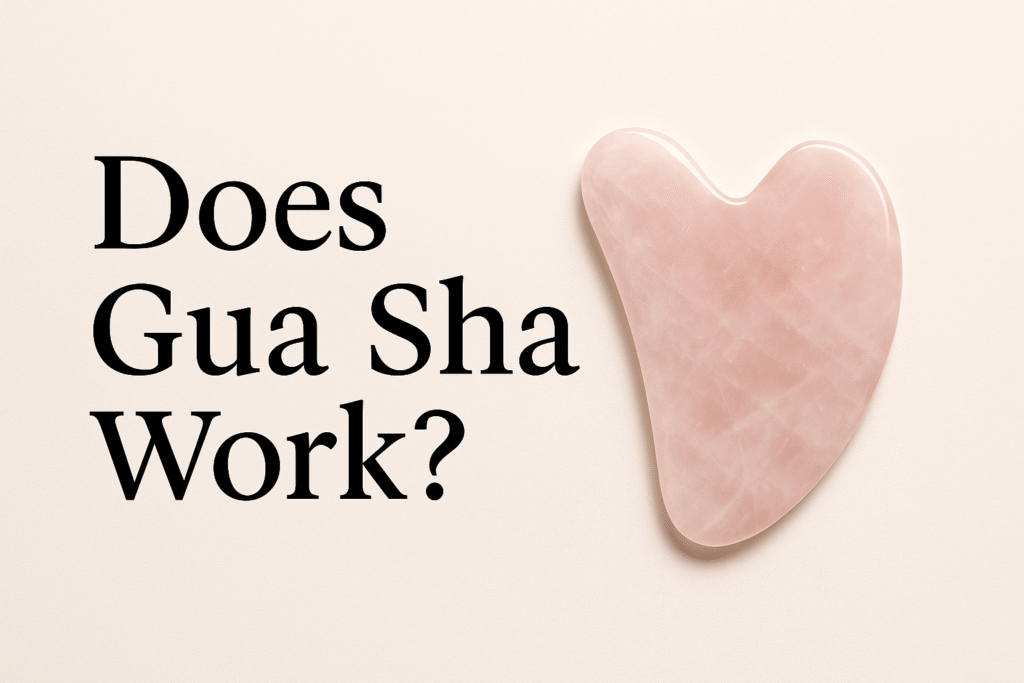
Does Gua Sha Work? And What Result about Gua Sha back?
Gua Sha’s journey from Traditional Chinese Medicine (TCM) into the global beauty scene has been remarkably swift. In just a few years, it has gained worldwide popularity—driven by rising demand for natural beauty and wellness, as well as the viral power of social media. But have you ever asked yourself: Does Gua Sha work? Today, we’ll explore this question through a closer look at what Gua Sha is, the science behind it, its real-world effects, and answers to some frequently asked questions. What Exactly Is Gua Sha? Origins and Principles of Gua Sha The origin of Gua Sha is varied and somewhat disputed, but the most widely accepted theory traces it back to Bian Stone Therapy, a traditional Chinese healing practice. Over centuries, it evolved into the Gua Sha we know today. Historical records show that Gua Sha has been used for over a thousand years. The theory behind Gua Sha is rooted in the TCM concept of qi (vital energy) and blood flow. A famous TCM saying goes, “Where there is free flow, there is no pain; where there is pain, there is no free flow.” In other words, pain and discomfort often stem from blockages in the flow of qi and blood. Gua Sha, through repeated scraping motions, helps to release these blockages and stimulate better circulation, which in turn can promote healing and relieve pain. Face vs. Body Gua Sha: Key Differences Facial and body Gua Sha differ significantly in terms of tools, techniques, and pressure applied. Using body Gua Sha methods on the face can actually cause harm instead of benefits. Understanding these differences is essential for effective and safe use. 1. Treatment Area: 2. Tool Type: 3. Technique & Pressure: 4. Expected Results: 5. Recovery Time: Does Gua Sha Work? Where Science Meets Experience The effectiveness of Gua Sha can be assessed from multiple perspectives, including clinical studies, expert opinions, and user experiences. However, outcomes may vary depending on individual health conditions and goals. Scientific and Clinical Findings: Expert and User Feedback: Different Outcomes for Different Needs Gua Sha Back: Does Gua Sha Work? Back Gua Sha is one of the most widely used forms of this therapy. The back has a broad surface area and contains many acupuncture points and energy pathways. Due to modern lifestyles—prolonged sitting, stress, or poor posture—people often suffer from tension in the lower back and trapezius muscles. Gua Sha helps ease these problems. Benefits of Back Gua Sha: Professional vs. DIY:Back Gua Sha is best done by trained professionals, as it involves deeper knowledge and technique than facial Gua Sha. Incorrect use may lead to adverse effects or injury. Gua Sha FAQs
Does Gua Sha Work? And What Result about Gua Sha back? Read More »
Gua Sha’s journey from Traditional Chinese Medicine (TCM) into the global beauty scene has been remarkably swift. In just a few years, it has gained worldwide popularity—driven by rising demand for natural beauty and wellness, as well as the viral power of social media. But have you ever asked yourself: Does Gua Sha work? Today, we’ll explore this question through a closer look at what Gua Sha is, the science behind it, its real-world effects, and answers to some frequently asked questions. What Exactly Is Gua Sha? Origins and Principles of Gua Sha The origin of Gua Sha is varied and somewhat disputed, but the most widely accepted theory traces it back to Bian Stone Therapy, a traditional Chinese healing practice. Over centuries, it evolved into the Gua Sha we know today. Historical records show that Gua Sha has been used for over a thousand years. The theory behind Gua Sha is rooted in the TCM concept of qi (vital energy) and blood flow. A famous TCM saying goes, “Where there is free flow, there is no pain; where there is pain, there is no free flow.” In other words, pain and discomfort often stem from blockages in the flow of qi and blood. Gua Sha, through repeated scraping motions, helps to release these blockages and stimulate better circulation, which in turn can promote healing and relieve pain. Face vs. Body Gua Sha: Key Differences Facial and body Gua Sha differ significantly in terms of tools, techniques, and pressure applied. Using body Gua Sha methods on the face can actually cause harm instead of benefits. Understanding these differences is essential for effective and safe use. 1. Treatment Area: 2. Tool Type: 3. Technique & Pressure: 4. Expected Results: 5. Recovery Time: Does Gua Sha Work? Where Science Meets Experience The effectiveness of Gua Sha can be assessed from multiple perspectives, including clinical studies, expert opinions, and user experiences. However, outcomes may vary depending on individual health conditions and goals. Scientific and Clinical Findings: Expert and User Feedback: Different Outcomes for Different Needs Gua Sha Back: Does Gua Sha Work? Back Gua Sha is one of the most widely used forms of this therapy. The back has a broad surface area and contains many acupuncture points and energy pathways. Due to modern lifestyles—prolonged sitting, stress, or poor posture—people often suffer from tension in the lower back and trapezius muscles. Gua Sha helps ease these problems. Benefits of Back Gua Sha: Professional vs. DIY:Back Gua Sha is best done by trained professionals, as it involves deeper knowledge and technique than facial Gua Sha. Incorrect use may lead to adverse effects or injury. Gua Sha FAQs