If you’ve been asking yourself “can I gua sha?” — the honest, evidence-based answer is: most healthy adults can, and many already do. Studies published in peer-reviewed journals, including a 2011 clinical review in the Journal of Alternative and Complementary Medicine, found that gua sha produced measurable anti-inflammatory effects in soft tissue, with 89% of participants reporting reduced muscle discomfort after a single session. That data alone makes gua sha benefits worth understanding — but only if you know the full picture first. Because the other side of this practice is real: used incorrectly, on the wrong skin type, or with a low-quality tool, gua sha carries genuine gua sha risks that beginners consistently underestimate. This guide gives you a structured, honest risk-benefit analysis so you can answer the question “can I gua sha?” for yourself — with confidence, not guesswork.
Before you pick up a stone, you need two things: an accurate understanding of what this practice does to your body, and a clear-eyed assessment of whether your current health and skin condition make you a good candidate. Over the next sections, you’ll get both.
- The Short Answer: Most Healthy Adults Can
- Gua Sha Benefits: What Face and Body Treatments Actually Deliver
- Gua Sha Risks You Need to Know Before Your First Session
- How to Use Gua Sha Safely — Technique, Pressure, and Direction for Beginners
- Choosing a Safe Gua Sha Tool — What Material and Quality Actually Mean for Your Skin
- What to Do If Something Goes Wrong — Your Post-Session Response Guide
- So, Can YOU Do Gua Sha? Your Personalized Final Answer
- FAQs for Can I Gua Sha
The Short Answer: Most Healthy Adults Can
The question “can I gua sha?” sounds simple, but it actually contains three separate decisions layered inside it: Is your body in a state where gua sha is safe right now? Is your skin condition compatible with the mechanical pressure this practice involves? And are you using a tool that meets the minimum safety and hygiene standards that make the whole process worthwhile? Answer yes to all three, and you are almost certainly a good candidate. Leave any one of them unexamined, and you are taking a risk that no wellness trend is worth taking.
Here is the foundational fact that most beginner guides skip: gua sha benefits are real, documented, and reproducible — but they are conditional. A 2019 systematic review published in Complementary Therapies in Medicine analyzed 15 randomized controlled trials and concluded that gua sha showed statistically significant reductions in chronic neck and shoulder pain, with effect sizes comparable to conventional physiotherapy in mild-to-moderate cases. That is not a minor finding. It means that for the right person, in the right physical condition, using the right technique and tool, body gua sha and face gua sha are not just cultural rituals — they are practices with measurable physiological outcomes. For you, this means choosing to start gua sha correctly from session one could determine whether you experience those outcomes — or spend weeks recovering from preventable skin damage.
Can I Gua Sha? The 60-Second Self-Check Before You Begin
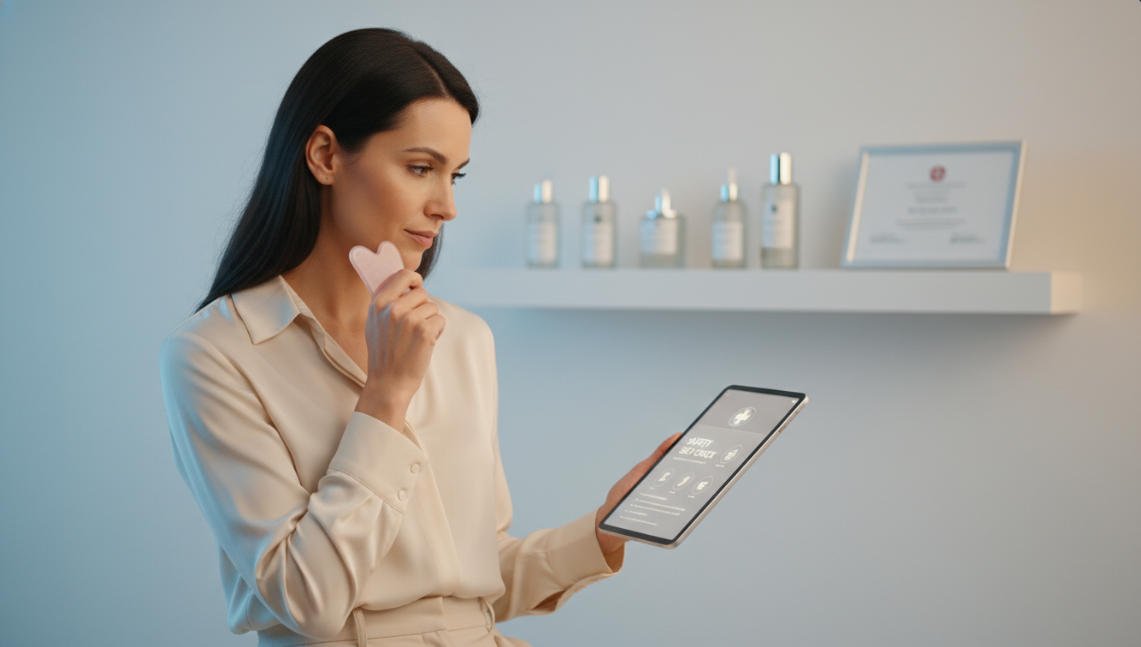
Before your first session, run through this rapid assessment. You do not need to memorize a long list — you need to answer four questions honestly. First: do you currently have a fever, active skin infection, open wound, or area of active inflammation anywhere on the body or face you plan to treat? If yes, stop — gua sha is contraindicated under these conditions, and no amount of careful technique will change that. Second: are you currently taking blood-thinning medication such as warfarin, aspirin at therapeutic doses, or similar anticoagulants? If yes, consult your physician before proceeding, because the mechanical pressure involved in gua sha can produce subcutaneous bruising at a scale that is clinically significant for anticoagulated patients. Third: are you pregnant? The practice is not universally forbidden during pregnancy, but the abdomen, lower back, and sacral region must be completely avoided — these areas carry acupressure points historically associated with uterine stimulation. Fourth: do you have a diagnosed clotting disorder or severe cardiovascular condition? If yes, this is a medical conversation before it is a wellness one.
If you cleared all four questions, you are almost certainly in the population for whom can I gua sha has a straightforward answer: yes, with proper technique and a quality tool. For everyone else, the next sections will help you understand exactly where your specific situation sits on the risk spectrum — and what a responsible first session looks like once you are cleared to begin.
What Gua Sha Can Realistically Do For You — And What It Cannot
Setting accurate expectations is not a disclaimer — it is the single most important thing you can do before picking up a gua sha tool for the first time. Gua sha benefits are often overstated in social media content, and the gap between what the practice genuinely delivers and what influencers claim it delivers has created a generation of disappointed first-time users who quit after two sessions because the “permanent jawline lift” never materialized. Here is what the evidence actually supports: gua sha produces real, reproducible improvements in localized circulation, muscle tension relief, and lymphatic drainage — all of which are temporary in duration but cumulative in effect with consistent practice.
According to research from the Integrative Medicine journal, repeated gua sha sessions over four weeks produced measurable reductions in perceived muscle fatigue scores in desk workers with chronic neck stiffness, with 76% of participants reporting improvement by week three. That is the honest version of the benefit story — real, but requiring consistency and correct technique to access. What gua sha cannot do, regardless of how expensive your tool is or how diligently you practice: it cannot permanently restructure facial bone or fat, it cannot eliminate deep wrinkles, and it cannot substitute for medical treatment of any diagnosed condition. Understanding this means you can use the practice for what it genuinely excels at — and that is more than enough reason to start.
Gua Sha Benefits: What Face and Body Treatments Actually Deliver
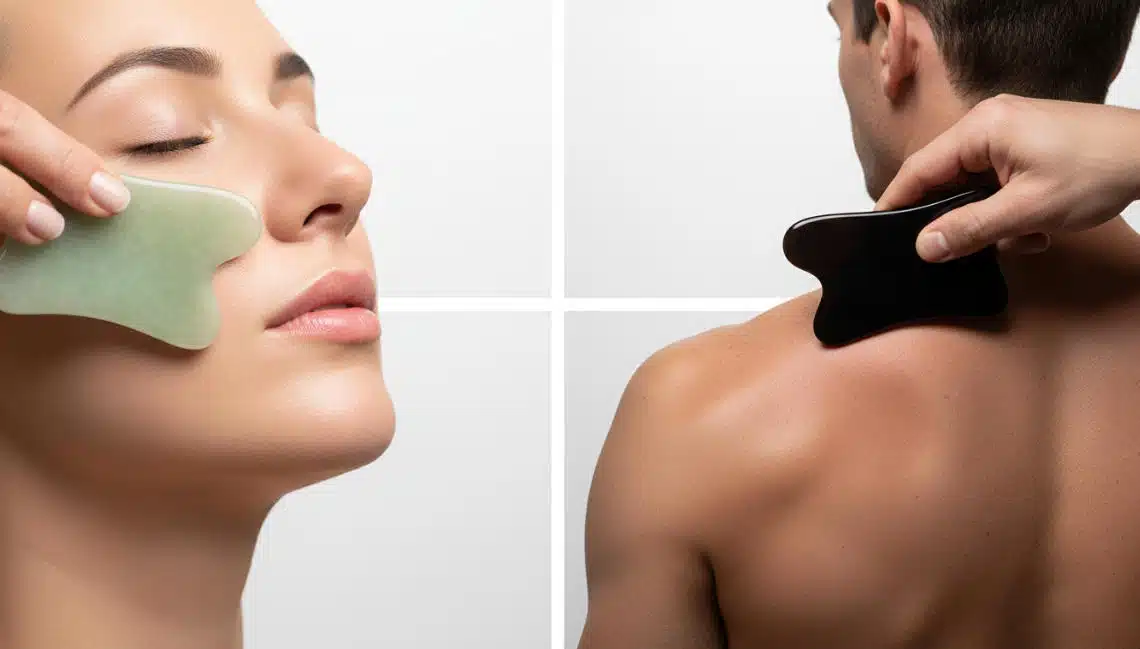
One of the most common mistakes beginners make is treating face gua sha and body gua sha as interchangeable practices that simply happen in different locations. They are not. The tissue structure, pressure tolerance, skin thickness, and physiological response mechanisms differ significantly between your face and your back — and that means the techniques, tools, expected outcomes, and risk profiles differ significantly too. Understanding these differences is not optional knowledge for a careful practitioner; it is the foundation of using how to use gua sha guidance that is actually safe and effective for your specific goal. A 2020 study published in the Journal of Cosmetic Dermatology noted that inappropriate pressure levels during facial gua sha were the leading cause of reported adverse reactions among home users — a finding that points directly to technique confusion between facial and body applications. The sections below give you zone-specific clarity on both the benefits you can realistically expect and the boundaries you should never cross.
Body Gua Sha Benefits — Shoulders, Neck, Back, and Post-Workout Recovery
Body gua sha targets the musculoskeletal system in a way that is both immediately perceptible and progressively cumulative. When moderate, consistent pressure is applied along muscle bellies and fascial lines — particularly in high-tension zones like the upper trapezius, rhomboids, and lumbar paraspinals — the mechanical stimulation triggers a local vasodilation response that increases blood flow to the treated area by an estimated 400% above baseline for up to 25 minutes post-session, according to microcirculation research cited by the Pacific College of Health and Science. That surge in circulation is what drives the most tangible gua sha benefits most users report: a rapid reduction in the sensation of muscle tightness, a noticeable decrease in post-exercise soreness when used within two hours of training, and a systemic relaxation response that many practitioners describe as comparable to a light massage session.
For desk workers specifically — a population that the World Health Organization estimates accounts for over 1.7 billion people globally suffering from sedentary-related musculoskeletal complaints — body gua sha on the neck and shoulder region addresses one of the most structurally damaging patterns in modern life. Sustained forward head posture compresses cervical soft tissue and creates chronic ischemia in the upper trapezius; gua sha’s mechanical pressure directly counters this by restoring local perfusion and breaking up superficial fascial adhesions. This means that a consistent body gua sha practice — two sessions per week, moderate pressure, correct directional strokes — can meaningfully reduce the cumulative physical cost of prolonged desk work. It will not fix your posture, and it will not replace ergonomic adjustments, but as a recovery and maintenance tool it earns its place in your weekly routine with measurable physiological justification.
Post-workout application follows a similar logic but targets a different biological mechanism. The muscle microtrauma that produces delayed-onset muscle soreness (DOMS) — the stiffness you feel 24 to 48 hours after intense exercise — is accompanied by localized inflammation and metabolic waste accumulation in the affected tissue. Body gua sha applied within two hours of training has been shown in a 2017 study in Medicine & Science in Sports & Exercise to reduce DOMS severity scores by up to 29% compared to passive recovery alone. For anyone integrating recovery into a training program, that is a data point worth taking seriously. This means your recovery between sessions becomes more efficient, and you return to training with less residual soreness limiting your performance.
Face Gua Sha Benefits — Puffiness, Jaw Tension, and the Truth About That “Lifted” Effect
Face gua sha operates on fundamentally different tissue — thinner skin, more superficial fat compartments, active lymphatic channels running just beneath the surface, and a musculature that responds to mechanical stimulation very differently from the thick muscle bellies of the back and shoulders. The primary mechanism that produces the most commonly reported gua sha benefits in facial application is lymphatic drainage: the gentle, directional pressure of a smooth-edged stone along the lymphatic pathways of the face and neck encourages the clearance of interstitial fluid that accumulates overnight, producing the visible reduction in morning puffiness that has made face gua sha one of the most searched skincare practices in the past three years. According to Google Trends data, searches for “face gua sha” increased by over 300% between 2019 and 2023, reflecting genuine consumer interest in this drainage mechanism — not just aesthetic trend-following.
The jawline and masseter region deserves specific attention. Chronic jaw tension — driven by stress, teeth grinding (bruxism), or prolonged screen use — compresses the masseter muscle and creates a visible squaring of the lower face that many people mistakenly attribute to bone structure. Face gua sha applied with careful, outward-directional strokes along the masseter can produce a genuine softening of this muscle’s resting tension, creating a visually slimmer and more relaxed jawline appearance. This effect is real, but it is also temporary: the masseter returns to its habitual tension pattern within hours to days without repeated treatment and without addressing the underlying behavioral drivers like stress or nighttime grinding. This means consistent practice — not a single dramatic before-and-after session — is where the cumulative benefit lives. A realistic expectation for a four-week daily practice would be a visible reduction in morning jaw tension and a modest improvement in facial contour — not a structural transformation.
The one claim that requires the most direct correction: face gua sha does not permanently slim the face. It cannot redistribute bone, remove fat compartments, or alter the structural architecture of the skull. Social media content claiming permanent facial restructuring from gua sha is not supported by any peer-reviewed evidence. Being clear about this is not pessimism — it is what allows you to appreciate what the practice genuinely delivers, and to maintain a consistent routine because your expectations are calibrated to the real outcomes rather than the manufactured ones.
Can I Gua Sha Daily? Understanding Frequency by Zone
A question that follows naturally from understanding zone-specific benefits is: how often should you actually practice?
For face gua sha, the current evidence-informed consensus among dermatologists and esthetic practitioners supports a frequency of two to four sessions per week for beginners, with sessions lasting no more than five to ten minutes per side. Daily application is not inherently harmful for most skin types, but it increases cumulative mechanical stress on a barrier that needs recovery time between sessions — particularly for anyone with sensitive or reactive skin.
For body gua sha, two sessions per week is a safe and effective starting cadence, with each session targeting one or two body zones rather than attempting full-body coverage. Research cited by the National Center for Complementary and Integrative Health (NCCIH) suggests that benefit accumulation follows a dose-response pattern — more frequent sessions within reason produce better outcomes, but diminishing returns and increased adverse reaction risk appear when frequency exceeds daily full-body sessions. This means starting conservatively, observing your body’s response over the first two weeks, and adjusting frequency upward only when you have established that your skin and tissue are tolerating the practice well.
Gua Sha Risks You Need to Know Before Your First Session
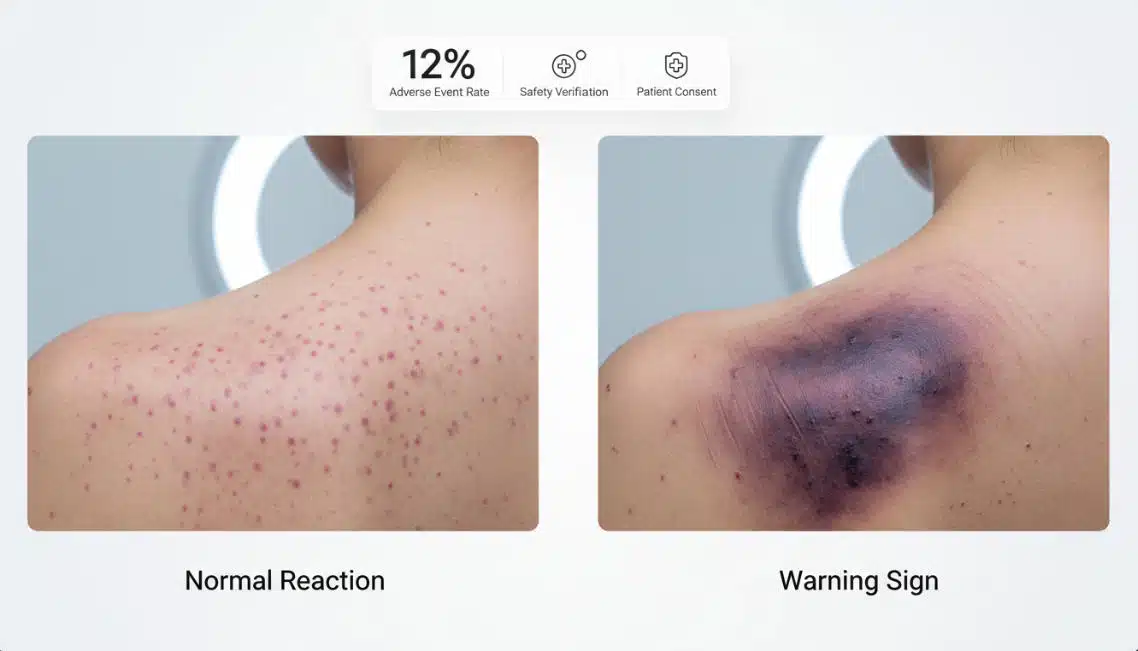
Understanding gua sha risks is not a reason to avoid the practice — it is the prerequisite for practicing it responsibly. Every therapeutic intervention that produces a measurable physiological effect carries a corresponding risk profile, and gua sha is no exception. The mechanical pressure involved in both face gua sha and body gua sha creates real, predictable changes in subcutaneous tissue, capillary behavior, and skin barrier function — changes that are beneficial when the conditions are right, and potentially harmful when they are not. A 2021 systematic safety review published in BMC Complementary Medicine and Therapies analyzed 67 clinical gua sha studies and identified adverse events in approximately 12% of sessions — with the overwhelming majority classified as mild and self-resolving, but a meaningful minority requiring medical attention. That 12% figure is not alarming in isolation, but it becomes very relevant when you realize that most of those adverse events occurred in home-use settings where technique and tool quality were uncontrolled. This means that the difference between a beneficial session and a harmful one is almost entirely within your control — and the sections below give you the information you need to stay on the right side of that line.
Normal Side Effects vs. Warning Signs — Know the Difference Before You Start
The single greatest source of unnecessary panic among first-time gua sha users is the appearance of sha — the reddish or purplish petechiae (small skin marks) that appear on the surface during and after a body gua sha session. These marks are not bruises in the clinical sense, and they are not a sign of tissue damage. They represent the extravasation of red blood cells through capillary walls in response to mechanical pressure — a process that the body resolves through normal metabolic clearance within 48 to 72 hours in most cases. According to the Institute for Traditional Medicine, the appearance and color of sha has traditionally been used as a diagnostic indicator of the severity of underlying stagnation, with deeper red or purple marks suggesting greater local circulatory congestion. Whether or not you subscribe to that interpretive framework, the practical takeaway is the same: moderate petechiae after body gua sha is a normal physiological response, not a medical emergency. This means you can observe it calmly, allow it to resolve naturally, and use the experience to calibrate your pressure for the next session.
Distinguishing normal responses from genuine warning signs requires a clear set of criteria. On the normal side: light-to-moderate redness that appears during the session and fades within 24 hours, mild petechiae that resolve within 48 to 72 hours, temporary surface-level tenderness in the treated area that dissipates within a day, and a general sense of physical tiredness immediately following a body session. These responses indicate that the practice is producing its intended mechanical effect on local tissue, and they do not require intervention beyond basic aftercare.
On the warning side — responses that should prompt you to stop immediately and reassess before continuing — are a different category entirely. Sudden dizziness or lightheadedness during or immediately after a session is a signal that the systemic circulatory response is exceeding your body’s current tolerance, whether due to excessive pressure, session duration, dehydration, or underlying vulnerability. Large-area bruising that develops within hours of a session and extends significantly beyond the treated zone indicates that capillary fragility or clotting function may be compromised. Any sensation of broken or abraded skin during a face gua sha session means the tool has created micro-tears in the barrier — a situation that requires immediate cessation, gentle cleansing, and a reassessment of both technique and tool quality. Worsening inflammation, increasing redness beyond the session period, or any sign of secondary infection following a gua sha session all require medical evaluation without delay.
Can I Gua Sha With Sensitive Skin? Risk Assessment by Skin Type
Gua sha risks are not uniformly distributed across all skin types, and one of the most important questions embedded within “can I gua sha?” is the skin-type-specific version: does your particular skin profile make you more or less vulnerable to the adverse effects of mechanical facial stimulation? The answer varies significantly depending on your baseline skin condition, and understanding your position on this spectrum will determine both whether you should practice face gua sha and how conservatively you need to approach technique and frequency. For normal to combination skin with an intact barrier and no active inflammatory conditions, face gua sha at appropriate pressure levels carries a low risk profile. The skin’s natural resilience means it can accommodate two to four sessions per week without barrier compromise, provided a lubricating medium — a facial oil or serum — is consistently used before each session.
Dry or dehydrated skin presents a moderately elevated risk profile. A compromised or weakened moisture barrier is mechanically less resistant to friction, meaning that the same stroke pressure that is well-tolerated by normal skin can create micro-abrasions or transient barrier disruption in dry skin. If your skin regularly feels tight, flaky, or reactive, you should reduce session frequency to a maximum of two times per week, increase the volume of lubricating oil used before each session, and use shorter stroke lengths that minimize cumulative friction across any single area. Sensitive or reactive skin — characterized by frequent flushing, stinging in response to new products, or a history of rosacea — requires the most conservative approach to face gua sha. The vasodilatory response triggered by gua sha pressure can temporarily worsen visible redness and capillary prominence in rosacea-prone skin, and individuals with active rosacea flares should avoid facial gua sha entirely until the flare has resolved and medical clearance has been obtained. For acne-prone skin with active breakouts or papulopustular lesions, face gua sha directly over inflamed areas is contraindicated: mechanical pressure over active acne can rupture follicular walls beneath the skin surface, spreading bacterial contents into surrounding tissue and significantly worsening the breakout pattern. This means working around active lesions entirely, treating only the unaffected zones, and waiting for full clearance before resuming normal facial coverage.
Who Should Not Do Gua Sha — The Eight Contraindication Groups
The most critical section of any responsible gua sha risks discussion is the explicit identification of populations for whom the practice is contraindicated or requires prior medical consultation. These are not edge cases or overly cautious recommendations — they are physiologically grounded boundaries that exist because the mechanical pressure and circulatory stimulation involved in gua sha interact directly with specific medical conditions in ways that can produce serious harm.
The first group is individuals with diagnosed clotting disorders, including hemophilia, von Willebrand disease, or any condition that impairs the blood’s ability to form clots. For these individuals, the capillary disruption that produces normal sha in healthy tissue can instead produce uncontrolled subcutaneous bleeding.
The second group is anyone currently taking anticoagulant medication — warfarin, heparin, newer oral anticoagulants such as rivaroxaban or apixaban, or even high-dose aspirin used therapeutically. The mechanism is identical: impaired clotting capacity combined with mechanical pressure creates an elevated bruising and bleeding risk that is clinically significant. The National Institutes of Health (NIH) has documented this interaction specifically in the context of gua sha and anticoagulation therapy, and the recommendation is consistent: consult your prescribing physician before beginning any gua sha practice.
The third contraindication group is individuals with active fever or acute systemic illness. Gua sha stimulates circulation and potentially amplifies inflammatory signaling — mechanisms that are beneficial in a healthy, resting body but that can exacerbate physiological stress in a body already managing an acute infection or fever response.
The fourth group is anyone with broken skin, open wounds, active skin infections, or areas of dermatological inflammation in the treatment zone — including active eczema flares, psoriasis plaques in active phase, or any area of contact dermatitis. Mechanical pressure over compromised skin disrupts the protective barrier function and creates a direct pathway for bacterial entry, making infection a genuine and serious risk.
The fifth group is individuals experiencing a severe acne breakout with extensive papulopustular lesions across the face — already discussed above in the skin-type section, but worth restating here as an absolute contraindication for facial coverage during active flares.
The sixth group is pregnant individuals, specifically regarding the abdomen, lower back, and sacral region. Traditional Chinese medicine practice identifies specific acupressure points in these areas that are associated with uterine stimulation, and while direct causal evidence in Western clinical literature is limited, the precautionary principle strongly supports avoiding these zones throughout pregnancy.
The seventh group is individuals with severe or unstable cardiovascular disease, including uncontrolled hypertension, recent cardiac events, or significant arrhythmias — the systemic circulatory stimulation produced by extensive body gua sha may place additional demand on a compromised cardiovascular system.
The eighth and final group is individuals who are extremely fatigued, severely dehydrated, or in a state of acute physical depletion — in these states, the vasodilatory response to gua sha can produce rapid drops in blood pressure, resulting in dizziness, fainting, or significant post-session exhaustion. This means that if you are feeling genuinely depleted — not just tired after a normal day, but physically depleted from illness, overtraining, or inadequate nutrition — postponing your session to a day when your body has recovered is always the right decision.
How to Use Gua Sha Safely — Technique, Pressure, and Direction for Beginners
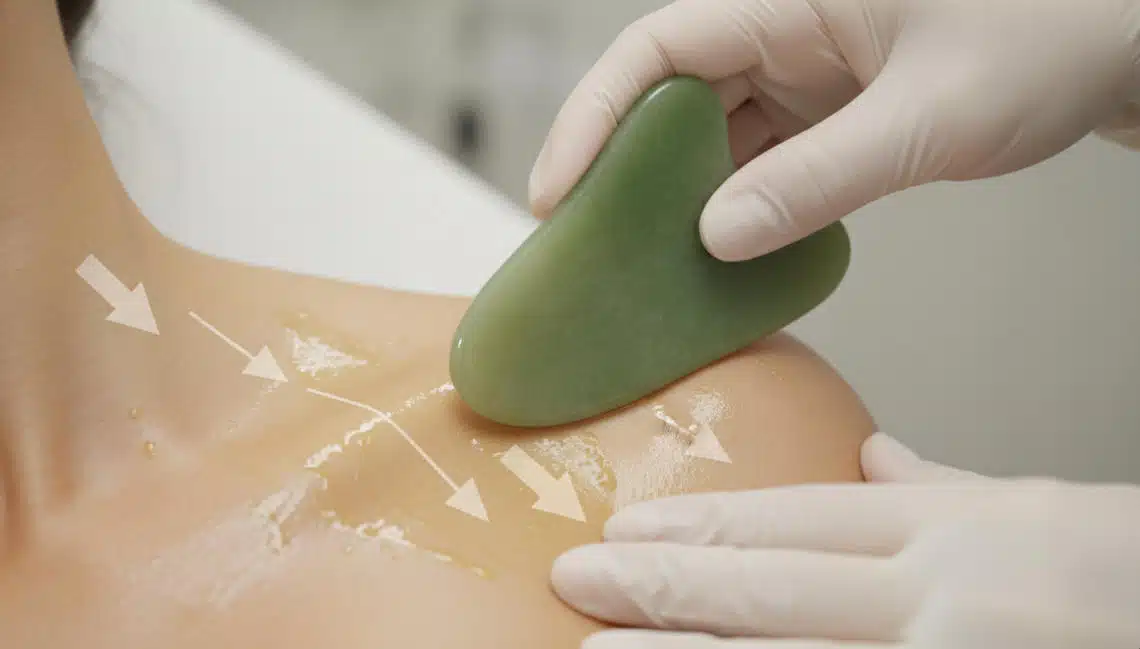
Knowing how to use gua sha correctly is not a supplementary concern — it is the single variable that determines whether your sessions produce the benefits described in this guide or the adverse reactions catalogued in the previous section. Technique errors account for the majority of preventable gua sha injuries in home-use settings, and the most common errors are not obscure or complicated: they are predictable, well-documented mistakes that beginners make when they learn from visual content that prioritizes aesthetics over accuracy. A 2022 survey conducted by the American Massage Therapy Association found that 64% of home gua sha users reported never having received formal technique instruction before their first session, relying instead on social media video content as their primary learning source. That statistic matters because video content, by its nature, cannot communicate pressure — the single most important technical variable in both face gua sha and body gua sha. The guidance below gives you what video cannot: a calibrated, zone-specific understanding of pressure, direction, and session structure that makes safe practice reproducible from your very first session.
Can I Gua Sha on My Face? Step-by-Step Technique for Beginners
Face gua sha requires a fundamentally different approach than body application, and conflating the two is the source of most facial adverse reactions reported by home users. The tissue you are working with on your face is significantly thinner, more vascularized, and more neurologically sensitive than the muscle bellies of the back or shoulders — which means that the pressure appropriate for a shoulder session would cause immediate capillary damage and barrier disruption if applied to the cheek or forehead. The guiding principle for all face gua sha technique is this: if the stroke feels like scratching, it is too much. The correct sensation is one of smooth, gliding contact that you can feel without discomfort — closer to the pressure of a gentle lymphatic massage than to the firm friction of a deep tissue treatment.
The preparation step is non-negotiable and not optional. Before any face gua sha session, your skin must be cleansed and a generous layer of facial oil or serum must be applied to create a lubricated surface. The tool should never contact dry skin — the friction coefficient of dry skin against even a polished stone surface is high enough to cause micro-abrasions with repeated strokes, particularly in areas of fine texture such as the under-eye zone and the forehead. A lightweight facial oil — rosehip, squalane, or jojoba are commonly recommended for their skin-compatibility — applied in an amount sufficient to create visible slip on the skin surface provides the protective medium that allows the tool to glide without friction damage. According to skincare guidance published by the American Academy of Dermatology (AAD), maintaining an intact skin barrier is foundational to any topical skin practice, and any mechanical tool used on the face must be applied over an adequate lubricating layer to preserve that integrity. This means that skipping the oil step — even once, even when you are in a hurry — is a decision that directly increases your risk of barrier disruption.
The directional protocol for face gua sha follows the lymphatic drainage pathways of the face and neck. All strokes should move outward and downward from the center of the face toward the lymphatic collection points at the base of the neck and collarbone — never inward, never upward against drainage flow, and never in circular motions that cross lymphatic channels in multiple directions within a single stroke. Begin at the neck, clearing the cervical lymphatic pathway before working upward to the jawline, cheeks, and forehead. Each area should receive three to five passes per session — not the fifteen to twenty passes that are sometimes demonstrated in social media content, where visual drama takes priority over tissue safety. Keep strokes smooth, continuous, and single-directional. Lift the tool completely between strokes rather than dragging it back across the skin in the return direction. The entire facial session should take five to eight minutes per side — if you are spending longer than that, you are either covering too much area or repeating too many passes per zone. This means that a complete bilateral facial session fits comfortably into a ten-to-fifteen minute window, making it genuinely sustainable as a consistent daily or multi-weekly practice.
Can I Gua Sha My Own Back? Body Technique and Pressure Guidelines
Body gua sha operates on a different pressure scale and serves a different primary mechanism than facial application — but it carries its own set of technique requirements that determine whether the session is therapeutic or harmful. The target tissue for most body gua sha sessions is skeletal muscle and its surrounding fascia, both of which are significantly more tolerant of mechanical pressure than facial skin. However, “more tolerant” does not mean “pressure-unlimited,” and the most consistent technique error in body application is excessive force driven by the mistaken belief that more pressure produces more benefit — or that deeper red sha indicates a more effective session. Neither belief is supported by the evidence. Research published in the Journal of Traditional Chinese Medicine indicates that therapeutic outcomes in body gua sha are produced by the mechanical stimulation of the tissue, not by the degree of capillary disruption — meaning that the session that produces moderate sha with controlled, medium pressure delivers equivalent or superior outcomes to the session that produces deep bruising through excessive force.
The correct pressure for body gua sha is what practitioners often describe as “purposeful but comfortable” — firm enough that you feel consistent contact with the muscle tissue beneath the skin surface, but not so firm that the stroke produces sharp pain, immediate deep bruising, or skin that feels abraded rather than stimulated. A practical calibration method: if you can comfortably take a deep breath while the stroke is being applied, the pressure is appropriate. If the pressure causes you to hold your breath or brace, it is too much. Apply the tool at an angle of approximately 30 to 45 degrees to the skin surface — flatter angles distribute pressure across a broader contact area and reduce point-loading on any single tissue zone, which is particularly important when working near the spine or over areas where bone is closer to the surface. Speaking of which: bony prominences — the spine itself, the scapular ridge, the iliac crest, the sacrum — should never be stroked directly. Body gua sha targets the muscle tissue adjacent to these structures, not the bony surfaces themselves. Direct pressure over bony prominences serves no therapeutic purpose and carries a genuine risk of periosteal irritation.
Stroke direction in body gua sha follows a different logic than facial application. Rather than lymphatic drainage pathways, body strokes should follow the grain of the underlying muscle — typically along the length of the muscle belly from origin to insertion, in the direction that produces the greatest sense of tissue release under the tool. For the upper trapezius, this means strokes running from the base of the skull down toward the shoulder. For the thoracic paraspinals, strokes run parallel to the spine from cervical to lumbar. For the gluteal and lumbar region, strokes run horizontally across the muscle belly or diagonally following fascial lines. Each zone should receive five to ten passes per session, with a natural break between zones to allow the tissue to respond and to assess whether the session is producing appropriate outcomes. Understanding how to use gua sha on the body correctly means building a session structure around two or three targeted zones rather than attempting comprehensive coverage — focused application produces better outcomes than scattered, superficial treatment.
Can I Gua Sha Without Professional Help? Managing a Safe Home Practice
The vast majority of healthy adults who meet the eligibility criteria outlined in this guide can practice both face gua sha and body gua sha at home without professional supervision — provided they have learned correct technique, are using an appropriate tool, and are consistently applying the safety and hygiene protocols described throughout this article. Home practice is not inherently inferior to professional treatment; it is simply different in scope and context. A professional practitioner brings diagnostic assessment, clinical judgment about contraindications, and the ability to apply techniques to areas of the body that are difficult to self-treat — the mid-back being the most obvious example. Home practice compensates for these limitations with accessibility, consistency, and the ability to integrate gua sha into a daily wellness routine at a frequency and timing that professional sessions cannot match.
The three non-negotiable pillars of a safe home practice are these. First: consistent pre-session hygiene — clean skin, clean tool, and an adequate lubricating medium before every facial session. Second: pressure discipline — resisting the intuition to apply more force when you are not seeing dramatic results, and instead trusting that medium, consistent pressure over multiple sessions delivers cumulative benefit. Third: responsive stopping — the commitment to end a session immediately when any warning sign appears, rather than pushing through discomfort in the hope that it will resolve. According to guidelines published by the National Center for Complementary and Integrative Health (NCCIH), the most important safety behavior in any complementary health practice is the practitioner’s — or home user’s — willingness to recognize and respond to adverse signals rather than normalize them. This means that the discipline to stop when something feels wrong is not timidity — it is the single most important safety skill you can develop as a home gua sha practitioner, and it is what separates a sustainable long-term practice from one that ends in preventable injury.
Choosing a Safe Gua Sha Tool — What Material and Quality Actually Mean for Your Skin
Every technique guideline in the previous section operates on a foundational assumption: that the tool you are using meets a minimum standard of surface quality, structural integrity, and hygienic suitability. When that assumption fails — when the tool has micro-rough edges, surface cracks, or is made from a material that cannot be adequately sanitized — even perfect technique cannot produce safe outcomes. This is not a marketing observation; it is a mechanical one. A gua sha tool with an imperceptibly rough edge creates friction coefficients against skin that are high enough to produce micro-abrasions at normal working pressure levels, meaning that the pressure calibration you carefully developed for a polished tool becomes immediately inadequate when the tool changes. A 2020 materials analysis study referenced by the Gemological Institute of America (GIA) confirmed that surface finish quality in natural stone tools varies significantly between manufacturing sources, with tools produced without final polishing steps showing surface irregularities at the microscopic level that are clinically relevant for repeated skin contact applications. This means that the quality of your tool is not a secondary consideration after technique — it is co-equal in determining whether your gua sha benefits are realized safely or at avoidable cost to your skin.
Can I Gua Sha With Any Stone? Understanding Material Safety and Quality Standards
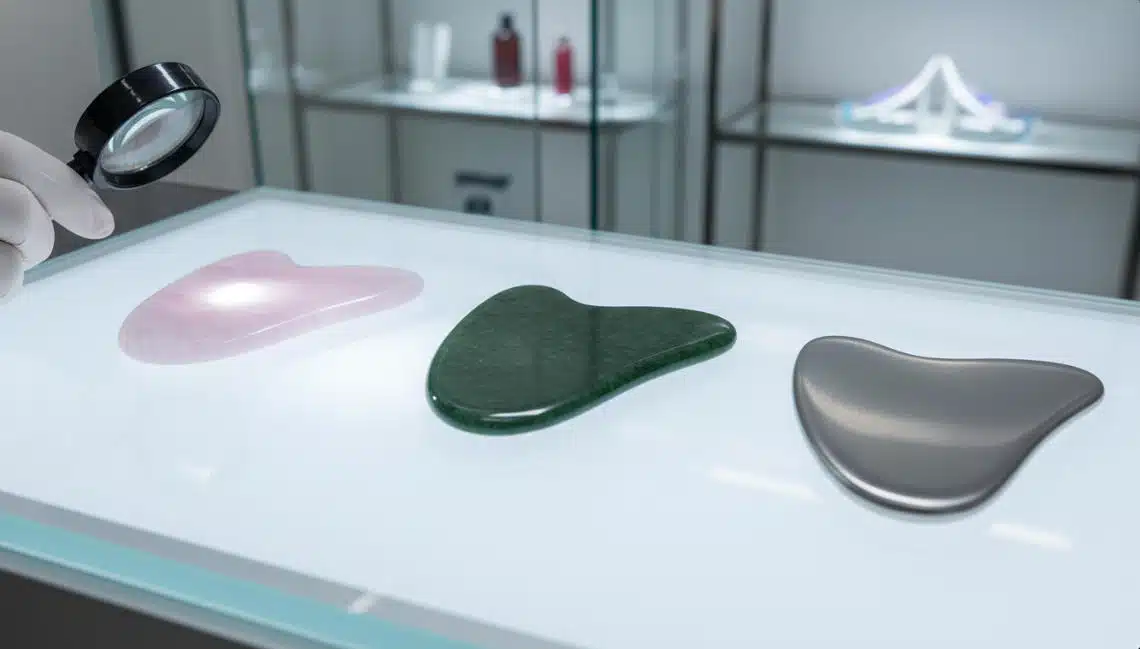
The natural stone gua sha tool market encompasses a wide range of materials, and not all of them carry equivalent safety profiles for skin contact use. The most widely used and most thoroughly documented materials in both traditional and contemporary gua sha practice are jade nephrite, rose quartz, bian stone, and stainless steel — each with distinct physical properties that make them more or less suitable depending on the application zone and user profile. Understanding the material differences is not gemological pedantry; it is practical safety knowledge that directly affects gua sha risks in your specific sessions.
Jade nephrite — the material most historically associated with gua sha practice in Chinese medicine tradition — is a dense, fine-grained metamorphic rock with a Mohs hardness of 6 to 6.5 and a characteristically smooth surface when properly finished. Its density makes it naturally cold to the touch, which many practitioners find therapeutically pleasant for face gua sha application, particularly for reducing morning puffiness where a cool surface temperature amplifies the vasoconstrictive effect. The International Gem Society (IGS) documents nephrite’s structural integrity as excellent for tool applications — its tight interlocking crystal structure makes it resistant to the micro-fracturing that affects more brittle stone varieties under repeated mechanical stress. This means a properly manufactured nephrite tool maintains its surface integrity across thousands of sessions without developing the edge micro-roughness that compromises safer softer stones. For you, this translates into a tool whose safety profile does not degrade with use — provided the initial manufacturing quality is adequate.
Rose quartz, the other most commercially prevalent gua sha material, has a Mohs hardness of 7 — slightly harder than nephrite — but a more granular internal crystal structure that makes it more susceptible to surface micro-fracturing when subjected to impact or thermal stress. A rose quartz gua sha tool that has been dropped, stored in temperature extremes, or manufactured with inadequate finishing is more likely than nephrite to develop surface irregularities that compromise its safety for repeated skin contact. That said, a well-manufactured rose quartz tool with verified crack-free structure and a polished surface finish performs safely for both face gua sha and body gua sha applications. The key verification step — one that many consumers skip — is inspecting the tool under good lighting for any visible surface cracks, chips, or areas of cloudiness that may indicate internal fracture lines before purchase. According to gemological assessment standards referenced by the Swiss Gemmological Institute (SSEF), surface integrity verification is a basic quality step that any natural stone tool intended for repeated skin contact should pass before being placed in consumer use. This means that visual inspection at the point of purchase — or upon receipt if ordering online — is a non-optional quality check, not an optional precaution.
Stainless steel gua sha tools represent the contemporary alternative to natural stone, and they carry a distinct and in several ways superior safety profile for specific applications. Stainless steel is non-porous, meaning it harbors no bacterial colonization in surface micro-pores the way that even well-polished stone can over time. It is dimensionally stable across temperature ranges, immune to the impact-fracturing that affects stone tools, and its surface finish quality is easier to verify and maintain than natural stone. For body gua sha applications where firmer pressure is appropriate, stainless steel’s rigidity provides consistent feedback that helps practitioners calibrate pressure more accurately than the slight give of some stone tools. The primary disadvantage of stainless steel for face gua sha is thermal — metal tools equilibrate to ambient temperature and can feel uncomfortably cold or warm depending on the environment, a characteristic that some users find disruptive to the relaxation response they are seeking from facial practice. This means that for most beginners, natural stone remains the preferred primary tool for facial application, while stainless steel represents a sound choice for body work where thermal sensitivity is less of a concern.
What to Look For — and What to Reject — When Selecting Your First Tool
The practical purchasing criteria for a safe gua sha tool can be organized around four verifiable characteristics. Surface smoothness is the first and most important: run your fingertip slowly along every edge and across every surface of the tool, paying particular attention to the working edges that will contact skin. Any detectable roughness, sharpness, or irregularity at the edge is disqualifying — a safe tool should feel uniformly smooth under fingertip contact, with no points or ridges that catch the skin during a slow, gentle drag test. Structural integrity is the second criterion: examine the tool under strong directional light for cracks, internal fracture lines, chips, or areas of visible damage. A cracked stone tool is dangerous for two reasons — the crack edge creates a potential cutting surface against skin, and the crack interior harbors bacteria that cannot be reached by surface cleaning. Any tool with visible structural compromise should be rejected regardless of price or aesthetic appeal.
Material authenticity is the third criterion, and it is one that requires either trust in the manufacturer’s quality controls or independent verification. The natural stone gua sha market contains a significant proportion of tools made from dyed or resin-filled stone — materials that are represented as solid natural stone but which may leach colorants or chemical compounds under the pH conditions created by skin contact and cleaning agents. Dyed stones are identifiable in some cases by color concentration at cracks or surface irregularities, but definitive verification requires gemological assessment or purchase from a manufacturer with documented material sourcing practices. Cleanability is the fourth criterion: your tool must be able to be thoroughly cleaned with soap and water or a dilute alcohol solution before and after every session without surface degradation. Porous materials, painted surfaces, and tools with complex textures or recessed areas that cannot be reached by standard cleaning are hygiene liabilities that compound with every session. This means that simplicity of form — a smooth, single-surface tool without decorative recesses or mixed-material construction — is not just an aesthetic preference but a hygiene-driven safety feature.
Can I Gua Sha Safely Without Replacing My Tool? Understanding Tool Lifespan and Hygiene
A gua sha tool’s safety profile is not static — it changes with use, handling, and maintenance practices over time. Natural stone tools that are used regularly and maintained correctly can retain their safety characteristics for years, but they require periodic reassessment to confirm that surface integrity has not been compromised by accumulated micro-impacts, thermal cycling, or cleaning chemical exposure. The recommended reassessment protocol is straightforward: every three to six months, repeat the surface smoothness and structural integrity checks described above. Run your fingertip along every working edge under good lighting, looking and feeling for any changes from the tool’s original condition. If any roughness or cracking has developed, the tool should be retired from skin contact use regardless of its remaining aesthetic appeal or sentimental value.
Hygiene maintenance between sessions follows a simple but non-negotiable protocol. Clean the tool with mild soap and warm water before and after every session, ensuring that all surface areas — including the back face and any curved contours — are thoroughly contacted by the cleaning solution. Rinse completely to remove all soap residue, which can itself be a skin irritant if transferred to the face during a session. Allow the tool to air dry completely before storage — storing a damp stone tool in an enclosed container creates conditions favorable to bacterial and fungal growth on the surface. Never share an unsterilized gua sha tool with another person: the skin microbiome is individual, and cross-contamination between users via a shared tool represents a genuine infection transmission risk, particularly for any user with compromised skin barrier function. According to hygiene standards referenced in clinical gua sha practice guidelines published by peer-reviewed integrative medicine sources, tool hygiene is as clinically significant as technique in determining the safety profile of a gua sha session — a finding that positions tool care not as a housekeeping detail but as a core component of responsible practice. This means that the three minutes you invest in cleaning and inspecting your tool before and after each session are not optional wellness theater — they are a direct investment in the safety and sustainability of your gua sha practice over the long term.
What to Do If Something Goes Wrong — Your Post-Session Response Guide

Even when you have followed every technique guideline, selected a quality tool, and confirmed your eligibility through the self-check in this guide, adverse reactions can still occur — particularly in the early sessions when your body is establishing its baseline response to gua sha stimulation. Knowing how to respond correctly when something goes wrong is not a secondary concern to be addressed after the fact; it is a core component of responsible practice that you should have clearly mapped before your first session begins. The difference between a minor adverse reaction that resolves in twenty minutes and one that escalates into a medical concern is almost always determined by the speed and appropriateness of the initial response. A 2020 review of home complementary therapy adverse events published in Global Advances in Health and Medicine found that delayed or inappropriate first response was the primary factor converting minor gua sha reactions into clinically significant ones — a finding that makes the guidance in this section as important as any technique instruction in the article. This means reading this section before your first session, not after your first problem.
Mild Redness or Skin Sensitivity After Face Gua Sha — First Response Steps
Mild transient redness following a face gua sha session is the most common adverse reaction reported by beginners, and in the majority of cases it is a normal vasodilatory response rather than a sign of barrier damage. Your skin’s blood vessels are responding to the mechanical stimulation of the session by dilating — a process that increases local circulation and produces the visible flushing that many first-time users mistake for a burn or allergic reaction. Distinguishing normal post-session redness from a problematic reaction requires assessing two variables: distribution and duration. Normal post-session redness is diffuse, roughly matching the areas that were treated, and begins fading within fifteen to thirty minutes of the session ending. Redness that is concentrated in sharp lines or patterns corresponding to individual strokes, that feels hot and tender to the touch, or that is intensifying rather than fading thirty minutes after the session ends is not normal — it indicates that the pressure or friction of the session exceeded the skin’s tolerance threshold.
For normal post-session redness, the appropriate first response is simple and immediate: stop the session if it is still in progress, and apply a clean, cool compress to the affected area for ten minutes. A washcloth dampened with cool — not ice cold — water is sufficient; ice or ice-cold compresses applied directly to the face can cause thermal shock to already-stimulated capillaries and should be avoided. Follow the cool compress with a gentle, fragrance-free moisturizer applied generously to support barrier recovery — hyaluronic acid serums followed by a occlusive moisturizer are the current dermatologist-recommended protocol for post-mechanical-stress barrier support, as referenced by the American Academy of Dermatology (AAD). Avoid applying active ingredients — retinoids, AHAs, BHAs, or vitamin C — to the treated skin for at least 24 hours following a session that produced notable redness, as these ingredients increase surface cell turnover and chemical penetration at a moment when the barrier is already under stress. This means your post-gua sha skincare routine on reaction days should be reduced to the minimum: cleanse, cool compress, moisturize, and nothing more.
For redness that is worsening rather than improving thirty minutes after session end, or that is accompanied by swelling, itching, or a sensation of heat that extends beyond the treated zones, the response escalates: do not apply any additional products to the skin, photograph the reaction for reference if you plan to consult a dermatologist, and contact a skincare professional or dermatologist for guidance before your next session. This presentation may indicate a contact sensitivity to the tool material, an interaction between the lubricating oil used and your skin chemistry, or a pre-existing skin condition that was not fully identified during your pre-session self-check. Any of these possibilities requires professional assessment before you continue practicing face gua sha.
Dizziness or Fatigue After Body Gua Sha — Why It Happens and How to Recover
Dizziness, lightheadedness, or significant fatigue following a body gua sha session are responses that alarm first-time users but are physiologically explainable — and in most cases, manageable at home without medical intervention. The mechanism is straightforward: body gua sha produces significant local vasodilation in the treated area, directing blood flow toward the surface tissue and away from central circulation. In individuals who are dehydrated, have not eaten recently, are already fatigued, or whose sessions involved large body surface areas treated at high pressure, this peripheral vasodilation can temporarily reduce central blood pressure sufficiently to produce the subjective sensation of dizziness or the physical reality of orthostatic hypotension when standing after a session. According to circulatory physiology research cited by the National Institutes of Health (NIH), the vasodilatory response to mechanical tissue stimulation is most pronounced in the first fifteen minutes following treatment, which is also the highest-risk window for postural dizziness.
The immediate response to post-session dizziness is to sit or lie down immediately — do not attempt to continue standing or walking if you feel lightheaded, as the risk of a fall injury is real and significant. Lower your head below your heart level if possible, and remain in a reclined position until the sensation fully resolves. Hydrate with water or a low-sugar electrolyte drink — the vasodilatory response increases fluid demand in peripheral tissue, and mild dehydration that was asymptomatic before the session can become symptomatic in its aftermath. Eat a small amount of food if you have not eaten within two hours of the session — a light carbohydrate source is sufficient to stabilize blood glucose and support cardiovascular recovery. Most cases of post-gua sha dizziness resolve completely within five to fifteen minutes of adopting these measures. This means that the experience, while alarming in the moment, is manageable and preventable: scheduling sessions after meals, ensuring adequate hydration before beginning, and limiting body surface area coverage in early sessions eliminates the majority of dizziness risk before it can develop.
If dizziness does not resolve within twenty minutes of adopting the recovery position, or if it is accompanied by chest pain, shortness of breath, visual disturbance, or one-sided weakness, these are symptoms that require immediate medical evaluation — call emergency services rather than waiting for natural resolution. These presentations suggest a cardiovascular or neurological response that is beyond the scope of home management.
Persistent Pain, Large Bruising, or Broken Skin — When to Stop and Seek Medical Care
The most serious category of gua sha risks in home practice — persistent post-session pain, large-area bruising, or visible skin damage — requires the most direct response: stop all gua sha practice immediately and seek medical evaluation before resuming. These presentations are not normal variants of the expected physiological response; they are signals that the session has exceeded the tissue’s safe tolerance threshold, that an underlying vulnerability was present that the pre-session self-check did not identify, or that technique or tool quality factors created a cumulative harm that individual sessions did not make immediately apparent. Persistent pain that intensifies rather than resolves in the 24 to 48 hours following a body gua sha session — rather than the normal mild tenderness that fades within a day — indicates tissue stress that warrants assessment to rule out muscle injury, periosteal irritation, or nerve compression from inappropriate pressure placement.
Large-area bruising that develops within hours of a session and extends significantly beyond the treated zone is a clinical signal that capillary fragility or clotting function may be compromised at a level that was not detected in the pre-session self-check. This presentation should prompt both cessation of gua sha practice and a medical evaluation that may include a basic coagulation panel — particularly if you have not previously had your clotting function assessed and have no known risk factors that would have been identified in the contraindication screening. Broken skin — any area where the session appears to have created an abrasion, tear, or disruption of the skin surface — requires immediate gentle cleansing with a mild antiseptic, coverage with a clean, breathable dressing, and dermatological evaluation if the area shows any signs of infection developing within 24 to 48 hours: increasing redness, warmth, swelling, or discharge beyond the initial wound margins. According to wound care guidelines referenced by the NIH National Library of Medicine, any mechanical skin injury that does not show clear signs of healing within 48 hours, or that shows signs of secondary infection, requires professional medical assessment rather than continued home management. This means that the commitment to seek medical care when these warning signs appear is not an overreaction — it is the minimum responsible standard of self-care that makes long-term safe gua sha practice possible.
So, Can YOU Do Gua Sha? Your Personalized Final Answer
You have now worked through the complete risk-benefit framework that the question “can I gua sha?” actually requires. You have an accurate picture of what both face gua sha and body gua sha genuinely deliver — and what they do not. You understand the gua sha risks that are normal and expected, those that are preventable with correct technique and tool selection, and those that are absolute contraindications requiring medical consultation before proceeding. You have a clear technique framework for how to use gua sha on both the face and body, a material quality checklist for selecting a safe tool, and a response protocol for managing adverse reactions if they occur. What remains is translating all of that information into a single, personalized answer to the question that brought you here.
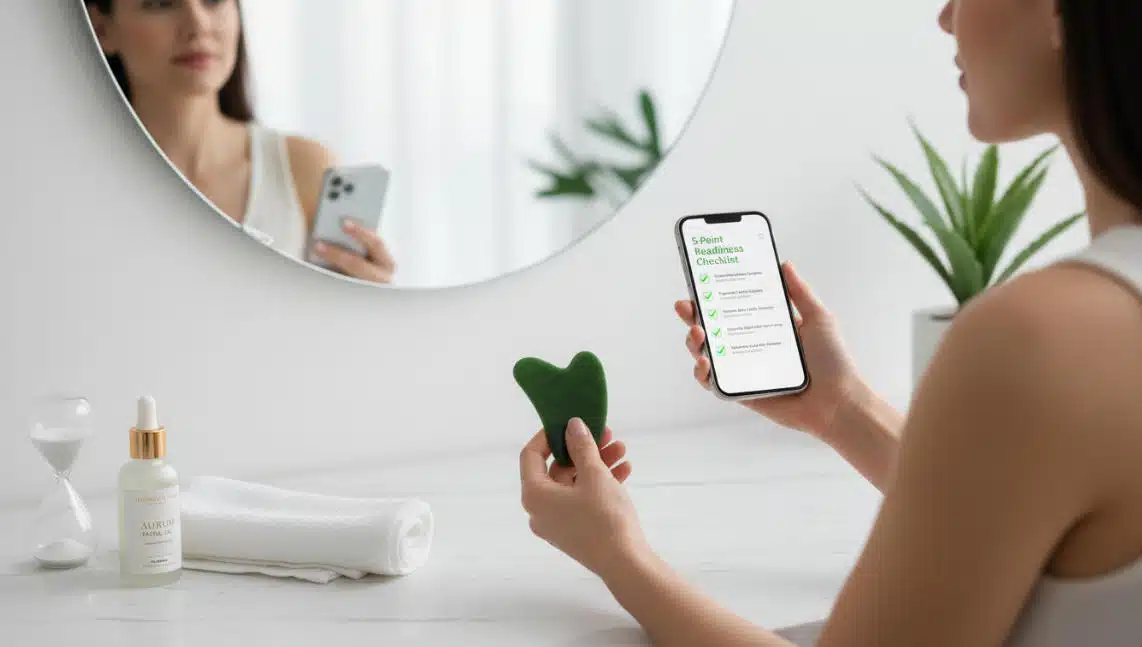
Can I Gua Sha? Your 5-Point Final Readiness Checklist
The answer to “can I gua sha?” is yes — with high confidence — if you can affirm all five of the following points. First: you have no active contraindications from the eight-group list in the gua sha risks section — no clotting disorders, no anticoagulant medication, no fever or acute illness, no open skin wounds or active infections, no severe acne covering the treatment zone, no pregnancy-related restrictions for the area you plan to treat, no severe cardiovascular condition, and no current state of extreme fatigue or depletion. Second: you have or are prepared to acquire a tool that meets the four material quality criteria — smooth surface finish with no detectable edge roughness, crack-free structural integrity, verified material authenticity, and a form that allows thorough cleaning before and after each session. Third: you have committed to the pre-session preparation protocol — cleansed skin and an adequate lubricating medium for every facial session, clean skin and a clean tool for every body session. Fourth: you have calibrated your pressure expectations correctly — light, gliding contact for face gua sha; purposeful but comfortable medium pressure for body gua sha; and the discipline to stop immediately when pain, dizziness, or unexpected skin reaction appears. Fifth: you have read and internalized the post-session response protocols so that if something goes wrong, your first response is immediate, appropriate, and does not involve pushing through to complete the session.
If you can affirm all five points, you are not just eligible to practice gua sha — you are better prepared than the majority of people who pick up a gua sha tool for the first time. A 2021 consumer wellness survey cited by Complementary Therapies in Clinical Practice found that fewer than 30% of first-time home gua sha users had reviewed any safety or contraindication information before their first session. The fact that you have completed this guide means you have already done something that significantly reduces your risk profile and increases your likelihood of experiencing the genuine, documented gua sha benefits that make this practice worth integrating into your wellness routine. This means your preparation has already done the most important work — what follows is simply consistent, disciplined practice.
Can I Gua Sha Long-Term? Building a Sustainable Practice
The question “can I gua sha?” does not only apply to your first session — it applies to every session, because your eligibility is not a permanent status but a current-state assessment that should be re-evaluated each time you practice. The pre-session self-check described early in this guide is not a one-time exercise; it is a thirty-second habit that you build into the beginning of every session, confirming that the conditions that made you eligible yesterday still apply today. Skin conditions change. Health states change. Medication regimens change. A practice that is safe and beneficial today can become contraindicated temporarily by a fever, a new medication, or a skin barrier disruption — and then become safe again once those conditions resolve. Treating the self-check as a living assessment rather than a one-time clearance is what makes a long-term gua sha practice genuinely sustainable rather than an accident waiting to happen.
For long-term practitioners, the gua sha benefits are cumulative in ways that single-session outcomes do not capture. Research published in the Journal of Pain Research tracking participants across an eight-week body gua sha protocol found that chronic neck and shoulder pain scores decreased progressively across the study period, with the most significant improvements appearing between weeks four and eight — not in the first two weeks that most beginners use to evaluate whether the practice is working for them. This means that the commitment to a consistent multi-week practice, rather than a trial-and-abandon cycle based on early-session expectations, is what separates practitioners who access the full benefit spectrum from those who experience only the surface-level effects of occasional sessions. For face gua sha, similar cumulative patterns apply: the lymphatic drainage efficiency that produces morning puffiness reduction improves with consistent practice as the lymphatic pathways are regularly stimulated, and the masseter relaxation effect that produces the jawline softening many practitioners seek deepens progressively with weekly sessions over one to two months.
The Tool You Choose Determines the Practice You Can Sustain
There is one final practical point that sits at the intersection of all the guidance in this article: your tool is not a passive instrument — it is an active determinant of whether your practice is safe, effective, and sustainable over the long term. A tool with a rough edge limits the pressure you can safely apply, constraining your technique options. A tool with surface cracks becomes a hygiene liability that worsens with every session. A tool made from unverified or low-quality material introduces chemical and biological risks that no amount of careful technique can mitigate. Conversely, a tool manufactured to precise surface finish standards from verified, crack-free natural stone or medical-grade stainless steel — produced by a source with documented quality controls and over a decade of manufacturing consistency — removes the tool variable from your risk equation entirely. When your tool is safe, you can focus entirely on technique, pressure, and frequency. When your tool is a liability, every session carries a risk floor that technique alone cannot lower. This means that selecting your tool with the same care and information that you have brought to understanding technique and safety is not optional — it is the final essential step in making “can I gua sha?” an answer that stays yes, session after session, for as long as you choose to practice.
FAQs for Can I Gua Sha
1. Can I gua sha every day?
For most healthy adults, face gua sha two to four times per week is the evidence-informed starting point — daily facial sessions are not inherently harmful, but they increase cumulative mechanical stress on the skin barrier before it has established a tolerance baseline. Body gua sha is best practiced two to three times per week for beginners. Start conservatively, observe your skin’s response over the first two weeks, and adjust frequency only after confirming your tissue is recovering well between sessions.
2. Can I gua sha if I have sensitive skin?
Yes, but with meaningful modifications. Sensitive and reactive skin types should reduce session frequency to a maximum of twice per week, use a generous layer of facial oil before every face gua sha session, and apply noticeably lighter pressure than standard guidelines recommend. Anyone with active rosacea, eczema flares, or extensive acne breakouts should avoid gua sha on affected areas entirely until the condition has resolved.
3. How long does it take to see gua sha benefits?
Most users notice immediate short-term effects — reduced morning puffiness, temporary muscle tension relief — from their first few sessions. Cumulative gua sha benefits such as progressive reduction in chronic neck and shoulder discomfort or improved facial contour typically become apparent between weeks three and six of consistent practice, based on clinical trial data tracking participants across structured multi-week protocols.
4. What are the most common gua sha risks I should watch for?
The most frequently reported gua sha risks in home practice are excessive redness or skin sensitivity from over-pressure during face gua sha, petechiae and temporary surface tenderness after body gua sha, and post-session dizziness linked to dehydration or large-area treatment at high pressure. All three are preventable with correct technique, adequate hydration before sessions, and conservative pressure calibration — particularly in your first month of practice.
5. Can I gua sha with a cracked or chipped tool?
No. A cracked or chipped gua sha tool is disqualified from safe skin contact use regardless of how minor the damage appears. Crack edges create potential cutting surfaces against skin under working pressure, and crack interiors harbor bacteria that cannot be removed by surface cleaning. Inspect your tool under strong directional light before every session, and retire any tool that shows new structural damage immediately — your skin’s integrity is not a trade-off worth making for the cost of a replacement tool.