Gua Sha Custom OEM: From Start to Finish
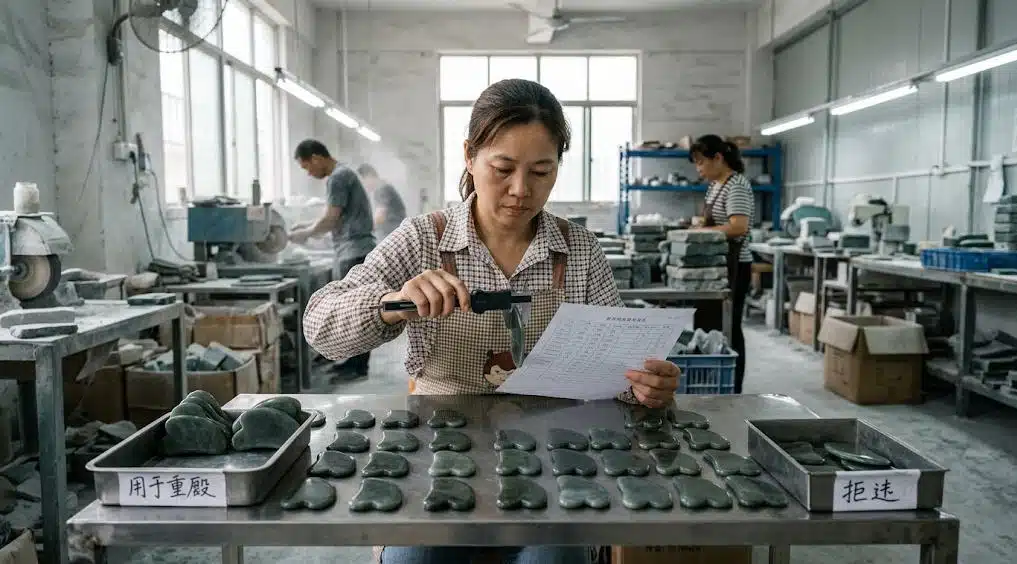
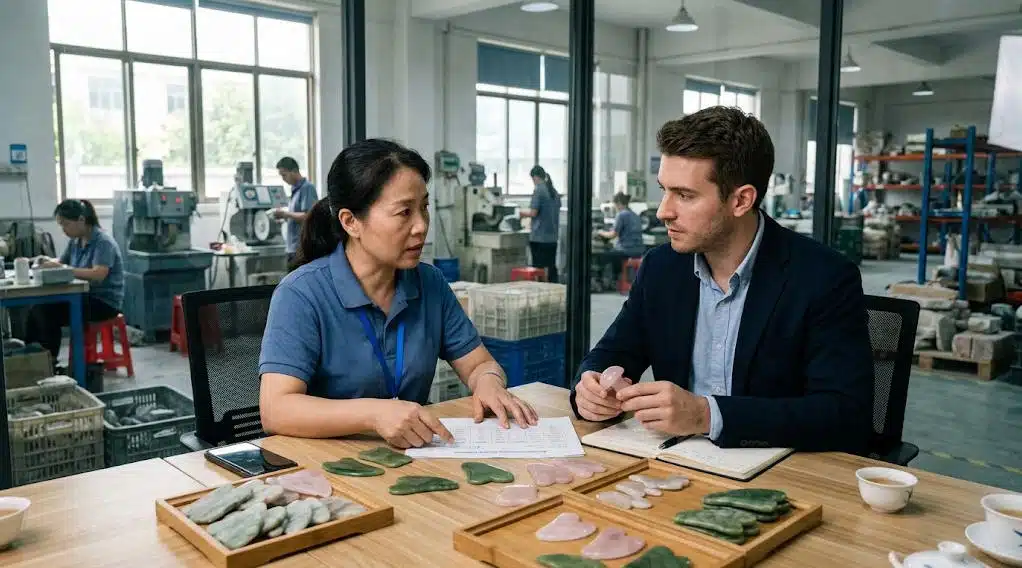
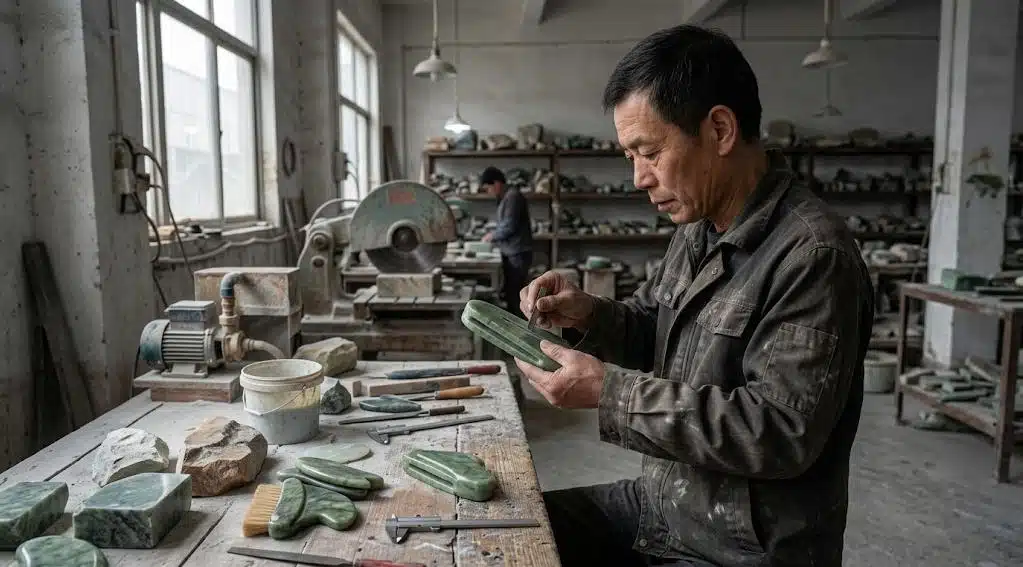
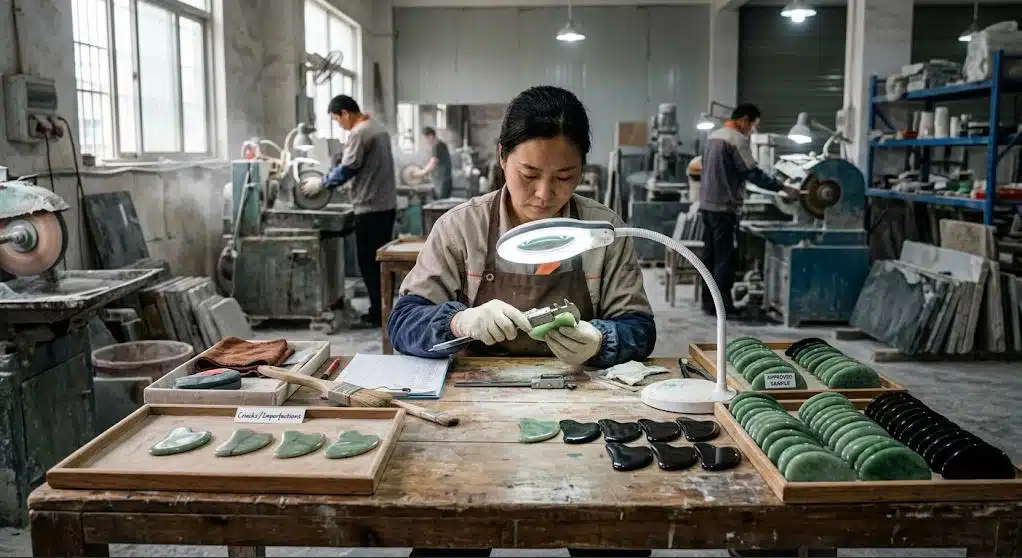
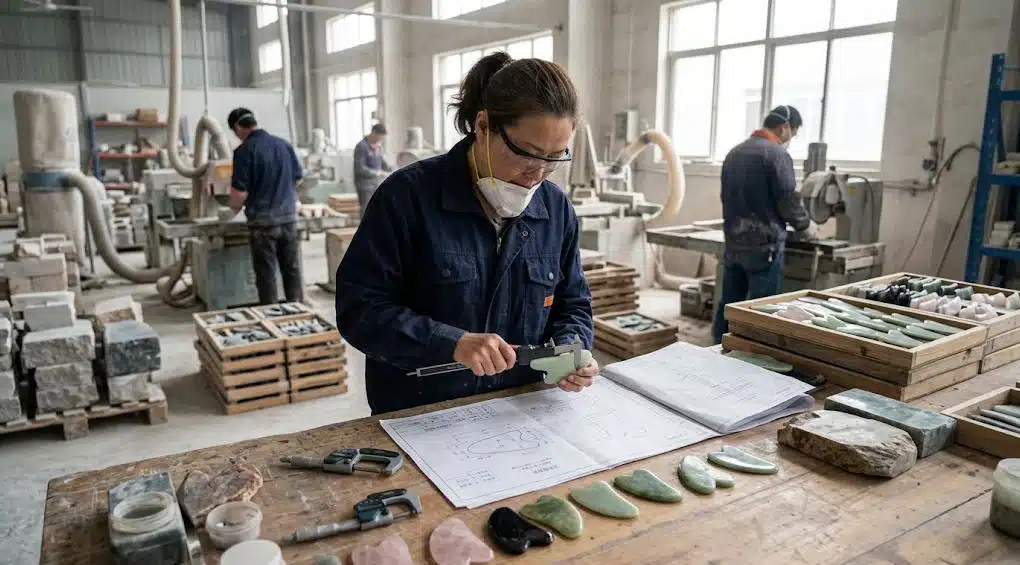
A gua sha custom project is decided long before the first stone is cut. According to the International Gem Society (IGS), nephrite rates 6–6.5 on the Mohs scale and jadeite 6.5–7, so a thin edge or a sharp inside corner can crack during grinding. After 12+ years as a gua sha manufacturer, our team has watched the same avoidable design mistakes repeat across projects. This means you can protect most of your sampling budget just by knowing where the risks sit. This article walks you through the risks that show up most often in gua sha oem work, what each one costs you, and how to remove it before you pay for a sample. Think of it as the conversation we wish every buyer had with a gua sha factory before sending a drawing. Why a Gua Sha Custom Order Breaks at the Design Stage First Most buyers expect trouble in production, but a gua sha custom order usually runs into it at the drawing stage. A shape that looks smooth on screen can turn out impossible to cut, polish, or hold at the thickness you specified. A design rejected after sampling costs you raw material, machine time, and calendar time, while a design question raised before sampling costs you one conversation. So why do so many projects still skip that conversation? How Jade and Crystal Fail in a Gua Sha Custom Shape The Gemological Institute of America (GIA) describes jade as a generic term covering nephrite, jadeite, and, under certain conditions, green omphacite, as listed in GIA’s jade research library. Both jade minerals are polycrystalline aggregates of interlocking grains or fibers, which gives them their toughness, yet the IGS is clear that the stone isn’t indestructible. Hardness and toughness are not the same thing: a stone rated 6.5–7 resists scratches well but can still chip along a thin, unsupported edge. This means you can keep a dramatic edge profile only if you leave enough thickness behind it to survive grinding. Crystal and other natural stones add a second variable, which is internal structure. Fractures and inclusions that are invisible on the surface of a rough block can open up once you carve a groove or drill a hole. A deep groove or a sharp inside corner concentrates stress at the exact point where the wheel pushes hardest. Would you trust that corner if it were cut from a slab with a hidden flaw? Adding a radius to those corners in your gua sha custom drawing usually reduces breakage, which means you can get more finished pieces from every block you pay for. What a Gua Sha Factory Checks Before Any Cutting Starts For natural stone, the review starts with weak points. Thin sections, deep grooves, and sharp inside corners raise the chance of breakage during cutting and grinding, so each one gets checked against the actual thickness and structure of the raw material. The review also asks whether your target thickness survives polishing, because polishing removes material, and whether your color or pattern preference forces extra block selection and lowers material utilization. This means you can learn, before paying for a sample, which features raise your unit cost and which ones are free. Stainless steel pieces get a different review in a gua sha oem project. The questions are which steel grade and sheet thickness suit the shape, and whether CNC machining, stamping, forming, or a combination fits the structure. A complex outline adds machining time, toolpath work, and fixture needs, and it raises the risk of deformation, surface scratches, and out-of-tolerance dimensions. This means you can choose a simpler outline wherever the extra machining time buys you nothing in use. What to Do When a Gua Sha Manufacturer Flags a Risk When a risk turns up, the right response is a decision, not a surprise invoice. Here is how you can handle it: A responsible supplier will not change your design without your consent. The job is to help you decide with full information before sampling or production money is spent. If your supplier says “no problem” to every drawing, treat that as a warning, not a compliment. This means you can walk into sampling knowing your drawing has already been tested against real cutting and polishing limits. Why Your Gua Sha Custom Order Won’t Match the Sample Piece for Piece Natural stone does not repeat itself. Two pieces cut from the same block can differ in color depth, translucency, and veining, and two blocks from the same supplier can differ even more. A gua sha custom buyer who expects identical twins from jade or crystal is setting up a dispute for the day the shipment lands. The better question is not “will every piece match?” but “what range of difference will you accept, and is that range written down?” How Natural Variation Shows Up in a Gua Sha Custom Batch The trade publication Jewellery Business notes that jadeite occurs in lavender, yellow, black, white, red, orange, blue, grey, and even colourless, while nephrite appears in white, grey, black, yellow, and brown. That is a wide palette before you add the shifts in texture and translucency inside a single block. When your gua sha custom order names a color such as “milky white” or “spinach green,” you are naming a range, not a single swatch. This means you can avoid arguments later by approving physical material swatches in advance instead of relying on photos alone. Appearance requirements also drive your cost. A narrow color window forces more blocks to be sorted and rejected, which lowers material utilization and raises the price of every finished gua sha custom piece. A wider window with clear defect rules keeps utilization higher. In any gua sha oem negotiation, the width of your acceptable range is one of the few levers that moves price without touching function. This means you can lower your unit cost by widening the cosmetic range in places where your customers will never notice the difference. What a
Gua Sha Custom OEM: From Start to Finish Read More »
A gua sha custom project is decided long before the first stone is cut. According to the International Gem Society (IGS), nephrite rates 6–6.5 on the Mohs scale and jadeite 6.5–7, so a thin edge or a sharp inside corner can crack during grinding. After 12+ years as a gua sha manufacturer, our team has watched the same avoidable design mistakes repeat across projects. This means you can protect most of your sampling budget just by knowing where the risks sit. This article walks you through the risks that show up most often in gua sha oem work, what each one costs you, and how to remove it before you pay for a sample. Think of it as the conversation we wish every buyer had with a gua sha factory before sending a drawing. Why a Gua Sha Custom Order Breaks at the Design Stage First Most buyers expect trouble in production, but a gua sha custom order usually runs into it at the drawing stage. A shape that looks smooth on screen can turn out impossible to cut, polish, or hold at the thickness you specified. A design rejected after sampling costs you raw material, machine time, and calendar time, while a design question raised before sampling costs you one conversation. So why do so many projects still skip that conversation? How Jade and Crystal Fail in a Gua Sha Custom Shape The Gemological Institute of America (GIA) describes jade as a generic term covering nephrite, jadeite, and, under certain conditions, green omphacite, as listed in GIA’s jade research library. Both jade minerals are polycrystalline aggregates of interlocking grains or fibers, which gives them their toughness, yet the IGS is clear that the stone isn’t indestructible. Hardness and toughness are not the same thing: a stone rated 6.5–7 resists scratches well but can still chip along a thin, unsupported edge. This means you can keep a dramatic edge profile only if you leave enough thickness behind it to survive grinding. Crystal and other natural stones add a second variable, which is internal structure. Fractures and inclusions that are invisible on the surface of a rough block can open up once you carve a groove or drill a hole. A deep groove or a sharp inside corner concentrates stress at the exact point where the wheel pushes hardest. Would you trust that corner if it were cut from a slab with a hidden flaw? Adding a radius to those corners in your gua sha custom drawing usually reduces breakage, which means you can get more finished pieces from every block you pay for. What a Gua Sha Factory Checks Before Any Cutting Starts For natural stone, the review starts with weak points. Thin sections, deep grooves, and sharp inside corners raise the chance of breakage during cutting and grinding, so each one gets checked against the actual thickness and structure of the raw material. The review also asks whether your target thickness survives polishing, because polishing removes material, and whether your color or pattern preference forces extra block selection and lowers material utilization. This means you can learn, before paying for a sample, which features raise your unit cost and which ones are free. Stainless steel pieces get a different review in a gua sha oem project. The questions are which steel grade and sheet thickness suit the shape, and whether CNC machining, stamping, forming, or a combination fits the structure. A complex outline adds machining time, toolpath work, and fixture needs, and it raises the risk of deformation, surface scratches, and out-of-tolerance dimensions. This means you can choose a simpler outline wherever the extra machining time buys you nothing in use. What to Do When a Gua Sha Manufacturer Flags a Risk When a risk turns up, the right response is a decision, not a surprise invoice. Here is how you can handle it: A responsible supplier will not change your design without your consent. The job is to help you decide with full information before sampling or production money is spent. If your supplier says “no problem” to every drawing, treat that as a warning, not a compliment. This means you can walk into sampling knowing your drawing has already been tested against real cutting and polishing limits. Why Your Gua Sha Custom Order Won’t Match the Sample Piece for Piece Natural stone does not repeat itself. Two pieces cut from the same block can differ in color depth, translucency, and veining, and two blocks from the same supplier can differ even more. A gua sha custom buyer who expects identical twins from jade or crystal is setting up a dispute for the day the shipment lands. The better question is not “will every piece match?” but “what range of difference will you accept, and is that range written down?” How Natural Variation Shows Up in a Gua Sha Custom Batch The trade publication Jewellery Business notes that jadeite occurs in lavender, yellow, black, white, red, orange, blue, grey, and even colourless, while nephrite appears in white, grey, black, yellow, and brown. That is a wide palette before you add the shifts in texture and translucency inside a single block. When your gua sha custom order names a color such as “milky white” or “spinach green,” you are naming a range, not a single swatch. This means you can avoid arguments later by approving physical material swatches in advance instead of relying on photos alone. Appearance requirements also drive your cost. A narrow color window forces more blocks to be sorted and rejected, which lowers material utilization and raises the price of every finished gua sha custom piece. A wider window with clear defect rules keeps utilization higher. In any gua sha oem negotiation, the width of your acceptable range is one of the few levers that moves price without touching function. This means you can lower your unit cost by widening the cosmetic range in places where your customers will never notice the difference. What a