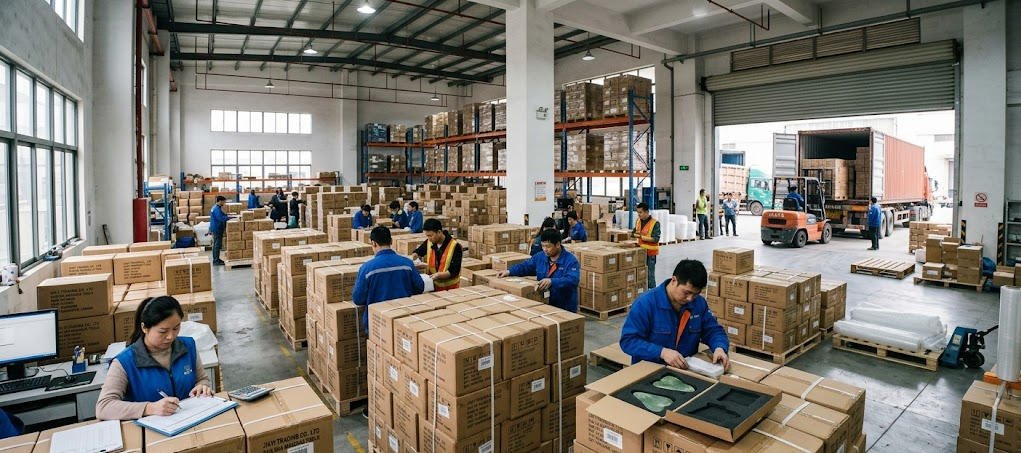
Your gua sha wholesale shipping fee is not a fixed number sitting quietly in a spreadsheet. It moves with fuel prices, cargo space, packaging choices, and the calendar itself, whether you track it or not. Here’s a number worth sitting with: on a standard 5,000-unit order, a shipping cost increase of just $0.05 per piece adds $250 to your landed cost before a single crate leaves the dock. Run that same order four times a year through a routine reorder cycle with your guasha supplier, and the drift alone tops $1,000 — money that never appeared in your original quote. For anyone buying gua sha wholesale, freight is often the second-largest line item after the product itself, and it’s the one buyers understand the least. This guide breaks down what actually drives gua sha shipping fee volatility, and what you can do, working directly with a gua sha manufacturer, to keep that number working for you instead of against you.
- Why Gua Sha Wholesale Shipping Fees Move Every Quarter
- How Natural Stone Density Sets Your Gua Sha Wholesale Shipping Fee
- Sea, Air, or Express: Matching the Method to Your Gua Sha Wholesale Order
- Six Ways to Control Your Gua Sha Wholesale Shipping Fee Before It Controls You
- What to Confirm With Your Gua Sha Manufacturer Before You Approve a Freight Quote
- Inside a Mature Gua Sha Wholesale Factory's Logistics System
Why Gua Sha Wholesale Shipping Fees Move Every Quarter
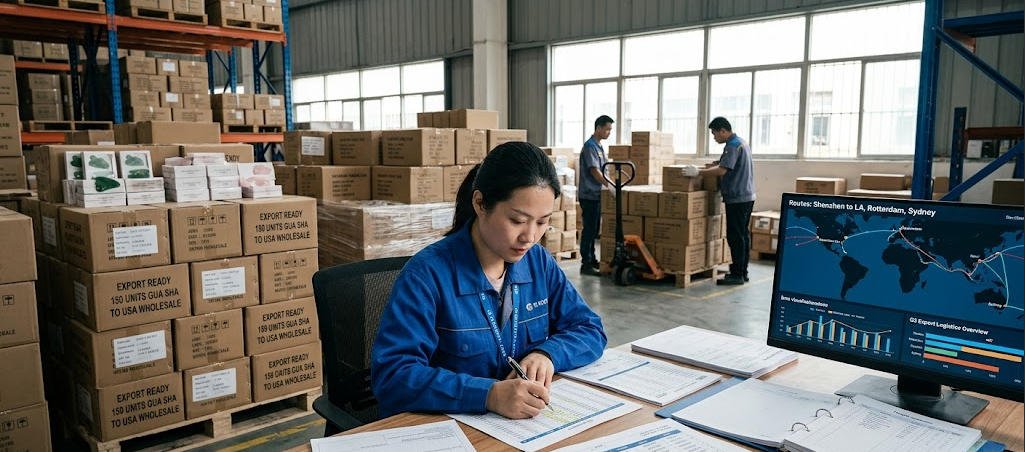
Before you can control a cost, you need to see what’s actually moving it. For gua sha wholesale buyers, three forces do most of the damage: fuel, the shipping calendar, and the route itself. None of them are unique to gua sha products, but stacked together with the material factors covered later, they explain almost every gap between your quoted rate and your final invoice. Ask yourself this before your next order: could you actually explain, line by line, why last quarter’s invoice was different from the quote you approved? Most buyers can’t, not because the information is hidden, but because no one on the supplier side ever walked them through it — which is exactly the gap this guide is meant to close.
The Fuel Surcharge Hiding in Every Quote
Carriers do not rebuild their base freight rate every time oil prices shift. Instead, they layer a Bunker Adjustment Factor (BAF) on top of it — a fuel-linked surcharge that moves independently of the number you negotiated. On some lanes, BAF alone can run 15 to 25 percent of the base rate, and carriers typically revise it monthly or quarterly, sometimes faster when oil prices swing hard. It’s rarely negotiable on a per-shipment basis, which is exactly why so few buyers ever ask about it.
This means the rate you locked in during sourcing is not necessarily the rate on your final invoice three months later. If your gua sha manufacturer quotes freight as one bundled number, ask for the breakdown between base rate and BAF. That single question tells you which part of your gua sha shipping fee is negotiable and which part simply isn’t, and it’s a fair question to put to any guasha supplier before you sign off on a purchase order.
Peak Season and the Space You Can’t Buy
International shipping runs on a calendar, and that calendar has predictable pressure points: pre-Christmas restocking across Europe and North America, the rush before Chinese New Year factory closures, and the run-up to major retail promotions. During these windows, carriers add peak season surcharges on top of the base rate, and available container space tightens fast — sometimes within days, not weeks.
If your gua sha wholesale reorder lands inside one of these windows without a booking already confirmed, you’re competing for space against thousands of other shippers, and price stops being the deciding factor once a vessel is full. Placing your gua sha wholesale shipping order two to three weeks ahead of these windows, rather than during them, is often the single cheapest decision you’ll make all year. What happens if you wait until the window opens? You’ll likely still get your cargo moved, but you’ll pay a premium for space that would have been available at standard rates a few weeks earlier.
When Routes Change, Your Cost Changes With Them
Port congestion, canal disruptions, and geopolitical risk reroute cargo more often than most buyers realize. When a carrier diverts a vessel around a contested route, that adds sailing days, burns more fuel, and often triggers an emergency surcharge on top of the BAF you’re already paying. None of this shows up in your original booking confirmation — it shows up on the final bill, usually with little warning.
This isn’t a hypothetical. A single week of Freightos Baltic Index data from May 2026 showed Asia–North America East Coast prices rise 10 percent while China–North America pricing fell 14 percent in the very same window, on lanes that often carry the same buyers’ cargo. So ask yourself: does your gua sha manufacturer tell you which routing your cargo is booked on, and why it changed? If they can’t answer that, you have no real way to anticipate whether your next gua sha shipping fee invoice will match your quote.
How Natural Stone Density Sets Your Gua Sha Wholesale Shipping Fee
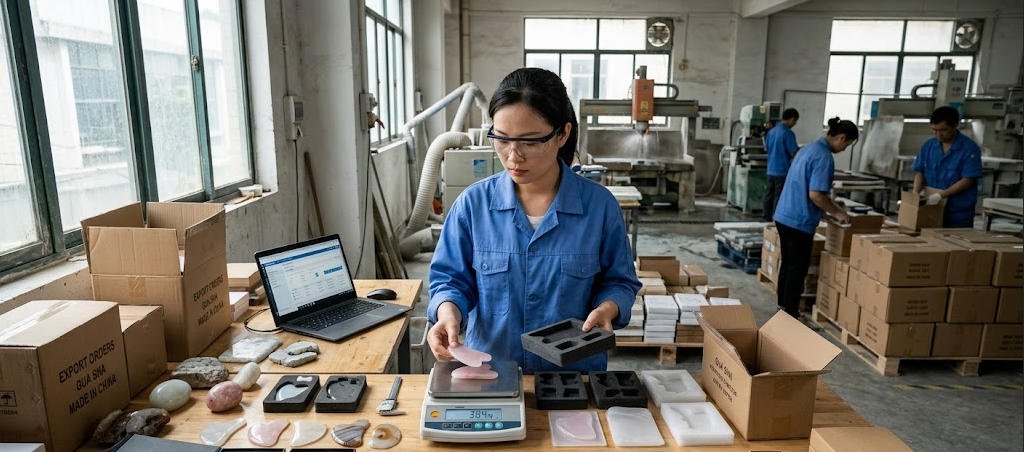
Fuel and the calendar affect every shipper equally. What makes gua sha wholesale shipping different from shipping plastic massage tools is the product itself. Natural stone is heavy, fragile, and space-hungry, and each of those three traits adds cost through a different mechanism — not through anyone’s pricing decision.
Why Jade and Quartz Weigh More Than You Think
Most gua sha wholesale catalogs are built on white jade (nephrite), white crystal (quartz), rose quartz, and agate, and all four are considerably denser than the resin or acrylic tools they compete against on price. According to the International Gem Society’s density reference, nephrite jade typically runs a specific gravity of roughly 2.9 to 3.1, while jadeite runs closer to 3.2 to 3.4. Quartz-family materials, including rose quartz, sit lower, generally around 2.6 to 2.7 according to standard gemological references, but they still weigh meaningfully more than acrylic of the same size. Testing institutes such as the Swiss Gemmological Institute SSEF measure these density differences as a routine part of gemstone identification, not as a marketing detail — density is one of the primary properties gemologists use to tell one stone from another, and the same physics applies whether the piece is destined for a jewelry case or a gua sha kit.
This means two gua sha boards that look identical on a product photo can differ in shipping weight by 20 percent or more, depending on which stone is inside. On air freight, that difference lands directly on your invoice. Carriers price air cargo using whichever is greater: actual weight or volumetric weight, calculated with the IATA-standard formula of length × width × height in centimeters, divided by 6,000. For dense, compact stone products, actual weight usually wins that comparison — so the material inside the box, not the box size, decides your gua sha shipping fee more often than buyers assume.
Packaging Volume Versus Protection: The CBM Trade-off
International freight is, at its core, a purchase of weight and space. A single-piece blister pack or a gift box raises perceived product value, but it also raises cubic meterage (CBM), and ocean freight is quoted per CBM on smaller shipments. Every extra centimeter of box height is air you’re paying to ship, and it adds up fast across a full container.
So what does that mean in practice? Before you approve packaging artwork with your guasha manufacturer, ask for the CBM per master carton and the units per carton side by side. A packaging redesign that trims 1 to 2 centimeters off carton height across a 5,000-unit order can shave a full CBM or more off an ocean shipment, often without the end customer ever noticing the difference on the shelf. That’s not a rounding error — on some lanes, a single CBM can represent a meaningful slice of your total freight bill, which is why this conversation belongs at the design stage with your guasha supplier, not after the molds are already cut.
What Fragile-Product Packaging Adds to Your Invoice
Natural stone chips, cracks along stress points, and travels through multiple handling stages before it reaches a container. That risk is real, not theoretical, which is why most gua sha wholesale shipments need EVA trays, foam dividers, individual sleeves, and reinforced outer cartons. Each layer adds protection, and each layer also adds weight and volume to the gua sha wholesale shipping total.
This is a trade-off, not a flaw. A carton that arrives with zero breakage saves you far more in replacement cost and customer complaints than the extra grams of foam ever cost in freight. The goal isn’t to strip out protective packaging — it’s to know exactly how much of your shipping fee each layer represents, so you and your guasha supplier can decide together where the trade-off is actually worth making, and where it isn’t.
Sea, Air, or Express: Matching the Method to Your Gua Sha Wholesale Order
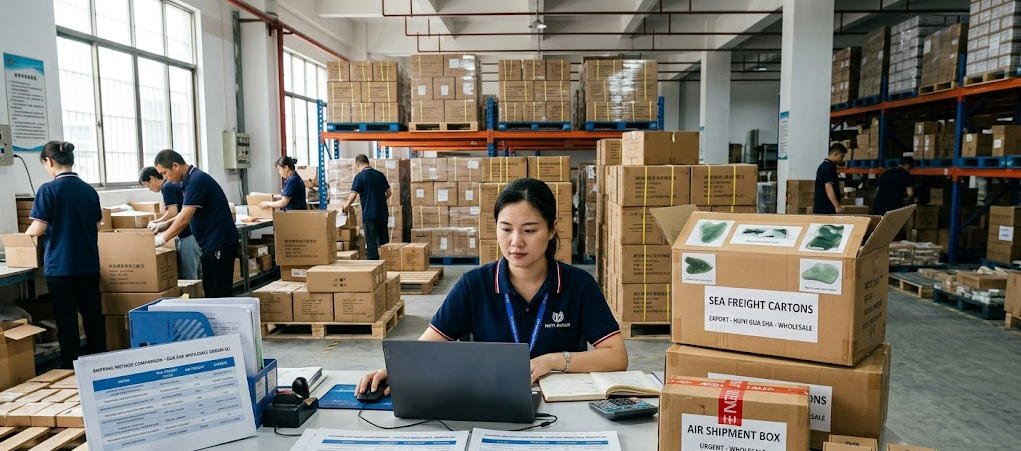
Different order profiles call for different transport modes, and mismatching them is one of the most common ways buyers overpay without ever realizing it.
Sea Freight for Volume Gua Sha Wholesale Orders
Sea freight remains the lowest unit cost for large, planned gua sha wholesale orders. The trade-off is time: transit typically runs several weeks door to door, plus the buffer needed around the peak season congestion described earlier. If your reorder cadence is predictable, sea freight is almost always the right default, and it’s the method most experienced buyers build their annual purchasing calendar around.
Air Freight for Speed and Mid-Size Runs
Air freight costs more per kilogram, but it compresses transit to days rather than weeks. It fits emergency restocks, new product launches, and mid-size batches where the cost of running out of inventory outweighs the freight premium. Because air pricing follows the chargeable-weight rule described earlier, dense stone products often perform better on a per-unit air freight basis than bulky, lightweight goods do — a detail worth mentioning to your gua sha manufacturer the next time a launch date is tight.
International Express for Samples and Small Orders
Courier services carry the highest per-unit shipping cost of the three, but they offer speed and door-to-door simplicity that neither ocean nor air freight can match on a small package. Reserve express shipping for sample approvals, small test orders, and time-critical replacement parts rather than routine reorders. Using it for volume orders is one of the fastest ways to quietly erase your margin without ever seeing it happen in one obvious line item.
What a Realistic Gua Sha Wholesale Shipping Cost Range Looks Like
Buyers researching this topic usually want a number, not just a framework, so here’s a rough way to think about it. On a mid-size natural stone gua sha order, ocean freight typically lands as the lowest per-unit cost, air freight commonly runs several times higher per kilogram, and international courier rates run higher still. The exact figures shift with the fuel and peak-season factors covered earlier, which is exactly why a single gua sha wholesale quote from six months ago should never be treated as still valid today. Treat any number you’re given as time-stamped, not permanent, and re-confirm it before it drives a purchasing decision.
Six Ways to Control Your Gua Sha Wholesale Shipping Fee Before It Controls You
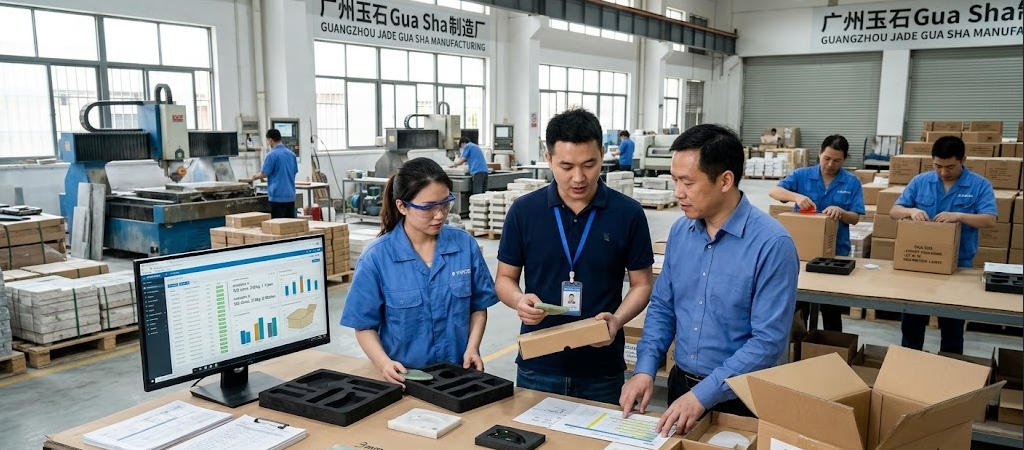
Understanding why costs move is only useful if it changes what you do next. These six practices are the ones that consistently keep gua sha wholesale freight costs predictable, regardless of what fuel prices or peak season are doing in any given month.
Match Your Gua Sha Wholesale Order Size to a Tiered Shipping Plan
Rather than defaulting to one shipping method for every order, set thresholds in advance: express for sample and test orders, air for mid-size or urgent restocks, sea for planned bulk volume. This means you stop paying express-level rates for orders that could have shipped by sea, and you stop waiting weeks for orders that genuinely needed to move fast.
Redesign Packaging Before You Redesign Your Budget
Packaging optimization — carton dimensions, units per carton, and single-piece pack sizing — reduces CBM and warehousing costs on every future shipment, not just the next one. This means a one-time design review with your gua sha manufacturer can produce savings that compound across every reorder for the life of the product, which is a far better return than renegotiating freight rates shipment by shipment.
Forecast Orders Instead of Reacting to Them
Quarterly purchasing plans, built around consolidated shipments, cut the number of small, frequent bookings that each carry their own minimum charges and surcharges. This means fewer bookings, more predictable freight budgeting, and stronger leverage when you do negotiate rates, since consolidated volume is worth more to a carrier — and to your guasha supplier — than scattered small shipments.
Build More Than One Logistics Channel
Relying on a single freight method for every scenario leaves you exposed when that one option gets expensive or slow. Route standard reorders through sea freight, urgent orders through air, sample confirmations through express, and, for buyers with sustained volume in one market, consider an overseas warehouse for the fastest local turnaround. This means a spike in one channel’s pricing doesn’t automatically become a crisis for your whole supply chain.
Lock In Rates With Longer-Term Agreements
If your order volume is steady, ask your guasha manufacturer or freight forwarder about monthly or quarterly rate agreements instead of accepting a fresh quote on every shipment. This means your gua sha shipping fee stops resetting every time the spot market moves, and your landed-cost forecasting becomes something you can actually plan a season around instead of guessing at.
Engineer Weight Out of the Product, Not Out of the Value
For natural stone products specifically, thickness optimization, structural refinement, and selective use of hybrid materials can reduce weight without reducing the perceived value of the finished piece. This means you keep the tactile, weighted feel that natural stone customers expect, while lowering the actual shipping weight your guasha manufacturer invoices you on every unit.
What to Confirm With Your Gua Sha Manufacturer Before You Approve a Freight Quote

A quote is not a contract until you know exactly what it covers. Three questions separate buyers who get surprised by their invoice from buyers who don’t, and none of them take more than a few minutes to ask.
How Long Is Your Gua Sha Wholesale Rate Valid?
Freight quotes expire, often faster than buyers expect given how quickly BAF and peak season surcharges move. Get the validity window in writing before you plan production timing or cash flow around a specific number. If your order might slip past that window, ask for the re-quote policy up front rather than after the fact — a surprised finance team is a worse conversation than a slightly awkward question at the quoting stage.
Which Trade Terms Are You Actually Buying?
EXW, FOB, CIF, and DDP shift responsibility for freight, insurance, and customs at different points in the journey, and confusing them is one of the most common — and most expensive — mistakes in wholesale procurement. Under EXW, you handle everything from the factory door onward. Under FOB, the gua sha manufacturer covers costs to the origin port. Under CIF, they cover freight and insurance to the destination port. Under DDP, they handle the full journey, including destination customs clearance. The same unit price can represent very different total landed costs depending on which of these four terms actually applies, so never assume — confirm it in writing on every purchase order.
What’s Included, and What Isn’t?
Fuel surcharges, port handling charges, documentation fees, and customs clearance costs are sometimes bundled into a quote and sometimes billed separately after the fact. Ask directly whether these are included, line by line, rather than assuming an “all-in” quote actually means all-in. A gua sha wholesale supplier that answers this clearly, without hedging or vague language, is one you can build a real budget around — and it’s a fair way to judge any guasha manufacturer you’re considering for the first time.
A Two-Minute Check Before You Sign the Purchase Order
None of the three questions above require a lawyer or a logistics degree, which is exactly why skipping them is so common and so costly. Before you approve a purchase order with a guasha manufacturer, read the freight line item out loud to yourself and ask whether you could repeat it back to your finance team without hesitating. If you can’t say clearly what your gua sha shipping fee covers, when it expires, and which trade term applies, that’s the signal to go back and ask, not to sign and hope.
This habit costs you nothing and protects a meaningful part of your landed cost on every order. A guasha supplier who welcomes this kind of question is telling you something important about how they’ll handle the next surprise — a port delay, a surcharge update, a routing change — long before it happens. A supplier who deflects it is telling you something too.
Inside a Mature Gua Sha Wholesale Factory’s Logistics System
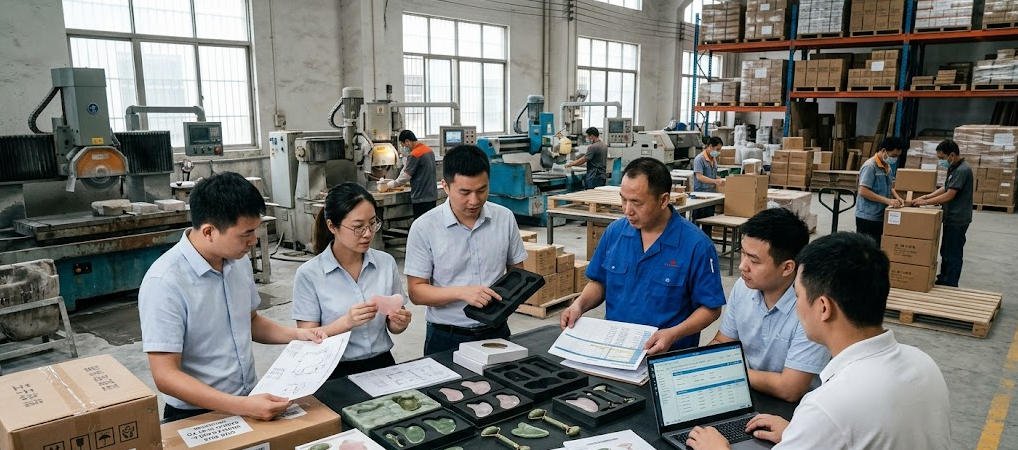
Everything above works better when it’s built into the factory relationship from the start, rather than negotiated shipment by shipment. A logistics system that holds up under pressure typically follows one sequence: product design optimized for weight, packaging structure optimized for volume, orders consolidated on a forecast, multiple shipping channels available depending on urgency, and a supply chain stable enough that none of this has to be renegotiated from scratch every quarter.
Deyi Gems has built and refined this sequence over 12 years of manufacturing gua sha boards, facial rollers, and jade tools at the source, which is a different vantage point than a trading company that outsources both production and shipping decisions to someone else. When your guasha manufacturer controls product design and packaging directly, you get one point of accountability for both product quality and shipping cost, instead of a chain of intermediaries, each adding their own margin and their own uncertainty to your gua sha wholesale shipping fee. That’s the difference between a supplier who can explain your invoice and one who can only forward it.
You feel this most clearly during the moments that actually test a supply chain: a sudden BAF increase, a port closure, a peak-season squeeze that hits right as your reorder is due. In those moments, a factory that already has packaging, forecasting, and multi-channel logistics built into how it operates can absorb the shock and keep your timeline intact. A supplier without that structure simply passes the shock straight through to your invoice, and you find out about it after the fact instead of before.
If you’re planning your next reorder and want a tiered freight quote broken down by shipping method, packaging option, and order volume, that breakdown is the starting point for every conversation worth having with a gua sha manufacturer — and it’s worth asking for before you commit to a number.
None of this removes volatility from international shipping altogether — fuel prices, port congestion, and peak season will keep doing what they do, on every lane, for every shipper. What changes is how much of that volatility lands on you unexplained, versus how much you can see coming. A guasha manufacturer who treats packaging, forecasting, and routing as part of the product itself, rather than as a separate problem for someone else to solve later, is the difference between a gua sha shipping fee that surprises you every quarter and one you can actually plan around. That distinction is worth more over a year of reorders than any single discount on a single shipment, and it’s the standard worth holding your next guasha supplier to.