Inside a Gua Sha Factory: Why Natural Stone Takes So Much Longer to Finish Than Steel
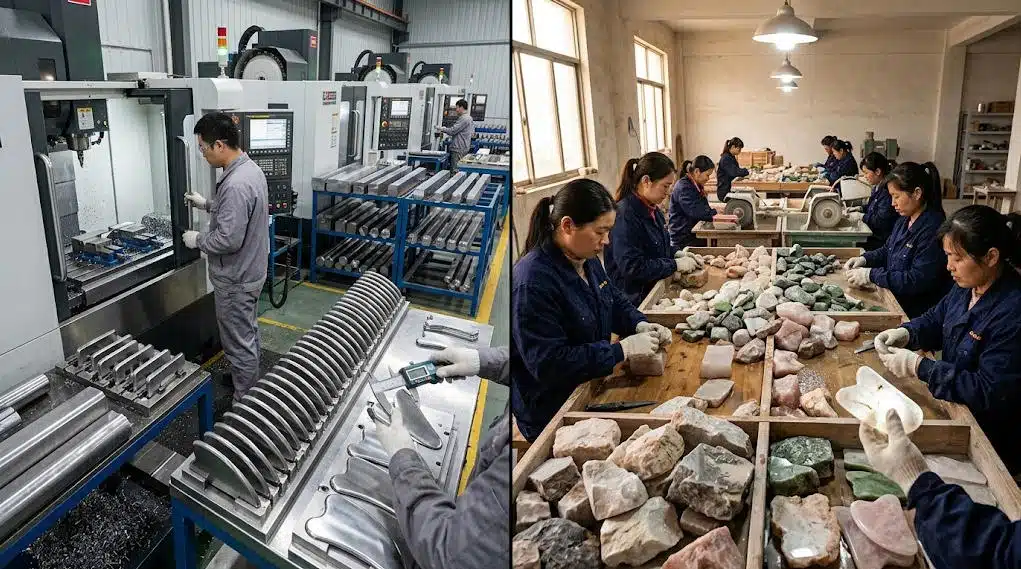
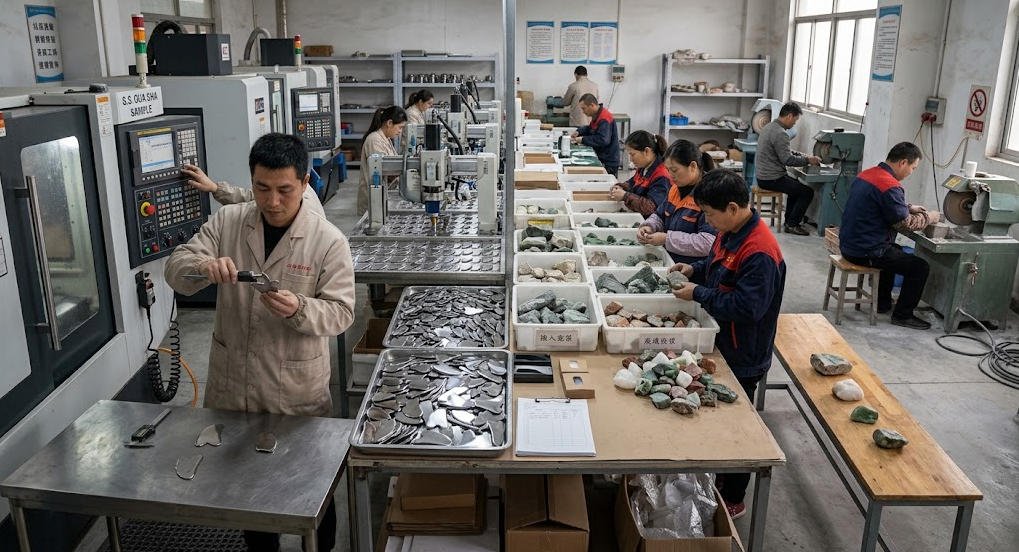
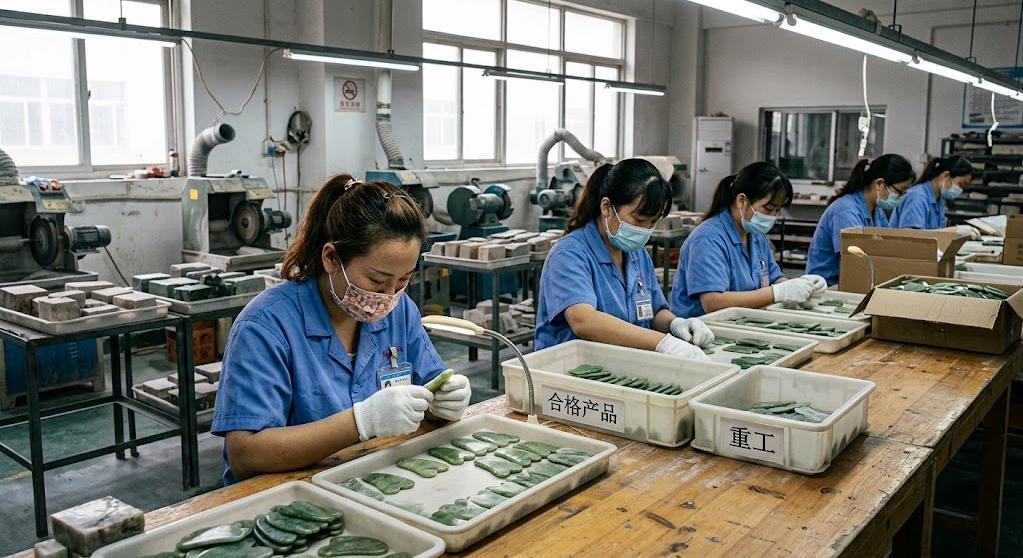
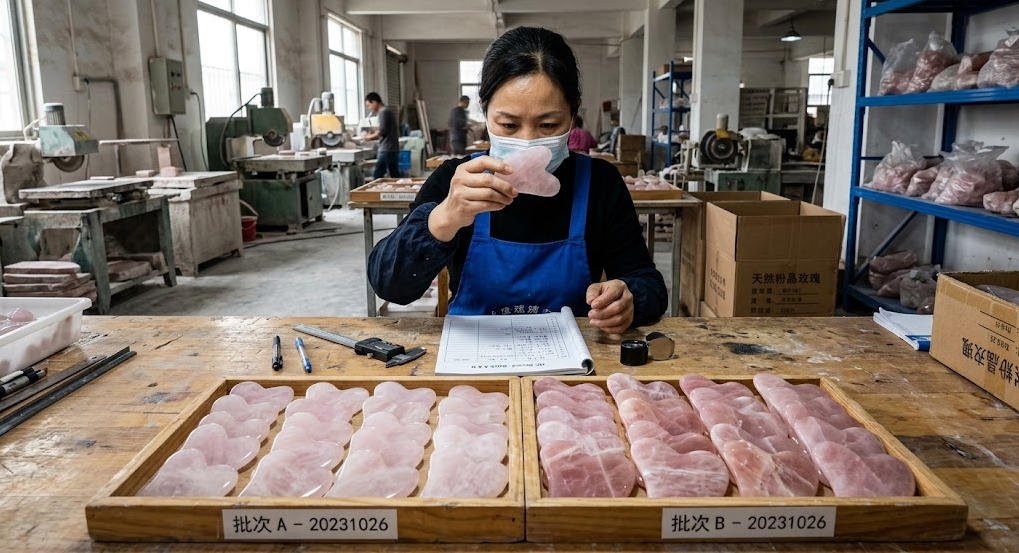
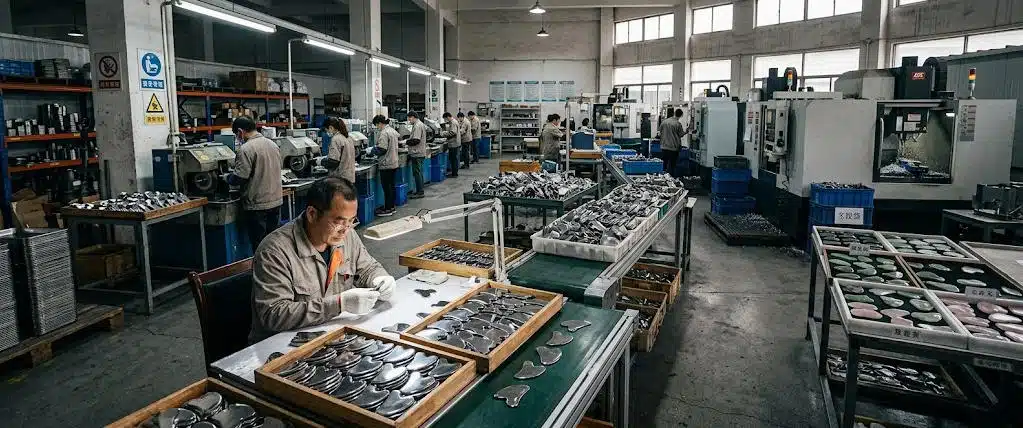
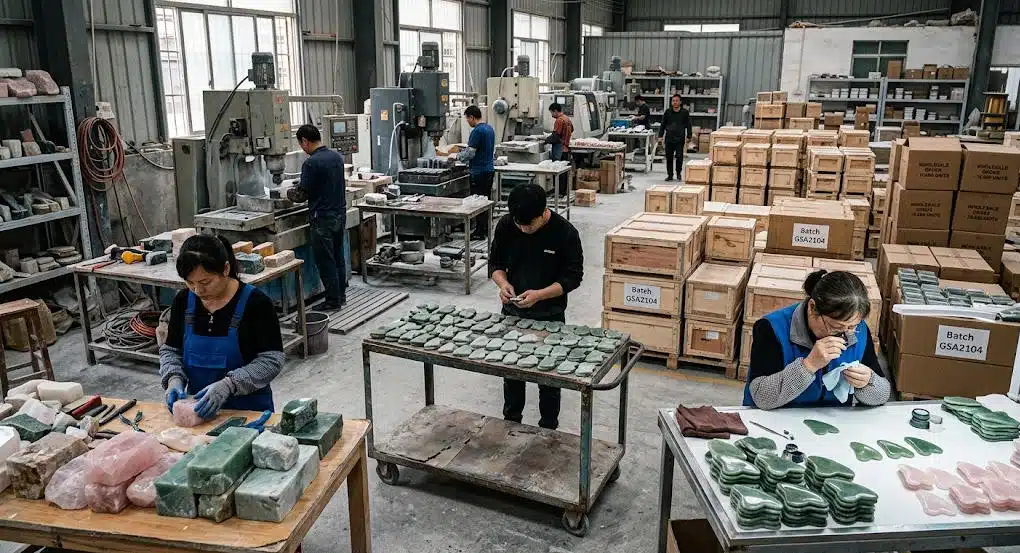
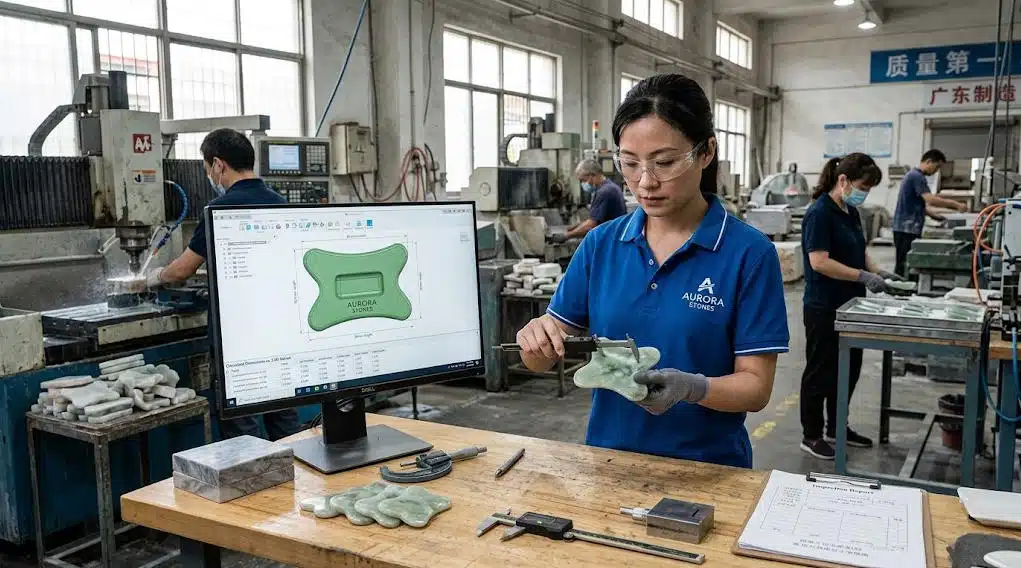
If you have ever asked a gua sha factory why a jade board costs more and ships slower than a stainless steel one, the answer comes down to one number: on most natural stone orders, the final 5% of the work — fine grinding and polishing — swallows close to half of the total production time. That single fact should change how you read a quote, plan a launch date, or negotiate a minimum order quantity. This isn’t a debate about which material looks better on a shelf. It’s a breakdown of where the hours actually go on the floor of a gua sha manufacturer, stage by stage, so you can see exactly what you’re paying for and why two quotes for the same design can sit weeks apart. What Actually Slows Down a Gua Sha Factory The Real Bottleneck Isn’t Where You Think It Is Most buyers assume the slowest part of making a natural stone gua sha tool is cutting the rough block open. It isn’t. Once you separate natural crystal and jade from stainless steel, the pattern inside a gua sha factory becomes clear: opening the material and rough-shaping it are comparatively fast, mechanized steps. The real ceiling on output sits later in the line, in fine grinding, final polishing, last-stage shaping, and the ongoing job of managing natural flaws that don’t show up until the piece is almost done. If you had to point at one single station and call it the hardest and slowest in natural stone gua sha production, it would be fine grinding combined with final polishing. This is the stage where a board that looks 90% finished can still lose an hour, a day, or its entire value depending on what the stone reveals as the surface gets thinner. Why This Isn’t One Problem — It’s a Chain Reaction Here’s the part that most cost breakdowns miss. The slow output on natural stone bulk orders is rarely caused by one isolated station. It’s caused by a chain: the material itself is inconsistent, so the machine settings can’t be pushed aggressively, so the fine-processing steps run slower, so the piece needs several rounds of grinding and polishing, so a person has to inspect it by hand, and that inspection creates a real risk of rework or scrap. Break the chain at any point and the whole schedule shifts. This means you can actually predict how long an order will take once you know which step in that chain is weakest for a given design — rather than guessing based on a generic “polishing takes a while” explanation. A wave-shaped board with thin edges will move through that chain differently than a flat rectangular one, and a gua sha manufacturer who can name which link is weak for your specific shape is giving you a more honest lead time than one who quotes a flat number for everything. Buyers who source guasha tools wholesale often assume every SKU in a catalog carries roughly the same cost-per-unit for labor. In practice, the chain above means a curved, thin-walled design and a flat rectangular one can differ in labor hours by a wide margin, even when the raw material weight going in is nearly identical. A factory that prices every shape the same way is either absorbing that difference somewhere else in the order, or hasn’t fully mapped it into the quote yet — and one of those two outcomes usually shows up later as a schedule slip. The Full Production Chain Inside a Natural Stone Gua Sha Factory Ten Steps From Rough Stone to Finished Tool A typical run through a natural crystal or jade gua sha factory looks like this: raw material sorting, opening the block, rough shaping, CNC or other precision machining, final shape correction, multiple rounds of fine grinding, polishing, cleaning, final quality inspection, and packaging. Ten stages, and no two of them behave the same way when the input is a natural mineral instead of a manufactured sheet metal. Each of those ten steps has its own risk profile. Opening the block is largely mechanical and predictable. Rough shaping removes bulk material and is fairly well automated. From CNC shaping onward, though, the work becomes progressively more manual, more inspection-heavy, and more sensitive to what’s actually inside that particular piece of stone — which is where the schedule starts to stretch. Where Time Actually Goes Inside a Gua Sha Factory If you plotted the hours spent at each of those ten stages, the curve wouldn’t be flat. It would climb sharply toward the back half of the line. Fine grinding and polishing alone often account for a larger share of total labor time than the first four stages combined, and that proportion tends to grow as the shape gets more complex — thinner boards, sharper curves, holes, or asymmetric silhouettes all push more hours into the back end. This means you can use shape complexity as a rough proxy for lead time before you even get a quote. A simple oval board moves through gua sha production faster than a U-shaped or multi-curve tool, not because anyone is working less carefully on the oval, but because the back-end stages simply have less to correct. This matters even more once you scale from a sample run to a full purchase order. A gua sha manufacturer filling a five-thousand-piece order isn’t just repeating the fast stages five thousand times — it’s repeating the slow, judgment-heavy stages five thousand times, with each piece carrying its own small chance of drifting out of tolerance. That’s a fundamentally different planning problem than scaling a metal product line, and it’s a large part of why gua sha production schedules get built around the back half of the process rather than the front half. Run the arithmetic and the reason large orders don’t get dramatically cheaper per piece becomes clearer. A one-percent increase in dimensional rejects across a five-thousand-piece run means dozens of pieces are pulled for
Inside a Gua Sha Factory: Why Natural Stone Takes So Much Longer to Finish Than Steel Read More »
If you have ever asked a gua sha factory why a jade board costs more and ships slower than a stainless steel one, the answer comes down to one number: on most natural stone orders, the final 5% of the work — fine grinding and polishing — swallows close to half of the total production time. That single fact should change how you read a quote, plan a launch date, or negotiate a minimum order quantity. This isn’t a debate about which material looks better on a shelf. It’s a breakdown of where the hours actually go on the floor of a gua sha manufacturer, stage by stage, so you can see exactly what you’re paying for and why two quotes for the same design can sit weeks apart. What Actually Slows Down a Gua Sha Factory The Real Bottleneck Isn’t Where You Think It Is Most buyers assume the slowest part of making a natural stone gua sha tool is cutting the rough block open. It isn’t. Once you separate natural crystal and jade from stainless steel, the pattern inside a gua sha factory becomes clear: opening the material and rough-shaping it are comparatively fast, mechanized steps. The real ceiling on output sits later in the line, in fine grinding, final polishing, last-stage shaping, and the ongoing job of managing natural flaws that don’t show up until the piece is almost done. If you had to point at one single station and call it the hardest and slowest in natural stone gua sha production, it would be fine grinding combined with final polishing. This is the stage where a board that looks 90% finished can still lose an hour, a day, or its entire value depending on what the stone reveals as the surface gets thinner. Why This Isn’t One Problem — It’s a Chain Reaction Here’s the part that most cost breakdowns miss. The slow output on natural stone bulk orders is rarely caused by one isolated station. It’s caused by a chain: the material itself is inconsistent, so the machine settings can’t be pushed aggressively, so the fine-processing steps run slower, so the piece needs several rounds of grinding and polishing, so a person has to inspect it by hand, and that inspection creates a real risk of rework or scrap. Break the chain at any point and the whole schedule shifts. This means you can actually predict how long an order will take once you know which step in that chain is weakest for a given design — rather than guessing based on a generic “polishing takes a while” explanation. A wave-shaped board with thin edges will move through that chain differently than a flat rectangular one, and a gua sha manufacturer who can name which link is weak for your specific shape is giving you a more honest lead time than one who quotes a flat number for everything. Buyers who source guasha tools wholesale often assume every SKU in a catalog carries roughly the same cost-per-unit for labor. In practice, the chain above means a curved, thin-walled design and a flat rectangular one can differ in labor hours by a wide margin, even when the raw material weight going in is nearly identical. A factory that prices every shape the same way is either absorbing that difference somewhere else in the order, or hasn’t fully mapped it into the quote yet — and one of those two outcomes usually shows up later as a schedule slip. The Full Production Chain Inside a Natural Stone Gua Sha Factory Ten Steps From Rough Stone to Finished Tool A typical run through a natural crystal or jade gua sha factory looks like this: raw material sorting, opening the block, rough shaping, CNC or other precision machining, final shape correction, multiple rounds of fine grinding, polishing, cleaning, final quality inspection, and packaging. Ten stages, and no two of them behave the same way when the input is a natural mineral instead of a manufactured sheet metal. Each of those ten steps has its own risk profile. Opening the block is largely mechanical and predictable. Rough shaping removes bulk material and is fairly well automated. From CNC shaping onward, though, the work becomes progressively more manual, more inspection-heavy, and more sensitive to what’s actually inside that particular piece of stone — which is where the schedule starts to stretch. Where Time Actually Goes Inside a Gua Sha Factory If you plotted the hours spent at each of those ten stages, the curve wouldn’t be flat. It would climb sharply toward the back half of the line. Fine grinding and polishing alone often account for a larger share of total labor time than the first four stages combined, and that proportion tends to grow as the shape gets more complex — thinner boards, sharper curves, holes, or asymmetric silhouettes all push more hours into the back end. This means you can use shape complexity as a rough proxy for lead time before you even get a quote. A simple oval board moves through gua sha production faster than a U-shaped or multi-curve tool, not because anyone is working less carefully on the oval, but because the back-end stages simply have less to correct. This matters even more once you scale from a sample run to a full purchase order. A gua sha manufacturer filling a five-thousand-piece order isn’t just repeating the fast stages five thousand times — it’s repeating the slow, judgment-heavy stages five thousand times, with each piece carrying its own small chance of drifting out of tolerance. That’s a fundamentally different planning problem than scaling a metal product line, and it’s a large part of why gua sha production schedules get built around the back half of the process rather than the front half. Run the arithmetic and the reason large orders don’t get dramatically cheaper per piece becomes clearer. A one-percent increase in dimensional rejects across a five-thousand-piece run means dozens of pieces are pulled for