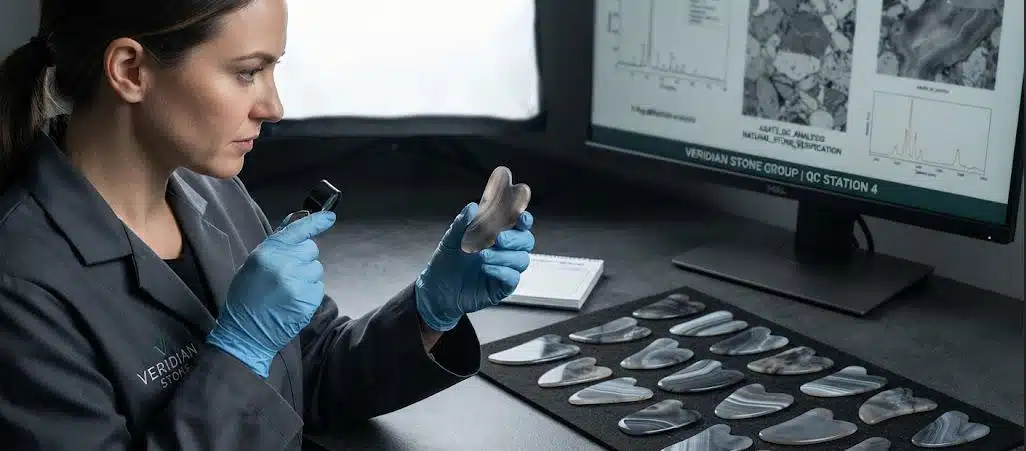
No gray agate gua sha wholesale partner can hand you a batch where every board shows an identical stripe pattern and identical shade — that promise is not a technical achievement, it’s a sign someone doesn’t understand the stone. Natural gray agate is graded on a moganite-to-quartz ratio that shifts within a single nodule, according to Raman spectroscopy research published in GIA’s Gems & Gemology journal. That single fact changes how you should be sourcing. If you’re buying gua sha wholesale for a retail line, you need to know upfront what “consistent” actually means in this material — and what it doesn’t. This article walks through why identical texture isn’t achievable, what a real gua sha manufacturer — specifically a gray agate guasha manufacturer working direct from rough stone — does instead to tighten variation, and how you can order in a way that protects your margins and your reputation with buyers.
- Why No Natural Stone Can Deliver 100% Identical Texture
- How Consistency Is Actually Engineered in a Gray Agate Gua Sha Wholesale Order
- Why Most Gua Sha Supplier Partners Won't Promise Fixed Texture
- What Fixed Texture Really Costs You in a Gray Agate Gua Sha Wholesale Deal
- A Compliant Framework for Buying Gray Agate Gua Sha Wholesale Without Getting Burned
- Regulatory and Authenticity Standards Worth Checking Before You Sign
- How This Gray Agate Gua Sha Wholesale Guide Was Compiled
- FAQs
Why No Natural Stone Can Deliver 100% Identical Texture
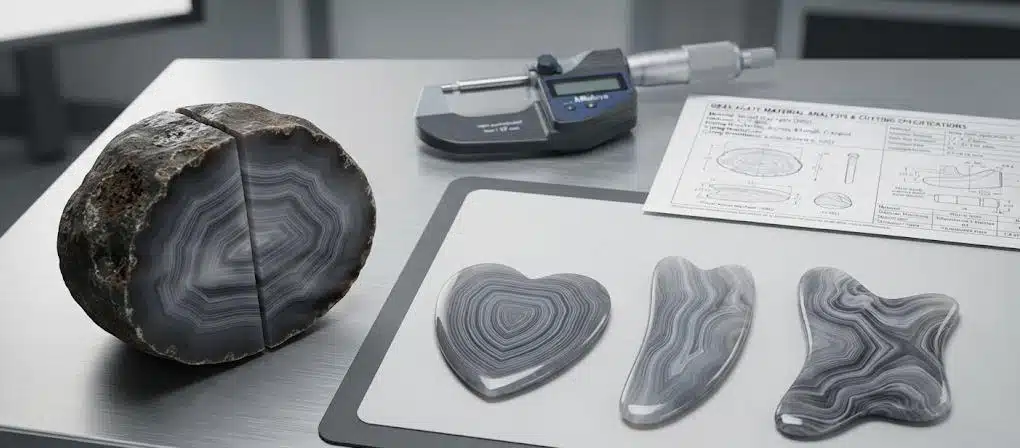
You’re not wrong to want predictable product photos and repeat orders that look the same on the shelf. But agate is a cryptocrystalline quartz that forms inside volcanic cavities over thousands of years, and geologists still don’t fully agree on how the banding forms — research published in GIA’s Gems & Gemology journal on Moroccan agate nodules states plainly that the mechanism behind rhythmic banding is still not completely understood, even with modern lab analysis. That means the pattern on your gua sha board was never designed by anyone; it was deposited layer by layer as mineral-rich fluid moved through rock. This means you can stop chasing a spec sheet that nature was never going to follow, and start asking your supplier the right questions instead.
The Geology Behind Every Gray Agate Gua Sha Wholesale Batch
Color banding in gray agate comes from repeated pulses of silica-rich fluid, each carrying slightly different mineral content, cooling and depositing at a slightly different rate. fire agate’s iridescence comes from layered silica and iron oxide, while moss agate’s green tone comes from chlorite and its reds from manganese or iron oxidation, per the International Gem Society’s agate reference — different agate varieties, same underlying lesson: color is a byproduct of chemistry, not a design choice. Even within one gray agate nodule, the moganite concentration is not evenly distributed, which is exactly why two slabs cut a few centimeters apart can show visibly different banding density. So when a gray agate gua sha wholesale listing promises “identical” boards from “the same batch,” ask what that actually means — same mine, same day of cutting, or same visual grade. Those are three very different guarantees, and only one of them is honest.
Trace Minerals and the Color Drift You Should Expect
Gray agate’s base tone comes from a mix of iron, manganese, and other trace oxides locked into the silica during formation, and agate’s vivid colors come from traces of iron, manganese, titanium, chromium, and nickel oxides, according to the International Gem Society’s gemological guide. Because these elements are never distributed in perfectly even concentrations through a mine layer, you’ll see gray drift toward blue, toward violet, or toward a warmer stone-gray depending on which part of the deposit your batch was cut from. This means your buying team should expect a color range and plan photography and packaging around it, rather than promising customers a swatch-perfect match on every restock.
Cutting Angle and Polish: The Variables Hiding in Plain Sight
Two boards cut from the same rough piece can look like they came from different mines once the saw angle changes — a cross-cut, a lengthwise cut, and an angled cut each expose a different cross-section of the same banding. Polish adds another variable on top of that: a mirror finish deepens the apparent color and brings out contrast, while a matte or satin finish lightens the same stone and softens the banding. If your current gua sha supplier isn’t telling you which cutting direction and polish method they standardize on, you’re buying variation you didn’t ask for. This means you can cut return complaints simply by asking for cut-direction and polish specs in writing before the first production run.
How Consistency Is Actually Engineered in a Gray Agate Gua Sha Wholesale Order

Here’s the part most buyers never get told: you can’t force nature into a fixed pattern, but you can absolutely tighten the range you’re working with, and that’s where a serious gua sha manufacturer earns its keep. The gap between a random pile of rough stone and a shelf-ready gray agate gua sha wholesale case comes down to seven controllable steps, and each one either narrows your color range or widens it.
Single-Seam Sourcing Behind Every Gray Agate Gua Sha Wholesale Batch
Locking sourcing to one mine, one seam, and one production batch of rough material is the single biggest lever for tightening color range — material pulled from different seams almost never grades the same, even when it’s labeled the same stone name. This means you can request a batch code tied to a specific rough lot on your purchase order, and use it to hold your gua sha supplier accountable if a reorder suddenly looks different.
Grading Systems That Turn Randomness Into Choice
A workable grading system sorts cut pieces by hue, translucency, and band density into defined tiers before they ever reach packing, instead of leaving matching to chance at the shipping stage. Once that grading exists, you can order against a tier — “Grade A, blue-gray, tight banding” — rather than hoping a random box matches your last one. This means your reorders become a spec you can repeat, not a gamble you re-run every time.
Cutting Direction, Thickness Tolerance, and Standardized Polishing
Holding one cutting angle across a production run, controlling slab thickness to a tight tolerance (thickness changes how much light passes through the stone and therefore how dark it reads), and locking down grit sequence, wheel speed, and polish time all narrow the variation stack at the same time. Stack all three controls together and the visual spread inside one order shrinks dramatically compared to an uncontrolled run. This means your unboxing photos and your product listing photos can actually match, batch after batch, without you needing to reshoot every restock.
Manual Pairing and Honest Disclosure on Dyeing
Even after grading, cutting, and polishing controls are in place, a final manual pairing step — someone physically matching pieces by eye before they’re boxed into a set — closes the remaining gap for matched pairs or trios. Some commercial suppliers heat-treat or dye stone to force a tighter visual match, and dyeing is one of the oldest gemstone treatments on record, used to introduce color, intensify existing color, or improve color uniformity, according to gemological treatment references. That’s not automatically a problem, but it has to be disclosed — the official FTC Jewelry Guides, 16 CFR Part 23, published on eCFR.gov, state it is unfair or deceptive to fail to disclose a gemstone treatment that is not permanent or that creates special care requirements. This means you should ask directly whether a batch is heat-treated or dyed before you commit, since your customers will ask you the same question eventually.
Why Most Gua Sha Supplier Partners Won’t Promise Fixed Texture
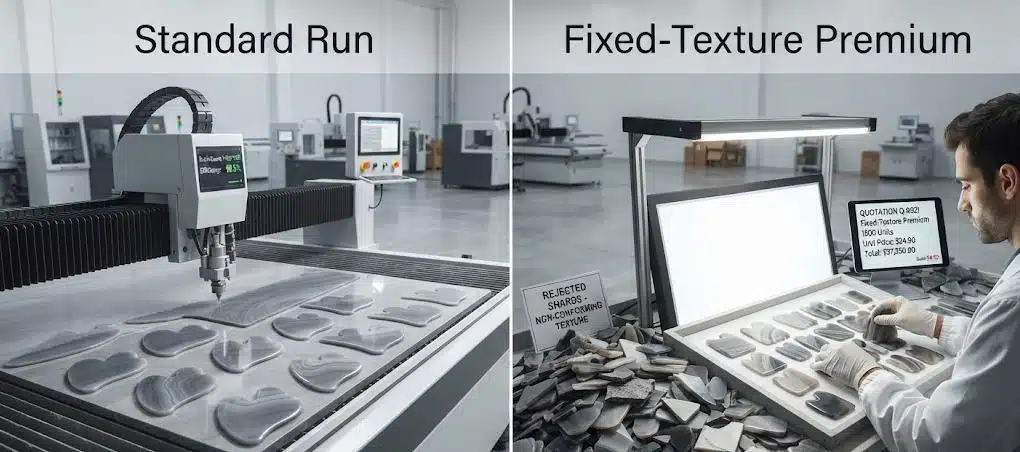
You may have already noticed that some suppliers dodge the question when you ask for a fixed, repeatable pattern on every board. That’s not evasiveness — it’s an honest answer they don’t know how to phrase without scaring off the order. A fixed-texture request forces a gua sha supplier to treat rough stone the way a jeweler treats a diamond: sorting for one narrow visual outcome instead of using the material efficiently. Once you understand the yield math behind that request, the hesitation from a gray agate guasha manufacturer makes a lot more sense.
The Yield Problem No Gray Agate Gua Sha Wholesale Buyer Sees Coming
Rough agate doesn’t arrive as a uniform block; it arrives as irregular nodules where the banding direction changes as you move through the stone, so a cutter chasing one exact texture across a whole production run has to reject a large share of each nodule. Industry lapidary references consistently note that even standard faceting and cabbing work already carries a meaningful rough-to-finished-piece loss before you add any texture-matching constraint on top. Add a strict pattern requirement and that rejection rate climbs fast, because now a piece has to pass two filters — soundness and pattern — instead of one. This means a gray agate gua sha wholesale order with a “must match exactly” clause is quietly asking your supplier to throw away good, sellable stone just to chase your spec, and someone is paying for that waste — usually you, in the unit price.
Beyond the raw material loss, cutting direction control gets harder, not easier, once you fix the texture requirement. Rough nodules aren’t uniform blocks, so hitting one exact cutting angle across dozens of irregularly shaped pieces means a saw operator has to reposition and re-angle constantly, which slows the line and produces more off-spec scrap at the edges. You end up trading speed for precision, and for a gray agate guasha manufacturer working against a shipping deadline, speed is usually the variable that protects your landed cost.
Manual Sorting, Inventory Load, and Slower Turnaround
Tighter pattern requirements also mean a person has to physically inspect and hand-match a much larger share of the run, piece by piece, for color, banding, and light transmission, and that labor cost doesn’t show up until the quote comes back higher than you expected. On top of that, a gua sha supplier chasing fixed texture typically has to stockpile a much larger reserve of similar rough material ahead of time, just to have enough options to hit your spec on the day of cutting — that’s inventory sitting on a shelf, tying up working capital, before a single piece ships. This means that when a fixed-texture quote comes back 30–60% above a standard gray agate gua sha wholesale price, you’re not being overcharged — you’re paying for waste, labor, and idle inventory that a standard order never generates.
What Fixed Texture Really Costs You in a Gray Agate Gua Sha Wholesale Deal
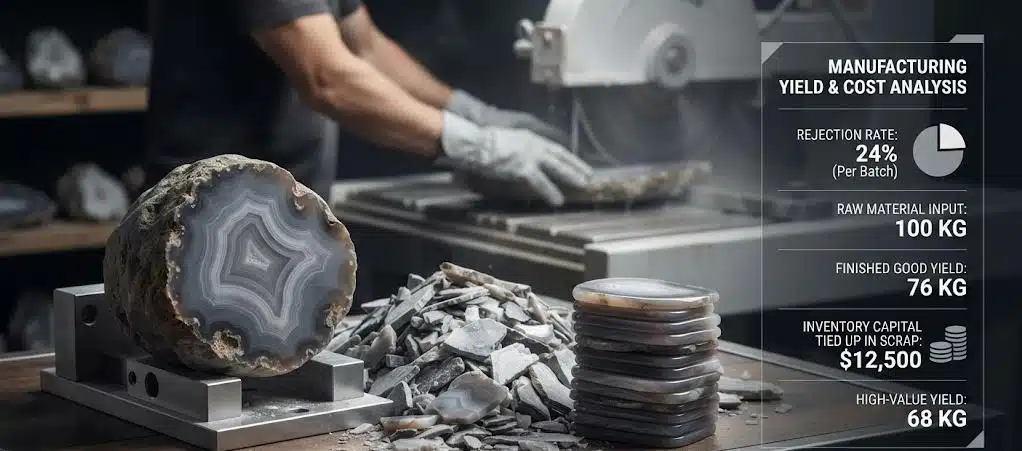
Here’s the number that matters for your purchase order: the closer you push toward “identical pattern, every piece,” the closer that product moves from an industrial commodity toward a curated, art-grade selection — and art-grade selection is priced by scarcity, not by weight or unit count. Five cost drivers stack on top of each other every time you tighten the texture spec: rough material waste, lower yield rate, higher manual sorting labor, longer inventory holding periods, and slower production throughput. None of these show up as a single line item on a quote from a gua sha manufacturer, which is exactly why “fixed texture” pricing can look confusing until you break it down driver by driver.
Quantifying the ROI of Accepting Natural Variation
If you’re running the numbers on a retail line, the math usually favors accepting a defined range rather than paying for a fixed match. A tiered grading system (commercial-grade, select-grade, collector-grade) typically prices 15–40% below a true fixed-texture run, because grading only requires sorting into buckets, not matching to a single reference sample. That gap compounds fast on volume orders — on a 5,000-unit run, a 25% unit-cost gap between graded stock and fixed-texture stock can be the difference between a healthy retail margin and a line that barely breaks even after freight and packaging. This means that before you write “must match sample exactly” into a purchase order, it’s worth asking your supplier for both a graded-tier quote and a fixed-texture quote side by side, so you can see the real dollar gap instead of guessing at it.
A Compliant Framework for Buying Gray Agate Gua Sha Wholesale Without Getting Burned
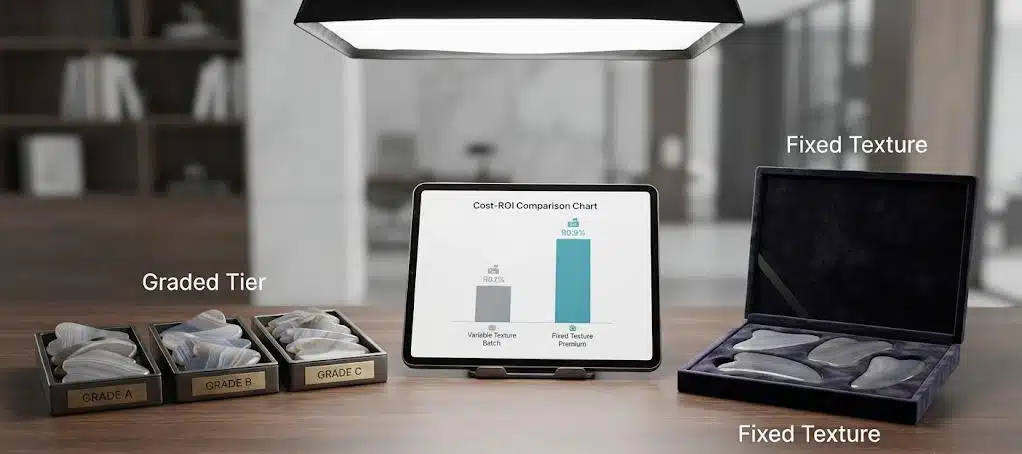
So what should actually go into your purchase order if “100% identical” is off the table? The honest industry standard splits into three parts, and once you know them, you can write a spec that a gray agate guasha manufacturer can realistically hold to instead of one that sets everyone up to argue over a return three months later.
Style Match vs. Sample Match: Know What You’re Asking For
A style match means the batch shares the same color family, the same general translucency, and the same banding direction as your reference sample — close family resemblance, not a twin. A sample match means every piece is checked against one physical reference stone before it ships, which is achievable only in small runs and only at collector-tier pricing. Confusing the two in your contract language is the single most common reason wholesale buyers end up disputing a shipment that technically met spec. This means you should write “style match to reference sample #___” into your PO language instead of the word “identical,” since that phrase alone can prevent a rejected container down the line.
Tiered Grading You Can Actually Order Against
Commercial grade accepts the widest natural color and banding range and carries the lowest unit cost; select grade narrows the range to a defined hue family with moderate banding consistency; collector grade approaches near-sample matching at a materially higher cost per piece. Ordering by tier gives you a repeatable spec number instead of a subjective promise, and it gives your gua sha supplier a sorting target their team can actually hit on the cutting floor. This means your next reorder can reference “Select Grade, Batch Code XXXX” and get a batch that’s genuinely comparable to your last one, without either side guessing at what “consistent” meant.
How to Vet a Gua Sha Manufacturer Before You Commit
Before you place a first order, ask for four things in writing: the mine or seam of origin, the grading tier definitions with reference photos, the cutting direction and polish standard, and a clear yes-or-no answer on heat treatment or dyeing. A gua sha manufacturer that answers all four without hesitation is telling you they actually control their process; one that dodges even one of these questions is telling you they’re reselling mixed-origin stock. This means a five-minute written Q&A before your deposit can save you a much longer dispute after your container lands.
A Step-by-Step Checklist Before You Place a Gray Agate Gua Sha Wholesale Order
Start by requesting the mine or seam origin in writing, because a gua sha supplier who can’t name a source location is almost certainly blending stock from multiple lots. Next, ask for reference photos tied to each grading tier — commercial, select, and collector — rather than a single glamour shot of the best piece in the showroom, since that one photo tells you nothing about what a full container will actually look like. Then confirm the cutting direction and polish method in the same document, because those two variables shift the final color reading more than almost any other factor in production.
After that, request a written yes-or-no on heat treatment and dyeing before you approve a deposit, and get it in the same email thread as your purchase order so there’s a paper trail if the batch arrives different from what was promised. Finally, ask any gray agate guasha manufacturer you’re evaluating for two quotes side by side — one at a graded tier, one at a fixed-texture level — so the cost gap is visible before you commit rather than buried in a single number. Buyers who run through these five checks before their first order consistently report fewer disputes on reorders, because the spec was written in testable terms from day one rather than in adjectives like “matching” or “consistent” that mean something different to every supplier.
Treat this checklist as a floor, not a ceiling — a gray agate guasha manufacturer worth reordering from will usually volunteer most of this information before you even ask, simply because they’ve been through enough wholesale disputes to know that clarity upfront is cheaper than a return shipment later. This means the fastest way to separate a factory-direct partner from a reseller is to watch how quickly, and how specifically, they answer these five questions.
Regulatory and Authenticity Standards Worth Checking Before You Sign
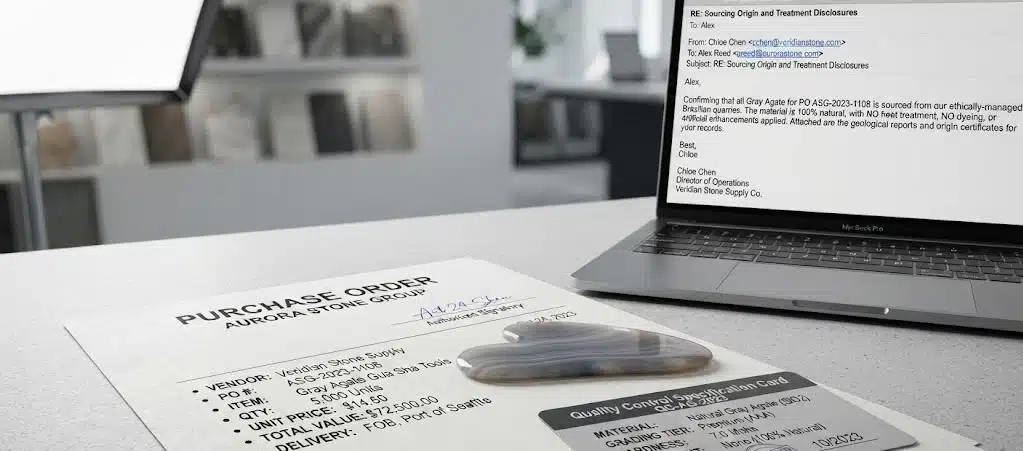
Treatment disclosure isn’t a courtesy in this industry — in several markets it’s a legal requirement, and buyers who skip this step are the ones who end up explaining an undisclosed treatment to their own customers later. This section is aimed squarely at the “is this compliant” question every serious wholesale buyer asks a gua sha manufacturer before signing a contract.
What GIA, IGS, and SSEF Say About Natural Stone Variation
The Swiss Gemmological Institute (SSEF) has run a full gem treatment disclosure policy since 1998 and continues to test submitted stones for undisclosed dye and fracture-fill treatments, publishing case studies where stones were dyed to mimic higher-value material. That same disclosure principle applies to agate: GIA’s own treatment reference confirms that bleaching and dyeing are commonly applied to chalcedony-family stones to lighten or unify color, and that ethical practice requires disclosing it. The International Gem Society makes the same point directly for agate specifically, noting that ethical dealers disclose commercial dyeing rather than let a buyer assume a stone is untreated. This means that when you’re vetting a gray agate guasha manufacturer for a compliant supply chain, a straight answer about treatment — not a marketing claim about “100% natural” — is the actual compliance signal you should be looking for, and it’s worth writing that disclosure requirement directly into your supplier agreement rather than assuming it.
How This Gray Agate Gua Sha Wholesale Guide Was Compiled
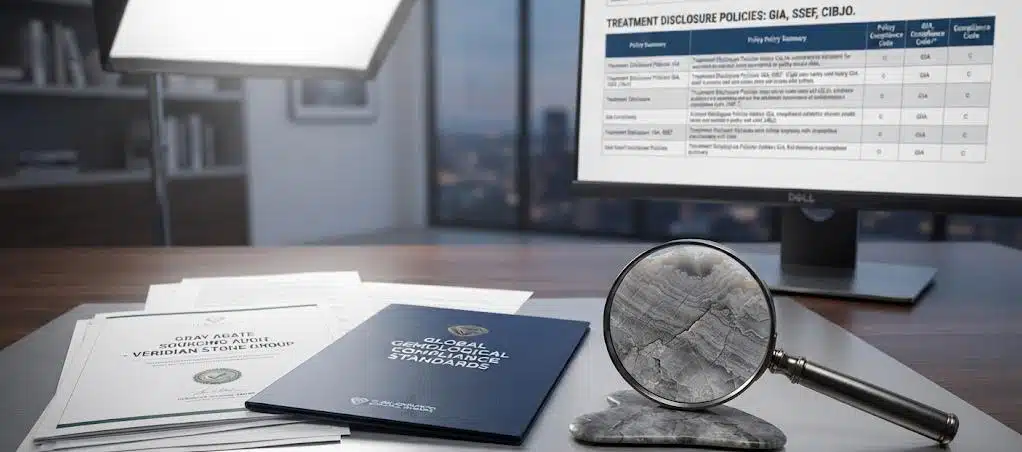
You’re reading a document built from two sources, cross-checked against each other rather than taken on faith from either one. The geological and treatment-disclosure claims above are drawn from published gemological literature — GIA’s Gems & Gemology journal, the International Gem Society’s reference material, SSEF’s public case studies, and the FTC’s official Jewelry Guides — with a working link to each source so you can verify it directly instead of taking a supplier’s word for it. The grading tiers, yield figures, and cost ranges are drawn from Deyi Gems’ own cutting-floor batch records: the same commercial, select, and collector tiers described in the framework section above are the tiers the factory’s sorting team actually sorts against, and the 15–40% and 30–60% cost ranges reflect the spread seen across past wholesale quotes for graded versus fixed-texture runs, not industry-wide averages.
This means two things for you as a reader. First, anywhere this guide cites a geological or regulatory fact, you can click through to the primary source yourself rather than trust a paraphrase. Second, anywhere this guide describes a cost range or process step, that description is checked by the people who run the saws and grade the stone, not written by a marketing team working from a supplier’s sell sheet. If you find a claim here that doesn’t match what you’re seeing from your own supplier, that mismatch is worth raising directly — either the guide needs a correction, or your supplier owes you an explanation.
FAQs
1. Can a gua sha manufacturer guarantee 100% identical texture on gray agate?
No. Natural gray agate forms with random mineral banding, so no gray agate gua sha wholesale order can guarantee pixel-identical texture — only a controlled color and style range within a defined grading tier.
2. What does “consistent” mean in a gray agate gua sha wholesale order?
It means matched style, color family, and banding direction within one graded tier — not an exact copy of a single reference sample. Confirm which definition your supplier is using before you sign.
3. Why do fixed-texture gray agate gua sha wholesale orders cost more?
Matching one exact pattern wastes rough material, lowers yield, and adds manual sorting labor. Expect a fixed-texture quote to run 30–60% above a standard graded gray agate gua sha wholesale order.
Written by the Deyi Gems sourcing and quality-control team, based on batch-grading records from the factory floor · Reviewed against published gemological references from GIA, IGS, and SSEF · Last updated July 2026