The Truth About Gray Agate Gua Sha Wholesale Texture Claims
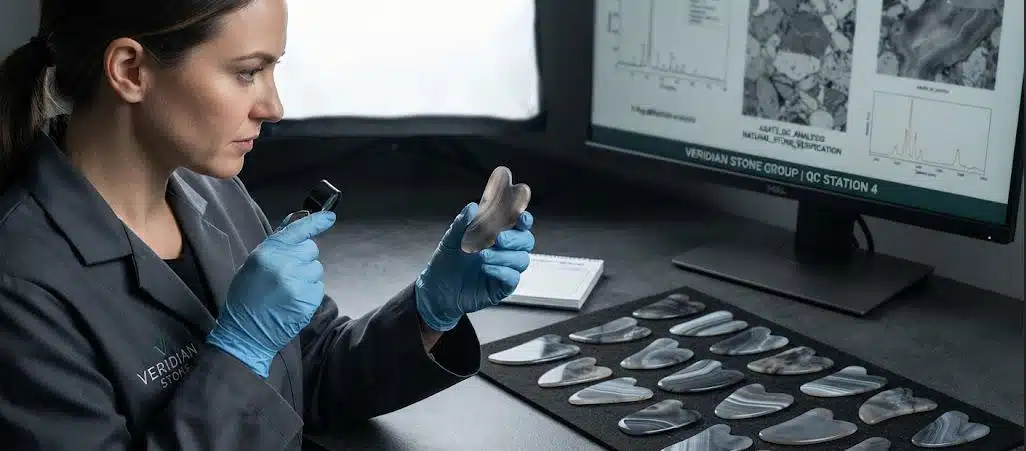
No gray agate gua sha wholesale partner can hand you a batch where every board shows an identical stripe pattern and identical shade — that promise is not a technical achievement, it’s a sign someone doesn’t understand the stone. Natural gray agate is graded on a moganite-to-quartz ratio that shifts within a single nodule, according to Raman spectroscopy research published in GIA’s Gems & Gemology journal. That single fact changes how you should be sourcing. If you’re buying gua sha wholesale for a retail line, you need to know upfront what “consistent” actually means in this material — and what it doesn’t. This article walks through why identical texture isn’t achievable, what a real gua sha manufacturer — specifically a gray agate guasha manufacturer working direct from rough stone — does instead to tighten variation, and how you can order in a way that protects your margins and your reputation with buyers. Why No Natural Stone Can Deliver 100% Identical Texture You’re not wrong to want predictable product photos and repeat orders that look the same on the shelf. But agate is a cryptocrystalline quartz that forms inside volcanic cavities over thousands of years, and geologists still don’t fully agree on how the banding forms — research published in GIA’s Gems & Gemology journal on Moroccan agate nodules states plainly that the mechanism behind rhythmic banding is still not completely understood, even with modern lab analysis. That means the pattern on your gua sha board was never designed by anyone; it was deposited layer by layer as mineral-rich fluid moved through rock. This means you can stop chasing a spec sheet that nature was never going to follow, and start asking your supplier the right questions instead. The Geology Behind Every Gray Agate Gua Sha Wholesale Batch Color banding in gray agate comes from repeated pulses of silica-rich fluid, each carrying slightly different mineral content, cooling and depositing at a slightly different rate. fire agate’s iridescence comes from layered silica and iron oxide, while moss agate’s green tone comes from chlorite and its reds from manganese or iron oxidation, per the International Gem Society’s agate reference — different agate varieties, same underlying lesson: color is a byproduct of chemistry, not a design choice. Even within one gray agate nodule, the moganite concentration is not evenly distributed, which is exactly why two slabs cut a few centimeters apart can show visibly different banding density. So when a gray agate gua sha wholesale listing promises “identical” boards from “the same batch,” ask what that actually means — same mine, same day of cutting, or same visual grade. Those are three very different guarantees, and only one of them is honest. Trace Minerals and the Color Drift You Should Expect Gray agate’s base tone comes from a mix of iron, manganese, and other trace oxides locked into the silica during formation, and agate’s vivid colors come from traces of iron, manganese, titanium, chromium, and nickel oxides, according to the International Gem Society’s gemological guide. Because these elements are never distributed in perfectly even concentrations through a mine layer, you’ll see gray drift toward blue, toward violet, or toward a warmer stone-gray depending on which part of the deposit your batch was cut from. This means your buying team should expect a color range and plan photography and packaging around it, rather than promising customers a swatch-perfect match on every restock. Cutting Angle and Polish: The Variables Hiding in Plain Sight Two boards cut from the same rough piece can look like they came from different mines once the saw angle changes — a cross-cut, a lengthwise cut, and an angled cut each expose a different cross-section of the same banding. Polish adds another variable on top of that: a mirror finish deepens the apparent color and brings out contrast, while a matte or satin finish lightens the same stone and softens the banding. If your current gua sha supplier isn’t telling you which cutting direction and polish method they standardize on, you’re buying variation you didn’t ask for. This means you can cut return complaints simply by asking for cut-direction and polish specs in writing before the first production run. How Consistency Is Actually Engineered in a Gray Agate Gua Sha Wholesale Order Here’s the part most buyers never get told: you can’t force nature into a fixed pattern, but you can absolutely tighten the range you’re working with, and that’s where a serious gua sha manufacturer earns its keep. The gap between a random pile of rough stone and a shelf-ready gray agate gua sha wholesale case comes down to seven controllable steps, and each one either narrows your color range or widens it. Single-Seam Sourcing Behind Every Gray Agate Gua Sha Wholesale Batch Locking sourcing to one mine, one seam, and one production batch of rough material is the single biggest lever for tightening color range — material pulled from different seams almost never grades the same, even when it’s labeled the same stone name. This means you can request a batch code tied to a specific rough lot on your purchase order, and use it to hold your gua sha supplier accountable if a reorder suddenly looks different. Grading Systems That Turn Randomness Into Choice A workable grading system sorts cut pieces by hue, translucency, and band density into defined tiers before they ever reach packing, instead of leaving matching to chance at the shipping stage. Once that grading exists, you can order against a tier — “Grade A, blue-gray, tight banding” — rather than hoping a random box matches your last one. This means your reorders become a spec you can repeat, not a gamble you re-run every time. Cutting Direction, Thickness Tolerance, and Standardized Polishing Holding one cutting angle across a production run, controlling slab thickness to a tight tolerance (thickness changes how much light passes through the stone and therefore how dark it reads), and locking down grit sequence, wheel speed, and polish time all narrow
The Truth About Gray Agate Gua Sha Wholesale Texture Claims Read More »
No gray agate gua sha wholesale partner can hand you a batch where every board shows an identical stripe pattern and identical shade — that promise is not a technical achievement, it’s a sign someone doesn’t understand the stone. Natural gray agate is graded on a moganite-to-quartz ratio that shifts within a single nodule, according to Raman spectroscopy research published in GIA’s Gems & Gemology journal. That single fact changes how you should be sourcing. If you’re buying gua sha wholesale for a retail line, you need to know upfront what “consistent” actually means in this material — and what it doesn’t. This article walks through why identical texture isn’t achievable, what a real gua sha manufacturer — specifically a gray agate guasha manufacturer working direct from rough stone — does instead to tighten variation, and how you can order in a way that protects your margins and your reputation with buyers. Why No Natural Stone Can Deliver 100% Identical Texture You’re not wrong to want predictable product photos and repeat orders that look the same on the shelf. But agate is a cryptocrystalline quartz that forms inside volcanic cavities over thousands of years, and geologists still don’t fully agree on how the banding forms — research published in GIA’s Gems & Gemology journal on Moroccan agate nodules states plainly that the mechanism behind rhythmic banding is still not completely understood, even with modern lab analysis. That means the pattern on your gua sha board was never designed by anyone; it was deposited layer by layer as mineral-rich fluid moved through rock. This means you can stop chasing a spec sheet that nature was never going to follow, and start asking your supplier the right questions instead. The Geology Behind Every Gray Agate Gua Sha Wholesale Batch Color banding in gray agate comes from repeated pulses of silica-rich fluid, each carrying slightly different mineral content, cooling and depositing at a slightly different rate. fire agate’s iridescence comes from layered silica and iron oxide, while moss agate’s green tone comes from chlorite and its reds from manganese or iron oxidation, per the International Gem Society’s agate reference — different agate varieties, same underlying lesson: color is a byproduct of chemistry, not a design choice. Even within one gray agate nodule, the moganite concentration is not evenly distributed, which is exactly why two slabs cut a few centimeters apart can show visibly different banding density. So when a gray agate gua sha wholesale listing promises “identical” boards from “the same batch,” ask what that actually means — same mine, same day of cutting, or same visual grade. Those are three very different guarantees, and only one of them is honest. Trace Minerals and the Color Drift You Should Expect Gray agate’s base tone comes from a mix of iron, manganese, and other trace oxides locked into the silica during formation, and agate’s vivid colors come from traces of iron, manganese, titanium, chromium, and nickel oxides, according to the International Gem Society’s gemological guide. Because these elements are never distributed in perfectly even concentrations through a mine layer, you’ll see gray drift toward blue, toward violet, or toward a warmer stone-gray depending on which part of the deposit your batch was cut from. This means your buying team should expect a color range and plan photography and packaging around it, rather than promising customers a swatch-perfect match on every restock. Cutting Angle and Polish: The Variables Hiding in Plain Sight Two boards cut from the same rough piece can look like they came from different mines once the saw angle changes — a cross-cut, a lengthwise cut, and an angled cut each expose a different cross-section of the same banding. Polish adds another variable on top of that: a mirror finish deepens the apparent color and brings out contrast, while a matte or satin finish lightens the same stone and softens the banding. If your current gua sha supplier isn’t telling you which cutting direction and polish method they standardize on, you’re buying variation you didn’t ask for. This means you can cut return complaints simply by asking for cut-direction and polish specs in writing before the first production run. How Consistency Is Actually Engineered in a Gray Agate Gua Sha Wholesale Order Here’s the part most buyers never get told: you can’t force nature into a fixed pattern, but you can absolutely tighten the range you’re working with, and that’s where a serious gua sha manufacturer earns its keep. The gap between a random pile of rough stone and a shelf-ready gray agate gua sha wholesale case comes down to seven controllable steps, and each one either narrows your color range or widens it. Single-Seam Sourcing Behind Every Gray Agate Gua Sha Wholesale Batch Locking sourcing to one mine, one seam, and one production batch of rough material is the single biggest lever for tightening color range — material pulled from different seams almost never grades the same, even when it’s labeled the same stone name. This means you can request a batch code tied to a specific rough lot on your purchase order, and use it to hold your gua sha supplier accountable if a reorder suddenly looks different. Grading Systems That Turn Randomness Into Choice A workable grading system sorts cut pieces by hue, translucency, and band density into defined tiers before they ever reach packing, instead of leaving matching to chance at the shipping stage. Once that grading exists, you can order against a tier — “Grade A, blue-gray, tight banding” — rather than hoping a random box matches your last one. This means your reorders become a spec you can repeat, not a gamble you re-run every time. Cutting Direction, Thickness Tolerance, and Standardized Polishing Holding one cutting angle across a production run, controlling slab thickness to a tight tolerance (thickness changes how much light passes through the stone and therefore how dark it reads), and locking down grit sequence, wheel speed, and polish time all narrow