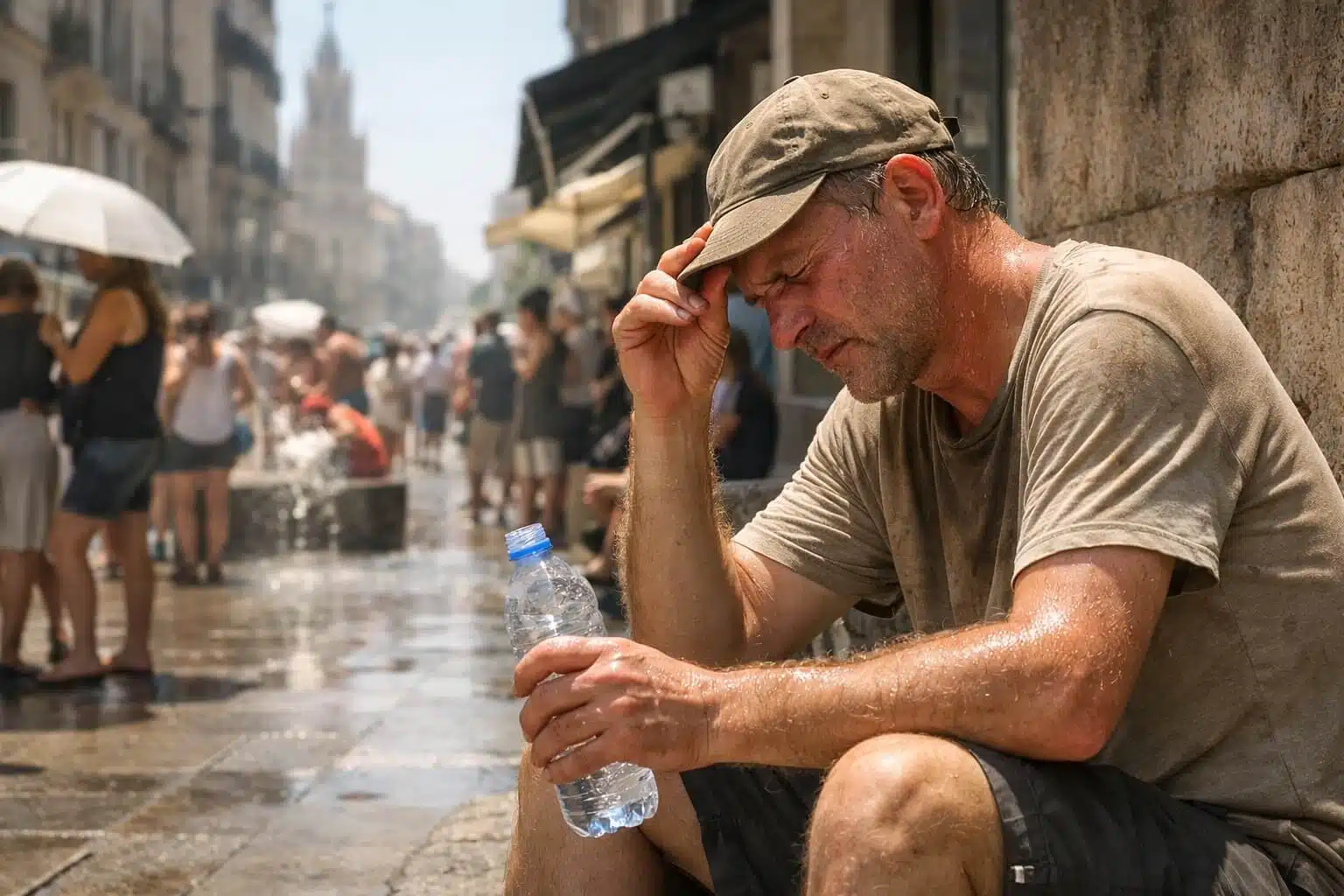
When Météo-France logged 44.3°C in the village of Pissos on June 23, 2026 — the country’s hottest day since national record-keeping began in 1947 — hospitals across Western Europe saw heat-related admissions climb within hours. The World Health Organization has confirmed more than 1,300 excess deaths across the continent since June 21 alone, most of them among people over 65. Against that backdrop, search interest in gua sha for heatstroke has jumped, and the honest answer sits between two extremes that both need correcting. Gua sha does not prevent heatstroke, and it cannot replace emergency cooling once someone’s core body temperature crosses 40°C (104°F). For mild heat discomfort — tightness in the neck, a dull headache, restlessness after a hot commute — the technique may offer a measurable, short-term physiological effect, one of several genuine gua sha benefits worth understanding. For true heatstroke, only one thing determines the outcome: how fast the body is cooled and how quickly emergency care arrives.
That distinction matters more this summer than in any recent one. Below, you’ll find what actually happens in your skin when a stone tool passes over it, how to use gua sha in a way that keeps risk low, and — most importantly — which situations call for a phone, not a tool.
- Gua Sha for Heatstroke: Where the Line Between Help and Harm Sits
- Gua Sha Benefits During a Heatwave: What the Lab Data Actually Shows
- Gua Sha Risks: Who Should Put the Tool Down During a Heatwave
- How to Use Gua Sha for Heatstroke-Adjacent Discomfort — A Manufacturer's Technique Notes
- Guasha Effects Myths That Spread Fastest When Gua Sha for Heatstroke Searches Spike
- What Actually Lowers Core Temperature When Gua Sha for Heatstroke Isn't Enough
- Manufacturing Standards Behind Gua Sha for Heatstroke Season Tools
- A Short History of Scraping Therapy for Heat Illness
- FAQs About Gua Sha for Heatstroke
Gua Sha for Heatstroke: Where the Line Between Help and Harm Sits
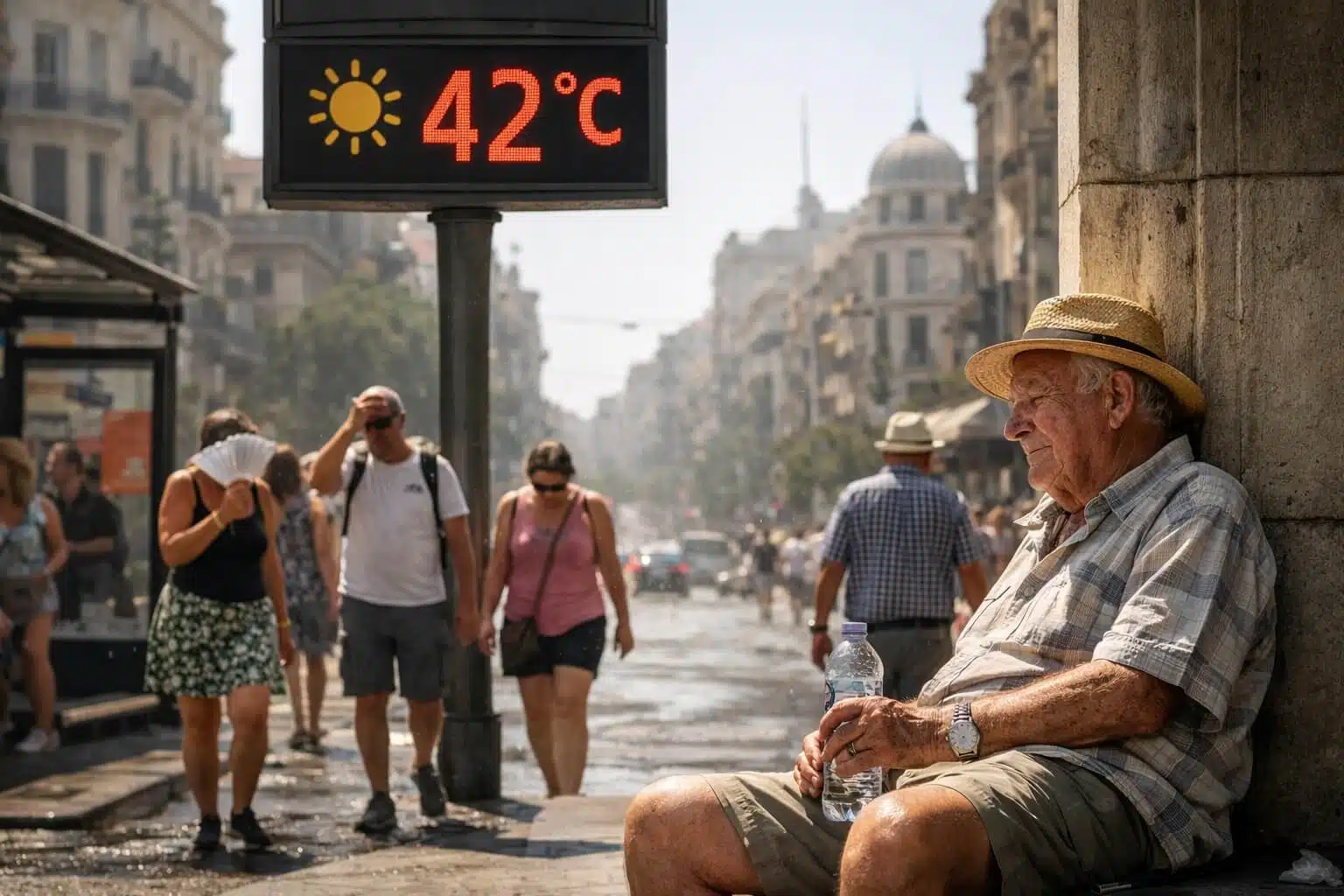
You need one number in your head before anything else: 40°C, or 104°F. Below that, you’re likely dealing with heat exhaustion — uncomfortable, draining, but reversible with rest, fluids, and shade. At or above that threshold, combined with confusion, slurred speech, or hot dry skin, you’re looking at heatstroke, a medical emergency where the body’s cooling system has failed outright. The U.S. Centers for Disease Control and Prevention notes that once heatstroke sets in, core temperature can climb to 106°F or higher within just 10 to 15 minutes, and permanent disability or death becomes a real risk without emergency treatment. That speed is the whole problem: you don’t have time to experiment, and getting this ceiling right matters more than any single technique you might reach for afterward.
Heat Exhaustion or Heatstroke? The 40°C Threshold
Heat exhaustion tends to announce itself gradually — heavy sweating, fatigue, nausea, a racing pulse. Heatstroke often arrives faster and hits the brain first: agitation, confusion, slurred speech, sometimes seizures or loss of consciousness. Mayo Clinic’s first-aid guidance is direct on this point — if you suspect heatstroke in yourself or someone else, call emergency services immediately and start cooling the person before help arrives, rather than waiting to see if symptoms pass on their own. That single instruction is worth more than any home remedy, gua sha included, and it should shape how you think about gua sha risks in a heat emergency.
Why Gua Sha for Heatstroke Cannot Lower Core Temperature
Gua sha works on the skin and the tissue just beneath it — the dermis and superficial fascia. Heatstroke is a core-temperature failure, meaning the problem sits deep in the body’s thermoregulatory center, not at the surface. Scraping the skin does not reach the hypothalamus, does not circulate cooled blood through the body’s core, and does not counteract the organ stress that dangerously high internal temperature causes. A clinical consensus guideline on heat stroke management states plainly that rapid reduction of core temperature is the single most effective intervention available, and that any delay in cooling raises the fatality rate. Nothing about a scraping tool changes that equation, no matter how the stone is marketed. This means you should treat any scraping-therapy claim about heatstroke recovery you see online as a comfort-tool claim at best — something to reach for once a real emergency has already been resolved by medical professionals, never as a substitute for calling for help.
Gua Sha Benefits During a Heatwave: What the Lab Data Actually Shows

Set aside heatstroke for a moment, because the picture changes when you’re talking about ordinary summer discomfort — a tension headache from sitting in a stuffy apartment, sore shoulders after a night of restless sleep in the heat. Here, the research on gua sha benefits is more specific than most marketing copy suggests, and it’s worth knowing the actual numbers rather than the folklore that usually surrounds them.
The Microcirculation Numbers Behind Guasha Effects
A widely cited pilot study from the University Hospital of Essen used laser Doppler imaging to track blood flow before and after a single gua sha session on 11 healthy volunteers. The result: a fourfold increase in microcirculation at the treated site during the first 7.5 minutes, with elevated blood flow persisting through the full 25-minute observation window. A separate study measuring local skin temperature and blood perfusion after scraping found blood flow in the treated area running roughly double that of untreated skin nearby. Later research on chronic low back pain found that gua sha reduced measurable tissue hardness and increased skin temperature at the treated site, consistent with a genuine vasodilation response rather than a placebo effect alone. Put together, this is where most of the legitimate guasha effects claims actually come from — a documented, short-term boost in local blood flow, not a systemic cooling mechanism. These numbers are also the clearest gua sha benefits currently supported by peer-reviewed data, and they’re worth separating from the folklore covered later in this guide.
Where the Clinical Evidence Runs Out
Here’s the catch: every one of those studies measured local circulation, not core body temperature, and none of them tested subjects in a heat-exhaustion or heatstroke state. A boost in surface blood flow at the neck or shoulders might genuinely ease muscle tension and the “stuck heat” feeling people describe during a heatwave, and that’s a legitimate, evidence-backed reason to reach for a tool on a bad-heat day. But there’s no clinical trial showing this translates into faster recovery from heat exhaustion, let alone heatstroke. Would you want to bet a family member’s safety on a mechanism that’s only ever been tested on comfortable, seated volunteers in a research lab? That gap — between “gua sha may help you feel better” and “gua sha treats heat illness” — is exactly why this topic deserves a more careful answer than most articles give it.
Gua Sha Risks: Who Should Put the Tool Down During a Heatwave
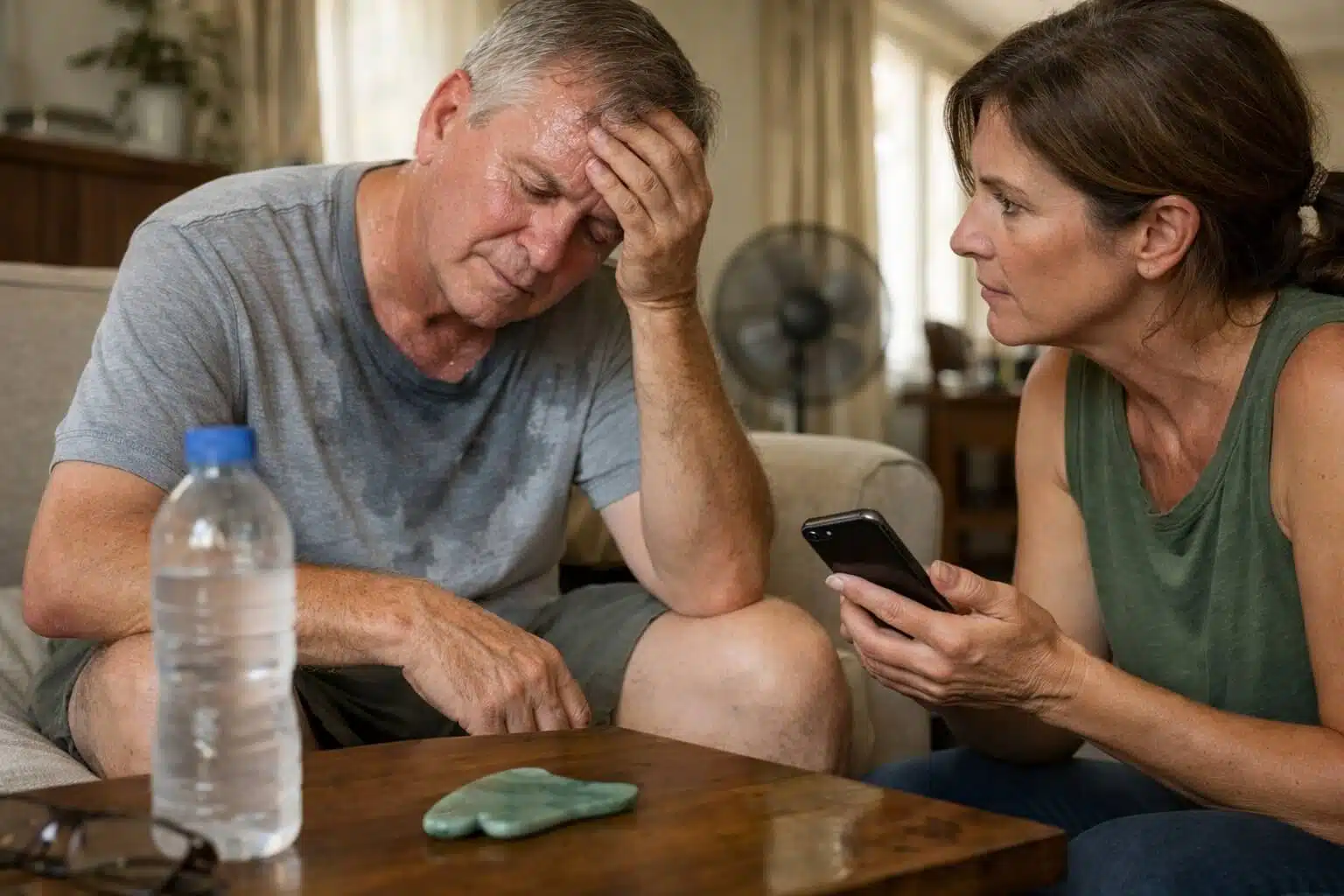
Every conversation about gua sha benefits needs an equally honest conversation about gua sha risks, especially when heat has already put someone’s body under stress. Scraping the skin is not a neutral action — it deliberately causes small capillaries to rupture, which is what produces the reddish “sha” marks people associate with the technique. That’s a controlled, minor form of tissue trauma, and it interacts badly with several conditions that heatwaves make more common.
Contraindications: When Gua Sha for Heatstroke Symptoms Is the Wrong Choice
If someone shows any sign of heatstroke — confusion, very high fever, hot dry skin, seizures — gua sha is off the table entirely, full stop. The same applies to anyone with an unexplained high fever of unclear origin, since scraping can mask or delay recognition of a more serious underlying illness, from infection to heat-related organ injury. People with bleeding disorders, those on blood thinners, anyone with open wounds, sunburn, or active skin disease should also avoid the technique, since the capillary rupture at the core of gua sha becomes considerably riskier under those conditions. This means you should ask a simple question before you or a family member picks up a tool during a heatwave: is this genuinely mild discomfort, or could it be something that needs a doctor first? Getting that question wrong is where most gua sha risks actually originate.
Skin, Bleeding, and Misdiagnosis Risks
Beyond the outright contraindications, there’s a subtler risk: false reassurance. Someone who feels “treated” after a gua sha session may delay seeking real medical attention while symptoms quietly worsen, and that delay is exactly what emergency physicians warn against with heat illness. Overly aggressive scraping — too much pressure, too long a session — can also produce genuine bruising, skin breakdown, or infection at the treatment site, particularly on skin that’s already compromised by sunburn or dehydration-related dryness. None of this means the technique is inherently dangerous when used with care and the correct contraindications in mind. It does mean that treating gua sha risks as a footnote, rather than a real part of the decision, is how people end up in urgent care instead of feeling better.
How to Use Gua Sha for Heatstroke-Adjacent Discomfort — A Manufacturer’s Technique Notes
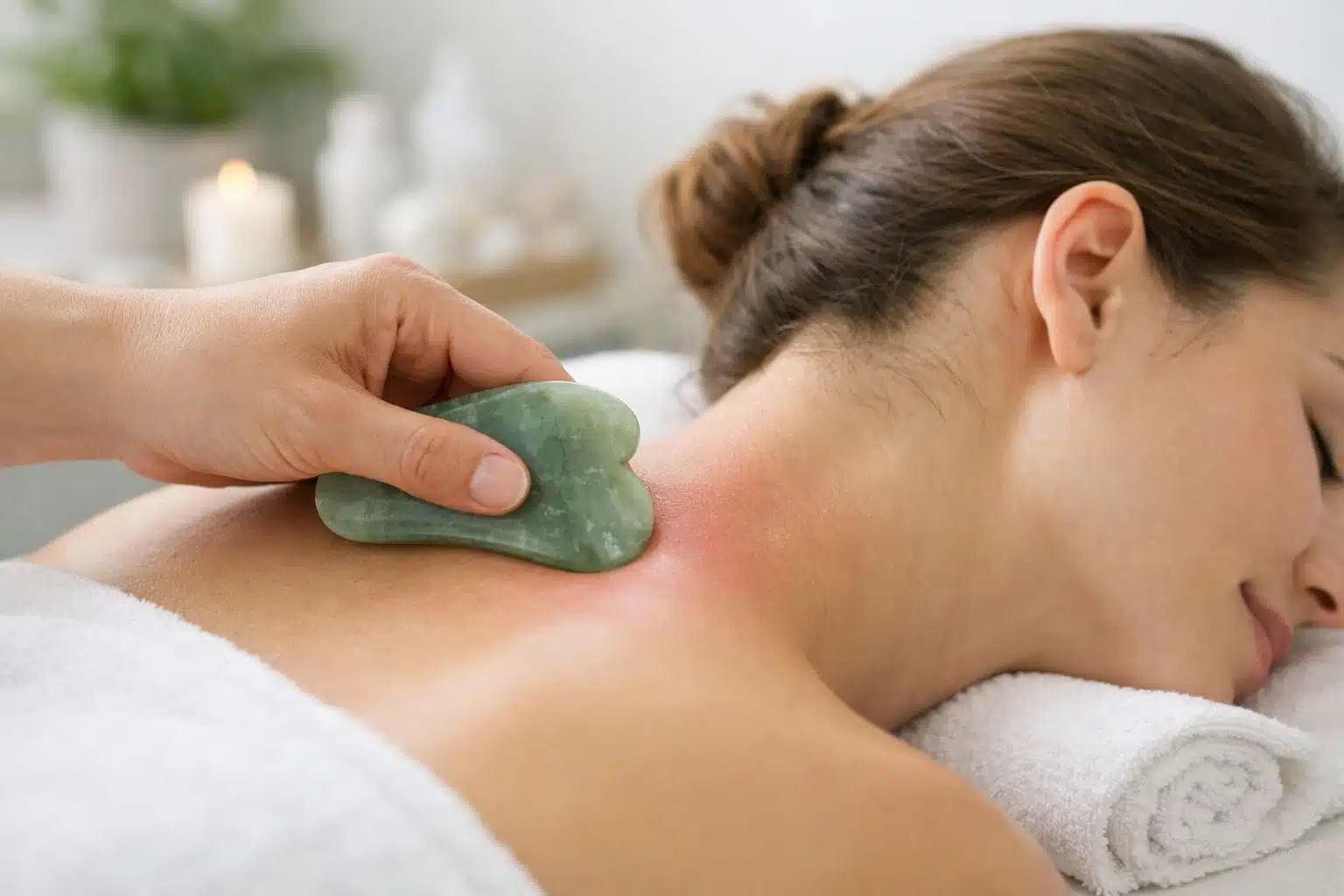
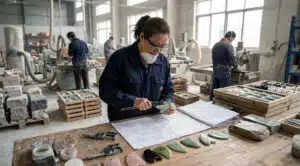
Assuming you’ve ruled out anything serious and you’re dealing with ordinary heat fatigue, the technique itself matters more than most guides let on. Twelve years spent producing scraping tools at Deyi Gems for clinics, spas, and retail partners across three continents has made one thing clear: most of the risk in home use comes from technique errors, not from the tool itself. Knowing how to use gua sha correctly is less about the stone and more about pressure control and timing.
Material Choice Changes How Much Heat You Actually Move
Jade and quartz behave differently from metal or plastic tools once they’re in contact with hot, sweaty skin, and the difference isn’t just aesthetic. Jadeite carries a Mohs hardness around 7, similar to quartz, and both materials have a thermal inertia high enough that they read as cool to the touch even after minutes of use — a property the International Gem Society attributes to how slowly heat moves through dense mineral structures compared to plastic or resin. This means the stone stays comfortable against overheated skin for longer, whereas a synthetic tool can start to feel warm and unpleasant within a session, tempting people to press harder to compensate. A cooler-feeling tool also gives you a built-in signal: if the stone starts to feel warm quickly, that’s often a sign it isn’t genuine jade or quartz at all, a detail GIA’s gemological research has documented when studying coated or treated jadeite substitutes sold under the same name.
Pressure, Direction, and the 10–15 Minute Rule
Here is how to use gua sha in practice, once you’ve confirmed the situation is safe for it. Work along a single direction — never back and forth — over the neck and upper back, the point at the base of the skull, the shoulder muscle between neck and shoulder tip, and the area around the breastbone, using light to moderate pressure rather than force. Ten to fifteen minutes is enough; a faint pinkish sha pattern is the goal, not a deep bruise, and darker marks are not evidence that the session “worked better.” Keep sessions short during a heatwave specifically, since already-dehydrated, heat-stressed skin bruises and irritates more easily than skin under normal conditions. This means your actual time investment should shrink, not grow, on the hottest days — the instinct to scrape harder or longer because you feel worse is exactly backward, and it’s the single most common mistake in how to use gua sha safely during extreme heat. Used this way, the realistic gua sha benefits are modest but real: less tension, a subjective sense of relief, nothing more dramatic than that.
Guasha Effects Myths That Spread Fastest When Gua Sha for Heatstroke Searches Spike
Heatwaves reliably produce a wave of folk advice, and gua sha attracts more of it than most home remedies. Four claims resurface every summer, and none of them hold up against the actual research on guasha effects.
The idea that darker sha marks mean “more toxins released” has no basis in the physiology — the color simply reflects how much capillary rupture occurred at that spot, which depends on pressure and skin fragility, not on how much heat or “toxin” was supposedly trapped underneath. The claim that gua sha “detoxifies” the body doesn’t hold up either; the liver and kidneys handle detoxification, and no study has shown scraping the skin changes that process in any measurable way. “The more it hurts, the more effective it is” runs directly against the safety guidance behind every credible source on the technique, since pain signals tissue damage rather than therapeutic benefit — more pain generally means you’ve pressed too hard, not that you’ve unlocked some deeper guasha effects. And the belief that “heatstroke requires gua sha” is arguably the most dangerous myth of the four, because it can delay the one intervention — rapid, aggressive cooling — that actually determines whether someone survives a heatstroke event. Isn’t it worth double-checking a habit against real data before applying it to someone who’s genuinely unwell, rather than assuming every old claim about guasha effects is automatically true?
What Actually Lowers Core Temperature When Gua Sha for Heatstroke Isn’t Enough

If you take away one section from this whole guide, make it this one. When symptoms cross from “uncomfortable” into “possible heatstroke,” the response has almost nothing to do with any scraping tool and everything to do with speed.
The Cooling Steps Emergency Medicine Relies On
Move the person out of direct heat immediately, into shade or an air-conditioned space if one is available. Remove excess clothing and apply cool water, ice packs, or wet cloths directly to the neck, armpits, groin, and palms — areas where blood vessels sit close to the skin and cooling has the fastest effect on core temperature. Mayo Clinic’s guidance specifically recommends immersing the person in cold water when possible, since this is one of the fastest methods available outside a hospital setting for reducing dangerously high body temperature. Offer cool water or an electrolyte drink only if the person is fully conscious and able to swallow safely; never force fluids on someone who is confused or losing consciousness. This means your job during those first minutes isn’t comfort — it’s raw, mechanical cooling, applied as fast and continuously as you can manage.
When to Call for Help Without Waiting
Call emergency services the moment you suspect heatstroke rather than waiting to see whether the person improves — Mayo Clinic’s first-aid protocol places this step before, not after, initial cooling attempts, precisely because minutes matter. Continue active cooling while you wait for paramedics to arrive rather than stopping once the call is made. If the person loses consciousness, stops breathing normally, or begins seizing, stay on the line with emergency dispatchers, who can talk you through additional steps until help reaches you. None of this leaves room for a scraping session, and that’s the point: heatstroke response is a timed, mechanical process, not a wellness ritual, and no article on this subject should suggest otherwise.
Manufacturing Standards Behind Gua Sha for Heatstroke Season Tools
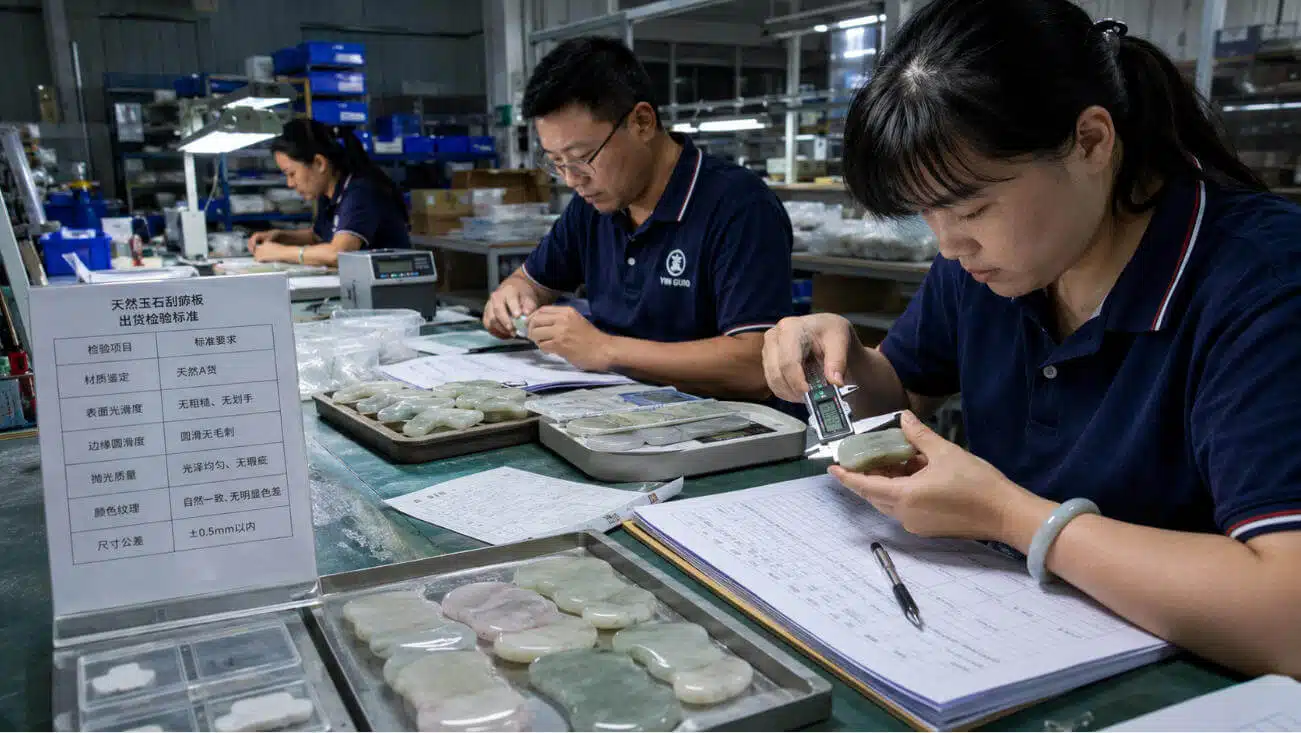
A lot of the risk discussion above assumes a well-made tool, and that assumption doesn’t hold for every product on the market during a heatwave sales spike. If you’re sourcing or buying tools for use during high-heat months, three manufacturing factors decide whether you’re getting something safe for repeated skin contact or something that just looks the part in a product photo.
Material Testing and Hardness Verification
Genuine jade and quartz are tested against the Mohs hardness scale, where jadeite sits around 7 and nephrite runs slightly lower — a benchmark the International Gem Society uses to separate real material from glass or resin substitutes marketed under the same name. GIA’s own gemological research on coated jadeite found that treated or composite pieces feel warmer and rougher to the touch than genuine stone, because a polymer coating changes the thermal inertia that makes real jade feel cool against skin. Every batch leaving a serious workshop should be checked against these benchmarks before it ships, not spot-checked only after complaints arrive. This means you can ask any supplier a direct question — what hardness and thermal testing does this batch go through, and can you see the data — and a real manufacturer will have an answer ready rather than a shrug.
Hygiene, Batch Consistency, and Small-Batch Customization Costs
Because gua sha tools contact skin that’s often sweaty, sun-exposed, or mildly broken from scraping, polish finish and edge smoothness aren’t cosmetic details — they determine whether a tool nicks the skin during a session. A rounded, consistently polished edge across an entire production run costs more in quality-control time than a batch that’s only spot-checked, but it’s the difference between a tool that glides and one that catches on the first heavy-sweat session of a heatwave. For buyers weighing cost against risk, custom small-batch runs — typically 500 to 2,000 units — carry a higher per-unit tooling cost than mass runs of 10,000-plus, but they let you specify edge radius, stone grade, and packaging without inheriting a generic catalog design. This means your upfront cost per unit rises somewhat on a small run, while your return-rate and liability exposure from inconsistent material typically falls — a trade worth running the numbers on before committing to either volume.
A Short History of Scraping Therapy for Heat Illness
Scraping therapy for heat-related illness has a documented history stretching back centuries in Chinese medical texts, including the Huangdi Neijing, the Emergency Formulas for Ready Reference (Zhouhou Beiji Fang), and later, more detailed works like the Compendium of Materia Medica and the Sha Zhang Yu Heng, a text specifically devoted to sha-pattern illness and its treatment. In southern China, particularly the Lingnan region, scraping for heat exhaustion remains a household practice passed down informally rather than through clinical training, often performed at the first sign of summer sluggishness or a stifled feeling in the chest. This tradition treated a category of illness broader than modern heatstroke — encompassing general heat malaise, digestive stagnation, and muscular tension — and it developed centuries before anyone understood core body temperature regulation in the terms medicine uses today. That historical context is useful for understanding why the practice persists, but it isn’t a substitute for the physiological threshold discussed earlier: the 40°C line separating discomfort from emergency hasn’t moved just because the remedy predates the thermometer.
FAQs About Gua Sha for Heatstroke
1. Does Gua Sha for Heatstroke Actually Work?
Not for actual heatstroke — no controlled study shows gua sha lowers core body temperature or treats organ stress from heat illness. For mild heat-related tension and discomfort, laboratory studies do show a real, short-term increase in local blood flow, one of the genuine gua sha benefits that explains why some people report feeling looser or less achy afterward.
2. How to Use Gua Sha Safely During a Heatwave?
Confirm first that you’re dealing with mild discomfort, not heatstroke symptoms like confusion or very high fever. If it’s safe to proceed, work in one direction along the neck, shoulders, and upper back for 10 to 15 minutes using light to moderate pressure, and stop the moment marks appear rather than pushing for a darker pattern — that’s the core of how to use gua sha without adding unnecessary risk.
3. What Gua Sha Risks Should You Watch For?
Avoid the technique entirely if you suspect heatstroke, have an unexplained fever, bleeding tendencies, open wounds, sunburn, or active skin conditions. Even in safe situations, over-pressing can cause bruising or skin irritation that’s more likely during a heatwave, when skin is already stressed by heat and dehydration — the two most common gua sha risks in summer use.
4. Can Guasha Effects Replace Medical Treatment?
No. The documented guasha effects are local — increased surface blood flow and reduced muscle tension at the treated site — not systemic cooling or organ protection. Heatstroke treatment requires active, whole-body cooling and, in most cases, hospital-level care, which is why every serious discussion of gua sha for heatstroke ends with the same instruction: know the threshold, and call for help the moment you cross it.
Given a summer where WHO officials have called European heat stress a “silent killer,” the safest approach is the simplest one: treat gua sha as a comfort tool for mild heat fatigue, enjoy the genuine gua sha benefits it offers at that modest scale, and never treat it as a response to heatstroke symptoms — keep emergency numbers closer at hand than any scraping tool during periods of extreme heat.
This article is provided for general educational purposes and does not constitute medical advice. If you or someone near you shows signs of heatstroke — confusion, very high fever, hot dry skin, or loss of consciousness — seek emergency medical care immediately.