Gua Sha Manufacturers: Gua Sha Material Market Analysis
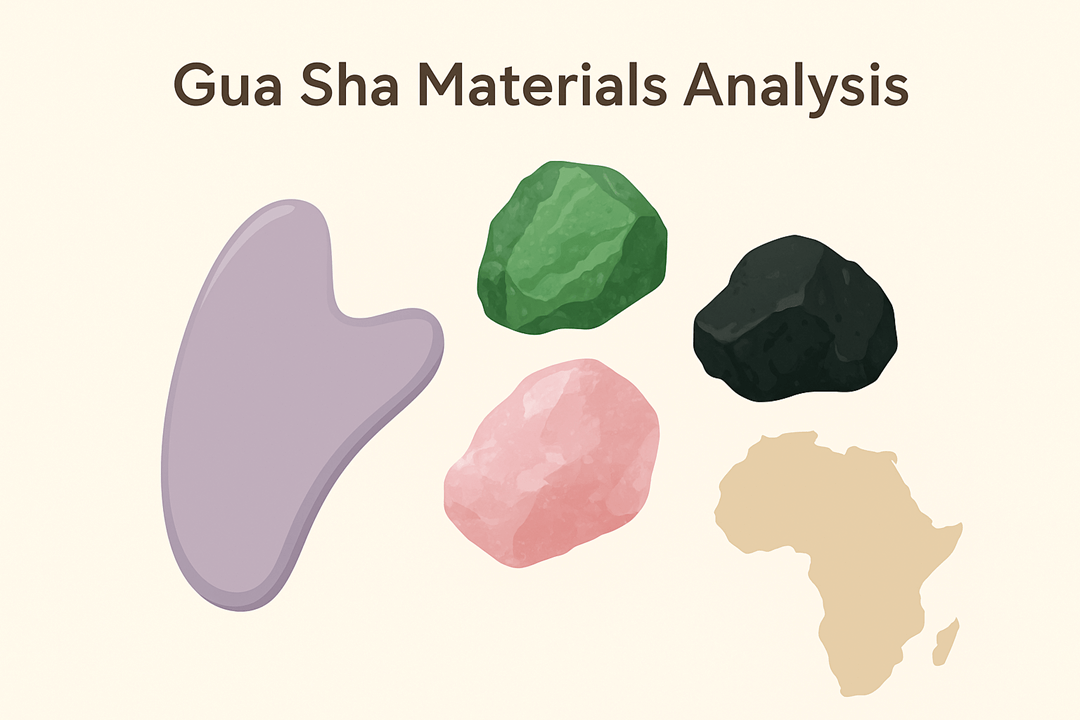
In recent years, with the continuous expansion of the Gua Sha market and a surge in demand, the market trends and price fluctuations of Gua Sha materials have become a key focus for many Gua Sha manufacturer. Low prices mean a sharp reduction in production costs, while securing large quantities of raw materials ensures a stable supply. Both are directly related to the manufacturer’s specific interests. However, for raw materials such as crystal and jade, their market supply is directly affected by mining volume, resulting in drastic price fluctuations. For example, the current amethyst raw material, affected by mining volume, has led to a sharp increase in cost and a shortage of supply. Today, we will analyze the market trends of amethyst raw materials, starting with amethyst raw materials and branching out to other crystal and jade materials. 1. Why is Amethyst Gua Sha so Hard to Come By? Amethyst in China is primarily divided into two types: “dog-tooth amethyst” (the raw material contains white banding), and “flower amethyst” (which lacks the white banding). Originally, the price of “dog-tooth amethyst” was slightly lower than that of “flower amethyst,” but with increasing material scarcity, the prices of both have risen sharply, and are now roughly on par. Most of the world’s amethyst is mined in regions such as South Africa, Brazil, and Uruguay. Amethyst is inherently scarcer than crystals like rose quartz. In addition to recent years of heavy mining, several major mines have been depleted, and new mines have yet to be discovered. This has led to an extreme shortage of amethyst in the raw material market. Not only is the quantity scarce, but the quality is also subpar. This situation has persisted for nearly a year and shows no signs of improvement. Besides the scarcity of raw material, another major factor is the structure of amethyst’s crystals. Amethyst cannot be produced in the form of large crystals like rose quartz, which can weigh several tons. Instead, it typically weighs around one or two kilograms. This size makes it difficult to create gua sha tools. Most raw amethyst is not large enough for this purpose, and can only be made into small carvings. Future Trend: Alternative materials (dyed crystal/synthetic amethyst) may emerge, but genuine amethyst will remain the mainstream in the high-end market. 2. Analysis of Other Crystal/Jade Gua Sha Materials 1. Mining situation: 2. Analysis of the Market Sales Situation of Gua Sha materials: 3. Challenges Faced By Supply Chain and Gua Sha Manufacturer In recent years, with the booming Gua Sha market, a large amount of raw stones have been mined. However, raw stone resources are limited, and some precious raw stones are at risk of depletion, while new resources are unlikely to be discovered in a short period of time. This has led to a large shortage of raw materials, with amethyst being a typical example. This situation has forced Gua Sha manufacturer to lock in resources in advance, resulting in increased financial pressure. The international market is increasingly demanding sustainable mining and environmental certification, and some supply chains are facing compliance challenges. Controls on the export of rough diamonds will also become increasingly stringent. The high-end market has higher requirements for the polishing, design, and branding of Gua Sha blades. While this will drive the upgrading of manufacturing processes in the industry to a certain extent, it also brings more challenges to Gua Sha manufacturer. The material market for Gua Sha tools is no longer simply a matter of raw material selection; it is a comprehensive reflection of supply chains, environmental policies, and global consumer trends. Given the scarcity of amethyst resources, Gua Sha manufacturer must not only seize opportunities in the high-end market but also actively explore alternative materials and innovative products to maintain their advantages in the fierce competition of the future.
Gua Sha Manufacturers: Gua Sha Material Market Analysis Read More »
In recent years, with the continuous expansion of the Gua Sha market and a surge in demand, the market trends and price fluctuations of Gua Sha materials have become a key focus for many Gua Sha manufacturer. Low prices mean a sharp reduction in production costs, while securing large quantities of raw materials ensures a stable supply. Both are directly related to the manufacturer’s specific interests. However, for raw materials such as crystal and jade, their market supply is directly affected by mining volume, resulting in drastic price fluctuations. For example, the current amethyst raw material, affected by mining volume, has led to a sharp increase in cost and a shortage of supply. Today, we will analyze the market trends of amethyst raw materials, starting with amethyst raw materials and branching out to other crystal and jade materials. 1. Why is Amethyst Gua Sha so Hard to Come By? Amethyst in China is primarily divided into two types: “dog-tooth amethyst” (the raw material contains white banding), and “flower amethyst” (which lacks the white banding). Originally, the price of “dog-tooth amethyst” was slightly lower than that of “flower amethyst,” but with increasing material scarcity, the prices of both have risen sharply, and are now roughly on par. Most of the world’s amethyst is mined in regions such as South Africa, Brazil, and Uruguay. Amethyst is inherently scarcer than crystals like rose quartz. In addition to recent years of heavy mining, several major mines have been depleted, and new mines have yet to be discovered. This has led to an extreme shortage of amethyst in the raw material market. Not only is the quantity scarce, but the quality is also subpar. This situation has persisted for nearly a year and shows no signs of improvement. Besides the scarcity of raw material, another major factor is the structure of amethyst’s crystals. Amethyst cannot be produced in the form of large crystals like rose quartz, which can weigh several tons. Instead, it typically weighs around one or two kilograms. This size makes it difficult to create gua sha tools. Most raw amethyst is not large enough for this purpose, and can only be made into small carvings. Future Trend: Alternative materials (dyed crystal/synthetic amethyst) may emerge, but genuine amethyst will remain the mainstream in the high-end market. 2. Analysis of Other Crystal/Jade Gua Sha Materials 1. Mining situation: 2. Analysis of the Market Sales Situation of Gua Sha materials: 3. Challenges Faced By Supply Chain and Gua Sha Manufacturer In recent years, with the booming Gua Sha market, a large amount of raw stones have been mined. However, raw stone resources are limited, and some precious raw stones are at risk of depletion, while new resources are unlikely to be discovered in a short period of time. This has led to a large shortage of raw materials, with amethyst being a typical example. This situation has forced Gua Sha manufacturer to lock in resources in advance, resulting in increased financial pressure. The international market is increasingly demanding sustainable mining and environmental certification, and some supply chains are facing compliance challenges. Controls on the export of rough diamonds will also become increasingly stringent. The high-end market has higher requirements for the polishing, design, and branding of Gua Sha blades. While this will drive the upgrading of manufacturing processes in the industry to a certain extent, it also brings more challenges to Gua Sha manufacturer. The material market for Gua Sha tools is no longer simply a matter of raw material selection; it is a comprehensive reflection of supply chains, environmental policies, and global consumer trends. Given the scarcity of amethyst resources, Gua Sha manufacturer must not only seize opportunities in the high-end market but also actively explore alternative materials and innovative products to maintain their advantages in the fierce competition of the future.