
Analyzing Why Temu Gua Sha is So Cheap & Expanded to Other Platforms
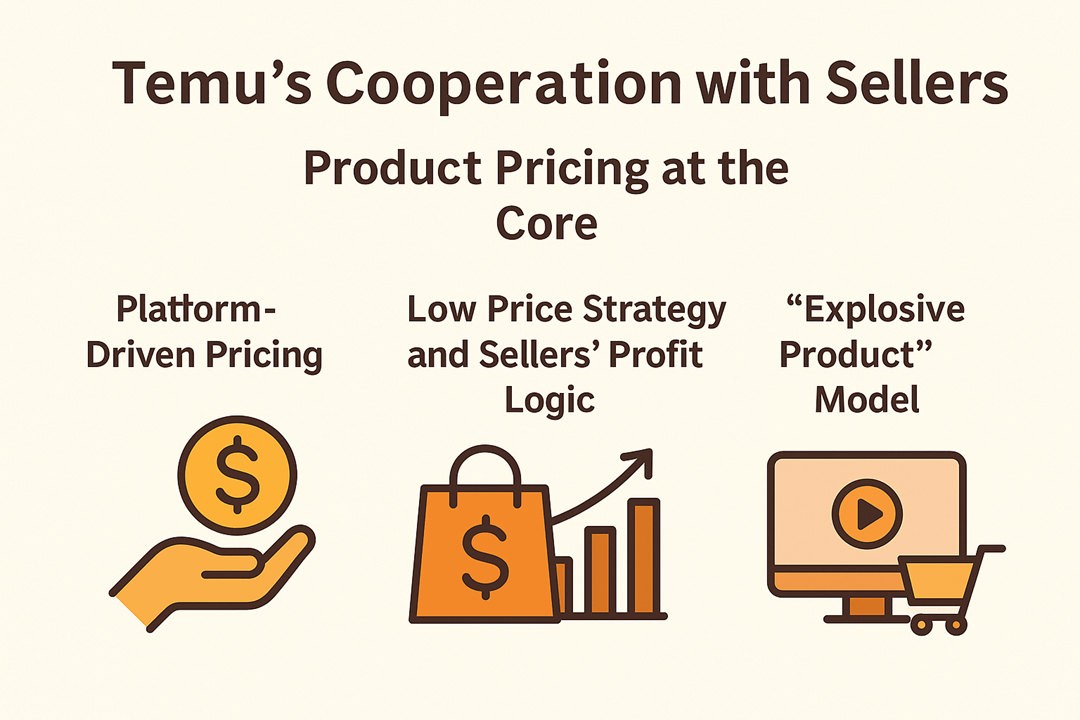
The prices of Gua Sha tools vary significantly across different platforms, with Temu often offering the cheapest prices, often significantly outpacing other platforms. Why are prices so different for the same product? Today, we’ll analyze the reasons. (As a leading gua sha wholesale manufacturer, we understand the rules and have worked with Temu before, so we’re well aware of some of them.) We’ll explain this from three perspectives: platform strategy, the partnership model between sellers and the platform, and merchant product positioning. What is Temu and Its Platform Strategy? Temu, with its comprehensive product range and low prices, has seen rapid growth in recent years overseas. Its popularity is even eclipsing established e-commerce platforms like Amazon. However, Temu’s origins lie in China, not Europe or the US. Temu’s predecessor stems from the Chinese retail platform Pinduoduo. China boasts numerous retail platforms, with Taobao and JD.com initially dominating the market. With the emergence of Pinduoduo, a three-way competition has emerged. Pinduoduo’s sales strategy in China mirrors its overseas strategy: rapidly establishing its brand and capturing market share through extremely low prices. While its rapid expansion has led to a poor brand reputation due to its neglect of product quality and the authenticity of its merchants, its unparalleled pricing has also significantly impacted JD.com and Taobao. The resulting consensus among Chinese customers is as follows: Temu Platform Sales Strategy: Temu (also known as the overseas version of Pinduoduo) employs the same sales strategy as its counterparts in China: using “extremely low prices” as its primary selling point, using various platform subsidies and paid advertising to capture market share. They then leverage social media to increase exposure and attract audiences. Temu Gua Sha Hosting Model: Temu’s Collaboration with Gua Sha Sellers: Pricing is the Core The most striking feature of Temu’s partnerships with sellers is that pricing power rests almost entirely with the platform. Unlike platforms like Amazon and eBay, which allow sellers to set their own prices, Temu adopts a “full-management” model: sellers are solely responsible for supplying products, while the platform oversees pricing, operations, logistics, and after-sales service. This means that product prices are not determined by sellers but rather by Temu’s data algorithms, market comparisons, and traffic strategies. Under this mechanism, Temu’s core goal is to ensure that the platform maintains the “lowest prices online.” The platform compares prices for similar products and continuously reduces sellers’ offers, ensuring that consumers on Temu consistently see lower prices than on other e-commerce platforms. Small commodities like gua sha tools, which are low-cost to produce and easy to ship, are particularly susceptible to being categorized as “low-priced bestsellers.” This model also brings changes to the seller’s profit logic: However, this partnership also presents a potential conflict of interest. For Temu, extremely low prices can continuously bring in traffic and market share; but for sellers, if the platform over-cuts prices, it could erode their profit margins in the long term, forcing some small and medium-sized suppliers to withdraw. This forces sellers to rethink their product channel positioning and pricing strategies when working with Temu. As a leading gua sha wholesale manufacture, we are constantly looking for platforms to expand our sales channels. Faced with the rapid growth of Temu, we naturally have also cooperated with it. Therefore, we have a deep understanding of Temu’s cooperation model. We need to submit our products to the Temu platform, and the product list includes our selling prices. Temu officials will search the entire internet for data, including products on their own platform. Once all data is collected, Temu officials will modify the product list provided by the merchant and send it back to the merchant. The modified product list includes which products are eligible for listing and the purchase price. Only if you agree to Temu’s purchase price will your products be displayed on the Temu platform. This leads to a serious problem: the purchase price of the products is far below our acceptable range. The main reason is that: To address this situation, we had to remove long-standing, hard-to-sell inventory and use various methods to lower product costs, even if this meant quality issues. There was no other solution: if you couldn’t accept Temu’s pricing, your products wouldn’t be sold on the platform. While merchants could dispute the purchase price and resubmit it, our experience showed that the success rate was low. For this reason, we abandoned the idea of using Temu as our primary platform for Gua Sha retail. Product Positioning and Response of Gua Sha Manufacturers As mentioned above, gua sha manufacturers have lost their pricing power in Temu, which is difficult for most merchants to accept. At the very least, they will not sell their company’s mainstream products on it, nor will they use it as a mainstream sales platform: 1. Low-end positioning: catering to the Temu platform’s “explosive thinking” 2. Mid-to-high-end positioning: Differentiation and breakthrough 3. Multi-level market layout: “kill two birds with one stone” Conclusion Admittedly, Temu should offer the lowest retail prices for gua sha products online, based solely on price. However, we can’t judge the issue solely by price. We believe quality is a more important factor. However, due to platform regulations, many wholesale manufacturers of gua sha products cannot sell high-quality gua sha products on Temu, as it would be a thankless task for them. So, if you’re looking to source high-quality gua sha products, brand-owned websites and Amazon are better options. The decision is yours; the balance between price and quality is different for everyone.
Analyzing Why Temu Gua Sha is So Cheap & Expanded to Other Platforms Read More »
The prices of Gua Sha tools vary significantly across different platforms, with Temu often offering the cheapest prices, often significantly outpacing other platforms. Why are prices so different for the same product? Today, we’ll analyze the reasons. (As a leading gua sha wholesale manufacturer, we understand the rules and have worked with Temu before, so we’re well aware of some of them.) We’ll explain this from three perspectives: platform strategy, the partnership model between sellers and the platform, and merchant product positioning. What is Temu and Its Platform Strategy? Temu, with its comprehensive product range and low prices, has seen rapid growth in recent years overseas. Its popularity is even eclipsing established e-commerce platforms like Amazon. However, Temu’s origins lie in China, not Europe or the US. Temu’s predecessor stems from the Chinese retail platform Pinduoduo. China boasts numerous retail platforms, with Taobao and JD.com initially dominating the market. With the emergence of Pinduoduo, a three-way competition has emerged. Pinduoduo’s sales strategy in China mirrors its overseas strategy: rapidly establishing its brand and capturing market share through extremely low prices. While its rapid expansion has led to a poor brand reputation due to its neglect of product quality and the authenticity of its merchants, its unparalleled pricing has also significantly impacted JD.com and Taobao. The resulting consensus among Chinese customers is as follows: Temu Platform Sales Strategy: Temu (also known as the overseas version of Pinduoduo) employs the same sales strategy as its counterparts in China: using “extremely low prices” as its primary selling point, using various platform subsidies and paid advertising to capture market share. They then leverage social media to increase exposure and attract audiences. Temu Gua Sha Hosting Model: Temu’s Collaboration with Gua Sha Sellers: Pricing is the Core The most striking feature of Temu’s partnerships with sellers is that pricing power rests almost entirely with the platform. Unlike platforms like Amazon and eBay, which allow sellers to set their own prices, Temu adopts a “full-management” model: sellers are solely responsible for supplying products, while the platform oversees pricing, operations, logistics, and after-sales service. This means that product prices are not determined by sellers but rather by Temu’s data algorithms, market comparisons, and traffic strategies. Under this mechanism, Temu’s core goal is to ensure that the platform maintains the “lowest prices online.” The platform compares prices for similar products and continuously reduces sellers’ offers, ensuring that consumers on Temu consistently see lower prices than on other e-commerce platforms. Small commodities like gua sha tools, which are low-cost to produce and easy to ship, are particularly susceptible to being categorized as “low-priced bestsellers.” This model also brings changes to the seller’s profit logic: However, this partnership also presents a potential conflict of interest. For Temu, extremely low prices can continuously bring in traffic and market share; but for sellers, if the platform over-cuts prices, it could erode their profit margins in the long term, forcing some small and medium-sized suppliers to withdraw. This forces sellers to rethink their product channel positioning and pricing strategies when working with Temu. As a leading gua sha wholesale manufacture, we are constantly looking for platforms to expand our sales channels. Faced with the rapid growth of Temu, we naturally have also cooperated with it. Therefore, we have a deep understanding of Temu’s cooperation model. We need to submit our products to the Temu platform, and the product list includes our selling prices. Temu officials will search the entire internet for data, including products on their own platform. Once all data is collected, Temu officials will modify the product list provided by the merchant and send it back to the merchant. The modified product list includes which products are eligible for listing and the purchase price. Only if you agree to Temu’s purchase price will your products be displayed on the Temu platform. This leads to a serious problem: the purchase price of the products is far below our acceptable range. The main reason is that: To address this situation, we had to remove long-standing, hard-to-sell inventory and use various methods to lower product costs, even if this meant quality issues. There was no other solution: if you couldn’t accept Temu’s pricing, your products wouldn’t be sold on the platform. While merchants could dispute the purchase price and resubmit it, our experience showed that the success rate was low. For this reason, we abandoned the idea of using Temu as our primary platform for Gua Sha retail. Product Positioning and Response of Gua Sha Manufacturers As mentioned above, gua sha manufacturers have lost their pricing power in Temu, which is difficult for most merchants to accept. At the very least, they will not sell their company’s mainstream products on it, nor will they use it as a mainstream sales platform: 1. Low-end positioning: catering to the Temu platform’s “explosive thinking” 2. Mid-to-high-end positioning: Differentiation and breakthrough 3. Multi-level market layout: “kill two birds with one stone” Conclusion Admittedly, Temu should offer the lowest retail prices for gua sha products online, based solely on price. However, we can’t judge the issue solely by price. We believe quality is a more important factor. However, due to platform regulations, many wholesale manufacturers of gua sha products cannot sell high-quality gua sha products on Temu, as it would be a thankless task for them. So, if you’re looking to source high-quality gua sha products, brand-owned websites and Amazon are better options. The decision is yours; the balance between price and quality is different for everyone.