Gua Sha and Lymphatic Drainage – Science, Techniques, and Safety
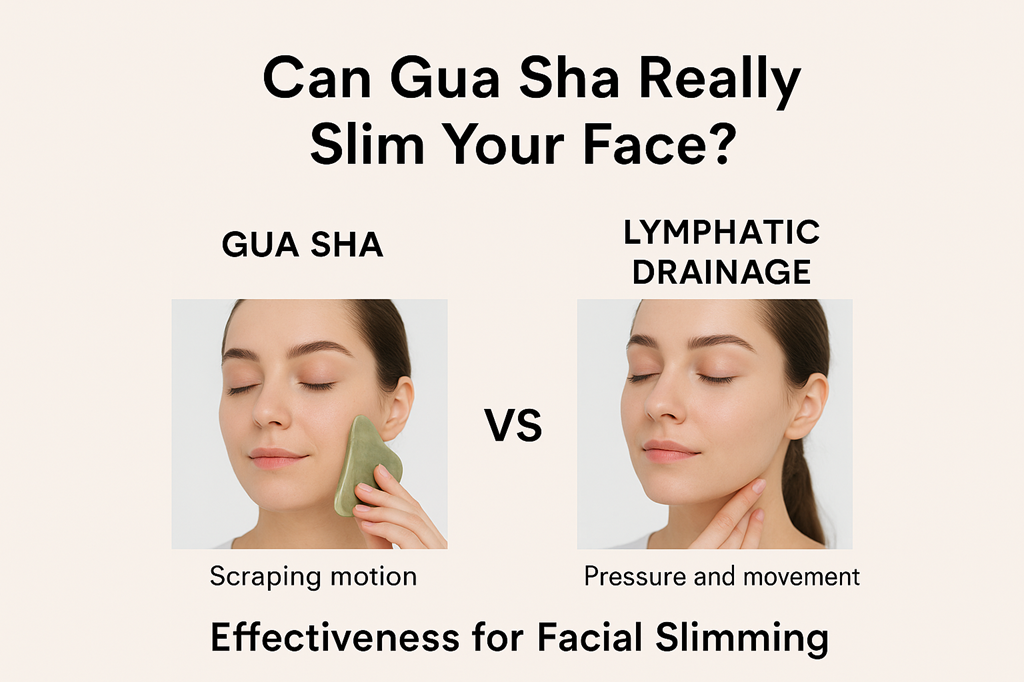
Gua Sha, an ancient Chinese healing method, has seen renewed vitality. Across social media platforms, it’s become a new beauty trend. Whether on Instagram, Pinterest, or YouTube, guasha is ubiquitous. Among the most popular videos are those showcasing facial Gua Sha. Bloggers use various jade scrapers to push and pull on the face, claiming they can “detoxify,” “slim the face,” and “lift the contours.” This seemingly similar approach to facial lymphatic drainage massage. But what exactly is the relationship between guasha and lymphatic drainage? What’s the scientific basis for this claim? This is the topic we’ll explore today. Gua Sha and Lymphatic Drainage: Like Sisters, Yet Different Many people consider Gua Sha to be one of the many techniques within lymphatic drainage massage, and indeed, the two share many similarities. However, this doesn’t mean that guasha is a separate branch of lymphatic drainage massage. Rather, they should be considered equivalent: So there are still obvious differences between the two. As for how to choose, you need to decide based on your actual needs. If you are looking for immediate results and an immediate firming feeling on your face, guasha is more suitable. But if you want to try a gentle daily care, Lymphatic Drainage Massage would be a better choice. Tradition and Science: Which is More Trustworthy? As we all know, Gua Sha originated in China and has a history spanning thousands of years. It holds a profoundly important place in the hearts of the Chinese people. According to traditional Chinese medicine, guasha’s benefits stem from: However, modern medicine has different explanations for this, and there are obvious differences between the two: Although there are some differences between traditional and scientific theories, guasha is effective in improving circulation and relieving tension in the body. Gua Sha Safety and Contraindications Although Gua Sha is considered a relatively safe treatment method, it is a non-invasive treatment with no toxic side effects. However, guasha is not absolutely safe and there are still many contraindications and common risks that need to be noted: Common risks of Gua Sha: Taboos-People Who are Not Suitable for Gua Sha Gua Sha Safety Tips Summarize Gua Sha and lymphatic drainage do share many similarities, but they are not mutually exclusive. They are rather equivalent. While their functions overlap, they also possess their own distinct characteristics. Regardless of their differences in efficacy, safety considerations are crucial when using them. Don’t blindly use them; always rely on scientific advice and seek professional advice.
Gua Sha and Lymphatic Drainage – Science, Techniques, and Safety Read More »
Gua Sha, an ancient Chinese healing method, has seen renewed vitality. Across social media platforms, it’s become a new beauty trend. Whether on Instagram, Pinterest, or YouTube, guasha is ubiquitous. Among the most popular videos are those showcasing facial Gua Sha. Bloggers use various jade scrapers to push and pull on the face, claiming they can “detoxify,” “slim the face,” and “lift the contours.” This seemingly similar approach to facial lymphatic drainage massage. But what exactly is the relationship between guasha and lymphatic drainage? What’s the scientific basis for this claim? This is the topic we’ll explore today. Gua Sha and Lymphatic Drainage: Like Sisters, Yet Different Many people consider Gua Sha to be one of the many techniques within lymphatic drainage massage, and indeed, the two share many similarities. However, this doesn’t mean that guasha is a separate branch of lymphatic drainage massage. Rather, they should be considered equivalent: So there are still obvious differences between the two. As for how to choose, you need to decide based on your actual needs. If you are looking for immediate results and an immediate firming feeling on your face, guasha is more suitable. But if you want to try a gentle daily care, Lymphatic Drainage Massage would be a better choice. Tradition and Science: Which is More Trustworthy? As we all know, Gua Sha originated in China and has a history spanning thousands of years. It holds a profoundly important place in the hearts of the Chinese people. According to traditional Chinese medicine, guasha’s benefits stem from: However, modern medicine has different explanations for this, and there are obvious differences between the two: Although there are some differences between traditional and scientific theories, guasha is effective in improving circulation and relieving tension in the body. Gua Sha Safety and Contraindications Although Gua Sha is considered a relatively safe treatment method, it is a non-invasive treatment with no toxic side effects. However, guasha is not absolutely safe and there are still many contraindications and common risks that need to be noted: Common risks of Gua Sha: Taboos-People Who are Not Suitable for Gua Sha Gua Sha Safety Tips Summarize Gua Sha and lymphatic drainage do share many similarities, but they are not mutually exclusive. They are rather equivalent. While their functions overlap, they also possess their own distinct characteristics. Regardless of their differences in efficacy, safety considerations are crucial when using them. Don’t blindly use them; always rely on scientific advice and seek professional advice.