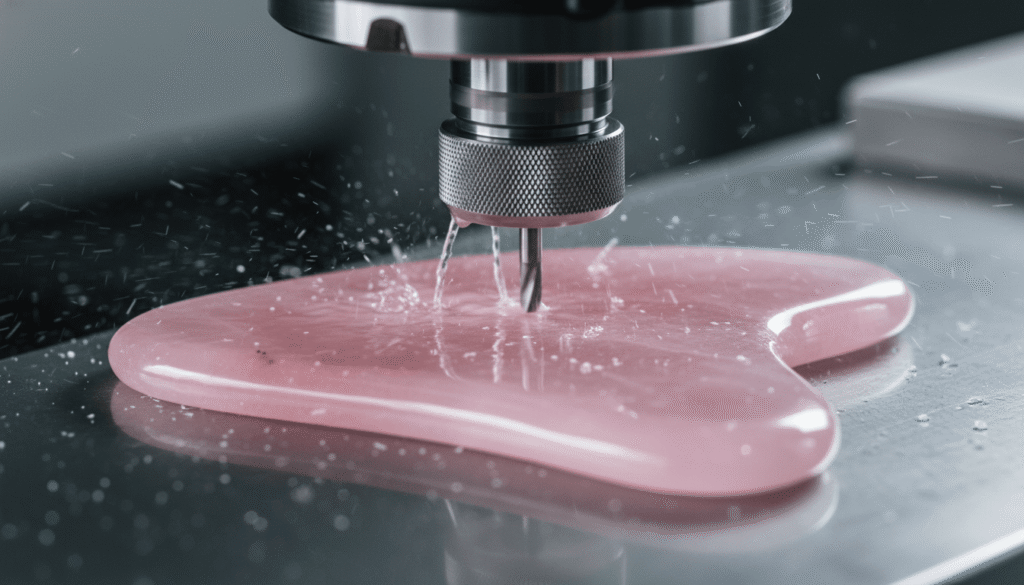
Gua Sha Factory Using CNC Fully Automated Production: Advantages and Disadvantages
In the global beauty and wellness tools market, gua sha tools have gained significant popularity for their therapeutic benefits and aesthetic appeal. At Deyi Gems, our gua sha factory specializes in producing high-quality gua sha stones, rollers, and crystal tools for wholesalers and custom brands. Over years of production experience, we have observed a major shift in manufacturing methods — particularly the increasing adoption of CNC fully automated production. CNC, or Computer Numerical Control, allows machines to shape materials with minimal human intervention. CNC machines work continuously, produce consistent shapes, and handle high-volume production demands. However, natural stones such as jade, rose quartz, or obsidian have internal variations that machines cannot detect, which poses challenges in automated production. This guide explores the technical advantages and limitations of CNC automation in gua sha manufacturing, with real data from Deyi Gems’ internal statistics. What Is a Gua Sha Factory and the Role of CNC Automation Gua Sha Factory Overview A gua sha factory produces tools used for facial massage, lymphatic drainage, and skin wellness. These tools are typically made from natural stones that require precise shaping, smoothing, and polishing. Traditionally, artisans handcraft each piece, adjusting for stone texture and internal fissures, which ensures tactile precision but limits scalability. CNC Automation Integration At Deyi Gems, CNC machines are integrated into production lines for rough shaping. Multi-axis routers and milling machines are programmed with precise digital tool paths, achieving consistent forms efficiently. After CNC shaping, skilled artisans perform final edge refinement and surface polishing to maintain premium quality. Technical Advantages of CNC Production Production Efficiency and Speed Consistent Uniformity Scalability and Continuous Running Flexible Design and Rapid Prototyping Reduced Labor Requirements Technical Details of CNC Processes CNC Parameters for Gua Sha Production Parameter Typical Range / Notes Machine Type 3–5 axis CNC router or milling machine Spindle Speed 12,000–18,000 RPM (stone-dependent) Feed Rate 800–1,200 mm/min for standard gua sha Cutting Depth 0.3–0.5 mm per pass for delicate edges Tool Type Diamond-coated or tungsten carbide end mills Cooling Water or oil mist to reduce heat and prevent microcracks Stone-Specific Considerations Hybrid Production Workflow Disadvantages of CNC Production Internal Stone Flaws Tactile Quality Capital and Maintenance Costs Skilled Operators Required Technology Dependence Quality Control and Inspection Standards QC Step Measurement Tool Standard / Target Dimensional Accuracy Digital calipers / CMM ±0.5 mm Surface Roughness Ra tester ≤0.8 µm Edge Smoothness Visual and tactile No sharp edges Structural Integrity Optical scan / X-ray (optional) No cracks/fissures Polishing Finish Visual & tactile High gloss, uniform texture Production Method Selection Based on Market Needs Conclusion: Smart CNC Use in Gua Sha Factories CNC automation enhances speed, uniformity, and scalability in gua sha manufacturing: Limitations: higher scrap rate, slightly reduced tactile feel, capital investment, and need for skilled operators. Recommendation: Adopt a hybrid workflow—CNC for rough shaping, artisans for fine finishing—to balance efficiency, quality, and premium tactile experience. This ensures both wholesale and boutique customers receive gua sha tools that meet functional, aesthetic, and tactile standards. Deyi Gems’ internal production data confirms that this approach is both practical and sustainable for long-term growth.
Gua Sha Factory Using CNC Fully Automated Production: Advantages and Disadvantages Read More »
In the global beauty and wellness tools market, gua sha tools have gained significant popularity for their therapeutic benefits and aesthetic appeal. At Deyi Gems, our gua sha factory specializes in producing high-quality gua sha stones, rollers, and crystal tools for wholesalers and custom brands. Over years of production experience, we have observed a major shift in manufacturing methods — particularly the increasing adoption of CNC fully automated production. CNC, or Computer Numerical Control, allows machines to shape materials with minimal human intervention. CNC machines work continuously, produce consistent shapes, and handle high-volume production demands. However, natural stones such as jade, rose quartz, or obsidian have internal variations that machines cannot detect, which poses challenges in automated production. This guide explores the technical advantages and limitations of CNC automation in gua sha manufacturing, with real data from Deyi Gems’ internal statistics. What Is a Gua Sha Factory and the Role of CNC Automation Gua Sha Factory Overview A gua sha factory produces tools used for facial massage, lymphatic drainage, and skin wellness. These tools are typically made from natural stones that require precise shaping, smoothing, and polishing. Traditionally, artisans handcraft each piece, adjusting for stone texture and internal fissures, which ensures tactile precision but limits scalability. CNC Automation Integration At Deyi Gems, CNC machines are integrated into production lines for rough shaping. Multi-axis routers and milling machines are programmed with precise digital tool paths, achieving consistent forms efficiently. After CNC shaping, skilled artisans perform final edge refinement and surface polishing to maintain premium quality. Technical Advantages of CNC Production Production Efficiency and Speed Consistent Uniformity Scalability and Continuous Running Flexible Design and Rapid Prototyping Reduced Labor Requirements Technical Details of CNC Processes CNC Parameters for Gua Sha Production Parameter Typical Range / Notes Machine Type 3–5 axis CNC router or milling machine Spindle Speed 12,000–18,000 RPM (stone-dependent) Feed Rate 800–1,200 mm/min for standard gua sha Cutting Depth 0.3–0.5 mm per pass for delicate edges Tool Type Diamond-coated or tungsten carbide end mills Cooling Water or oil mist to reduce heat and prevent microcracks Stone-Specific Considerations Hybrid Production Workflow Disadvantages of CNC Production Internal Stone Flaws Tactile Quality Capital and Maintenance Costs Skilled Operators Required Technology Dependence Quality Control and Inspection Standards QC Step Measurement Tool Standard / Target Dimensional Accuracy Digital calipers / CMM ±0.5 mm Surface Roughness Ra tester ≤0.8 µm Edge Smoothness Visual and tactile No sharp edges Structural Integrity Optical scan / X-ray (optional) No cracks/fissures Polishing Finish Visual & tactile High gloss, uniform texture Production Method Selection Based on Market Needs Conclusion: Smart CNC Use in Gua Sha Factories CNC automation enhances speed, uniformity, and scalability in gua sha manufacturing: Limitations: higher scrap rate, slightly reduced tactile feel, capital investment, and need for skilled operators. Recommendation: Adopt a hybrid workflow—CNC for rough shaping, artisans for fine finishing—to balance efficiency, quality, and premium tactile experience. This ensures both wholesale and boutique customers receive gua sha tools that meet functional, aesthetic, and tactile standards. Deyi Gems’ internal production data confirms that this approach is both practical and sustainable for long-term growth.