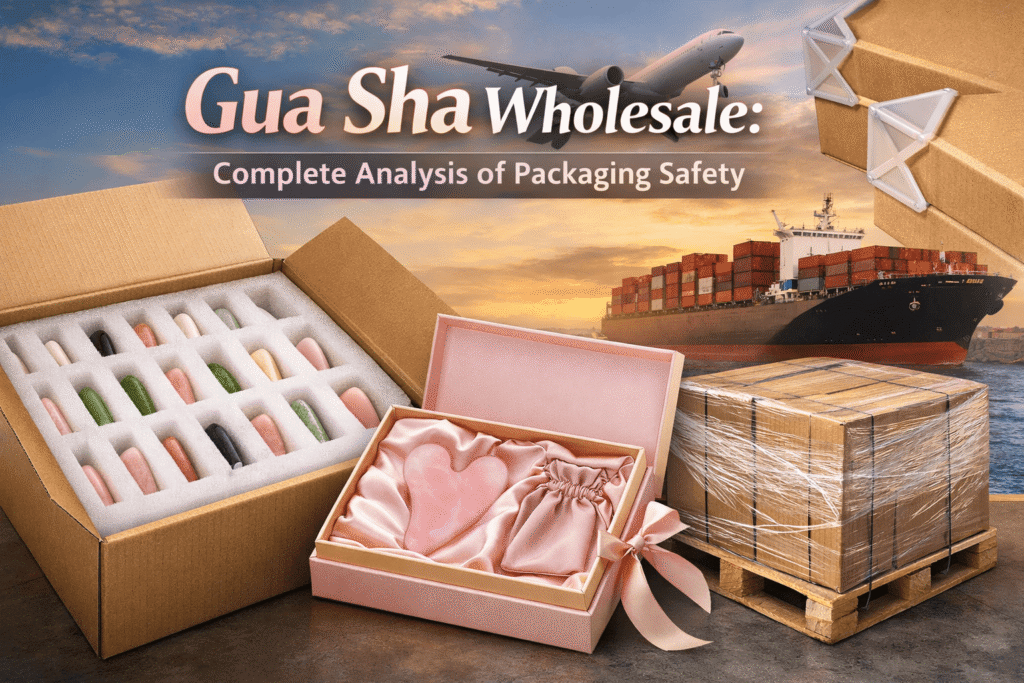
Gua Sha Wholesale: Complete Analysis of Packaging Safety
In the global beauty and wellness market, gua sha tools have evolved from traditional therapy instruments into mainstream skincare and facial massage products. As demand grows across North America, Europe, and emerging markets, gua sha wholesale buyers are no longer focused solely on material quality, shape, or pricing. Packaging safety has become an equally critical factor that directly affects product integrity, brand reputation, logistics costs, and customer satisfaction. From a wholesale perspective, the packaging of gua sha boards is more than just about appearance. It’s a systematic process that requires protecting these fragile stone tools during long-distance transportation, multi-stage handling, and storage. Even finely crafted jade or quartz gua sha boards can crack or break if the packaging design and shipping protection are inadequate. Therefore, understanding packaging security is crucial for brand owners, distributors, and importers operating on a large scale. In this comprehensive guide, we will analyze gua sha wholesale packaging safety from a professional manufacturing and industry standpoint. Drawing on years of experience in gua sha production and export, this article explains how packaging is structured, tested, and optimized for both bulk and individual units. At the same time, the content is written in clear, accessible English to ensure it is practical for readers at all levels of industry experience. Understanding Gua Sha Wholesale Packaging in the Beauty Supply Chain The Role of Packaging in Wholesale Distribution In gua sha wholesale, packaging acts as the first line of defense between the product and external risk factors. These risks include vibration, compression, impact, humidity, and temperature changes during shipping. Unlike mass-produced plastic tools, gua sha stones are inherently brittle due to their crystalline structure, which makes them vulnerable to micro-fractures and edge damage. Packaging in wholesale distribution must therefore serve multiple functions simultaneously. It must protect the product physically, maintain consistent quality across large quantities, and support efficient logistics handling. At the same time, it should align with brand positioning, whether the brand emphasizes luxury, sustainability, or clinical professionalism. According to the International Safe Transit Association (ISTA), over 30% of product damage in international shipping is related to insufficient or poorly designed packaging rather than manufacturing defects. This data highlights why packaging safety must be integrated into wholesale strategy rather than treated as an afterthought(https://ista.org). Differences Between Retail Packaging and Wholesale Packaging Retail packaging is often designed with the end consumer in mind, focusing on visual appeal and shelf presence. Wholesale packaging, however, prioritizes structural stability and transport efficiency. In gua sha wholesale, these two packaging layers must work together rather than compete with each other. Wholesale packaging typically includes outer cartons, protective inserts, and palletization systems. Retail packaging, such as individual boxes or gift sets, is then placed inside this outer protective structure. If the dimensions or materials are mismatched, damage can occur even if each layer appears strong on its own. Therefore, coordination between wholesale and retail packaging design is a key principle in safe gua sha distribution. Material Characteristics and Their Impact on Packaging Safety Why Gua Sha Stones Require Special Protection Gua sha tools are commonly made from jade, rose quartz, amethyst, obsidian, or other natural stones. These materials vary in hardness, density, and internal structure. While some stones are harder on the Mohs scale, they may still contain internal fissures that make them susceptible to impact damage. Because stone tools do not flex under pressure, even minor collisions can result in chips or hairline cracks. This characteristic means packaging must not only cushion external shocks but also prevent internal movement. Allowing gua sha tools to collide with each other is one of the most common causes of damage in wholesale shipments. The Gemological Institute of America (GIA) explains that natural gemstones often contain inclusions that are invisible to the naked eye but can weaken structural integrity under stress(https://www.gia.edu). This reinforces the need for packaging systems that isolate each tool during transport. Weight Distribution and Pressure Points Another important factor in gua sha wholesale packaging safety is weight distribution. Stone tools are relatively heavy for their size, which can create pressure points when stacked improperly. If weight is unevenly distributed in a carton, tools at the bottom may experience excessive compression, leading to fractures. To address this, professional packaging systems are designed to distribute weight evenly across foam inserts or partitions. Vertical placement is often preferred because it reduces surface-to-surface contact and minimizes stress on thin edges. Bulk Packaging Safety for Gua Sha Wholesale Orders Large-Volume Carton Packaging Structure In large gua sha wholesale orders, bulk packaging is the foundation of transport safety. Bulk packaging refers to how multiple units are packed together in cartons before palletization or container loading. The primary goal is to ensure stability while maximizing space efficiency. In professional factory settings, bulk packaging is not random. It follows standardized internal layouts based on carton strength, tool size, and transport distance. Cartons are selected according to international shipping standards such as ASTM D5118, which defines corrugated box performance requirements(https://www.astm.org). Foam Insert Systems with Individual Compartments For our factory-level wholesale packaging, foam inserts are a core safety component. Each foam tray is designed with approximately 25 individual compartments, with each compartment holding one gua sha tool. The tools are placed vertically rather than horizontally, which significantly reduces the chance of edge impact. This compartmentalized design ensures that each gua sha tool remains isolated throughout transport. Even under vibration or sudden movement, the foam absorbs shock and prevents tools from colliding with each other. Compared to loose packing or paper wrapping, foam inserts provide a much higher level of consistency and damage prevention. In addition, foam density is carefully selected. Foam that is too soft may compress excessively, while foam that is too rigid may transfer shock directly to the stone. Balancing these properties is a key part of wholesale packaging engineering. Carton Reinforcement and Sealing Methods Beyond internal protection, the outer carton must also be reinforced. Double-wall corrugated cartons are commonly used for gua sha wholesale shipments, especially for international transport. These
Gua Sha Wholesale: Complete Analysis of Packaging Safety Read More »
In the global beauty and wellness market, gua sha tools have evolved from traditional therapy instruments into mainstream skincare and facial massage products. As demand grows across North America, Europe, and emerging markets, gua sha wholesale buyers are no longer focused solely on material quality, shape, or pricing. Packaging safety has become an equally critical factor that directly affects product integrity, brand reputation, logistics costs, and customer satisfaction. From a wholesale perspective, the packaging of gua sha boards is more than just about appearance. It’s a systematic process that requires protecting these fragile stone tools during long-distance transportation, multi-stage handling, and storage. Even finely crafted jade or quartz gua sha boards can crack or break if the packaging design and shipping protection are inadequate. Therefore, understanding packaging security is crucial for brand owners, distributors, and importers operating on a large scale. In this comprehensive guide, we will analyze gua sha wholesale packaging safety from a professional manufacturing and industry standpoint. Drawing on years of experience in gua sha production and export, this article explains how packaging is structured, tested, and optimized for both bulk and individual units. At the same time, the content is written in clear, accessible English to ensure it is practical for readers at all levels of industry experience. Understanding Gua Sha Wholesale Packaging in the Beauty Supply Chain The Role of Packaging in Wholesale Distribution In gua sha wholesale, packaging acts as the first line of defense between the product and external risk factors. These risks include vibration, compression, impact, humidity, and temperature changes during shipping. Unlike mass-produced plastic tools, gua sha stones are inherently brittle due to their crystalline structure, which makes them vulnerable to micro-fractures and edge damage. Packaging in wholesale distribution must therefore serve multiple functions simultaneously. It must protect the product physically, maintain consistent quality across large quantities, and support efficient logistics handling. At the same time, it should align with brand positioning, whether the brand emphasizes luxury, sustainability, or clinical professionalism. According to the International Safe Transit Association (ISTA), over 30% of product damage in international shipping is related to insufficient or poorly designed packaging rather than manufacturing defects. This data highlights why packaging safety must be integrated into wholesale strategy rather than treated as an afterthought(https://ista.org). Differences Between Retail Packaging and Wholesale Packaging Retail packaging is often designed with the end consumer in mind, focusing on visual appeal and shelf presence. Wholesale packaging, however, prioritizes structural stability and transport efficiency. In gua sha wholesale, these two packaging layers must work together rather than compete with each other. Wholesale packaging typically includes outer cartons, protective inserts, and palletization systems. Retail packaging, such as individual boxes or gift sets, is then placed inside this outer protective structure. If the dimensions or materials are mismatched, damage can occur even if each layer appears strong on its own. Therefore, coordination between wholesale and retail packaging design is a key principle in safe gua sha distribution. Material Characteristics and Their Impact on Packaging Safety Why Gua Sha Stones Require Special Protection Gua sha tools are commonly made from jade, rose quartz, amethyst, obsidian, or other natural stones. These materials vary in hardness, density, and internal structure. While some stones are harder on the Mohs scale, they may still contain internal fissures that make them susceptible to impact damage. Because stone tools do not flex under pressure, even minor collisions can result in chips or hairline cracks. This characteristic means packaging must not only cushion external shocks but also prevent internal movement. Allowing gua sha tools to collide with each other is one of the most common causes of damage in wholesale shipments. The Gemological Institute of America (GIA) explains that natural gemstones often contain inclusions that are invisible to the naked eye but can weaken structural integrity under stress(https://www.gia.edu). This reinforces the need for packaging systems that isolate each tool during transport. Weight Distribution and Pressure Points Another important factor in gua sha wholesale packaging safety is weight distribution. Stone tools are relatively heavy for their size, which can create pressure points when stacked improperly. If weight is unevenly distributed in a carton, tools at the bottom may experience excessive compression, leading to fractures. To address this, professional packaging systems are designed to distribute weight evenly across foam inserts or partitions. Vertical placement is often preferred because it reduces surface-to-surface contact and minimizes stress on thin edges. Bulk Packaging Safety for Gua Sha Wholesale Orders Large-Volume Carton Packaging Structure In large gua sha wholesale orders, bulk packaging is the foundation of transport safety. Bulk packaging refers to how multiple units are packed together in cartons before palletization or container loading. The primary goal is to ensure stability while maximizing space efficiency. In professional factory settings, bulk packaging is not random. It follows standardized internal layouts based on carton strength, tool size, and transport distance. Cartons are selected according to international shipping standards such as ASTM D5118, which defines corrugated box performance requirements(https://www.astm.org). Foam Insert Systems with Individual Compartments For our factory-level wholesale packaging, foam inserts are a core safety component. Each foam tray is designed with approximately 25 individual compartments, with each compartment holding one gua sha tool. The tools are placed vertically rather than horizontally, which significantly reduces the chance of edge impact. This compartmentalized design ensures that each gua sha tool remains isolated throughout transport. Even under vibration or sudden movement, the foam absorbs shock and prevents tools from colliding with each other. Compared to loose packing or paper wrapping, foam inserts provide a much higher level of consistency and damage prevention. In addition, foam density is carefully selected. Foam that is too soft may compress excessively, while foam that is too rigid may transfer shock directly to the stone. Balancing these properties is a key part of wholesale packaging engineering. Carton Reinforcement and Sealing Methods Beyond internal protection, the outer carton must also be reinforced. Double-wall corrugated cartons are commonly used for gua sha wholesale shipments, especially for international transport. These