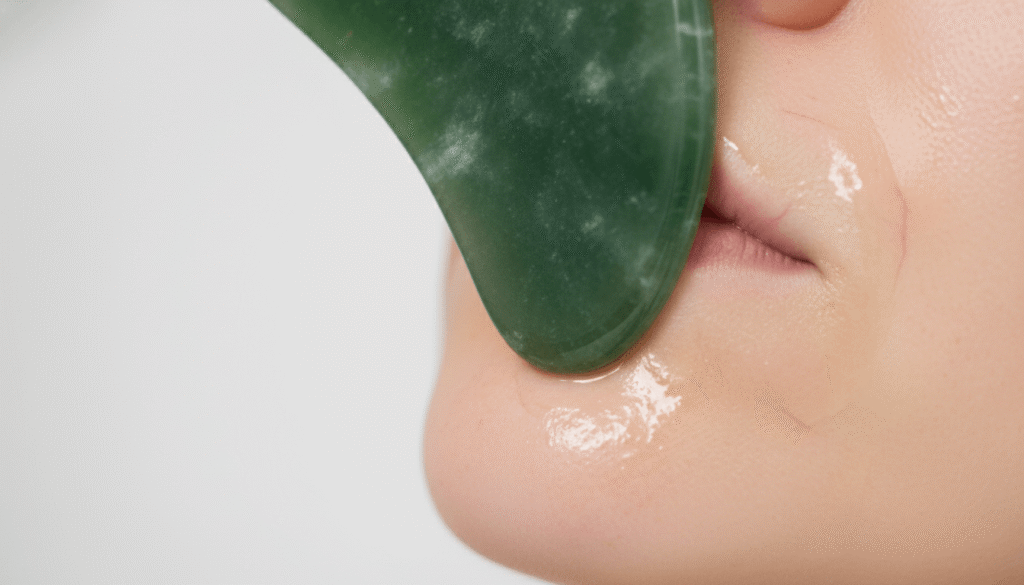
How to Use Gua Sha on Face Safety? – Gua Sha Analysis
Facial gua sha has evolved from a traditional East Asian therapeutic technique into a mainstream skincare ritual adopted by estheticians, dermatologists’ offices, and at-home users worldwide. Today, gua sha on face is frequently associated with de-puffing, contouring, relaxation, and short-term improvements in skin appearance. However, the rapid spread of simplified tutorials has also led to widespread misunderstandings about safety, pressure, and appropriate use. From an industry and product-development perspective, facial gua sha is not a casual massage technique. It is a form of controlled mechanical stimulation applied directly to the skin barrier, superficial vasculature, lymphatic structures, and facial musculature. When performed correctly, gua sha on face can support circulation and skin comfort. When performed incorrectly, it can contribute to barrier disruption, capillary damage, inflammation, and long-term sensitivity. This article is designed as a safety-focused gua sha use guide. Centered on the core keyword gua sha on face, it integrates skin barrier science, anatomical considerations, manufacturing experience, and verifiable dermatology consensus sources. The objective is not to promote aggressive techniques, but to help readers understand how to practice facial gua sha responsibly, effectively, and with clear awareness of its limits. Understanding Gua Sha on Face: Foundations of Safety Facial Gua Sha vs. Traditional Body Gua Sha Traditional gua sha, as described in classical Chinese medicine texts, was primarily applied to the body using firm pressure to intentionally create visible petechiae, often referred to as “sha.” Facial gua sha is a modern adaptation that follows a fundamentally different safety logic. The goal is not to raise deep redness or bruising, but to provide gentle stimulation compatible with the thin and highly vascularized facial skin. Dermatology research confirms that facial skin differs significantly from body skin in thickness, lipid composition, and barrier recovery speed. According to skin barrier research published by the National Center for Biotechnology Information (NCBI), repeated mechanical stress can impair barrier function when applied without adequate recovery time or lubrication (https://www.ncbi.nlm.nih.gov/pmc/articles/PMC2878624/). Why the Face Requires Lower Pressure The face contains a dense network of superficial capillaries and lymphatic vessels located closer to the skin surface than on most body areas. As a result, excessive force during gua sha on face can rupture capillaries or trigger prolonged inflammation. This is particularly relevant for individuals with fair skin, rosacea-prone skin, or a history of sensitivity. The American Academy of Dermatology (AAD) notes that repeated mechanical irritation can worsen visible redness and broken capillaries, especially in vulnerable facial zones such as the cheeks and nasal area (https://www.aad.org/public/diseases/rosacea). Skin Preparation: The First Line of Facial Gua Sha Safety Assessing Skin Condition Before Each Session Safe gua sha on face begins with an honest assessment of current skin condition. Facial gua sha should only be performed on intact, calm skin. Active acne lesions, eczema, sunburn, post-procedure skin, or compromised barriers significantly increase the risk of irritation and delayed healing. From repeated internal routine testing and customer feedback analysis, we have observed that most adverse reactions attributed to gua sha are not caused by the tool itself, but by ignoring temporary skin contraindications. If the skin feels warm, itchy, or reactive to touch, gua sha should be postponed. Cleansing and Lubrication as Safety Requirements Facial gua sha should never be performed on dry or inadequately lubricated skin. Cleansing removes surface debris that may increase friction, while lubrication allows the tool to glide without dragging. Dragging is a primary cause of micro-irritation and barrier stress. Dermatology guidance from institutions such as the Cleveland Clinic emphasizes that facial massage techniques should always minimize friction to protect the skin barrier (https://health.clevelandclinic.org/lymphatic-drainage-massage/). Choosing a Safe Gua Sha Tool for Facial Use Material Selection and Skin Contact Safety The material of a gua sha tool directly influences safety during facial use. Polished natural stones such as jade and rose quartz are commonly preferred because they provide stable weight, smooth edges, and a naturally cool skin feel. From a manufacturing quality-control standpoint, well-polished stone tools are less likely to develop sharp micro-edges compared to low-grade molded materials. In internal comparative testing of stone, resin, and metal tools, we found that surface polish consistency was a stronger predictor of skin comfort than material hardness alone. Tools with inconsistent polishing increased localized friction, particularly on the cheek area. Tool Shape, Thickness, and Edge Geometry Facial gua sha tools should be designed to distribute pressure evenly across the skin. Medium-thickness edges with smooth curvature are generally safer than thin or sharply contoured edges. Thin edges concentrate force into smaller contact areas, increasing the likelihood of capillary stress. For most users, especially beginners, classic heart-shaped or wing-shaped designs provide sufficient versatility while maintaining safe pressure distribution across facial contours. How to Perform Gua Sha on Face Safely: Technique Principles Pressure Control and Tool Angle One of the most critical safety principles of gua sha on face is pressure moderation. Facial gua sha should never feel painful. A practical guideline used in professional demonstrations is that the skin should move gently with the tool, without blanching or sharp discomfort. The tool should be held nearly flat against the skin, typically at a 10–15 degree angle. This orientation allows the edge to glide smoothly rather than scrape. In repeated in-house demonstrations, we observed that steeper angles significantly increased post-session redness, even when stroke counts were low. Stroke Direction and Movement Logic Safe gua sha on face follows the natural orientation of facial muscles and lymphatic drainage pathways. Most strokes begin near the center of the face and move outward toward the hairline or ears. Movements should be slow and controlled, allowing the skin to adapt to mechanical stimulation. According to lymphatic massage guidance published by the Cleveland Clinic, gentle outward and downward movements are most compatible with facial lymph flow and tissue comfort (https://health.clevelandclinic.org/lymphatic-drainage-massage/). Practical Facial Gua Sha Session: Step-by-Step Safety Walkthrough Duration and Frequency Based on Skin Tolerance In routine product demonstrations and internal testing sessions, a typical facial gua sha session lasts between five and eight minutes. Sessions exceeding ten minutes were consistently associated with
How to Use Gua Sha on Face Safety? – Gua Sha Analysis Read More »
Facial gua sha has evolved from a traditional East Asian therapeutic technique into a mainstream skincare ritual adopted by estheticians, dermatologists’ offices, and at-home users worldwide. Today, gua sha on face is frequently associated with de-puffing, contouring, relaxation, and short-term improvements in skin appearance. However, the rapid spread of simplified tutorials has also led to widespread misunderstandings about safety, pressure, and appropriate use. From an industry and product-development perspective, facial gua sha is not a casual massage technique. It is a form of controlled mechanical stimulation applied directly to the skin barrier, superficial vasculature, lymphatic structures, and facial musculature. When performed correctly, gua sha on face can support circulation and skin comfort. When performed incorrectly, it can contribute to barrier disruption, capillary damage, inflammation, and long-term sensitivity. This article is designed as a safety-focused gua sha use guide. Centered on the core keyword gua sha on face, it integrates skin barrier science, anatomical considerations, manufacturing experience, and verifiable dermatology consensus sources. The objective is not to promote aggressive techniques, but to help readers understand how to practice facial gua sha responsibly, effectively, and with clear awareness of its limits. Understanding Gua Sha on Face: Foundations of Safety Facial Gua Sha vs. Traditional Body Gua Sha Traditional gua sha, as described in classical Chinese medicine texts, was primarily applied to the body using firm pressure to intentionally create visible petechiae, often referred to as “sha.” Facial gua sha is a modern adaptation that follows a fundamentally different safety logic. The goal is not to raise deep redness or bruising, but to provide gentle stimulation compatible with the thin and highly vascularized facial skin. Dermatology research confirms that facial skin differs significantly from body skin in thickness, lipid composition, and barrier recovery speed. According to skin barrier research published by the National Center for Biotechnology Information (NCBI), repeated mechanical stress can impair barrier function when applied without adequate recovery time or lubrication (https://www.ncbi.nlm.nih.gov/pmc/articles/PMC2878624/). Why the Face Requires Lower Pressure The face contains a dense network of superficial capillaries and lymphatic vessels located closer to the skin surface than on most body areas. As a result, excessive force during gua sha on face can rupture capillaries or trigger prolonged inflammation. This is particularly relevant for individuals with fair skin, rosacea-prone skin, or a history of sensitivity. The American Academy of Dermatology (AAD) notes that repeated mechanical irritation can worsen visible redness and broken capillaries, especially in vulnerable facial zones such as the cheeks and nasal area (https://www.aad.org/public/diseases/rosacea). Skin Preparation: The First Line of Facial Gua Sha Safety Assessing Skin Condition Before Each Session Safe gua sha on face begins with an honest assessment of current skin condition. Facial gua sha should only be performed on intact, calm skin. Active acne lesions, eczema, sunburn, post-procedure skin, or compromised barriers significantly increase the risk of irritation and delayed healing. From repeated internal routine testing and customer feedback analysis, we have observed that most adverse reactions attributed to gua sha are not caused by the tool itself, but by ignoring temporary skin contraindications. If the skin feels warm, itchy, or reactive to touch, gua sha should be postponed. Cleansing and Lubrication as Safety Requirements Facial gua sha should never be performed on dry or inadequately lubricated skin. Cleansing removes surface debris that may increase friction, while lubrication allows the tool to glide without dragging. Dragging is a primary cause of micro-irritation and barrier stress. Dermatology guidance from institutions such as the Cleveland Clinic emphasizes that facial massage techniques should always minimize friction to protect the skin barrier (https://health.clevelandclinic.org/lymphatic-drainage-massage/). Choosing a Safe Gua Sha Tool for Facial Use Material Selection and Skin Contact Safety The material of a gua sha tool directly influences safety during facial use. Polished natural stones such as jade and rose quartz are commonly preferred because they provide stable weight, smooth edges, and a naturally cool skin feel. From a manufacturing quality-control standpoint, well-polished stone tools are less likely to develop sharp micro-edges compared to low-grade molded materials. In internal comparative testing of stone, resin, and metal tools, we found that surface polish consistency was a stronger predictor of skin comfort than material hardness alone. Tools with inconsistent polishing increased localized friction, particularly on the cheek area. Tool Shape, Thickness, and Edge Geometry Facial gua sha tools should be designed to distribute pressure evenly across the skin. Medium-thickness edges with smooth curvature are generally safer than thin or sharply contoured edges. Thin edges concentrate force into smaller contact areas, increasing the likelihood of capillary stress. For most users, especially beginners, classic heart-shaped or wing-shaped designs provide sufficient versatility while maintaining safe pressure distribution across facial contours. How to Perform Gua Sha on Face Safely: Technique Principles Pressure Control and Tool Angle One of the most critical safety principles of gua sha on face is pressure moderation. Facial gua sha should never feel painful. A practical guideline used in professional demonstrations is that the skin should move gently with the tool, without blanching or sharp discomfort. The tool should be held nearly flat against the skin, typically at a 10–15 degree angle. This orientation allows the edge to glide smoothly rather than scrape. In repeated in-house demonstrations, we observed that steeper angles significantly increased post-session redness, even when stroke counts were low. Stroke Direction and Movement Logic Safe gua sha on face follows the natural orientation of facial muscles and lymphatic drainage pathways. Most strokes begin near the center of the face and move outward toward the hairline or ears. Movements should be slow and controlled, allowing the skin to adapt to mechanical stimulation. According to lymphatic massage guidance published by the Cleveland Clinic, gentle outward and downward movements are most compatible with facial lymph flow and tissue comfort (https://health.clevelandclinic.org/lymphatic-drainage-massage/). Practical Facial Gua Sha Session: Step-by-Step Safety Walkthrough Duration and Frequency Based on Skin Tolerance In routine product demonstrations and internal testing sessions, a typical facial gua sha session lasts between five and eight minutes. Sessions exceeding ten minutes were consistently associated with