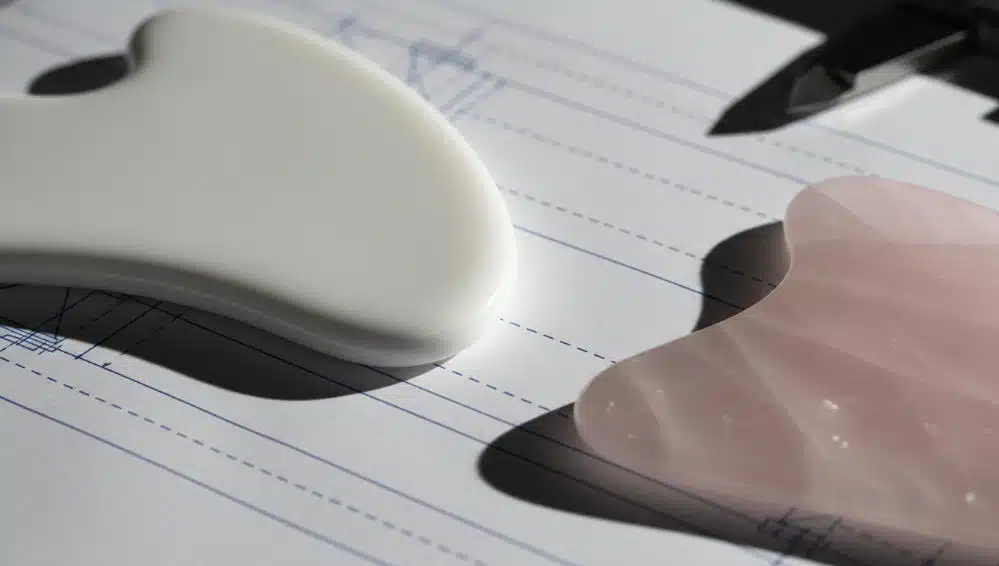
Ceramic Gua Sha Wholesale Price Analysis – From Guasha Factory
Ceramic gua sha has become an increasingly discussed product in the global beauty and wellness industry. As a manufacturer with years of experience producing gua sha tools for international wholesalers and private label brands, we at Deyi Gems have observed clear changes in buyer demand. While traditional materials like rose quartz and jade still dominate the market, ceramic gua sha is quietly becoming a strategic alternative for many distributors. From a factory perspective, wholesale pricing is never random. It is directly influenced by raw material costs, production loss rates, labor intensity, finishing standards, quality control procedures, packaging requirements, and international shipping variables. Therefore, in this article, we will explain in detail how ceramic gua sha wholesale prices are formed. We will also compare ceramic gua sha with rose quartz gua sha to help buyers understand cost differences more clearly and make informed sourcing decisions. Throughout this analysis, we will rely on both manufacturing experience and publicly available industry references, including ceramic production data from organizations such as the American Ceramic Society and global trade data from the International Trade Centre. What Is Ceramic Gua Sha? The Material Nature of Ceramic Gua Sha Ceramic gua sha is made from refined clay materials that are shaped, dried, and fired at high temperatures. Unlike natural stone tools, ceramic tools are engineered materials. This means their color, density, and surface texture can be controlled during manufacturing. According to the American Ceramic Society, advanced ceramics can reach firing temperatures above 1,000°C, which significantly increases hardness and durability. In cosmetic tools, mid-range firing temperatures are typically used to balance strength and cost efficiency. As a result, ceramic gua sha tools have stable shapes, consistent thickness, and smooth edges. Differences Between Ceramic and Natural Stone Gua Sha Rose quartz gua sha is cut directly from natural stone blocks. The formation of quartz takes millions of years under geological pressure. Because of this, each piece has natural veins, color variation, and unpredictable internal fractures. In contrast, ceramic gua sha is manufactured in molds. Every piece can be almost identical. This consistency reduces sorting time and lowers rejection rates during quality inspection. From a wholesale buyer’s perspective, ceramic gua sha offers stable appearance and branding flexibility, while rose quartz offers natural luxury appeal. Raw Material Cost Structure Raw material cost is the first major factor affecting wholesale pricing. However, the cost structure between ceramic and rose quartz is very different. Clay and Mineral Input Costs for Ceramic Gua Sha Ceramic production starts with clay, feldspar, silica, and other mineral additives. These materials are widely available and industrially processed. Compared to gemstone mining, clay extraction has lower environmental and geological limitations. According to global commodity data from the U.S. Geological Survey, silica and feldspar remain relatively stable in supply due to widespread deposits. Therefore, raw material price fluctuations are generally moderate. For a standard ceramic gua sha tool weighing around 60–80 grams, raw material cost is often only a small percentage of the final wholesale price. However, we must also consider production loss. During drying and firing, ceramic pieces can crack or deform. Loss rates typically range between 5% and 15%, depending on factory process control. These losses are calculated into overall cost. Mining and Block Yield in Rose Quartz Gua Sha Rose quartz raw material cost is much more volatile. Quartz mining involves geological extraction, cutting large stone blocks, and transporting heavy materials. Furthermore, not every mined block is suitable for gua sha carving. Natural stone has internal fractures and color inconsistency. After cutting and shaping, usable yield may drop to 50–70% depending on stone quality. The International Trade Centre reports that gemstone trade values fluctuate with mining regulations and export policies, especially from countries like Brazil and Madagascar. Therefore, even before manufacturing begins, rose quartz gua sha already carries higher raw material risk compared to ceramic gua sha. Production and Processing Costs Beyond raw materials, the second major cost factor is processing. Mold Development and Shaping for Ceramic Gua Sha Ceramic gua sha production begins with mold design. Once molds are created, shaping becomes efficient and repeatable. This lowers long-term labor cost for large volume orders. However, mold development requires initial investment. For custom shapes, private label buyers may need to pay mold fees. After shaping, pieces must be dried carefully to prevent cracking. Then, they are fired in kilns at high temperature. Firing consumes significant energy. Industrial kilns operate at over 1,000°C for many hours. Energy cost varies depending on electricity or gas pricing in the manufacturing country. Therefore, ceramic wholesale pricing partially reflects local energy markets. Cutting and Polishing Rose Quartz Gua Sha In contrast, rose quartz gua sha manufacturing is more labor-intensive. Stone blocks are cut into slabs using diamond saws. Each piece is shaped individually and then polished. Polishing natural stone requires water-cooled grinding wheels and multiple abrasive stages. This process consumes time and skilled labor. In addition, broken pieces during shaping directly increase material waste. Therefore, while ceramic production has energy-intensive firing, rose quartz production has higher manual processing time and raw material waste risk. Both cost structures are different, but ceramic is often more scalable in high-volume wholesale production. Surface Finishing and Quality Control Quality finishing is essential for both materials, especially in skincare tools where surface smoothness affects user comfort. Glazing and Surface Treatment in Ceramic Gua Sha Ceramic gua sha can be glazed or left matte. Glazing adds color options and surface shine. However, glazing introduces another firing stage, increasing energy consumption. Factories must also conduct edge smoothing inspections. Even small surface defects can cause skin irritation. Therefore, strict quality control is applied before packaging. Because ceramic production is mold-based, dimensional consistency is usually high. This reduces time spent on individual inspection compared to natural stone tools. Natural Veins and Sorting in Rose Quartz Rose quartz tools must be manually sorted based on color consistency and crack visibility. Buyers often request “AAA grade” material, which requires extra inspection. This sorting stage increases labor cost. Additionally, customer returns are more
Ceramic Gua Sha Wholesale Price Analysis – From Guasha Factory Read More »
Ceramic gua sha has become an increasingly discussed product in the global beauty and wellness industry. As a manufacturer with years of experience producing gua sha tools for international wholesalers and private label brands, we at Deyi Gems have observed clear changes in buyer demand. While traditional materials like rose quartz and jade still dominate the market, ceramic gua sha is quietly becoming a strategic alternative for many distributors. From a factory perspective, wholesale pricing is never random. It is directly influenced by raw material costs, production loss rates, labor intensity, finishing standards, quality control procedures, packaging requirements, and international shipping variables. Therefore, in this article, we will explain in detail how ceramic gua sha wholesale prices are formed. We will also compare ceramic gua sha with rose quartz gua sha to help buyers understand cost differences more clearly and make informed sourcing decisions. Throughout this analysis, we will rely on both manufacturing experience and publicly available industry references, including ceramic production data from organizations such as the American Ceramic Society and global trade data from the International Trade Centre. What Is Ceramic Gua Sha? The Material Nature of Ceramic Gua Sha Ceramic gua sha is made from refined clay materials that are shaped, dried, and fired at high temperatures. Unlike natural stone tools, ceramic tools are engineered materials. This means their color, density, and surface texture can be controlled during manufacturing. According to the American Ceramic Society, advanced ceramics can reach firing temperatures above 1,000°C, which significantly increases hardness and durability. In cosmetic tools, mid-range firing temperatures are typically used to balance strength and cost efficiency. As a result, ceramic gua sha tools have stable shapes, consistent thickness, and smooth edges. Differences Between Ceramic and Natural Stone Gua Sha Rose quartz gua sha is cut directly from natural stone blocks. The formation of quartz takes millions of years under geological pressure. Because of this, each piece has natural veins, color variation, and unpredictable internal fractures. In contrast, ceramic gua sha is manufactured in molds. Every piece can be almost identical. This consistency reduces sorting time and lowers rejection rates during quality inspection. From a wholesale buyer’s perspective, ceramic gua sha offers stable appearance and branding flexibility, while rose quartz offers natural luxury appeal. Raw Material Cost Structure Raw material cost is the first major factor affecting wholesale pricing. However, the cost structure between ceramic and rose quartz is very different. Clay and Mineral Input Costs for Ceramic Gua Sha Ceramic production starts with clay, feldspar, silica, and other mineral additives. These materials are widely available and industrially processed. Compared to gemstone mining, clay extraction has lower environmental and geological limitations. According to global commodity data from the U.S. Geological Survey, silica and feldspar remain relatively stable in supply due to widespread deposits. Therefore, raw material price fluctuations are generally moderate. For a standard ceramic gua sha tool weighing around 60–80 grams, raw material cost is often only a small percentage of the final wholesale price. However, we must also consider production loss. During drying and firing, ceramic pieces can crack or deform. Loss rates typically range between 5% and 15%, depending on factory process control. These losses are calculated into overall cost. Mining and Block Yield in Rose Quartz Gua Sha Rose quartz raw material cost is much more volatile. Quartz mining involves geological extraction, cutting large stone blocks, and transporting heavy materials. Furthermore, not every mined block is suitable for gua sha carving. Natural stone has internal fractures and color inconsistency. After cutting and shaping, usable yield may drop to 50–70% depending on stone quality. The International Trade Centre reports that gemstone trade values fluctuate with mining regulations and export policies, especially from countries like Brazil and Madagascar. Therefore, even before manufacturing begins, rose quartz gua sha already carries higher raw material risk compared to ceramic gua sha. Production and Processing Costs Beyond raw materials, the second major cost factor is processing. Mold Development and Shaping for Ceramic Gua Sha Ceramic gua sha production begins with mold design. Once molds are created, shaping becomes efficient and repeatable. This lowers long-term labor cost for large volume orders. However, mold development requires initial investment. For custom shapes, private label buyers may need to pay mold fees. After shaping, pieces must be dried carefully to prevent cracking. Then, they are fired in kilns at high temperature. Firing consumes significant energy. Industrial kilns operate at over 1,000°C for many hours. Energy cost varies depending on electricity or gas pricing in the manufacturing country. Therefore, ceramic wholesale pricing partially reflects local energy markets. Cutting and Polishing Rose Quartz Gua Sha In contrast, rose quartz gua sha manufacturing is more labor-intensive. Stone blocks are cut into slabs using diamond saws. Each piece is shaped individually and then polished. Polishing natural stone requires water-cooled grinding wheels and multiple abrasive stages. This process consumes time and skilled labor. In addition, broken pieces during shaping directly increase material waste. Therefore, while ceramic production has energy-intensive firing, rose quartz production has higher manual processing time and raw material waste risk. Both cost structures are different, but ceramic is often more scalable in high-volume wholesale production. Surface Finishing and Quality Control Quality finishing is essential for both materials, especially in skincare tools where surface smoothness affects user comfort. Glazing and Surface Treatment in Ceramic Gua Sha Ceramic gua sha can be glazed or left matte. Glazing adds color options and surface shine. However, glazing introduces another firing stage, increasing energy consumption. Factories must also conduct edge smoothing inspections. Even small surface defects can cause skin irritation. Therefore, strict quality control is applied before packaging. Because ceramic production is mold-based, dimensional consistency is usually high. This reduces time spent on individual inspection compared to natural stone tools. Natural Veins and Sorting in Rose Quartz Rose quartz tools must be manually sorted based on color consistency and crack visibility. Buyers often request “AAA grade” material, which requires extra inspection. This sorting stage increases labor cost. Additionally, customer returns are more