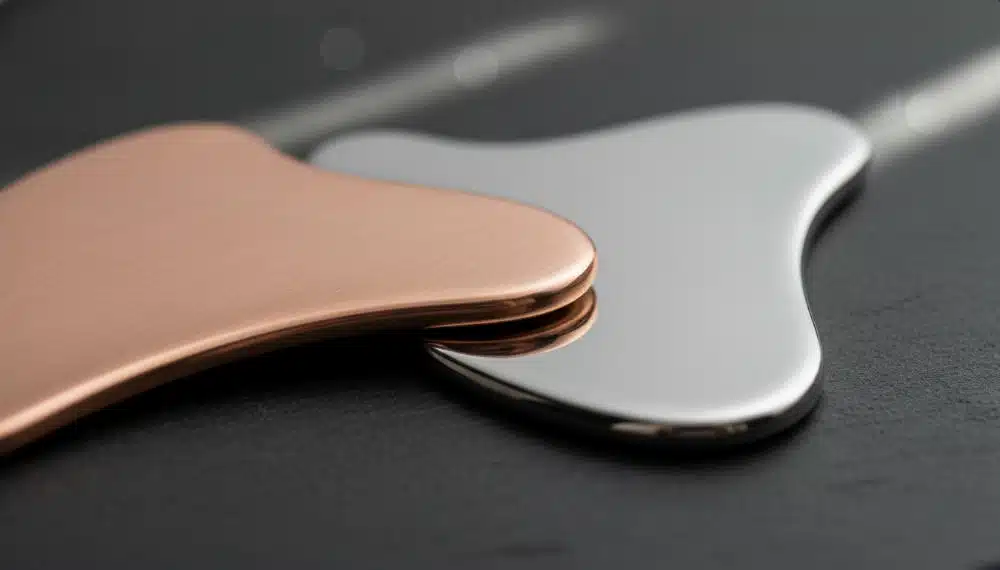
Different about Copper Gua Sha and Stainless Steel Gua Sha
As a manufacturer who has worked for many years in the gua sha and beauty tool industry, we have seen materials rise and fall in popularity. Some trends are driven by marketing, while others are shaped by performance, durability, and cost efficiency. Among all metal tools, copper gua sha and stainless steel gua sha are often compared by professional estheticians, spa brands, and private label buyers. From a distance, both tools may look similar. They are smooth, polished, and designed to glide over the skin. However, when you examine them from a manufacturing perspective—considering raw material cost, processing difficulty, safety compliance, long-term durability, and user experience—the differences become much clearer. In this article, we will explore the contrast between copper gua sha and stainless steel gua sha from multiple angles. We will explain not only how they perform in practice but also how they behave during production. As a direct factory source, our goal is to provide objective and practical insight so that brands and buyers can make informed decisions. Understanding the Core Material: Copper vs Stainless Steel Before discussing performance, we need to understand the base materials. The differences start at the atomic and metallurgical level, and they influence everything from cost to longevity. What Is Copper in Copper Gua Sha? Copper is one of the oldest metals used by humans. It is highly conductive, soft compared to steel, and naturally antimicrobial to a certain degree. According to the U.S. Geological Survey (USGS), copper has been widely used in medical and industrial fields due to its conductivity and corrosion resistance in certain environments (https://www.usgs.gov/centers/national-minerals-information-center/copper-statistics-and-information). In the context of copper gua sha, most tools are made from pure copper or copper alloys such as brass. Brass is primarily a mix of copper and zinc. The percentage of copper typically ranges from 60% to 90%, depending on the formulation. From a factory perspective, copper is a relatively soft metal. This softness makes shaping easier in early processing stages. However, it also introduces surface vulnerability if not properly finished and coated. What Is Stainless Steel in Gua Sha Tools? Stainless steel is an iron-based alloy that contains chromium, usually at least 10.5%. The chromium forms a protective oxide layer that prevents rust. The World Stainless Association explains that this passive layer gives stainless steel its well-known corrosion resistance (https://worldstainless.org/about-stainless/what-is-stainless-steel/). In gua sha production, the most common grades are 304 and 316 stainless steel. Grade 316 contains molybdenum, which improves resistance to corrosion and makes it more suitable for humid environments or professional spa sterilization processes. Unlike copper, stainless steel is harder and more resistant to surface damage. This hardness significantly affects machining, polishing, and tool longevity. Material Cost and Market Fluctuation From a manufacturer’s viewpoint, material cost is one of the first considerations when developing a product line. Raw Material Price Differences Copper prices fluctuate heavily in global commodity markets. According to the London Metal Exchange (LME), copper pricing is influenced by construction demand, electrical infrastructure growth, and global economic conditions. This means copper gua sha tools may experience cost instability. Stainless steel pricing is also influenced by nickel and chromium markets. However, stainless steel is often more stable in mass production due to broader industrial usage and higher supply volume. In general, per kilogram, copper is often more expensive than basic 304 stainless steel. When using 316 stainless steel, the cost gap narrows but remains relatively predictable. Impact on Wholesale Pricing For B2B buyers, copper gua sha tools usually have a slightly higher base material cost. However, the total unit price depends on thickness, finishing method, and surface treatment. Stainless steel tools, especially those made from 304 grade, tend to offer more consistent pricing in large-scale production. As a factory, we often advise brands to consider long-term pricing stability. If your brand targets high-volume retail distribution, stainless steel may offer better cost control over time. Manufacturing Complexity and Processing Differences The real contrast between copper gua sha and stainless steel gua sha becomes evident during machining and finishing. Machining and Shaping Copper is softer, which means it is easier to stamp or cut into rough shapes. However, softness also means edges can deform more easily during handling. This requires extra care in mold design and post-processing. Stainless steel, especially 316 grade, is harder and more resistant to deformation. This improves shape retention but increases tool wear during cutting and CNC machining. Manufacturing stainless steel gua sha tools requires stronger equipment and more time per piece. From our experience, stainless steel machining tools require more frequent replacement, which increases production overhead. Surface Finishing and Polishing Both copper and stainless steel need careful polishing to achieve a smooth skin-safe surface. Copper tends to oxidize quickly when exposed to air. Therefore, copper gua sha tools often require protective coatings such as clear lacquer or electroplating. Without protection, the surface may darken over time due to natural oxidation. Stainless steel, on the other hand, naturally resists rust due to its chromium oxide layer. It does not require coating to prevent corrosion. This reduces one production step and lowers long-term maintenance concerns. Because of this, stainless steel often offers greater consistency in appearance across large batches. Safety and Skin Compatibility Safety is one of the most important factors for professional beauty tools. As manufacturers, we must comply with international safety standards, including regulations related to heavy metal content and surface coatings. Copper and Skin Reaction Considerations Copper itself is generally safe for skin contact. In fact, copper-infused fabrics are sometimes marketed for antimicrobial benefits. The U.S. Environmental Protection Agency (EPA) recognizes certain copper alloys as antimicrobial materials in specific applications (https://www.epa.gov/pesticide-registration/copper-alloys). However, copper oxidation can leave greenish marks on the skin. While these marks are not typically harmful, they may concern consumers. Additionally, if the copper is alloyed with certain metals like lead (in low-quality brass), safety issues may arise. This is why responsible factories must conduct heavy metal testing. At Deyi Gems, we ensure compliance with standards such as REACH in the European Union
Different about Copper Gua Sha and Stainless Steel Gua Sha Read More »
As a manufacturer who has worked for many years in the gua sha and beauty tool industry, we have seen materials rise and fall in popularity. Some trends are driven by marketing, while others are shaped by performance, durability, and cost efficiency. Among all metal tools, copper gua sha and stainless steel gua sha are often compared by professional estheticians, spa brands, and private label buyers. From a distance, both tools may look similar. They are smooth, polished, and designed to glide over the skin. However, when you examine them from a manufacturing perspective—considering raw material cost, processing difficulty, safety compliance, long-term durability, and user experience—the differences become much clearer. In this article, we will explore the contrast between copper gua sha and stainless steel gua sha from multiple angles. We will explain not only how they perform in practice but also how they behave during production. As a direct factory source, our goal is to provide objective and practical insight so that brands and buyers can make informed decisions. Understanding the Core Material: Copper vs Stainless Steel Before discussing performance, we need to understand the base materials. The differences start at the atomic and metallurgical level, and they influence everything from cost to longevity. What Is Copper in Copper Gua Sha? Copper is one of the oldest metals used by humans. It is highly conductive, soft compared to steel, and naturally antimicrobial to a certain degree. According to the U.S. Geological Survey (USGS), copper has been widely used in medical and industrial fields due to its conductivity and corrosion resistance in certain environments (https://www.usgs.gov/centers/national-minerals-information-center/copper-statistics-and-information). In the context of copper gua sha, most tools are made from pure copper or copper alloys such as brass. Brass is primarily a mix of copper and zinc. The percentage of copper typically ranges from 60% to 90%, depending on the formulation. From a factory perspective, copper is a relatively soft metal. This softness makes shaping easier in early processing stages. However, it also introduces surface vulnerability if not properly finished and coated. What Is Stainless Steel in Gua Sha Tools? Stainless steel is an iron-based alloy that contains chromium, usually at least 10.5%. The chromium forms a protective oxide layer that prevents rust. The World Stainless Association explains that this passive layer gives stainless steel its well-known corrosion resistance (https://worldstainless.org/about-stainless/what-is-stainless-steel/). In gua sha production, the most common grades are 304 and 316 stainless steel. Grade 316 contains molybdenum, which improves resistance to corrosion and makes it more suitable for humid environments or professional spa sterilization processes. Unlike copper, stainless steel is harder and more resistant to surface damage. This hardness significantly affects machining, polishing, and tool longevity. Material Cost and Market Fluctuation From a manufacturer’s viewpoint, material cost is one of the first considerations when developing a product line. Raw Material Price Differences Copper prices fluctuate heavily in global commodity markets. According to the London Metal Exchange (LME), copper pricing is influenced by construction demand, electrical infrastructure growth, and global economic conditions. This means copper gua sha tools may experience cost instability. Stainless steel pricing is also influenced by nickel and chromium markets. However, stainless steel is often more stable in mass production due to broader industrial usage and higher supply volume. In general, per kilogram, copper is often more expensive than basic 304 stainless steel. When using 316 stainless steel, the cost gap narrows but remains relatively predictable. Impact on Wholesale Pricing For B2B buyers, copper gua sha tools usually have a slightly higher base material cost. However, the total unit price depends on thickness, finishing method, and surface treatment. Stainless steel tools, especially those made from 304 grade, tend to offer more consistent pricing in large-scale production. As a factory, we often advise brands to consider long-term pricing stability. If your brand targets high-volume retail distribution, stainless steel may offer better cost control over time. Manufacturing Complexity and Processing Differences The real contrast between copper gua sha and stainless steel gua sha becomes evident during machining and finishing. Machining and Shaping Copper is softer, which means it is easier to stamp or cut into rough shapes. However, softness also means edges can deform more easily during handling. This requires extra care in mold design and post-processing. Stainless steel, especially 316 grade, is harder and more resistant to deformation. This improves shape retention but increases tool wear during cutting and CNC machining. Manufacturing stainless steel gua sha tools requires stronger equipment and more time per piece. From our experience, stainless steel machining tools require more frequent replacement, which increases production overhead. Surface Finishing and Polishing Both copper and stainless steel need careful polishing to achieve a smooth skin-safe surface. Copper tends to oxidize quickly when exposed to air. Therefore, copper gua sha tools often require protective coatings such as clear lacquer or electroplating. Without protection, the surface may darken over time due to natural oxidation. Stainless steel, on the other hand, naturally resists rust due to its chromium oxide layer. It does not require coating to prevent corrosion. This reduces one production step and lowers long-term maintenance concerns. Because of this, stainless steel often offers greater consistency in appearance across large batches. Safety and Skin Compatibility Safety is one of the most important factors for professional beauty tools. As manufacturers, we must comply with international safety standards, including regulations related to heavy metal content and surface coatings. Copper and Skin Reaction Considerations Copper itself is generally safe for skin contact. In fact, copper-infused fabrics are sometimes marketed for antimicrobial benefits. The U.S. Environmental Protection Agency (EPA) recognizes certain copper alloys as antimicrobial materials in specific applications (https://www.epa.gov/pesticide-registration/copper-alloys). However, copper oxidation can leave greenish marks on the skin. While these marks are not typically harmful, they may concern consumers. Additionally, if the copper is alloyed with certain metals like lead (in low-quality brass), safety issues may arise. This is why responsible factories must conduct heavy metal testing. At Deyi Gems, we ensure compliance with standards such as REACH in the European Union