The Hidden Cost of Ignoring Packaging in Gua Sha Wholesale: What Every Buyer Must Know Before Placing Your Next Order
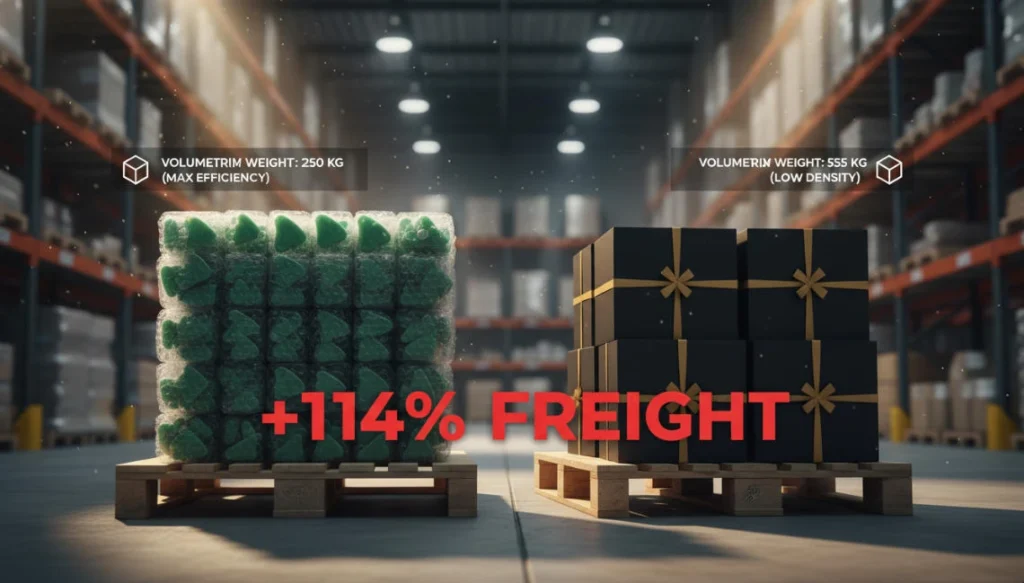
Here is a number that most buyers in the gua sha wholesale market have never calculated: gift box packaging increases per-unit shipping costs by an average of 114% compared to bulk goods. Based on an internal review of 1,436 fulfilled orders processed in 2025, 1,023 shipments were delivered in gift box format — and every single one of those buyers paid more than double the per-unit freight of their bulk-shipping counterparts. The question is not whether packaging adds cost. The real question is whether you are factoring that cost into your procurement model before the invoice arrives. If you are sourcing gua sha wholesale for e-commerce, retail, spa distribution, or private label, the packaging decision you make at the inquiry stage will ripple through your logistics budget, your end-customer retention rate, your brand equity, and your supplier negotiation outcomes. Most buyers treat packaging as the last item on the checklist. In practice, it is one of the first variables that determines whether a wholesale order is profitable. This article breaks down exactly why packaging is the most consistently underestimated factor in gua sha wholesale procurement — and what a structurally sound packaging strategy actually looks like across five dimensions: cost, channel fit, product protection, brand development, and supplier capability. The Real Numbers: How the Wrong Packaging Decision Quietly Inflates Your Gua Sha Wholesale Cost by Over 100% Most procurement professionals in the gua sha wholesale space build their cost models around three variables: unit price, tariff, and freight. The packaging format is rarely treated as a cost driver in its own right. That assumption is expensive. Packaging geometry, weight distribution, and box dimensions directly determine how carriers calculate billable weight — and in cross-border logistics, the gap between actual weight and volumetric weight can more than double your per-unit shipping cost before a single tool leaves the warehouse. What 1,436 Real Orders Actually Tell You About Packaging Costs The data here does not come from an industry survey or a logistics white paper. It comes from 1,436 fulfilled gua sha wholesale orders processed through Deyi Gems’ production and export pipeline in 2025. Of those orders, 1,023 were shipped in gift box packaging — 816 of which were fully customized gift boxes — while the remaining 413 orders were shipped as bulk goods. When per-unit freight costs were isolated across both groups, the gift box shipments averaged 2.14 times the per-unit shipping cost of bulk orders. In practical terms: if your bulk per-unit freight is $1.00 per piece, your gift box per-unit freight is running at approximately $2.14. That 114% premium is not a rounding error — it is a structural cost gap driven by the physics of international freight billing. Bulk Packaging Standard Gift Box Custom Gift Box Per-unit freight (index) $1.00 $2.14 $2.14+ Premium vs bulk — +114% +114%+ Orders in 2025 413 207 816 Share of total orders 28.8% 14.4% 56.8% Volumetric weight impact Low High High Carton density High Medium Low–Medium Recommended for B2B distributor / internal use Entry-level retail E-commerce / gift retail / brand building True Landed Cost Formula: Cost Component Bulk Gift Box Unit price ✓ ✓ Packaging cost per unit Low Medium–High Volumetric freight per unit (key variable) $1.00 baseline ~$2.14 average Import duty ✓ ✓ Last-mile delivery ✓ ✓ Total landed cost Lower upfront Higher — but enables higher retail price Data source: 1,436 fulfilled gua sha wholesale orders, Deyi Gems 2025. Volumetric weight calculated per IATA standard: L × W × H (cm) ÷ 5,000. Gift box packaging typically increases per-unit volumetric displacement by 3–5×. Individual lane costs vary by destination market and carrier. Why Gift Box Gua Sha Tools Cost More to Ship: The Logistics Mechanics Understanding the mechanics behind this cost gap is the first step toward controlling it. A raw gua sha scraping tool — say, a standard rose quartz board measuring 8cm × 5cm × 0.8cm — has a compact, dense profile that ships efficiently in bulk cartons. When that same tool is placed inside a rigid gift box with an EVA foam inlay, a magnetic closure lid, and a branded sleeve, its shipping footprint expands significantly. The box might measure 14cm × 10cm × 4cm, which more than quadruples the volumetric displacement per unit. Multiply that across 500 pieces per carton, and your carton count doubles — which directly increases freight line items, handling charges, and in some destination countries, customs processing fees calculated per carton. This is not an argument against gift box packaging. In fact, as the order data shows, 71.2% of buyers in the 2025 dataset chose gift box formats — a clear signal that the market has moved decisively toward presentation-grade packaging. The argument is for informed cost modeling. Buyers who enter a gua sha wholesale negotiation with only unit price and bulk freight rates in mind will consistently underestimate their true landed cost per piece. According to Flexport’s cross-border logistics benchmarking data, packaging-related dimensional weight surcharges account for an estimated 18–25% of total air freight invoices for consumer goods in the health and beauty category — a figure most buyers only discover after their first shipment clears customs. How to Calculate Your True Landed Cost Per Gua Sha Tool Before placing any gua sha wholesale order, your cost model should include at minimum five components: product unit price, packaging cost per unit, per-unit freight (calculated on volumetric weight, not actual weight), destination tariff or import duty, and final-mile delivery cost if applicable. The formula is straightforward: True Landed Cost = Unit Price + Packaging Cost + Volumetric Freight Per Unit + Duty + Last-Mile Cost. Running this calculation before you finalize your packaging format — not after — is what separates buyers who hit margin targets from those who renegotiate at the point of invoice. You should also account for packaging-related cost offsets that work in your favor. A well-designed gift box that ships retail-ready eliminates secondary packaging labor at your warehouse or fulfillment center. A structurally sound inner inlay
Here is a number that most buyers in the gua sha wholesale market have never calculated: gift box packaging increases per-unit shipping costs by an average of 114% compared to bulk goods. Based on an internal review of 1,436 fulfilled orders processed in 2025, 1,023 shipments were delivered in gift box format — and every single one of those buyers paid more than double the per-unit freight of their bulk-shipping counterparts. The question is not whether packaging adds cost. The real question is whether you are factoring that cost into your procurement model before the invoice arrives. If you are sourcing gua sha wholesale for e-commerce, retail, spa distribution, or private label, the packaging decision you make at the inquiry stage will ripple through your logistics budget, your end-customer retention rate, your brand equity, and your supplier negotiation outcomes. Most buyers treat packaging as the last item on the checklist. In practice, it is one of the first variables that determines whether a wholesale order is profitable. This article breaks down exactly why packaging is the most consistently underestimated factor in gua sha wholesale procurement — and what a structurally sound packaging strategy actually looks like across five dimensions: cost, channel fit, product protection, brand development, and supplier capability. The Real Numbers: How the Wrong Packaging Decision Quietly Inflates Your Gua Sha Wholesale Cost by Over 100% Most procurement professionals in the gua sha wholesale space build their cost models around three variables: unit price, tariff, and freight. The packaging format is rarely treated as a cost driver in its own right. That assumption is expensive. Packaging geometry, weight distribution, and box dimensions directly determine how carriers calculate billable weight — and in cross-border logistics, the gap between actual weight and volumetric weight can more than double your per-unit shipping cost before a single tool leaves the warehouse. What 1,436 Real Orders Actually Tell You About Packaging Costs The data here does not come from an industry survey or a logistics white paper. It comes from 1,436 fulfilled gua sha wholesale orders processed through Deyi Gems’ production and export pipeline in 2025. Of those orders, 1,023 were shipped in gift box packaging — 816 of which were fully customized gift boxes — while the remaining 413 orders were shipped as bulk goods. When per-unit freight costs were isolated across both groups, the gift box shipments averaged 2.14 times the per-unit shipping cost of bulk orders. In practical terms: if your bulk per-unit freight is $1.00 per piece, your gift box per-unit freight is running at approximately $2.14. That 114% premium is not a rounding error — it is a structural cost gap driven by the physics of international freight billing. Bulk Packaging Standard Gift Box Custom Gift Box Per-unit freight (index) $1.00 $2.14 $2.14+ Premium vs bulk — +114% +114%+ Orders in 2025 413 207 816 Share of total orders 28.8% 14.4% 56.8% Volumetric weight impact Low High High Carton density High Medium Low–Medium Recommended for B2B distributor / internal use Entry-level retail E-commerce / gift retail / brand building True Landed Cost Formula: Cost Component Bulk Gift Box Unit price ✓ ✓ Packaging cost per unit Low Medium–High Volumetric freight per unit (key variable) $1.00 baseline ~$2.14 average Import duty ✓ ✓ Last-mile delivery ✓ ✓ Total landed cost Lower upfront Higher — but enables higher retail price Data source: 1,436 fulfilled gua sha wholesale orders, Deyi Gems 2025. Volumetric weight calculated per IATA standard: L × W × H (cm) ÷ 5,000. Gift box packaging typically increases per-unit volumetric displacement by 3–5×. Individual lane costs vary by destination market and carrier. Why Gift Box Gua Sha Tools Cost More to Ship: The Logistics Mechanics Understanding the mechanics behind this cost gap is the first step toward controlling it. A raw gua sha scraping tool — say, a standard rose quartz board measuring 8cm × 5cm × 0.8cm — has a compact, dense profile that ships efficiently in bulk cartons. When that same tool is placed inside a rigid gift box with an EVA foam inlay, a magnetic closure lid, and a branded sleeve, its shipping footprint expands significantly. The box might measure 14cm × 10cm × 4cm, which more than quadruples the volumetric displacement per unit. Multiply that across 500 pieces per carton, and your carton count doubles — which directly increases freight line items, handling charges, and in some destination countries, customs processing fees calculated per carton. This is not an argument against gift box packaging. In fact, as the order data shows, 71.2% of buyers in the 2025 dataset chose gift box formats — a clear signal that the market has moved decisively toward presentation-grade packaging. The argument is for informed cost modeling. Buyers who enter a gua sha wholesale negotiation with only unit price and bulk freight rates in mind will consistently underestimate their true landed cost per piece. According to Flexport’s cross-border logistics benchmarking data, packaging-related dimensional weight surcharges account for an estimated 18–25% of total air freight invoices for consumer goods in the health and beauty category — a figure most buyers only discover after their first shipment clears customs. How to Calculate Your True Landed Cost Per Gua Sha Tool Before placing any gua sha wholesale order, your cost model should include at minimum five components: product unit price, packaging cost per unit, per-unit freight (calculated on volumetric weight, not actual weight), destination tariff or import duty, and final-mile delivery cost if applicable. The formula is straightforward: True Landed Cost = Unit Price + Packaging Cost + Volumetric Freight Per Unit + Duty + Last-Mile Cost. Running this calculation before you finalize your packaging format — not after — is what separates buyers who hit margin targets from those who renegotiate at the point of invoice. You should also account for packaging-related cost offsets that work in your favor. A well-designed gift box that ships retail-ready eliminates secondary packaging labor at your warehouse or fulfillment center. A structurally sound inner inlay