Stainless Steel Gua Sha Wholesale Fraud Exposed: 5 Hidden Risks That Could Be Costing Your Business Right Now
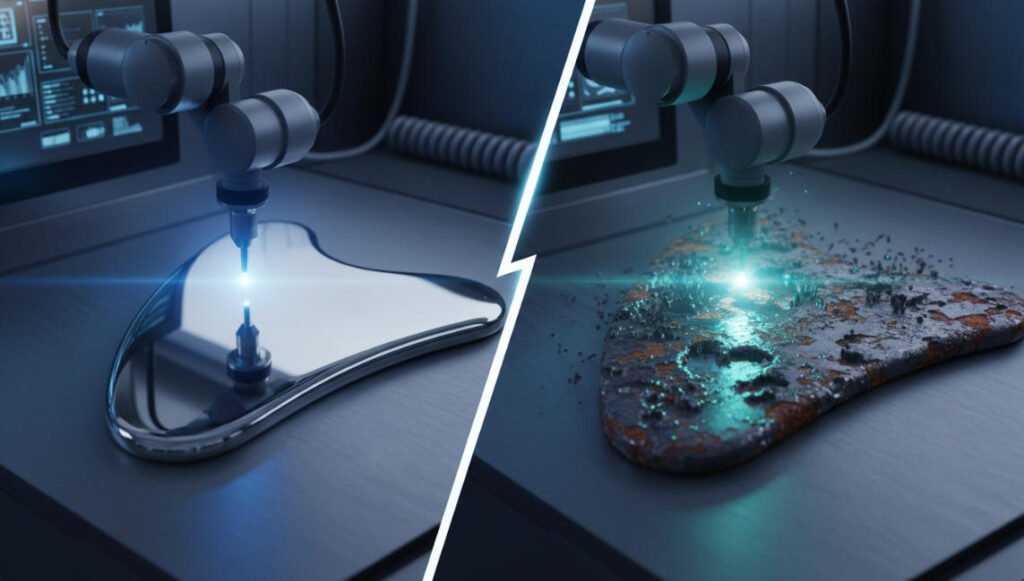
When evaluating stainless steel gua sha wholesale options, the most dangerous threats to your business are not the ones you can see during an initial sample inspection — they are the ones deliberately engineered to remain invisible. In a 2025 internal market audit, 30 gua sha tools from 30 different suppliers were purchased and independently tested. Every single one was labeled “304 stainless steel.” The results were unambiguous: among the 10 lowest-priced samples — those priced more than 20% below prevailing wholesale benchmarks — 8 out of 10 failed material verification entirely. Even within the standard price bracket, 4 out of 10 did not meet the 304 stainless steel specification they claimed. This is not an anecdote. It is a pattern. And if your procurement process relies on supplier self-declaration, you are already exposed. The stainless steel gua sha market has expanded rapidly alongside global wellness trends, and that growth has attracted manufacturers whose primary competitive advantage is not quality — it is the appearance of quality. For any buyer operating in wholesale volumes, the financial and reputational consequences of sourcing adulterated or misrepresented products are compounding: customer returns, brand liability, regulatory scrutiny, and the loss of accounts that took years to build. Understanding where the fraud occurs, and how to detect it before it reaches your warehouse, is not optional due diligence. It is the foundational business risk you need to address before your next purchase order is signed. What a 30-Supplier Market Test Revealed About Stainless Steel Gua Sha Wholesale Quality The internal audit referenced above was structured around three price tiers. The first tier — suppliers pricing more than 20% below standard stainless steel gua sha wholesale rates — produced the most damaging results: 8 of 10 tools confirmed as material substitution fraud, with the remaining 2 meeting 304 specifications but exhibiting measurably substandard surface polishing. The second tier — suppliers within a 20% band of standard pricing — showed 4 of 10 failing material verification, with an additional 2 passing material tests but displaying polishing quality inconsistencies. The third tier — suppliers pricing more than 20% above standard stainless steel gua sha wholesale benchmarks — produced the cleanest results: all 10 met 304 stainless steel standards, with 9 demonstrating acceptable polishing and only 1 falling short on surface finish. It is important to be transparent about the limitations of this data. The sample size of 30 is statistically narrow, and the testing methodology is internal rather than third-party accredited. These figures should be treated as directional evidence, not industry-wide benchmarks. That said, the directional signal is consistent with what experienced sourcing professionals observe repeatedly: price compression below a material threshold is almost always achieved through material substitution, not operational efficiency. The question is not whether fraud exists in the stainless steel gua sha wholesale supply chain — the question is whether your current verification process is capable of catching it. This means you need a procurement framework that goes beyond certificate requests and visual inspection, because neither of those methods is sufficient to detect what experienced counterfeiters have spent years learning to disguise. 30-Supplier Market Audit Results (June 2025) Price Tier Sample Count Confirmed Material Fraud Passed 304 Verification Poor Polishing (304 Confirmed) Full Pass >20% Below Benchmark 10 8 (80%) 2 (20%) 2 of 2 passed 0 (0%) Within ±20% of Benchmark 10 4 (40%) 6 (60%) 2 of 6 passed 4 (40%) >20% Above Benchmark 10 0 (0%) 10 (100%) 1 of 10 passed 9 (90%) Total 30 12 (40%) 18 (60%) 5 (28% of passed) 13 (43%) Data source: Deyi Gems internal procurement audit, June 2025. Sample size is limited (n=30). Findings are directional and not statistically representative of the broader market. A 6-Week Salt Water Immersion Test That Reframes the Material Risk Conversation To move beyond price-tier analysis, a parallel material durability test was conducted in the same period. Two groups of 10 gua sha tools — one manufactured from 201 stainless steel, one from 304 stainless steel — were submerged in identical saline solutions under controlled conditions. The 201 stainless steel group began showing surface rust in individual samples by Week 2. By Week 3, 5 out of 10 exhibited visible corrosion. The deterioration accelerated: by Week 5, 9 out of 10 had developed rust points, and by Week 6, every sample in the 201 group showed measurable surface degradation. The 304 stainless steel group showed zero corrosion across the entire two-month observation window. Why does this matter to your business specifically? Because your end customers are not using gua sha tools in controlled lab conditions — they are using them in humid environments, with skincare serums and oils, repeatedly over months and years. A tool that begins rusting within weeks of regular use does not just generate refund requests. It generates negative reviews that suppress organic conversion, social media complaints that erode brand credibility, and in markets with cosmetic tool safety regulations, potential liability exposure. According to ASTM International’s standard specifications for stainless steel, grade differentiation between 201 and 304 alloys is defined by nickel and chromium content ratios — differences that are invisible to the naked eye but structurally decisive in terms of corrosion resistance and long-term material integrity. This means that accepting a supplier’s verbal or printed “304 SS” claim, without third-party material verification, is accepting a risk whose consequences are paid for not by your supplier — but by your customers, and ultimately, by your brand. Salt Water Immersion Corrosion Test: 201 SS vs. 304 SS (June 2025) Week 201 Stainless Steel (n=10) — Rust Points Detected 304 Stainless Steel (n=10) — Rust Points Detected Week 2 2 / 10 samples (20%) 0 / 10 samples (0%) Week 3 5 / 10 samples (50%) 0 / 10 samples (0%) Week 4 7 / 10 samples (70%) 0 / 10 samples (0%) Week 5 9 / 10 samples (90%) 0 / 10 samples (0%) Week 6 10 / 10 samples (100%) 0 / 10 samples (0%) Week
When evaluating stainless steel gua sha wholesale options, the most dangerous threats to your business are not the ones you can see during an initial sample inspection — they are the ones deliberately engineered to remain invisible. In a 2025 internal market audit, 30 gua sha tools from 30 different suppliers were purchased and independently tested. Every single one was labeled “304 stainless steel.” The results were unambiguous: among the 10 lowest-priced samples — those priced more than 20% below prevailing wholesale benchmarks — 8 out of 10 failed material verification entirely. Even within the standard price bracket, 4 out of 10 did not meet the 304 stainless steel specification they claimed. This is not an anecdote. It is a pattern. And if your procurement process relies on supplier self-declaration, you are already exposed. The stainless steel gua sha market has expanded rapidly alongside global wellness trends, and that growth has attracted manufacturers whose primary competitive advantage is not quality — it is the appearance of quality. For any buyer operating in wholesale volumes, the financial and reputational consequences of sourcing adulterated or misrepresented products are compounding: customer returns, brand liability, regulatory scrutiny, and the loss of accounts that took years to build. Understanding where the fraud occurs, and how to detect it before it reaches your warehouse, is not optional due diligence. It is the foundational business risk you need to address before your next purchase order is signed. What a 30-Supplier Market Test Revealed About Stainless Steel Gua Sha Wholesale Quality The internal audit referenced above was structured around three price tiers. The first tier — suppliers pricing more than 20% below standard stainless steel gua sha wholesale rates — produced the most damaging results: 8 of 10 tools confirmed as material substitution fraud, with the remaining 2 meeting 304 specifications but exhibiting measurably substandard surface polishing. The second tier — suppliers within a 20% band of standard pricing — showed 4 of 10 failing material verification, with an additional 2 passing material tests but displaying polishing quality inconsistencies. The third tier — suppliers pricing more than 20% above standard stainless steel gua sha wholesale benchmarks — produced the cleanest results: all 10 met 304 stainless steel standards, with 9 demonstrating acceptable polishing and only 1 falling short on surface finish. It is important to be transparent about the limitations of this data. The sample size of 30 is statistically narrow, and the testing methodology is internal rather than third-party accredited. These figures should be treated as directional evidence, not industry-wide benchmarks. That said, the directional signal is consistent with what experienced sourcing professionals observe repeatedly: price compression below a material threshold is almost always achieved through material substitution, not operational efficiency. The question is not whether fraud exists in the stainless steel gua sha wholesale supply chain — the question is whether your current verification process is capable of catching it. This means you need a procurement framework that goes beyond certificate requests and visual inspection, because neither of those methods is sufficient to detect what experienced counterfeiters have spent years learning to disguise. 30-Supplier Market Audit Results (June 2025) Price Tier Sample Count Confirmed Material Fraud Passed 304 Verification Poor Polishing (304 Confirmed) Full Pass >20% Below Benchmark 10 8 (80%) 2 (20%) 2 of 2 passed 0 (0%) Within ±20% of Benchmark 10 4 (40%) 6 (60%) 2 of 6 passed 4 (40%) >20% Above Benchmark 10 0 (0%) 10 (100%) 1 of 10 passed 9 (90%) Total 30 12 (40%) 18 (60%) 5 (28% of passed) 13 (43%) Data source: Deyi Gems internal procurement audit, June 2025. Sample size is limited (n=30). Findings are directional and not statistically representative of the broader market. A 6-Week Salt Water Immersion Test That Reframes the Material Risk Conversation To move beyond price-tier analysis, a parallel material durability test was conducted in the same period. Two groups of 10 gua sha tools — one manufactured from 201 stainless steel, one from 304 stainless steel — were submerged in identical saline solutions under controlled conditions. The 201 stainless steel group began showing surface rust in individual samples by Week 2. By Week 3, 5 out of 10 exhibited visible corrosion. The deterioration accelerated: by Week 5, 9 out of 10 had developed rust points, and by Week 6, every sample in the 201 group showed measurable surface degradation. The 304 stainless steel group showed zero corrosion across the entire two-month observation window. Why does this matter to your business specifically? Because your end customers are not using gua sha tools in controlled lab conditions — they are using them in humid environments, with skincare serums and oils, repeatedly over months and years. A tool that begins rusting within weeks of regular use does not just generate refund requests. It generates negative reviews that suppress organic conversion, social media complaints that erode brand credibility, and in markets with cosmetic tool safety regulations, potential liability exposure. According to ASTM International’s standard specifications for stainless steel, grade differentiation between 201 and 304 alloys is defined by nickel and chromium content ratios — differences that are invisible to the naked eye but structurally decisive in terms of corrosion resistance and long-term material integrity. This means that accepting a supplier’s verbal or printed “304 SS” claim, without third-party material verification, is accepting a risk whose consequences are paid for not by your supplier — but by your customers, and ultimately, by your brand. Salt Water Immersion Corrosion Test: 201 SS vs. 304 SS (June 2025) Week 201 Stainless Steel (n=10) — Rust Points Detected 304 Stainless Steel (n=10) — Rust Points Detected Week 2 2 / 10 samples (20%) 0 / 10 samples (0%) Week 3 5 / 10 samples (50%) 0 / 10 samples (0%) Week 4 7 / 10 samples (70%) 0 / 10 samples (0%) Week 5 9 / 10 samples (90%) 0 / 10 samples (0%) Week 6 10 / 10 samples (100%) 0 / 10 samples (0%) Week