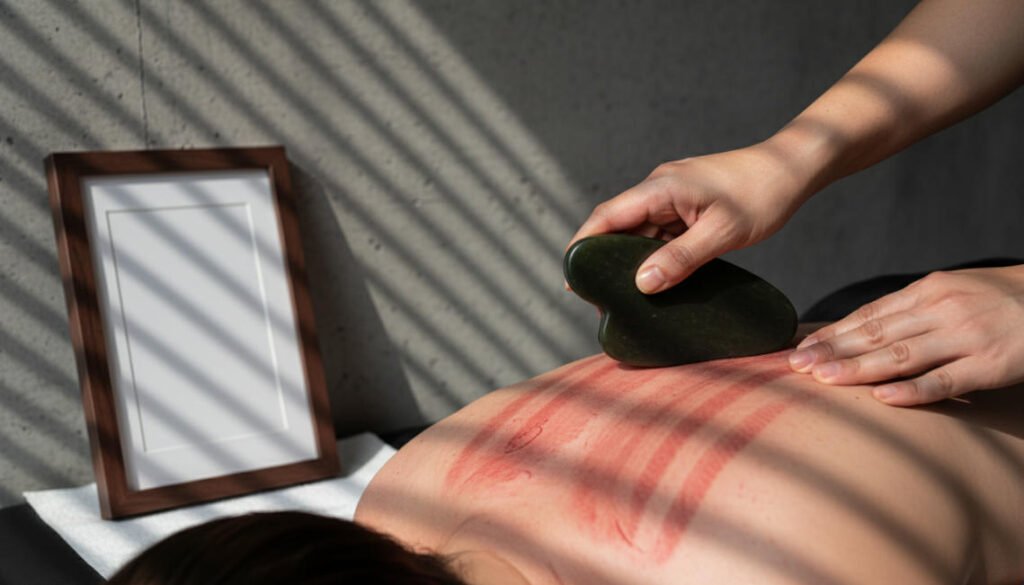
Is Gua Sha Legit? The Hidden Risks Behind Unlicensed Gua Sha Services
If you’ve ever paid $150 for a “medical-grade gua sha treatment” and walked away wondering why the results felt no different from a $60 spa session — you may have been overcharged, undertreated, and legally unprotected all at once. Is gua sha legit? The short answer is yes — the tool itself is completely legal across Asia, North America, and Europe. But the service behind it? That’s where the legal and physical risks begin. Consumers are routinely paying medical-tier prices for beauty-tier services, delivered by practitioners who hold no qualifying credentials. And in some cases, those same practitioners are using substandard tools that introduce skin and circulatory risks that a licensed provider would never allow. Before you book your next session — or place your next B2B order — here’s what the industry won’t tell you. The Tool Is Legal. The Service Behind It May Not Be. There is a persistent misconception in the wellness market: because gua sha tools are sold openly on Amazon, in spas, and through health retailers, the entire practice must fall under a single legal umbrella. It does not. Gua sha as a physical instrument — whether crafted from jade, rose quartz, or bian stone — is a legal consumer product in every major market it serves. Regulatory bodies in the United States, the European Union, and across Southeast Asia do not restrict the manufacture or general sale of gua sha tools. What they do regulate, often rigorously, is the context in which those tools are used and the claims made about what they can do. Why the Tool Itself Is Not the Legal Variable The legal status of a gua sha tool is fixed: it is a wellness or cosmetic product until someone changes its designation through the claims they make about it. A jade facial roller sold as a skincare accessory on a beauty website sits in an entirely different regulatory category than the same tool marketed as a device capable of “treating chronic inflammation” or “accelerating lymphatic drainage for diagnosed conditions.” The moment a seller, clinic, or practitioner attaches a medical claim to the tool or the service, an entirely different body of law applies. In the United States, this falls under FDA oversight for medical devices. In the EU, it triggers compliance requirements under the EU Medical Device Regulation (MDR 2017/745). Ignoring these thresholds is not a gray area — it is a prosecutable violation. The Two Tracks That Define Gua Sha Legality Every gua sha business, whether a manufacturing operation, a retail brand, or a treatment clinic, operates on one of two distinct legal tracks. The first is the beauty and general wellness track, which covers facial gua sha, relaxation massage, and daily self-care tools sold without medical claims. This category requires no special medical licensing, no clinical certification, and no government-issued healthcare registration — as long as the business itself is operating lawfully. The second is the medical or therapeutic track, which applies the moment a practitioner or brand claims that gua sha can treat, diagnose, or prevent any health condition. This track demands practitioner licensure, institutional accreditation, liability insurance calibrated for clinical services, and in some markets, product registration as a Class I or Class II medical device. Understanding which track your provider — or your product — sits on is the single most important question you can ask before spending money or accepting risk. The $150 Price Gap — How Unlicensed Clinics Cost You More Than Money One of the most financially damaging patterns in the gua sha market is also one of the least discussed. Consumers walk into clinics that advertise “medical-grade gua sha therapy,” pay accordingly, and leave having received nothing more than a standard beauty treatment delivered by someone without the training — or the legal authority — to provide anything more. This is not a rare edge case. Based on market surveys covering both in-person clinics and institutional pricing published on provider websites, the pricing gap between beauty-tier and medical-tier gua sha services is significant and consistent: beauty gua sha sessions typically run between $50 and $100 per visit, while sessions marketed as medical or therapeutic gua sha are priced between $80 and $200 per session. That gap exists for legitimate reasons. When those reasons are absent — when the clinic lacks credentials but keeps the premium price — you absorb the entire financial loss with no recourse. Why Medical Gua Sha Costs More — and Why That Premium Is Justified The price differential between beauty and medical gua sha is not arbitrary, and understanding its structure helps you identify when you’re being charged fairly versus when you’re being exploited. Medical-tier gua sha costs more because it is more — across four measurable dimensions. First, labor costs are substantially higher: licensed practitioners — whether they hold Traditional Chinese Medicine (TCM) certifications, acupuncture licenses, or physical therapy credentials — spend years acquiring qualifications that command higher compensation. Second, service depth differs meaningfully: a medical gua sha session involves intake assessment, contraindication screening, pressure calibration based on the patient’s condition, and post-treatment monitoring. A beauty session involves none of these steps. Third, session structure reflects the difference: medical gua sha is typically integrated into a multi-session treatment plan with documented progress tracking, whereas a beauty session is a standalone experience with no clinical continuity. Fourth, and perhaps most importantly, legal and liability costs are built into every medical-tier session: malpractice insurance, clinical compliance overhead, and regulatory filing requirements add real operational costs that licensed providers must absorb. When you pay $160 for a session, a meaningful portion of that is purchasing protection — yours and theirs. The Trap: Medical Pricing, Beauty Execution Here is where the financial risk becomes concrete. An unlicensed clinic that markets itself as offering “therapeutic” or “medical-grade” gua sha carries none of the four cost structures described above. They pay standard beauty labor rates, they perform standard beauty-depth service, they run no intake assessment, and they carry no clinical liability
Is Gua Sha Legit? The Hidden Risks Behind Unlicensed Gua Sha Services Read More »
If you’ve ever paid $150 for a “medical-grade gua sha treatment” and walked away wondering why the results felt no different from a $60 spa session — you may have been overcharged, undertreated, and legally unprotected all at once. Is gua sha legit? The short answer is yes — the tool itself is completely legal across Asia, North America, and Europe. But the service behind it? That’s where the legal and physical risks begin. Consumers are routinely paying medical-tier prices for beauty-tier services, delivered by practitioners who hold no qualifying credentials. And in some cases, those same practitioners are using substandard tools that introduce skin and circulatory risks that a licensed provider would never allow. Before you book your next session — or place your next B2B order — here’s what the industry won’t tell you. The Tool Is Legal. The Service Behind It May Not Be. There is a persistent misconception in the wellness market: because gua sha tools are sold openly on Amazon, in spas, and through health retailers, the entire practice must fall under a single legal umbrella. It does not. Gua sha as a physical instrument — whether crafted from jade, rose quartz, or bian stone — is a legal consumer product in every major market it serves. Regulatory bodies in the United States, the European Union, and across Southeast Asia do not restrict the manufacture or general sale of gua sha tools. What they do regulate, often rigorously, is the context in which those tools are used and the claims made about what they can do. Why the Tool Itself Is Not the Legal Variable The legal status of a gua sha tool is fixed: it is a wellness or cosmetic product until someone changes its designation through the claims they make about it. A jade facial roller sold as a skincare accessory on a beauty website sits in an entirely different regulatory category than the same tool marketed as a device capable of “treating chronic inflammation” or “accelerating lymphatic drainage for diagnosed conditions.” The moment a seller, clinic, or practitioner attaches a medical claim to the tool or the service, an entirely different body of law applies. In the United States, this falls under FDA oversight for medical devices. In the EU, it triggers compliance requirements under the EU Medical Device Regulation (MDR 2017/745). Ignoring these thresholds is not a gray area — it is a prosecutable violation. The Two Tracks That Define Gua Sha Legality Every gua sha business, whether a manufacturing operation, a retail brand, or a treatment clinic, operates on one of two distinct legal tracks. The first is the beauty and general wellness track, which covers facial gua sha, relaxation massage, and daily self-care tools sold without medical claims. This category requires no special medical licensing, no clinical certification, and no government-issued healthcare registration — as long as the business itself is operating lawfully. The second is the medical or therapeutic track, which applies the moment a practitioner or brand claims that gua sha can treat, diagnose, or prevent any health condition. This track demands practitioner licensure, institutional accreditation, liability insurance calibrated for clinical services, and in some markets, product registration as a Class I or Class II medical device. Understanding which track your provider — or your product — sits on is the single most important question you can ask before spending money or accepting risk. The $150 Price Gap — How Unlicensed Clinics Cost You More Than Money One of the most financially damaging patterns in the gua sha market is also one of the least discussed. Consumers walk into clinics that advertise “medical-grade gua sha therapy,” pay accordingly, and leave having received nothing more than a standard beauty treatment delivered by someone without the training — or the legal authority — to provide anything more. This is not a rare edge case. Based on market surveys covering both in-person clinics and institutional pricing published on provider websites, the pricing gap between beauty-tier and medical-tier gua sha services is significant and consistent: beauty gua sha sessions typically run between $50 and $100 per visit, while sessions marketed as medical or therapeutic gua sha are priced between $80 and $200 per session. That gap exists for legitimate reasons. When those reasons are absent — when the clinic lacks credentials but keeps the premium price — you absorb the entire financial loss with no recourse. Why Medical Gua Sha Costs More — and Why That Premium Is Justified The price differential between beauty and medical gua sha is not arbitrary, and understanding its structure helps you identify when you’re being charged fairly versus when you’re being exploited. Medical-tier gua sha costs more because it is more — across four measurable dimensions. First, labor costs are substantially higher: licensed practitioners — whether they hold Traditional Chinese Medicine (TCM) certifications, acupuncture licenses, or physical therapy credentials — spend years acquiring qualifications that command higher compensation. Second, service depth differs meaningfully: a medical gua sha session involves intake assessment, contraindication screening, pressure calibration based on the patient’s condition, and post-treatment monitoring. A beauty session involves none of these steps. Third, session structure reflects the difference: medical gua sha is typically integrated into a multi-session treatment plan with documented progress tracking, whereas a beauty session is a standalone experience with no clinical continuity. Fourth, and perhaps most importantly, legal and liability costs are built into every medical-tier session: malpractice insurance, clinical compliance overhead, and regulatory filing requirements add real operational costs that licensed providers must absorb. When you pay $160 for a session, a meaningful portion of that is purchasing protection — yours and theirs. The Trap: Medical Pricing, Beauty Execution Here is where the financial risk becomes concrete. An unlicensed clinic that markets itself as offering “therapeutic” or “medical-grade” gua sha carries none of the four cost structures described above. They pay standard beauty labor rates, they perform standard beauty-depth service, they run no intake assessment, and they carry no clinical liability