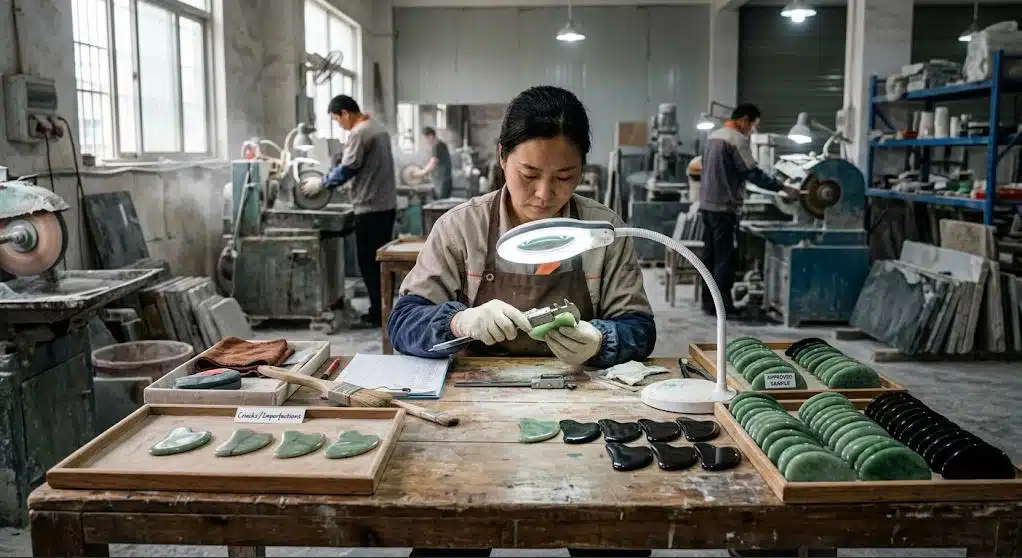
Gua Sha Quality Control: The Real Cost Buyers and Manufacturers Both Pay When It Fails
When a batch of gua sha tools comes back with hairline cracks, uneven polish, or a green that doesn’t match the sample you approved, the sticker price of the defect is almost never the real cost. The American Society for Quality has found that quality-related failures typically consume 10% to 20% of a gua sha manufacturer‘s sales revenue once rework, re-shipping, and customer service hours are added on top of the defective units themselves (ASQ). Gua sha quality problems behave the same way on both sides of a purchase order. If you’re sourcing for your own brand, a defect rate of two or three percent can turn into a bill several times larger than the product itself. If you’re running the factory floor, that same defect eats CNC time, polishing labor, a production slot that belonged to someone else’s order, and often a gua sha after sale bill that lands weeks later. Neither side gets to walk away clean — which is exactly why this deserves a look from both directions before it happens, not after. That’s the core of every gua sha quality conversation this article walks through. Why Gua Sha Quality Problems Are Never a One-Sided Risk A cracked stone, a shade of green that doesn’t match last month’s shipment, a rough edge that catches on skin — none of these are simply cases of “the product doesn’t look good enough.” For a gua sha wholesale buyer, a batch with visible cracks, color mismatch, size deviation, rough edges, or shipping damage works its way quietly into sales numbers, inventory turnover, and how your customer feels about the brand printed on the box. That’s not a minor side effect. It’s a direct hit to the figures you report at the end of the quarter, and it rarely shows up as a single clean line item you can point to. For the factory producing the order, the same defect shows up as rework, a second production run, a refund, extra freight, and a schedule that now has to absorb a delay nobody planned for. Put both sides together and the pattern is hard to miss: gua sha quality control isn’t an after-the-fact customer service issue you deal with when something breaks. It’s a supply chain risk both parties are exposed to at the same time, from the moment raw material gets pulled off the shelf to the moment your customer opens the box at home. This is worth stating plainly, because most sourcing conversations still treat gua sha quality as something to handle “if something goes wrong.” That framing quietly shifts the entire cost onto whichever side notices the problem first — usually you, since you’re the one facing the end customer. This means you can stop treating gua sha quality control as a post-shipment fire drill and start treating it as a shared cost that both sides have a genuine incentive to reduce before production even starts, not after the container has already left port. A single gua sha quality failure rarely stays contained to the pieces that are visibly cracked or off-color. Once one customer flags a defective piece from a batch, the next question is almost always whether the rest of that batch can be trusted — and answering that question honestly is expensive no matter which side of the supply chain has to do it. Ask yourself how many of your current supplier conversations define gua sha quality with a number instead of an adjective. If the honest answer is “not many,” you’re not alone, and that gap is precisely where gua sha quality disputes tend to start. What Gua Sha Quality Failures Cost You as a Gua Sha Wholesale Buyer If you buy gua sha tools at any real volume, the failure mode you should worry about isn’t the occasional broken piece in transit. It’s the cost that stacks up after the defect is already sitting in your warehouse, your 3PL, or your retail channel. A gua sha wholesale order that looked clean on paper can turn expensive fast once a gua sha quality issue surfaces downstream. A tighter gua sha QC checkpoint upstream is usually what keeps that order from turning into one. The Line Item Nobody Puts in the Purchase Order When you receive gua sha products with a gua sha quality problem, the loss is rarely limited to the value of the defective pieces. If the goods have already entered an overseas warehouse, a third-party logistics center, or a retail shelf, discovering the issue later means you may also absorb the cost of re-sorting and re-inspecting stock, return or exchange logistics, freight for replacement units, extra warehousing time, labor for reprocessing, and repackaging. This means you can end up paying for the same unit of inventory two or three times over before the customer ever gets a usable product. A defect rate that looks like “just a few percent” on a spreadsheet can generate costs that run well past the value of the product itself, which is exactly the pattern ASQ describes when hidden failure costs outweigh the visible ones (ASQ). This is precisely the class of cost a documented gua sha QC checklist is designed to catch before the goods ever leave the factory. When Natural Stone Variation Turns Into a Customer Service Ticket Gua sha is a visually direct product. Cracks, obvious color mismatch, rough burrs, uneven edges, or inconsistent polish are easy for a customer to spot the moment they open the box. Natural jade and crystal carry variation that most consumers don’t fully understand going in, so without a gua sha quality standard set before the order ships, a fairly ordinary sequence tends to play out: the consumer assumes the piece is defective, your brand has to explain the material, your gua sha after sale team spends time on it, a refund or replacement follows, and your business absorbs the cost. What started as a manufacturing-side variance quietly becomes a customer service expense that sits entirely on
Gua Sha Quality Control: The Real Cost Buyers and Manufacturers Both Pay When It Fails Read More »
When a batch of gua sha tools comes back with hairline cracks, uneven polish, or a green that doesn’t match the sample you approved, the sticker price of the defect is almost never the real cost. The American Society for Quality has found that quality-related failures typically consume 10% to 20% of a gua sha manufacturer‘s sales revenue once rework, re-shipping, and customer service hours are added on top of the defective units themselves (ASQ). Gua sha quality problems behave the same way on both sides of a purchase order. If you’re sourcing for your own brand, a defect rate of two or three percent can turn into a bill several times larger than the product itself. If you’re running the factory floor, that same defect eats CNC time, polishing labor, a production slot that belonged to someone else’s order, and often a gua sha after sale bill that lands weeks later. Neither side gets to walk away clean — which is exactly why this deserves a look from both directions before it happens, not after. That’s the core of every gua sha quality conversation this article walks through. Why Gua Sha Quality Problems Are Never a One-Sided Risk A cracked stone, a shade of green that doesn’t match last month’s shipment, a rough edge that catches on skin — none of these are simply cases of “the product doesn’t look good enough.” For a gua sha wholesale buyer, a batch with visible cracks, color mismatch, size deviation, rough edges, or shipping damage works its way quietly into sales numbers, inventory turnover, and how your customer feels about the brand printed on the box. That’s not a minor side effect. It’s a direct hit to the figures you report at the end of the quarter, and it rarely shows up as a single clean line item you can point to. For the factory producing the order, the same defect shows up as rework, a second production run, a refund, extra freight, and a schedule that now has to absorb a delay nobody planned for. Put both sides together and the pattern is hard to miss: gua sha quality control isn’t an after-the-fact customer service issue you deal with when something breaks. It’s a supply chain risk both parties are exposed to at the same time, from the moment raw material gets pulled off the shelf to the moment your customer opens the box at home. This is worth stating plainly, because most sourcing conversations still treat gua sha quality as something to handle “if something goes wrong.” That framing quietly shifts the entire cost onto whichever side notices the problem first — usually you, since you’re the one facing the end customer. This means you can stop treating gua sha quality control as a post-shipment fire drill and start treating it as a shared cost that both sides have a genuine incentive to reduce before production even starts, not after the container has already left port. A single gua sha quality failure rarely stays contained to the pieces that are visibly cracked or off-color. Once one customer flags a defective piece from a batch, the next question is almost always whether the rest of that batch can be trusted — and answering that question honestly is expensive no matter which side of the supply chain has to do it. Ask yourself how many of your current supplier conversations define gua sha quality with a number instead of an adjective. If the honest answer is “not many,” you’re not alone, and that gap is precisely where gua sha quality disputes tend to start. What Gua Sha Quality Failures Cost You as a Gua Sha Wholesale Buyer If you buy gua sha tools at any real volume, the failure mode you should worry about isn’t the occasional broken piece in transit. It’s the cost that stacks up after the defect is already sitting in your warehouse, your 3PL, or your retail channel. A gua sha wholesale order that looked clean on paper can turn expensive fast once a gua sha quality issue surfaces downstream. A tighter gua sha QC checkpoint upstream is usually what keeps that order from turning into one. The Line Item Nobody Puts in the Purchase Order When you receive gua sha products with a gua sha quality problem, the loss is rarely limited to the value of the defective pieces. If the goods have already entered an overseas warehouse, a third-party logistics center, or a retail shelf, discovering the issue later means you may also absorb the cost of re-sorting and re-inspecting stock, return or exchange logistics, freight for replacement units, extra warehousing time, labor for reprocessing, and repackaging. This means you can end up paying for the same unit of inventory two or three times over before the customer ever gets a usable product. A defect rate that looks like “just a few percent” on a spreadsheet can generate costs that run well past the value of the product itself, which is exactly the pattern ASQ describes when hidden failure costs outweigh the visible ones (ASQ). This is precisely the class of cost a documented gua sha QC checklist is designed to catch before the goods ever leave the factory. When Natural Stone Variation Turns Into a Customer Service Ticket Gua sha is a visually direct product. Cracks, obvious color mismatch, rough burrs, uneven edges, or inconsistent polish are easy for a customer to spot the moment they open the box. Natural jade and crystal carry variation that most consumers don’t fully understand going in, so without a gua sha quality standard set before the order ships, a fairly ordinary sequence tends to play out: the consumer assumes the piece is defective, your brand has to explain the material, your gua sha after sale team spends time on it, a refund or replacement follows, and your business absorbs the cost. What started as a manufacturing-side variance quietly becomes a customer service expense that sits entirely on