
Gua Sha Manufacturer Industry Experience and Risk Disclosure: What Can Go Wrong After Delivery
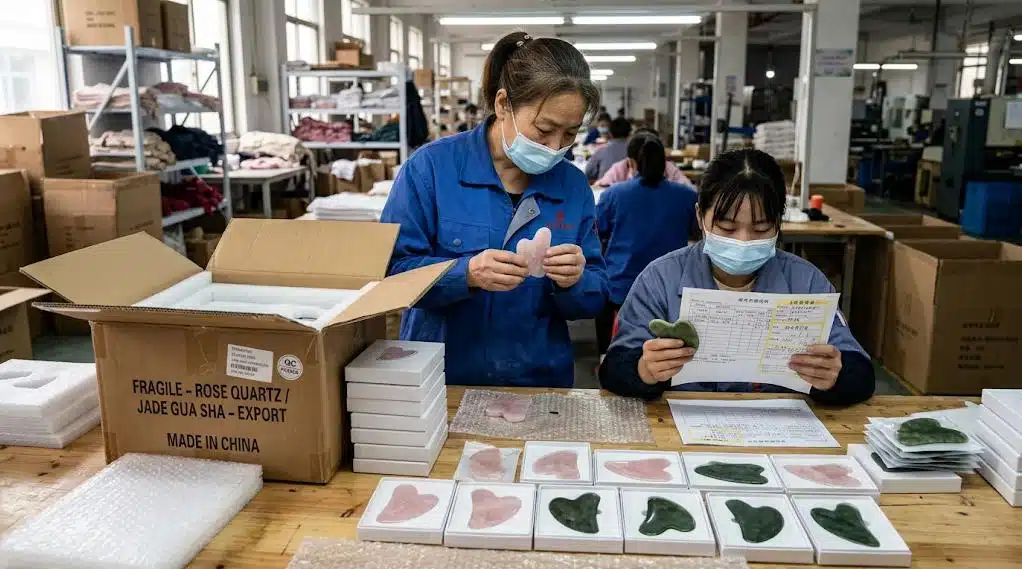
A gua sha manufacturer you can hold to account puts three things in writing before you pay a deposit: who covers each defect type, how a wrong or damaged carton gets fixed, and how the factory stops the same fault from returning. After 12+ years of making jade and crystal tools, the pattern is clear. Post-delivery disputes fall into eight categories, three fixes resolve a mixed-up shipment, and a first reply within 24 hours decides whether you stay calm or start shopping for another supplier. This article shows you what gua sha after sale terms look like in practice, what to do when guasha shipping goes wrong, and which checks you can run on any gua sha manufacturer before placing a gua sha wholesale order. Because it is a risk disclosure, it also shows what a gua sha factory cannot promise, such as identical natural stone from one batch to the next. What a Gua Sha Manufacturer Should Disclose Before You Pay a Deposit Most disputes start long before the first stone is cut. When you request a quote from a gua sha manufacturer, the unit price tells you very little about what happens after cartons reach your warehouse. Cracked stones, wrong logos, and mixed-up boxes all cost money, and the only open question is who pays. A supplier that states its rules at the quoting stage saves both sides an argument later. Disclosure matters most on custom orders. Your engraved logo, your box size, and your stone grade belong to you, so another supplier cannot replace them on short notice. If a gua sha factory ships a 2,000-set order with a misspelled logo, the sets may work perfectly and still be unsellable. That is why custom gua sha wholesale buyers should request remedy terms in writing before approving a sample. This means you can compare suppliers on risk, not only on price. How a Gua Sha Manufacturer Separates Defects From Natural Stone Variation Natural stone never repeats itself, and a gua sha manufacturer who promises otherwise is setting you up for a dispute. GIA’s jade description explains that jadeite and nephrite are metamorphic rocks built from tiny interlocking crystals, which makes them exceptionally tough, and that their colour is often unevenly distributed. A pale vein in a green jade tool is therefore variation, while a hairline crack across the edge is a defect. This means you can approve a colour and pattern range at the sample stage and reject only what falls outside it. In practice, a defect is anything that breaks the agreed standard: a crack, a chip that affects use, a pit beyond the approved surface grade, a size outside tolerance, or a wrong logo. Everything else is measured against the signed golden sample, which acts as your yardstick at inspection. Ask for it in writing, and keep your own copy. How else will you prove what was approved? Who Pays When Something Breaks: The Remedy Rules A gua sha manufacturer with a fair policy matches remedies to severity instead of defaulting to a refund. For a few broken pieces, a replacement shipment or a credit on your next order is the usual answer. For a batch with cracks, the factory should isolate the batch, find the cause, and remake it. Light polish flaws call for re-polishing, and a wrong logo means rework or a remake depending on whether the engraving can be corrected. Refunds and negotiated compensation sit behind these options for cases where rework cannot save the order. The unit price of a defective piece rarely equals your real loss. A logo error can force you to repack, store, and delay a launch, so a gua sha after sale policy that offers only a replacement unit covers a fraction of the cost. Ask your gua sha manufacturer to put the claim window, the evidence rules, and the remedy scope into the contract before production starts. This means you can settle a small problem in days instead of letting it grow into a long dispute. Guasha Shipping Risks: What Should a Gua Sha Manufacturer Do When the Wrong Carton Arrives? Picture the worst case: tracking says delivered, yet the carton on your dock holds another buyer’s order. Neither of you did anything wrong, and the mistake usually happens at the carrier’s sorting step, when a label is scanned or stuck on the wrong box. A gua sha manufacturer that takes ownership still steps in, because telling you to chase the carrier alone leaves you paying for a mistake you did not make. In guasha shipping, “delivered” only proves that a carton arrived, not that the right goods did. Three Fixes for a Guasha Shipping Mix-Up Three fixes cover the common mix-ups, and the right one depends on order value and freight cost. In the first, the factory ships the correct goods again and you return the wrong carton as the factory or carrier arranges. In the second, two buyers who received each other’s cartons swap them directly through the carrier, which skips the trip back to the factory. In the third, you keep the wrong carton and the factory reships your order, which makes sense when return freight would cost more than the goods inside. The responsible carrier pays the extra freight in all three, and the gua sha manufacturer coordinates the process so quantities and models match your order. This means you can get the right goods without paying for freight twice. Choose by value. A high-value custom order with specific logos usually justifies a reshipment, while a low-value order crossing borders often fits keep-and-reship, because return freight, re-sorting, and customs paperwork can exceed what the goods are worth. Whichever path you pick, ask the gua sha manufacturer to file the carrier claim with handover photos and waybill records. Why should you carry the paperwork for a sorting error you never made? Why Incoterms Decide Who Pays for Transit Damage A mix-up is the carrier’s fault, but transit breakage is a contract question. The […]
A gua sha manufacturer you can hold to account puts three things in writing before you pay a deposit: who covers each defect type, how a wrong or damaged carton gets fixed, and how the factory stops the same fault from returning. After 12+ years of making jade and crystal tools, the pattern is clear. Post-delivery disputes fall into eight categories, three fixes resolve a mixed-up shipment, and a first reply within 24 hours decides whether you stay calm or start shopping for another supplier. This article shows you what gua sha after sale terms look like in practice, what to do when guasha shipping goes wrong, and which checks you can run on any gua sha manufacturer before placing a gua sha wholesale order. Because it is a risk disclosure, it also shows what a gua sha factory cannot promise, such as identical natural stone from one batch to the next. What a Gua Sha Manufacturer Should Disclose Before You Pay a Deposit Most disputes start long before the first stone is cut. When you request a quote from a gua sha manufacturer, the unit price tells you very little about what happens after cartons reach your warehouse. Cracked stones, wrong logos, and mixed-up boxes all cost money, and the only open question is who pays. A supplier that states its rules at the quoting stage saves both sides an argument later. Disclosure matters most on custom orders. Your engraved logo, your box size, and your stone grade belong to you, so another supplier cannot replace them on short notice. If a gua sha factory ships a 2,000-set order with a misspelled logo, the sets may work perfectly and still be unsellable. That is why custom gua sha wholesale buyers should request remedy terms in writing before approving a sample. This means you can compare suppliers on risk, not only on price. How a Gua Sha Manufacturer Separates Defects From Natural Stone Variation Natural stone never repeats itself, and a gua sha manufacturer who promises otherwise is setting you up for a dispute. GIA’s jade description explains that jadeite and nephrite are metamorphic rocks built from tiny interlocking crystals, which makes them exceptionally tough, and that their colour is often unevenly distributed. A pale vein in a green jade tool is therefore variation, while a hairline crack across the edge is a defect. This means you can approve a colour and pattern range at the sample stage and reject only what falls outside it. In practice, a defect is anything that breaks the agreed standard: a crack, a chip that affects use, a pit beyond the approved surface grade, a size outside tolerance, or a wrong logo. Everything else is measured against the signed golden sample, which acts as your yardstick at inspection. Ask for it in writing, and keep your own copy. How else will you prove what was approved? Who Pays When Something Breaks: The Remedy Rules A gua sha manufacturer with a fair policy matches remedies to severity instead of defaulting to a refund. For a few broken pieces, a replacement shipment or a credit on your next order is the usual answer. For a batch with cracks, the factory should isolate the batch, find the cause, and remake it. Light polish flaws call for re-polishing, and a wrong logo means rework or a remake depending on whether the engraving can be corrected. Refunds and negotiated compensation sit behind these options for cases where rework cannot save the order. The unit price of a defective piece rarely equals your real loss. A logo error can force you to repack, store, and delay a launch, so a gua sha after sale policy that offers only a replacement unit covers a fraction of the cost. Ask your gua sha manufacturer to put the claim window, the evidence rules, and the remedy scope into the contract before production starts. This means you can settle a small problem in days instead of letting it grow into a long dispute. Guasha Shipping Risks: What Should a Gua Sha Manufacturer Do When the Wrong Carton Arrives? Picture the worst case: tracking says delivered, yet the carton on your dock holds another buyer’s order. Neither of you did anything wrong, and the mistake usually happens at the carrier’s sorting step, when a label is scanned or stuck on the wrong box. A gua sha manufacturer that takes ownership still steps in, because telling you to chase the carrier alone leaves you paying for a mistake you did not make. In guasha shipping, “delivered” only proves that a carton arrived, not that the right goods did. Three Fixes for a Guasha Shipping Mix-Up Three fixes cover the common mix-ups, and the right one depends on order value and freight cost. In the first, the factory ships the correct goods again and you return the wrong carton as the factory or carrier arranges. In the second, two buyers who received each other’s cartons swap them directly through the carrier, which skips the trip back to the factory. In the third, you keep the wrong carton and the factory reships your order, which makes sense when return freight would cost more than the goods inside. The responsible carrier pays the extra freight in all three, and the gua sha manufacturer coordinates the process so quantities and models match your order. This means you can get the right goods without paying for freight twice. Choose by value. A high-value custom order with specific logos usually justifies a reshipment, while a low-value order crossing borders often fits keep-and-reship, because return freight, re-sorting, and customs paperwork can exceed what the goods are worth. Whichever path you pick, ask the gua sha manufacturer to file the carrier claim with handover photos and waybill records. Why should you carry the paperwork for a sorting error you never made? Why Incoterms Decide Who Pays for Transit Damage A mix-up is the carrier’s fault, but transit breakage is a contract question. The […]