
How to Evaluate Natural Gua Sha Quality: A Manufacturer’s Risk Disclosure for Natural Gua Sha Wholesale Buyers
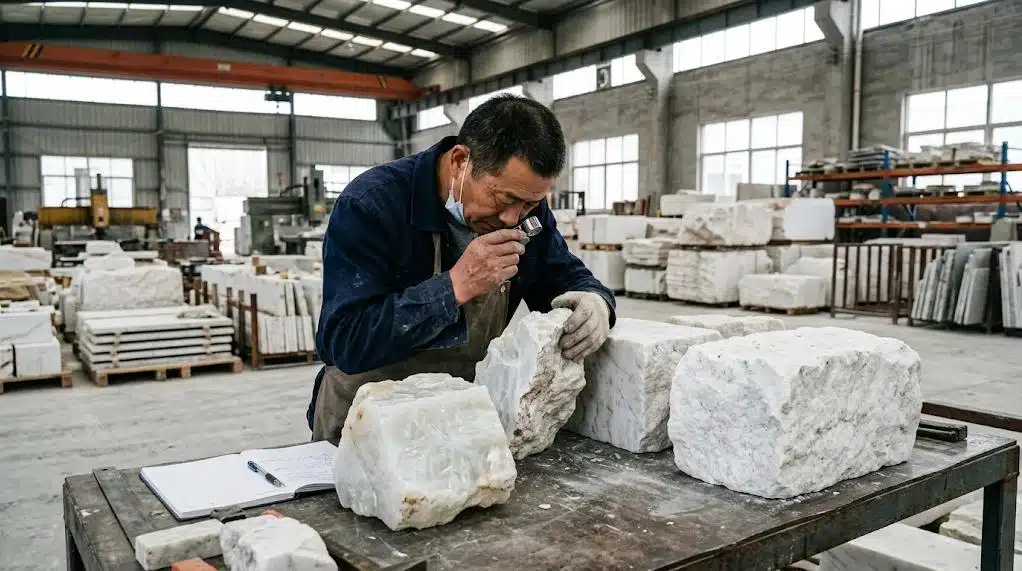
If you are sourcing natural gua sha wholesale orders, one number should change how you read every quotation: Mohs 3. That is roughly the hardness of calcite marble, the material often sold as Afghan White Jade, while true nephrite sits at 6–6.5 according to GIA. A second number matters just as much. Two stones quoted at RMB 100 per kg end up costing RMB 105 and RMB 133 per kg of sellable output when yield is 95% and 75%, a 27% gap that never appears on a price list. This risk disclosure draws on more than 12 years of processing jade and crystal tools at Yan Cheng, a gua sha manufacturer that cuts, polishes and inspects stone every day. It shows where material names mislead you, where hardness fails as a quality test, and what to write into a contract so your margin and your brand stay protected. Is the Stone Really What the Label Says? Material Risk in Natural Gua Sha Wholesale Material identity is the first risk you face, and it costs the most when it goes wrong. In natural gua sha wholesale, a single product name can cover three different minerals with three different prices and three different breakage profiles. So ask your gua sha supplier what the stone is before you ask what it costs. How Afghan White Jade Turned Into a Marble Problem Trade names describe color, not mineralogy. In natural gua sha wholesale listings, White Jade can be nephrite, quartzite or marble, Green Jade is frequently serpentine, and Purple Stone may be a dyed or naturally purple marble. Afghan White Jade is commonly calcite-based marble rather than nephrite, so the name alone proves nothing. The hardness gap is large. Calcite sits near Mohs 3, serpentine ranges from roughly 2.5 to 5.5 depending on its composition, and nephrite holds 6–6.5. The International Gem Society notes in its hardness and wearability lesson that gems softer than quartz scratch from everyday dust, and marble sits far below that line. This means you can expect a marble blade to dull and show scratches under normal handling, which is where complaints about worn finishes tend to start. How to Verify Stone Material Before Your Natural Gua Sha Wholesale Contract You do not need a laboratory for every order, but you do need a paper trail. Before you approve a deposit on a natural gua sha wholesale order, work through four steps: Gemological laboratories including GIA and SSEF issue jade identification reports that name the species and flag treatment. A report costs far less than a rejected container, and a gua sha manufacturer that welcomes the test is telling you something useful. This means you can hold the contract to a mineral definition instead of a color. Natural or Treated? Dye, Filler and Skin-Contact Risks GIA points out on its jade care page that jade may be dyed, bleached, impregnated, coated or heat treated. A gua sha tool touches skin every day, so an unknown filler or leftover polishing compound is more than a cosmetic issue. Have you asked your gua sha supplier in writing whether the stone is natural or treated? Request a one-line declaration for each batch that says “untreated” or names the exact treatment used. Check surface cleanliness on arrival too, because oil and polishing residue show up as a greasy film on the stone. This means you can reject a shipment on documented grounds, and it protects the gua sha quality your customers judge the moment they pick the tool up. Does Higher Hardness Mean Better Gua Sha Quality? Mohs Scale vs. Toughness Hardness is the number buyers quote most often and understand least. The Mohs scale ranks resistance to scratching, while breakage depends on internal structure, thickness and flaws. Most natural gua sha wholesale inquiries open with a hardness question, yet hardness gives you only half the answer. Why a Mohs 7 Rose Quartz Gua Sha Can Still Snap The International Gem Society lists rose quartz at Mohs 7 with no cleavage and a conchoidal fracture, which means it breaks in curved, glassy chips once stress exceeds its limit. Add one hairline fissure inside the block, a thin edge or a deep groove, and the tool can snap in a customer’s hand. A stone gua sha factory sees this most often at thin edges, notches and curve transitions, because stress concentrates exactly there. This means you can ask for fissure checks and minimum thickness values instead of relying on a hardness figure. Nephrite behaves differently. GIA’s Gems & Gemology describes a fibrous, interlocking felted structure that gives nephrite the toughness so important to jade, and the GIA buyer’s guide states that nephrite and jadeite are both very resistant to breaking or chipping. That holds even though nephrite measures only 6–6.5 on the Mohs scale. For a natural gua sha wholesale line with slimmer blades and finer detail, this means you can choose nephrite where a quartz blade would need extra thickness. Which Stone Fits Which Natural Gua Sha Wholesale Tier? Match the stone to your price tier and design thickness before you compare quotes. The table below summarizes where each material usually fits. Stone Mohs (reference) Best fit Watch for Rose quartz 7 Volume orders, private label Internal fissures, batch color shift Amethyst 7 Purple series Color banding, cutting yield Nephrite 6–6.5 Upper-tier jade line Authenticity, rough grade Serpentine about 2.5–5.5 Budget green line Wide range between lots Marble about 3 Low-cost decorative items Scratches, edge chipping A natural gua sha wholesale program built on rose quartz suits high-volume private label, while nephrite fits a collection where breakage claims would hurt the brand. Serpentine and marble can work for budget lines, but only if you accept softer surfaces and tighten edge inspection. Tell your gua sha supplier the thickness and use case up front, and a stone gua sha factory can then propose the right stone instead of the cheapest one. This means you can compare quotes on the same material definition, which sets […]
If you are sourcing natural gua sha wholesale orders, one number should change how you read every quotation: Mohs 3. That is roughly the hardness of calcite marble, the material often sold as Afghan White Jade, while true nephrite sits at 6–6.5 according to GIA. A second number matters just as much. Two stones quoted at RMB 100 per kg end up costing RMB 105 and RMB 133 per kg of sellable output when yield is 95% and 75%, a 27% gap that never appears on a price list. This risk disclosure draws on more than 12 years of processing jade and crystal tools at Yan Cheng, a gua sha manufacturer that cuts, polishes and inspects stone every day. It shows where material names mislead you, where hardness fails as a quality test, and what to write into a contract so your margin and your brand stay protected. Is the Stone Really What the Label Says? Material Risk in Natural Gua Sha Wholesale Material identity is the first risk you face, and it costs the most when it goes wrong. In natural gua sha wholesale, a single product name can cover three different minerals with three different prices and three different breakage profiles. So ask your gua sha supplier what the stone is before you ask what it costs. How Afghan White Jade Turned Into a Marble Problem Trade names describe color, not mineralogy. In natural gua sha wholesale listings, White Jade can be nephrite, quartzite or marble, Green Jade is frequently serpentine, and Purple Stone may be a dyed or naturally purple marble. Afghan White Jade is commonly calcite-based marble rather than nephrite, so the name alone proves nothing. The hardness gap is large. Calcite sits near Mohs 3, serpentine ranges from roughly 2.5 to 5.5 depending on its composition, and nephrite holds 6–6.5. The International Gem Society notes in its hardness and wearability lesson that gems softer than quartz scratch from everyday dust, and marble sits far below that line. This means you can expect a marble blade to dull and show scratches under normal handling, which is where complaints about worn finishes tend to start. How to Verify Stone Material Before Your Natural Gua Sha Wholesale Contract You do not need a laboratory for every order, but you do need a paper trail. Before you approve a deposit on a natural gua sha wholesale order, work through four steps: Gemological laboratories including GIA and SSEF issue jade identification reports that name the species and flag treatment. A report costs far less than a rejected container, and a gua sha manufacturer that welcomes the test is telling you something useful. This means you can hold the contract to a mineral definition instead of a color. Natural or Treated? Dye, Filler and Skin-Contact Risks GIA points out on its jade care page that jade may be dyed, bleached, impregnated, coated or heat treated. A gua sha tool touches skin every day, so an unknown filler or leftover polishing compound is more than a cosmetic issue. Have you asked your gua sha supplier in writing whether the stone is natural or treated? Request a one-line declaration for each batch that says “untreated” or names the exact treatment used. Check surface cleanliness on arrival too, because oil and polishing residue show up as a greasy film on the stone. This means you can reject a shipment on documented grounds, and it protects the gua sha quality your customers judge the moment they pick the tool up. Does Higher Hardness Mean Better Gua Sha Quality? Mohs Scale vs. Toughness Hardness is the number buyers quote most often and understand least. The Mohs scale ranks resistance to scratching, while breakage depends on internal structure, thickness and flaws. Most natural gua sha wholesale inquiries open with a hardness question, yet hardness gives you only half the answer. Why a Mohs 7 Rose Quartz Gua Sha Can Still Snap The International Gem Society lists rose quartz at Mohs 7 with no cleavage and a conchoidal fracture, which means it breaks in curved, glassy chips once stress exceeds its limit. Add one hairline fissure inside the block, a thin edge or a deep groove, and the tool can snap in a customer’s hand. A stone gua sha factory sees this most often at thin edges, notches and curve transitions, because stress concentrates exactly there. This means you can ask for fissure checks and minimum thickness values instead of relying on a hardness figure. Nephrite behaves differently. GIA’s Gems & Gemology describes a fibrous, interlocking felted structure that gives nephrite the toughness so important to jade, and the GIA buyer’s guide states that nephrite and jadeite are both very resistant to breaking or chipping. That holds even though nephrite measures only 6–6.5 on the Mohs scale. For a natural gua sha wholesale line with slimmer blades and finer detail, this means you can choose nephrite where a quartz blade would need extra thickness. Which Stone Fits Which Natural Gua Sha Wholesale Tier? Match the stone to your price tier and design thickness before you compare quotes. The table below summarizes where each material usually fits. Stone Mohs (reference) Best fit Watch for Rose quartz 7 Volume orders, private label Internal fissures, batch color shift Amethyst 7 Purple series Color banding, cutting yield Nephrite 6–6.5 Upper-tier jade line Authenticity, rough grade Serpentine about 2.5–5.5 Budget green line Wide range between lots Marble about 3 Low-cost decorative items Scratches, edge chipping A natural gua sha wholesale program built on rose quartz suits high-volume private label, while nephrite fits a collection where breakage claims would hurt the brand. Serpentine and marble can work for budget lines, but only if you accept softer surfaces and tighten edge inspection. Tell your gua sha supplier the thickness and use case up front, and a stone gua sha factory can then propose the right stone instead of the cheapest one. This means you can compare quotes on the same material definition, which sets […]