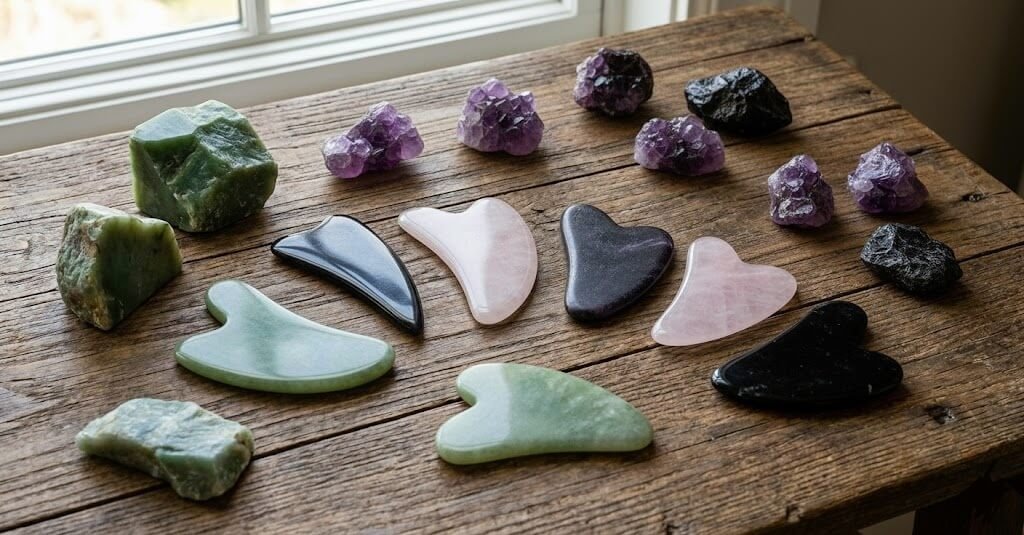
In the global gua sha wholesale and OEM/ODM market, gua sha materials selection is not a superficial design decision. Instead, it directly affects product positioning, perceived value, regulatory compliance, and long-term brand trust. As the chief editor of guashawholesale.com and a long-term practitioner in jade and stone processing under the Deyi Gems brand, we work closely with beauty brands, wellness retailers, and distributors who source gua sha tools at scale.
From our factory perspective, many misunderstandings in the market do not come from shape design or packaging, but from incorrect or unclear material descriptions. Therefore, this article focuses on five of the most widely used gua sha materials, explaining them from the source factory level, including geological background, physical characteristics, processing difficulty, wholesale positioning, and market acceptance.
Throughout this article, the language remains practical and accessible, while the information is grounded in industry standards and verifiable references.
- Chapter 1: Natural Jade – The Traditional Benchmark Material
- Chapter 2: Rose Quartz – The Global Bestseller in Modern Beauty Retail
- Chapter 3: Green Aventurine – A Cost-Effective and Stable Option
- Chapter 4: Amethyst – Distinctive Color with Premium Appeal
- Chapter 5: Obsidian – Volcanic Glass for Modern Minimalist Brands
- Chapter 6: Comparing the Five Materials from a Factory Perspective
- Chapter 7: How Deyi Gems Approaches Material Selection and OEM Production
- Conclusion: Choosing the Right Gua Sha Material for Wholesale Success
- Gua Sha Materials Faqs
Chapter 1: Natural Jade – The Traditional Benchmark Material
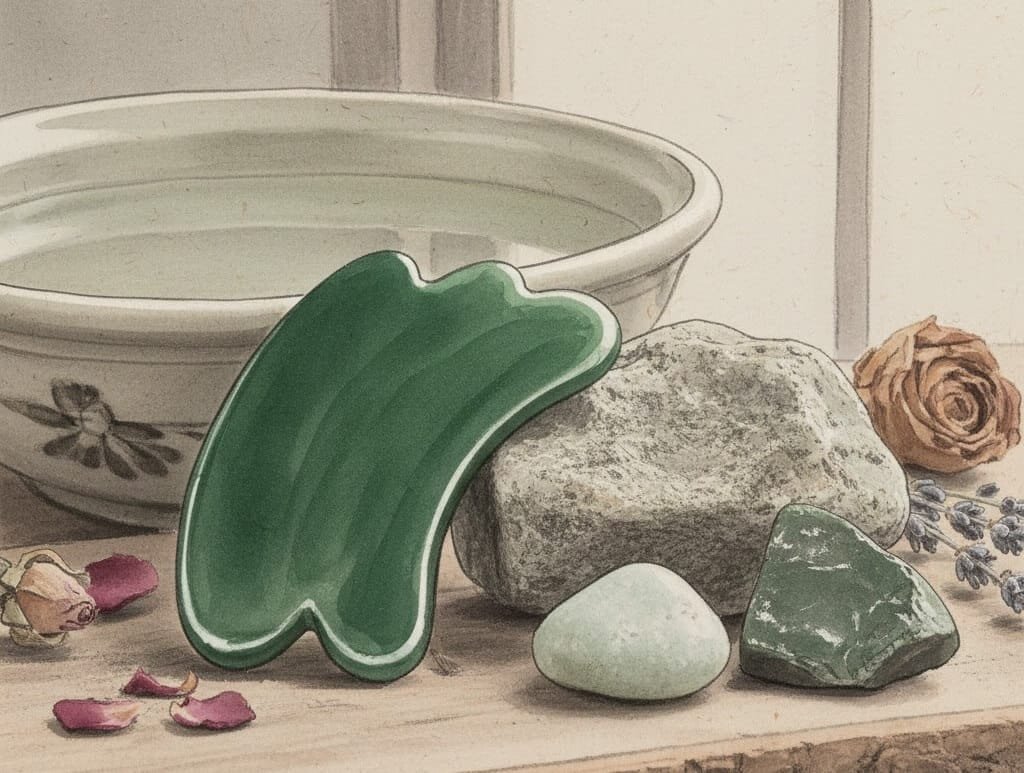
What “Jade” Really Means in Gua Sha Production
In professional stone processing, the word “jade” does not refer to a single mineral. According to gemological standards recognized by institutions such as the Gemological Institute of America (GIA), true jade includes nephrite jade and jadeite jade. In gua sha wholesale, nephrite jade is far more common due to its availability, toughness, and stable processing yield.
Authoritative reference: Gemological Institute of America – Jade
Physical Properties Relevant to Gua Sha Use
Nephrite jade has a compact fibrous structure, giving it excellent impact resistance and a naturally smooth hand feel after polishing. From a factory perspective, this stability reduces breakage during CNC cutting and hand-finishing. As a result, jade gua sha tools can maintain thin edges without compromising durability.
Wholesale Positioning and Market Demand
In the wholesale market, jade gua sha tools are often positioned as heritage-inspired or premium traditional products. They appeal strongly to consumers who associate jade with balance and long-term wellness. For brands targeting East Asian or traditional wellness narratives, jade remains a cornerstone material.
However, due to the high price of genuine jade, the market share of genuine jade gua sha tools is not high. Based on our factory’s order data, it accounts for approximately 5% of our total orders.
Chapter 2: Rose Quartz – The Global Bestseller in Modern Beauty Retail
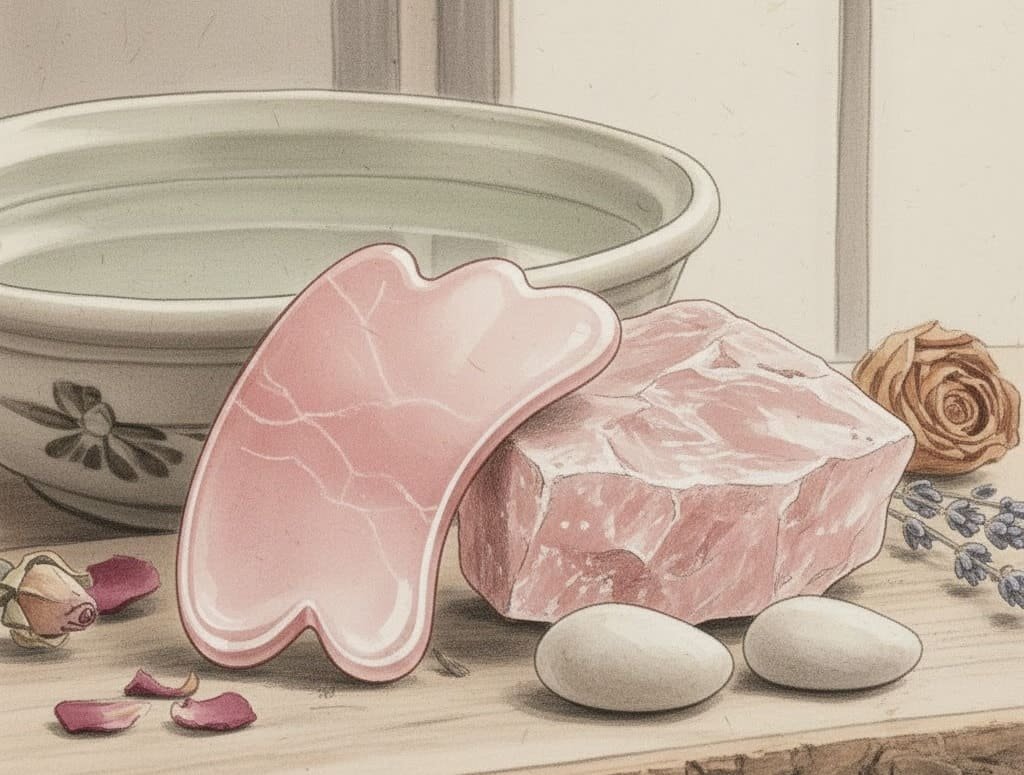
Mineral Composition and Transparency Standards
Rose quartz is a variety of quartz (SiO₂) characterized by its pink coloration, which comes from trace mineral inclusions rather than dyes. According to the International Gem Society, genuine rose quartz displays uneven internal clouding, not perfectly uniform color.
Reference: International Gem Society – Rose Quartz
Processing Advantages in Mass Production
From a factory standpoint, rose quartz offers a balanced hardness that allows efficient shaping while minimizing tool wear. Compared to jade, rose quartz is easier to polish to a high-gloss finish, which is why it dominates the mid-range gua sha wholesale segment. Rose quartz gua sha tools account for approximately 35% of our total order quantity.
Branding Flexibility for Private Label Clients
Because rose quartz is widely recognized in Western skincare markets, it integrates smoothly into clean beauty, self-care, and wellness branding. Many private-label clients choose rose quartz for its familiarity and strong conversion rate in e-commerce channels.
Chapter 3: Green Aventurine – A Cost-Effective and Stable Option
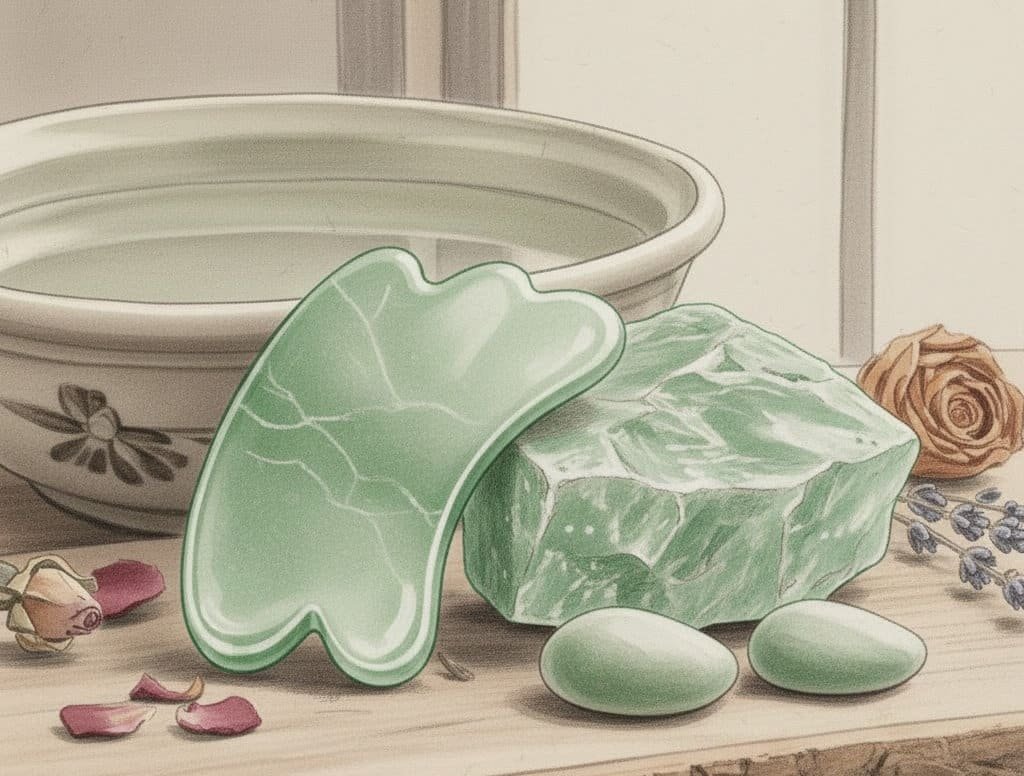
Geological Characteristics and Color Formation
Green aventurine is another quartz-based stone, distinguished by its shimmering appearance caused by fuchsite inclusions. This mineral structure provides visual depth without requiring artificial enhancement.
Reference: https://www.mindat.org/min-407.html
Production Stability and Yield Rate
In gua sha factory production, aventurine has a high yield rate due to its relatively uniform internal structure. Fewer fractures mean lower rejection rates during cutting and shaping, which translates into cost efficiency for large wholesale orders.
Ideal Use Cases in Wholesale Programs
Green aventurine gua sha tools are often selected for entry-level wholesale collections or promotional campaigns. While affordable, they still deliver a natural stone experience, making them suitable for brands prioritizing accessibility over luxury positioning.
Green aventurine gua sha tools account for approximately 15% of our factory’s total orders.
Chapter 4: Amethyst – Distinctive Color with Premium Appeal
Material Identity and Natural Color Range
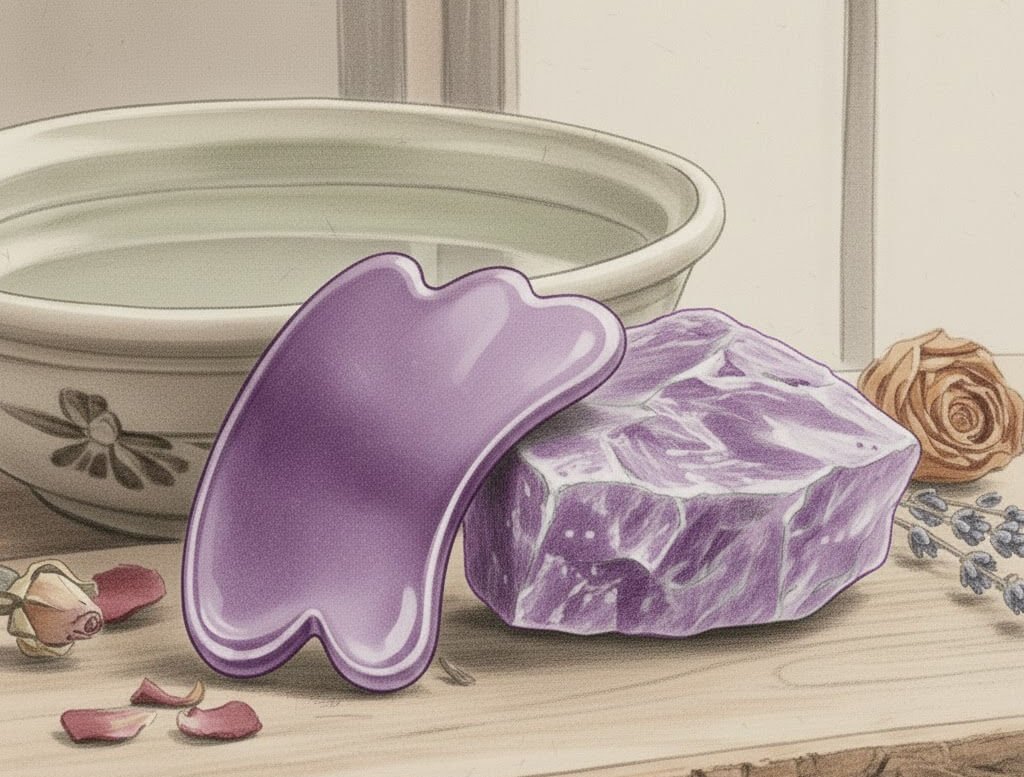
Amethyst is a purple variety of quartz, with coloration linked to iron content and natural irradiation. According to research from the School of Natural Resources at the University of Nebraska–Lincoln, natural amethyst typically exhibits color banding rather than a single, uniform purple hue.
Reference: School of Natural Resources – Traditional Birthstones – Amethyst (February)
Challenges in Factory Processing
From a production perspective, amethyst is more brittle than rose quartz or aventurine. This requires slower cutting speeds and stricter quality inspection. As a result, amethyst gua sha tools usually have a higher unit cost.
Positioning in Premium Wholesale Lines
Due to its deep color and perceived rarity, amethyst is frequently used in limited collections or premium SKUs. Brands often pair it with upgraded packaging to reinforce exclusivity and justify higher retail pricing.
Due to the scarcity of the material and its high price, amethyst gua sha tools do not have a large market share. According to our factory data, amethyst gua sha tools account for approximately 10% of our total orders.
Chapter 5: Obsidian – Volcanic Glass for Modern Minimalist Brands
Material Origin and Structural Properties
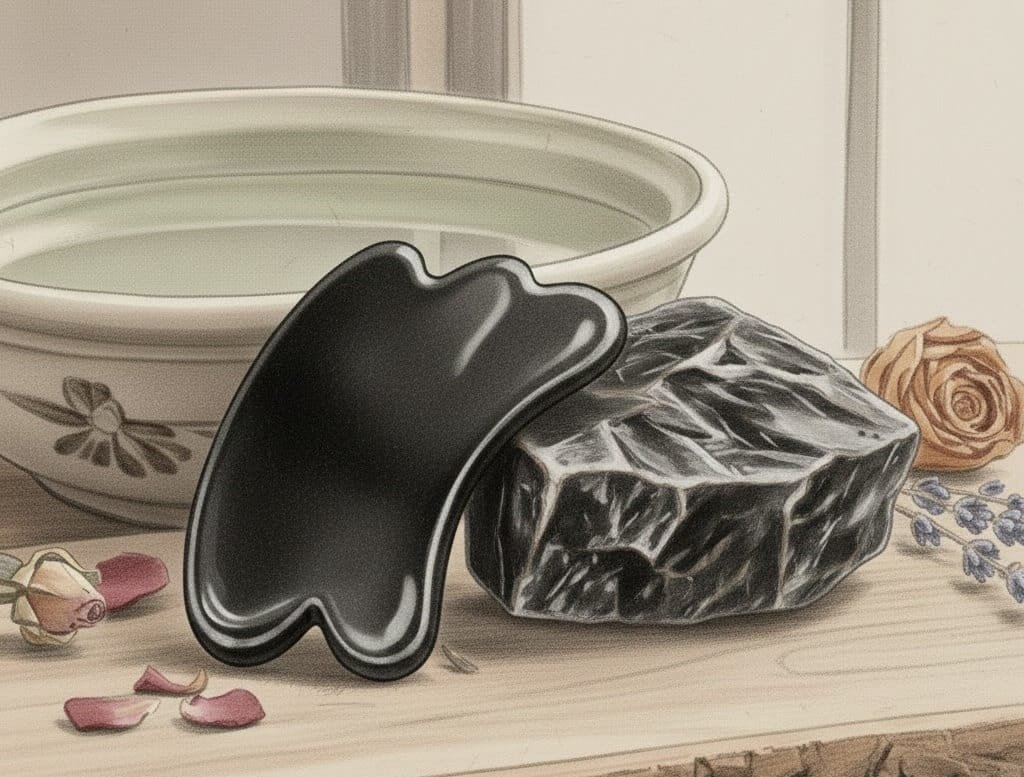
Obsidian is not a crystal but a natural volcanic glass formed from rapidly cooled lava. According to the U.S. Geological Survey, its amorphous structure distinguishes it from mineral stones.
Reference: https://www.usgs.gov/volcanoes/volcanic-materials/obsidian
Manufacturing Considerations in Gua Sha Factories
Obsidian can achieve extremely sharp edges, which must be carefully softened during polishing to ensure user safety. Factory experience is essential here, as improper finishing increases breakage risk during transport.
Market Trends and Design Compatibility
Obsidian gua sha tools align well with modern, minimalist branding. Their deep black surface pairs effectively with monochrome packaging, making them popular among contemporary skincare brands seeking differentiation.
Obsidian gua sha tools account for approximately 20% of our total orders.
Chapter 6: Comparing the Five Materials from a Factory Perspective
Durability, Cost, and Production Efficiency
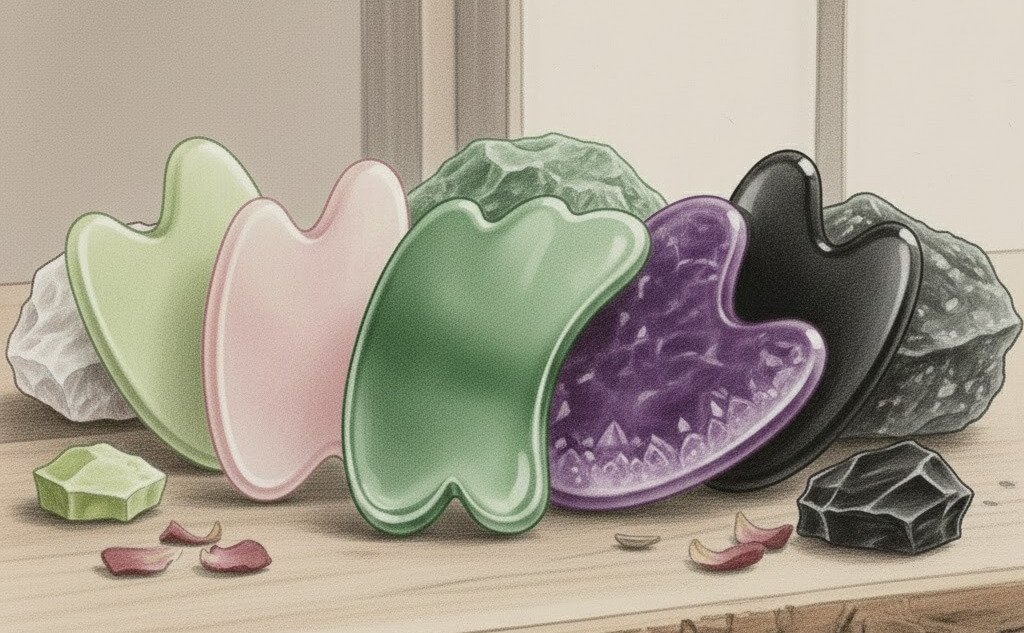
When comparing jade, rose quartz, aventurine, amethyst, and obsidian, no single material is objectively superior. Instead, each offers a different balance between durability, processing difficulty, and raw material cost. From a gua sha wholesale perspective, understanding these trade-offs is essential for sustainable sourcing.
Based on our factory’s production experience, the conclusions are generally as follows:
- Durability: All five are comparable, with no significant differences.
- Cost: genuine jade > amethyst > rose quartz ≈ green aventurine > obsidian
- Production efficiency: Rose Quartz ≈ Green Aventurine ≈ Obsidian > Jade > Amethyst
Compliance, Labeling, and Consumer Transparency
Accurate material naming is not optional. Regulatory bodies such as the U.S. Federal Trade Commission (FTC) emphasize truthful product descriptions to avoid misleading claims.
Reference: https://www.ftc.gov/business-guidance/resources/advertising-marketing-internet-rules-road
Chapter 7: How Deyi Gems Approaches Material Selection and OEM Production
Factory-Level Material Verification
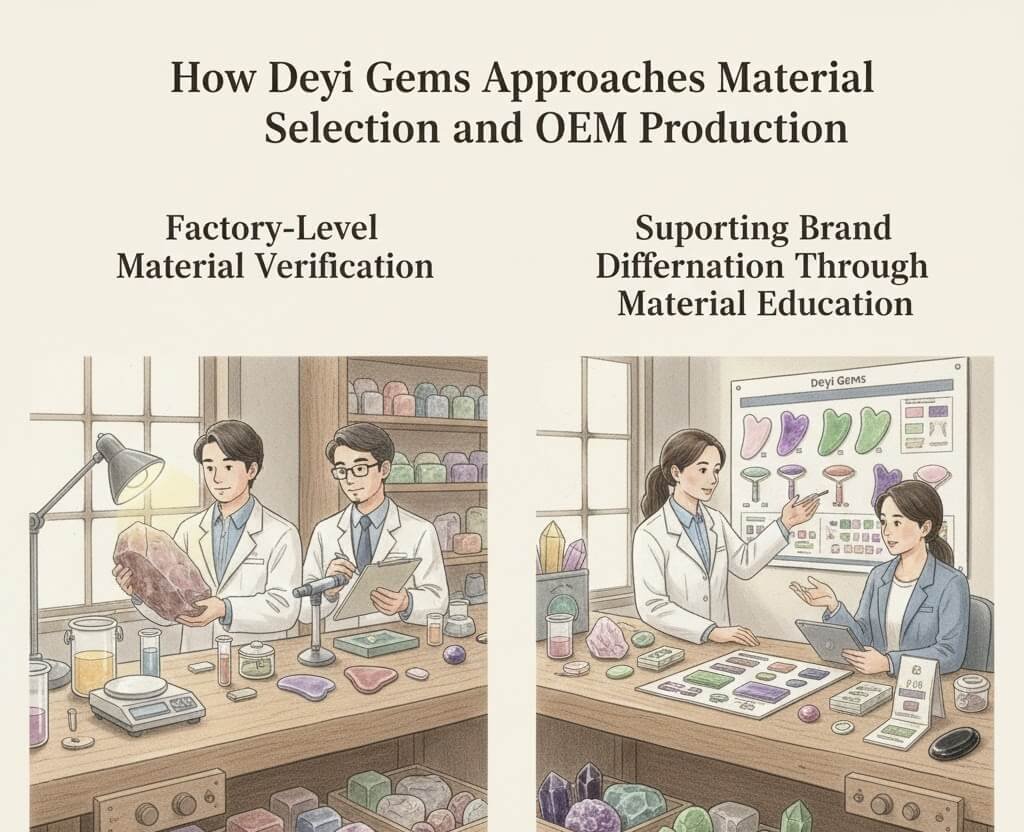
At Deyi Gems, all incoming raw stone batches undergo visual inspection and density testing before production. This ensures material consistency across large wholesale orders.
Supporting Brand Differentiation Through Material Education
Rather than pushing a single “best” stone, we help clients align material choice with brand story, target market, and price structure. This consultative approach reduces returns and improves long-term brand credibility.
Conclusion: Choosing the Right Gua Sha Material for Wholesale Success
In summary, gua sha material selection is a strategic decision that bridges geology, manufacturing, branding, and compliance. By understanding the real characteristics of jade, rose quartz, green aventurine, amethyst, and obsidian, brands can make informed choices that support both product performance and market positioning.
From the perspective of a source gua sha factory, transparency and education are as important as production capacity. At Deyi Gems, we believe that well-informed material decisions lead to stronger partnerships, fewer disputes, and more sustainable growth in the global gua sha wholesale market.
Gua Sha Materials Faqs
1. Do Different Materials of Gua Sha Tools Result in Different Gua Sha Effects?
As long as the gua sha tools are made of qualified materials, the effectiveness of gua sha is basically the same regardless of the material. The differences in popularity of different materials are entirely determined by public acceptance of those materials.
2. Why is There Such A Significant Price Difference for Gua Sha Tools Made From Different Materials?
The differences largely stem from the price variations of the raw materials themselves. For example, the raw material cost of amethyst and obsidian is in a ratio of 5:1 (data based on our factory’s raw material procurement prices).
A smaller portion of the difference is due to variations in labor costs caused by differences in processing difficulty.
3. Which Material is Best for Gua Sha Tools?
There is no single best gua sha tool, only the most suitable one. From a functional perspective, there are no significant differences between high-quality gua sha tools.
Considering factors such as cost, aesthetics, and durability, we recommend choosing gua sha tools made of rose quartz, obsidian, or stainless steel.