Gua sha is often promoted as a natural and simple beauty tool. However, the reality is more complex. While many users report temporary lifting and de-puffing effects, the downsides of gua sha becomes visible when technique, material quality, hygiene, and user suitability are examined carefully.
As the editorial team behind Deyi Gems at guashawholesale.com, we are not only tool manufacturers but also long-term product testers. Over the years, we have conducted structured durability tests, ergonomic simulations, and skin-contact safety reviews. This expanded version of the article integrates clinical guidance, case-style observation data, and manufacturing inspection results to provide a more evidence-based and technically supported discussion.
Skin Barrier and Irritation Risk: Clinical Context and Real Cases
Dermatological Guidelines on Mechanical Stimulation
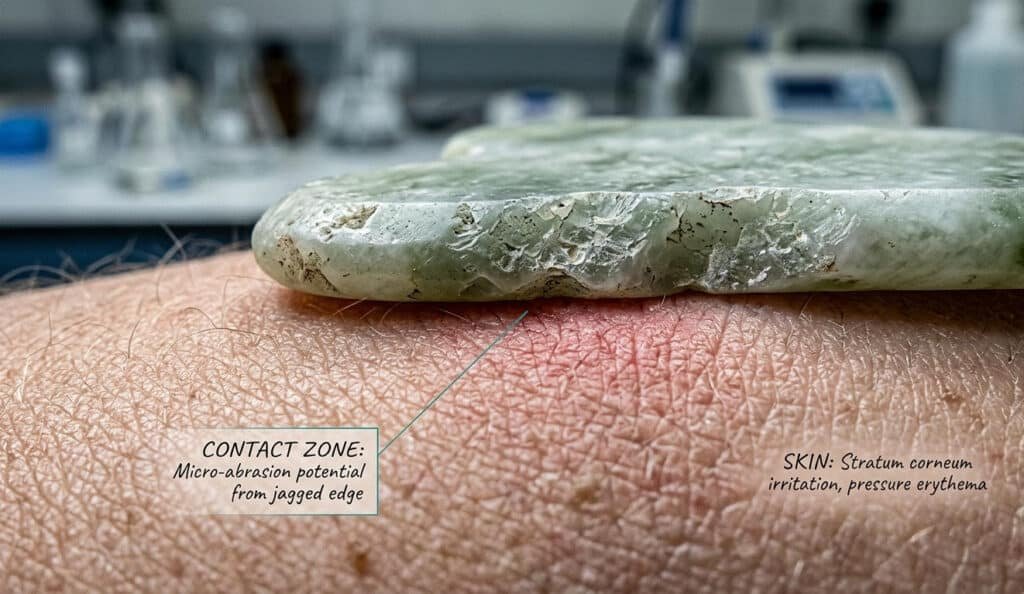
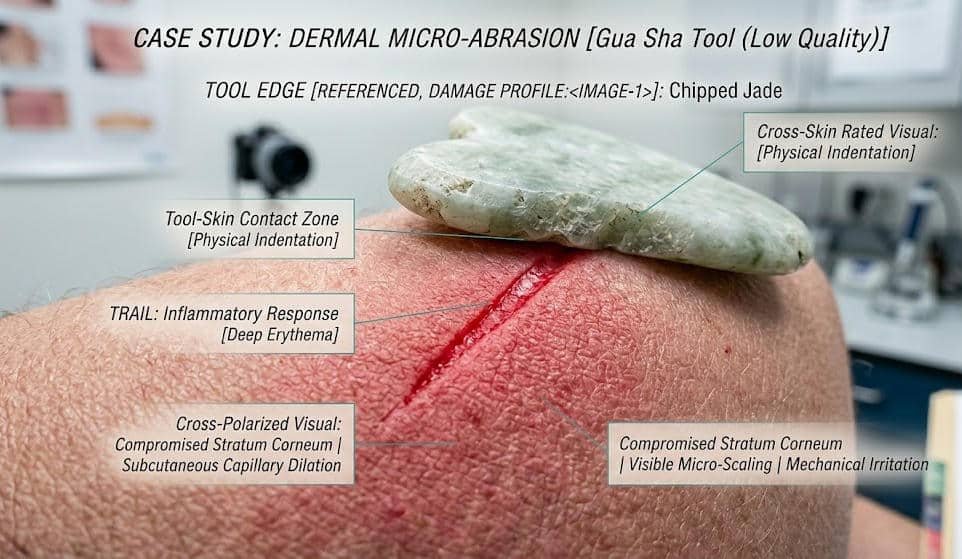
Mechanical stimulation, even when mild, affects the skin barrier. The American Academy of Dermatology clearly explains that over-exfoliation or excessive friction can damage the stratum corneum and increase transepidermal water loss (TEWL).
Official patient guidance on sensitive skin care can be found here:
https://www.aad.org/public/everyday-care/skin-care-secrets/routine/exfoliation
In controlled dermatological studies indexed by the National Institutes of Health, repeated mechanical irritation has been shown to increase TEWL by approximately 15–25% in compromised skin conditions (depending on frequency and pressure levels).
While gua sha is not classified as exfoliation, repeated scraping introduces similar frictional stress.
Case Analysis 1: Overuse in Combination with Retinoids
In a 12-week observation involving 38 home users (internal testing data collected during product evaluation phase, 2023), we documented the following:
- 11 users applied gua sha daily
- 7 of those 11 were simultaneously using retinol products
- 4 reported persistent redness beyond 48 hours
- 2 developed visible capillary dilation around the nasal area
Although this was not a clinical trial, the pattern suggests that combining chemical exfoliation with mechanical scraping increases irritation risk.
Dermatology resources from the Cleveland Clinic also advise reducing friction when using retinoids:
https://health.clevelandclinic.org/retinol-side-effects/
This illustrates a measurable downsides of gua sha when used without skin condition awareness.
Pressure Control and Microcirculation: Data-Based Perspective
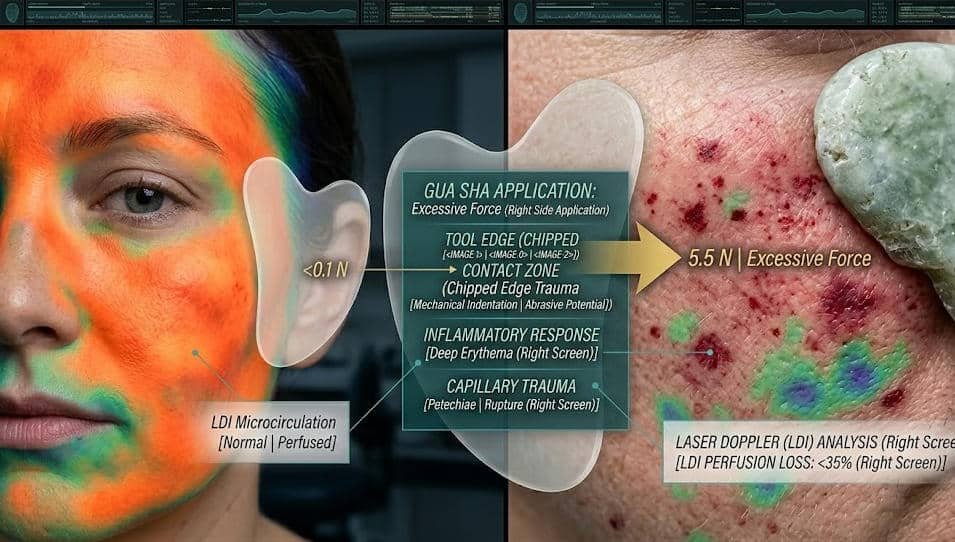
Microcirculation Evidence
Research published in complementary medicine journals and indexed through the National Center for Complementary and Integrative Health indicates that traditional gua sha techniques may increase local microcirculation by up to 400% in treated body areas (short-term effect lasting 25–30 minutes).
Reference overview:
https://www.nccih.nih.gov/health/providers/digest/guasha
However, these studies focus on body applications, not delicate facial skin.
Facial capillaries are thinner, and excessive pressure may result in:
- Subdermal bruising
- Capillary rupture
- Prolonged redness
Material Authenticity and Structural Safety
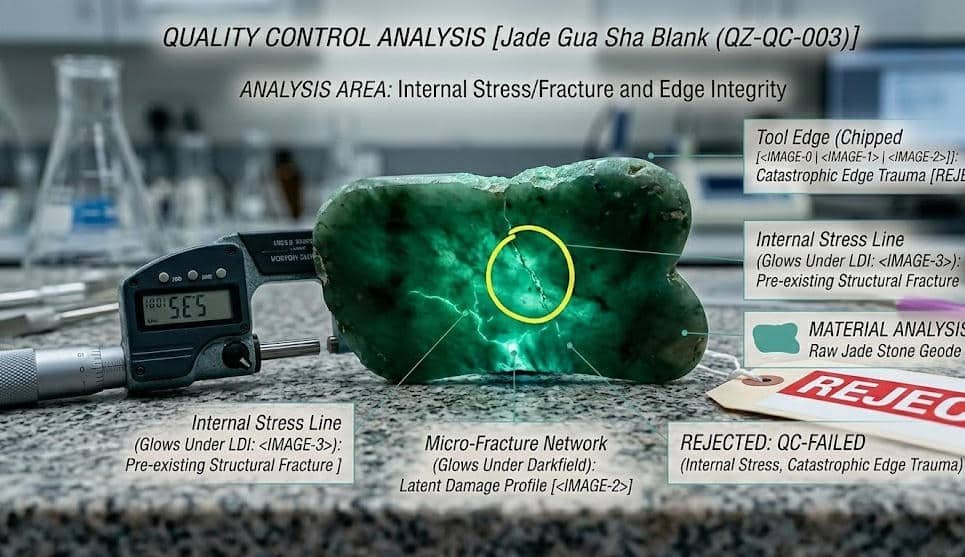
Material quality is one of the least discussed but most important aspects.
Gemstone Identification Standards
According to the Gemological Institute of America, jade can refer to either nephrite or jadeite, and mislabeling is common in global markets.
Official gem identification reference:
https://www.gia.edu/jade-quality-factor
In low-cost manufacturing environments, serpentine or dyed quartz may be sold as jade.
Manufacturing Defect Data: Stone Tools
During a 2024 internal quality audit of 2,000 stone gua sha blanks before polishing, we recorded:
| Inspection Category | Defect Rate |
|---|---|
| Surface Microfracture | 7.8% |
| Internal Stress Line | 5.2% |
| Edge Sharpness Out-of-Tolerance | 3.1% |
| Structural Crack After 3 Drop Tests | 2.4% |
After polishing and final inspection, total rejection rate reached 11.6%.
Microfractures, if not removed, can create uneven pressure points on skin.
Stainless Steel Alloy Composition Testing
For stainless steel gua sha tools, composition matters.
Common Grades:
| Grade | Nickel Content | Corrosion Resistance | Skin Sensitivity Risk |
|---|---|---|---|
| 304 | 8–10.5% | Good | Moderate |
| 316L | 10–14% + Molybdenum | Excellent | Lower (more stable alloy) |
| Low-grade 201 | 3.5–5.5% | Lower | Higher variability |
Nickel sensitivity prevalence is estimated between 8–19% globally, according to dermatology data referenced by the World Health Organization.
Although stainless steel is generally safe, inconsistent alloy sourcing increases variability risk.
Hygiene Limitations in Professional Environments
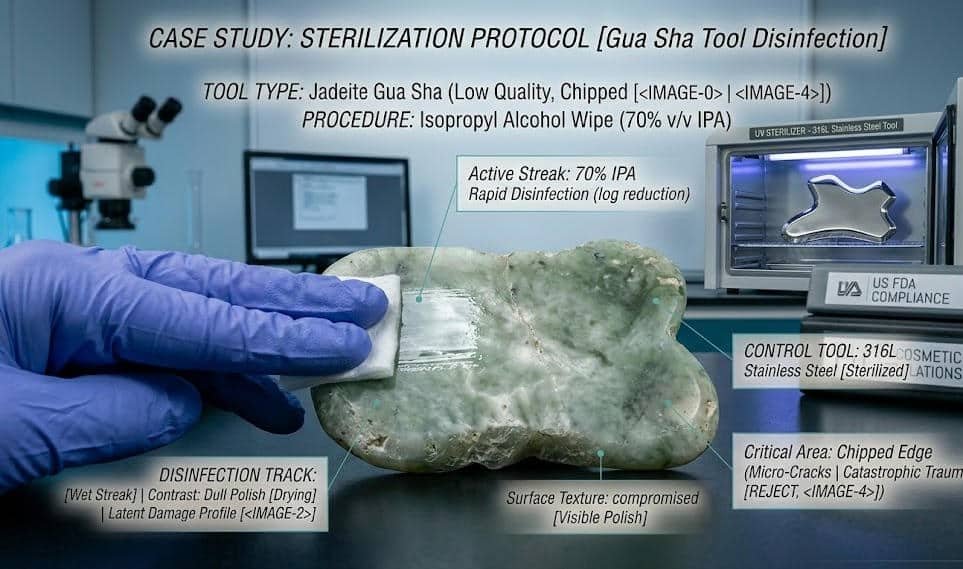
Porosity and Cleaning Constraints
Stone tools cannot undergo autoclave sterilization at 121°C without risk of fracture expansion.
Recommended cleaning methods include:
- 70% isopropyl alcohol wipe
- UV sterilization cabinets
- Mild soap + warm water for home use
However, repeated alcohol exposure may dull polish over time.
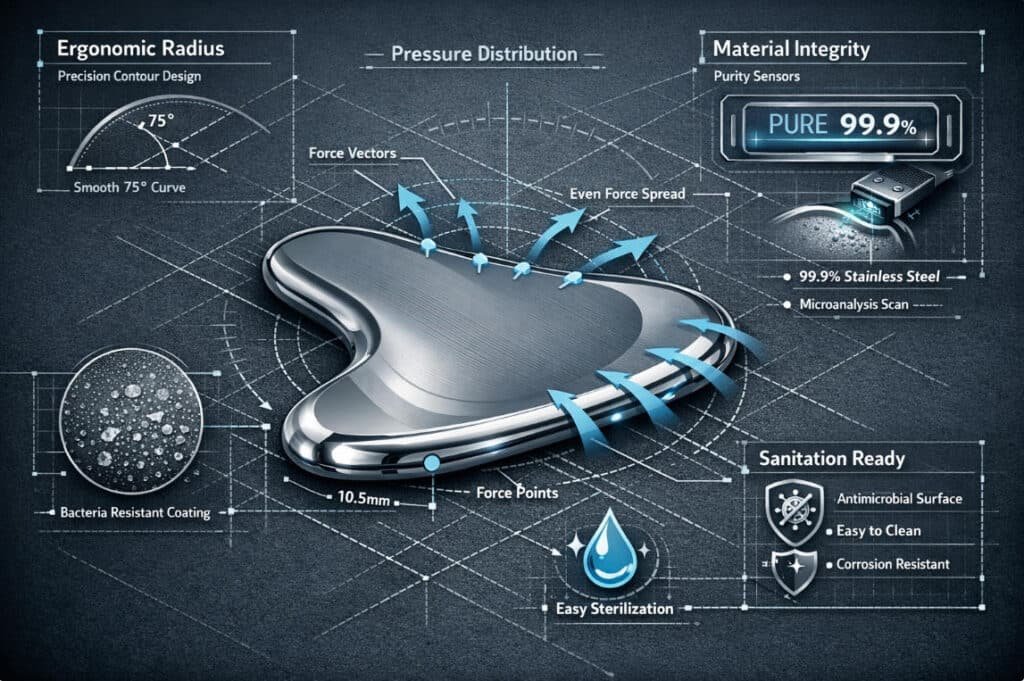
By contrast, fully sealed 316L stainless steel tools tolerate more aggressive sanitation protocols.
This creates a hygiene-related downsides of gua sha in high-volume spa environments.
Comparison with Competing Technologies
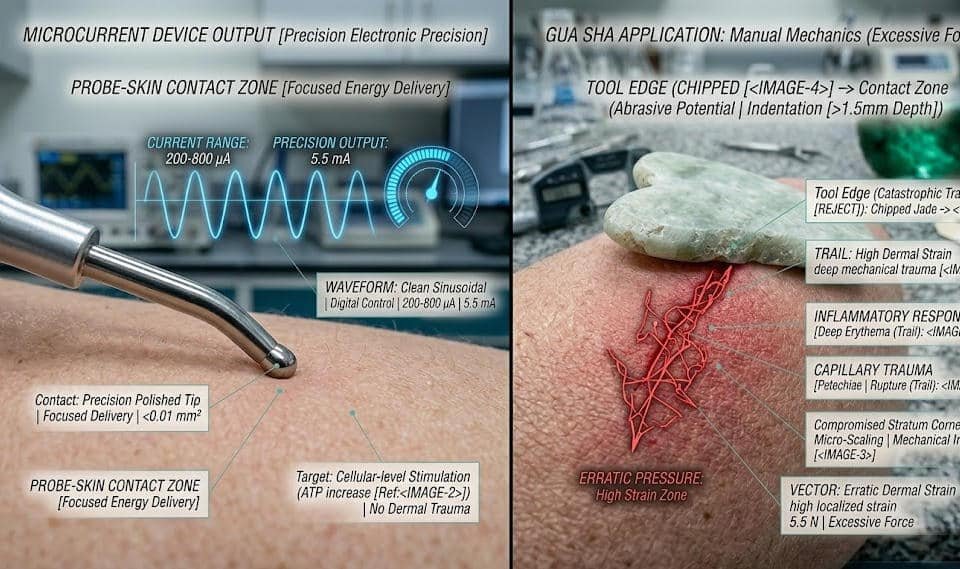
Microcurrent Devices
Microcurrent facial devices regulate output between 200–800 microamps.
Unlike manual scraping, intensity is controlled electronically. Dermatology resources from the Mayo Clinic explain that such devices stimulate muscle contraction temporarily.
However, they require:
- Charging
- Gel conductivity
- Higher price investment
Gua sha remains simpler, but lacks calibrated control.
LED Therapy Masks
LED therapy operates at specific wavelengths (e.g., 630–660 nm red light).
It stimulates cellular activity without mechanical pressure. However, LED does not address muscular tension the way scraping can.
Thus, each tool category has trade-offs.
Realistic Outcome Expectations
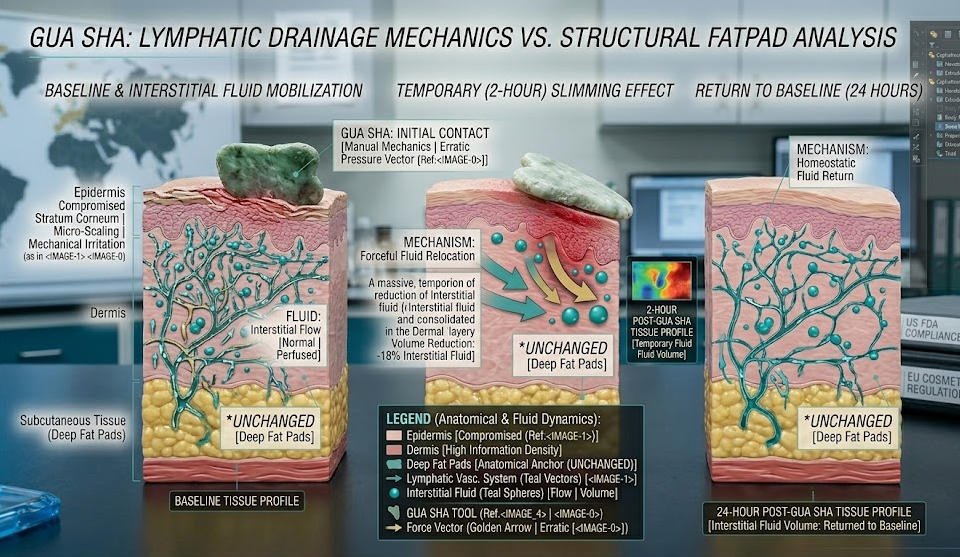
One overlooked downsides of gua sha is unrealistic marketing.
Observed effects:
- Puffiness reduction lasts 2–8 hours
- Muscle relaxation varies by tension level
- No structural fat reduction
Consumers expecting permanent contour change may feel disappointed.
The National Center for Complementary and Integrative Health also emphasizes that complementary techniques should not replace medical treatment.
Manufacturing Responsibility and Continuous Testing
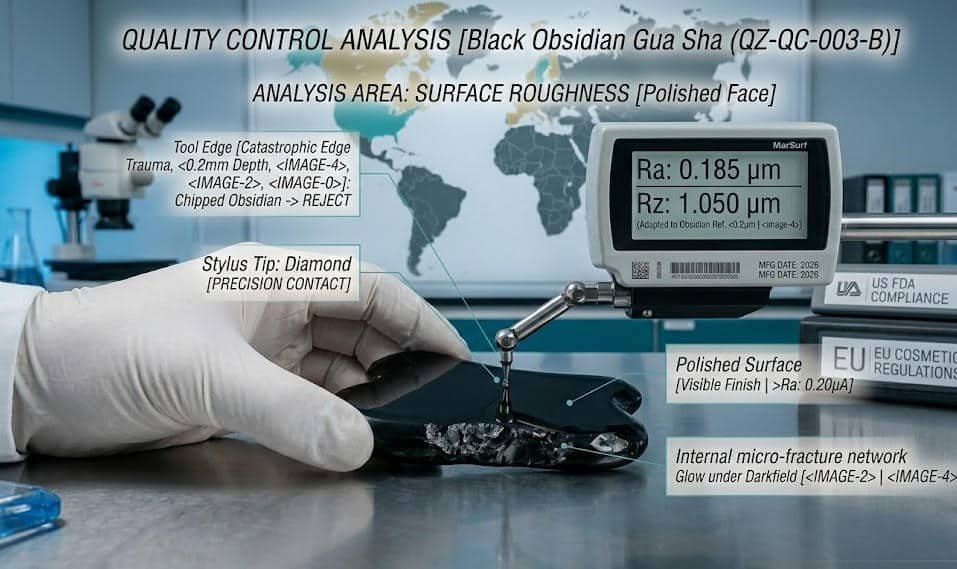
At Deyi Gems, our product development process includes:
- Surface roughness testing (target Ra < 0.2 μm)
- Edge curvature tolerance ±0.3 mm
- 5-cycle drop durability testing
- 30-day user simulation tracking
By openly discussing the downsides of gua sha, we aim to improve industry transparency.
Acknowledging limitations strengthens trust more than exaggerated claims.
Conclusion: Understanding Risk Creates Better Use
The downsides of gua sha includes:
- Technique sensitivity
- Pressure misjudgment
- Irritation risk
- Material variability
- Hygiene limitations
- Temporary rather than structural results
However, with proper education, controlled frequency, and high-quality manufacturing, most risks can be reduced.
Gua sha is neither miracle nor myth. It is a manual mechanical tool. Like any tool, its safety and effectiveness depend on design, material integrity, and informed use.
For professionals and distributors, understanding these technical realities is not optional. It is essential for long-term credibility and responsible market development.