In today’s competitive beauty industry, gua sha custom has become more than just a manufacturing option. It is now a strategic decision that can shape brand identity, product positioning, and long-term profitability. As the chief editor of Deyi Gems and someone who has worked directly with gua sha factories, stone suppliers, and international beauty brands for many years, I have seen how customization transforms simple scraping tools into powerful brand assets.
The global facial tool market has grown steadily in the past decade, especially after traditional Chinese wellness practices gained mainstream attention in North America and Europe. According to industry insights published by organizations such as the International Spa Association, demand for natural beauty tools continues to expand as consumers prefer non-invasive skincare methods. In addition, educational resources from the National Center for Complementary and Integrative Health highlight growing interest in traditional wellness techniques, including scraping therapies.
Against this backdrop, brands face an important question: should they choose OEM or ODM for gua sha custom production? From the perspective of a source manufacturer, the answer depends on cost structure, time-to-market, minimum order quantity (MOQ), design control, and long-term brand value.
This article will illustrate the differences between OEM and ODM in gua sha custom manufacturing, offering insights from the factory floor to the global marketplace.
Understanding Gua Sha Custom as a Strategic Tool
What Does Gua Sha Custom Really Mean?
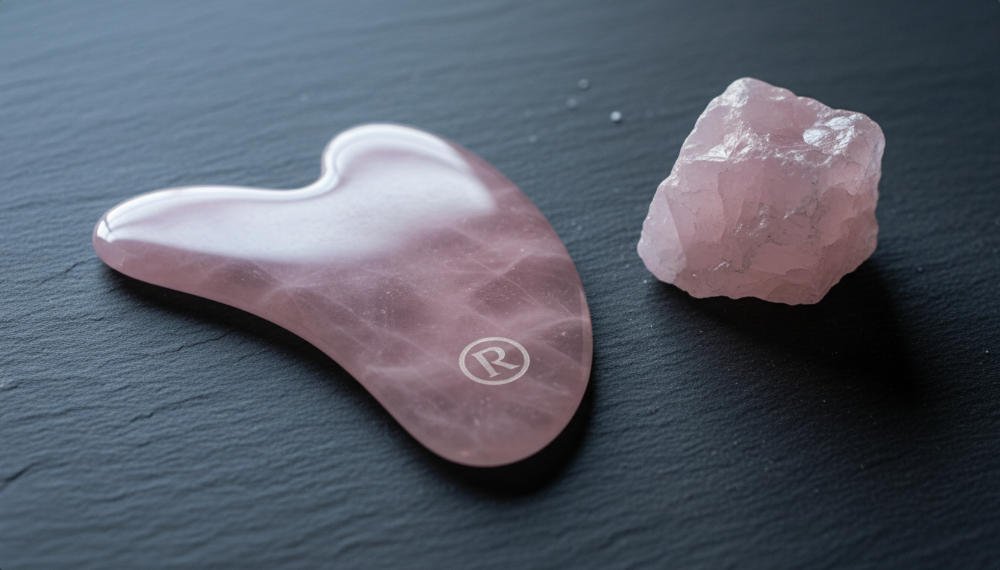
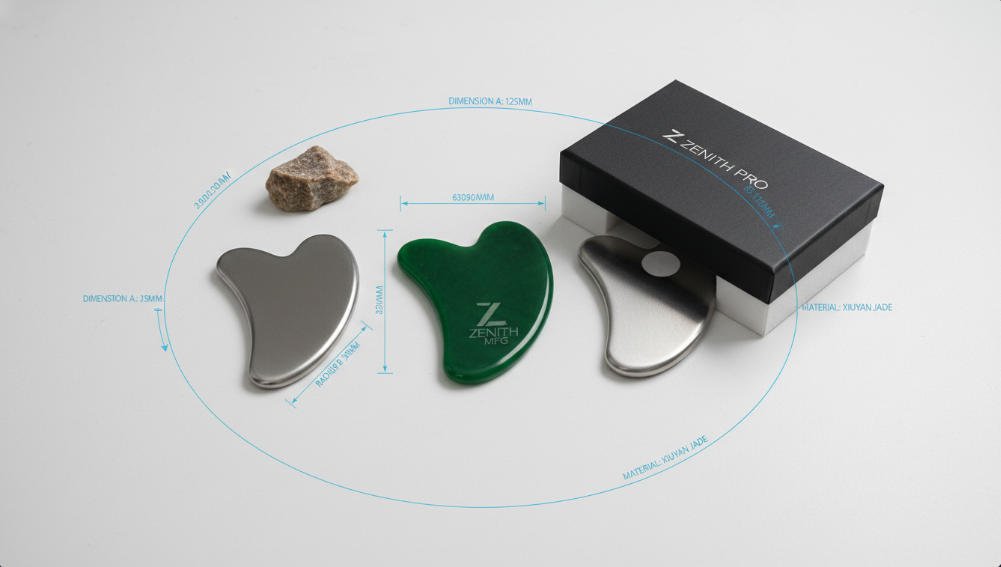
Gua sha custom refers to the tailored design, material selection, shape development, packaging creation, and brand marking of gua sha tools according to a client’s specific needs. Unlike generic wholesale products, customized gua sha tools reflect the identity and positioning of a brand.
From a manufacturing standpoint, customization can involve:
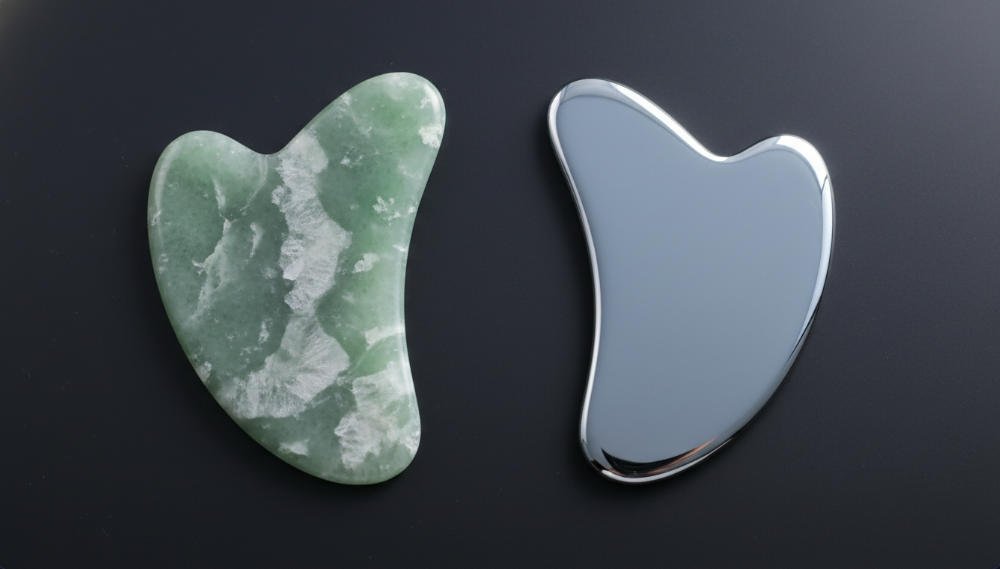
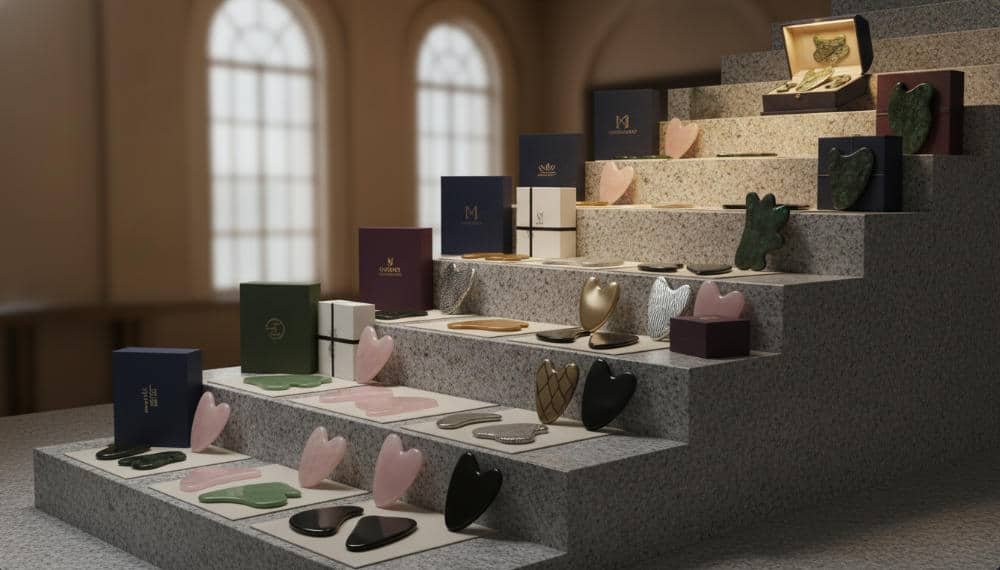
- Stone selection such as jade, rose quartz, amethyst, stainless steel, or Bian stone
- Shape engineering for facial contouring or body use
- Logo engraving, laser marking, or gold foil stamping
- Custom packaging including magnetic gift boxes or eco-friendly paper tubes
However, customization is not just about aesthetics. It also affects tooling cost, defect rates, production lead times, and quality control standards. Therefore, understanding the difference between OEM and ODM is essential before launching a gua sha custom project.
OEM in Gua Sha Custom Manufacturing
What Is OEM?
OEM stands for Original Equipment Manufacturer. In gua sha custom production, OEM means the buyer provides the design, specifications, and branding, while the factory manufactures the product according to those instructions.
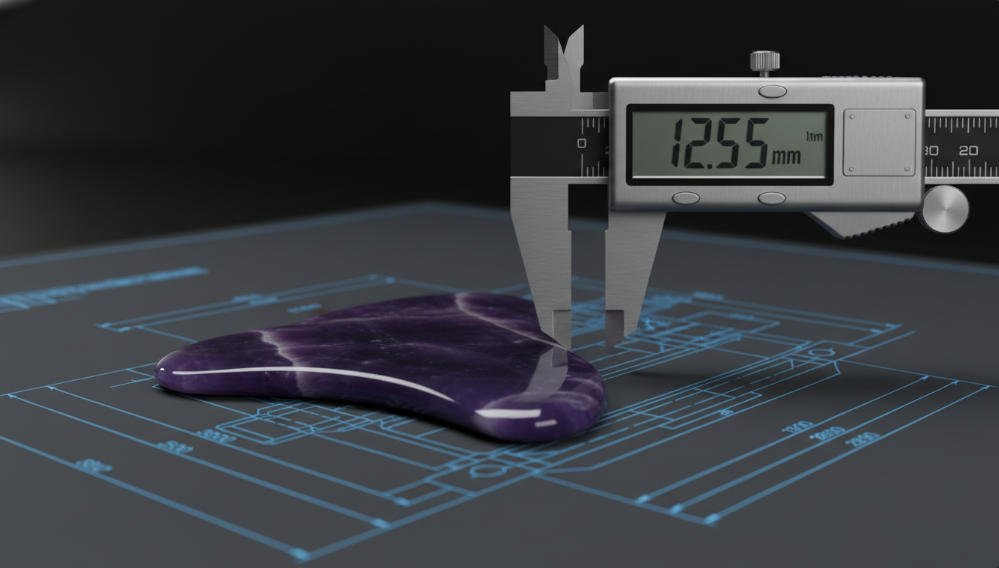
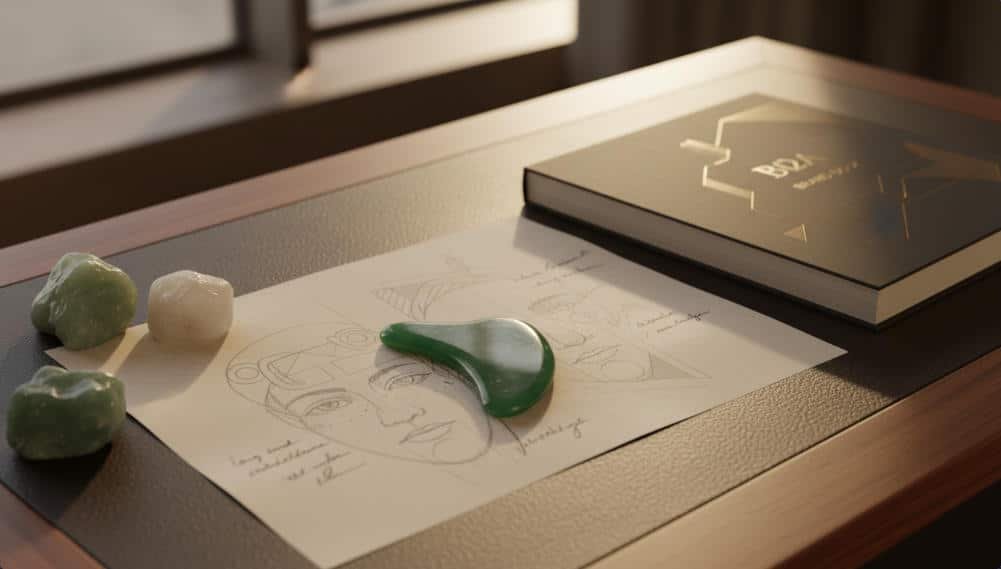
From our experience at Deyi Gems, OEM projects often involve established beauty brands that already have product designers or R&D teams. They typically send us CAD drawings, stone thickness requirements, curvature angles, and surface finish standards.
Cost Structure from the Manufacturer’s View
OEM projects usually require higher upfront costs for the buyer. Tooling molds, cutting templates, and sample revisions increase the initial investment. For example, developing a brand-new gua sha shape may require CNC programming and polishing adjustments, which increases labor time.
However, once production stabilizes, per-unit cost becomes competitive. Buyers gain control over differentiation, which can justify higher retail pricing. For the factory, OEM projects demand strict process control and tighter quality inspection, because the specifications are unique and cannot be replaced with generic stock.
Lead Time Comparison
Lead time for OEM gua sha custom orders is typically longer. Initial sampling may take 10 to 20 days depending on complexity. Mass production can take 25 to 40 days.
The reason is simple: every design detail must be verified. Edge smoothness, thickness tolerance, stone texture consistency, and logo positioning must meet agreed standards. Unlike stock items, OEM production cannot rely on pre-existing molds.
MOQ Considerations
OEM projects usually require higher MOQs. From our manufacturing experience, most factories set minimums between 1000 and 3000 pieces per design. This is because machine setup, worker training, and inspection costs must be distributed across a sufficient volume.
For buyers, this means higher initial capital. For manufacturers, it ensures production efficiency and stable yield rates.
Buyer Benefits
OEM offers maximum brand control. Buyers own the design and can create exclusive shapes that competitors cannot copy easily. Over time, this exclusivity builds stronger brand recognition and allows higher profit margins.
ODM in Gua Sha Custom Manufacturing
What Is ODM?
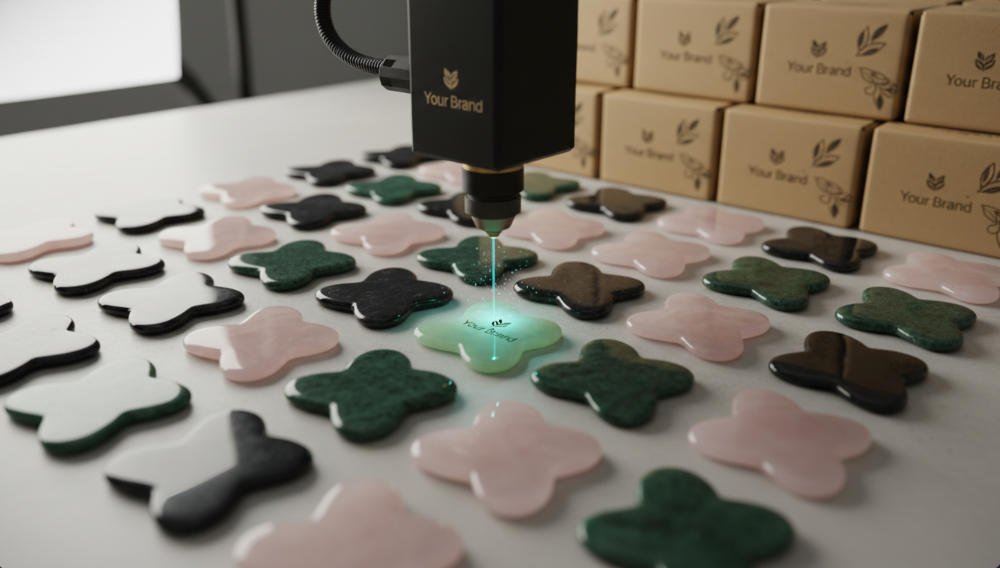
ODM stands for Original Design Manufacturer. In this model, the factory develops the design internally and offers it to buyers who then customize branding elements such as logos or packaging.
For gua sha custom orders, ODM is extremely popular among start-up brands or spa chains entering the market quickly.
Cost Efficiency Advantages
ODM significantly reduces development cost. Since the factory already has existing molds and proven shapes, there is no need to create new tooling. This lowers sample costs and accelerates decision-making.
From our factory perspective, ODM improves machine utilization. We can run larger combined production batches for multiple clients using the same base design. This reduces material waste and lowers per-unit cost.
Faster Lead Time
Because the shape already exists, sampling can be completed within 5 to 7 days. Mass production often takes only 20 to 30 days.
For buyers aiming to capture seasonal trends or social media momentum, speed matters. For example, when facial lifting tools went viral on platforms like Instagram and TikTok, brands using ODM were able to enter the market faster than those waiting for OEM development.
Lower MOQ
ODM typically requires smaller MOQs, often 300 to 800 pieces depending on the material. This lower threshold allows small businesses to test the market without heavy financial risk.
From a manufacturing viewpoint, ODM orders are easier to schedule because process parameters are already optimized. Yield rates are stable, and quality standards are documented.
Buyer Benefits
ODM offers convenience and reduced risk. Buyers can focus on marketing and brand storytelling while relying on the factory’s proven product structure. However, differentiation may be limited because similar shapes might be available to other brands.
Multi-Dimensional Comparison: OEM vs ODM in Gua Sha Custom
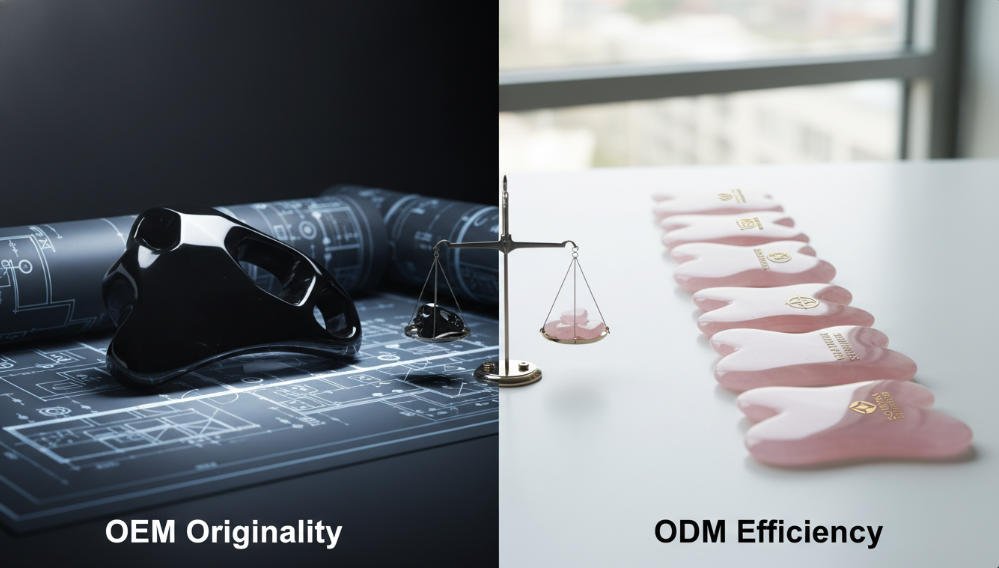
Cost Comparison from Both Sides
From the buyer’s perspective, OEM involves higher initial investment but potentially higher long-term brand equity. ODM reduces startup cost but may limit premium pricing potential.
From the manufacturer’s perspective, OEM requires more engineering resources and risk management. ODM improves operational efficiency and reduces defect probability.
Lead Time Comparison
OEM development requires more communication rounds and sample confirmation cycles. Consequently, time-to-market is longer.
ODM enables rapid deployment. When beauty trends shift quickly, this speed can translate directly into sales revenue.
MOQ and Inventory Risk
OEM usually demands higher volume commitment, which increases inventory risk if sales projections fail.
ODM supports smaller batch production, allowing flexible testing of new markets. For new brands, this flexibility reduces financial pressure.
Design Ownership and Brand Value
OEM allows buyers to claim unique design ownership. Over time, proprietary shapes and signature contours can become part of a brand’s visual identity.
ODM designs belong to the manufacturer. While branding elements can differ, structural exclusivity is limited.
Material Selection in Gua Sha Custom Projects
Natural Stone Considerations
Material choice significantly affects cost and consumer perception. Jade and rose quartz remain popular due to their historical association with traditional Chinese wellness practices.
Educational references from the World Health Organization acknowledge the cultural relevance of traditional medicine systems. While gua sha tools are cosmetic products rather than medical devices, consumer trust often connects to this cultural heritage.
However, stone quality varies greatly. Density, internal cracks, and color consistency influence yield rates. OEM projects often require higher-grade raw materials, increasing sourcing complexity.
Stainless Steel and Modern Materials
In recent years, stainless steel gua sha tools have gained attention because they are durable and easy to sanitize. According to general materials standards published by organizations like the ASTM International, stainless steel grades differ in corrosion resistance and hardness.
From a factory perspective, steel production reduces breakage rates but increases CNC machining time. Surface finishing must be precise to avoid sharp edges.
Quality Control and Risk Management
Inspection Standards
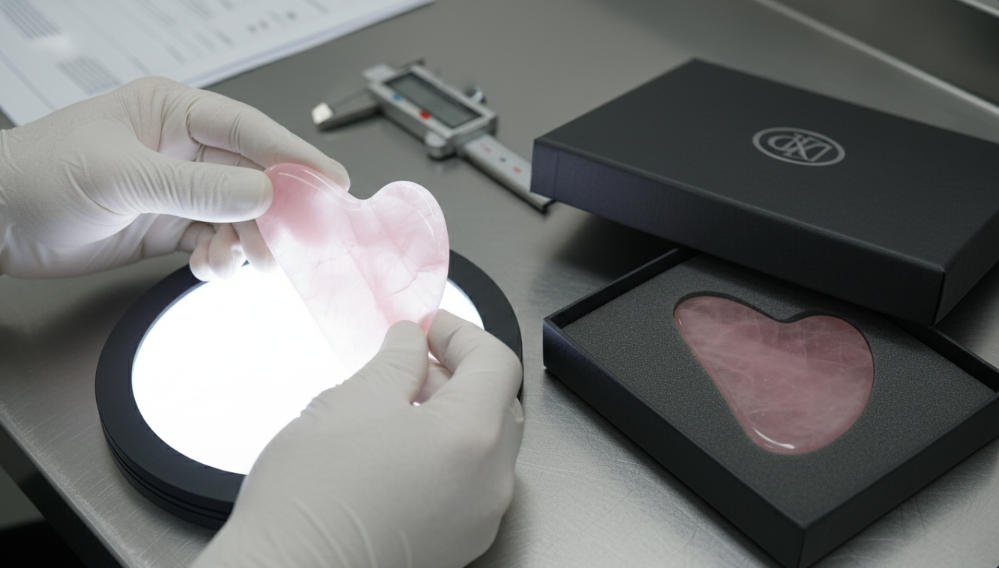
In OEM projects, inspection standards are often defined by the buyer. Thickness tolerance may be limited to ±0.5 mm. Surface polishing must pass visual inspection under strong light.
In ODM production, the factory typically applies its internal quality control system. Because parameters are standardized, defect rates are more predictable.
Packaging and Brand Protection
Custom packaging influences both logistics safety and brand image. Magnetic boxes, velvet pouches, and recyclable kraft boxes each serve different market segments.
Moreover, protective packaging reduces breakage during shipping, especially for natural stone tools. As manufacturers, we always calculate drop-test resistance and transport vibration risks before finalizing packaging structures.
Long-Term Strategic Impact for Buyers
Profit Margin Outlook
OEM projects, though expensive initially, often deliver stronger differentiation and allow higher retail pricing. Over several years, the brand equity created through exclusive design may offset the initial development cost.
ODM projects support fast entry and stable margins but may face price competition if similar shapes appear across multiple brands.
Market Positioning
Luxury spa brands usually prefer OEM because exclusivity aligns with premium positioning. Meanwhile, online start-ups often begin with ODM to test consumer response before investing in proprietary designs.
From our direct manufacturing experience, many brands start with ODM and later transition to OEM once their sales stabilize.
Final Thoughts: Choosing the Right Gua Sha Custom Path
From the standpoint of a source manufacturer like Deyi Gems, gua sha custom is not merely a production choice. It is a strategic collaboration between brand vision and factory capability.
OEM offers uniqueness, higher control, and long-term brand value, but requires greater investment and patience. ODM delivers speed, cost efficiency, and lower risk, making it ideal for emerging brands or market testing.
Ultimately, the decision should align with financial capacity, brand positioning, and growth strategy. As manufacturers deeply rooted in stone sourcing, shaping, and polishing processes, we believe transparent communication between buyer and factory is the key to successful gua sha custom projects.
In the evolving beauty market, customization is no longer optional. It is the foundation for differentiation, credibility, and sustainable growth.