Jade gua sha tools have become one of the fastest-growing segments in the beauty, wellness, and therapeutic massage industries. According to a 2023 analysis by the Global Wellness Institute (https://globalwellnessinstitute.org), the global beauty-tool market is projected to surpass USD 1.5 billion by 2030. As demand increases, the number of manufacturers—especially in China, India, Brazil, and Southeast Asia—has surged as well.
Unfortunately, rapid expansion has also created an environment where synthetic, dyed, or low-grade stones are frequently marketed as “natural jade.” The gap between what buyers expect and what factories deliver is now one of the most common causes of disputes in the gua sha wholesale market.
For brands, spas, and distributors, material authenticity is not just a cosmetic issue. It affects:
- product performance
- regulatory compliance
- customer trust
- long-term brand reputation
A customer who discovers their “jade” tool is actually dyed glass or serpentine marketed dishonestly is unlikely to purchase from that brand again.
As a manufacturer and wholesale supplier at Deyi Gems, with over 10 years of experience in sourcing natural stones, cutting and polishing gua sha tools, and performing professional QC evaluations, I have witnessed nearly every form of misrepresented stone in the market. This guide will teach you how to accurately identify genuine jade gua sha tools before placing bulk orders, and how to differentiate acceptable alternative materials from intentionally misleading substitutes.
1. What “Real Jade” Actually Means in the Gua Sha Industry
The word “jade” is one of the most misused material terms in the beauty-tool market. Many suppliers label any green mineral—or even glass—as jade. Before you can distinguish fakes, you need a clear understanding of what jade truly is.
1.1 Jadeite – Rare, Dense, and Premium
Jadeite is the rarest and most valuable form of jade, primarily sourced from Myanmar.
According to the Gemological Institute of America (GIA) (https://www.gia.edu/):
- Mohs hardness: 6.5–7
- Highly durable and resistant to surface scratches
- Bright translucency and vibrant colors
However, jadeite is almost never used for mass-produced gua sha tools because:
- supply is extremely limited
- costs are high
- waste during cutting is significant
If any supplier offers “jadeite gua sha” for under USD 5, it is almost certainly dyed quartz, serpentine, or glass.
1.2 Nephrite – The Most Common Real Jade for Gua Sha
Nephrite is the traditional gua sha stone used in Chinese medicine. It has:
- Mohs hardness: 6–6.5
- A fibrous, interwoven internal structure
- Natural coolness
- A smooth, waxy surface
According to the Canadian Nephrite Jade Research Center, over 80% of jade used in non-jewelry applications worldwide is nephrite.
Typical nephrite gua sha traits:
- deep green to almost blackish-green
- heavier and denser than quartz
- cool even in warm environments
1.3 Stones Commonly Marketed Incorrectly as Jade
These materials are often mislabeled as jade, yet many are still natural and safe:
- serpentine
- aventurine
- fuchsite quartz
- dyed quartz
- green-colored glass
The European Chemicals Agency (ECHA) reports that serpentine is 70–85% cheaper than nephrite (https://echa.europa.eu/), making it a common substitution.
2. Why Fake or Mislabeled Jade Is So Common in Wholesale Markets
Fake or misrepresented jade gua sha tools dominate low-priced markets for several reasons.
2.1 Major Cost Gaps Between Materials
Based on global stone-index data and internal Deyi Gems cost records:
| Material | Price (USD/kg) |
|---|---|
| Nephrite jade | 15–48 |
| Aventurine | 6–12 |
| Serpentine | 3–8 |
| Dyed quartz | 3–6 |
| Glass | <2 |
This large price difference encourages low-end factories to replace jade with cheaper stones while keeping jade-level pricing.
2.2 Minimal Global Regulation
Although the U.S. FTC requires accurate gemstone labeling (https://www.ftc.gov/), enforcement outside North America is weak. Terms like “new jade,” “jade-type stone,” or “Korean jade” can be used legally in many regions even when the material is not jade.
2.3 Buyer Behavior Encourages Substitution
When buyers request the lowest price, suppliers adjust materials accordingly.
Many first-time buyers unknowingly approve serpentine or glass while believing they are purchasing jade.
3. How to Identify Genuine Jade Gua Sha Tools Before Wholesale Orders
The following identification methods are used daily at Deyi Gems when evaluating raw stone blocks and incoming supplier materials.
3.1 Examine Natural Color Variations
Genuine jade has:
- cloudy, fibrous patterns
- non-uniform color distribution
- subtle mineral inclusions
Fake jade (dyed quartz or glass) usually looks too perfect.
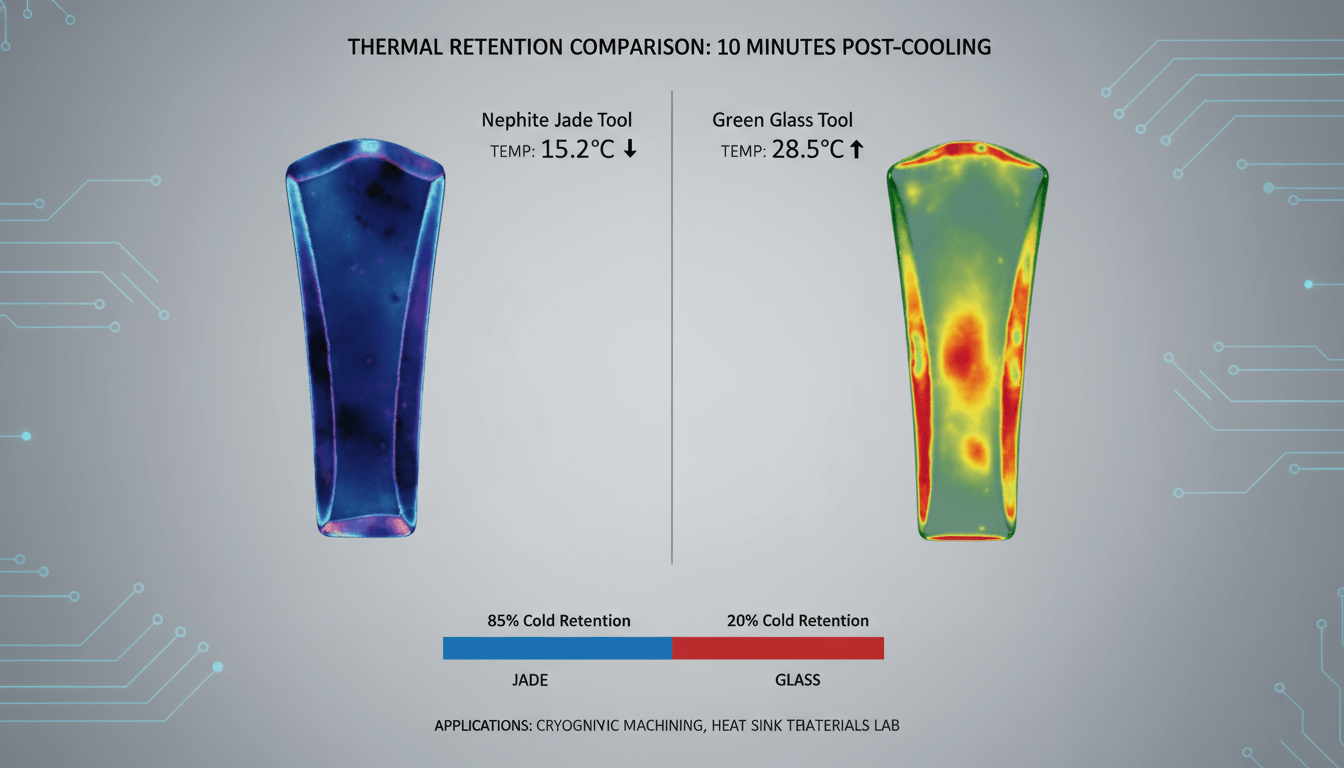
3.2 Temperature Retention Test
Natural jade:
- feels cool to the touch
- warms slowly in the hand
Glass and quartz warm significantly faster.
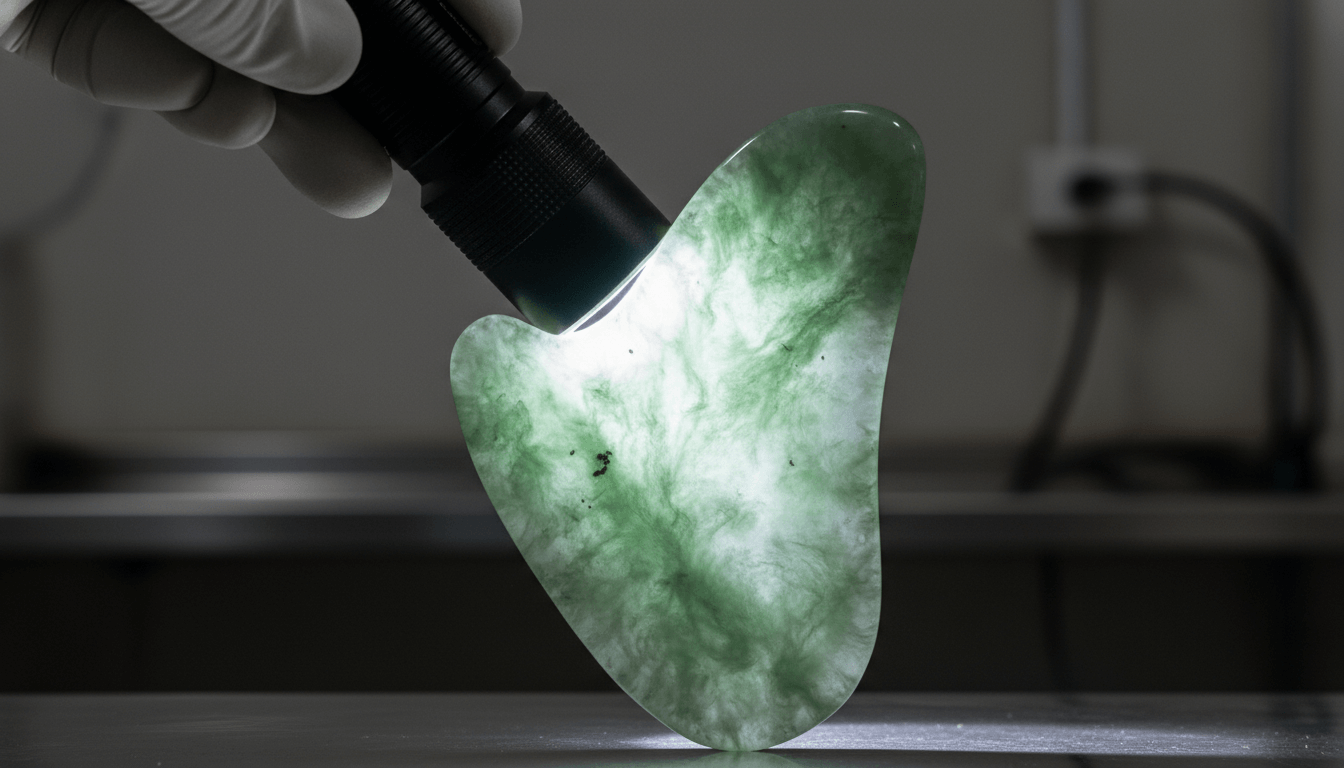
3.3 LED Light Inspection
Under strong LED lighting:
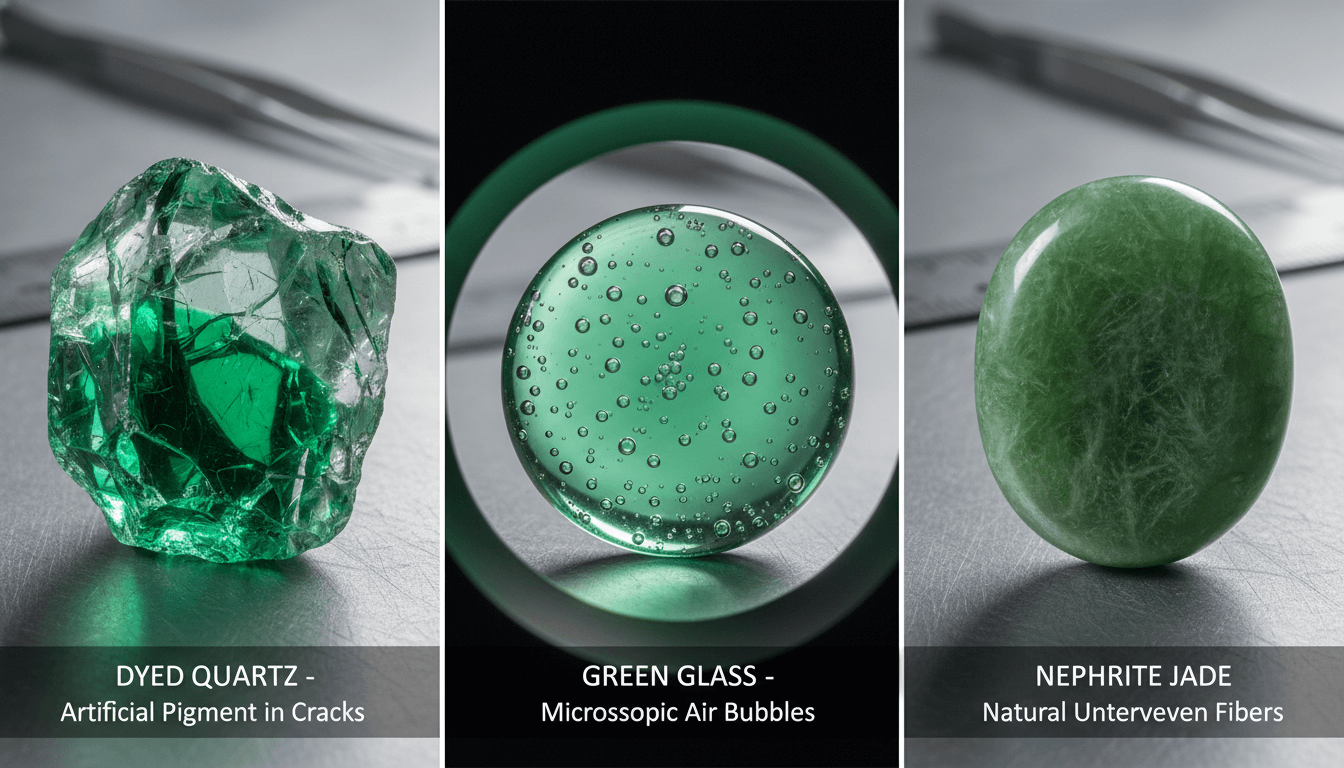
- Nephrite → fibrous texture
- Jadeite → granular, sugary texture
- Glass → air bubbles (never present in jade, confirmed by GIA)
- Dyed quartz → visible dye pockets or streaks
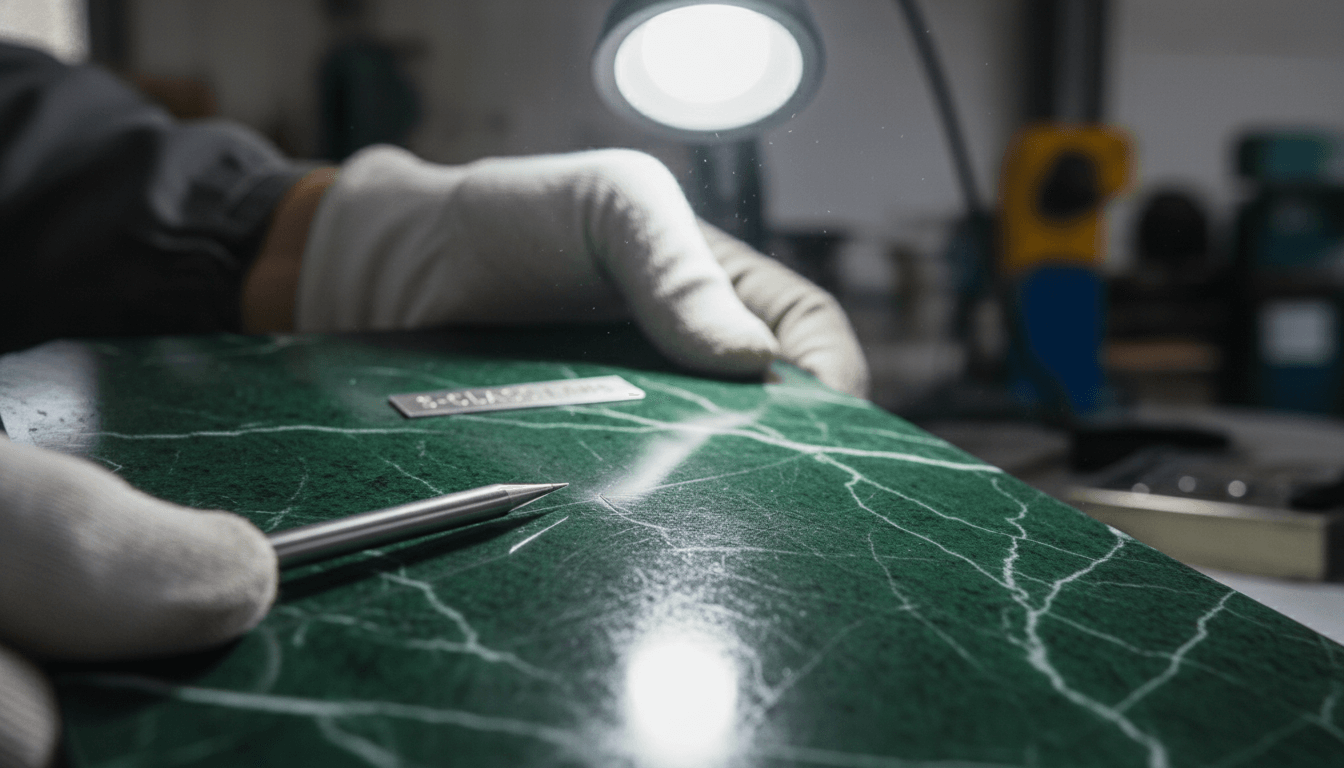
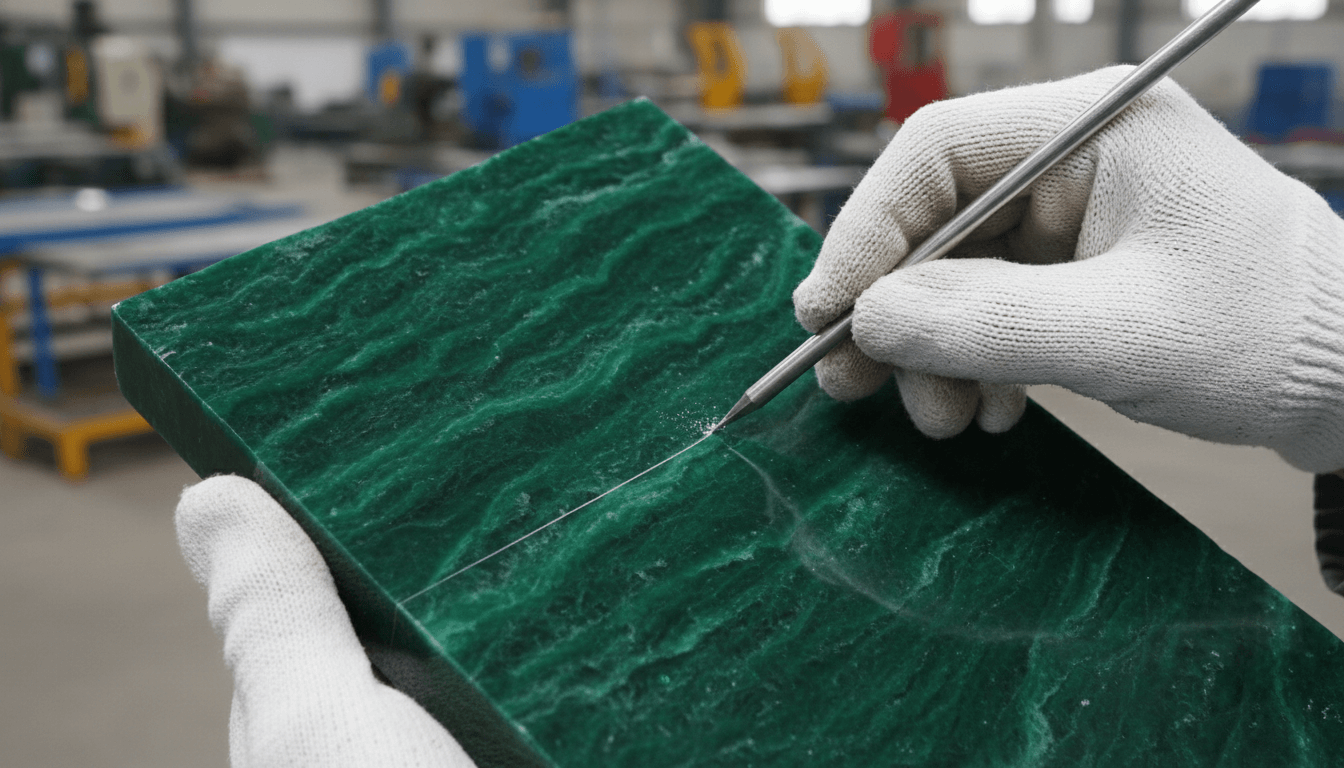
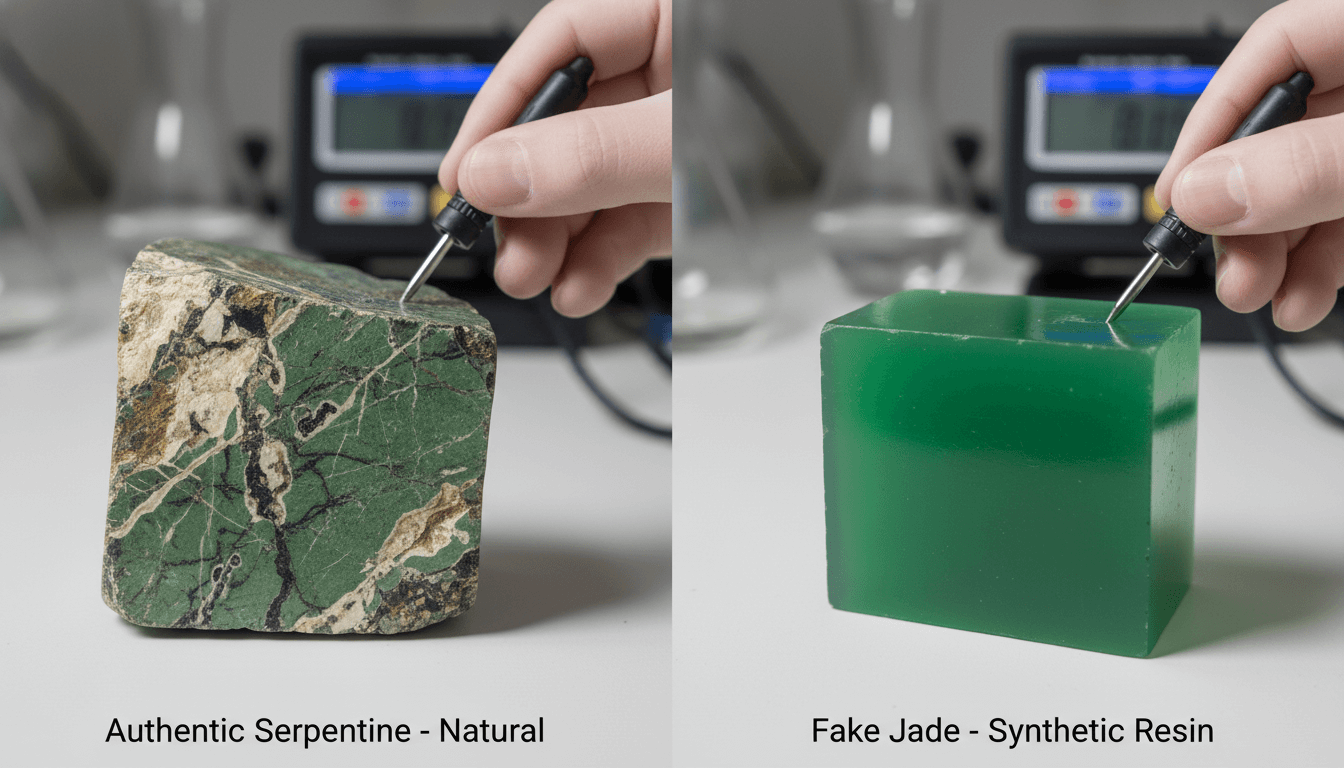
3.4 Scratch Test (Light Version)
With supplier permission:
- Nephrite/jadeite resist scratches
- Serpentine, quartz, and glass scratch more easily
3.5 Weight & Density Check
Professionals can feel the density difference instantly:
- Jade is heavier
- Glass is lighter
- Serpentine is softer and lighter than nephrite
3.6 Third-Party Lab Verification
Trusted labs include:
- GIA
- NGTC
- SGS
Avoid “factory certificates” without mineralogical testing equipment.
4. Common Types of Fake or Mislabeled Jade Gua Sha Tools
4.1 Dyed Quartz Sold as Jade
Visually attractive but often contains dye pockets.
ECHA warns that some dyes can leach during alcohol cleaning and may irritate skin.
4.2 Serpentine Sold as Jade (Important Clarification)
Serpentine is natural, but not jade.
However, when honestly advertised as serpentine, it is an excellent gua sha material.
Many brands use serpentine because:
- it looks similar to nephrite
- it is easier to carve
- it is more affordable, enabling broader price ranges
Serpentine is a valid, natural stone option as long as labeling is truthful.
4.3 Glass Gua Sha Marketed as Jade (Important Clarification)
Glass is often colored to mimic jade, but:
- has air bubbles
- warms fast
- lacks natural patterns
Yet when sold transparently as glass—especially borosilicate or tempered glass—it is:
- hygienic
- affordable
- consistent
- ideal for beginners or mass retail
Glass is not jade, but it is a legitimate gua sha material when disclosed properly.
4.4 Polymer/Resin Composite Tools
These contain synthetic resin mixed with powdered stone.
They are lightweight, plastic-like, and lack authentic stone benefits.
5. Acceptable Alternatives vs Unacceptable Counterfeits
5.1 Acceptable Alternatives (When Truthfully Labeled)
- Serpentine
- Aventurine
- Fuchsite quartz
- Glass
These materials offer different price points, color choices, and production efficiencies.
5.2 Unacceptable Counterfeits
- Glass sold as quartz or jade
- Serpentine marketed as nephrite
- Resin sold as jade
- Dyed marble sold as “grade A jade”
Counterfeit labeling—not the stone itself—is the real problem.
6. How Authenticity Affects Your Brand
6.1 Real Jade Delivers Superior Performance
According to GIA durability classifications, jadeite and nephrite are among the toughest natural stones used in beauty tools.
They resist:
- scratching
- temperature changes
- essential oils
6.2 Professional Spa Expectations
Spa professionals prefer real jade because it:
- retains temperature longer
- provides heavier pressure
- glides more smoothly
6.3 Transparency Prevents Refunds and Complaints
Clear labeling—whether the tool is jade, serpentine, quartz, or glass—protects your brand’s reputation.
7. How to Protect Yourself When Placing Wholesale Orders
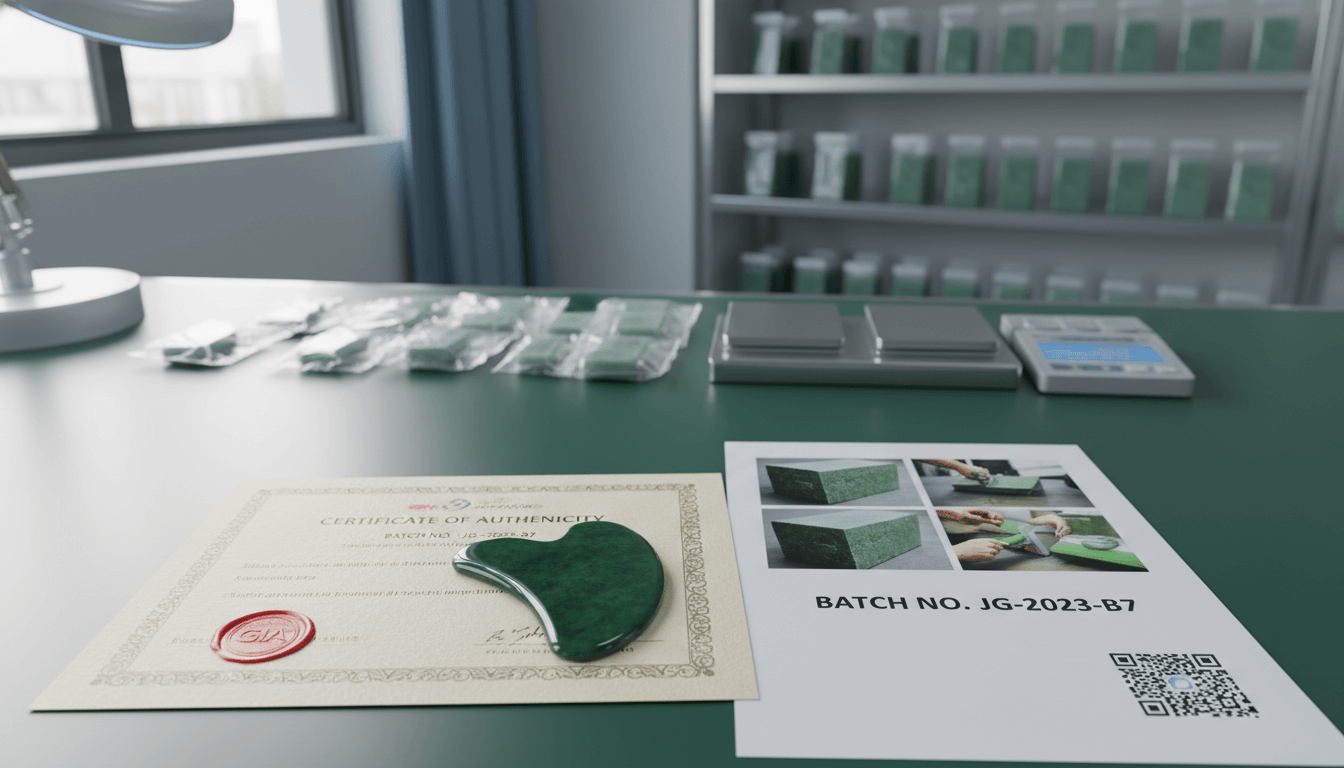
7.1 Request Raw Material Photos and Factory Footage
Reliable factories can show:
- raw stone blocks
- cutting process
- shaping and polishing workflow
7.2 Compare Pricing Realistically
If the price is dramatically below market norms, the material is almost certainly not jade.
7.3 Always Inspect Samples
Even if you’ve worked with the supplier before.
7.4 Test Large Orders Through Third-Party Labs
Especially for orders exceeding USD 5,000.
7.5 Work Only with Transparent Factories
Deyi Gems provides:
- authentic raw stone sourcing
- traceability
- real lab certificates
- consistent QC
Conclusion: Authenticity, Transparency, and Material Integrity Will Define Your Brand
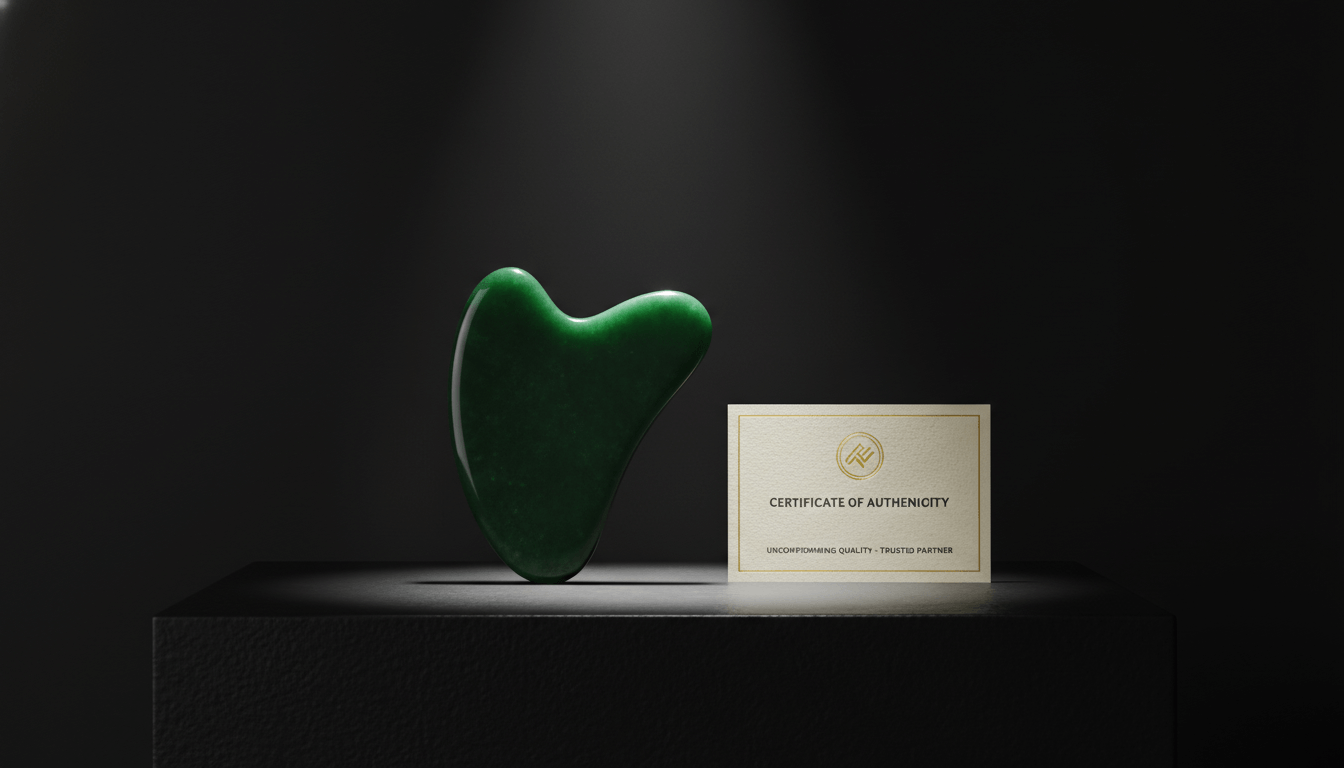
The jade gua sha market is filled with quality options—as well as misleading claims. By understanding what real jade is, learning to identify fakes, and recognizing acceptable alternatives such as serpentine and glass, you can make informed and honest decisions for your brand.
Authenticity is not only about using jade—it’s about truthful communication.
Your customers, wholesalers, and long-term brand reputation will all benefit from transparency.