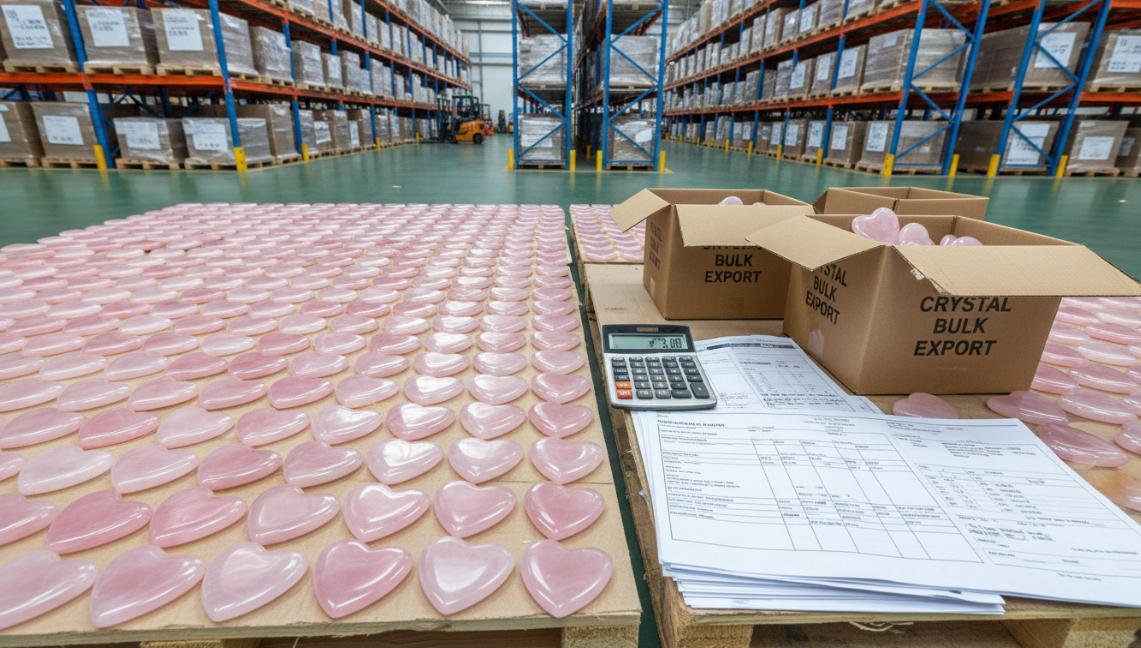
If you are currently sourcing gua sha wholesale through Amazon, eBay, or AliExpress, here is the number you need to see before your next purchase order: $8.93. That is the minimum realistic retail price for a gua sha board that leaves a factory at $3.00 per unit — a markup of nearly 300%, calculated using the most conservative cost estimates available. This is not a quality problem. The products on Amazon may be perfectly functional. The problem is structural: every layer of the Amazon selling model — platform commissions, FBA fulfillment fees, advertising costs, and seller margins — is funded by you, the buyer, embedded invisibly into every price you see. For any business that intends to resell gua sha tools, supply a spa operation, or build a wellness brand, this cost structure eliminates your profit margin before you process a single order. The solution is direct: source from a verified gua sha manufacturer, cut every intermediary layer, and pay a price that actually supports a profitable business. This article breaks down exactly how the platform cost structure works, what the math looks like at every stage, and what your sourcing process should look like when you are ready to buy at genuine wholesale pricing.
Why Amazon Gua Sha Prices Are Always 3× Higher Than Factory Cost
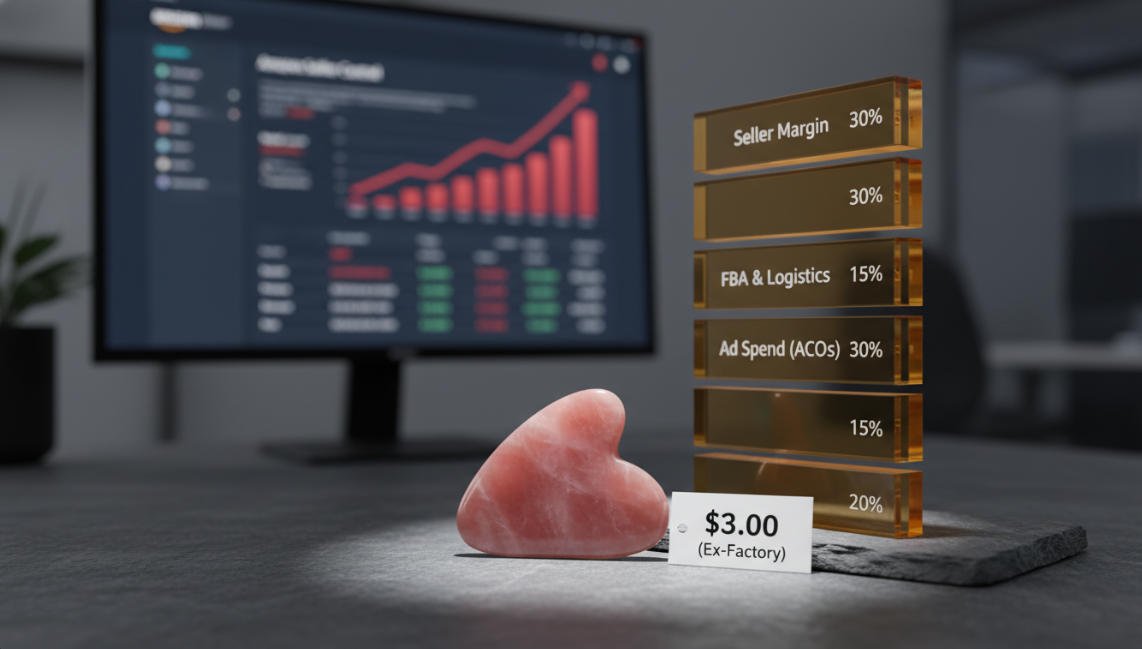
The Five-Layer Cost Stack That Every Gua Sha Wholesale Buyer Is Unknowingly Funding
When you purchase a gua sha tool from an Amazon listing, you are not simply paying for the product and international shipping. You are paying for an entire commercial ecosystem — one that encompasses platform infrastructure, advertising auction systems, third-party logistics operations, and seller profit expectations layered on top of all the above. None of these costs appear as line items on the product page, but every single one of them is embedded in the unit price you pay. For any business making gua sha wholesale purchasing decisions, understanding this five-layer cost structure is not optional — it is the prerequisite for making a financially rational sourcing choice.
The foundation of the cost stack is the base import cost, which is the one layer every buyer pays regardless of sourcing channel. This includes the ex-factory price from the gua sha manufacturer, international ocean or air freight, import duties assessed by your country’s customs authority, and any applicable value-added tax at the point of entry. Whether you buy from an Amazon seller or work directly with a gua sha factory in China, this foundational cost layer is unavoidable. What changes entirely — and dramatically — is every cost layer above it.
Platform Commission and FBA Fees: The 20–35% Silent Tax on Every Unit
Amazon’s platform fee structure is the single largest markup layer in the Amazon gua sha pricing stack, and it has been growing more complex with each passing year. According to Amazon’s official seller fee schedule, referral fees in the health, beauty, and personal care categories — where virtually all gua sha listings are classified — range from 8% to 15% of the total sale price. That figure alone, however, substantially understates the true platform overhead.
In 2024, Amazon introduced two additional fee categories that permanently expanded the cost burden for FBA sellers. The Inbound Placement Service Fee, effective April 15, 2024, charges sellers for distributing inventory across Amazon’s fulfillment network. The Low-Inventory-Level Fee, effective May 14, 2024, penalizes sellers whose stock levels fall below demand-based thresholds — a fee that disproportionately affects smaller gua sha importers managing lean inventory cycles. Then, effective January 15, 2026, Amazon restructured fulfillment fees by price tier: standard-size products in the $10–$50 range — precisely where most Amazon gua sha listings are priced — saw an average increase of $0.08 per unit, as confirmed in Amazon’s 2026 fee update announcement. When referral fees, FBA fulfillment fees, inbound placement fees, monthly storage, and account subscription costs are combined, total platform-related overhead for a typical gua sha seller consistently falls in the 20%–35%+ range of selling price. This is, by comparative measure, the highest combined platform fee structure among all major wholesale and retail marketplaces. You do not see this fee on any product page — but you fund every dollar of it through the inflated price you pay per unit.
Advertising Costs: The Hidden 20–30% That Determines What You See on Page One
Here is a structural fact that should permanently change how you interpret Amazon search results: the Amazon gua sha products ranked at the top of any search results page are not there because they are the best-made or most carefully sourced tools on the market. They are there because the sellers behind them are spending the most money on advertising. Amazon operates on a search-plus-competitive-auction model in which product visibility is determined primarily by advertising bid price rather than product quality, customer satisfaction scores, or production standards.
For most active sellers in competitive health and wellness categories, advertising spend — measured as ACoS (Advertising Cost of Sale) — runs between 20% and 30% of the sale price, according to data published by Jungle Scout’s Amazon Advertising Cost analysis. In high-competition keyword clusters such as “jade gua sha board” or “rose quartz facial tool,” this figure climbs further. Every dollar a seller spends on keyword bids is a dollar that gets priced into the unit cost you pay as a buyer. When you source gua sha wholesale from an Amazon seller, you are indirectly co-funding their search ranking — a cost that cannot exist when you source directly from a gua sha supplier.
The $3 Gua Sha Board That Becomes $8.93: A Three-Scenario Cost Simulation
To make the abstract concrete, consider a gua sha board with an ex-factory cost of $3.00 — a realistic price point for a mid-grade rose quartz or green jade tool sourced directly from a gua sha factory in China. A single-scenario calculation understates the variability every wholesale buyer should account for, so the table below models three distinct seller cost configurations — conservative, mid-range, and aggressive — each representing a real and observable business profile in the Amazon gua sha category.
| Cost Scenario | Platform Fee | Ad Cost (ACoS) | Seller Margin | Factory Cost | Final List Price | Markup vs Factory |
|---|---|---|---|---|---|---|
| Conservative | 20% | 15% | 35% | $3.00 | $6.79 | 2.3× |
| Mid-Range | 28% | 22% | 40% | $3.00 | $8.90 | 3.0× |
| Aggressive | 35% | 30% | 45% | $3.00 | $12.00 | 4.0× |
The formula applied across all three scenarios is identical: Factory Cost ÷ (1 − Platform Fee) ÷ (1 − Ad Cost) ÷ (1 − Seller Margin). What the table reveals is that even the most conservative, most seller-favorable configuration still results in a gua sha wholesale buyer paying 2.3× the actual factory price. The mid-range scenario — which reflects typical observed cost structures for established gua sha sellers — confirms the 3× multiplier. The aggressive scenario, which describes sellers in highly competitive keyword environments with premium margin expectations, takes the multiplier to 4×. Ask yourself honestly: which scenario best describes the seller whose listing your current gua sha wholesale budget is funding?
What Amazon Gua Sha Sellers Won’t Tell You About Their Pricing
Why a Gua Sha Manufacturer Once Studied — Then Walked Away From — Amazon
There is a directly relevant story behind Deyi Gems‘ position on the Amazon channel. When Deyi Gems — a gua sha manufacturer with over 12 years of integrated crystal and jade production experience — evaluated the possibility of opening an Amazon seller account, the process was methodical and data-driven. The operations team modeled out the full cost structure: platform referral commissions, FBA logistics and inbound placement fees, the advertising investment required to achieve meaningful page-one visibility for competitive Amazon gua sha keywords, and the seller margin necessary to make the channel financially self-sustaining over a 12-month operational window.
The conclusion required no deliberation. The total overhead required to operate profitably as an Amazon seller would have meant pricing end products at more than double the direct B2B wholesale rate — passing platform-driven costs onto buyers who deserved none of them. Rather than charge wholesale clients for Amazon’s infrastructure, Deyi Gems made the deliberate and permanent decision to redirect that margin capacity into lower direct pricing for B2B buyers. That single decision defines the company’s wholesale pricing structure to this day, and it is the clearest possible illustration of why your per-unit cost when sourcing directly from a gua sha factory is structurally and unavoidably lower than any Amazon-sourced alternative.
Who Is Actually Selling Amazon Gua Sha? A Seller Profile Analysis
Before you treat Amazon as a gua sha wholesale sourcing channel, there is a structural question worth asking that most buyers never think to pose: who, exactly, is selling to you? The answer matters significantly for understanding why the prices are what they are — and for recognizing that the cost markup layers described above are not theoretical; they are the operational reality of nearly every seller you see on those product pages.
Amazon hosts over 9.7 million sellers globally, of which approximately 2 million are actively selling Yaguara on the platform at any given time. Beauty and Personal Care is the second most popular seller category, accounting for 26% of Amazon sellers Meetanshi — the precise category bracket where every Amazon gua sha listing sits. Of those sellers, the overwhelming majority are not the factories that manufacture the tools. They are importers, resellers, private label entrepreneurs, and trading companies who have themselves purchased from a gua sha manufacturer at factory price, absorbed their own import costs, and are now recovering all of those costs — plus platform fees, advertising spend, and profit margin — through the price you pay.
The supply chain reality behind most Amazon gua sha listings follows a predictable structure. A trading company or importer sources from a gua sha factory at ex-factory price — the same factory cost that is available to you as a direct buyer. That trader then adds their own margin, ships the goods to an Amazon fulfillment center, pays inbound placement and storage fees, runs advertising campaigns to compete for keyword visibility, pays Amazon’s referral commission on every unit sold, and builds their profit target above all of the above. According to Jungle Scout’s 2024 State of the Amazon Seller report, 54% of Amazon sellers use a private label model Jungle Scout — meaning they source from manufacturers exactly as described, apply their own branding, and list under a brand name that creates no direct traceability back to the originating factory. When you purchase from these listings, you are not buying from a gua sha supplier with any production relationship to the product. You are buying from the middle of a supply chain that has already absorbed multiple markup layers before the product reaches your hands.
This is not a criticism of Amazon sellers — it is simply the structural reality of how marketplace commerce operates. The question for your business is whether you want to fund that structure, or step around it entirely by sourcing directly from the gua sha manufacturer at the originating point of the chain.
A Direct Cost Comparison: Amazon vs. Gua Sha Factory Procurement
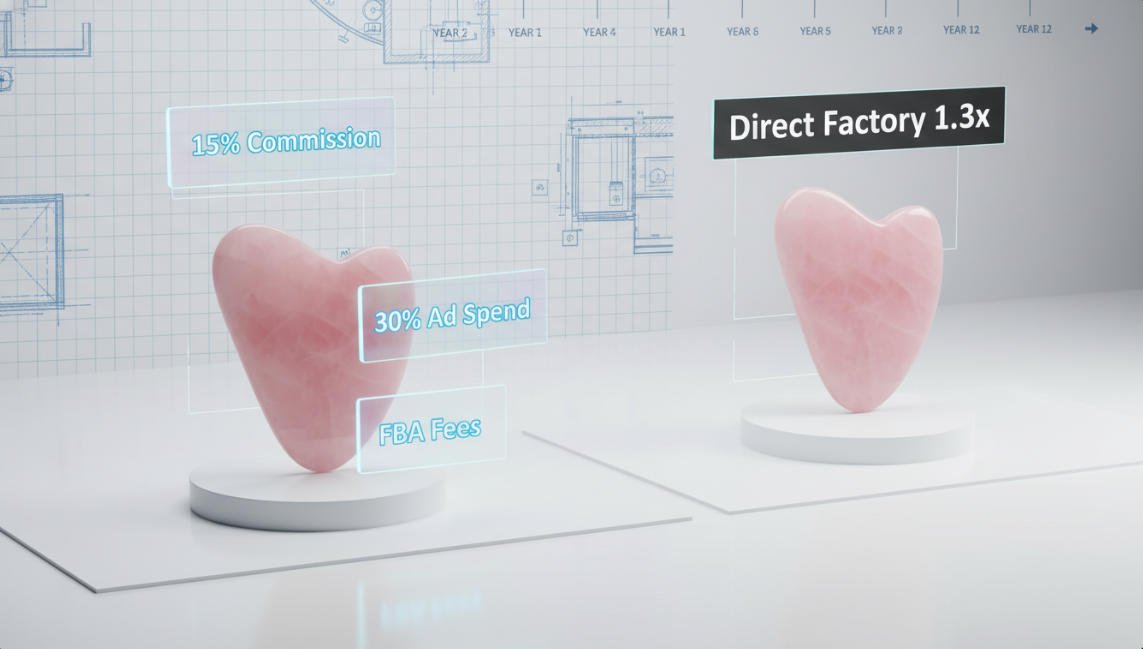
When the two sourcing paths are placed side by side, the per-unit cost differential becomes impossible to ignore. Sourcing gua sha wholesale through Amazon means your purchase price already embeds platform commissions of 8–15%, FBA and inbound placement fees folded into the seller’s margin recovery calculation, advertising spend of 20–30%, and a seller profit layer of at least 35–45% above all accumulated costs. The all-in multiplier on factory cost sits at 2.3× to 4.0× depending on the seller’s specific cost profile.
Sourcing directly from a gua sha manufacturer or gua sha supplier simplifies your cost structure to: ex-factory price, plus actual international freight at market rates, plus applicable import duties for your destination market, plus the manufacturer’s B2B margin — which in a genuine factory-direct relationship typically does not exceed 30% of the ex-factory price. Your all-in multiplier on factory cost sits at approximately 1.3×. The gap between 1.3× and 3.0× — the mid-range Amazon scenario — represents roughly 1.7× the factory cost per unit that your current sourcing channel is consuming before you make a single sale. That recoverable margin, compounded across your entire order volume, is the financial case for this sourcing transition in its entirety.
Platform Cost Comparison — Amazon Gua Sha vs. Direct Factory Sourcing
To make the cost difference concrete, the table below compares the cost layers present in each sourcing channel. The purpose is not to argue that Amazon is poorly managed — it is to show that its cost structure is architecturally misaligned with gua sha wholesale purchasing.
| Cost Layer | Amazon Gua Sha | Direct Gua Sha Factory |
|---|---|---|
| Platform Commission | 8%–15% of selling price | None |
| FBA / Fulfillment Fees | $2–$4+ per unit (within 20–35% total) | Actual freight cost only |
| Advertising Cost Share | 20%–30% of revenue | None |
| Seller / Intermediary Margin | ≥40% of selling price | Factory margin ≤30% |
| Total Over Factory Cost | ≈3× factory price | ≈1.3× factory price |
Consider what this table means for your resale economics. If you purchase gua sha tools at $9.00 per unit through Amazon and intend to resell at $13.00–$15.00, your gross margin before your own operating costs is approximately 31%–40% on a product whose manufacturing cost is $3.00. If you source the same product at $3.90 (factory cost × 1.3) through a direct gua sha supplier, your gross margin at the same $13.00–$15.00 selling price is 70%–80%. The difference is not incremental — it is the difference between a business that scales and one that does not. This means every wholesale order placed through a platform is a measurable, calculable transfer of your margin to a system that provides no value to your supply chain.
The Smarter Path — How to Buy Gua Sha Wholesale Direct from a Factory
What Factory-Direct Pricing Actually Looks Like for Your Gua Sha Wholesale Order
Sourcing gua sha wholesale directly from a gua sha factory simplifies your cost structure to its essential components: the manufacturing cost of the product, plus the factory’s own operating margin. At Deyi Gems, that factory margin does not exceed 30% of the ex-factory price — and for higher-volume orders, it is typically less. You pay for the product. You pay for freight and applicable import duties. You pay nothing for advertising auctions you do not participate in, platform systems you do not use, or intermediary layers that add no function to your supply chain. That reduction in cost structure gives your business room to operate — room to price competitively in your market, room to absorb promotional costs, and room to build the kind of margin that sustains a growing product line.
The contrast with platform sourcing becomes especially significant as your order volume increases. At 500 units, the difference between $3.90 per unit (factory-direct) and $8.93 per unit (Amazon-level pricing) is approximately $2,515 in direct cost savings per order. At 2,000 units, that number reaches $10,060. These are not theoretical savings — they are the difference between capital that returns to your business and capital that funds Amazon’s infrastructure. This means scaling your gua sha wholesale operation through direct factory sourcing is not just a pricing preference; it is a structural financial decision that compounds in your favor with every order you place.
Material Quality and Independent Certification — What You Should Know Before Ordering
One question that arises consistently among buyers considering a shift from platform sourcing to direct gua sha factory purchasing is quality verification. On Amazon, buyer reviews and return rates provide a proxy signal for quality — imperfect, but present. When sourcing directly, that signal is replaced by documentation and due diligence. For crystal and jade gua sha tools, material authenticity is the primary quality variable, and it can be assessed through the standards published by recognized gemological institutions.
The Gemological Institute of America (GIA) provides industry-standard frameworks for identifying natural gemstone materials — including the mineral varieties commonly used in gua sha production such as nephrite jade, rose quartz, and green aventurine — versus synthetic, treated, or composite substitutes. The International Gem Society (IGS) similarly publishes accessible reference material on jade identification and valuation that is relevant to anyone sourcing jade gua sha tools commercially. Requesting material testing documentation or third-party certification consistent with these standards is a professional, standard practice in B2B sourcing. This means you can make accurate, verifiable product claims to your own customers and retail partners without relying on platform review proxies.
Four Structural Advantages of Sourcing Directly from a Gua Sha Manufacturer
Flexible MOQ: A direct relationship with a gua sha manufacturer typically provides more adaptable minimum order quantity arrangements than purchasing through distributors or platform sellers. This allows your business to test new material types, shapes, or product formats with limited inventory commitment before committing to full production volumes.
Customization Access: Direct engagement with a gua sha factory opens OEM and ODM capabilities that are simply unavailable through platform purchasing. Custom product shapes, material selection across rose quartz, nephrite jade, bian stone, obsidian, aventurine, and others, private label packaging, and branded gift box configurations can all be integrated into your order — requirements that define most professional wellness and spa product lines.
Supply Stability: A verified direct relationship with your gua sha supplier provides visibility into production scheduling, raw material availability, and lead time commitments. You are not dependent on a third-party seller’s inventory levels or their shipping speed to Amazon warehouses. This means your replenishment planning becomes predictable rather than reactive.
Cost Predictability: When you negotiate pricing directly with a gua sha manufacturer, your per-unit cost does not fluctuate based on Amazon’s algorithmic fee adjustments, changes to FBA pricing structures, or advertising auction competition. Your procurement budget is stable, which directly supports accurate financial planning across your product lines.
Regional Landed Cost Reality: What Wholesale Buyers in the US, EU, and UK Actually Pay
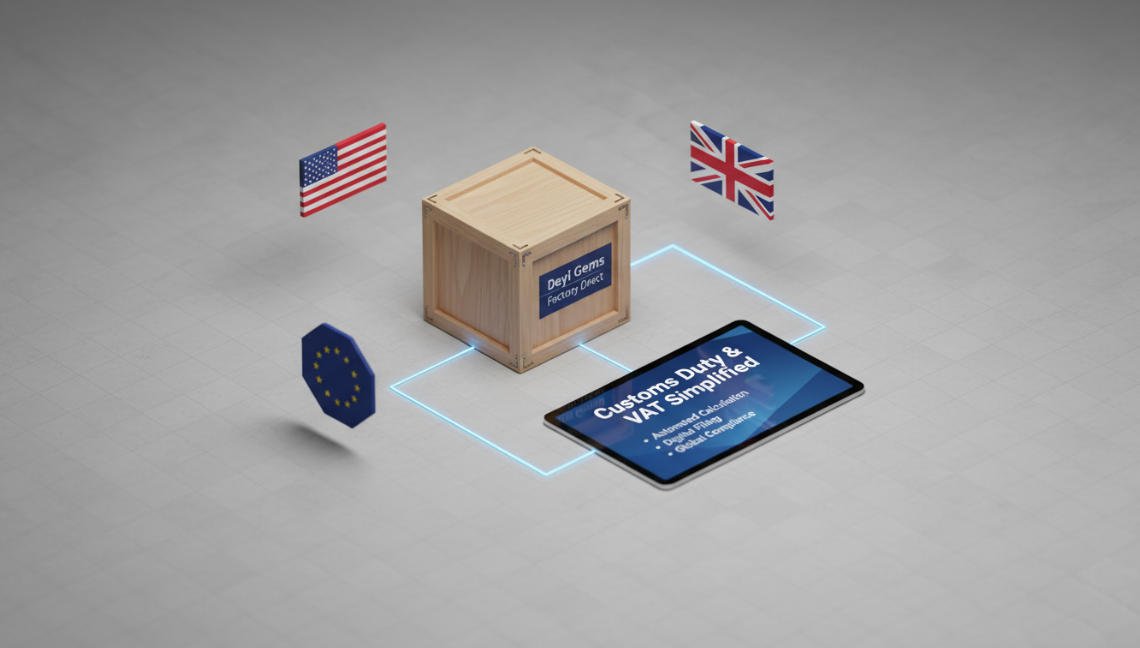
The factory-cost-to-landed-cost calculation does not end at the freight invoice. Depending on your destination market, your import duty and tax obligations add a third mandatory cost layer on top of ex-factory price and international shipping — and these obligations apply equally whether you source gua sha wholesale through Amazon or directly from a gua sha factory. Understanding the regional picture is essential for modeling your true procurement baseline in each market you serve.
United States buyers face the most complex duty environment for Chinese-origin stone products. Natural jade and semiprecious stone articles (HTS subheading 7103.99.5000) carry a base MFN duty rate of 10.5% of declared customs value, as confirmed by U.S. Customs and Border Protection ruling records. This base rate is independent of any Section 301 trade action classifications, which may apply additionally depending on how the product is classified and whether any exemptions are in effect at the time of your shipment. The practical implication: a $3.00 factory-cost gua sha board with freight may carry a landed duty cost of $0.30–$0.50 per unit before any platform or seller markup layer is applied. You pay this cost regardless of your sourcing channel. The question is solely how much additional markup is stacked above it.
European Union buyers operate under a different but similarly material framework. Most natural stone personal care and wellness articles imported into the EU from China attract customs duty rates of 2.7%–6% depending on product classification, applied to the CIF (Cost, Insurance, Freight) value of the shipment. On top of import duty, EU VAT — which applies at the point of import for commercial shipments — is assessed at the standard rate of 20% in most member states (Germany, France, Italy, Spain) or the applicable local rate where different. For a bulk gua sha wholesale shipment with a CIF value of $5,000, a 5% duty plus 20% VAT on the duty-inclusive value adds approximately $1,250 in tax obligations before the goods clear customs — a cost that compounds directly with your per-unit economics.
United Kingdom buyers post-Brexit operate under their own Global Tariff schedule. Natural stone articles follow broadly similar classification logic to EU codes, with standard VAT at 20% applied at import. UK customs duty rates for worked stone personal care articles typically range from 2.5%–6% of customs value. UK-based gua sha wholesale buyers should also note that post-Brexit border procedures add administrative lead time to shipments that was previously absorbed within the EU single market framework — a factor relevant to inventory planning and cash flow management for repeat orders.
The important takeaway for any multi-market gua sha wholesale buyer is this: the import duty and VAT obligations in your destination market are fixed costs that exist in every sourcing scenario. What varies — by a factor of 2× to 3× — is the commercial markup that sits above them. Removing the Amazon platform layer does not change your duty liability by a single dollar. It does, however, eliminate the 1.0×–2.7× additional commercial premium that currently compounds on top of your unavoidable import costs. This means the net financial benefit of sourcing directly from a gua sha manufacturer is even larger when expressed as a percentage of your total landed cost, because the factory-direct saving applies to the commercial component of your per-unit cost while the duty component remains fixed regardless of channel.
How to Evaluate a Reliable Gua Sha Manufacturer Before Placing a Gua Sha Wholesale Order
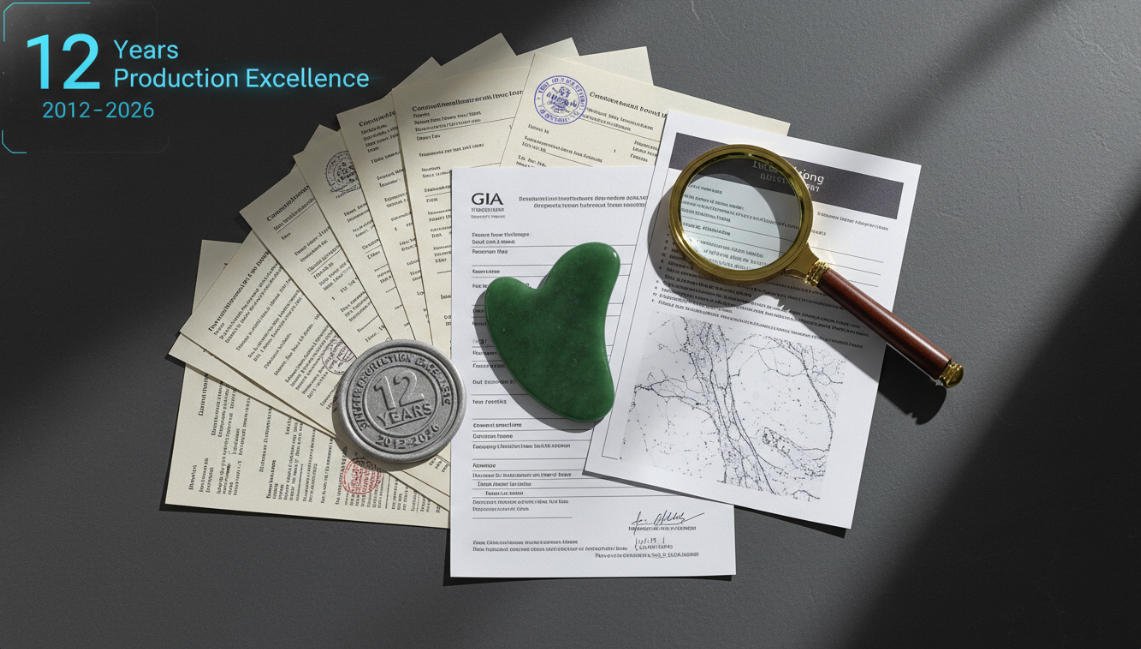
Five Questions That Separate Real Manufacturers from Trading Companies
Not every entity presenting itself as a gua sha factory is actually a manufacturer. A significant portion of Chinese suppliers operating on B2B platforms such as Alibaba, Global Sources, or Made-in-China are trading companies — intermediaries who purchase from actual production facilities and resell with their own margin added. Identifying the distinction before you place a wholesale order is not a minor due diligence step; it directly determines whether you are getting factory-level pricing or adding another intermediary layer to a cost structure you are already trying to simplify.
Do you operate your own production facility? Ask the supplier to provide factory registration documents ( Business License) or arrange a live video walkthrough of their production floor. A genuine gua sha manufacturer can demonstrate active production equipment, raw material inventory, in-process quality control checkpoints, and finished goods inspection procedures. A trading company typically cannot produce these without revealing their actual source factory.
Can you provide material authentication documentation? Natural stone gua sha tools — jade, rose quartz, bian stone, and others — carry a different market value and a different set of product claim obligations than synthetic or composite alternatives. Request testing reports or material certificates that reference recognized gemological standards. For jade specifically, the testing methodology described by the GIA’s gem lab services distinguishes between Type A natural nephrite or jadeite, and treated or composite material — a distinction that matters both for pricing accuracy and for the claims you make to your downstream customers.
What is your MOQ, and how does it change with custom specifications? A factory with genuine production capacity will provide different MOQ thresholds depending on product complexity, customization level, and current production scheduling. If a supplier quotes identical MOQ and pricing regardless of whether you want a standard product or a fully customized OEM configuration, this rigidity often signals limited production control — and likely a trading company structure.
What export documentation do you routinely provide? Professional B2B gua sha wholesale orders to international buyers require a clear documentation package: commercial invoice, packing list, certificate of origin, and in some markets, material testing certificates for customs classification. A reliable gua sha supplier handles international export documentation regularly and can explain the process and timeline for each document type without requiring significant preparation time.
Can you commit to a sample timeline and a production schedule in writing? Sample evaluation before full production commitment is standard B2B sourcing practice. A trustworthy gua sha factory will accommodate sample requests — typically 1–3 units of a proposed product — with a confirmed production and shipping timeline. If a supplier is evasive about sample lead times or requests full payment before providing samples without any negotiated terms, treat this as a due diligence flag.
What 12 Years of Gua Sha Production Experience Delivers to Your Order
Deyi Gems has manufactured crystal and jade gua sha tools since 2012, spanning design, production, quality inspection, and international export across more than a decade of continuous operation. That production history matters in concrete, verifiable terms. Twelve years in this specific product category means that the raw material sourcing channels — stone quarry relationships, material grading processes, quality consistency benchmarks — have been tested, refined, and stabilized. Production processes for shaping, polishing, and finishing natural stone gua sha tools have been iterated across thousands of production batches. International export procedures, including documentation requirements for markets in the United States, European Union, United Kingdom, Australia, and Southeast Asia, are handled routinely rather than treated as exceptions.
For your wholesale orders, this means predictable lead times, batch-to-batch product consistency, and a gua sha manufacturer that already understands the compliance and documentation requirements of the markets you are selling into. This means you spend less time troubleshooting supply chain problems and more time building your customer base.
How to Start Your Gua Sha Wholesale Inquiry — A Practical Sourcing Guide

What to Prepare Before Contacting a Gua Sha Factory
Contacting a gua sha manufacturer directly for the first time is more straightforward than most buyers expect, particularly if you have done any previous sourcing through platforms. You do not need a finalized purchase order, a signed NDA, or a detailed technical specification sheet. You need enough information to initiate a productive conversation and receive an accurate quotation. Preparing three core inputs before your first contact will accelerate the timeline from initial inquiry to confirmed pricing by a measurable margin.
The first input is your target product type and material. Gua sha tools are produced across a range of natural stone materials — rose quartz, nephrite jade, green aventurine, bian stone, black obsidian, and others — each carrying different production costs, material sourcing lead times, and price points. If your market research is still in early stages, a professional gua sha supplier should be able to walk you through comparative pricing across materials with sample availability timelines for each. Knowing your preferred material — or your preferred price tier, if material is flexible — allows the factory to propose relevant options immediately rather than engaging in multiple rounds of broad inquiry.
The second input is an approximate order volume. A range is more useful than a precise number at the inquiry stage. Volume determines MOQ applicability, production scheduling priority, and whether tiered pricing structures apply to your order. An initial inquiry of “500–2,000 units, depending on pricing” gives a gua sha factory enough information to quote meaningfully. The third input is whether you need standard products or any degree of customization. If you are building a private label wellness brand, supplying a hotel spa group under a branded identity, or developing an OEM product line, stating this upfront allows the factory to route your inquiry to the appropriate technical and design team rather than providing a generic product quote that does not match your actual requirements.
What to Expect After Submitting a Gua Sha Wholesale Inquiry to a Direct Gua Sha Supplier
When you contact Deyi Gems as a prospective wholesale buyer, the inquiry process follows a structured, documented timeline. Your initial inquiry is reviewed and a preliminary product proposal with indicative pricing is typically returned within 24–48 business hours. If your inquiry includes customization requirements — packaging design, logo placement, custom shapes, or material specifications — the proposal includes a preliminary assessment of production feasibility and an OEM/ODM timeline. Sample orders are arranged with confirmed production and shipping timelines before any full-volume production commitment is required on your part.
There are no platform fees embedded in the pricing you receive. There are no advertising cost structures factored into the unit price. There is no intermediary margin between the factory and your purchase order. What you see in a factory-direct quotation is the actual production cost plus a transparent manufacturer margin — which, as established by the cost modeling earlier in this article, delivers a price approximately 2.3× lower than what the same product would reach through Amazon’s platform channel. This means your first direct inquiry to a gua sha manufacturer is not a commitment — it is a data point. You get a real price, compare it to your current sourcing costs, and make a decision based on verifiable numbers rather than platform-level price assumptions.
About Deyi Gems — Direct Gua Sha Manufacturer and Wholesale Supplier
12+ Years of Crystal and Jade Gua Sha Manufacturing — Production Capabilities Overview
Deyi Gems is a source-level gua sha manufacturer based in China, with over 12 years of dedicated production experience in crystal and jade gua sha tools and related natural stone wellness products. The company operates across the full production chain — raw material procurement and grading, product design, precision shaping and polishing, quality inspection, and international export logistics — without reliance on subcontracted manufacturing. The product range covers gua sha boards and tools in rose quartz, nephrite jade, bian stone, green aventurine, black obsidian, and a range of additional natural stone materials, available in standard configurations and full OEM/ODM custom specifications.
Deyi Gems works directly with wholesale buyers, international distributors, spa operators, wellness brands, private label product developers, and gift sourcing businesses — without the pricing overhead associated with platform-based distribution or multi-tier intermediary channels. The company’s B2B pricing structure reflects factory-level economics: you pay for the product and the production expertise, not for the platform infrastructure, advertising auctions, or intermediary margins that define platform-based gua sha wholesale sourcing. This means your procurement cost is anchored at the point closest to actual manufacturing — the starting point that gives your business the margin structure to compete and scale.
For buyers evaluating gua sha wholesale sourcing options for the first time or considering a transition away from platform-based purchasing, Deyi Gems provides sample availability, documented material certification, and transparent production timelines from the first inquiry. Contact Deyi Gems directly to request a factory-direct pricing proposal for your specific product requirements, discuss OEM customization options, or arrange a sample evaluation order. The pricing difference between a platform purchase and a factory-direct order is calculable from the first quotation — and for any business operating at commercial wholesale volumes, that calculation is worth making before your next purchase order is placed.
FAQs About Gua Sha Wholesale on Amazon
1. Why are Gua Sha tools on Amazon priced 3x higher than factory cost?
Amazon prices include a hidden “cost stack” consisting of platform referral and FBA fees (20–35%), aggressive advertising spend (20–30%), and seller profit margins (35–45%). These layers are embedded in the unit price but do not appear as line items.
2. How much capital can be saved by sourcing directly from a manufacturer?
While Amazon-sourced products often cost 2.3x to 4.0x the factory price, direct sourcing typically costs only 1.3x the factory price. For an order of 500 units, this can result in direct savings of approximately $2,515.
3. How can I distinguish a real manufacturer from a trading company?
A genuine manufacturer, such as Deyi Gems, can provide factory registration documents, offer live video walkthroughs of their production floor, and demonstrate active raw material inventory. Trading companies often cannot show these without revealing their source.
4. Can I customize products when sourcing directly from a factory?
Yes. Direct engagement with a factory provides access to OEM and ODM capabilities, including custom product shapes, material selection (such as nephrite jade or rose quartz), and private label packaging. These options are generally unavailable through platform distributors.
5. How is material quality verified when buying wholesale?
Professional buyers should request material testing documentation or third-party certification consistent with Gemological Institute of America (GIA) or International Gem Society (IGS) standards. This ensures the tools are made from natural gemstones rather than synthetic substitutes