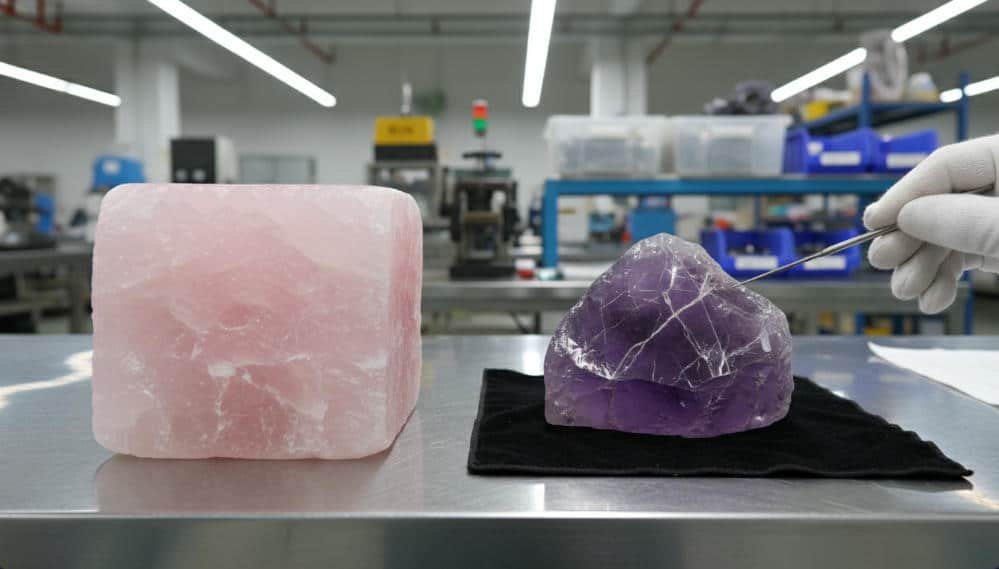
In the fast-growing beauty and wellness industry, natural stone tools continue to gain popularity among global distributors and skincare brands. As a source manufacturer under the Deyi Gems brand, we are frequently asked why amethyst gua sha wholesale prices are consistently higher than other quartz gua sha tools. At first glance, amethyst and rose quartz both belong to the quartz family, so buyers often expect similar production costs. However, once we examine the manufacturing process from mining to final polishing, clear structural differences begin to appear.
From a gua sha wholesale manufacturing perspective, pricing is influenced by raw material availability, processing difficulty, yield efficiency, labor intensity, and long-term production risk. These factors originate at the earliest stage of sourcing raw stone and continue throughout the manufacturing chain. In other words, the wholesale price is not only about color or branding but about real technical and operational costs.
In this article, Deyi Gems shares a comprehensive manufacturer-level analysis explaining why amethyst gua sha tools command higher wholesale prices. The discussion uses clear, easy English while providing deeper technical insight, measurable production standards, and third-party industry references. Readers who want additional geological context may explore the Gemological Institute of America’s introduction to amethyst formation:
https://www.gia.edu/amethyst-description
Additional mineral background can also be found at Geology.com:
https://geology.com/minerals/quartz.shtml
The Role of Raw Material Cost in Gua Sha Wholesale Pricing
Limited Supply of High-Quality Amethyst Raw Stone
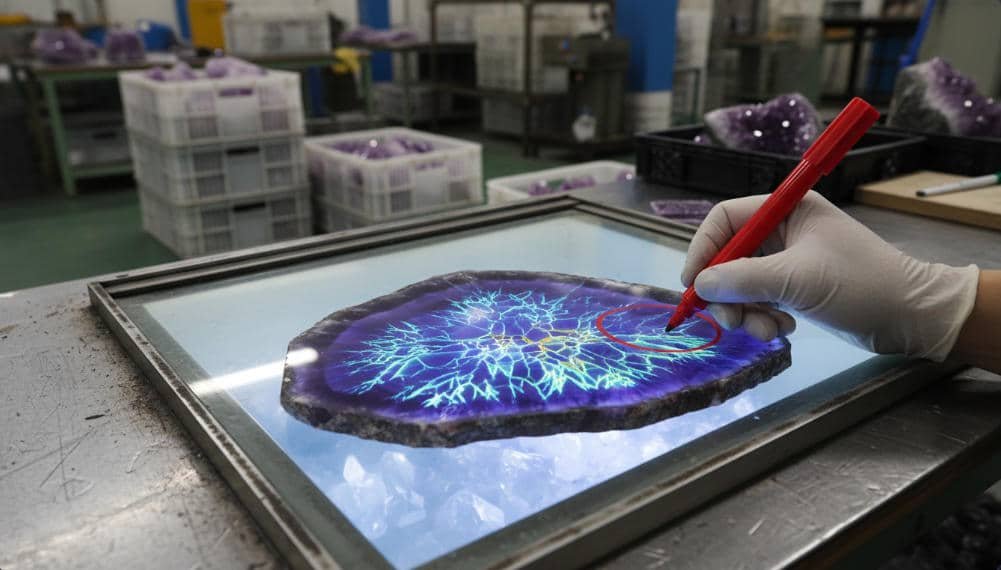
Although amethyst is classified as quartz, suitable raw material for gua sha manufacturing is far more limited than many buyers realize. Manufacturers require stones with structural stability, low fracture density, and enough surface area to produce ergonomic tools safely. However, most amethyst forms inside geodes rather than large solid slabs, which limits usable material size and increases sourcing difficulty.
In typical procurement cycles, only about 25%–40% of mined amethyst clusters meet the structural requirements necessary for facial gua sha tools. Stones are evaluated using polarized light inspection to detect internal stress fractures, and pieces lacking sufficient continuous surface length are rejected. This selective sourcing increases raw material competition and raises baseline gua sha wholesale costs before production even begins.
Detailed mineral formation explanations are available through Mindat’s mineral database:
https://www.mindat.org/min-198.html
Higher Market Demand Driving Up Purchase Prices
Amethyst holds strong recognition in both the jewelry and wellness markets. Global demand for visually attractive purple gemstones often exceeds supply, especially during periods of high consumer interest in natural beauty tools. As a result, raw stone purchase prices fluctuate more than common quartz materials like rose quartz.
From a gua sha wholesale manufacturing viewpoint, this demand pressure directly affects production planning. Manufacturers must secure raw materials months in advance to stabilize supply, which increases financial risk and contributes to higher wholesale pricing structures.
Raw Material Size Limitations and Their Impact on Manufacturing
Small Crystal Structure Reduces Usable Production Volume
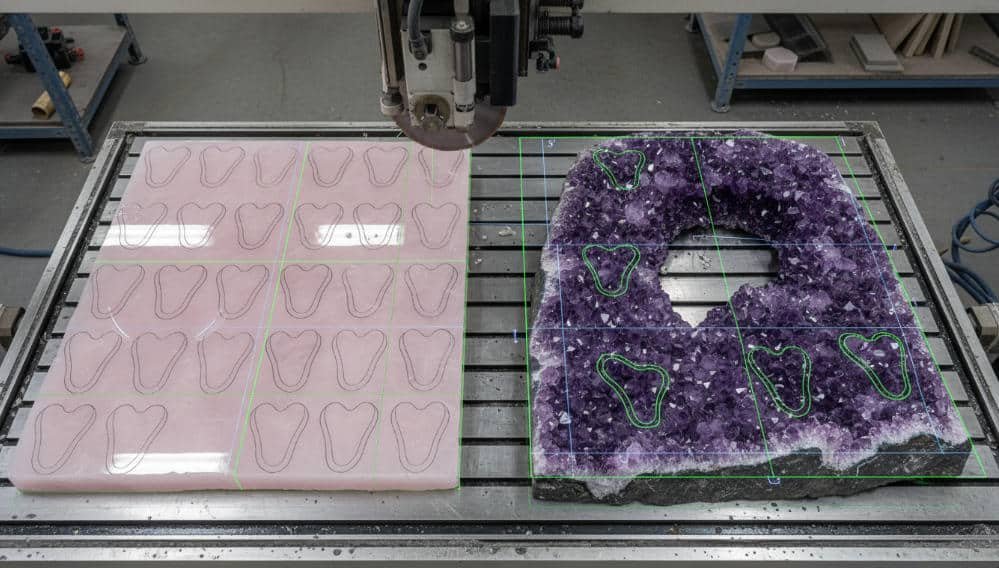
Unlike large quartz slabs that can be cut efficiently into multiple tools, amethyst crystals frequently grow in irregular clusters. Even stones that appear large may contain internal cavities or uneven growth layers that limit usable cutting space. Manufacturers must carefully inspect each piece and design custom cutting layouts based on available geometry.
Because of these limitations, production efficiency drops significantly. A single rose quartz slab may produce dozens of gua sha tools, while a similarly sized amethyst cluster may produce only a few finished units. This reduction in output increases the cost per finished tool in the gua sha wholesale supply chain.
Strict Selection Standards for Beauty Tool Safety
Safety is critical in facial skincare tools. Manufacturers must avoid stones with hidden fractures that could break during use. Therefore, only the most stable sections of each amethyst cluster are used for gua sha production, while smaller fragments are redirected into jewelry or accessory components.
This strict selection reduces overall material utilization rates. While other quartz materials may achieve high conversion efficiency, amethyst manufacturing involves more material rejection, which increases the final wholesale price.
High Material Waste Rates During Production
Limited Cutting Space Leads to Greater Loss
One of the most significant factors affecting gua sha wholesale pricing is the amount of material lost during cutting. Because amethyst clusters often have uneven shapes, technicians cannot arrange optimized cutting patterns. Consequently, more stone is removed during trimming and shaping processes.
Typical stone fabrication guidelines discussed by the Natural Stone Institute explain how irregular geometry increases material waste and reduces production efficiency:
https://www.naturalstoneinstitute.org
From a manufacturing perspective, each discarded fragment represents both lost material and lost labor time. This waste ratio is significantly higher for amethyst compared to many other quartz varieties.
Internal Fractures Increase Breakage Risk
Amethyst’s crystal structure contains natural cleavage planes that make it more prone to cracking during mechanical processing. Hidden fractures may not appear until grinding or polishing begins, at which point partially finished tools may break and become unusable.
Material science resources such as ScienceDirect provide technical discussions on quartz fracture behavior and stress responses:
https://www.sciencedirect.com/topics/materials-science/quartz
Higher breakage rates directly reduce production yield. As a result, successful gua sha wholesale units must absorb a greater share of the overall production cost.
Manufacturing Expertise and Measurable Production Standards
Material Grading Protocols Used by Source Manufacturers
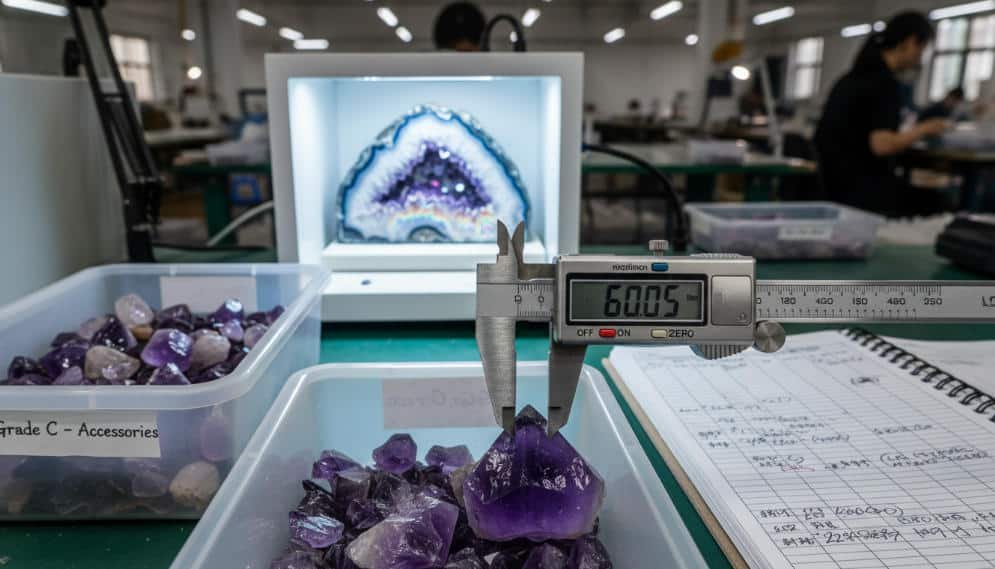
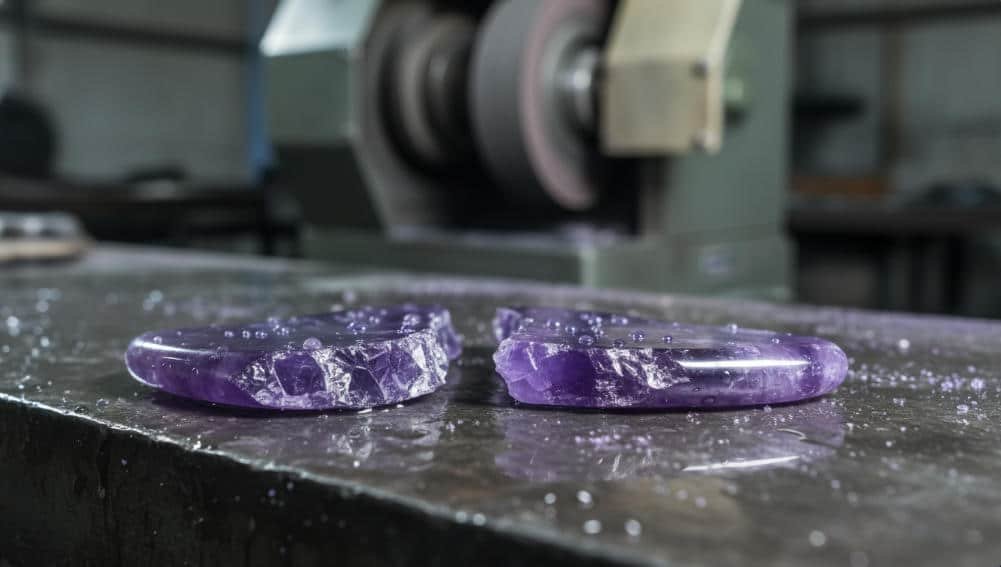
At Deyi Gems, incoming amethyst stones are sorted into structured grading levels based on fracture density, color uniformity, and workable surface area rather than appearance alone. Stones must provide at least 60 mm of continuous usable surface length and demonstrate minimal internal stress lines during polarized light inspection.
Only about 35%–50% of incoming material typically progresses into full gua sha production batches. Lower-grade stones are redirected into smaller accessories, ensuring responsible resource usage while maintaining high product safety standards. Gemstone testing frameworks described by the Gemological Institute of America provide reference methods for structural evaluation:
https://www.gia.edu/gem-testing-lab
Realistic Production Yield Ranges Compared to Other Quartz
Standard rose quartz slabs may achieve finished product yields of approximately 65%–75% after cutting and polishing. In contrast, amethyst clusters generally achieve only 35%–50% yield because of irregular geometry and higher fracture risk.
Lower yield significantly affects gua sha wholesale pricing. Since fewer finished units are produced from the same raw material weight, each successful tool must carry a larger portion of the original material and labor expense.
Technical Processing Difficulty and Labor Cost
Controlled Cutting and Grinding Parameters
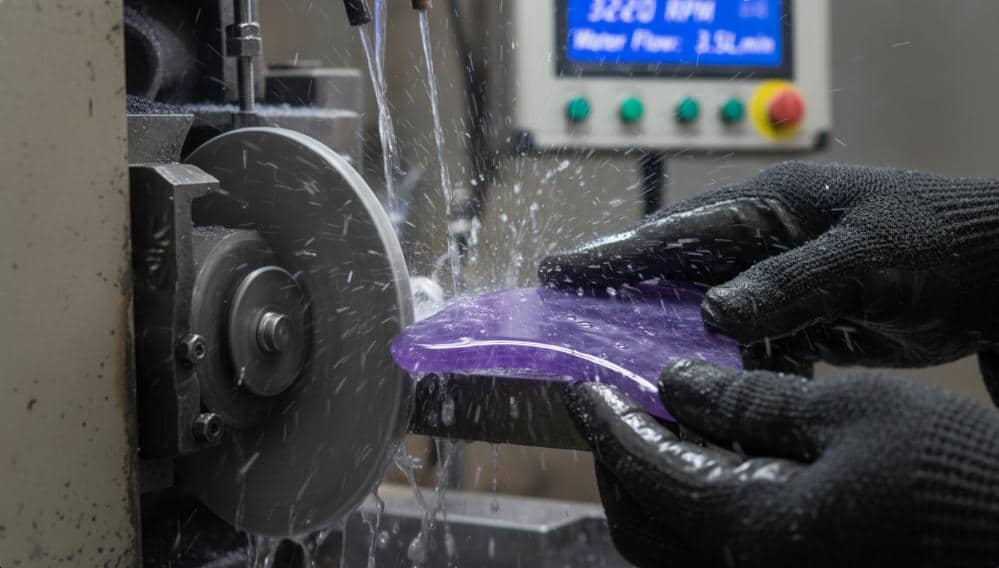
Amethyst requires slower machining speeds to prevent stress fractures. Diamond grinding wheels typically operate between 2800–3500 RPM, with cooling water flow maintained between 2–4 liters per minute to stabilize temperature. Grinding pressure is carefully controlled because excessive force may cause invisible micro-cracks.
These slower processing conditions reduce daily output compared to other quartz materials. As a result, labor hours per unit increase, which directly influences gua sha wholesale pricing.
Multi-Stage Polishing Cycles and Surface Safety
Amethyst gua sha tools require four to six polishing stages, beginning with coarse shaping at around 400–600 grit and progressing to mirror finishes above 3000 grit. Each stage is followed by microscopic inspection to confirm that no sharp edges or micro-fractures remain.
Because of the stone’s brittle nature, polishing cycles may take 20%–30% longer than rose quartz tools. Extended finishing time increases energy consumption, labor cost, and machine wear, all of which contribute to higher wholesale pricing.
Quality Control, Testing Standards, and Trustworthy Manufacturing
Structured Inspection and Quantifiable Tolerances
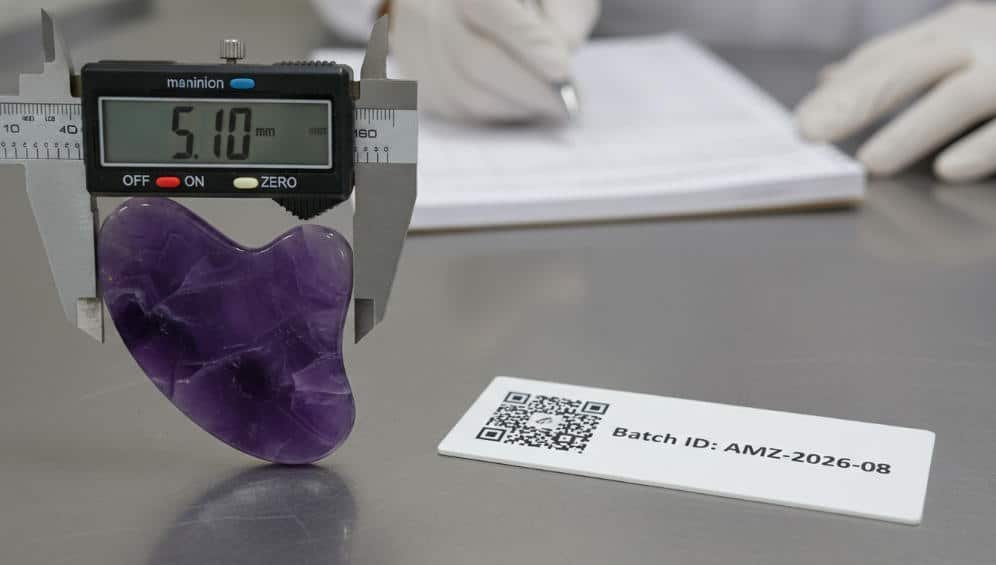
Responsible gua sha wholesale manufacturing requires measurable inspection standards. Incoming stones undergo structural testing, while mid-process checks ensure dimensional accuracy within approximately ±0.5 mm tolerance. Final inspection includes tactile edge testing, visual surface analysis, and controlled drop testing to simulate handling conditions.
Although there is no universal ISO standard dedicated specifically to gua sha tools, many manufacturers operate under ISO 9001 quality management frameworks to ensure documentation and traceability:
https://www.iso.org/iso-9001-quality-management.html
These measurable procedures strengthen buyer confidence and support consistent product quality.
Batch Traceability and Production Documentation
Each production batch is recorded with raw material origin data, technician identification, inspection results, and finishing parameters. Batch traceability allows manufacturers to track performance trends and address quality issues quickly.
Transparent documentation provides gua sha wholesale buyers with assurance that production processes are consistent and accountable across supply cycles.
Logistics, Inventory Risk, and Market Factors
Financial Risk of Premium Raw Materials
Because amethyst stones are more expensive and less abundant, manufacturers carry greater financial exposure when holding inventory. Market price fluctuations may impact profitability, especially when raw materials are sourced months in advance.
Wholesale pricing must reflect this risk to ensure sustainable production and consistent supply availability for distributors.
Protective Packaging and Shipping Requirements
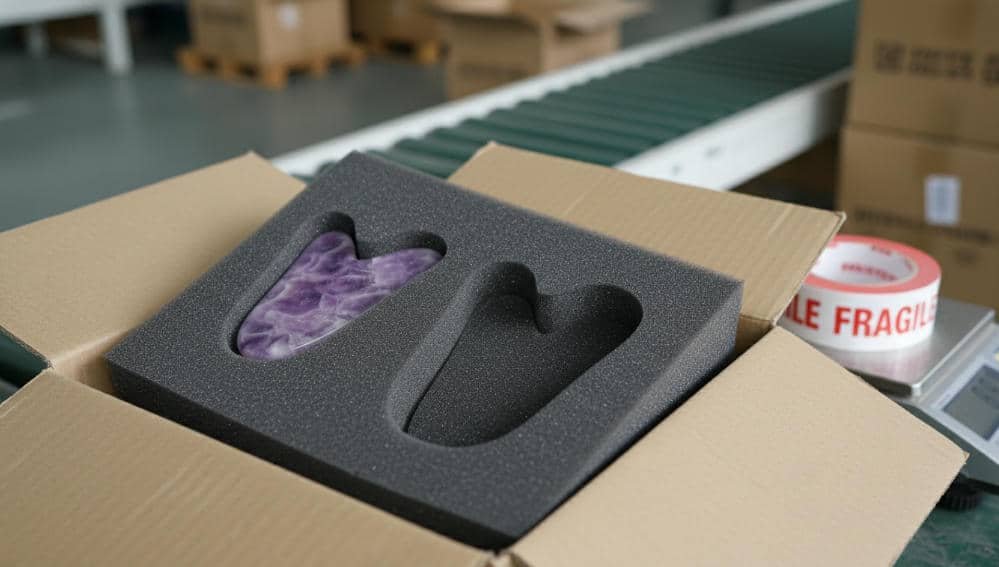
Amethyst’s brittle structure increases the need for reinforced packaging. Manufacturers use multi-layer foam inserts, thicker cartons, and shock-resistant shipping methods to reduce breakage during transportation. These additional protective measures increase overall logistics costs within the gua sha wholesale supply chain.
Packaging industry resources such as Packaging Digest discuss the importance of reinforced packaging for fragile products:
https://www.packagingdigest.com
Authority Signals and Industry Validation in Manufacturing
Alignment with Recognized Industry Knowledge
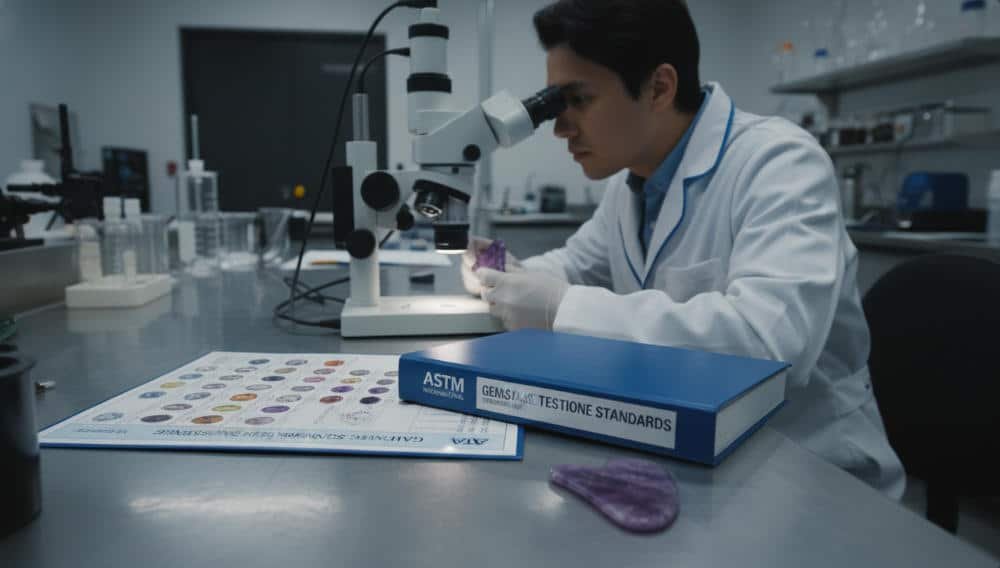
Responsible manufacturers follow guidelines and reference frameworks from established organizations such as the Gemological Institute of America, the Natural Stone Institute, and ASTM material testing standards. While these organizations do not directly certify gua sha tools, their technical publications inform safe and consistent stone processing practices.
- Gemological Institute of America: https://www.gia.edu
- Natural Stone Institute: https://www.naturalstoneinstitute.org
- ASTM International: https://www.astm.org
Referencing recognized institutions strengthens manufacturing credibility and supports consistent quality expectations.
Real Wholesale Collaboration Experience
Long-term partnerships with skincare brands, distributors, and spa suppliers contribute to continuous manufacturing improvement. Feedback from real-world use cases helps refine ergonomic design, packaging durability, and production efficiency.
These collaborations build authority through practical experience rather than theoretical claims alone, reinforcing trust within the gua sha wholesale market.
Market Perception and Value Positioning in Gua Sha Wholesale
Premium Image and Consumer Expectations
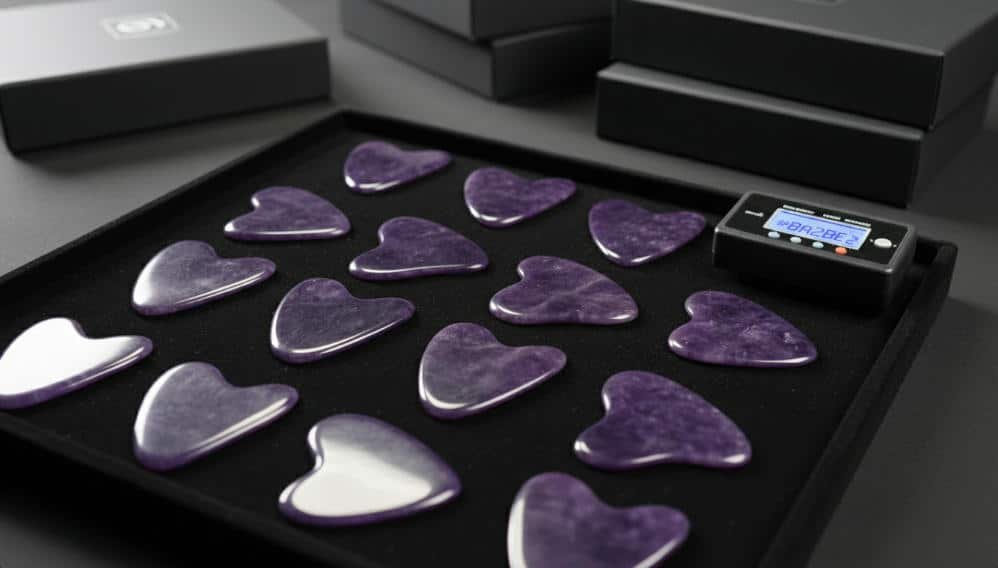
Amethyst is widely perceived as a premium gemstone. Retail buyers expect refined finishing, consistent color grading, and high-quality packaging. To meet these expectations, manufacturers invest more time in polishing, inspection, and presentation.
This premium positioning aligns with the increased production complexity and cost structure of amethyst gua sha tools.
Alignment Between Production Reality and Market Value
Wholesale pricing must reflect geological scarcity, technical labor requirements, and safety-focused manufacturing standards. If pricing falls below production reality, manufacturers may compromise on durability or inspection rigor, which ultimately harms distributors and end users.
Understanding this balance helps buyers evaluate gua sha wholesale pricing more accurately.
Additional Industry Data and Educational References
Geological and Mineral Information Sources
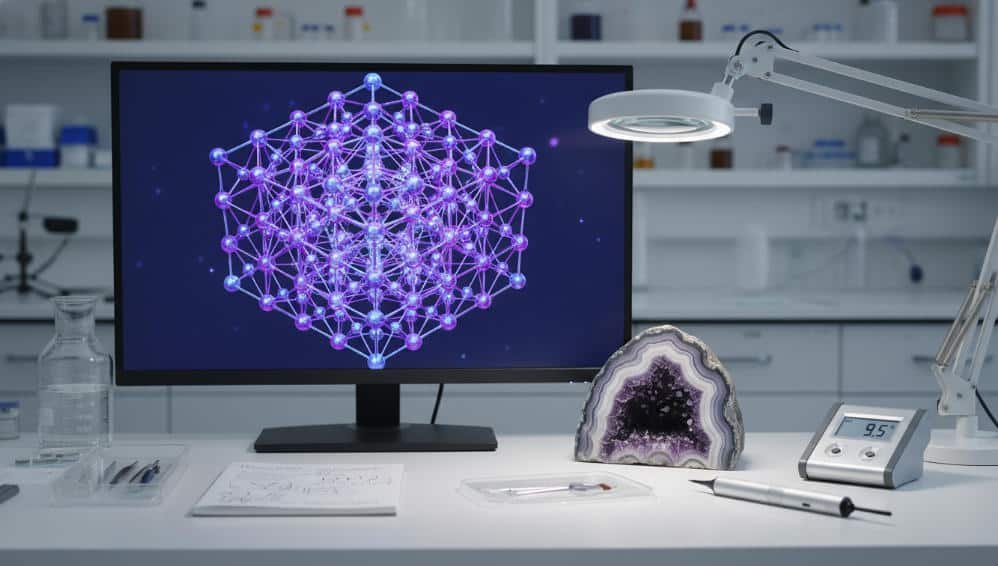
Readers interested in mineral formation and gemstone structure can explore additional educational resources:
- Gemological Institute of America: https://www.gia.edu
- Mindat Mineral Database: https://www.mindat.org
- Geology.com Quartz Overview: https://geology.com/minerals/quartz.shtml
These sources provide scientific background that explains why amethyst differs from other quartz materials in manufacturing performance.
Stone Processing and Safety Knowledge
Stone fabrication guidelines from professional organizations help explain production challenges associated with brittle materials. These references highlight why additional machining care and quality inspection are necessary in amethyst gua sha manufacturing.
Conclusion — The True Reasons Behind Higher Amethyst Gua Sha Wholesale Prices
From a source manufacturer’s perspective, higher amethyst gua sha wholesale pricing reflects real production realities rather than marketing decisions alone. Raw material scarcity, small crystal size, high waste rates, fragile machining behavior, longer polishing cycles, and stricter inspection standards all contribute to higher manufacturing costs.
Measured production data shows that amethyst tools typically have lower yield ranges and longer processing times compared to other quartz materials. Additional quality control procedures and reinforced packaging further increase operational expenses. At the same time, premium market positioning aligns with the technical complexity involved in producing safe and durable amethyst tools.
For distributors and retailers operating in the gua sha wholesale market, understanding these underlying manufacturing factors provides a clearer perspective on price differences. Recognizing the full production chain—from geological sourcing to final inspection—helps buyers make informed purchasing decisions and communicate genuine value to customers.
Ultimately, responsible manufacturing practices, transparent quality standards, and realistic pricing structures ensure sustainable supply and consistent product performance across the global gua sha wholesale industry.