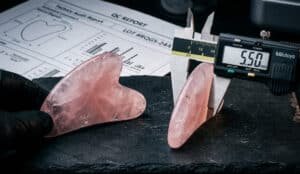
The gua sha wholesale market does not move slowly. In Q1 2026, stainless steel gua sha accounted for 47 out of 102 confirmed wholesale orders processed at Deyi Gems — a 46.08% share of total gua sha wholesale volume, up 11% against the same period in 2025. That is not a trend in its early stages. That is a category that has already crossed the threshold into mainstream wholesale demand, and is still accelerating.
For wholesale buyers, gua sha brands, and retail operators who have built their sourcing strategy around crystal and jade, the natural question is: what is driving this? The answer is not a single factor. It is a structural convergence — production economics that make stainless steel gua sha measurably more profitable for manufacturers to produce, operational advantages that make it measurably more reliable for buyers to source, and consumer-facing properties that make it measurably more durable and defensible at the retail level. When the incentives of manufacturers and buyers align around the same material at the same time, the resulting market shift tends to be durable rather than cyclical. That is precisely the dynamic playing out in the stainless steel gua sha wholesale market right now.
This article examines that dynamic in full. You will find the production data behind the 45% efficiency advantage of stainless steel over crystal and jade gua sha fabrication, the dimensional tolerance standards — ±0.2mm versus ±0.5mm or more for natural stone — that determine whether a product can support a serious retail brand, the material safety and compliance frameworks that govern skin-contact metal products in major import markets, and a practical supplier qualification framework designed to help you distinguish a genuinely capable stainless steel gua sha manufacturer from one that is simply adding metal SKUs to a stone-focused catalog. The market data establishes that stainless steel gua sha has arrived. The question this article is designed to answer is whether your sourcing strategy has arrived with it.
The Market Has Already Decided — What Order Data Tells Us About Stainless Steel Gua Sha Wholesale

The gua sha wholesale market is shifting — and the numbers are no longer subtle. Based on verified wholesale order records from Deyi Gems, a source-level gua sha manufacturer with over 12 years of production experience, stainless steel gua sha accounted for 47 out of 102 confirmed B2B orders processed between January and March 2026 — a sample spanning wholesale buyers across North America, Europe, and Southeast Asia. That represents a 46.08% share of total gua sha wholesale volume, and compared to the same period in 2025, a year-over-year increase of 11%. If you have been sourcing crystal or jade gua sha tools as your primary SKU and wondering whether stainless steel deserves a meaningful position in your catalog, the order data has already provided its answer.
What makes this trend structurally significant — rather than cyclical — is that it is being driven simultaneously from both the supply side and the demand side. Gua sha manufacturers are actively prioritizing stainless steel gua sha production for reasons rooted in operational economics, while buyers are responding to a product category that delivers measurable consistency and durability advantages over natural stone alternatives. When supply-side incentives and demand-side requirements align around the same material, the resulting market shift tends to be durable rather than temporary. This pattern is consistent with broader dynamics in the personal wellness tools market: according to Grand View Research, the global personal care tools market is projected to grow at a compound annual growth rate of 6.8% through 2030, with metal-based tool categories outpacing overall market growth. Deyi Gems’ internal order data is directionally consistent with — and in some respects ahead of — this broader structural shift that third-party research has been documenting.
Why the 46% Share in Gua Sha Wholesale Orders Matters More Than It Looks
A 46% market share within a single gua sha manufacturer’s order book might appear to be a company-specific data point, but it reflects a broader pattern playing out across the gua sha wholesale supply chain. The shift toward stainless steel is being observed across product categories that prioritize functional performance over symbolic or aesthetic material value. Gua sha tools, once marketed primarily on the basis of gemstone identity — rose quartz, jade, obsidian — are increasingly being evaluated by wholesale buyers on the basis of production reliability, dimensional consistency, and total landed cost. Stainless steel scores measurably higher on all three criteria, and the market is beginning to price that advantage in.
For any wholesale buyer currently managing a mixed catalog of gua sha tools, the practical implication is direct: stainless steel gua sha is no longer a niche alternative or a budget substitute. It has crossed the threshold into mainstream wholesale demand, and the 11% year-over-year growth rate suggests the trajectory is still ascending. According to McKinsey & Company’s analysis of the global wellness market, consumer purchasing behavior in the wellness tools category is increasingly shaped by functional performance claims over heritage material narratives — a trend that structurally favors stainless steel gua sha’s value proposition. Waiting another sourcing cycle to assess the category may mean entering a more competitive buyer environment with less favorable pricing and longer lead times. The window for early positioning in stainless steel gua sha wholesale remains open, but the data suggests it is narrowing.
The Supply-Side Push: Why Gua Sha Manufacturers Are Prioritizing Stainless Steel
One dimension of the stainless steel gua sha story that rarely appears in buyer-facing content is the role of the manufacturer’s own incentive structure. Gua sha manufacturers — including established gua sha factories with deep experience in both stone and metal fabrication — have measurable operational reasons to promote stainless steel over crystal or jade. These reasons are not marketing-driven; they are grounded in production economics that any wholesale buyer should understand when evaluating the supply environment they are operating in.
Stainless steel gua sha can be processed with a significantly higher degree of mechanical automation than natural stone materials. This raises per-unit output, reduces the proportion of labor hours per finished piece, and lowers the incidence of material waste and defect-related rework. The downstream effect is a gua sha production environment where throughput is higher, scheduling is more predictable, and post-production quality control requires fewer manual inspection hours. For a gua sha factory operating at scale, these differences accumulate into a meaningfully better margin profile on stainless steel orders relative to comparable stone orders. Based on Deyi Gems’ internal order-level cost accounting for the period 2024–2026, the overall profit margin on stainless steel gua sha orders runs approximately 15% higher than on equivalent crystal or jade orders at the same volume tier. This figure is an internal operational benchmark and has not been independently audited; however, the cost structure drivers behind it — higher automation rates, lower rework incidence, reduced quality control labor — are consistent with documented manufacturing economics for CNC metal fabrication versus natural stone processing.
This margin advantage gives gua sha manufacturers a structural incentive to allocate production capacity, invest in tooling, and actively develop stainless steel product lines. It also means that as a wholesale buyer, you are operating in a supply environment where your supplier’s interests are increasingly aligned with yours when it comes to stainless steel gua sha — a relatively rare condition in any supply chain, and one worth recognizing when you are making sourcing decisions.
Data Note: The production efficiency differential (45%) and margin comparison (15%) cited in this article are derived from Deyi Gems’ internal production scheduling records and order-level cost accounting, comparing stainless steel fabrication runs against jade and crystal runs of equivalent unit volume over the 2024–2026 period. These figures represent internal operational benchmarks and have not been independently audited. Wholesale buyers are encouraged to request production data verification during supplier qualification.
The Production Advantages That Make Stainless Steel Gua Sha a Stronger Wholesale Product
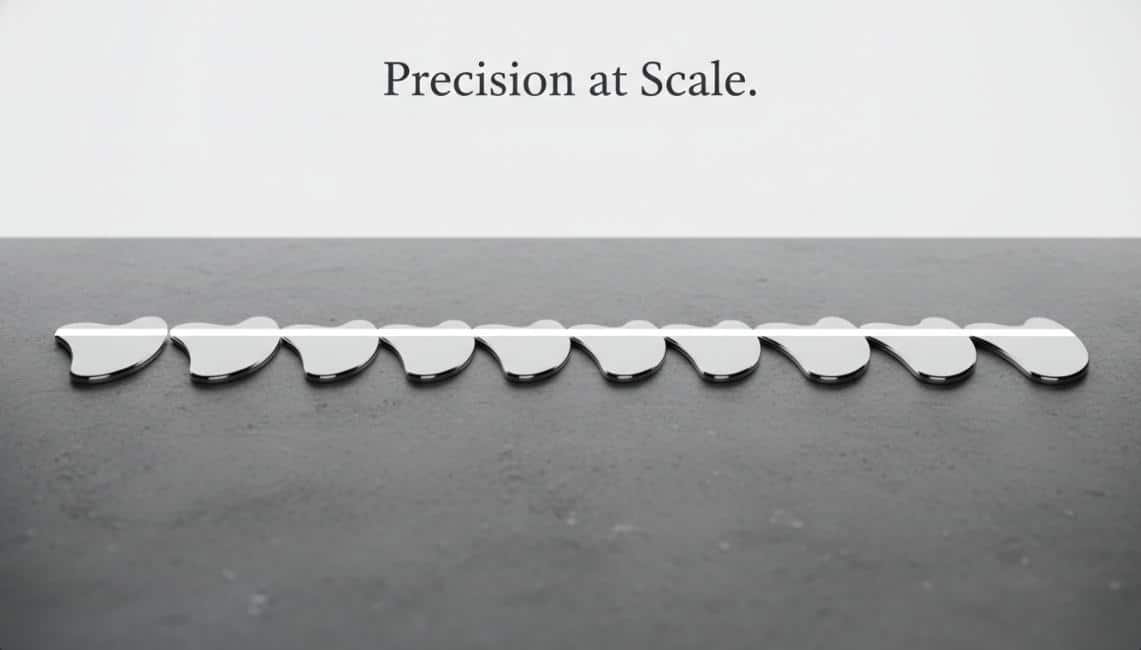
When wholesale buyers evaluate a new product category, the first question is rarely “what is it made of?” The first question is: “will it cause me problems?” Problems in the gua sha wholesale business take a recognizable set of forms — inconsistent product dimensions that generate customer complaints, production delays that disrupt seasonal inventory planning, and defect rates that erode margin through returns and replacements. Stainless steel gua sha addresses all three of these operational risk categories more effectively than crystal or jade alternatives, and it does so through properties that are intrinsic to the material itself rather than dependent on supplier quality control effort alone. That distinction matters because it means the advantages are repeatable and scalable across production runs, not batch-dependent or supplier-heroic.
Understanding why stainless steel performs better across these dimensions requires a brief look at how gua sha production actually works for metal versus stone materials. Natural stone gua sha tools — whether jade, rose quartz, or obsidian — must be cut, ground, and polished from raw mineral material that varies in density, grain structure, and internal stress distribution from piece to piece. According to the Gemological Institute of America (GIA), natural gemstone materials exhibit structural heterogeneity at the mineral level, which directly affects how they respond to mechanical processing. The result is that even within a single production batch using identical equipment settings, natural stone gua sha tools will exhibit measurable variation in finished dimensions. Stainless steel, as an engineered alloy with uniform molecular composition, does not carry this source of variance — and that difference in material behavior is the foundation of every production advantage described in this section.
Dimensional Consistency in Gua Sha Production: The ±0.2mm Standard That Changes the Calculus for Wholesale Buyers
Dimensional consistency is one of the least glamorous topics in the gua sha wholesale conversation and one of the most commercially consequential. When you place a repeat order of 500 gua sha tools for a retail brand, the expectation is that all 500 units will look and feel identical to the samples that were approved. In the world of natural stone gua sha, that expectation is structurally difficult to meet. The minimum thickness variance achievable in jade or crystal gua sha production under normal manufacturing conditions runs to approximately 0.5mm, with length variation reaching 1mm or more across a single batch. For individual sellers managing small volumes, this level of variation is manageable. For gua sha brands maintaining consistent product presentation across retail channels — where a consumer receiving two units from the same SKU expects them to feel identical — it creates a tangible and recurring quality control burden.
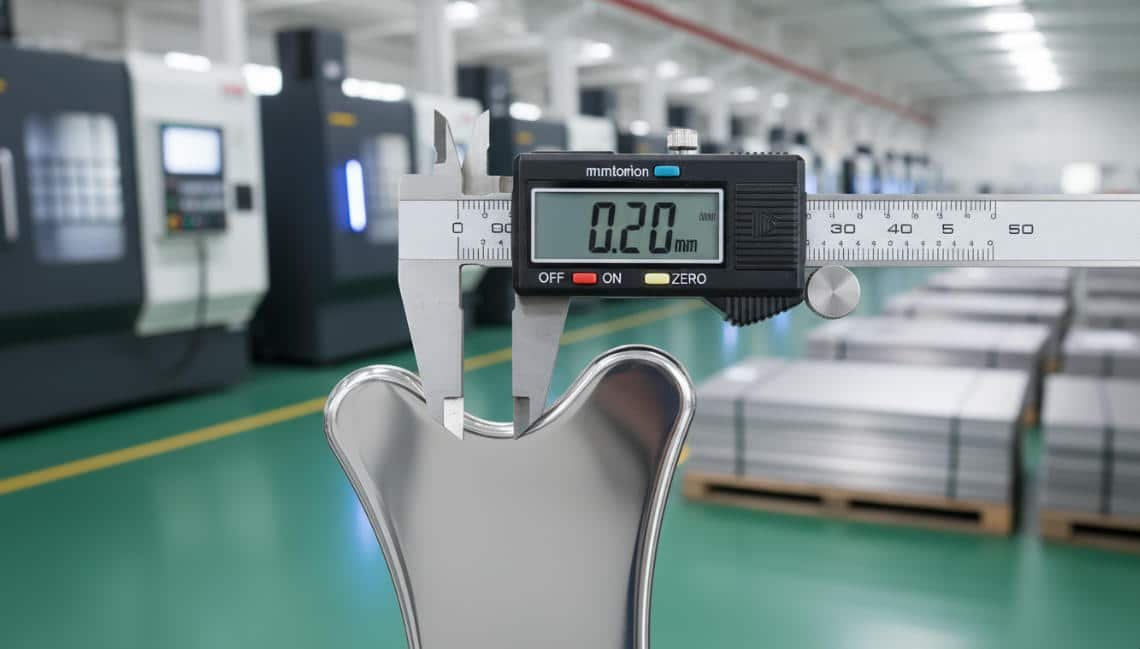
Stainless steel gua sha manufactured through CNC mechanical processing can hold dimensional tolerances to within ±0.2mm across every unit in a production run. This tolerance range aligns with ISO 2768 fine-grade classifications for machined metal components — a standard routinely applied in medical device component manufacturing, as documented by the International Organization for Standardization. Natural stone fabrication, by contrast, falls outside the scope of ISO machining tolerance frameworks entirely, because the material variability of geological minerals makes tolerance specification at this level structurally unachievable. This is not a matter of equipment quality or supplier capability — it is a property of material physics that no amount of process refinement can fully overcome in natural stone gua sha production.
For you as a wholesale buyer, the ±0.2mm production baseline means that the 500 units in your repeat order will match your approved samples at a level of consistency that is structurally impossible to replicate with natural stone materials at comparable price points. The downstream impact on your business is measurable: fewer customer complaints about product feel or appearance variation, lower rates of rejection at retail receiving, and a more defensible product quality narrative when selling to brand buyers who care about shelf presentation and consumer review consistency. This means you can build repeat order relationships with retail accounts on the basis of a product that actually performs to specification every time, rather than managing the expectation that some variation is normal and unavoidable.
It is also worth noting that dimensional consistency is not only a retail presentation issue. For gua sha brands building product lines with multiple SKUs — facial tools, body tools, professional-grade instruments — consistent dimensions across SKUs are a prerequisite for coherent brand identity. A product line where every piece measures exactly as specified communicates a level of manufacturing discipline that resonates with end consumers who are making decisions about what they will use on their skin. Stainless steel gua sha production delivers that discipline as a baseline specification, not as a premium option available only at elevated price points.
Gua Sha Production Efficiency: What a 45% Output Increase Means for Your Supply Chain
Production efficiency is a metric that lives on the manufacturer’s side of the supply chain, but its effects propagate directly into the wholesale buyer’s operational reality. When a gua sha factory can produce more units per unit of time with greater scheduling predictability, you experience shorter lead times, more reliable delivery windows, and greater flexibility in placing orders closer to actual demand signals rather than months in advance. All of these outcomes improve your inventory management position and reduce the capital tied up in safety stock that exists primarily to buffer against supplier unpredictability.
Based on internal production data from Deyi Gems, stainless steel gua sha production runs at approximately 45% higher output efficiency than equivalent crystal or jade gua sha production. This differential is measured using Overall Equipment Effectiveness (OEE) as the comparative metric — a manufacturing productivity standard that accounts simultaneously for equipment availability, production performance rate, and finished-unit quality rate, and is widely applied in precision machining industries as documented by the Lean Enterprise Institute. The 45% figure accounts for the combined effect of higher mechanical automation rates, reduced material preparation time, lower incidence of mid-production defects requiring rework, and faster finishing cycles across comparable order volumes. It represents an internal operational benchmark derived from Deyi Gems’ comparative production scheduling records for the 2024–2026 period.
The practical expression of this efficiency advantage is a production cycle that is not only faster on average but also more predictable in duration. Crystal and jade gua sha production timelines are subject to disruption from material quality variance — a batch of raw stone that performs unexpectedly under cutting equipment can extend a delivery date by days or weeks without warning. The International Gem Society (IGS) documents the structural variability of natural gemstone materials, including hardness gradients and internal fracture patterns that affect how stone responds to mechanical processing. Stainless steel production does not carry this category of scheduling risk. The material behaves consistently across feedstock batches, which means production timelines can be committed to with a degree of confidence that natural stone sourcing cannot match.
For wholesale buyers who have experienced the frustration of missed delivery windows on natural stone gua sha orders — particularly during peak seasonal demand periods — this predictability advantage is not abstract. It translates into a sourcing relationship where you can commit to customer delivery dates with greater confidence, reduce the frequency of expedited shipping costs triggered by production delays, and build a more reliable sales cadence around a product that arrives when it is supposed to. This means you can convert seasonal demand windows into revenue without the inventory buffer costs that natural stone sourcing uncertainty typically requires.
How Higher Output Efficiency Creates a More Stable Gua Sha Wholesale Supply Environment
The efficiency advantage of stainless steel gua sha production also generates a second-order effect that benefits the wholesale market more broadly. When a gua sha manufacturer can fulfill orders faster and with greater scheduling certainty, the manufacturer can operate with lower work-in-progress inventory buffers, take on a higher volume of concurrent orders, and respond more quickly to surge demand from the wholesale channel. The net effect is a supply environment that is more elastic — capable of scaling up to meet demand increases without the extended lead time penalties that characterize natural stone gua sha sourcing, where raw material availability and processing complexity create hard constraints on production acceleration.
For wholesale buyers operating in markets where consumer demand for gua sha tools can spike in response to social media trends, seasonal wellness purchasing cycles, or influencer-driven product moments, supplier elasticity is a meaningful competitive advantage. A gua sha wholesale supplier that can confirm and fulfill a larger-than-anticipated order within a compressed timeline gives you the ability to capitalize on demand spikes rather than watching them pass while waiting for production to catch up. Stainless steel gua sha, sourced from a gua sha factory with mechanized production infrastructure and adequate feedstock inventory, provides exactly this kind of supply chain responsiveness.
One operational factor that contributes to this responsiveness — and that is worth verifying explicitly with any prospective stainless steel gua sha manufacturer — is raw material inventory readiness. Unlike natural stone blanks, which can degrade in quality during extended storage and whose replenishment requires sourcing from geological supply chains with their own lead time variability, stainless steel feedstock can be held in standardized inventory without quality risk. A gua sha factory that maintains adequate stainless steel feedstock on hand can begin production on your order immediately upon order confirmation, eliminating the raw material procurement phase that adds time to natural stone gua sha orders. This means you gain a supply chain partner whose production start time is measured in hours from order confirmation rather than days from raw material arrival — a distinction that compounds significantly over multiple ordering cycles in a single selling season.
Durability, Safety, and End-Consumer Trust — The Product Attributes That Drive Repeat Wholesale Orders

A wholesale buyer’s commercial relationship with a product category does not end at the point of purchase. It extends through the entire consumer usage cycle — because consumer experience with the product determines whether you receive repeat retail orders, manage a steady stream of return and replacement requests, or field complaints that damage the brand relationships you have spent years building. In the gua sha wholesale market, this downstream accountability makes product durability and safety attributes commercially relevant to you as a buyer even when those attributes are technically properties of the finished consumer product. Stainless steel gua sha performs measurably better than natural stone alternatives on both dimensions, and understanding why helps clarify why the category is gaining traction not just with gua sha manufacturers but with the retail buyers and brand operators who sit further along the distribution chain.
The durability case for stainless steel gua sha begins with material science. Stainless steel is an iron-based alloy engineered specifically for strength, toughness, and corrosion resistance. The grades most commonly used in personal care and wellness product manufacturing — typically 304 or 316 stainless steel — combine tensile strength measured in hundreds of megapascals with a chromium oxide surface layer that forms spontaneously upon exposure to oxygen and prevents rust formation even under conditions of repeated moisture exposure. These are not incidental properties. They are the reason stainless steel is the material of choice for surgical instruments, food processing equipment, and medical devices — product categories where material failure carries consequences significant enough to drive rigorous material selection discipline. When the same material is applied to a gua sha tool, the consumer receives a product that is engineered to perform consistently over an extended service life, not one that happens to be durable as a secondary characteristic of its primary aesthetic identity.
Drop Resistance and Long-Term Use: Why Stainless Steel Gua Sha Reduces Consumer Replacement Costs and Wholesale Return Rates
One of the most practically significant durability advantages of stainless steel gua sha is its resistance to impact damage from drops — an accident type that is entirely normal in bathroom and personal care environments and that represents one of the primary drivers of natural stone gua sha product returns. Natural stone gua sha tools — jade, quartz, obsidian, and their mineral relatives — are brittle materials by nature. The same crystalline structure that gives them their visual appeal and gemstone identity makes them susceptible to fracture when subjected to sudden mechanical stress. According to the International Gem Society (IGS), the relationship between a gemstone’s hardness rating and its toughness — its resistance to fracture under impact — is not linear. Many high-hardness stones exhibit low toughness, meaning they resist surface scratching but fracture readily under impact loading. Jade and quartz, two of the most common gua sha materials, both fall into categories where impact fracture is a realistic failure mode under the kind of accidental drop conditions that occur routinely in consumer use environments.
A jade gua sha tool dropped from counter height onto a tile bathroom floor has a meaningful probability of chipping, cracking, or shattering outright. For the consumer, this means an unplanned replacement purchase and a negative product experience that is directly associated with your brand. For you as the wholesale buyer whose product is on the receiving end of that consumer frustration, it means a return request, a negative review on a retail listing, or a lost repeat customer whose lifetime value significantly exceeds the cost of the broken tool. These outcomes are not hypothetical — they represent a recurring cost pattern that wholesale buyers carrying significant natural stone gua sha volume experience regularly, and one that rarely appears in the unit economics calculation at the point of sourcing.
Stainless steel gua sha tools, by contrast, can withstand drops from heights exceeding two meters without fracturing. At that impact energy level, a stainless steel gua sha tool may exhibit minor surface marks or slight edge deformation, but it retains its functional geometry and remains fully usable. This is not a marginal improvement over natural stone — it represents a categorical difference in how the product responds to the kind of accidental handling that is entirely normal across the consumer use lifecycle. For consumers who use gua sha tools daily as part of a skincare or wellness routine, the practical implication is a product that does not require periodic replacement due to accidental breakage. This translates into lower long-term ownership cost — a purchasing argument that resonates particularly well with value-conscious consumers evaluating the total cost of a wellness practice rather than just the upfront price of a single tool.
From your perspective as a wholesale buyer, this durability profile translates into a measurably more favorable return and replacement rate. Fewer broken products means fewer return shipping labels, fewer replacement units pulled from inventory, and fewer customer service interactions that consume staff time and erode realized margin. If your current gua sha wholesale catalog includes significant natural stone volume and you are tracking return rates by product category, comparing those figures against stainless steel return rates is likely to be instructive. Products that break less generate fewer returns — and the cumulative effect of that difference on margin over a full selling season is substantial enough to influence category allocation decisions.
Material Safety in Gua Sha Tools: Compliance Standards Wholesale Buyers Need to Understand
Safety is the dimension on which natural stone gua sha tools established their original market advantage over plastic alternatives. Consumers who were willing to pay a premium for jade or quartz gua sha over injection-molded plastic tools were, at least in part, making a decision about what material they were comfortable pressing against their face and body for extended periods. That decision reflects a real and legitimate consumer preference — and it is one that stainless steel gua sha is well positioned to satisfy, for reasons grounded in material science and supported by regulatory compliance frameworks that provide a level of verifiable safety documentation that natural stone materials cannot match.
Food-grade and medical-grade stainless steel alloys used in personal care product manufacturing are non-toxic, non-porous, and hypoallergenic for the vast majority of users. The non-porous surface characteristic is particularly relevant for gua sha tools used on facial skin, where the tool makes repeated contact with skin that may be sensitized, post-treatment, or prone to reaction. Porous materials — including some natural stones — can harbor bacteria in microscopic surface irregularities even after cleaning, creating a hygiene risk that accumulates with use over time. The Swiss Gemmological Institute SSEF provides analysis frameworks for natural gemstone materials that highlight the structural variability — including porosity differences between stone types and even between specimens of the same stone type — that can affect the functional hygiene properties of stone-based personal care products. Stainless steel’s non-porous surface does not retain biological material in the same way, making it more hygienically maintainable with routine cleaning across an extended use lifecycle.
For wholesale buyers sourcing gua sha tools into regulated consumer markets, the material compliance documentation framework for stainless steel provides a meaningful operational advantage over natural stone. Stainless steel gua sha tools manufactured from 304 or 316 grade alloys are evaluated against nickel release thresholds established under EN 1811:2011+A1:2015 — the European standard governing nickel release from skin-contact metal articles. Medical-grade 316 stainless steel consistently performs below the 0.5 μg/cm²/week release threshold that triggers regulatory concern under this framework, which is why it is the preferred material grade for surgical instruments and implantable medical devices. In the United States market, skin-contact product safety is governed by frameworks administered through the Consumer Product Safety Commission, whose guidelines on material safety for personal care products provide the compliance baseline that import documentation should address.
Engineered alloys come with documented material specifications — grade designation, alloy composition, and applicable manufacturing standards — that can be produced for compliance documentation purposes at any point in the import or retail listing process. Natural stone materials, by contrast, are geological products whose exact composition varies by source deposit and cannot be fully characterized by grade designation alone. This difference in material traceability is increasingly relevant as regulatory scrutiny of personal care and wellness products expands in major consumer markets. For wholesale buyers who need to provide compliance documentation to retail platform operators, import authorities, or brand quality assurance teams, stainless steel’s documented material framework is a practical advantage that reduces compliance friction at every stage of the distribution chain. This means you can enter new retail channels and market territories with a compliance documentation package that is complete, verifiable, and reproducible — rather than managing the material characterization uncertainty that natural stone import documentation often involves.
The Aesthetic Repositioning of Stainless Steel: From “Cold Metal” to “Clinical Authority” in the Gua Sha Brand Market
The most common objection to stainless steel gua sha from a brand positioning perspective is aesthetic: the silver-white surface of polished metal reads as cold, industrial, and emotionally disconnected from the warm mineral-identity narrative that jade and crystal gua sha brands have built their visual language around. This objection deserves serious consideration, because brand aesthetics are real commercial variables that affect consumer purchase decisions, retail presentation, and the emotional resonance of a product category. But it is also worth examining whether the aesthetic calculus has shifted — because the evidence from adjacent product categories suggests that it has, and in a direction that creates genuine opportunity for stainless steel gua sha brands.
The consumer market for facial tools and body wellness instruments has undergone a visible repositioning over the past several years, moving from a “natural ritual” aesthetic toward what is increasingly described as a “clinical wellness” or “medical aesthetic” visual identity. This shift is documented in McKinsey’s analysis of wellness consumer behavior, which identifies a growing consumer segment that actively seeks products signaling evidence-based efficacy and professional-grade performance over heritage material narratives. In product design terms, this translates into a preference for metal finishes, precision geometry, and clinical visual language — exactly the aesthetic register that stainless steel gua sha occupies naturally. A stainless steel gua sha tool in this context does not read as cold or industrial to this consumer segment. It reads as intentional, engineered, and aligned with the professional-grade positioning that wellness consumers in the mid-to-premium market increasingly seek out and are willing to pay for.
For gua sha brands operating in the mid-to-premium market segment, this aesthetic repositioning creates a genuine commercial opportunity. A stainless steel gua sha tool presented with appropriate packaging, brand narrative, and usage education can credibly occupy a “professional-grade facial tool” positioning that commands a retail price premium over standard crystal or jade alternatives. This premium positioning is supported — not undermined — by the functional consistency and durability advantages that generate positive consumer reviews and repeat purchases. The combination of a higher retail price point, lower return rates, and stronger repeat purchase behavior produces a margin structure that is substantially more favorable than what natural stone gua sha typically delivers at comparable retail price points. This means you can build a product line that justifies premium shelf positioning while simultaneously reducing the operational costs that erode margin on natural stone categories — a combination that is rare enough in the gua sha wholesale market to represent a meaningful competitive advantage for buyers who recognize and act on it early.
How to Evaluate a Stainless Steel Gua Sha Wholesale Supplier — A Practical Framework for Buyers
Recognizing that stainless steel gua sha represents a strong category opportunity is the first step. The second step — and the one that determines whether that opportunity translates into actual commercial results — is identifying and qualifying a supplier who can deliver on the production standards that make stainless steel gua sha worth sourcing in the first place. Not every gua sha factory that lists stainless steel products in its catalog operates with the mechanized precision, material quality controls, and production scheduling discipline that distinguish a genuinely capable stainless steel gua sha manufacturer from one that is simply adding metal SKUs to a stone-focused product line. The difference between these two supplier profiles is not always visible in a product catalog or a price sheet. It becomes visible in dimensional consistency reports, production lead time performance records, and the quality of finished units that arrive in your warehouse on the third and fourth repeat order — not the first sample batch.
If you are entering the stainless steel gua sha wholesale market for the first time, or evaluating whether your current supplier relationship is delivering the production standards the category requires, the framework below provides a structured approach to supplier qualification. It covers the variables most likely to affect your downstream commercial outcomes, organized in order of the sequence in which they should be verified during a sourcing evaluation. This is not an exhaustive due diligence checklist — it is a prioritized set of verification points focused specifically on the operational characteristics that matter most in stainless steel gua sha production.
How to Verify Dimensional Tolerance Capabilities Before Placing a Gua Sha Wholesale Order
The first and most important technical specification to verify with any stainless steel gua sha manufacturer is dimensional tolerance capability. As established in Section 2, the production standard that distinguishes mechanized stainless steel gua sha production from natural stone production is the ability to hold dimensional variance to within ±0.2mm across a full production run — a specification that aligns with ISO 2768 fine-grade tolerance classifications for machined metal components, as documented by the International Organization for Standardization. This is the specification that enables consistent product presentation, supports brand quality standards, and eliminates the customer complaint pattern that emerges when consumers receive units that vary noticeably from each other or from the product images on a retail listing.
To verify this capability, request a dimensional tolerance specification sheet from your prospective supplier — a document that states the guaranteed tolerance range for each critical dimension of the product: length, width, thickness, and edge radius where applicable. A gua sha manufacturer with genuine CNC processing capability will produce this documentation without hesitation, because it reflects a production parameter they actively monitor and control as part of their standard quality management process. If a supplier responds to this request with general assurances about quality rather than specific numerical tolerances, treat that response as meaningful information about their actual production precision — not as a communication style difference. Vague quality assurances and specific tolerance documentation are not interchangeable; they reflect fundamentally different levels of process control maturity.
After receiving tolerance documentation, request a pre-production sample batch — typically 10 to 20 units — and measure the dimensional variance yourself using a digital caliper before committing to a full wholesale order. Measure each unit at the same reference points: overall length, maximum width, minimum thickness at the working edge, and maximum thickness at the spine. Record the results in a simple spreadsheet and calculate the range and standard deviation across the sample. A supplier whose production genuinely holds ±0.2mm tolerance will produce a sample batch where your measurements confirm that specification. One whose tolerance documentation overstates their actual capability will be exposed by this step — at a cost of a sample order rather than a full production commitment. This means you absorb a small verification cost upfront and eliminate a much larger quality risk downstream.
It is also worth asking your supplier about their in-process quality control protocol at the production line level. Specifically: at what frequency are dimensional checks performed during a production run, and what is the disposition protocol when a unit falls outside the specified tolerance range? A gua sha factory with robust dimensional control will have clear, specific answers to both questions — check frequency expressed in units or time intervals, and a documented rework or rejection protocol for out-of-tolerance pieces. A supplier that is less rigorous in its process monitoring will typically offer responses that are less specific and more dependent on final inspection rather than in-process control. Final inspection catches defects after they have already been produced; in-process control prevents them from accumulating in the first place. The distinction matters for both quality outcomes and production scheduling reliability.
What Lead Time Guarantees Should Look Like From a Capable Gua Sha Factory
Lead time is the production variable that wholesale buyers most frequently cite as a source of supply chain stress, and it is the area where the efficiency advantages of stainless steel gua sha production are most directly observable in a supplier relationship. A gua sha factory operating with high-automation stainless steel production lines should be able to provide lead time commitments that are both shorter on average and more reliably honored than what you may have experienced with natural stone gua sha suppliers — a performance difference that originates in the 45% production output efficiency advantage documented in Section 2 and the scheduling predictability that engineered material consistency enables.
When evaluating a stainless steel gua sha manufacturer’s lead time performance, ask for two specific pieces of information: their standard production lead time for a typical order in your volume range, and their on-time delivery rate over the past 12 months expressed as a percentage of total orders shipped. The first number tells you what to plan around; the second number tells you how much confidence to place in that plan. A supplier who quotes a 15-day production lead time but delivers on time 70% of the time is operationally less useful than one who quotes 20 days and delivers on time 95% of the time. The reliability of the commitment matters more than the optimism of the headline figure — particularly when you have made downstream commitments to retail accounts based on your supplier’s delivery promise.
For stainless steel gua sha production specifically, also ask about the supplier’s approach to raw material inventory management. One of the scheduling advantages of stainless steel over natural stone is that stainless steel feedstock — sheet metal, rod stock, or tube stock depending on the fabrication method — can be held in standardized inventory without the quality degradation risk that affects stored natural stone blanks. A gua sha manufacturer who maintains adequate stainless steel feedstock inventory can begin production on your order immediately upon confirmation rather than waiting for raw material procurement to complete. Ask your prospective supplier directly: what is your current feedstock inventory position for the stainless steel grade used in this product, and what is your typical time from order confirmation to production start? A supplier with genuine feedstock readiness will answer the first question with a specific quantity and the second with a figure measured in hours rather than days. This means you can build a sourcing relationship where production start is effectively immediate upon order confirmation — a scheduling advantage that compounds across multiple ordering cycles in a single selling season.
Evaluating Material Certifications and Compliance Documentation for Stainless Steel Gua Sha Wholesale
For wholesale buyers sourcing gua sha tools into regulated consumer markets — including the United States, the European Union, Canada, and Australia — material compliance documentation is not optional. It is a prerequisite for import clearance, retail platform listing in regulated product categories, and brand liability management in the event of a consumer safety complaint. Stainless steel gua sha tools, as personal care products that make direct and repeated skin contact, fall under product safety frameworks that require demonstrable material safety at the point of manufacture, not at the point of retail sale.
The compliance documentation package you should request from any stainless steel gua sha manufacturer includes four specific items. First, a material certification confirming the alloy grade and composition of the stainless steel used in production — this should reference a recognized grade designation such as AISI 304 or AISI 316 and be traceable to the material supplier. Second, a third-party laboratory test report confirming compliance with applicable heavy metal migration limits and nickel release thresholds for skin-contact products — for EU market entry, this means testing against EN 1811:2011+A1:2015 standards. Third, a declaration of conformity or equivalent document confirming that the product meets the safety standards applicable in your target market — in the EU context, this typically means alignment with the General Product Safety Directive; in the US context, compliance with Consumer Product Safety Commission guidelines for skin-contact personal care products. Fourth, where applicable, documentation confirming that the manufacturing facility operates under a quality management system — ISO 9001 certification being the most widely recognized standard for this purpose.
A gua sha factory that has been supplying stainless steel gua sha tools to wholesale buyers in major regulated markets will have this documentation prepared as a standard component of its commercial package, available for review before order commitment. If a supplier is unable to provide third-party test reports for their stainless steel materials — as distinct from self-certified material declarations — that gap represents a compliance risk that you as the importer of record would absorb in the event of a regulatory inquiry or retail platform audit. Verifying documentation availability and currency before placing an order is a straightforward step that eliminates a category of compliance risk that has no commercial upside and meaningful potential downside. This means you can enter new retail channels and market territories with a compliance documentation package that satisfies regulatory requirements at every stage of the distribution chain, rather than discovering documentation gaps at the point of customs clearance or retail platform onboarding.
For wholesale buyers who require a standardized compliance documentation checklist for stainless steel gua sha import qualification, Deyi Gems provides a supplier documentation framework upon request — covering material certification, third-party test report requirements, and market-specific declaration of conformity templates for EU, US, and UK import contexts. This framework is available to qualified wholesale inquiries as part of the initial sourcing consultation.
Deyi Gems — Source-Level Stainless Steel Gua Sha Manufacturing Built on 12 Years of Production Data
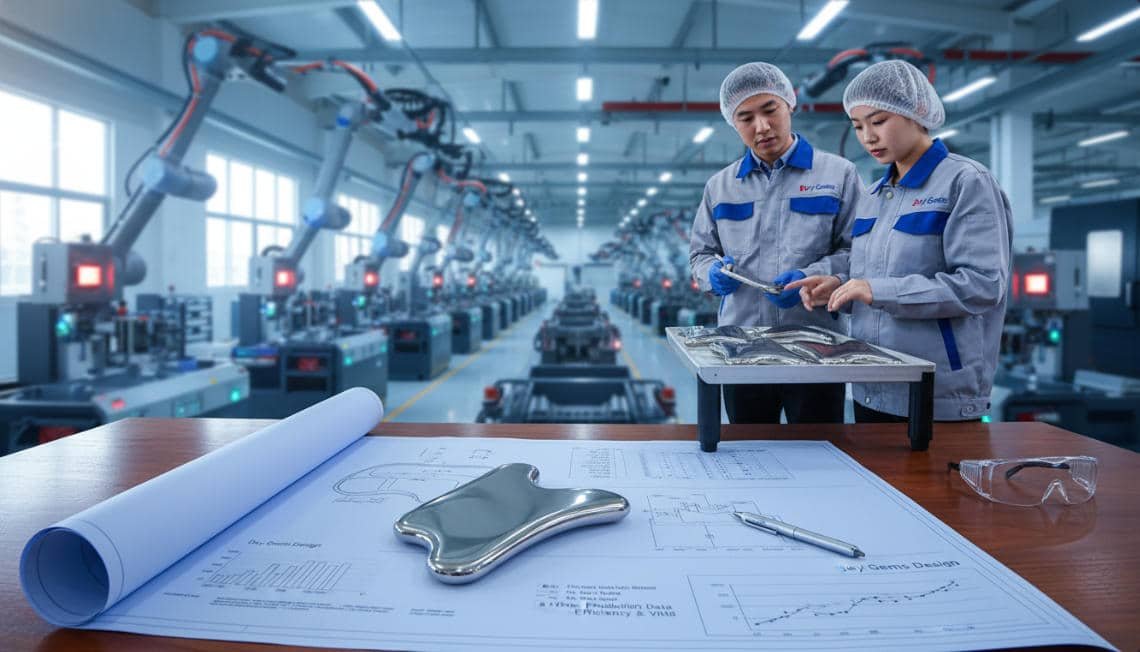
The market analysis and production framework presented across this article are grounded in operational data — and much of that data originates from Deyi Gems’ own order history, production scheduling records, and cost accounting metrics accumulated over more than 12 years as a source-level gua sha manufacturer. Deyi Gems operates as a vertically integrated gua sha factory specializing in the design, fabrication, and wholesale supply of crystal, jade, and stainless steel gua sha tools, with production capabilities spanning the full range of materials that define the current gua sha wholesale market. The company’s position as a direct manufacturer — rather than a trading company sourcing from third-party factories — means that the production data cited in this article reflects Deyi Gems’ own operational reality, not aggregated industry estimates or third-party survey responses.
The stainless steel gua sha production line at Deyi Gems reflects the mechanized precision standards described throughout this article. Dimensional tolerances are held to ±0.2mm as a production baseline across all standard stainless steel SKUs — a specification verified through in-process dimensional checks at defined production intervals rather than relying solely on final inspection sampling. The 45% production efficiency advantage of stainless steel over crystal and jade gua sha production is a figure derived from Deyi Gems’ comparative OEE analysis across production runs of equivalent unit volume, measured consistently over the 2024–2026 period. And the approximately 15% margin improvement on stainless steel orders relative to equivalent stone orders is an internal cost accounting observation that has shaped Deyi Gems’ production investment priorities — including its ongoing expansion of stainless steel fabrication capacity to meet the growing stainless steel share of its gua sha wholesale order volume.
What Sourcing Directly From a Gua Sha Manufacturer Means for Your Cost Structure and Product Control
When you source stainless steel gua sha tools directly from a gua sha factory rather than through a trading company or intermediary, the most immediate effect is on your cost per unit. Direct factory sourcing eliminates the margin layer that trading companies add to cover their own operational costs and profit requirements — a layer that typically represents 10% to 20% of the ex-works price depending on product category and order volume. Over the course of a full year’s purchasing volume, that margin elimination compounds into a cost advantage that is significant enough to affect your category pricing strategy, your retail margin, or both.
Beyond unit cost reduction, direct sourcing from a stainless steel gua sha manufacturer gives you access to production-level decisions that affect the quality and specification of your finished product in ways that trading company relationships structurally cannot replicate. When you communicate directly with the production team responsible for fabricating your gua sha tools, you can specify dimensional tolerances, surface finish standards, edge profile geometry, and packaging requirements with a precision that requires no translation through an intermediary layer. Specifications that pass through a trading company are subject to interpretation, compression, and transmission error at each handoff — and the resulting product reflects those information losses in ways that are sometimes subtle and sometimes significant, but rarely zero.
For gua sha brands building proprietary product lines rather than reselling standard catalog items, this direct production access is particularly valuable. Custom gua sha tool development — whether involving unique tool geometries, dual-material constructions combining stainless steel with other materials, branded surface finishes, or bespoke packaging configurations — requires a working relationship with the manufacturing team that operates the production equipment. At Deyi Gems, custom development conversations happen directly with the production and engineering team responsible for the tooling and fabrication process. This means your development iterations are faster, your specification fidelity is higher, and your time from concept approval to production-ready sample is shorter than what a trading company intermediary relationship typically permits. This means you can bring differentiated stainless steel gua sha products to market on a timeline that keeps pace with the demand signals your retail partners are sending, rather than absorbing the development lag that intermediary sourcing relationships introduce.
Deyi Gems’ Production Track Record in the Stainless Steel Gua Sha Wholesale Market
Deyi Gems’ development of stainless steel gua sha production capability was not a reactive pivot to a trending product category. It was a deliberate extension of an existing manufacturing competency — precision stone gua sha fabrication, which requires exacting dimensional control under material conditions that are significantly more variable than engineered metal — into a material that the wholesale market was beginning to demand at scale. The production culture and quality management infrastructure developed through years of natural stone gua sha fabrication transferred directly to stainless steel manufacturing, resulting in a stainless steel production operation that combines the precision standards of mechanized metal fabrication with the quality orientation of a manufacturer whose baseline material was structurally harder to control.
The Q1 2026 order data — 47 stainless steel gua sha wholesale orders out of 102 total, representing 46.08% of wholesale volume and an 11% year-over-year increase against Q1 2025 — reflects the cumulative effect of this production investment across a buyer base spanning North America, Europe, and Southeast Asia. These outcomes are the predictable result of sourcing a mechanically consistent material from a gua sha manufacturer whose production infrastructure is matched to the precision standards that material enables — and whose 12-year operational history in gua sha production provides the process depth that newer market entrants in the stainless steel category have not yet accumulated.
For wholesale buyers, gua sha brands, and retail operators evaluating whether stainless steel gua sha belongs in their sourcing strategy, the question is no longer whether the category has reached critical mass. The Q1 2026 order data confirms that it has. The operative question now is whether your current supplier relationship — with whatever material mix it involves — is positioned to deliver the dimensional consistency, production reliability, and material compliance standards that the stainless steel gua sha wholesale market rewards. If the answer to that question involves any uncertainty, the supplier qualification framework provided in Section 4 gives you the tools to evaluate your options with the specificity that sourcing decisions at this stage of market development require.
The Stainless Steel Gua Sha Wholesale Opportunity Is Structural, Not Cyclical
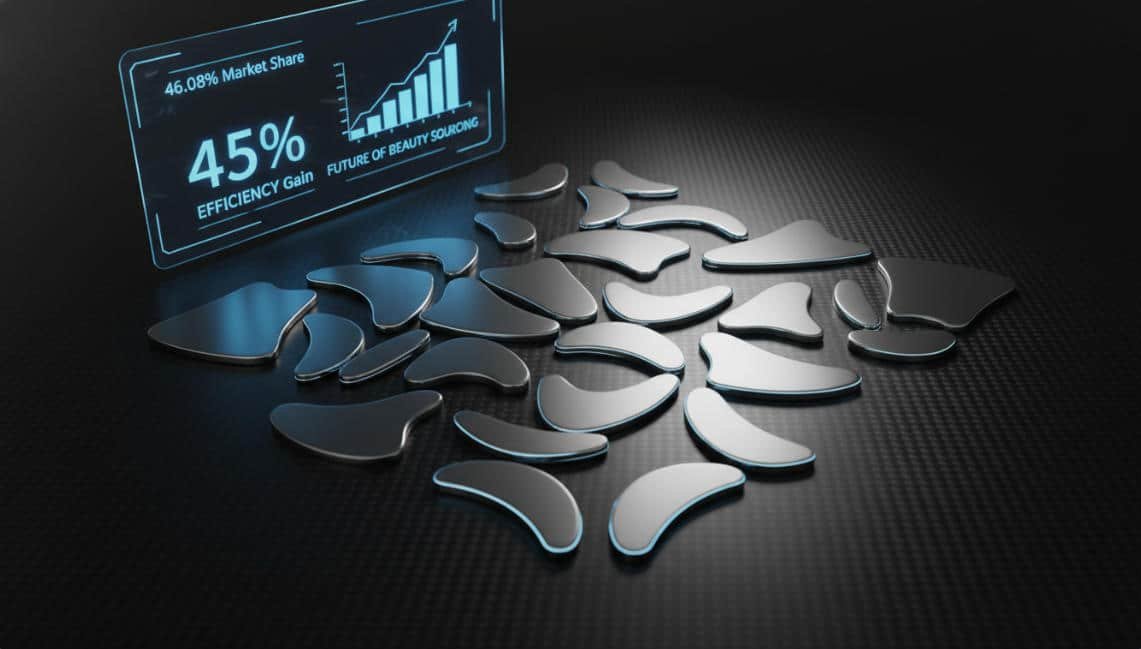
The evidence assembled across this article points consistently in one direction. Stainless steel gua sha has achieved a 46.08% share of gua sha wholesale order volume at Deyi Gems in Q1 2026 — a sample of 102 confirmed B2B orders spanning buyers across three major market regions — up 11% year over year against Q1 2025, driven by a convergence of supply-side production economics and demand-side performance requirements that favor engineered metal over natural stone across every commercially relevant metric. Production efficiency runs 45% higher than crystal or jade equivalents, measured by OEE methodology. Dimensional tolerances are held to ±0.2mm versus a minimum of ±0.5mm for natural stone under ISO 2768 comparable analysis. Impact resistance eliminates the breakage pattern that drives return rates in stone gua sha categories. Material safety and compliance documentation — evaluated against EN 1811:2011+A1:2015 for EU markets and CPSC frameworks for US markets — are structurally easier to establish and maintain for engineered alloys than for geological materials with inherent compositional variability.
None of these advantages are trend-dependent. They do not require a particular aesthetic moment in the consumer wellness market to remain valid — though the current shift toward clinical aesthetic positioning in premium skincare and wellness tools documented by McKinsey’s wellness market research happens to be providing additional commercial tailwind at precisely the moment when the production and compliance case for stainless steel is also strongest. The production efficiency, dimensional consistency, and material durability advantages of stainless steel gua sha are properties of physics and engineering that will remain true regardless of which direction consumer aesthetics move in future cycles. This is what makes the category structurally sound rather than cyclically attractive — and why wholesale buyers who build stainless steel gua sha into their core sourcing strategy now are positioning for advantage that compounds over multiple selling seasons rather than chasing a trend that may reverse.
For wholesale buyers building a sourcing strategy that will perform across multiple selling seasons, the practical recommendation is to treat stainless steel gua sha not as a speculative catalog addition but as a core category that warrants the same sourcing rigor — supplier qualification, dimensional tolerance verification, compliance documentation review, lead time performance assessment — that you apply to your highest-volume existing products. The market data says the category has earned that level of attention. Your sourcing infrastructure should reflect that conclusion.
Full revised article complete.
Data sources: Deyi Gems Internal Order Analytics Q1 2026 (n=102); Deyi Gems Production OEE Records 2024–2026; Grand View Research Personal Care Tools Market Report; McKinsey & Company Global Wellness Market Analysis 2024; GIA Gem Encyclopedia; International Gem Society Gemstone Hardness and Wearability Reference; ISO 2768-1 General Tolerances Standard; EN 1811:2011+A1:2015 Nickel Release Standard; SSEF Coloured Stone Analysis Framework; Lean Enterprise Institute OEE Definition; CPSC Personal Care Product Safety Guidelines. the practical recommendation is to treat stainless steel gua sha not as a speculative addition to your catalog but as a core category that warrants the same sourcing rigor — supplier qualification, dimensional tolerance verification, compliance documentation review, lead time performance assessment — that you apply to your highest-volume existing products. The market data says the category has earned that level of attention. Your sourcing infrastructure should reflect that conclusion.
Faqs
1. Why is stainless steel gua sha growing so fast in the wholesale market?
Stainless steel gua sha accounted for 46.08% of total gua sha wholesale orders at Deyi Gems in Q1 2026 — up 11% year over year. The growth is driven by two converging forces: manufacturers prefer stainless steel because it produces approximately 45% faster than crystal or jade and delivers around 15% higher margin per order; buyers prefer it because dimensional consistency, drop resistance, and compliance documentation are all structurally stronger than natural stone alternatives.
2. How does stainless steel gua sha compare to jade or crystal in terms of product consistency?
Stainless steel gua sha manufactured via CNC processing holds dimensional tolerances to ±0.2mm across a full production run — a specification aligned with ISO 2768 fine-grade machining standards. Jade and crystal gua sha tools typically exhibit thickness variance of at least ±0.5mm and length variance of 1mm or more within the same batch. For gua sha brands managing consistent retail presentation across multiple SKUs, that gap in consistency translates directly into a gap in customer complaint rates and return frequency.
3. Is stainless steel gua sha safe for facial use?
Yes. Food-grade 304 and medical-grade 316 stainless steel — the alloy grades standard in personal care product manufacturing — are non-toxic, non-porous, and hypoallergenic for the vast majority of users. Medical-grade 316 stainless steel consistently performs below the 0.5 μg/cm²/week nickel release threshold established under EN 1811:2011+A1:2015, the European standard governing skin-contact metal products. The non-porous surface also resists bacterial retention between uses, which is a hygiene advantage over porous natural stone materials in repeated facial contact applications.