Stone Gua Sha VS Horn Gua Sha VS Plastic Gua Sha
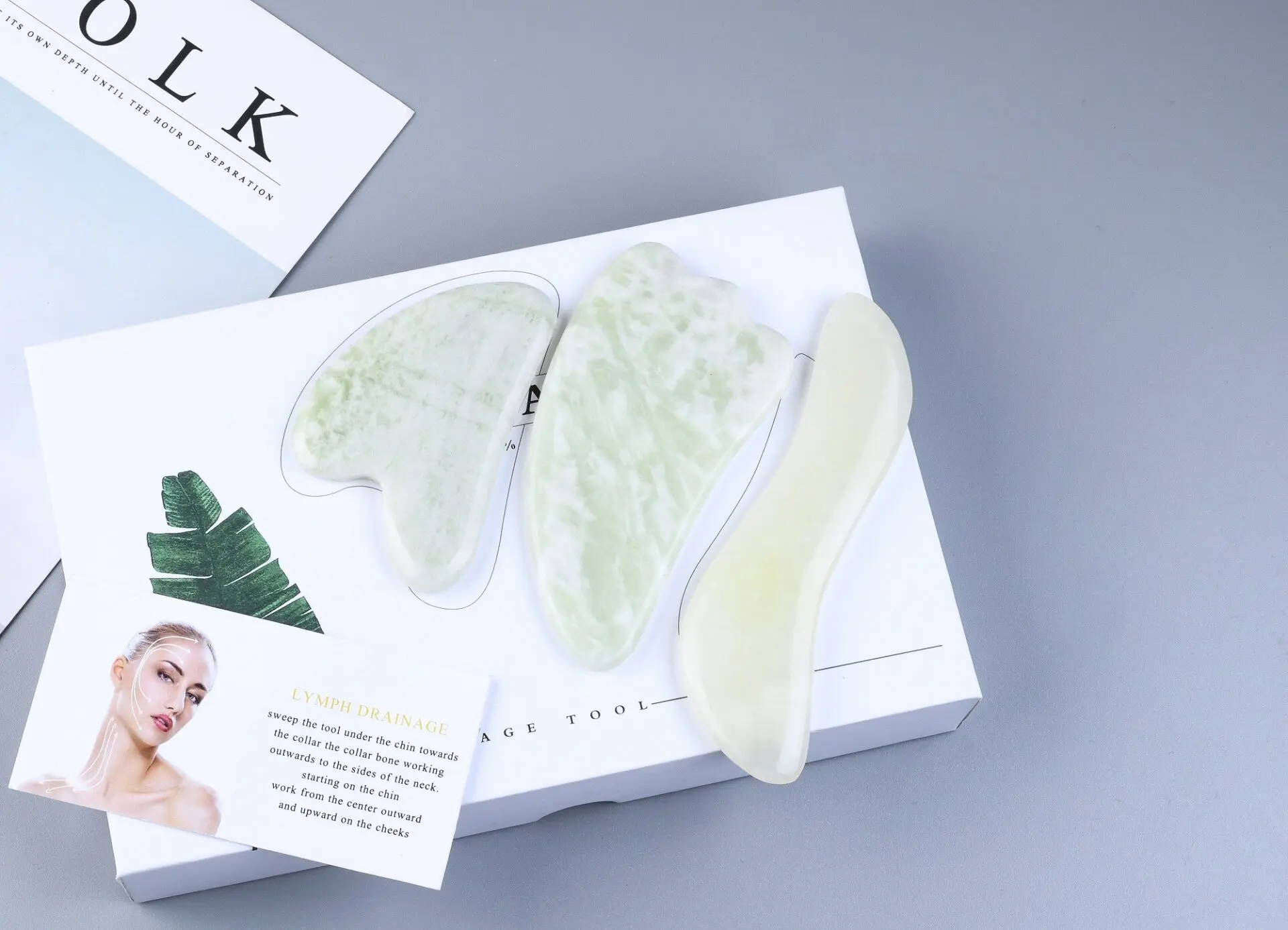
Walk into any wellness store or scroll through five minutes of skincare content, and you will encounter the same saturated promise: a gua sha tool will lift, contour, drain, and transform your face. But before you reach for the nearest jade board or quartz scraper, consider the question that wellness marketing rarely asks directly — does material actually determine what you get? When you place stone gua sha vs horn gua sha vs plastic side by side, the differences are not cosmetic. A 2019 systematic review indexed on PubMed confirmed that gua sha effectiveness is governed primarily by applied technique and pressure — not by the composition of the tool. Yet material still determines something arguably more important than efficacy: your skin’s safety, the physical consistency of your practice, and the cumulative effects of daily facial contact with that material. This guide examines all three materials through dermatological safety data, biomechanical performance, and gemmological science sourced from institutions including the Gemological Institute of America (GIA) and the International Gem Society (IGS), so that you can make a decision grounded in evidence rather than aesthetics. What the Science Behind Gua Sha Actually Says — Before You Pick a Material The most commercially motivated claims in the gua sha market position the tool’s material as the primary driver of results. The evidence does not support this. A study published in The Journal of Alternative and Complementary Medicine concluded explicitly that gua sha tool material is less relevant than technique for improving microcirculation — the core physiological mechanism behind the practice. What this finding means for you is straightforward: you do not need a specific crystal to achieve the documented gua sha benefits. What you do need is a material that is safe to use on your skin every day, consistent enough in its physical properties to support correct technique, and durable enough to maintain those properties over repeated gua sha use sessions. Gua Sha vs Wellness Culture: Separating Documented Benefits from Marketing Gua sha use has a substantiated therapeutic record within Traditional Chinese Medicine, where practitioners have employed smooth-edged tools across the skin surface to promote blood circulation and release fascial tension for centuries. Modern Western adoption of the practice — particularly face gua sha — has produced a secondary mythology around the specific healing properties of individual crystals, mineral vibrations, and gemstone energies. The GIA’s gem encyclopedia and the IGS both document the verified physical and chemical properties of gemstones — hardness, thermal conductivity, specific gravity, refractive index — without any peer-reviewed evidence that these properties transfer healing energy through skin contact. This does not diminish the ritual comfort and psychological benefit that many practitioners derive from working with a beautiful piece of natural stone. It does mean that when you evaluate stone gua sha vs horn vs plastic, the material conversation should be anchored to safety and performance rather than energy theory. What Peer-Reviewed Research Confirms About Gua Sha Benefits The gua sha benefits that scientific literature does support are measurable and meaningful. PubMed-indexed research demonstrates that correct gua sha use produces a documented four-fold increase in surface microperfusion — increased blood flow in the capillary beds immediately beneath the skin surface — that persists for approximately 25 minutes post-treatment. Separately, the directional stroking technique used in face gua sha, when performed toward the lymphatic drainage nodes of the face and neck, mechanically supports interstitial fluid movement in a way that reduces visible puffiness. Myofascial tension relief is a third documented effect: the sustained pressure and gliding motion of gua sha use along facial and neck musculature produces a stretching effect on the connective tissue that can temporarily reduce the appearance of tension-related creasing. These effects are real, replicable, and worth pursuing — but they require consistent, correctly executed technique. The material in your hand determines whether that technique is safe and sustainable, not whether the effects occur at all. The Swiss Gemmological Institute SSEF applies exactly the standard of measurable evidence to gemstone assessment that the gua sha market would benefit from applying to its own claims. Their certification protocols verify origin, treatment history, and physical composition through laboratory analysis — the same rigour that should inform any claim made about a material that makes daily contact with your skin. This means you deserve the same level of material transparency in your gua sha tools that you would expect from a certified gemstone. Skin Safety: Stone Gua Sha vs Horn vs Plastic — A Material-by-Material Analysis Safety is not a secondary consideration in face gua sha — it is the foundational one. Your face is covered with a thin, selectively permeable epidermal barrier that absorbs compounds from topical contact, particularly when that contact involves heat, friction, and oil-based lubricants. The material of your gua sha tool determines what, if anything, crosses that barrier during every session. When you assess the three primary materials available — natural stone, buffalo horn, and plastic — the safety profiles diverge substantially, and the differences compound with the frequency of use. Why Stone Gua Sha Is the Benchmark for Skin Safety Natural stone — jade, rose quartz, amethyst, aventurine — is chemically inert under normal skincare conditions. It does not react with the facial oils, serums, and moisturisers you apply before face gua sha, and it releases no compounds into the skin during friction-based contact. Healthline notes that natural stone tools are specifically preferred in clinical and wellness contexts because they introduce no foreign chemical compounds to the skin surface. MindBodyGreen similarly confirms that jade gua sha tools are non-toxic and considered safe across all skin types, including reactive and compromised skin. For users who practice face gua sha daily or multiple times per week, this chemical neutrality means cumulative exposure carries no measurable risk — which is the definition of a safe daily-use tool. Stone gua sha is non-porous, meaning its surface harbours no bacteria between uses, and its hardness — typically 6–7 on the Mohs scale for jade, as documented by
Stone Gua Sha VS Horn Gua Sha VS Plastic Gua Sha Read More »
Walk into any wellness store or scroll through five minutes of skincare content, and you will encounter the same saturated promise: a gua sha tool will lift, contour, drain, and transform your face. But before you reach for the nearest jade board or quartz scraper, consider the question that wellness marketing rarely asks directly — does material actually determine what you get? When you place stone gua sha vs horn gua sha vs plastic side by side, the differences are not cosmetic. A 2019 systematic review indexed on PubMed confirmed that gua sha effectiveness is governed primarily by applied technique and pressure — not by the composition of the tool. Yet material still determines something arguably more important than efficacy: your skin’s safety, the physical consistency of your practice, and the cumulative effects of daily facial contact with that material. This guide examines all three materials through dermatological safety data, biomechanical performance, and gemmological science sourced from institutions including the Gemological Institute of America (GIA) and the International Gem Society (IGS), so that you can make a decision grounded in evidence rather than aesthetics. What the Science Behind Gua Sha Actually Says — Before You Pick a Material The most commercially motivated claims in the gua sha market position the tool’s material as the primary driver of results. The evidence does not support this. A study published in The Journal of Alternative and Complementary Medicine concluded explicitly that gua sha tool material is less relevant than technique for improving microcirculation — the core physiological mechanism behind the practice. What this finding means for you is straightforward: you do not need a specific crystal to achieve the documented gua sha benefits. What you do need is a material that is safe to use on your skin every day, consistent enough in its physical properties to support correct technique, and durable enough to maintain those properties over repeated gua sha use sessions. Gua Sha vs Wellness Culture: Separating Documented Benefits from Marketing Gua sha use has a substantiated therapeutic record within Traditional Chinese Medicine, where practitioners have employed smooth-edged tools across the skin surface to promote blood circulation and release fascial tension for centuries. Modern Western adoption of the practice — particularly face gua sha — has produced a secondary mythology around the specific healing properties of individual crystals, mineral vibrations, and gemstone energies. The GIA’s gem encyclopedia and the IGS both document the verified physical and chemical properties of gemstones — hardness, thermal conductivity, specific gravity, refractive index — without any peer-reviewed evidence that these properties transfer healing energy through skin contact. This does not diminish the ritual comfort and psychological benefit that many practitioners derive from working with a beautiful piece of natural stone. It does mean that when you evaluate stone gua sha vs horn vs plastic, the material conversation should be anchored to safety and performance rather than energy theory. What Peer-Reviewed Research Confirms About Gua Sha Benefits The gua sha benefits that scientific literature does support are measurable and meaningful. PubMed-indexed research demonstrates that correct gua sha use produces a documented four-fold increase in surface microperfusion — increased blood flow in the capillary beds immediately beneath the skin surface — that persists for approximately 25 minutes post-treatment. Separately, the directional stroking technique used in face gua sha, when performed toward the lymphatic drainage nodes of the face and neck, mechanically supports interstitial fluid movement in a way that reduces visible puffiness. Myofascial tension relief is a third documented effect: the sustained pressure and gliding motion of gua sha use along facial and neck musculature produces a stretching effect on the connective tissue that can temporarily reduce the appearance of tension-related creasing. These effects are real, replicable, and worth pursuing — but they require consistent, correctly executed technique. The material in your hand determines whether that technique is safe and sustainable, not whether the effects occur at all. The Swiss Gemmological Institute SSEF applies exactly the standard of measurable evidence to gemstone assessment that the gua sha market would benefit from applying to its own claims. Their certification protocols verify origin, treatment history, and physical composition through laboratory analysis — the same rigour that should inform any claim made about a material that makes daily contact with your skin. This means you deserve the same level of material transparency in your gua sha tools that you would expect from a certified gemstone. Skin Safety: Stone Gua Sha vs Horn vs Plastic — A Material-by-Material Analysis Safety is not a secondary consideration in face gua sha — it is the foundational one. Your face is covered with a thin, selectively permeable epidermal barrier that absorbs compounds from topical contact, particularly when that contact involves heat, friction, and oil-based lubricants. The material of your gua sha tool determines what, if anything, crosses that barrier during every session. When you assess the three primary materials available — natural stone, buffalo horn, and plastic — the safety profiles diverge substantially, and the differences compound with the frequency of use. Why Stone Gua Sha Is the Benchmark for Skin Safety Natural stone — jade, rose quartz, amethyst, aventurine — is chemically inert under normal skincare conditions. It does not react with the facial oils, serums, and moisturisers you apply before face gua sha, and it releases no compounds into the skin during friction-based contact. Healthline notes that natural stone tools are specifically preferred in clinical and wellness contexts because they introduce no foreign chemical compounds to the skin surface. MindBodyGreen similarly confirms that jade gua sha tools are non-toxic and considered safe across all skin types, including reactive and compromised skin. For users who practice face gua sha daily or multiple times per week, this chemical neutrality means cumulative exposure carries no measurable risk — which is the definition of a safe daily-use tool. Stone gua sha is non-porous, meaning its surface harbours no bacteria between uses, and its hardness — typically 6–7 on the Mohs scale for jade, as documented by