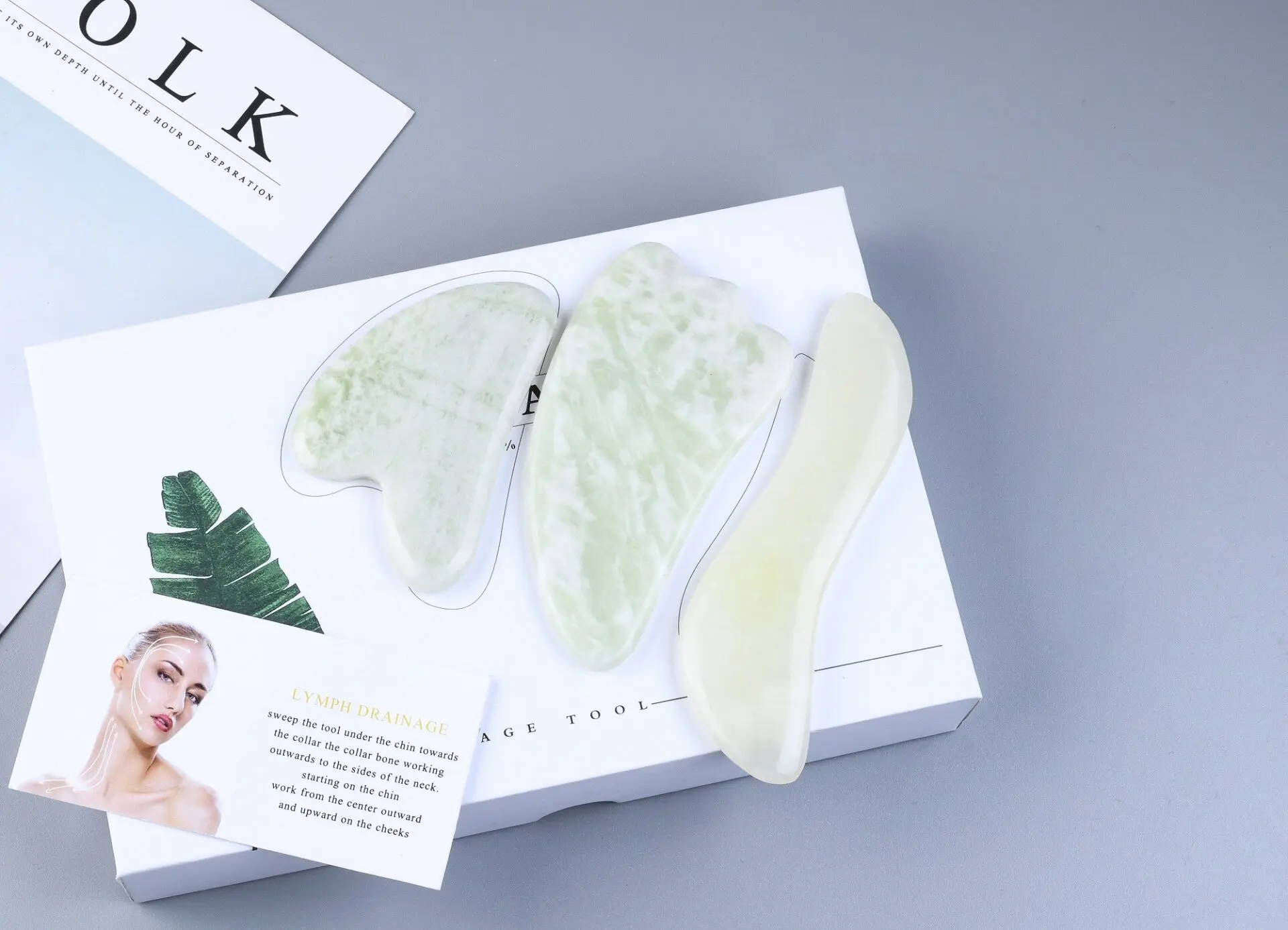
Walk into any wellness store or scroll through five minutes of skincare content, and you will encounter the same saturated promise: a gua sha tool will lift, contour, drain, and transform your face. But before you reach for the nearest jade board or quartz scraper, consider the question that wellness marketing rarely asks directly — does material actually determine what you get? When you place stone gua sha vs horn gua sha vs plastic side by side, the differences are not cosmetic. A 2019 systematic review indexed on PubMed confirmed that gua sha effectiveness is governed primarily by applied technique and pressure — not by the composition of the tool. Yet material still determines something arguably more important than efficacy: your skin’s safety, the physical consistency of your practice, and the cumulative effects of daily facial contact with that material. This guide examines all three materials through dermatological safety data, biomechanical performance, and gemmological science sourced from institutions including the Gemological Institute of America (GIA) and the International Gem Society (IGS), so that you can make a decision grounded in evidence rather than aesthetics.
- What the Science Behind Gua Sha Actually Says — Before You Pick a Material
- Skin Safety: Stone Gua Sha vs Horn vs Plastic — A Material-by-Material Analysis
- How Each Material Feels in Practice: Stone Gua Sha vs Horn vs Plastic on Your Skin
- Gua Sha Benefits: What the Evidence Supports and Where Scepticism Is Warranted
- Gua Sha vs Different Skin Types: Matching Your Material to Your Actual Needs
- Hygiene, Maintenance, and Knowing When to Replace Your Gua Sha Tool
- Regulatory Compliance: What EU, US, and Australian Standards Mean for Your Gua Sha Use
- Final Verdict: Stone Gua Sha vs Horn vs Plastic — A Decision Framework for Your Skin
What the Science Behind Gua Sha Actually Says — Before You Pick a Material
The most commercially motivated claims in the gua sha market position the tool’s material as the primary driver of results. The evidence does not support this. A study published in The Journal of Alternative and Complementary Medicine concluded explicitly that gua sha tool material is less relevant than technique for improving microcirculation — the core physiological mechanism behind the practice. What this finding means for you is straightforward: you do not need a specific crystal to achieve the documented gua sha benefits. What you do need is a material that is safe to use on your skin every day, consistent enough in its physical properties to support correct technique, and durable enough to maintain those properties over repeated gua sha use sessions.
Gua Sha vs Wellness Culture: Separating Documented Benefits from Marketing
Gua sha use has a substantiated therapeutic record within Traditional Chinese Medicine, where practitioners have employed smooth-edged tools across the skin surface to promote blood circulation and release fascial tension for centuries. Modern Western adoption of the practice — particularly face gua sha — has produced a secondary mythology around the specific healing properties of individual crystals, mineral vibrations, and gemstone energies. The GIA’s gem encyclopedia and the IGS both document the verified physical and chemical properties of gemstones — hardness, thermal conductivity, specific gravity, refractive index — without any peer-reviewed evidence that these properties transfer healing energy through skin contact. This does not diminish the ritual comfort and psychological benefit that many practitioners derive from working with a beautiful piece of natural stone. It does mean that when you evaluate stone gua sha vs horn vs plastic, the material conversation should be anchored to safety and performance rather than energy theory.
What Peer-Reviewed Research Confirms About Gua Sha Benefits
The gua sha benefits that scientific literature does support are measurable and meaningful. PubMed-indexed research demonstrates that correct gua sha use produces a documented four-fold increase in surface microperfusion — increased blood flow in the capillary beds immediately beneath the skin surface — that persists for approximately 25 minutes post-treatment. Separately, the directional stroking technique used in face gua sha, when performed toward the lymphatic drainage nodes of the face and neck, mechanically supports interstitial fluid movement in a way that reduces visible puffiness. Myofascial tension relief is a third documented effect: the sustained pressure and gliding motion of gua sha use along facial and neck musculature produces a stretching effect on the connective tissue that can temporarily reduce the appearance of tension-related creasing. These effects are real, replicable, and worth pursuing — but they require consistent, correctly executed technique. The material in your hand determines whether that technique is safe and sustainable, not whether the effects occur at all.
The Swiss Gemmological Institute SSEF applies exactly the standard of measurable evidence to gemstone assessment that the gua sha market would benefit from applying to its own claims. Their certification protocols verify origin, treatment history, and physical composition through laboratory analysis — the same rigour that should inform any claim made about a material that makes daily contact with your skin. This means you deserve the same level of material transparency in your gua sha tools that you would expect from a certified gemstone.
Skin Safety: Stone Gua Sha vs Horn vs Plastic — A Material-by-Material Analysis
Safety is not a secondary consideration in face gua sha — it is the foundational one. Your face is covered with a thin, selectively permeable epidermal barrier that absorbs compounds from topical contact, particularly when that contact involves heat, friction, and oil-based lubricants. The material of your gua sha tool determines what, if anything, crosses that barrier during every session. When you assess the three primary materials available — natural stone, buffalo horn, and plastic — the safety profiles diverge substantially, and the differences compound with the frequency of use.
Why Stone Gua Sha Is the Benchmark for Skin Safety
Natural stone — jade, rose quartz, amethyst, aventurine — is chemically inert under normal skincare conditions. It does not react with the facial oils, serums, and moisturisers you apply before face gua sha, and it releases no compounds into the skin during friction-based contact. Healthline notes that natural stone tools are specifically preferred in clinical and wellness contexts because they introduce no foreign chemical compounds to the skin surface. MindBodyGreen similarly confirms that jade gua sha tools are non-toxic and considered safe across all skin types, including reactive and compromised skin. For users who practice face gua sha daily or multiple times per week, this chemical neutrality means cumulative exposure carries no measurable risk — which is the definition of a safe daily-use tool. Stone gua sha is non-porous, meaning its surface harbours no bacteria between uses, and its hardness — typically 6–7 on the Mohs scale for jade, as documented by the IGS — ensures the surface does not develop the micro-abrasions that create friction damage and chemical migration pathways.
Horn Gua Sha and Skin Compatibility — the Variables You Need to Manage
Horn gua sha tools are made from buffalo horn, a keratin-based biological material chemically similar to your own fingernails and hair. This structural similarity makes horn gua sha inherently non-toxic — there is no BPA, no synthetic plasticiser, and no industrial chemical compound in the material itself. Traditional Chinese Medicine texts have classified buffalo horn as safe for topical and therapeutic use for centuries, and this safety record is upheld by modern dermatological assessment. The variable that distinguishes horn gua sha from stone gua sha on safety grounds is porosity. Horn’s microscopic surface structure contains fine channels that can retain bacteria, sebum, and product residue if the tool is not cleaned thoroughly after every face gua sha session. In temperate, lower-humidity environments with rigorous post-use hygiene, this risk is manageable. In warmer climates, or for users with acne-prone skin producing higher sebum volumes, bacterial retention on an inadequately cleaned horn gua sha tool creates a genuine infection risk that non-porous stone gua sha tools do not carry. This means the safety of horn gua sha is conditional on your cleaning discipline in a way that stone gua sha safety is not.
Gua Sha vs Chemical Risk: The BPA and Phthalate Problem in Plastic Tools
This is where the safety differential becomes impossible to rationalise away. A substantial proportion of plastic gua sha tools available at low price points — particularly through undifferentiated wholesale and online marketplace channels — are manufactured from plastics containing Bisphenol A (BPA) or phthalate-class plasticisers. The U.S. Food and Drug Administration (FDA) has documented that BPA migration from plastics increases under conditions of heat and mechanical friction — precisely the conditions created during face gua sha, where a plastic tool warmed by body contact is repeatedly dragged under pressure across oil-coated skin. The Environmental Working Group (EWG) independently flags BPA and phthalates among the highest-priority chemicals to avoid in personal care product contexts, noting their endocrine-disrupting potential with cumulative exposure. Byrdie and Healthline have both published explicit cautions against using plastic gua sha tools for daily facial routines, citing chemical exposure risk as the primary concern. When you evaluate gua sha vs any reasonable safety standard for daily skin contact, plastic gua sha fails the test for regular face gua sha use — not because every plastic tool is equally hazardous, but because you cannot verify the composition of unregulated plastic without laboratory testing that most consumers cannot access.
How Each Material Feels in Practice: Stone Gua Sha vs Horn vs Plastic on Your Skin
Understanding the physical differences between these three materials in actual use is the information most users cannot get from product pages alone. The experience diverges across four parameters that matter for effective gua sha use: natural weight and pressure delivery, surface temperature, glide quality, and how the tool responds to the three-dimensional contours of the face. Each material performs differently across all four, and those differences accumulate into meaningfully different face gua sha outcomes over time.
Stone Gua Sha: How Natural Density Delivers Consistent Pressure
Natural stone has a specific gravity that most plastic and horn tools cannot approach. Rose quartz measures approximately 2.6 g/cm³, nephrite jade approximately 2.9–3.1 g/cm³, and amethyst approximately 2.65 g/cm³ — figures documented in the IGS mineral reference database. A stone gua sha tool of standard facial dimensions typically weighs between 40–80g, depending on stone type and shape. This natural mass means the tool delivers consistent downward pressure through its own weight, without requiring you to consciously push. In practice, this translates to more uniform stimulation of the superficial fascia and subcutaneous tissue during face gua sha — the pressure stays consistent from the beginning of a stroke to the end, which is mechanically difficult to sustain manually when holding a featherlight tool. Stone gua sha also carries a surface temperature approximately 2–4°C below ambient skin temperature at the start of a session, creating a mild vasoconstrictive response that visibly reduces puffiness on contact. This means your stone gua sha tool is actively working before you have completed a single stroke.
Gua Sha vs Beginners: Where Horn Gua Sha Has a Genuine Advantage
Horn gua sha tools typically weigh 15–25g — roughly one-third to one-half the weight of a comparable stone gua sha tool. For users in the early stages of developing gua sha use technique, this lower mass is a genuine functional advantage. Correct face gua sha requires maintaining a consistent tool angle — typically 15–45 degrees to the skin surface — and applying directional pressure in a controlled, deliberate stroke. Learning this requires muscle memory that takes time to develop, and a lighter horn gua sha tool demands less wrist strength and offers more immediate positional control during the learning period. Horn gua sha also responds to the three-dimensional architecture of the face with more natural conformability than rigid stone — the slight flex in horn’s structure allows it to follow the curve of the undereye area, the jawline’s angle, and the bridge of the nose without the practitioner needing to reposition their grip as frequently. For detailed face gua sha work in anatomically complex zones, this flexibility provides a functional advantage that experienced practitioners acknowledge even when they prefer stone gua sha for standard strokes. The trade-off is that the lower mass of horn gua sha means you must consciously generate the pressure that stone delivers passively — and over a 10–15 minute session, that additional effort produces measurable hand and wrist fatigue.
Plastic Gua Sha vs Stone and Horn: Performance That Falls Short of Safety Concerns
Even setting aside the chemical safety concerns documented in the previous section, plastic gua sha underperforms on pure physical metrics. The specific gravity of common plastics ranges from 0.9–1.4 g/cm³ — less than half that of most stones — which means a plastic gua sha tool of equivalent dimensions exerts substantially less passive pressure per stroke than stone. To compensate, users apply more conscious force, but conscious pressure is harder to distribute evenly across a stroke than weight-assisted passive pressure, leading to inconsistent fascial stimulation that undermines the gua sha benefits you are attempting to achieve. The surface of plastic also degrades differently from stone over time. Unlike stone gua sha, which can be polished to a sub-micron smoothness that it retains through normal use, plastic develops micro-scratches within weeks of regular gua sha use. Those micro-abrasions on the tool’s surface correspond to micro-abrasions on the skin during face gua sha — individually invisible but collectively responsible for cumulative barrier disruption. When you compare gua sha vs performance standards across all relevant physical categories — pressure delivery, surface consistency, thermal properties, durability — plastic gua sha ranks last in every one.
Gua Sha Benefits: What the Evidence Supports and Where Scepticism Is Warranted
The category of gua sha benefits can be cleanly divided into two groups: those with reproducible clinical evidence, and those propagated by wellness culture without peer-reviewed support. Understanding which is which allows you to approach your gua sha use practice with realistic expectations — and realistic expectations are the single most reliable predictor of sustained practice, which is what actually delivers results.
Documented Gua Sha Benefits: Microcirculation, Lymphatic Drainage, and Fascial Release
The strongest evidence base for gua sha benefits covers three physiological mechanisms. First, improved superficial microcirculation: a study available through PubMed demonstrated that gua sha produced a four-fold increase in surface microperfusion that persisted for 25 minutes post-treatment — a measurable, replicable outcome that explains the visible skin radiance that follows a face gua sha session. Second, mechanical lymphatic drainage support: directional face gua sha strokes — performed consistently toward the lymph nodes of the neck rather than away from them — physically move interstitial fluid along its natural drainage pathway, reducing the fluid accumulation that presents as facial puffiness. Third, myofascial tension relief: the sustained gliding pressure of gua sha use along muscle groups applies a mechanical stretch to fascial tissue that transiently reduces the appearance of tension-related facial creasing and tightness. None of these effects require a specific crystal type, horn, or plastic — they require correct technique, appropriate pressure, and consistent practice.
Gua Sha vs Exaggerated Claims: Where the Evidence Stops
Not every claim attributed to gua sha in wellness content holds up to scrutiny. The assertion that regular stone gua sha use produces permanent structural changes in facial bone architecture, or that it permanently lifts and repositions sagging skin tissue, is not supported by any peer-reviewed clinical evidence available at the time of writing. What face gua sha demonstrably produces is temporary improvement in fluid distribution, circulation, and muscle tone — real and valuable effects that require consistent practice to maintain, not a one-time structural intervention. Approaching your gua sha use with the same framing you would apply to facial exercise — cumulative, maintenance-dependent, and genuinely effective within its documented scope — is the most honest and ultimately the most productive mindset. This means your material choice should be driven by safety and sustainability, not by which stone is marketed as most “energetically potent.”
Gua Sha vs Different Skin Types: Matching Your Material to Your Actual Needs
Sensitive and Acne-Prone Skin: Why Stone Gua Sha Is the Evidence-Backed Choice
For sensitive, reactive, or acne-prone skin, the material of your gua sha tool is not a stylistic preference — it is a clinical consideration. Stone gua sha tools are non-porous, chemically neutral, and naturally cool in temperature. The non-porous surface means no bacterial accumulation between uses, even if post-session cleaning is occasionally imperfect. The chemical neutrality means no risk of the tool introducing irritants across a skin barrier that is, by definition, compromised. And the lower surface temperature of stone gua sha tools can actively soothe acute inflammation during face gua sha — making the session comfortable rather than aggravating for reactive skin. The Environmental Working Group (EWG) consistently identifies natural stone as among the lowest-risk materials in personal care product contexts, reinforcing the recommendation with independently verified safety data. This means you can practice face gua sha daily without introducing material-based variables to an already sensitive equation.
Oily and Combination Skin: Face Gua Sha Tool Hygiene as the Deciding Factor
For oily and combination skin types, both stone gua sha and horn gua sha are functionally effective options — but the non-porous nature of stone delivers a decisive hygiene advantage. Oily skin produces higher volumes of sebum, which accumulates on the tool surface during every gua sha use session and creates a more favourable environment for bacterial proliferation on porous materials. Stone gua sha tools can be cleaned in under 60 seconds with mild soap and warm water, and their non-porous surface does not retain residue in subsurface channels regardless of cleaning thoroughness. Horn gua sha requires more systematic post-use cleaning — soap, warm water, thorough air drying in an open environment, and periodic oil conditioning — and any cleaning shortcut increases the bacterial load on the tool surface in ways that stone gua sha simply does not. If your skincare routine is already time-pressured, the faster and more forgiving maintenance profile of stone gua sha is a practical advantage that compounds daily.
Gua Sha vs Dry and Mature Skin: Which Material Adds Therapeutic Value?
Dry and mature skin typically carries a more fragile epidermal barrier and responds best to gua sha use that minimises friction per stroke while maximising pressure delivery. Stone gua sha, applied over a generous layer of facial oil or a rich serum, glides across dry skin with minimal drag — the combination of a molecularly smooth stone surface and a lubricating medium creates an optimal low-friction contact that does not pull or stress the skin. Mature skin additionally benefits from the mild thermal cycling effect of stone gua sha: the initial cool-surface vasoconstriction, followed by the vasodilation produced by mechanical pressure, transiently increases local blood flow and can improve skin surface radiance and elasticity visibility. Plastic gua sha, at equivalent pressure, generates more friction per stroke due to its lighter weight and rougher surface profile — a level of drag that dry or mature skin with a compromised barrier tolerates poorly and that can contribute to micro-irritation over repeated face gua sha sessions.
Hygiene, Maintenance, and Knowing When to Replace Your Gua Sha Tool
Correct maintenance of your gua sha tool is not an afterthought to the practice — it is integral to the safety and effectiveness of every gua sha use session. A poorly maintained tool introduces bacterial contamination, surface damage, and chemical risk to a practice that is otherwise remarkably safe and beneficial. Each material has a specific care profile, and understanding that profile before you invest in a tool is part of making an informed choice.
How to Clean Stone Gua Sha Tools After Every Face Gua Sha Session
The cleaning protocol for stone gua sha tools is straightforward and takes under two minutes. Rinse the tool under lukewarm water — not hot, as thermal shock can create micro-fractures in some stone types over repeated cycles — apply a small amount of mild, fragrance-free liquid soap, and clean the entire surface with your fingertips for 20–30 seconds, paying particular attention to any edges or carved details that could retain product residue. Rinse thoroughly and pat dry with a clean, soft cloth. Do not soak stone gua sha tools for extended periods: while most stones used for gua sha tools — jade, rose quartz, amethyst — are water-stable under brief contact, sustained soaking can affect the structural integrity of softer varieties and may loosen adhesives used in tools with inlaid or composite elements. Store your stone gua sha wrapped in a soft cloth or in a dedicated pouch, separated from hard surfaces that could chip its edges. A properly maintained stone gua sha tool from a quality manufacturer can remain in active service for a decade or more — meaning your investment per use session over that lifespan is measurably lower than any cheaper material alternative.
Horn Gua Sha Care: Preventing Cracks, Bacterial Buildup, and Warping
Horn gua sha tools demand more attentive maintenance than stone, particularly in low-humidity environments. Buffalo horn is a keratin structure that responds to moisture loss by becoming brittle and prone to surface cracking — the same process that causes fingernails to split in dry conditions. If you live in an environment with low relative humidity, use central heating extensively, or notice that your horn gua sha tool has begun to look dull or feel slightly rough at the edges, conditioning is necessary. Apply a small amount of pure coconut oil or jojoba oil to a soft cloth, rub it across all surfaces of the tool, allow five minutes for absorption, then wipe away any excess. Repeat every two to three weeks under normal conditions. Never submerge a horn gua sha tool in water for cleaning or sterilisation: prolonged water exposure followed by air drying creates an expansion-contraction cycle in the keratin structure that initiates cracking from the inside out. If visible cracks develop in your horn gua sha — regardless of depth — retire the tool immediately. Cracked horn harbours bacteria in quantities that no surface cleaning can adequately reach, and a cracked edge on a face gua sha tool is a skin laceration risk that serves no one.
When to Replace Your Gua Sha Tool — Recognising the Signs That Protect Your Skin
Knowing when a gua sha tool has reached the end of its safe service life is as important as knowing how to use it. For stone gua sha, the replacement trigger is any chip, nick, or edge roughness detectable by running a fingertip slowly along every working edge before each session. Stone fractures cleanly and sharply — a chipped stone gua sha tool does not dull its edge the way a chipped ceramic cup does; it creates a micro-blade that will abrade rather than glide across skin. For horn gua sha, replace when any crack becomes visible, when the surface feels noticeably rough during use, or when the tool retains odour after thorough cleaning — the last indicator signals bacterial colonisation in subsurface channels that cleaning cannot address. For plastic gua sha, the replacement threshold arrives soonest: visible surface scratching — which begins within weeks of regular gua sha use — signals both a functional degradation (increased skin friction per stroke) and a potential chemical risk (greater surface area exposure for BPA or plasticiser migration). Across all three materials, gua sha vs replacement frequency strongly favours stone: one quality stone gua sha tool typically outlasts five to ten comparable plastic tools across the same period of active use, making the upfront cost difference a straightforward long-term calculation.
Regulatory Compliance: What EU, US, and Australian Standards Mean for Your Gua Sha Use
When evaluating gua sha vs international regulatory standards, the picture varies significantly by material — and the gaps in consumer protection are wider than most users realise. In the European Union, personal care tools that make repeated skin contact are subject to the General Product Safety Directive and, where applicable, REACH chemical substance regulations. REACH restrictions on BPA in skin-contact consumer products are documented and enforced by the European Chemicals Agency (ECHA), and plastic gua sha tools sourced from unregulated manufacturing environments may not meet the thresholds required for legal sale in EU member states. This is not a marginal compliance technicality — it has direct implications for the safety of your face gua sha practice if your tool was not manufactured to these standards.
In the United States, the FDA regulates BPA in food-contact materials under a more established framework, but skin-contact wellness tools occupy a less stringently pre-market tested category, meaning that compliance verification currently falls substantially on the consumer or retailer rather than the regulator. In Australia and Canada, consumer product safety legislation requires that personal care tools not contain restricted substances above specified thresholds — but enforcement operates on a complaint-driven, post-market model, meaning non-compliant products can reach consumers before being identified and withdrawn. For plastic gua sha, this regulatory landscape means that without verifiable manufacturer documentation of material composition, you cannot be certain your tool meets the safety standards of the market in which you live.
Stone gua sha tools face a different regulatory and verification landscape — one centred on accurate material identification rather than chemical safety. The GIA and SSEF both provide gemmological certification services that verify the species, geographic origin, and treatment history of jade and other semi-precious stones used in wellness tools. In markets where “jade” or “crystal” designations are used commercially, verified gemmological certification protects you from misrepresentation — a documented issue in the stone gua sha market, where dyed quartzite, resin composites, and glass are sometimes presented as genuine jade or crystal. Purchasing stone gua sha tools from manufacturers who reference gemmological material standards — and who can supply traceable sourcing documentation — is the most reliable consumer protection strategy available for this category.
Final Verdict: Stone Gua Sha vs Horn vs Plastic — A Decision Framework for Your Skin
After examining each material across skin safety, physical performance, verified gua sha benefits, skin type compatibility, maintenance requirements, and regulatory compliance, the evidence points to a clear hierarchy — qualified by the specific circumstances of each user.
Stone gua sha is the most defensible material choice for daily face gua sha use across virtually all skin types and experience levels. Its chemical inertness, non-porous surface, passive weight-assisted pressure delivery, natural thermal properties, and decade-plus lifespan with proper care make it the material that most consistently aligns with both the safety requirements and the practical demands of serious gua sha use. Quality stone gua sha tools typically retail between $15–$60 depending on stone variety and craftsmanship precision — a cost range that, when amortised across years of daily face gua sha practice, represents a per-session investment that plastic gua sha cannot approach despite its lower entry price.
Horn gua sha occupies a legitimate and evidence-supported position for beginners who benefit from lighter weight control during technique development, and for practitioners who value the material’s facial conformability for detailed contouring work. The ethical sourcing dimension — particularly relevant in EU, Australian, and Canadian markets with active animal welfare legislation — requires supply chain verification before purchase. A horn gua sha supplier who cannot confirm that horn is sourced as a byproduct of the food industry is not a supplier whose material transparency meets the standard your skin deserves. With proper conditioning, cleaning discipline, and verified sourcing, horn gua sha delivers genuine gua sha benefits and a comfortable user experience within its limitations.
Plastic gua sha has a limited and specific use case: travel situations where tool breakage is a genuine concern, demonstration and teaching contexts where expendability is a feature, and occasional body-area use where the daily chemical exposure risk of face gua sha does not apply. It does not belong in a daily facial skincare routine. The combination of BPA risk, surface degradation, inferior pressure delivery, and low consumer confidence in the primary gua sha markets — North America, Western Europe, and Australia — makes plastic gua sha a short-term convenience with consequences that compound faster than most users anticipate.
What Quality Standards Should You Look for in Stone Gua Sha Tools?
When purchasing stone gua sha, several quality indicators separate tools designed for sustained skin contact from decorative objects shaped like gua sha boards. The working edges — the surfaces that contact your skin — should be uniformly smooth with no roughness detectable by a slow fingertip pass along the full edge length. The surface polish should be consistent and deep, reflecting professional lapidary-grade finishing rather than a sprayed coating. If you are purchasing jade specifically, genuine nephrite or jadeite — as defined by the GIA’s jade resource — has a characteristic waxy, resinous luster, a cool and dense hand feel, and a translucency profile that resin composites and dyed quartzite cannot replicate convincingly. Asking your supplier for material origin documentation and, ideally, reference to a recognised gemmological standard is not excessive diligence — it is the minimum you should expect when purchasing a tool for daily skin contact.
Deyi Gems has spent over 12 years manufacturing jade and crystal gua sha tools from source material with traceable provenance and consistent gemmological quality benchmarks. Every stone gua sha tool produced by Deyi Gems undergoes multi-stage edge polishing that brings working surfaces to a smoothness level measured in microns — the professional lapidary standard — so that your face gua sha practice involves no unintended friction or surface irregularity. Deyi Gems works with material sourcing standards that align with the verification principles promoted by institutions like the GIA and IGS, allowing retailers and end users to understand exactly what material they are applying to their skin. For retailers looking to offer their customers verified, traceable stone gua sha tools backed by documented manufacturing standards, Deyi Gems welcomes wholesale enquiries from partners who share that commitment to transparency.
Your skin interacts with your gua sha tool every day. The material you choose determines not just the quality of that interaction, but whether it is safe to sustain. The evidence is clear: invest in verified natural stone, maintain it properly, execute correct technique, and the gua sha benefits you have read about are genuinely within reach — not because of the crystal’s energy, but because of what consistent, correctly executed gua sha use does to your skin’s physiology every time you practice.