Gua Sha for Infant & Young Children Sparks Controversy: Safety, Ethics, and Legal Boundaries
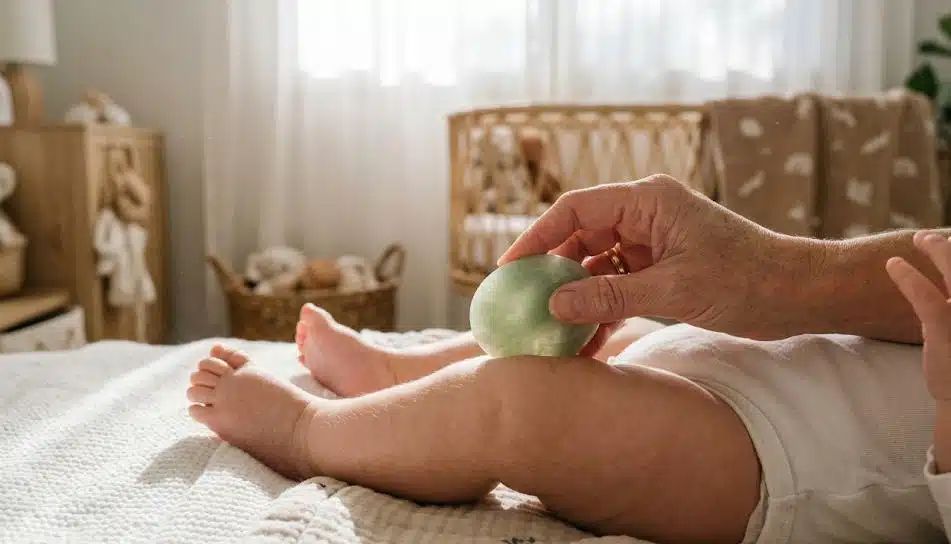
If you are searching for answers about gua sha for infant care, here is the most important fact you need to know before reading any further: the global mainstream medical community does not currently recommend traditional gua sha for babies or toddlers. According to a 2020 systematic review published in PLOS ONE, while gua sha demonstrates measurable clinical effects in adult populations — including reduced neck pain and improved local circulation — there are zero large-scale randomized controlled trials examining its safety or efficacy in children under the age of five. That absence of evidence is not a minor footnote; it is the central reason pediatricians worldwide urge caution. Yet in millions of Asian households, gua sha for baby care has been practiced for generations, and the conversation between tradition and modern medicine is far from settled. This article gives you both sides — clearly, with the data you need to make an informed decision. What Global Medical Institutions Currently Say About Gua Sha for Infant Skin The American Academy of Pediatrics (AAP) consistently upholds a clear standard: any physical therapy applied to infants must demonstrate that benefit outweighs risk, supported by peer-reviewed clinical evidence. Currently, gua sha for infant treatment does not meet that standard. Infant skin is structurally distinct from adult skin — it is approximately 20–30% thinner, with capillaries sitting closer to the surface and connective tissue that has not yet fully matured. This means that even moderate scraping pressure — pressure an adult would barely register — can produce bruising, capillary rupture, and epidermal damage in a baby. The physical vulnerability of infant skin is not a cultural judgment; it is a documented anatomical fact that directly shapes how pediatric dermatologists approach any friction-based therapy applied to young children. Beyond skin structure, there is a second layer of risk that is equally important: infants cannot self-report pain. A two-month-old cannot tell you “this hurts” or “that pressure is too much.” This communication barrier makes it structurally impossible to maintain the real-time feedback loop that any responsible manual therapy depends on. Even a practitioner working with the most careful intentions operates without the safety net that verbal feedback provides — and that gap in safety infrastructure is a permanent feature of applying any manual technique to a pre-verbal child. Why Traditional Practice and Modern Medicine Don’t Always Agree Traditional Chinese Medicine (TCM) frameworks approach health through a lens that prioritizes qi circulation, wind-cold pathogen removal, and meridian balance — concepts that have guided family healthcare across East Asia for over two thousand years. Within these frameworks, a gentle form of gua sha for baby — using soft tools, minimal pressure, and very short sessions — has long been considered a valid first response to minor childhood ailments such as early-stage colds, fussiness, or disrupted sleep. This is not ignorance; it is a different model of how the body functions and recovers. Respecting that distinction is necessary for any honest evaluation of the evidence. The tension between these two systems is real and deserves to be treated directly. Modern medicine demands randomized controlled trials and quantifiable, reproducible outcomes. Traditional systems rely on generational observation and case-based knowledge accumulated across centuries. Neither approach is inherently superior in all contexts, but when the subject is an infant who cannot advocate for themselves, the burden of proof falls heavily on demonstrating that the intervention is safe. That proof, for gua sha for infant use, does not yet exist in the form that modern pediatric medicine requires — and that is the central fact this article is built around. What Is Baby Gua Sha, and How Is It Different from Adult Practice? Understanding the difference between adult gua sha and gua sha for infant application is essential before evaluating any risk accurately. Many parents who encounter warnings about gua sha picture the aggressive scraping that leaves dark red marks across an adult’s upper back — and that image, while accurate for certain adult applications, is not what traditional infant practitioners describe or perform. The Foundational Technique — Understanding Adult Gua Sha First In adult practice, how to use gua sha involves pressing a smooth-edged tool — traditionally made from jade, buffalo horn, or rose quartz — firmly against oiled skin and drawing it in repeated strokes along muscle groups or meridian lines. The deliberate goal is to produce sha: reddish or purplish petechiae that appear as superficial capillaries respond to controlled friction. According to research published in the Journal of Traditional and Complementary Medicine, this process stimulates local microcirculation, reduces myofascial tension, and triggers an anti-inflammatory response mediated by upregulation of heme oxygenase-1 (HO-1) — a protein with measurable tissue-protective properties. In healthy adults with no contraindications, this technique has produced documented benefits for musculoskeletal pain, chronic neck stiffness, and fatigue-related conditions. The material quality of the gua sha tool is a significant variable at this stage, and not only for performance reasons. For context on gemstone quality standards relevant to jade and crystal tools, the Gemological Institute of America (GIA) publishes internationally recognized grading criteria that distinguish genuine nephrite jade, jadeite, and rose quartz from imitation materials — a distinction that directly affects tool hardness, edge smoothness, and surface friction coefficient, all of which carry safety implications for skin contact. Choosing a tool verified against these standards means you can predict its behavior against skin with much greater confidence than with ungraded alternatives. How Gua Sha for Infant Differs — Lighter, Shorter, and Fundamentally Different in Goal Gua sha for infant application, as described within traditional practice, is not a scaled-down version of the adult technique. It is a categorically different approach in both mechanism and intent. The pressure used is described as genuinely feather-light — comparable to the gentle strokes of structured infant massage rather than the firm, deliberate scraping that defines adult gua sha. Sessions are kept to one to two minutes at most. The tool moves slowly and is never dragged with repeated, accumulating force. Critically, the
If you are searching for answers about gua sha for infant care, here is the most important fact you need to know before reading any further: the global mainstream medical community does not currently recommend traditional gua sha for babies or toddlers. According to a 2020 systematic review published in PLOS ONE, while gua sha demonstrates measurable clinical effects in adult populations — including reduced neck pain and improved local circulation — there are zero large-scale randomized controlled trials examining its safety or efficacy in children under the age of five. That absence of evidence is not a minor footnote; it is the central reason pediatricians worldwide urge caution. Yet in millions of Asian households, gua sha for baby care has been practiced for generations, and the conversation between tradition and modern medicine is far from settled. This article gives you both sides — clearly, with the data you need to make an informed decision. What Global Medical Institutions Currently Say About Gua Sha for Infant Skin The American Academy of Pediatrics (AAP) consistently upholds a clear standard: any physical therapy applied to infants must demonstrate that benefit outweighs risk, supported by peer-reviewed clinical evidence. Currently, gua sha for infant treatment does not meet that standard. Infant skin is structurally distinct from adult skin — it is approximately 20–30% thinner, with capillaries sitting closer to the surface and connective tissue that has not yet fully matured. This means that even moderate scraping pressure — pressure an adult would barely register — can produce bruising, capillary rupture, and epidermal damage in a baby. The physical vulnerability of infant skin is not a cultural judgment; it is a documented anatomical fact that directly shapes how pediatric dermatologists approach any friction-based therapy applied to young children. Beyond skin structure, there is a second layer of risk that is equally important: infants cannot self-report pain. A two-month-old cannot tell you “this hurts” or “that pressure is too much.” This communication barrier makes it structurally impossible to maintain the real-time feedback loop that any responsible manual therapy depends on. Even a practitioner working with the most careful intentions operates without the safety net that verbal feedback provides — and that gap in safety infrastructure is a permanent feature of applying any manual technique to a pre-verbal child. Why Traditional Practice and Modern Medicine Don’t Always Agree Traditional Chinese Medicine (TCM) frameworks approach health through a lens that prioritizes qi circulation, wind-cold pathogen removal, and meridian balance — concepts that have guided family healthcare across East Asia for over two thousand years. Within these frameworks, a gentle form of gua sha for baby — using soft tools, minimal pressure, and very short sessions — has long been considered a valid first response to minor childhood ailments such as early-stage colds, fussiness, or disrupted sleep. This is not ignorance; it is a different model of how the body functions and recovers. Respecting that distinction is necessary for any honest evaluation of the evidence. The tension between these two systems is real and deserves to be treated directly. Modern medicine demands randomized controlled trials and quantifiable, reproducible outcomes. Traditional systems rely on generational observation and case-based knowledge accumulated across centuries. Neither approach is inherently superior in all contexts, but when the subject is an infant who cannot advocate for themselves, the burden of proof falls heavily on demonstrating that the intervention is safe. That proof, for gua sha for infant use, does not yet exist in the form that modern pediatric medicine requires — and that is the central fact this article is built around. What Is Baby Gua Sha, and How Is It Different from Adult Practice? Understanding the difference between adult gua sha and gua sha for infant application is essential before evaluating any risk accurately. Many parents who encounter warnings about gua sha picture the aggressive scraping that leaves dark red marks across an adult’s upper back — and that image, while accurate for certain adult applications, is not what traditional infant practitioners describe or perform. The Foundational Technique — Understanding Adult Gua Sha First In adult practice, how to use gua sha involves pressing a smooth-edged tool — traditionally made from jade, buffalo horn, or rose quartz — firmly against oiled skin and drawing it in repeated strokes along muscle groups or meridian lines. The deliberate goal is to produce sha: reddish or purplish petechiae that appear as superficial capillaries respond to controlled friction. According to research published in the Journal of Traditional and Complementary Medicine, this process stimulates local microcirculation, reduces myofascial tension, and triggers an anti-inflammatory response mediated by upregulation of heme oxygenase-1 (HO-1) — a protein with measurable tissue-protective properties. In healthy adults with no contraindications, this technique has produced documented benefits for musculoskeletal pain, chronic neck stiffness, and fatigue-related conditions. The material quality of the gua sha tool is a significant variable at this stage, and not only for performance reasons. For context on gemstone quality standards relevant to jade and crystal tools, the Gemological Institute of America (GIA) publishes internationally recognized grading criteria that distinguish genuine nephrite jade, jadeite, and rose quartz from imitation materials — a distinction that directly affects tool hardness, edge smoothness, and surface friction coefficient, all of which carry safety implications for skin contact. Choosing a tool verified against these standards means you can predict its behavior against skin with much greater confidence than with ungraded alternatives. How Gua Sha for Infant Differs — Lighter, Shorter, and Fundamentally Different in Goal Gua sha for infant application, as described within traditional practice, is not a scaled-down version of the adult technique. It is a categorically different approach in both mechanism and intent. The pressure used is described as genuinely feather-light — comparable to the gentle strokes of structured infant massage rather than the firm, deliberate scraping that defines adult gua sha. Sessions are kept to one to two minutes at most. The tool moves slowly and is never dragged with repeated, accumulating force. Critically, the