If you are searching for answers about gua sha for infant care, here is the most important fact you need to know before reading any further: the global mainstream medical community does not currently recommend traditional gua sha for babies or toddlers. According to a 2020 systematic review published in PLOS ONE, while gua sha demonstrates measurable clinical effects in adult populations — including reduced neck pain and improved local circulation — there are zero large-scale randomized controlled trials examining its safety or efficacy in children under the age of five. That absence of evidence is not a minor footnote; it is the central reason pediatricians worldwide urge caution. Yet in millions of Asian households, gua sha for baby care has been practiced for generations, and the conversation between tradition and modern medicine is far from settled. This article gives you both sides — clearly, with the data you need to make an informed decision.
- What Global Medical Institutions Currently Say About Gua Sha for Infant Skin
- What Is Baby Gua Sha, and How Is It Different from Adult Practice?
- Claimed Gua Sha Benefits for Babies — What Supporters Report and What the Evidence Shows
- Gua Sha Side Effects in Babies — A Severity-Ranked Risk Analysis
- What Does Current Research Say About Gua Sha for Child Health?
- If You Still Choose to Try — A Safety Framework for Gua Sha for Infant Use
- Legal and Ethical Dimensions of Gua Sha for Child Treatment
- Final Recommendations — What Every Parent Should Know Before Deciding
- Infant Gua Sha FAQS
What Global Medical Institutions Currently Say About Gua Sha for Infant Skin
The American Academy of Pediatrics (AAP) consistently upholds a clear standard: any physical therapy applied to infants must demonstrate that benefit outweighs risk, supported by peer-reviewed clinical evidence. Currently, gua sha for infant treatment does not meet that standard. Infant skin is structurally distinct from adult skin — it is approximately 20–30% thinner, with capillaries sitting closer to the surface and connective tissue that has not yet fully matured. This means that even moderate scraping pressure — pressure an adult would barely register — can produce bruising, capillary rupture, and epidermal damage in a baby. The physical vulnerability of infant skin is not a cultural judgment; it is a documented anatomical fact that directly shapes how pediatric dermatologists approach any friction-based therapy applied to young children.
Beyond skin structure, there is a second layer of risk that is equally important: infants cannot self-report pain. A two-month-old cannot tell you “this hurts” or “that pressure is too much.” This communication barrier makes it structurally impossible to maintain the real-time feedback loop that any responsible manual therapy depends on. Even a practitioner working with the most careful intentions operates without the safety net that verbal feedback provides — and that gap in safety infrastructure is a permanent feature of applying any manual technique to a pre-verbal child.
Why Traditional Practice and Modern Medicine Don’t Always Agree
Traditional Chinese Medicine (TCM) frameworks approach health through a lens that prioritizes qi circulation, wind-cold pathogen removal, and meridian balance — concepts that have guided family healthcare across East Asia for over two thousand years. Within these frameworks, a gentle form of gua sha for baby — using soft tools, minimal pressure, and very short sessions — has long been considered a valid first response to minor childhood ailments such as early-stage colds, fussiness, or disrupted sleep. This is not ignorance; it is a different model of how the body functions and recovers. Respecting that distinction is necessary for any honest evaluation of the evidence.
The tension between these two systems is real and deserves to be treated directly. Modern medicine demands randomized controlled trials and quantifiable, reproducible outcomes. Traditional systems rely on generational observation and case-based knowledge accumulated across centuries. Neither approach is inherently superior in all contexts, but when the subject is an infant who cannot advocate for themselves, the burden of proof falls heavily on demonstrating that the intervention is safe. That proof, for gua sha for infant use, does not yet exist in the form that modern pediatric medicine requires — and that is the central fact this article is built around.
What Is Baby Gua Sha, and How Is It Different from Adult Practice?
Understanding the difference between adult gua sha and gua sha for infant application is essential before evaluating any risk accurately. Many parents who encounter warnings about gua sha picture the aggressive scraping that leaves dark red marks across an adult’s upper back — and that image, while accurate for certain adult applications, is not what traditional infant practitioners describe or perform.
The Foundational Technique — Understanding Adult Gua Sha First
In adult practice, how to use gua sha involves pressing a smooth-edged tool — traditionally made from jade, buffalo horn, or rose quartz — firmly against oiled skin and drawing it in repeated strokes along muscle groups or meridian lines. The deliberate goal is to produce sha: reddish or purplish petechiae that appear as superficial capillaries respond to controlled friction. According to research published in the Journal of Traditional and Complementary Medicine, this process stimulates local microcirculation, reduces myofascial tension, and triggers an anti-inflammatory response mediated by upregulation of heme oxygenase-1 (HO-1) — a protein with measurable tissue-protective properties. In healthy adults with no contraindications, this technique has produced documented benefits for musculoskeletal pain, chronic neck stiffness, and fatigue-related conditions.
The material quality of the gua sha tool is a significant variable at this stage, and not only for performance reasons. For context on gemstone quality standards relevant to jade and crystal tools, the Gemological Institute of America (GIA) publishes internationally recognized grading criteria that distinguish genuine nephrite jade, jadeite, and rose quartz from imitation materials — a distinction that directly affects tool hardness, edge smoothness, and surface friction coefficient, all of which carry safety implications for skin contact. Choosing a tool verified against these standards means you can predict its behavior against skin with much greater confidence than with ungraded alternatives.
How Gua Sha for Infant Differs — Lighter, Shorter, and Fundamentally Different in Goal
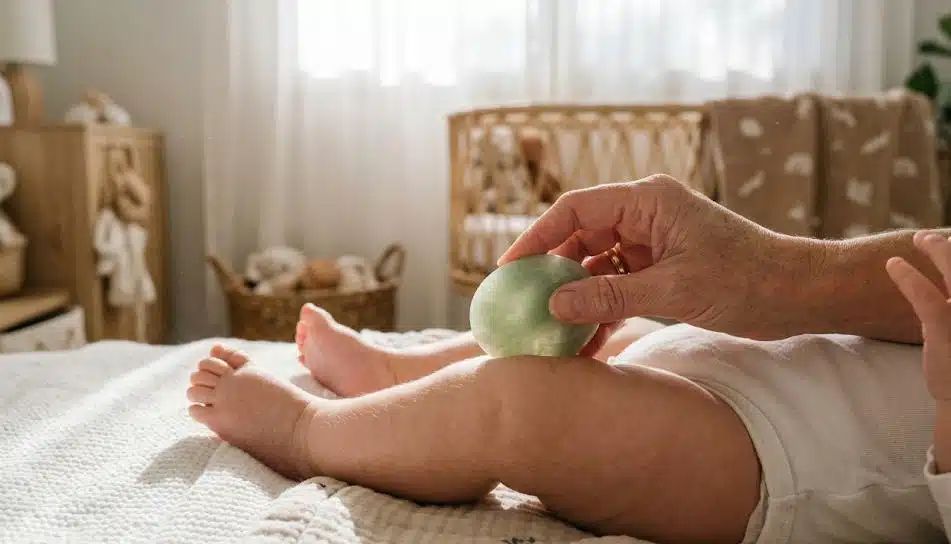
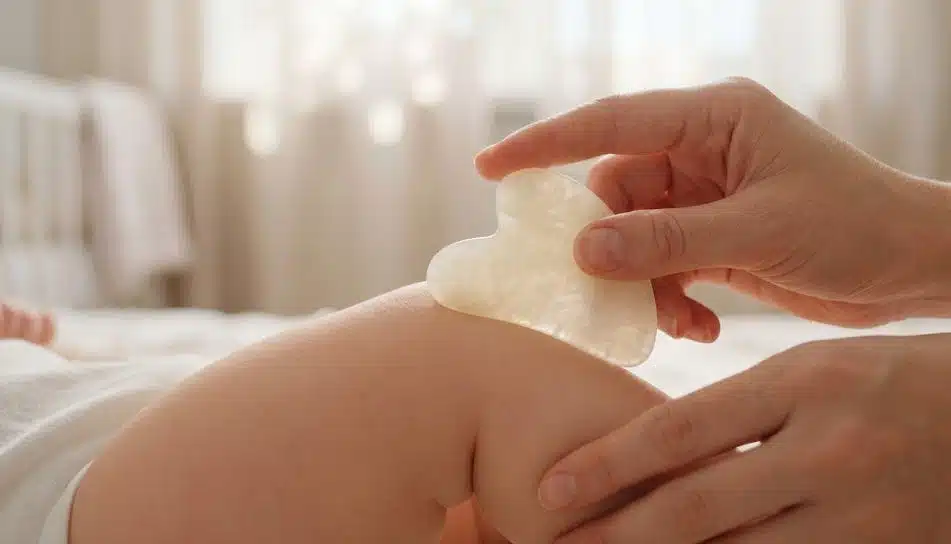
Gua sha for infant application, as described within traditional practice, is not a scaled-down version of the adult technique. It is a categorically different approach in both mechanism and intent. The pressure used is described as genuinely feather-light — comparable to the gentle strokes of structured infant massage rather than the firm, deliberate scraping that defines adult gua sha. Sessions are kept to one to two minutes at most. The tool moves slowly and is never dragged with repeated, accumulating force. Critically, the explicit goal is not to produce sha (petechiae) at all; any redness appearing on a baby’s skin during the session is considered a signal to stop immediately, not an indication of therapeutic success.
Functionally, the practice is closer to a structured form of therapeutic touch than to the friction-based stimulation that characterizes adult gua sha. This distinction matters because parents evaluating the risk of gua sha for baby are often comparing their mental image of adult gua sha — vivid red marks, firm pressure, extended sessions — to a practice that looks very different in the infant context. Understanding this does not make gua sha for infant automatically safe, but it does mean that the risk evaluation needs to be anchored to the actual technique being used, not to a different technique that shares the same name.
Claimed Gua Sha Benefits for Babies — What Supporters Report and What the Evidence Shows
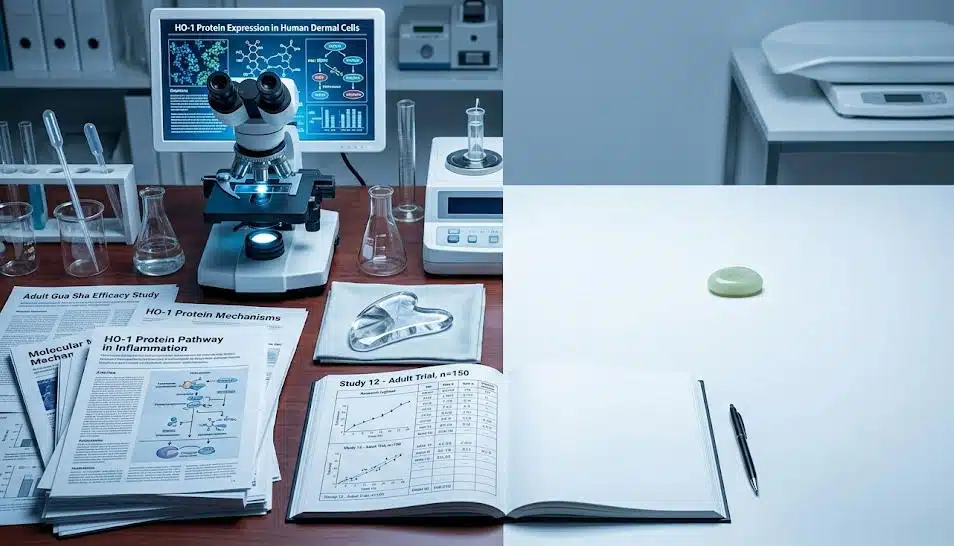
Parents who practice gua sha for infant care are not acting without reason. Within communities where this approach has been used for generations, specific observations have been reported consistently enough to warrant serious examination — even while acknowledging the near-total absence of clinical trial confirmation.
Relieving Wind-Chill and Cold Discomfort — A Core Claim in Gua Sha for Infant Care
The most frequently cited reason parents turn to gua sha for child treatment is relief of what TCM terms “wind-cold invasion” — the early stage of a cold characterized by chills, nasal congestion, mild cough, and general irritability. Supporters report that light stroking along the upper back and between the shoulder blades helps the child release the pathogen through gentle perspiration, easing congestion and reducing fussiness within hours. These accounts appear consistently across Chinese, Vietnamese, Malaysian, and Chinese diaspora communities in North America and Europe — a geographic spread that suggests the practice is grounded in a shared observational tradition rather than isolated anecdote.
Precision matters here, however. There are no peer-reviewed randomized controlled trials — not one — that have demonstrated these specific effects in infants using controlled methodology. Parental observation, however consistent and widespread, does not constitute clinical proof. What it does constitute is a coherent set of hypotheses that deserve research investment, particularly as interest in integrative pediatric medicine grows within academic institutions. Until that evidence exists, the reported gua sha benefits in this category remain plausible but unverified — a distinction that every parent deserves to understand clearly before making decisions about their child.
Promoting Relaxation and Sleep — Is It Gua Sha, or Is It the Touch Itself?
A second cluster of reported gua sha benefits involves sleep quality and emotional regulation in infants. Parents consistently report that after a gentle session, babies sleep more deeply, appear calmer, and show warmer extremities. These observations are compelling at the individual level — but they point toward a mechanism that may have little to do with gua sha specifically. Research in infant developmental psychology consistently demonstrates that structured, gentle touch exerts powerful regulatory effects on the autonomic nervous system. A 2019 study in Frontiers in Psychology found that infant massage — defined as rhythmic, gentle, sustained skin contact — significantly reduced salivary cortisol levels and improved sleep duration in infants aged two to twelve months.
The honest interpretation is that the relaxation effects attributed to gua sha for baby may be primarily driven by tactile contact and rhythmic movement, rather than by the gua sha mechanism itself. This does not invalidate the practical benefit parents experience. What it does suggest is that comparable results may be achievable through standard infant massage, which carries a substantially lower risk profile and carries active support from pediatric medical bodies. That means you may be able to achieve the same outcome for your baby through a technique that your pediatrician can actively guide and support.
Reducing Medication Dependence — A Global Parental Concern That Drives Gua Sha for Infant Interest
The third driver behind interest in gua sha for infant care is a concern that crosses cultural borders: anxiety about medication use in very young children. A 2022 survey by the National Center for Complementary and Integrative Health (NCCIH) found that 34% of parents who used complementary therapies for their children cited “concern about medication side effects” as the primary motivating factor. This reflects a legitimate area of scientific uncertainty — pediatric pharmacology is genuinely complex, and the long-term effects of repeated antibiotic or antipyretic exposure in very young children remain under active investigation.
Within this context, the appeal of gua sha for child care as a first-response tool for minor ailments makes intuitive sense. The desire to avoid reaching for medication at the first sign of a sniffle, and to use something grounded in cultural tradition instead, is not irrational — it reflects a coherent parenting philosophy. The question this article asks is whether gua sha for baby is the right instrument to fulfill that goal, or whether safer and better-evidenced alternatives can meet the same need with a lower risk profile.
Gua Sha Side Effects in Babies — A Severity-Ranked Risk Analysis
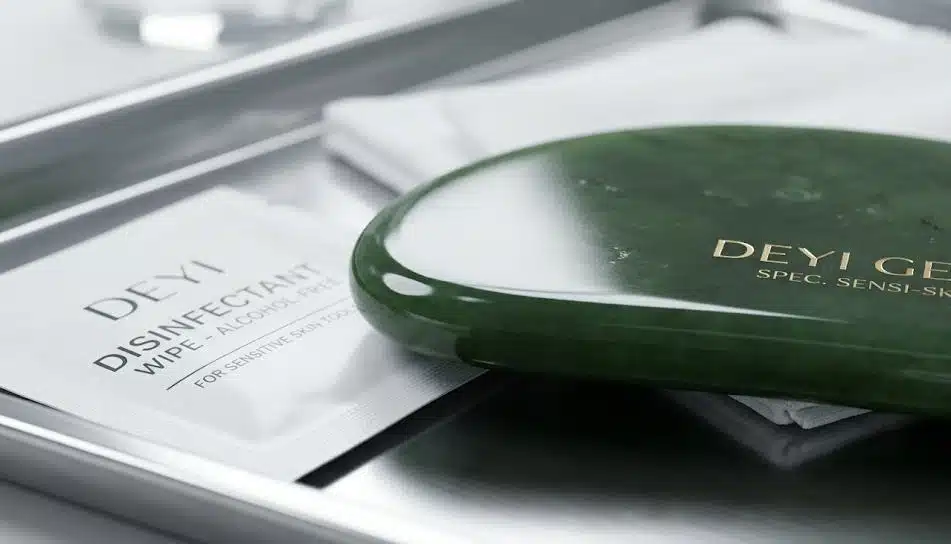
This chapter carries the most weight in this article. The risks below are ranked not by how frequently they occur, but by how severely they can affect your child — from the immediately visible to the potentially life-threatening. Every parent considering gua sha for infant use deserves to read all of them before making any decision.
Skin Damage in Gua Sha for Infant Use — Why Infant Skin Cannot Absorb Adult-Level Pressure
The most immediately visible gua sha side effects in infants are dermal: bruising, petechiae, capillary rupture, localized redness, and in cases of incorrect technique, epidermal abrasion. Infant skin begins life at approximately 60% of adult skin thickness and does not reach full structural maturity until around age two. The collagen cross-linking that gives adult skin its resilience and pressure tolerance is simply not present in the same density in a baby’s tissue. A stroking pressure that an adult registers as firm but comfortable can produce subcutaneous bruising in a six-month-old. Pediatric emergency departments in countries where traditional medicine is widely practiced have documented cases of infants presenting with unexplained bruising subsequently attributed to gua sha applied by family members with genuine care and good intent.
What makes this risk particularly difficult to manage in practice is that mild redness on an infant’s skin can be misread as an intended therapeutic response — leading a practitioner to continue or increase pressure when stopping is the correct action. You need to establish, before any session begins, that any color change on your baby’s skin is an unconditional signal to stop. There are no exceptions to that rule.
Infection Risk — A Hidden Gua Sha Side Effect Amplified by Infant Immune Immaturity
If a gua sha tool has not been properly sterilized between uses, or if skin integrity is compromised during the session, the potential for secondary infection becomes a serious risk that many parents do not anticipate. Infants’ immune systems are not fully functional until approximately 12–24 months of age, meaning their capacity to contain and resolve bacterial infections is significantly lower than in older children or adults. A small skin abrasion that an adult’s immune system resolves within 24–48 hours can become an entry point for bacterial colonization in a baby. In children with eczema — a condition affecting approximately 15–20% of infants in developed countries according to the American Academy of Dermatology — gua sha for baby friction can disrupt an already-compromised skin barrier, triggering flare-ups or bacterial superinfections that require medical treatment. This means that the risk profile for infants with skin conditions is not just elevated — it is categorically different.
The Most Serious Risk of Gua Sha for Infant Care — Delayed Medical Treatment
This is the risk that no honest discussion of gua sha for baby can afford to minimize, because it is the one most likely to cause irreversible harm. When an infant is febrile, breathing rapidly, crying inconsolably, or showing signs of neurological change, those symptoms require immediate medical evaluation — not home treatment of any kind. The danger here is not the gua sha itself; it is the delay in care that a gua sha session can create. A parent who believes that a session will “clear the pathogen” and waits an hour before calling a doctor may inadvertently allow bacterial pneumonia, acute otitis media, febrile convulsion, severe dehydration, or a viral infection to progress without treatment.
A 2018 analysis published in Pediatrics examining complementary medicine use in children with serious illness found that delays in seeking conventional treatment were associated with a 2.4-fold increase in hospitalization duration and a measurably higher rate of preventable complications. The gua sha practice itself was not the cause of harm in those cases — the delay was. That finding means the single most dangerous thing about gua sha for infant care is not the tool or the technique; it is the possibility that it replaces a phone call to your pediatrician at exactly the moment that call is most needed.
The Feedback Problem — Babies Cannot Tell You When Gua Sha Side Effects Are Occurring
Every responsible manual therapy — physiotherapy, therapeutic massage, chiropractic care — relies on real-time patient feedback to calibrate pressure and identify contraindications as they emerge. An infant eliminates this safety mechanism entirely. A baby who is crying during gua sha for infant application might be in pain, frightened by the novel sensation, cold from clothing removal, or simply overtired. There is no reliable way to distinguish between these possibilities. This is not a failure of parental attentiveness — it is a structural limitation that applies to any practitioner, however experienced, who applies manual therapy to a pre-verbal child. When the primary safety mechanism of a technique is unavailable, the entire risk calculus of that intervention changes fundamentally and must be reassessed accordingly.
What Does Current Research Say About Gua Sha for Child Health?
The research landscape around gua sha is considerably more developed than many people realize — but almost entirely within the adult domain. For gua sha for infant and pediatric populations, the evidence base is thin enough that it cannot currently support any clinical guidance, positive or negative.
The Evidence Base in Adult Gua Sha — Establishing What We Actually Know
Adult gua sha research has produced replicable and significant findings worth acknowledging. A landmark 2011 study by Arya Nielsen et al., published in Pain Medicine, found that a single gua sha session produced a significant upregulation of HO-1 — a protein with potent anti-inflammatory and cytoprotective properties — that persisted for five days post-treatment in adult subjects. A subsequent systematic review examining gua sha for chronic neck pain found moderate evidence of short-term pain reduction superior to heat therapy alone, a finding replicated across multiple independent research groups. These results matter because they establish that gua sha benefits in adults are not purely placebo-driven — there are identifiable physiological mechanisms operating in adult tissue. Deyi Gems, with over 12 years of manufacturing experience producing jade and crystal gua sha tools, works with these evidence parameters to ensure that tool design — edge radius, material hardness, surface texture — aligns with the specifications used in peer-reviewed adult studies, so that practitioners working in evidence-supported contexts use instruments that match the research baseline.
The Critical Research Gap in Gua Sha for Child and Infant Populations
For gua sha for child and infant populations, the contrast with the adult evidence base is stark. As of 2025, there are no published large-scale randomized controlled trials examining gua sha for infant safety or efficacy. There are no longitudinal safety studies tracking outcomes over months or years in pediatric populations. There are no international pediatric guidelines — not from the World Health Organization, not from the AAP, not from the Royal College of Paediatrics and Child Health — that endorse or provide protocols for gua sha for baby application. This absence of guidance is not an administrative oversight; it reflects the lack of qualifying evidence that would justify generating such guidelines in the first place. Research teams studying how to use gua sha in pediatric populations also face substantial ethical review barriers that further slow the generation of evidence. The result is a genuine knowledge gap — one that leaves parents without the evidence-based guidance they deserve, and without the safety data that would allow practitioners to define appropriate protocols with confidence.
If You Still Choose to Try — A Safety Framework for Gua Sha for Infant Use
Given the risk profile documented in the preceding chapters, the responsible position is clear: gua sha for infant use should not be practiced without guidance from a qualified healthcare professional familiar with your child’s individual health history. Recognizing that some parents will make their own decisions regardless, this chapter provides the minimum safety framework that reduces harm if you proceed.
Absolute Contraindications — When Gua Sha for Infant Must Never Be Attempted
There are conditions under which no form of gua sha — however gentle — should ever be applied to an infant, and these conditions are non-negotiable. If your baby has a fever above 38.5°C (101.3°F), gua sha for baby is categorically inappropriate — seek medical attention immediately. If your child is crying inconsolably and you cannot identify a clear, benign cause, treat this as a potential medical emergency. Any visible skin damage, rash, eczema flare, or open wound on the area you intend to treat is an absolute contraindication. Rapid or labored breathing, unusual pallor, limpness, or any sign of altered responsiveness requires emergency medical evaluation, not a gua sha session. What you are watching for, in each of these cases, is a signal that your baby’s body is under a stress that manual therapy cannot address and may worsen. Recognizing these signals accurately is more important than any aspect of how to use gua sha technique.
Six Minimum Safety Rules for Gua Sha for Infant Practice
If your child presents none of the contraindications listed above, and you have consulted a qualified healthcare provider who knows your child’s health history, the following framework represents the minimum acceptable safety standard for gua sha for infant application. Limit the session to one to two minutes maximum — there is no evidence that longer sessions produce additional gua sha benefits in infants, and the risk profile increases with every additional minute of friction. Apply pressure that you would be comfortable applying to your own closed eyelid — genuinely feather-light, not what most adults would call “gentle.” Never apply any gua sha for child technique to the front of the neck, directly over the spinal column, or over any bony prominence. Ensure your tool is cleaned with a medical-grade disinfectant solution before every single use — never reuse without sterilizing. Use a tool that is appropriately sized for infant application; a full-sized adult gua sha board applies distributed force over a surface area that is not designed for an infant’s body. Stop immediately at the first sign of any skin color change, or any change in your child’s behavior, crying pattern, or breathing.
How to Choose the Right Gua Sha Tool for a Baby’s Sensitive Skin
Tool selection is not an aesthetic decision when gua sha for infant care is being considered — it is a primary safety variable. The material, edge radius, and surface finish of the tool directly determine how much mechanical force is transferred to the skin per unit area. Genuine nephrite jade and rose quartz, assessed against grading standards published by the International Gem Society (IGS) and the Gemological Institute of America (GIA), offer a naturally smooth surface, predictable hardness ratings, and a thermal conductivity profile that synthetic or imitation materials cannot reliably replicate. The edge geometry of a properly manufactured jade tool — with a radius that distributes pressure rather than concentrating it — is a measurable safety specification, not a marketing claim. Deyi Gems manufactures gua sha tools with surface polish and edge specifications specifically calibrated for sensitive-skin applications, drawing on 12 years of production experience across jade, rose quartz, and crystal materials. Understanding material verification standards means you can select an instrument whose physical properties genuinely reduce, rather than compound, the risk to your child’s skin — and that distinction matters far more than price or appearance.
Legal and Ethical Dimensions of Gua Sha for Child Treatment
The legal landscape around gua sha for infant practice is not uniform globally. Parents in different countries face substantially different frameworks governing who is permitted to perform such treatments on children, and what consequences may follow if harm occurs — even unintentionally.
In Asian Countries — Cultural Acceptance and Regulatory Ambiguity in Gua Sha for Child Practice
In China, Taiwan, Vietnam, and Malaysia, traditional medicine practices including gua sha for child treatment occupy a complex regulatory space where the boundaries between home health care, professional physiotherapy, and regulated medical practice are not always clearly defined. Traditional medicine clinics offering gua sha for baby services may operate under national TCM licensing frameworks, under general wellness licensing, or informally as part of family care traditions, depending on jurisdiction and enforcement environment. The social acceptance of these practices is high in these communities, and how to use gua sha on children is frequently transmitted as intergenerational family knowledge rather than as a regulated medical procedure. This cultural embeddedness is real and should be respected — but it does not eliminate liability exposure when gua sha side effects result in demonstrable harm to a child, and parents should understand that operating within a culturally accepted practice does not automatically constitute legal protection.
In the US, UK, and Europe — Child Protection Laws You Must Understand Before Using Gua Sha for Child Techniques
In the United States, the United Kingdom, the European Union, and Australia, applying any physical treatment to a child that carries a documented risk of harm can intersect with child welfare legislation in ways that parents from traditional medicine backgrounds may not anticipate. Pediatric physical therapies performed by practitioners in these jurisdictions typically require professional licensure, documented informed consent, and strict adherence to scope-of-practice regulations established by relevant health authorities. Gua sha side effects such as bruising, when observed on a child by a school nurse, childcare provider, or physician, may trigger mandatory reporting obligations under child protection statutes — regardless of parental intent or the cultural context of the practice. This has occurred in documented cases in the United States, Canada, and the United Kingdom, creating significant legal and social consequences for families practicing traditional care in good faith. You need to understand that gua sha for child care in these legal environments carries dimensions that extend well beyond the question of physical safety — and that this is not a reason to feel criminalized, but a reality to navigate with full awareness before you proceed.
Final Recommendations — What Every Parent Should Know Before Deciding
The evidence, examined honestly, supports a clear position: gua sha for infant use is not recommended by mainstream pediatric medicine, and the absence of clinical evidence means the risk-benefit calculation cannot currently be resolved in favor of the practice under most circumstances. This is not a dismissal of traditional medicine or the cultural wisdom that has sustained these practices across generations. It is a recognition that infants occupy a unique category — physiologically fragile, pre-verbal, and legally protected — that demands a higher standard of demonstrated safety before any non-standard intervention is applied.
If you are a parent who has used gua sha for baby care and observed what you believe to be positive outcomes, those observations are real and have value. The research community studying integrative pediatric medicine needs exactly that kind of documented parental observation to build the evidence base that could one day provide clearer guidance. But an observed benefit in your individual case is not a population-level safety guarantee — and it is not sufficient assurance for your child on any specific occasion, particularly when their health status changes.
Your first action, before trying any complementary therapy on an infant, should be a direct conversation with your pediatrician. Describe the technique you are considering, the specific symptoms you are hoping to address, and ask for an evidence-based assessment of your child’s individual health context. That conversation costs nothing and provides the one thing that no article — including this one — can provide: professional evaluation of your specific child’s specific situation. Deyi Gems manufactures jade and crystal gua sha tools engineered to meet verifiable material safety standards for the adult applications where clinical evidence supports their use. Our position on gua sha for infant use is consistent with the evidence: the tools exist for adults, the research does not yet exist for infants, and your child’s safety is not a variable to optimize around. Make the call to your pediatrician first.
Infant Gua Sha FAQS
1. Is Gua Sha Recommended for Infants and Young Children?
Generally speaking, it is not recommended. Because infants and young children are not fully developed, they are more prone to adverse reactions to gua sha, and their symptoms are more severe. Furthermore, their recovery after gua sha is not as good as that of adults. Therefore, considering all the risks, gua sha is not suitable for infants and young children.
2. So, Is It Absolutely Forbidden to Perform Gua Sha on Infants and Young Children?
It is not absolutely prohibited. Gua sha (scraping therapy) can be performed on infants and young children under the evaluation and guidance of professionals. However, it is absolutely forbidden for private individuals to perform it, as this could cause irreversible harm.