Where Does the Gua Sha Custom Mold Fee Actually Go? A Manufacturer’s Cost Breakdown
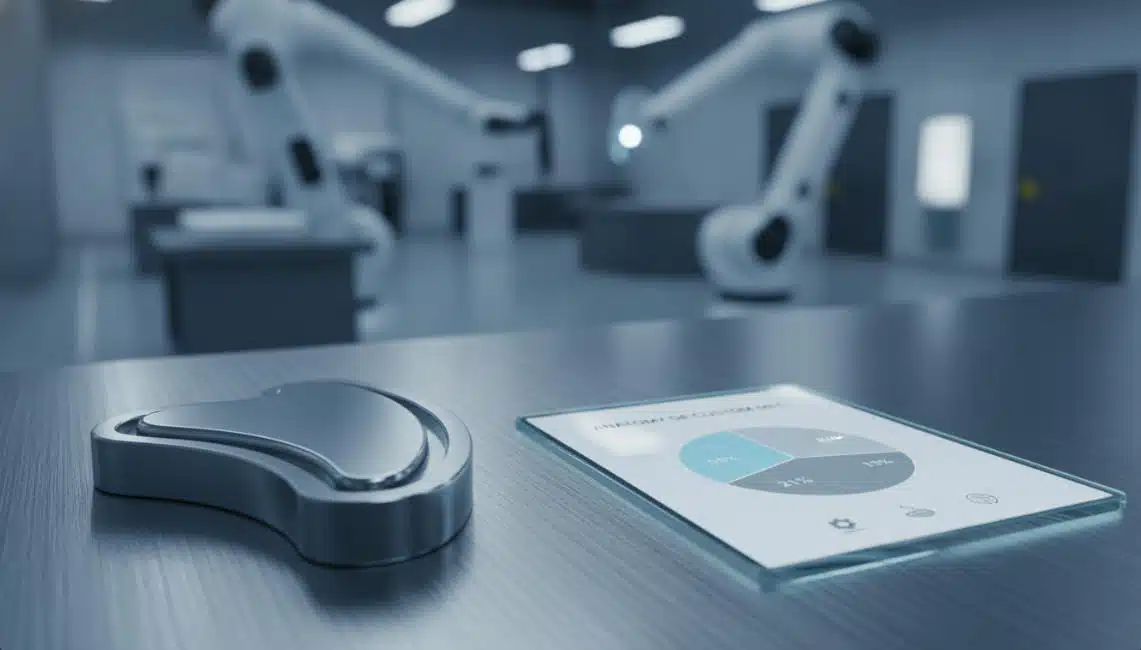
If you’ve ever requested a gua sha custom shape from a supplier and received a quote with a mold fee attached, your first instinct might be to negotiate it down — or skip it entirely. Before you do, here’s what you actually need to know: based on Deyi Gems’ internal data from 45 completed gua sha mold custom orders (tracked through June 2026), that fee breaks down into three distinct cost categories — shape tooling at 65.2%, engineering development at 21.5%, and sample materials at 13.3%. This isn’t a vague “setup charge.” Every dollar has a destination, and understanding where it goes is the fastest way to protect your sourcing budget and avoid costly surprises mid-project. Most buyers approach gua sha tool custom projects the same way: they send a reference image, ask for a price, and expect the factory to handle the rest. That process works fine — until the mold fee shows up and nobody can explain what it covers. The goal of this article is to change that. Whether you’re placing your first custom order or you’ve been sourcing from a gua sha factory for years, a transparent cost breakdown gives you the leverage to ask better questions, compare quotes fairly, and make smarter purchasing decisions. ⚠️ All internal data cited in this article is sourced from Deyi Gems’ production records and is intended for reference purposes only. It does not represent industry-wide averages or authoritative benchmarks. Why Two-Thirds of Your Gua Sha Custom Budget Goes to One Component When buyers first see a mold fee breakdown, the tooling line item is almost always the one that raises eyebrows. Sixty-five percent feels like a lot — until you understand what’s actually being built. In a gua sha custom production workflow, creating a new shape doesn’t mean a technician sketches an outline and starts grinding. It means engineering an entirely new mechanical component from scratch, one that will define every single unit produced in your bulk order. That component is called a profile grinding wheel, and it’s the reason tooling dominates the cost structure. The Profile Grinding Wheel: The Component Most Buyers Never Hear About A profile grinding wheel — known in Chinese manufacturing as a 定形砂轮 — is a precision-machined part that controls the movement trajectory of the grinding machine. Think of it as a physical template embedded into the production equipment itself. When the machine operates, it follows the exact path carved into that wheel, reproducing your gua sha custom shape consistently across hundreds or thousands of units. Without a correctly engineered profile wheel, the machine has no reference point. It cannot replicate a compound curve, a beveled edge, or a concave facial contour with any reliability. This is why you cannot simply send a photo to a gua sha factory and expect the tooling cost to be minimal. The factory isn’t just cutting stone — they’re building a dedicated mechanical guide that encodes your shape into the production line itself. Every curve, every edge angle, every thickness transition has to be translated from your design file into a physical grinding path. That engineering process, and the machined component it produces, is where your 65.2% goes. Manual Samples vs. Machine Production: A Trade-Off Worth Understanding Here’s a decision point that catches many buyers off guard. You do have an option to request a handmade sample first, before committing to the full profile wheel cost. A skilled artisan can approximate your gua sha tool custom design by hand, giving you a physical reference to evaluate the shape, proportions, and feel. This approach reduces your upfront investment, which makes sense if you’re still in early concept validation and not yet ready to commit to tooling. However, there’s a real risk embedded in that choice. A handmade sample and a machine-produced unit are not the same object. The handmade version is shaped by a craftsperson’s judgment — their hand pressure, their grinding angle, their interpretation of your reference. The machine-produced version is shaped by the profile wheel, which operates on fixed mechanical parameters. When you approve a handmade sample and then move to bulk production, the final product will almost certainly differ from what you approved. For buyers with strict consistency requirements — particularly those supplying professional clinics, spa brands, or retail chains — that gap can be a serious quality control problem. The better path for most gua sha manufacturer relationships at scale is to invest in the profile wheel upfront, validate the shape at the tooling stage, and enter bulk production with a mechanically verified reference. It costs more at the start, but it eliminates the consistency gap entirely. This means you can present a sample to your retail buyers or end customers with full confidence that every unit coming off the line will match it exactly. Why Modern Gua Sha Manufacturing Is No Longer a Handcraft Industry There’s a persistent assumption in the market that gua sha tools are artisanal products — shaped by hand, finished by eye, and inherently variable from piece to piece. That image made sense twenty years ago. It does not reflect how a functioning gua sha factory operates in 2025. The shift toward CNC-assisted grinding, automated edge finishing, and precision tooling wasn’t driven by a desire to industrialize a traditional craft. It was driven by demand — specifically, by buyers who needed 5,000 units to look identical for a product launch, or 10,000 units to pass a retail chain’s incoming quality inspection. Pure handcraft production introduces variability at every stage: grinding pressure, finishing time, individual artisan skill level. At small volumes, that variability is manageable. At the order sizes that make a gua sha custom project commercially viable for most brands, it becomes a liability. CNC-guided production with proper tooling removes the human variable from the shaping process, while still leaving room for skilled hand finishing at the polishing stage. The result is a product that meets modern retail consistency standards without abandoning the material quality that makes natural stone
Where Does the Gua Sha Custom Mold Fee Actually Go? A Manufacturer’s Cost Breakdown Read More »
If you’ve ever requested a gua sha custom shape from a supplier and received a quote with a mold fee attached, your first instinct might be to negotiate it down — or skip it entirely. Before you do, here’s what you actually need to know: based on Deyi Gems’ internal data from 45 completed gua sha mold custom orders (tracked through June 2026), that fee breaks down into three distinct cost categories — shape tooling at 65.2%, engineering development at 21.5%, and sample materials at 13.3%. This isn’t a vague “setup charge.” Every dollar has a destination, and understanding where it goes is the fastest way to protect your sourcing budget and avoid costly surprises mid-project. Most buyers approach gua sha tool custom projects the same way: they send a reference image, ask for a price, and expect the factory to handle the rest. That process works fine — until the mold fee shows up and nobody can explain what it covers. The goal of this article is to change that. Whether you’re placing your first custom order or you’ve been sourcing from a gua sha factory for years, a transparent cost breakdown gives you the leverage to ask better questions, compare quotes fairly, and make smarter purchasing decisions. ⚠️ All internal data cited in this article is sourced from Deyi Gems’ production records and is intended for reference purposes only. It does not represent industry-wide averages or authoritative benchmarks. Why Two-Thirds of Your Gua Sha Custom Budget Goes to One Component When buyers first see a mold fee breakdown, the tooling line item is almost always the one that raises eyebrows. Sixty-five percent feels like a lot — until you understand what’s actually being built. In a gua sha custom production workflow, creating a new shape doesn’t mean a technician sketches an outline and starts grinding. It means engineering an entirely new mechanical component from scratch, one that will define every single unit produced in your bulk order. That component is called a profile grinding wheel, and it’s the reason tooling dominates the cost structure. The Profile Grinding Wheel: The Component Most Buyers Never Hear About A profile grinding wheel — known in Chinese manufacturing as a 定形砂轮 — is a precision-machined part that controls the movement trajectory of the grinding machine. Think of it as a physical template embedded into the production equipment itself. When the machine operates, it follows the exact path carved into that wheel, reproducing your gua sha custom shape consistently across hundreds or thousands of units. Without a correctly engineered profile wheel, the machine has no reference point. It cannot replicate a compound curve, a beveled edge, or a concave facial contour with any reliability. This is why you cannot simply send a photo to a gua sha factory and expect the tooling cost to be minimal. The factory isn’t just cutting stone — they’re building a dedicated mechanical guide that encodes your shape into the production line itself. Every curve, every edge angle, every thickness transition has to be translated from your design file into a physical grinding path. That engineering process, and the machined component it produces, is where your 65.2% goes. Manual Samples vs. Machine Production: A Trade-Off Worth Understanding Here’s a decision point that catches many buyers off guard. You do have an option to request a handmade sample first, before committing to the full profile wheel cost. A skilled artisan can approximate your gua sha tool custom design by hand, giving you a physical reference to evaluate the shape, proportions, and feel. This approach reduces your upfront investment, which makes sense if you’re still in early concept validation and not yet ready to commit to tooling. However, there’s a real risk embedded in that choice. A handmade sample and a machine-produced unit are not the same object. The handmade version is shaped by a craftsperson’s judgment — their hand pressure, their grinding angle, their interpretation of your reference. The machine-produced version is shaped by the profile wheel, which operates on fixed mechanical parameters. When you approve a handmade sample and then move to bulk production, the final product will almost certainly differ from what you approved. For buyers with strict consistency requirements — particularly those supplying professional clinics, spa brands, or retail chains — that gap can be a serious quality control problem. The better path for most gua sha manufacturer relationships at scale is to invest in the profile wheel upfront, validate the shape at the tooling stage, and enter bulk production with a mechanically verified reference. It costs more at the start, but it eliminates the consistency gap entirely. This means you can present a sample to your retail buyers or end customers with full confidence that every unit coming off the line will match it exactly. Why Modern Gua Sha Manufacturing Is No Longer a Handcraft Industry There’s a persistent assumption in the market that gua sha tools are artisanal products — shaped by hand, finished by eye, and inherently variable from piece to piece. That image made sense twenty years ago. It does not reflect how a functioning gua sha factory operates in 2025. The shift toward CNC-assisted grinding, automated edge finishing, and precision tooling wasn’t driven by a desire to industrialize a traditional craft. It was driven by demand — specifically, by buyers who needed 5,000 units to look identical for a product launch, or 10,000 units to pass a retail chain’s incoming quality inspection. Pure handcraft production introduces variability at every stage: grinding pressure, finishing time, individual artisan skill level. At small volumes, that variability is manageable. At the order sizes that make a gua sha custom project commercially viable for most brands, it becomes a liability. CNC-guided production with proper tooling removes the human variable from the shaping process, while still leaving room for skilled hand finishing at the polishing stage. The result is a product that meets modern retail consistency standards without abandoning the material quality that makes natural stone