How a Serious Gua Sha Manufacturer Handles Quality Control: IQC, IPQC & OQC Explained
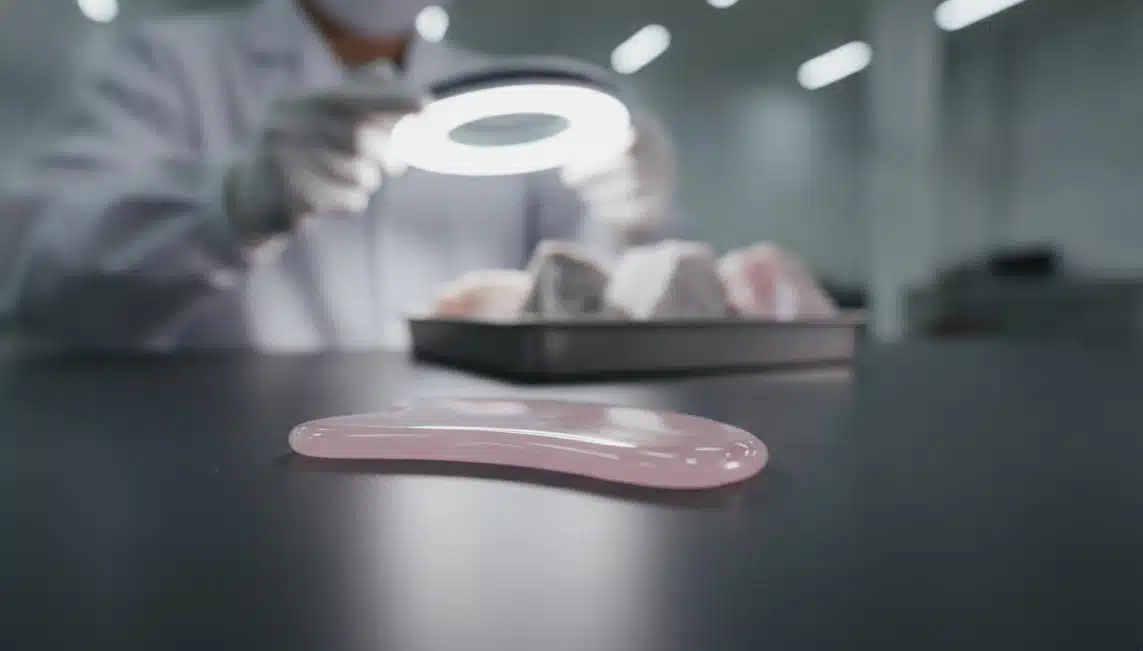
If you have ever placed a gua sha wholesale order only to receive chipped stones, inconsistent finishes, or cracked tools buried inside “compliant” packaging — you already understand why gua sha wholesale qc is not a checkbox exercise. It is the structural backbone that separates a reliable gua sha manufacturer from one that simply quotes low prices. Within the first production cycle alone, a factory running without a three-stage quality system can lose anywhere from 8% to 22% of its raw stone to preventable defects, according to manufacturing audit data routinely cited by industry consultants. That rejection rate does not stay inside the factory — it travels directly into your inventory, your return rate, and your customer reviews. This article walks you through the three-stage quality control framework that a mature gua sha factory applies across every wholesale batch: IQC (Incoming Quality Control), IPQC (In-Process Quality Control), and OQC (Outgoing Quality Control). You will find specific inspection checklists, AQL standards, packaging protocols, and the exact points in production where defects are caught — or, in weaker operations, missed entirely. Whether you are evaluating a new supplier, auditing a current one, or building sourcing criteria for the first time, understanding gua sha wholesale qc from the inside gives you the leverage to ask the right questions before a shipment goes wrong. Why QC Looks Different for Natural Stone Products? Natural stone behaves differently from injection-molded plastic or die-cast metal. When you are sourcing gua sha material — whether that is nephrite jade, rose quartz, bian stone, or obsidian — you are working with a substrate that formed under geological pressure over millions of years. That process creates internal fracture planes, mineral inclusions, and moisture variations that no two blocks share identically. The Gemological Institute of America (GIA) has documented extensively how structural integrity in natural stone varies at the micro-crystal level, which is precisely why surface-level inspection at the finished product stage catches far less than most buyers assume. A guasha tool manufacturer working with natural stone cannot rely solely on dimensional tolerances. Your quality system must start before a single stone enters the cutting line — and that is exactly where IQC begins. IQC: The First Gate Your Gua Sha Material Must Pass Before Production Begins IQC, or Incoming Quality Control, is the inspection process applied to every raw material, semi-finished component, and packaging supply before it enters the production floor. For a gua sha factory, this stage is not administrative formality. It is the most cost-efficient quality intervention available, because defects caught at the raw material stage cost roughly 1x to correct, while the same defect discovered after polishing and engraving costs anywhere from 6x to 14x more to address — and defects found only after shipment can cost 20x or more once you factor in returns, re-shipment, and lost account value. What a Rigorous Gua Sha Wholesale QC Incoming Inspection Actually Checks A structured IQC process for gua sha material covers seven distinct inspection dimensions. The first is crack and hidden fracture detection, performed under strong transmitted light using fiber-optic illumination. Natural jade and quartz frequently carry micro-fractures that are invisible under ambient workshop lighting but propagate under mechanical stress during cutting or grinding. The International Gem Society (IGS) notes that internal fractures in gemstone materials can run perpendicular to the visible surface, making them impossible to detect without transmitted light or polarized inspection. You need a gua sha manufacturer who runs this test on every incoming lot, not on a sampled subset. The second dimension is colorimetric verification. Natural stone batches from the same mine can vary in hue and saturation across individual pieces, and when those pieces end up in a finished product set, the visual inconsistency becomes the first thing your customer notices. A qualified guasha tool manufacturer uses a calibrated colorimeter — not just visual comparison — to verify that incoming stone falls within the agreed color tolerance band documented in the purchase specification. Additional IQC Parameters That Most Buyers Never Ask About Beyond cracks and color, a thorough IQC process checks hardness (using a Shore or Mohs-based instrument), moisture content (relevant particularly for porous stones like bian stone, where excess moisture causes surface bloom after polishing), dimensional conformity against drawing specifications (verified by digital caliper), and the print quality and dimensional accuracy of incoming packaging materials. This last point is frequently overlooked. Packaging defects discovered at the IQC stage — misaligned logos, incorrect color on boxes, undersized inserts — can delay an entire production batch by days if they are not caught until the OQC stage. When incoming material fails any parameter, a disciplined gua sha factory follows a documented rejection workflow: physical quarantine with yellow non-conformance tags, photographic documentation of the defect type and quantity, supplier notification with deviation report, and batch-level traceability logging that feeds into supplier performance scoring. This is not bureaucratic overhead. This means you receive consistent quality lot after lot because your supplier has an accountability loop that creates real consequences for recurring material failures. IPQC: How a Gua Sha Factory Catches Problems Before They Become Batch-Level Disasters Once raw material clears IQC, it moves into production — and that is where the largest volume of quality risk lives. For a gua sha manufacturer working with natural stone, the production sequence typically spans six to eight major operations: primary cutting, profile shaping, edge grinding, surface polishing, logo engraving, optional electroplating or inlaying, and pre-packaging. Each of these operations introduces its own failure mode, and none of them can be fully controlled by inspecting the finished product. IPQC, or In-Process Quality Control, is the monitoring system that runs alongside production in real time to intercept defects at the operation where they originate. The First-Piece Confirmation Protocol in Gua Sha Wholesale QC The most critical IPQC mechanism for gua sha wholesale qc compliance is the first-piece confirmation, also called first-article inspection. Before any production run begins on a new batch, a verified first sample is produced, measured against the
How a Serious Gua Sha Manufacturer Handles Quality Control: IQC, IPQC & OQC Explained Read More »
If you have ever placed a gua sha wholesale order only to receive chipped stones, inconsistent finishes, or cracked tools buried inside “compliant” packaging — you already understand why gua sha wholesale qc is not a checkbox exercise. It is the structural backbone that separates a reliable gua sha manufacturer from one that simply quotes low prices. Within the first production cycle alone, a factory running without a three-stage quality system can lose anywhere from 8% to 22% of its raw stone to preventable defects, according to manufacturing audit data routinely cited by industry consultants. That rejection rate does not stay inside the factory — it travels directly into your inventory, your return rate, and your customer reviews. This article walks you through the three-stage quality control framework that a mature gua sha factory applies across every wholesale batch: IQC (Incoming Quality Control), IPQC (In-Process Quality Control), and OQC (Outgoing Quality Control). You will find specific inspection checklists, AQL standards, packaging protocols, and the exact points in production where defects are caught — or, in weaker operations, missed entirely. Whether you are evaluating a new supplier, auditing a current one, or building sourcing criteria for the first time, understanding gua sha wholesale qc from the inside gives you the leverage to ask the right questions before a shipment goes wrong. Why QC Looks Different for Natural Stone Products? Natural stone behaves differently from injection-molded plastic or die-cast metal. When you are sourcing gua sha material — whether that is nephrite jade, rose quartz, bian stone, or obsidian — you are working with a substrate that formed under geological pressure over millions of years. That process creates internal fracture planes, mineral inclusions, and moisture variations that no two blocks share identically. The Gemological Institute of America (GIA) has documented extensively how structural integrity in natural stone varies at the micro-crystal level, which is precisely why surface-level inspection at the finished product stage catches far less than most buyers assume. A guasha tool manufacturer working with natural stone cannot rely solely on dimensional tolerances. Your quality system must start before a single stone enters the cutting line — and that is exactly where IQC begins. IQC: The First Gate Your Gua Sha Material Must Pass Before Production Begins IQC, or Incoming Quality Control, is the inspection process applied to every raw material, semi-finished component, and packaging supply before it enters the production floor. For a gua sha factory, this stage is not administrative formality. It is the most cost-efficient quality intervention available, because defects caught at the raw material stage cost roughly 1x to correct, while the same defect discovered after polishing and engraving costs anywhere from 6x to 14x more to address — and defects found only after shipment can cost 20x or more once you factor in returns, re-shipment, and lost account value. What a Rigorous Gua Sha Wholesale QC Incoming Inspection Actually Checks A structured IQC process for gua sha material covers seven distinct inspection dimensions. The first is crack and hidden fracture detection, performed under strong transmitted light using fiber-optic illumination. Natural jade and quartz frequently carry micro-fractures that are invisible under ambient workshop lighting but propagate under mechanical stress during cutting or grinding. The International Gem Society (IGS) notes that internal fractures in gemstone materials can run perpendicular to the visible surface, making them impossible to detect without transmitted light or polarized inspection. You need a gua sha manufacturer who runs this test on every incoming lot, not on a sampled subset. The second dimension is colorimetric verification. Natural stone batches from the same mine can vary in hue and saturation across individual pieces, and when those pieces end up in a finished product set, the visual inconsistency becomes the first thing your customer notices. A qualified guasha tool manufacturer uses a calibrated colorimeter — not just visual comparison — to verify that incoming stone falls within the agreed color tolerance band documented in the purchase specification. Additional IQC Parameters That Most Buyers Never Ask About Beyond cracks and color, a thorough IQC process checks hardness (using a Shore or Mohs-based instrument), moisture content (relevant particularly for porous stones like bian stone, where excess moisture causes surface bloom after polishing), dimensional conformity against drawing specifications (verified by digital caliper), and the print quality and dimensional accuracy of incoming packaging materials. This last point is frequently overlooked. Packaging defects discovered at the IQC stage — misaligned logos, incorrect color on boxes, undersized inserts — can delay an entire production batch by days if they are not caught until the OQC stage. When incoming material fails any parameter, a disciplined gua sha factory follows a documented rejection workflow: physical quarantine with yellow non-conformance tags, photographic documentation of the defect type and quantity, supplier notification with deviation report, and batch-level traceability logging that feeds into supplier performance scoring. This is not bureaucratic overhead. This means you receive consistent quality lot after lot because your supplier has an accountability loop that creates real consequences for recurring material failures. IPQC: How a Gua Sha Factory Catches Problems Before They Become Batch-Level Disasters Once raw material clears IQC, it moves into production — and that is where the largest volume of quality risk lives. For a gua sha manufacturer working with natural stone, the production sequence typically spans six to eight major operations: primary cutting, profile shaping, edge grinding, surface polishing, logo engraving, optional electroplating or inlaying, and pre-packaging. Each of these operations introduces its own failure mode, and none of them can be fully controlled by inspecting the finished product. IPQC, or In-Process Quality Control, is the monitoring system that runs alongside production in real time to intercept defects at the operation where they originate. The First-Piece Confirmation Protocol in Gua Sha Wholesale QC The most critical IPQC mechanism for gua sha wholesale qc compliance is the first-piece confirmation, also called first-article inspection. Before any production run begins on a new batch, a verified first sample is produced, measured against the