Why a Stainless Steel Gua Sha Custom Sample Takes 15 Days but Ships Faster in Bulk — Industry Experience and Risk Disclosure
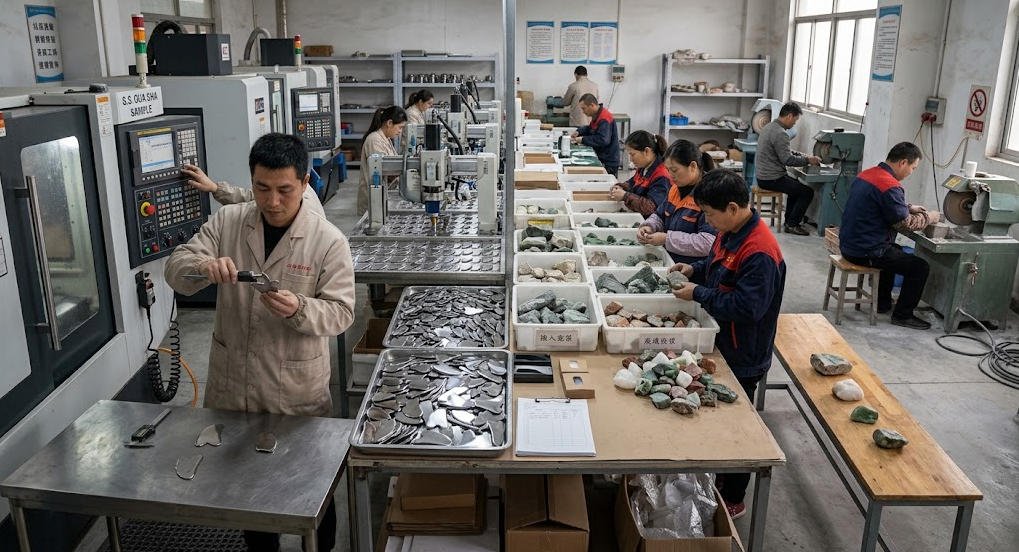
If you have ever waited on a gua sha custom sample, you already know the frustration: a stainless steel piece can take around 15 days to arrive, while a stone version shows up in roughly 10. On paper, that looks like stone wins the race. In practice, the opposite usually happens once the order grows from a handful of samples to a few thousand pieces, because a gua sha manufacturer working in stainless steel typically ships bulk orders faster than one working in natural stone — even though the sample took 50% longer to confirm. That gap is not a coincidence, and it is not poor planning on the factory’s side. It is a structural difference in how the two materials move through engineering, tooling, and production, and understanding it will change how you read every quote you receive from a gua sha supplier from now on. The 15-Day Reality Check: What a Longer Gua Sha Custom Sample Timeline Actually Tells You Sample Speed and Bulk Speed Are Not the Same Number When you request a custom gua sha sample, you are really asking two different factories to answer two different questions, even if you send the same drawing to both. A stone workshop is often answering “can we cut and polish this shape,” while a stainless steel workshop is answering “can we build a repeatable process that still works correctly on piece number 4,999.” That second question takes longer to answer the first time a design is new, and it shows up directly in your sample invoice — typically around 15 days for a first-run stainless steel design versus roughly 10 days for a stone piece that resembles something already in production. The gap feels backwards until you look at what each timeline is actually paying for, and once you do, it stops being confusing. This means you can stop treating sample lead time as a scorecard for the whole factory, and start treating it as a readout of how much new engineering your specific design required. It also means the 15-day figure is not a fixed tax on stainless steel as a material — it is a one-time cost tied to a specific, new design. Once that design has been through the process once, the next stainless steel sample sharing similar geometry can move noticeably faster, because much of the groundwork is already sitting on file. A gua sha supplier quoting you 15 days on a shape close to something they already manufacture should, in most cases, be able to compress that timeline. If they cannot explain why, it is worth asking directly what part of the 15 days is genuinely new work versus habit. The Data Point Most Buyers Get Wrong So does a 10-day stone sample mean that particular gua sha supplier simply works faster? Not necessarily — and this is exactly where sourcing decisions go wrong. A stone sample can move quickly because the physical steps — cutting, rough shaping, grinding, polishing, cleaning — already exist as a proven sequence inside the workshop, and your design just slots into it. A stainless steel sample moves more slowly because several of those steps do not exist yet for your specific shape; they have to be built, tested, and locked in before anyone touches production material. Comparing the two numbers side by side, without asking what each one is actually measuring, is how buyers end up choosing a gua sha manufacturer based on the wrong signal entirely. You are better served asking what happens after the sample is approved than asking how many days the sample itself took. A factory that can walk you through its post-approval process in detail — tooling handoff, material ordering, first-article inspection — is telling you far more about your real delivery date than a sample-day comparison ever could. Isn’t the actual delivery date the number you are trying to plan around in the first place? Why a Stainless Steel Gua Sha Custom Sample Needs More Engineering Time The Front-Loaded Engineering Behind Every Stainless Steel Gua Sha Custom Sample Before a single stainless steel blank gets cut for your project, a factory usually has to lock down a list of decisions that never show up on your invoice as separate line items. That list typically includes confirming the 3D/CAD structure and tolerances, building or adjusting the CNC program and tool paths, selecting cutting tools and feed rates, making or ordering jigs and fixtures, confirming raw billet specifications, validating how edges, holes, and curved surfaces will be machined, deciding on a deburring and surface-finishing method, fixing the logo process and placement, and setting the final inspection standard for appearance and dimensions. None of this is wasted time — it is the reason your stainless steel gua sha custom sample survives contact with a 5,000-piece order later without falling apart on the shop floor. This means your 15-day wait is buying you a tested, repeatable process rather than a one-off, hand-adjusted prototype that might not scale cleanly. It is worth pausing on why this matters more for stainless steel than for most other metal products you might have sourced before. A gua sha tool has a compound curve, a polished skin-contact surface, and often a logo placed on a narrow edge — none of which are trivial to program correctly the first time. Get the tool path wrong on piece one and you catch it in the sample. Get it wrong on piece 3,000 of a bulk run and you are looking at scrap, rework, and a shipment delay you did not budget for. That is precisely why a careful gua sha manufacturer will not rush this stage, even when a buyer is pushing for a faster sample date. Why a Stone Gua Sha Custom Sample Can Feel Faster Natural stone is not simple to machine — cutting, rough grinding, shaping, fine polishing, cleaning, and inspection are all real, physical steps that take real time on their own. But when your requested shape
If you have ever waited on a gua sha custom sample, you already know the frustration: a stainless steel piece can take around 15 days to arrive, while a stone version shows up in roughly 10. On paper, that looks like stone wins the race. In practice, the opposite usually happens once the order grows from a handful of samples to a few thousand pieces, because a gua sha manufacturer working in stainless steel typically ships bulk orders faster than one working in natural stone — even though the sample took 50% longer to confirm. That gap is not a coincidence, and it is not poor planning on the factory’s side. It is a structural difference in how the two materials move through engineering, tooling, and production, and understanding it will change how you read every quote you receive from a gua sha supplier from now on. The 15-Day Reality Check: What a Longer Gua Sha Custom Sample Timeline Actually Tells You Sample Speed and Bulk Speed Are Not the Same Number When you request a custom gua sha sample, you are really asking two different factories to answer two different questions, even if you send the same drawing to both. A stone workshop is often answering “can we cut and polish this shape,” while a stainless steel workshop is answering “can we build a repeatable process that still works correctly on piece number 4,999.” That second question takes longer to answer the first time a design is new, and it shows up directly in your sample invoice — typically around 15 days for a first-run stainless steel design versus roughly 10 days for a stone piece that resembles something already in production. The gap feels backwards until you look at what each timeline is actually paying for, and once you do, it stops being confusing. This means you can stop treating sample lead time as a scorecard for the whole factory, and start treating it as a readout of how much new engineering your specific design required. It also means the 15-day figure is not a fixed tax on stainless steel as a material — it is a one-time cost tied to a specific, new design. Once that design has been through the process once, the next stainless steel sample sharing similar geometry can move noticeably faster, because much of the groundwork is already sitting on file. A gua sha supplier quoting you 15 days on a shape close to something they already manufacture should, in most cases, be able to compress that timeline. If they cannot explain why, it is worth asking directly what part of the 15 days is genuinely new work versus habit. The Data Point Most Buyers Get Wrong So does a 10-day stone sample mean that particular gua sha supplier simply works faster? Not necessarily — and this is exactly where sourcing decisions go wrong. A stone sample can move quickly because the physical steps — cutting, rough shaping, grinding, polishing, cleaning — already exist as a proven sequence inside the workshop, and your design just slots into it. A stainless steel sample moves more slowly because several of those steps do not exist yet for your specific shape; they have to be built, tested, and locked in before anyone touches production material. Comparing the two numbers side by side, without asking what each one is actually measuring, is how buyers end up choosing a gua sha manufacturer based on the wrong signal entirely. You are better served asking what happens after the sample is approved than asking how many days the sample itself took. A factory that can walk you through its post-approval process in detail — tooling handoff, material ordering, first-article inspection — is telling you far more about your real delivery date than a sample-day comparison ever could. Isn’t the actual delivery date the number you are trying to plan around in the first place? Why a Stainless Steel Gua Sha Custom Sample Needs More Engineering Time The Front-Loaded Engineering Behind Every Stainless Steel Gua Sha Custom Sample Before a single stainless steel blank gets cut for your project, a factory usually has to lock down a list of decisions that never show up on your invoice as separate line items. That list typically includes confirming the 3D/CAD structure and tolerances, building or adjusting the CNC program and tool paths, selecting cutting tools and feed rates, making or ordering jigs and fixtures, confirming raw billet specifications, validating how edges, holes, and curved surfaces will be machined, deciding on a deburring and surface-finishing method, fixing the logo process and placement, and setting the final inspection standard for appearance and dimensions. None of this is wasted time — it is the reason your stainless steel gua sha custom sample survives contact with a 5,000-piece order later without falling apart on the shop floor. This means your 15-day wait is buying you a tested, repeatable process rather than a one-off, hand-adjusted prototype that might not scale cleanly. It is worth pausing on why this matters more for stainless steel than for most other metal products you might have sourced before. A gua sha tool has a compound curve, a polished skin-contact surface, and often a logo placed on a narrow edge — none of which are trivial to program correctly the first time. Get the tool path wrong on piece one and you catch it in the sample. Get it wrong on piece 3,000 of a bulk run and you are looking at scrap, rework, and a shipment delay you did not budget for. That is precisely why a careful gua sha manufacturer will not rush this stage, even when a buyer is pushing for a faster sample date. Why a Stone Gua Sha Custom Sample Can Feel Faster Natural stone is not simple to machine — cutting, rough grinding, shaping, fine polishing, cleaning, and inspection are all real, physical steps that take real time on their own. But when your requested shape