Gua Sha Lymphatic Brush Manufacturer Guide: Industry Experience and Risk Disclosure
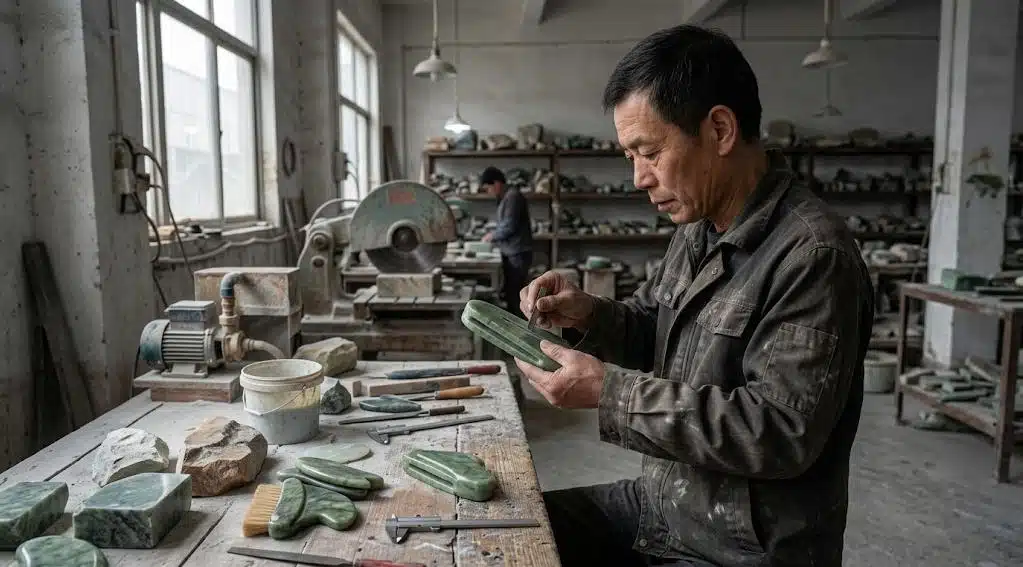
After 12 years of cutting, slotting and polishing stone tools, one step stands out as the hardest in a Gua Sha Lymphatic Brush manufacturer‘s workflow: carving a precise slot into a thick section of nephrite that rates 6.0 to 6.5 on the Mohs scale, according to GIA’s jade overview. Hardness is not the real issue, since GIA also notes that both jadeite and nephrite resist breaking and chipping well. The risk starts when a thin scraping edge and a thick brush-head zone have to live in one block of stone. You probably want to know where that risk sits before you sign a purchase order, so this page names it plainly. That means you can ask any gua sha manufacturer sharper questions on day one, instead of finding out in your first failed batch. What Twelve Years on the Floor Teach a Gua Sha Lymphatic Brush Manufacturer Why Thickness Is the First Risk a Gua Sha Lymphatic Brush Manufacturer Checks A traditional jade board has one smooth, even thickness, so the work is mostly shaping, edge finishing and polishing. A lymphatic brush asks for more. The scraping area stays thin, while the brush-head area stays thick enough to hold a mounting slot and still leave a solid floor under it. Cutting both zones from one stone means the cutter has to plan the final shape before the first pass, not after it. That planning changes the production sequence. Rough cutting leaves allowance for fine grinding and polishing, slotting happens before the final polish, and every transition between thick and thin gets checked for cracks and chipped edges. A gua sha production line set up only for flat boards may not have these checks in place. This means you can expect a different quote, lead time and inspection plan from a brush supplier, and those differences show you who understands the job. Where Material Choice Adds Gua Sha Risks Natural stone carries internal cracks and texture shifts that can stay invisible until the slotting pass exposes them. Treatment adds a second question. GIA’s buyers guide explains that jade can be dyed, bleached, heated, waxed and impregnated, and that these processes are not always obvious to the buyer. Ask your supplier to state in writing whether the stone is untreated, and how they screen for hidden cracks before cutting. This means you can request a material statement and a screening method before you approve any sample. The chapters ahead follow the order in which problems show up on a real order: cutting, slotting, bristle bonding, inspection, compliance and cost. Each one tells you what to ask, what to measure and what a straight answer sounds like. If your project needs guasha custom shapes or a specific bristle feel, you will see exactly where those choices raise or lower gua sha risks. And if you are comparing one gua sha factory against another, you will have a checklist that does not depend on anyone’s sales pitch. That means you can finish this guide ready to request a sample with clear acceptance criteria. Dual-Thickness Cutting: The First Test of a Gua Sha Lymphatic Brush Manufacturer When a stone reaches the cutting table, the outline on your drawing is only half the instruction. The other half is the thickness map: how thin the scraping zone stays, how thick the brush-head zone stays, and how the stone steps between them. A flat board can be judged by outline and edge alone, while a brush has to be judged by outline, thickness and transition at the same time. This means you can spot a weak supplier early, because a capable one will ask for your thickness requirements and not only your outline. How a Gua Sha Lymphatic Brush Manufacturer Plans the Cut Four problems come up again and again in dual-thickness work. The cutting path is more complex because each zone has its own contour and depth. Thickness control cuts both ways: a scraping area that is too thick spoils the shape and feel, one that is too thin loses local strength, and a head zone that is too thin cannot hold the slot depth plus a solid floor under it. The transition between the two is where chipped edges, uneven walls and accidental thin spots tend to appear. Finally, the cut has to leave enough stone for grinding and polishing, or the last polishing pass can push a part below spec. This means you can ask your supplier how much allowance they leave for polishing and whether that figure appears in the work order. Natural stone makes the plan harder. GIA’s buyers guide notes that jadeite’s texture can be fine, medium or coarse depending on crystal size and hardness, and the same logic applies to any natural block you send through a saw. Two blocks cut from the same drawing can behave differently, with one giving a clean transition and the other cracking at the step. That is why gua sha production for brushes works better when rough stone is sorted by texture and visible flaws before cutting begins. This means you can expect steadier results and fewer surprise rejects at final inspection when your supplier sorts stone first. Three Checks to Run Before Cutting Starts You can turn all of this into a short routine. First, send a drawing with thickness values for each zone, not just the outline, and ask the supplier to mark the transition area. Second, ask for a cut sample of the transition, have it measured at several points, and agree the allowed tolerance in writing before the batch begins. Third, ask what happens to a stone that shows a crack after cutting: is it scrapped, reworked or shipped? These three questions expose most of the gua sha risks tied to cutting, and they work on any gua sha factory, so you can compare quotes on equal terms. This means you can sign off on a process before you commit to a volume. If your project involves guasha custom shapes, add a fourth check: request a manufacturability review before you finalize the
Gua Sha Lymphatic Brush Manufacturer Guide: Industry Experience and Risk Disclosure Read More »
After 12 years of cutting, slotting and polishing stone tools, one step stands out as the hardest in a Gua Sha Lymphatic Brush manufacturer‘s workflow: carving a precise slot into a thick section of nephrite that rates 6.0 to 6.5 on the Mohs scale, according to GIA’s jade overview. Hardness is not the real issue, since GIA also notes that both jadeite and nephrite resist breaking and chipping well. The risk starts when a thin scraping edge and a thick brush-head zone have to live in one block of stone. You probably want to know where that risk sits before you sign a purchase order, so this page names it plainly. That means you can ask any gua sha manufacturer sharper questions on day one, instead of finding out in your first failed batch. What Twelve Years on the Floor Teach a Gua Sha Lymphatic Brush Manufacturer Why Thickness Is the First Risk a Gua Sha Lymphatic Brush Manufacturer Checks A traditional jade board has one smooth, even thickness, so the work is mostly shaping, edge finishing and polishing. A lymphatic brush asks for more. The scraping area stays thin, while the brush-head area stays thick enough to hold a mounting slot and still leave a solid floor under it. Cutting both zones from one stone means the cutter has to plan the final shape before the first pass, not after it. That planning changes the production sequence. Rough cutting leaves allowance for fine grinding and polishing, slotting happens before the final polish, and every transition between thick and thin gets checked for cracks and chipped edges. A gua sha production line set up only for flat boards may not have these checks in place. This means you can expect a different quote, lead time and inspection plan from a brush supplier, and those differences show you who understands the job. Where Material Choice Adds Gua Sha Risks Natural stone carries internal cracks and texture shifts that can stay invisible until the slotting pass exposes them. Treatment adds a second question. GIA’s buyers guide explains that jade can be dyed, bleached, heated, waxed and impregnated, and that these processes are not always obvious to the buyer. Ask your supplier to state in writing whether the stone is untreated, and how they screen for hidden cracks before cutting. This means you can request a material statement and a screening method before you approve any sample. The chapters ahead follow the order in which problems show up on a real order: cutting, slotting, bristle bonding, inspection, compliance and cost. Each one tells you what to ask, what to measure and what a straight answer sounds like. If your project needs guasha custom shapes or a specific bristle feel, you will see exactly where those choices raise or lower gua sha risks. And if you are comparing one gua sha factory against another, you will have a checklist that does not depend on anyone’s sales pitch. That means you can finish this guide ready to request a sample with clear acceptance criteria. Dual-Thickness Cutting: The First Test of a Gua Sha Lymphatic Brush Manufacturer When a stone reaches the cutting table, the outline on your drawing is only half the instruction. The other half is the thickness map: how thin the scraping zone stays, how thick the brush-head zone stays, and how the stone steps between them. A flat board can be judged by outline and edge alone, while a brush has to be judged by outline, thickness and transition at the same time. This means you can spot a weak supplier early, because a capable one will ask for your thickness requirements and not only your outline. How a Gua Sha Lymphatic Brush Manufacturer Plans the Cut Four problems come up again and again in dual-thickness work. The cutting path is more complex because each zone has its own contour and depth. Thickness control cuts both ways: a scraping area that is too thick spoils the shape and feel, one that is too thin loses local strength, and a head zone that is too thin cannot hold the slot depth plus a solid floor under it. The transition between the two is where chipped edges, uneven walls and accidental thin spots tend to appear. Finally, the cut has to leave enough stone for grinding and polishing, or the last polishing pass can push a part below spec. This means you can ask your supplier how much allowance they leave for polishing and whether that figure appears in the work order. Natural stone makes the plan harder. GIA’s buyers guide notes that jadeite’s texture can be fine, medium or coarse depending on crystal size and hardness, and the same logic applies to any natural block you send through a saw. Two blocks cut from the same drawing can behave differently, with one giving a clean transition and the other cracking at the step. That is why gua sha production for brushes works better when rough stone is sorted by texture and visible flaws before cutting begins. This means you can expect steadier results and fewer surprise rejects at final inspection when your supplier sorts stone first. Three Checks to Run Before Cutting Starts You can turn all of this into a short routine. First, send a drawing with thickness values for each zone, not just the outline, and ask the supplier to mark the transition area. Second, ask for a cut sample of the transition, have it measured at several points, and agree the allowed tolerance in writing before the batch begins. Third, ask what happens to a stone that shows a crack after cutting: is it scrapped, reworked or shipped? These three questions expose most of the gua sha risks tied to cutting, and they work on any gua sha factory, so you can compare quotes on equal terms. This means you can sign off on a process before you commit to a volume. If your project involves guasha custom shapes, add a fourth check: request a manufacturability review before you finalize the