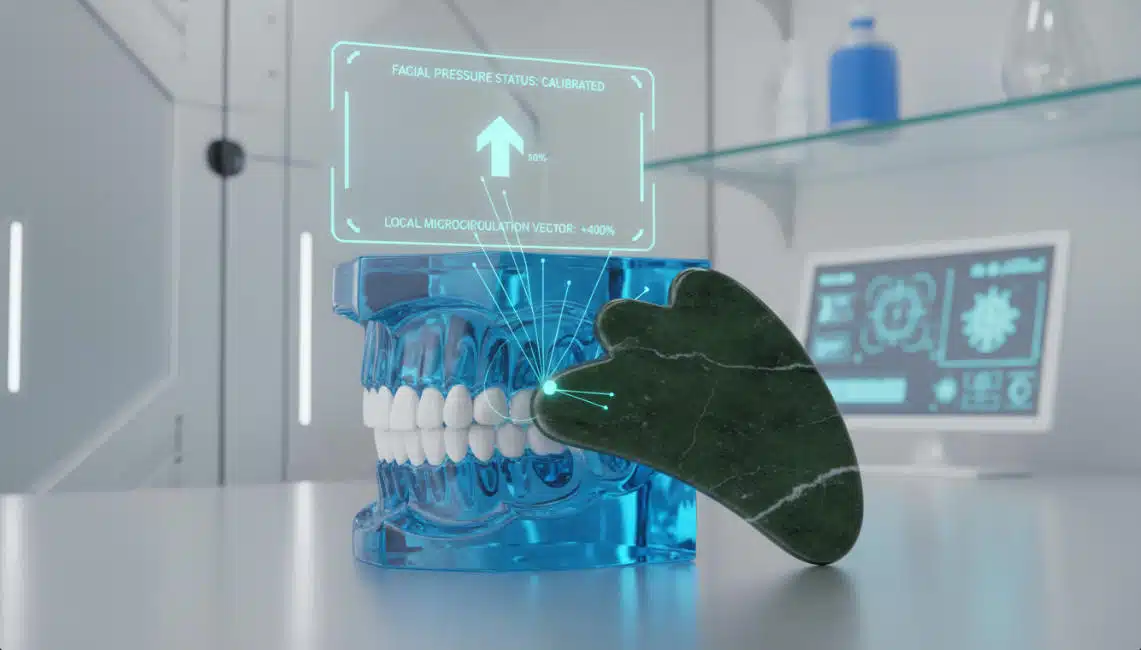
Gua sha TMJ therapy is not a contradiction — but the wrong technique turns a useful tool into a clinical risk within seconds. According to the National Institute of Dental and Craniofacial Research (NIDCR), temporomandibular disorders affect between 5% and 12% of the global population, making jaw-related muscle pain one of the most prevalent and least-treated musculoskeletal conditions in modern wellness. A peer-reviewed study published in the Journal of Alternative and Complementary Medicine (Nielsen et al., 2012) confirmed that gua sha can increase local surface microcirculation by up to 400% in treated tissue — a mechanism directly relevant to the overworked muscles driving most TMJ symptoms. That data matters because it tells you what gua sha actually does: it reaches soft tissue, not bone. And that distinction is the entire foundation of safe gua sha TMJ practice.
The short answer to “can you use gua sha for TMJ?” is yes — with three non-negotiable conditions. You must apply it to the muscles surrounding the joint, never to the joint itself. You must use pressure calibrated to facial tissue sensitivity, not body protocol standards. And you must treat frequency as a variable controlled by your body’s observed response, not a fixed schedule. Violate any one of these three conditions, and the mechanism that produces gua sha benefits becomes the mechanism that worsens your symptoms. This guide walks you through every layer of that distinction: the evidence, the anatomy, the risks, and the step-by-step protocol that keeps you on the right side of the line.
- Can You Use Gua Sha with TMJ? What the Evidence Suggests
- Gua Sha Risks for TMJ Patients: Three Mistakes That Make It Worse
- How to Use Gua Sha Safely When You Have TMJ: A Step-by-Step Protocol
- Choosing the Right Tool for Gua Sha TMJ Practice
- Alternatives to Gua Sha When You Have TMJ
- Key Takeaways: Gua Sha and TMJ in Plain Language
- Faqs About About Gua Sha TMJ
Can You Use Gua Sha with TMJ? What the Evidence Suggests
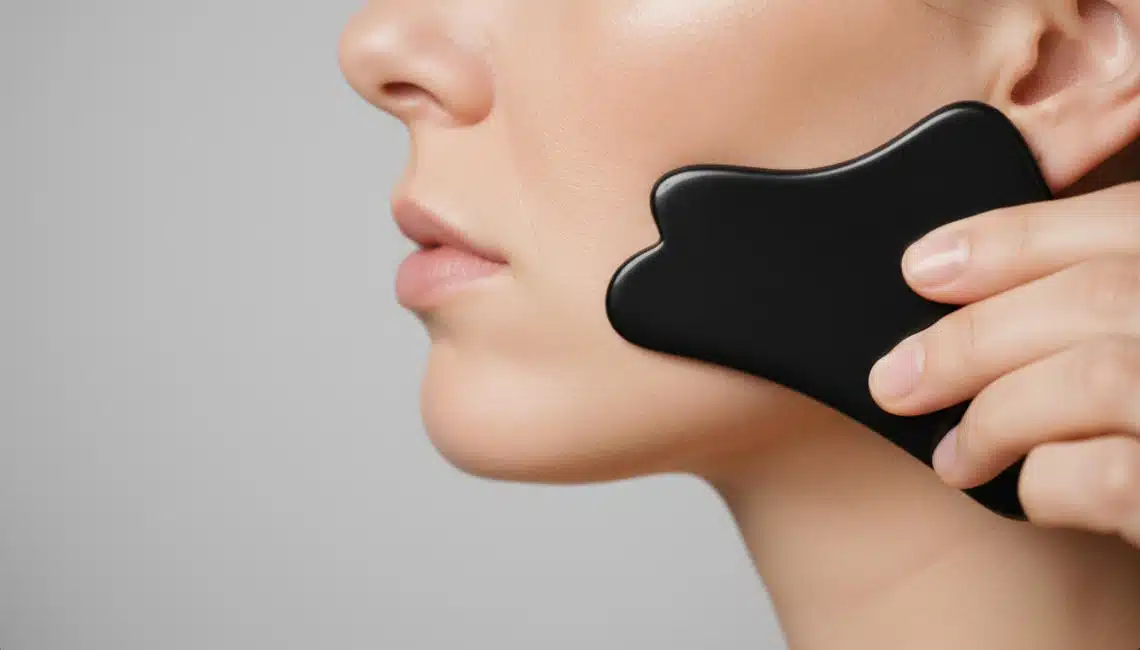
How Gua Sha May Support Muscle and Fascia Recovery
Gua sha benefits for TMJ-related symptoms operate through four primary physiological mechanisms, each of which has a specific anatomical relevance to the jaw and cranial region. The scraping action creates a controlled mechanical stimulus across the skin and subcutaneous tissue, triggering vasodilation and increasing blood flow to chronically ischemic muscle fibres — precisely the fibres responsible for the deep, dull aching that defines myofascial TMJ dysfunction. The sustained directional pressure breaks down fascial adhesions: areas where connective tissue surrounding the masseter, temporalis, and pterygoid muscles has thickened and begun restricting movement as a result of chronic overloading from clenching or bruxism. The repeated strokes also stimulate the lymphatic vessels embedded in the treated tissue, supporting the clearance of inflammatory metabolites that accumulate in muscles held in sustained contraction. Finally, by activating mechanoreceptors in the skin and superficial fascia, gua sha triggers a neurological inhibition response that temporarily reduces resting muscle tone — interrupting the contraction-pain-contraction cycle that sustains chronic TMJ discomfort over months and years.
A randomized controlled trial published in the Journal of Pain (Braun et al., 2011) demonstrated statistically significant reductions in neck pain and muscle stiffness following gua sha treatment, with effects lasting up to one week after a single session. This means that for the TMJ patient whose primary symptom profile is muscular rather than structural, gua sha benefits are both real and durable — provided the application targets the correct anatomical zones. You gain access to a self-care tool that compounds its effects over time without pharmaceutical intervention, without equipment costs beyond a single quality tool, and without requiring clinic appointments for every session.
Why TMJ Makes Gua Sha TMJ Practice More Complex
Not all TMJ presentations respond to the same interventions, and this nuance is the most clinically important point in this entire guide. The American Academy of Orofacial Pain (AAOP) classifies temporomandibular disorders into three primary categories: joint-based pathology — disc displacement, osteoarthritis, structural degeneration; muscle-based pathology — myofascial pain, masticatory muscle spasm, chronic tension; and combination presentations involving both. Gua sha benefits apply primarily to muscle-based presentations. They are not appropriate as a primary intervention in cases of active joint inflammation or structural disc pathology, and applying gua sha to a structurally compromised joint risks aggravating the condition in ways that are entirely avoidable through correct anatomical targeting.
The Mayo Clinic’s TMJ disorder overview provides a reliable patient-oriented reference for understanding symptom categories. Audible clicking, jaw locking, and restricted opening range all suggest a structural joint component — and these symptoms warrant professional evaluation before any gua sha TMJ protocol is initiated. If your dominant complaints are diffuse jaw aching, facial fatigue, temple tension, and neck stiffness, the evidence points toward a myofascial driver that gua sha is well-positioned to address. If you are unsure which category applies to you, that uncertainty is itself a reason to seek a professional diagnosis before proceeding.
Clinical note: Most existing gua sha research focuses on the neck and upper back. TMJ-specific clinical trial data remains limited. The recommendations in this guide are derived from anatomical principles, orofacial physical therapy literature, and validated soft tissue research — not from dedicated gua sha TMJ randomized controlled trials.
Gua Sha Risks for TMJ Patients: Three Mistakes That Make It Worse
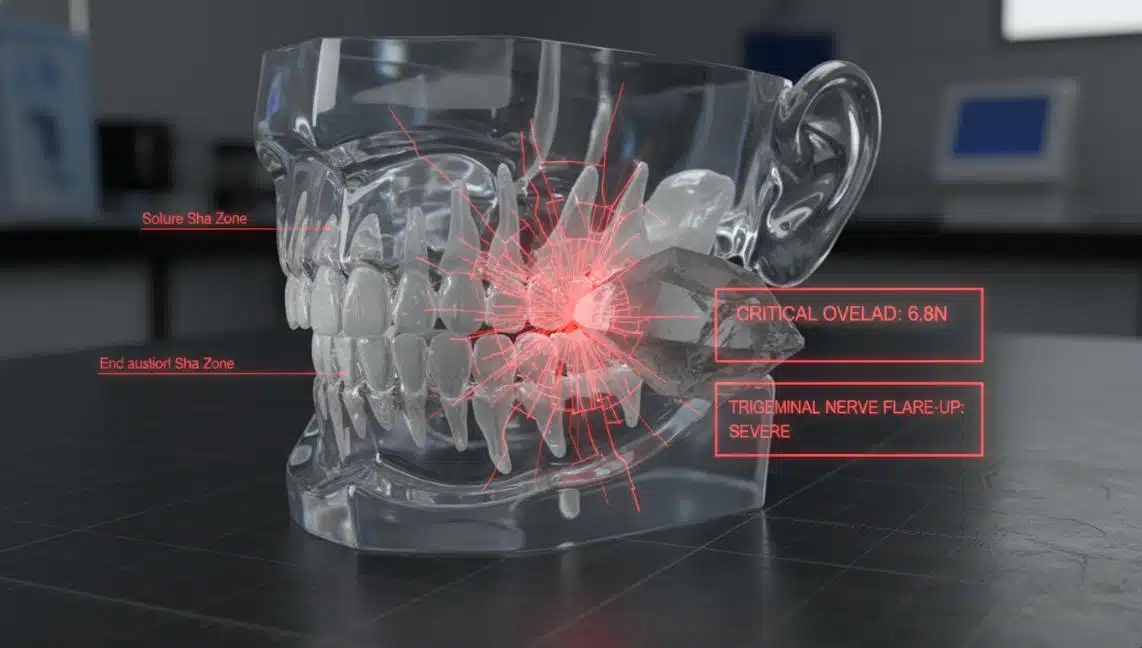
Gua Sha TMJ Risk 1: Direct Application Over the Joint
The temporomandibular joint is positioned immediately anterior to the tragus — the small cartilage flap at the entrance of the ear canal. If you place your fingertip just in front of your tragus and open your mouth slowly, you will feel the head of the mandibular condyle moving beneath your skin. This is the exclusion zone. The gua sha risks at this anatomical site are grounded in basic joint mechanics: the articular disc of the temporomandibular joint is a thin fibrocartilage structure that depends on precise load distribution to function without irritation. Applying compressive mechanical force from a rigid gua sha tool to an already-sensitized or inflamed joint increases intra-articular pressure, irritates the synovial lining, and can trigger a protective muscle spasm that worsens, not resolves, jaw restriction. The American Academy of Orofacial Pain is explicit that mechanical self-care interventions should target the pericranial and cervical musculature — not the joint capsule or its immediately adjacent soft tissue.
Would you apply firm pressure to an inflamed knee joint directly over the bursa? The principle is identical. Applying gua sha over the temporomandibular joint, regardless of how carefully it is done, does not achieve what the therapy is designed to achieve and introduces risks that the surrounding-muscle protocol entirely avoids.
Gua Sha Side Effects 2
Gua sha side effects are significantly more likely to manifest on the face than on the body, and more likely in TMJ patients than in the general population, for two converging anatomical reasons. First, the subcutaneous fat layer of the face is substantially thinner than on the back, thighs, or upper arms, placing superficial blood vessels much closer to the surface. Heavy scraping pressure produces petechiae — subcutaneous microhemorrhages — which may be considered an acceptable therapeutic marker in traditional body gua sha contexts but are inappropriate on the face and actively counterproductive in the jaw zone of a TMJ patient. The American Academy of Dermatology notes that facial protocols require substantially lower pressure than body protocols for this structural reason. Second, the trigeminal nerve — which innervates the face, jaw, and teeth — can become sensitized in chronic pain conditions including TMJ disorder, making the facial region abnormally reactive to mechanical stimulation. Gua sha side effects in this neurologically sensitized state can include amplified local pain, referred pain to the teeth or temple, and paradoxical muscle tension increases. If you experience any of these responses, the tool pressure is too high and the frequency should be reduced immediately.
Gua Sha Risk 3: Frequency Mismanagement Without a Response Protocol
The third major gua sha risk for TMJ patients is the absence of a structured observation protocol between sessions. In healthy, non-sensitized soft tissue, the controlled inflammatory cascade triggered by gua sha resolves within 24 to 48 hours and produces progressive adaptation — the basis for cumulative therapeutic benefit. In chronically sensitized tissue, which describes a significant proportion of TMJ patients, that same inflammatory cascade can be disproportionate in magnitude and prolonged in duration. Applying a second session before the first has resolved does not accelerate adaptation; it stacks micro-irritation, pushes reactive tissue past its recovery threshold, and creates a flare cycle that undoes any benefit from the initial session. Research on soft tissue recovery consistently supports treating mechanical intervention frequency as a feedback-driven variable — particularly in sensitized populations. The rule is simple: observe first, increase frequency second. Never the other way around.
How to Use Gua Sha Safely When You Have TMJ: A Step-by-Step Protocol
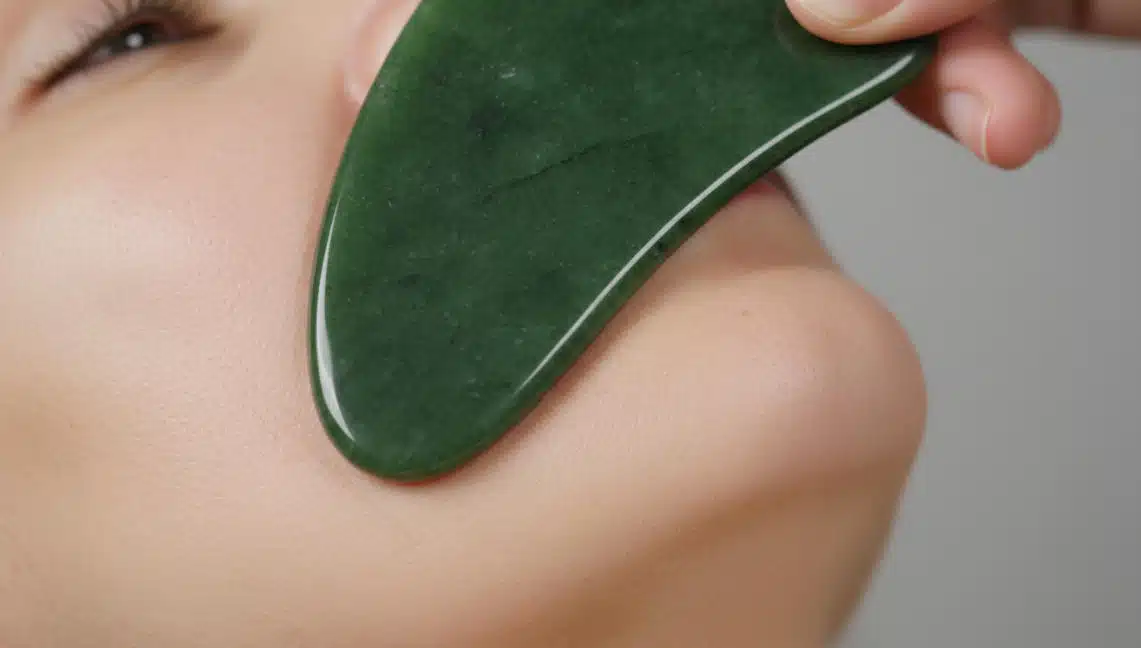
Gua Sha TMJ Safe Zones: Where to Scrape, and Where to Stop
How to use gua sha for TMJ effectively begins with a precise anatomical map. Three safe target zones exist, each targeting muscles that directly generate or perpetuate TMJ symptoms through chronic tension, fascial restriction, or myofascial referral patterns. The first zone is the masseter muscle: locate it by placing your fingertips at the angle of the jaw and clenching — the firm contracting muscle belly you feel is the masseter. Work the lower two-thirds of this muscle using short, upward-angled strokes with consistent light pressure, stopping well below the level of the zygomatic arch and never advancing toward the preauricular region where the joint sits. The second zone is the temporalis muscle: the broad, fan-shaped muscle at the temple, palpable as an area of tension just above and in front of the ear. Work this zone using downward strokes from the hairline toward the zygomatic arch, stopping before the arch. The third safe zone is the posterior neck and upper trapezius — from the base of the skull to the top of the shoulder — which is frequently hypertonic in TMJ patients and contributes to referred headache, tinnitus, and dizziness through established myofascial referral patterns. Treating this zone as part of a gua sha TMJ session addresses symptom drivers that jaw-focused protocols miss entirely.
The absolute exclusion zone is a circle of approximately 2 centimeters in diameter centered on the tragus of the ear. Mark this zone before every session, every time. No tool stroke enters this area under any circumstances. The Physiopedia reference on temporomandibular joint anatomy provides a clear structural reference for the joint’s relationship to surrounding musculature — reviewing it once before your first session meaningfully reduces the risk of anatomical error in the first few weeks of practice.
Pressure, Duration, and Frequency: Exact Parameters for Gua Sha TMJ Sessions
How to use gua sha for TMJ requires parameters that differ from standard body protocols in every measurable dimension, and the differences are not cosmetic — they reflect the genuine structural and neurological differences of the facial and jaw region. Pressure: the working threshold is skin erythema — a diffuse, mild redness that indicates increased blood flow without vascular trauma. If you are producing marks that resemble bruising anywhere on the jaw or temple area, you have exceeded the appropriate pressure ceiling. Duration: 3 to 5 minutes total across all target zones per session — not 3 to 5 minutes per zone. This constraint is deliberate and clinically grounded: sensitized tissue in TMJ patients can enter a reactive state from over-stimulation, and the initial sessions are designed to establish a response baseline, not to maximize mechanical input in a single sitting. Frequency: begin at once per week for the first two sessions. Observe your response over the full 48 hours following each session. In the absence of increased jaw pain, heightened restriction, or new gua sha side effects, increase to twice per week after the second session.
These parameters are derived from general soft tissue rehabilitation principles and orofacial physical therapy clinical practice — they are not from dedicated gua sha TMJ trials, and they are your starting point, not your fixed ceiling. Your body’s response data is the variable that determines how to progress from here. This means you can build a gua sha TMJ practice that compounds its benefits over weeks, adapted to your specific symptom profile and tissue reactivity — rather than one that creates a cycle of irritation and recovery.
Combining Gua Sha with Professional TMJ Treatment
Gua sha is not a replacement for evidence-based TMJ care — and representing it as such would be both clinically inaccurate and a disservice to the patient. The American Dental Association (ADA) outlines a multi-modal management framework for temporomandibular disorders that may include occlusal splint therapy, behavioral modification targeting parafunctional habits, manual physical therapy, and pharmacological management where clinically indicated. Within that framework, gua sha occupies a specific and legitimate position: a between-session adjunct that extends the soft tissue relaxation effects of professional treatment without requiring clinic attendance for every application. If your physical therapist has prescribed jaw muscle mobilization exercises, performing gua sha on the masseter and temporalis on the same days amplifies the tissue preparation achieved by the exercises. If your dentist has prescribed a nightguard for bruxism-related TMJ, reducing daytime masseter tension through gua sha supports the overall reduction in joint loading that the nightguard provides overnight. Tell your treating clinician you are using gua sha — so the full picture of your self-care is factored into their clinical assessments and any adjustments to your treatment plan.
Choosing the Right Tool for Gua Sha TMJ Practice
Why Material Authenticity and Edge Design Determine Outcome
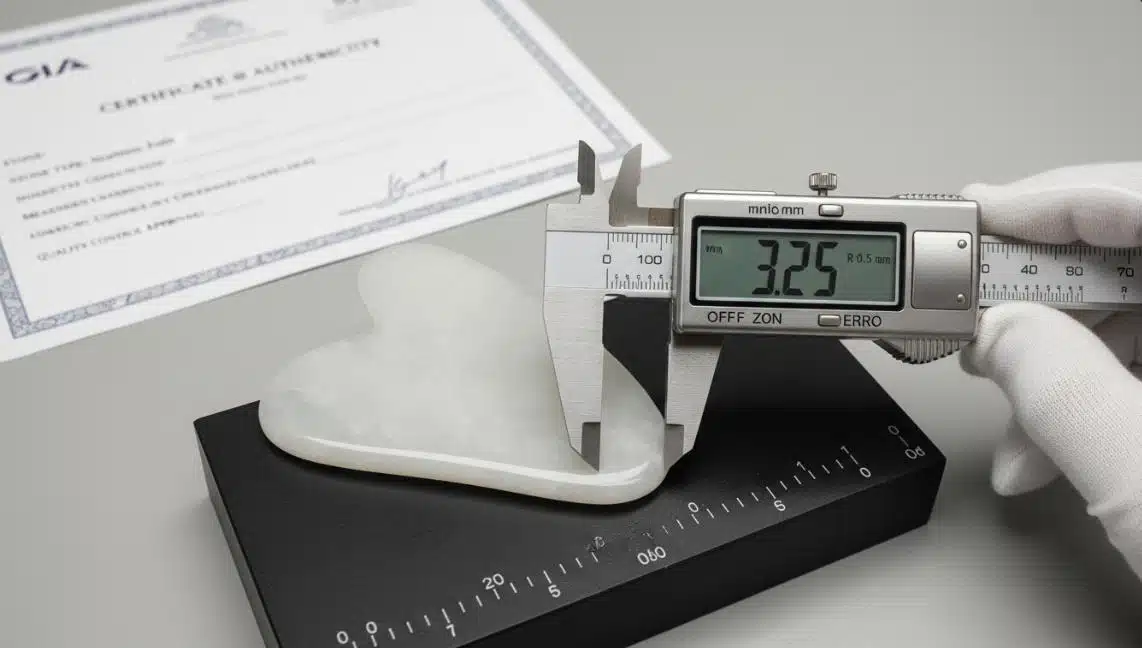
The tool you use for gua sha TMJ practice is not an interchangeable variable — and this is particularly true for jaw and face application, where the contact surface geometry and material properties interact directly with tissue sensitivity. Three design criteria determine whether a tool is appropriate for this protocol. Edge geometry is the most critical: the working edge must present a smooth, continuously curved profile with no abrupt transitions, sharp angles, or narrow ridges that concentrate pressure into a contact line narrower than the surrounding tissue can absorb safely. A tool designed for broad body strokes — with a flat or angled edge optimized for thick posterior musculature — applies the wrong load geometry to the curved, shallow muscle belly of the masseter or temporalis. Surface finish determines the quality of mechanical contact: the working surface must be polished to a degree that allows consistent gliding on lubricated skin without drag, friction, or adhesion. A tool that resists gliding rather than flowing creates micro-abrasion rather than therapeutic compression — a distinction that matters considerably in a TMJ patient whose tissue is already neurologically sensitized.
For gua sha tool material, authenticity directly determines thermal and mechanical properties. The Gemological Institute of America (GIA) and the International Gem Society (IGS) provide the reference frameworks for distinguishing genuine nephrite jade and jadeite from treated, composite, or synthetic substitutes — a distinction that is routinely obscured in the consumer wellness market. For high-value jade specimens, the Swiss Gemmological Institute (SSEF) offers certification services that verify material identity and treatment status. Why does this matter for gua sha TMJ practice? Genuine nephrite jade maintains a consistent, mild coolness during use — a thermal property arising from the material’s density and thermal conductivity — that provides passive comfort to irritated periarticular tissue in a way that resin, glass, or pressed-composite tools cannot replicate. This means that a tool made from authenticated natural jade is not just aesthetically different from a synthetic substitute: its physical properties actively contribute to the therapeutic experience in a TMJ session where tissue reactivity is the dominant concern.
Alternatives to Gua Sha When You Have TMJ
Heat Therapy and Gentle Massage for Acute TMJ Flare-Ups
Recognizing when gua sha is not the correct intervention is as important as knowing how to use gua sha correctly. During an acute TMJ flare — characterized by pain elevated above your typical baseline, visible swelling in the preauricular or masseter region, or a measurable reduction in comfortable jaw opening range — the periarticular tissue and surrounding musculature are in an active inflammatory state. Introducing additional mechanical stimulation from a gua sha tool at this point does not accelerate recovery; it risks amplifying the inflammatory response, increasing tissue reactivity, and converting a temporary flare into a prolonged setback. The gua sha risks during an acute phase are meaningfully higher than during a stable symptom baseline, and the threshold for contraindication is lower than most patients expect.
The NIDCR recommends moist heat application — 10 to 20 minutes, several times daily — as a first-line self-care measure for TMJ muscle pain, noting that moist heat penetrates more effectively than dry heat and produces more sustained muscle relaxation. Cold packs are recommended as an alternative during acute joint inflammation phases, where warmth may exacerbate vascular dilation in already-inflamed tissue. Gentle digital massage — performed with fingertip pressure only, without a tool — delivers a lower mechanical stimulus than gua sha and provides meaningful tension relief during flare periods without the gua sha side effects associated with a firm-edged implement on reactive tissue. Once the acute phase resolves and your pain returns to a stable baseline, gua sha TMJ practice can be reintroduced using the parameters in Section 4, starting again from the once-per-week frequency before progressing.
Jaw Relaxation Exercises and Physical Therapy Approaches
For TMJ patients who are not yet ready to introduce gua sha, or who are managing an acute phase where mechanical stimulation is contraindicated, structured jaw relaxation exercises offer a clinically supported alternative with effectively zero risk of adverse mechanical effect. The American Physical Therapy Association (APTA) includes controlled mandibular movement exercises — slow, guided opening and closing within a pain-free range, performed 5 to 10 repetitions, two to three times daily — among the evidence-supported interventions for TMJ myofascial pain. Tongue-position training involves consciously resting the tongue gently against the hard palate behind the upper front teeth rather than pressing against the lower dental arch — a habit change that reduces chronic masseter activation at rest and forms a foundational component of almost every comprehensive TMJ management protocol. Low-frequency transcutaneous electrical nerve stimulation (TENS), applied by a physical therapist to the masseter and temporalis, targets the same muscle groups as gua sha through a different mechanism and is often more appropriate for patients in the early stages of management, before tissue reactivity has reduced enough for gua sha to be comfortable. A 2014 Cochrane Review on physical therapy for temporomandibular disorders noted that exercise combined with manual therapy produces measurable improvements in pain and jaw function — supporting a layered approach that may include gua sha as one component among several.
Key Takeaways: Gua Sha and TMJ in Plain Language
Gua Sha TMJ Self-Assessment: Three Questions Before Every Session
Before initiating any gua sha TMJ session — whether your first or your fiftieth — three questions should be answered in the affirmative before you proceed. First: is your current symptom presentation predominantly muscular? Diffuse jaw aching, facial fatigue, tension headaches, and neck and shoulder stiffness all point toward a myofascial driver to which the gua sha benefits described in this guide are directly relevant. Structural symptoms — audible clicking or popping, intermittent jaw locking, restricted opening that has worsened progressively — suggest a joint component that warrants professional evaluation before any mechanical self-care protocol is introduced. Second: are your current symptoms at or below your typical stable baseline, rather than in an elevated flare state? If your pain is measurably worse than your usual level, defer the session in favor of heat therapy and rest until the flare resolves. Third: can you confidently identify the exclusion zone around the temporomandibular joint, and can you confirm that your intended stroke paths in all three safe zones do not enter it? If all three answers are affirmative, the parameters in Section 4 provide your responsible starting protocol.
This self-assessment is a general reference framework and is not a clinical diagnostic instrument. Individual anatomy, symptom profiles, and tissue reactivity vary. A qualified orofacial pain specialist or physical therapist provides the only reliable clinical baseline — this framework is a useful structure, not a substitute for that evaluation.
The Bottom Line on Gua Sha for TMJ
Gua sha TMJ therapy is conditionally appropriate, mechanistically sound for muscular-dominant presentations, and genuinely hazardous when applied without anatomical precision. Three rules contain the entire safe protocol: scrape muscles, not the joint; use pressure calibrated to produce erythema rather than petechiae; and treat session frequency as a response-driven variable adjusted based on your body’s feedback between sessions, not a fixed number imposed regardless of how the tissue responds. The gua sha benefits available to TMJ patients — reduced masseter and temporalis tension, improved neck and shoulder mobility, decreased frequency of tension-related headaches — are real, measurable, and accessible at low cost. But every one of those benefits is contingent on correct technique and appropriate anatomical targeting. What you gain from learning the technique correctly is a self-care tool you can use sustainably, within your existing professional treatment plan, for as long as your symptoms require active management. Deyi Gems is here to support that practice with tools built to the precision the protocol requires.
Faqs About About Gua Sha TMJ
1. About Gua Sha TMJ
Yes — under specific, avoidable conditions. Applying a gua sha tool directly over the temporomandibular joint, using pressure heavy enough to produce petechiae on the jaw or temple, or performing a session during an acute inflammatory flare can all aggravate TMJ symptoms rather than relieve them. These are the primary gua sha risks for TMJ patients, and all three are eliminated by following the safe zone map, the pressure ceiling, and the frequency protocol described in Section 4. If you experience worsening jaw pain, increased restriction, new ear discomfort, or amplified headaches following any gua sha session, stop immediately and consult your healthcare provider before resuming. Gua sha side effects that resolve within 48 hours without worsening are generally within the expected response range; effects that persist or worsen beyond 48 hours are a signal to pause and seek professional input.
2. How often should I do gua sha if I have TMJ?
Begin at once per week and commit to the full 48-hour observation window before making any frequency decision. If your symptoms remain stable or demonstrate improvement after two sessions at this frequency, move to twice per week. How to use gua sha responsibly for TMJ requires treating frequency as a feedback-driven variable — not a fixed protocol. Your body’s response between sessions is the most reliable clinical indicator you have. Increasing frequency before the tissue has adapted does not accelerate results; it compounds micro-irritation and risks setting your recovery back. Patients who progress slowly and consistently achieve better cumulative outcomes than those who push frequency prematurely.
3. What type of gua sha tool works best for the jaw and temple area?
Choose a small-format facial gua sha tool with a smooth, continuously curved working edge and a surface finish that glides on lubricated skin without drag or resistance. A concave working edge follows the curve of the masseter muscle more accurately than a flat-edged body tool and allows more controlled pressure application in the restricted anatomy of the jaw zone. For material, genuine nephrite jade provides mild, consistent thermal coolness and a density that delivers controlled mechanical pressure without requiring heavy hand force — a practical combination for the light-pressure parameters appropriate to gua sha TMJ practice. For reference standards on jade authenticity and quality, the GIA and IGS resources linked in Section 5 provide accessible, authoritative frameworks. Deyi Gems facial gua sha tools are designed to these functional specifications, with edge geometry and surface polish controlled at the manufacturing level across a product range developed specifically for face and jaw application.
Full Disclaimer: The information in this article is for general educational purposes only. It does not constitute medical advice, diagnosis, or treatment. Deyi Gems is a gua sha tool manufacturer, not a medical institution. Always seek the advice of your dentist, physician, or qualified healthcare provider with any questions you have regarding a medical condition.