Gerry Ou

With over 10 years of experience in the gua sha industry, I possess a considerable understanding of the field. This includes in-depth knowledge of industry trends, product characteristics, and usage tutorials.

does gua sha work

Does Gua Sha Really Work? — A Discussion on the Intersection of Science and Tradition

Does gua sha really work? With the global popularity of guasha therapy, the above question is inevitable. Through various social media sharing and the display of various guasha-related blog posts, it seems to prove that guasha is indeed effective. However, how much truth is there in these related content sharing? How much scientific principles exist? This is the topic we will explore today. The Origin and Principle of Guasha Gua Sha originated in China. While there’s no definitive date for its invention, existing data indicates it has a history of over a thousand years (nearly two thousand years). Throughout this period, Gua Sha has been widely used as a folk remedy. In Traditional Chinese Medicine (TCM), it’s believed that maintaining a balance between Qi and blood is crucial for maintaining health. Once Qi and blood become blocked or unbalanced, illness can afflict the body. guasha’s principles are believed to relax muscles and tendons, promote blood circulation, and relieve pain (though this has yet to be fully scientifically proven). Currently, Guasha is increasingly used for beauty, relaxation, and self-healing. Particularly in Europe and the United States, Guasha’s popularity for beauty treatments far outweighs its traditional medical applications. While its cosmetic benefits are a relatively recent development, they are one of the most important factors driving guasha’s globalization. Is Gua Sha Really Effective From a Scientific Perspective? Although scientific research on Gua Sha therapy is currently insufficient, particularly regarding its cosmetic benefits, a growing number of studies are attempting to analyze and demonstrate its true effectiveness from a scientific perspective. Through these studies, we can further explore the realities behind guasha: A clinical trial published in Pain Medicine (2011) showed that after a single neck Gua Sha treatment, participants’ pain scores decreased significantly within a short period of time, and their neck range of motion improved significantly. This suggests that guasha may have short-term therapeutic effects on muscle tension pain. A joint study by Harvard Medical School and the China Academy of Chinese Medical Sciences found that Gua Sha can activate the immune response of skin endothelial cells and increase blood levels of white blood cells and antioxidant enzymes. This suggests that Guasha is not only a physical stimulation but may also play a role in regulating the body’s immune function. Thermography and Doppler ultrasound studies have shown that Gua Sha can increase local skin temperature by 2–3°C and microcirculatory blood flow by more than fourfold. This effect can last from 30 minutes to several hours, providing a physiological basis for its metabolic and detoxification benefits. While the aforementioned studies confirm the potential efficacy of guasha, current research lacks substantial clinical data, potentially leading to the so-called survivor bias. Therefore, we do not recommend using guasha as a primary treatment. Why Gua Sha is So Popular in the Beauty Industry? Gua Sha’s success in the beauty industry is largely due to three factors: 1. Market demand, 2. Product features, and 3. Distribution channels. The synergy of these three factors has enabled guasha to rise in the beauty industry, expanding from China to the global market. With the improvement of people’s quality of life, the pursuit of non-invasive treatments has increased. Many beauty enthusiasts are seeking natural beauty treatments that enhance their appearance through non-drug methods. Gua Sha, as a physical therapy, perfectly fits the bill for non-invasive treatments. Furthermore, guasha tools are very competitively priced compared to skincare products that can cost tens or even hundreds of dollars. Especially if properly stored, a Guasha tool can last for years. Furthermore, Guasha tools are compact and portable, allowing for facial treatments anytime, anywhere. In recent years, with the widespread adoption of social media platforms like TikTok and YouTube, and the support of various related companies, the search index for Gua Sha has skyrocketed. This is especially true in Europe and the United States, where a large number of videos demonstrating guasha have emerged. Limitations and Precautions of Guasha Gua Sha does have theoretical efficacy and has certain scientific evidence and clinical data, but it also has certain limitations and precautions. Does Gua Sha Work? A Rational Approach is the best Approach. Various clinical data and scientific studies have demonstrated that Gua Sha has certain benefits in relieving muscle tension, promoting blood circulation, and boosting local metabolic rates. A growing number of research cases continue to confirm the positive effects of Guasha in these areas. However, the widespread claims on social media regarding Guasha’s “detoxifying, slimming, and anti-aging” benefits are currently largely hype, lacking sufficient scientific evidence to support these claims. Therefore, we need to approach them with caution. Furthermore, negative experiences with Gua Sha demonstrate that it carries certain risks and can negatively impact our health if used improperly. Thus, the value of guasha may lie not in its pursuit of “instant results,” but rather in its provision of a gentle, sustainable form of self-care. As long as it is used correctly, contraindications are understood, and overreliance is avoided, it can become a safe and beneficial traditional therapy in modern people’s daily health management.

Does Gua Sha Really Work? — A Discussion on the Intersection of Science and Tradition Read More »

Does gua sha really work? With the global popularity of guasha therapy, the above question is inevitable. Through various social media sharing and the display of various guasha-related blog posts, it seems to prove that guasha is indeed effective. However, how much truth is there in these related content sharing? How much scientific principles exist? This is the topic we will explore today. The Origin and Principle of Guasha Gua Sha originated in China. While there’s no definitive date for its invention, existing data indicates it has a history of over a thousand years (nearly two thousand years). Throughout this period, Gua Sha has been widely used as a folk remedy. In Traditional Chinese Medicine (TCM), it’s believed that maintaining a balance between Qi and blood is crucial for maintaining health. Once Qi and blood become blocked or unbalanced, illness can afflict the body. guasha’s principles are believed to relax muscles and tendons, promote blood circulation, and relieve pain (though this has yet to be fully scientifically proven). Currently, Guasha is increasingly used for beauty, relaxation, and self-healing. Particularly in Europe and the United States, Guasha’s popularity for beauty treatments far outweighs its traditional medical applications. While its cosmetic benefits are a relatively recent development, they are one of the most important factors driving guasha’s globalization. Is Gua Sha Really Effective From a Scientific Perspective? Although scientific research on Gua Sha therapy is currently insufficient, particularly regarding its cosmetic benefits, a growing number of studies are attempting to analyze and demonstrate its true effectiveness from a scientific perspective. Through these studies, we can further explore the realities behind guasha: A clinical trial published in Pain Medicine (2011) showed that after a single neck Gua Sha treatment, participants’ pain scores decreased significantly within a short period of time, and their neck range of motion improved significantly. This suggests that guasha may have short-term therapeutic effects on muscle tension pain. A joint study by Harvard Medical School and the China Academy of Chinese Medical Sciences found that Gua Sha can activate the immune response of skin endothelial cells and increase blood levels of white blood cells and antioxidant enzymes. This suggests that Guasha is not only a physical stimulation but may also play a role in regulating the body’s immune function. Thermography and Doppler ultrasound studies have shown that Gua Sha can increase local skin temperature by 2–3°C and microcirculatory blood flow by more than fourfold. This effect can last from 30 minutes to several hours, providing a physiological basis for its metabolic and detoxification benefits. While the aforementioned studies confirm the potential efficacy of guasha, current research lacks substantial clinical data, potentially leading to the so-called survivor bias. Therefore, we do not recommend using guasha as a primary treatment. Why Gua Sha is So Popular in the Beauty Industry? Gua Sha’s success in the beauty industry is largely due to three factors: 1. Market demand, 2. Product features, and 3. Distribution channels. The synergy of these three factors has enabled guasha to rise in the beauty industry, expanding from China to the global market. With the improvement of people’s quality of life, the pursuit of non-invasive treatments has increased. Many beauty enthusiasts are seeking natural beauty treatments that enhance their appearance through non-drug methods. Gua Sha, as a physical therapy, perfectly fits the bill for non-invasive treatments. Furthermore, guasha tools are very competitively priced compared to skincare products that can cost tens or even hundreds of dollars. Especially if properly stored, a Guasha tool can last for years. Furthermore, Guasha tools are compact and portable, allowing for facial treatments anytime, anywhere. In recent years, with the widespread adoption of social media platforms like TikTok and YouTube, and the support of various related companies, the search index for Gua Sha has skyrocketed. This is especially true in Europe and the United States, where a large number of videos demonstrating guasha have emerged. Limitations and Precautions of Guasha Gua Sha does have theoretical efficacy and has certain scientific evidence and clinical data, but it also has certain limitations and precautions. Does Gua Sha Work? A Rational Approach is the best Approach. Various clinical data and scientific studies have demonstrated that Gua Sha has certain benefits in relieving muscle tension, promoting blood circulation, and boosting local metabolic rates. A growing number of research cases continue to confirm the positive effects of Guasha in these areas. However, the widespread claims on social media regarding Guasha’s “detoxifying, slimming, and anti-aging” benefits are currently largely hype, lacking sufficient scientific evidence to support these claims. Therefore, we need to approach them with caution. Furthermore, negative experiences with Gua Sha demonstrate that it carries certain risks and can negatively impact our health if used improperly. Thus, the value of guasha may lie not in its pursuit of “instant results,” but rather in its provision of a gentle, sustainable form of self-care. As long as it is used correctly, contraindications are understood, and overreliance is avoided, it can become a safe and beneficial traditional therapy in modern people’s daily health management.

Gua Sha Ruined My Face — A Guide to Truth, Risk, and Restoration

“Gua sha ruined my face.” If you’ve typed those words into a search bar, you’re not alone — but you may be working from incomplete information. Here is the conclusion first: in the overwhelming majority of documented cases, gua sha itself did not cause the damage. The damage came from three controllable, identifiable factors — incorrect technique, incompatible skin conditions, and unsafe tools. The good news? Most mild facial injuries from gua sha resolve on their own within 2 to 3 days of stopping use. Severe cases, such as visible bruising or persistent swelling, typically clear within one week with basic first-aid intervention. Before you abandon gua sha on face entirely, the evidence strongly suggests that what went wrong is fixable — and preventable. Understanding why your skin reacted the way it did is the fastest path to recovery. This guide breaks down every documented cause of gua sha facial damage, ranks them by frequency and severity, and gives you a concrete repair roadmap based on your specific injury type. Whether you’re dealing with broken capillaries, unexpected sensitivity, or a reaction you can’t quite explain, the answer is almost certainly in one of the three categories covered below. Did Gua Sha Actually Ruin Your Face? What the Evidence Really Shows The phrase “gua sha ruined my face” has become one of the most searched skincare concerns of the past three years, spreading rapidly across Reddit threads, TikTok comment sections, and beauty forums. Yet when you examine the clinical and practitioner literature on facial gua sha, a striking pattern emerges: the therapy itself is not the primary variable. According to a widely cited overview published by the National Center for Complementary and Integrative Health (NCCIH), gua sha is broadly considered safe when performed correctly, with adverse effects almost universally traced back to application errors rather than the technique’s fundamental mechanism. This distinction matters enormously — because it means the problem is solvable. What makes this topic genuinely complicated is that real injuries do occur. Dismissing every complaint as user error would be both inaccurate and unhelpful. Broken capillaries, skin barrier disruption, bacterial infection, and heightened sensitivity are all documented outcomes of improper facial gua sha practice. The question is not whether these injuries happen — they do — but why they happen and whether they are attributable to the therapy or to the conditions surrounding its application. In nearly every well-documented case, the answer points to at least one of three external factors: technique, skin state, or tool quality. The 3-Factor Framework — Why “Gua Sha Ruined My Face” Is Almost Never the Whole Story Researchers and licensed practitioners who study traditional East Asian medicine consistently organize gua sha adverse events into a predictable three-part framework. The first factor is operator error, which accounts for the largest share of reported facial injuries by a significant margin. The second is individual skin condition and skin type variation, which determines how a given level of pressure or friction will translate into tissue response. The third is tool-related issues, including material safety and shape compatibility with facial anatomy. Understanding which factor — or combination of factors — applies to your situation is the essential first step before any recovery protocol can be effective. This framework is not just theoretical. A 2021 practitioner survey referenced in the Journal of Integrative Medicine found that over 78% of reported skin complaints following gua sha treatment were linked to identifiable technique deviations, not to the therapy itself. That figure should reframe how you interpret your own experience. If gua sha on face left your skin red, tender, or broken out, the most statistically likely explanation is not that gua sha is dangerous — it is that something specific went wrong in one of three measurable places. The sections that follow address each one in detail. The Overlooked Psychological Factor — When “Gua Sha Ruined My Face” Is a Perception, Not a Physical Reality Before moving into the three objective factors, there is one additional cause that almost never appears in mainstream skincare articles, yet represents a meaningful share of negative gua sha experiences. A subset of users — particularly those who discovered gua sha through heavily marketed social media content — develop expectations of dramatic, rapid transformation: lifted jawlines, erased fine lines, visibly sculpted cheekbones, all within weeks. When those results do not materialize after consistent use, the psychological response can be surprisingly intense. The gap between expectation and reality can distort perception so significantly that users begin interpreting their unchanged or slowly improving skin as deterioration. Skin that looks the same as it did three months ago starts to feel worse than it did before they began — not because the tissue has changed, but because the benchmark has shifted. This phenomenon is not imaginary, but it is important to recognize it for what it is: a response to misleading marketing, not evidence that gua sha caused physical harm. This situation is genuinely rare among the broader population of gua sha users, and it should not be conflated with the documented physical injuries discussed in the chapters that follow. Identifying which category your experience falls into will determine your entire recovery strategy. The 3 Real Reasons Gua Sha on Face Goes Wrong If you have concluded that gua sha ruined my face is an accurate description of your experience, this chapter is where the diagnosis begins. The three factors outlined below are not ranked arbitrarily — they are ordered by frequency of occurrence, from the most commonly reported cause of facial gua sha injury to the least. Working through them systematically will help you identify exactly where your practice deviated from safe parameters, which in turn determines the most effective recovery approach. Skipping this diagnostic step and jumping straight to treatment is one of the most common mistakes people make after a negative gua sha experience. Reason 1 — Wrong Technique: The Leading Cause Behind “Gua Sha Ruined My Face” Complaints Technique error is responsible for

Gua Sha Ruined My Face — A Guide to Truth, Risk, and Restoration Read More »

“Gua sha ruined my face.” If you’ve typed those words into a search bar, you’re not alone — but you may be working from incomplete information. Here is the conclusion first: in the overwhelming majority of documented cases, gua sha itself did not cause the damage. The damage came from three controllable, identifiable factors — incorrect technique, incompatible skin conditions, and unsafe tools. The good news? Most mild facial injuries from gua sha resolve on their own within 2 to 3 days of stopping use. Severe cases, such as visible bruising or persistent swelling, typically clear within one week with basic first-aid intervention. Before you abandon gua sha on face entirely, the evidence strongly suggests that what went wrong is fixable — and preventable. Understanding why your skin reacted the way it did is the fastest path to recovery. This guide breaks down every documented cause of gua sha facial damage, ranks them by frequency and severity, and gives you a concrete repair roadmap based on your specific injury type. Whether you’re dealing with broken capillaries, unexpected sensitivity, or a reaction you can’t quite explain, the answer is almost certainly in one of the three categories covered below. Did Gua Sha Actually Ruin Your Face? What the Evidence Really Shows The phrase “gua sha ruined my face” has become one of the most searched skincare concerns of the past three years, spreading rapidly across Reddit threads, TikTok comment sections, and beauty forums. Yet when you examine the clinical and practitioner literature on facial gua sha, a striking pattern emerges: the therapy itself is not the primary variable. According to a widely cited overview published by the National Center for Complementary and Integrative Health (NCCIH), gua sha is broadly considered safe when performed correctly, with adverse effects almost universally traced back to application errors rather than the technique’s fundamental mechanism. This distinction matters enormously — because it means the problem is solvable. What makes this topic genuinely complicated is that real injuries do occur. Dismissing every complaint as user error would be both inaccurate and unhelpful. Broken capillaries, skin barrier disruption, bacterial infection, and heightened sensitivity are all documented outcomes of improper facial gua sha practice. The question is not whether these injuries happen — they do — but why they happen and whether they are attributable to the therapy or to the conditions surrounding its application. In nearly every well-documented case, the answer points to at least one of three external factors: technique, skin state, or tool quality. The 3-Factor Framework — Why “Gua Sha Ruined My Face” Is Almost Never the Whole Story Researchers and licensed practitioners who study traditional East Asian medicine consistently organize gua sha adverse events into a predictable three-part framework. The first factor is operator error, which accounts for the largest share of reported facial injuries by a significant margin. The second is individual skin condition and skin type variation, which determines how a given level of pressure or friction will translate into tissue response. The third is tool-related issues, including material safety and shape compatibility with facial anatomy. Understanding which factor — or combination of factors — applies to your situation is the essential first step before any recovery protocol can be effective. This framework is not just theoretical. A 2021 practitioner survey referenced in the Journal of Integrative Medicine found that over 78% of reported skin complaints following gua sha treatment were linked to identifiable technique deviations, not to the therapy itself. That figure should reframe how you interpret your own experience. If gua sha on face left your skin red, tender, or broken out, the most statistically likely explanation is not that gua sha is dangerous — it is that something specific went wrong in one of three measurable places. The sections that follow address each one in detail. The Overlooked Psychological Factor — When “Gua Sha Ruined My Face” Is a Perception, Not a Physical Reality Before moving into the three objective factors, there is one additional cause that almost never appears in mainstream skincare articles, yet represents a meaningful share of negative gua sha experiences. A subset of users — particularly those who discovered gua sha through heavily marketed social media content — develop expectations of dramatic, rapid transformation: lifted jawlines, erased fine lines, visibly sculpted cheekbones, all within weeks. When those results do not materialize after consistent use, the psychological response can be surprisingly intense. The gap between expectation and reality can distort perception so significantly that users begin interpreting their unchanged or slowly improving skin as deterioration. Skin that looks the same as it did three months ago starts to feel worse than it did before they began — not because the tissue has changed, but because the benchmark has shifted. This phenomenon is not imaginary, but it is important to recognize it for what it is: a response to misleading marketing, not evidence that gua sha caused physical harm. This situation is genuinely rare among the broader population of gua sha users, and it should not be conflated with the documented physical injuries discussed in the chapters that follow. Identifying which category your experience falls into will determine your entire recovery strategy. The 3 Real Reasons Gua Sha on Face Goes Wrong If you have concluded that gua sha ruined my face is an accurate description of your experience, this chapter is where the diagnosis begins. The three factors outlined below are not ranked arbitrarily — they are ordered by frequency of occurrence, from the most commonly reported cause of facial gua sha injury to the least. Working through them systematically will help you identify exactly where your practice deviated from safe parameters, which in turn determines the most effective recovery approach. Skipping this diagnostic step and jumping straight to treatment is one of the most common mistakes people make after a negative gua sha experience. Reason 1 — Wrong Technique: The Leading Cause Behind “Gua Sha Ruined My Face” Complaints Technique error is responsible for

gua sha for neck and shoulder

The Evidence Speaks: Is Really Effective About Gua Sha for Neck and Should Pain?

In recent years, people have been using computers more and more frequently, with many spending hours at a time sitting at their desks. This prolonged sitting and hunching over the head inevitably leads to shoulder and neck pain, prompting many to seek treatments or relief. Videos promoting gua sha for neck and Should pain have become widely circulated, attracting significant attention. Many of these gua sha videos claim that “visible results can be seen after just one gua sha session,” suggesting that gua sha truly possesses miraculous and rapid effects on shoulder and neck pain. However, many remain skeptical or hesitant, believing these effects are simply fabricated by marketers to promote their products, or perhaps simply a psychological effect. So, is gua sha truly effective for shoulder and neck pain? Is there any scientific research to support this claim? This is a topic worth pondering and researching. A Brief Introduction to the Scientific Principles of Gua Sha: Traditional and Modern Gua Sha is a traditional Chinese therapy with a history of thousands of years. Although we cannot know the specific origin of Gua Sha, there must be a reason why it has existed for such a long time without being eliminated. Today we will analyze the scientific principles of Gua Sha from two dimensions: traditional and modern. Traditional Chinese Medicine Theory Traditional Chinese Medicine theory is fundamentally different from modern medicine. In traditional Chinese medicine theory, the “Qi and blood” in the human body are important factors in maintaining health. Gua Sha, as a branch of traditional Chinese medicine, is naturally inseparable from this category. Gua Sha is generally believed to have the following principles: The Mechanism and Principle of Gua Sha From a Modern Perspective What Does Scientific Research Say About Gua Sha for Neck and Shoulder Pain? The Persistence and Limitations of Gua Sha for Neck and Shoulder Pain Multiple scientific studies have shown that gua sha can relieve shoulder and neck pain for approximately 2-3 days. Sensory perception suggests that the pain relief effect is most pronounced within 4 hours of using guasha. If the initial treatment is maintained, the improvement will gradually diminish over time, ultimately returning to its initial state after 2-4 days. Therefore, gua sha is not a definitive solution. While it can effectively relieve the symptoms of shoulder and neck pain, it cannot completely cure it. If unhealthy habits persist, the effects of guasha will gradually diminish. Remember, maintain good habits; gua sha is merely a stopgap measure. Also, it’s important to note that while gua sha has been around for thousands of years, its internationalization and modernization have only been around for a little over a decade. Therefore, it lacks extensive sample data and research support. The Correct Method and Tips About Gua Sha for Neck and Shoulder The operation of gua sha is not as complicated as other medical techniques, which is why it has become a favorite for home care. However, guasha still needs to be mastered in the right way to treat and relieve shoulder and neck pain. Gua Sha for Neck and Shoulder Cons Summarize “The value of gua sha lies in improving muscle tone and local microcirculation, but it cannot cure cervical spondylosis or nerve compression.” — Li Yu, a Traditional Chinese Medicine rehabilitation physician (compiled from multiple public interviews), pointed out that guasha should be considered an auxiliary rehabilitation method, not a medical alternative. Combined with numerous clinical data and case studies, guasha can moderately relieve muscle soreness, alleviate fatigue, and promote blood flow. This suggests that gua sha has a positive effect on shoulder and neck pain. However, it is important to note that gua sha does not treat symptoms caused by nerve compression. If your shoulder and neck pain does not improve after using guasha, or even worsens, please discontinue use and seek medical attention immediately. Overall, gua sha should be used as an auxiliary treatment, not as a primary treatment. We must use guasha scientifically and rationally.

The Evidence Speaks: Is Really Effective About Gua Sha for Neck and Should Pain? Read More »

In recent years, people have been using computers more and more frequently, with many spending hours at a time sitting at their desks. This prolonged sitting and hunching over the head inevitably leads to shoulder and neck pain, prompting many to seek treatments or relief. Videos promoting gua sha for neck and Should pain have become widely circulated, attracting significant attention. Many of these gua sha videos claim that “visible results can be seen after just one gua sha session,” suggesting that gua sha truly possesses miraculous and rapid effects on shoulder and neck pain. However, many remain skeptical or hesitant, believing these effects are simply fabricated by marketers to promote their products, or perhaps simply a psychological effect. So, is gua sha truly effective for shoulder and neck pain? Is there any scientific research to support this claim? This is a topic worth pondering and researching. A Brief Introduction to the Scientific Principles of Gua Sha: Traditional and Modern Gua Sha is a traditional Chinese therapy with a history of thousands of years. Although we cannot know the specific origin of Gua Sha, there must be a reason why it has existed for such a long time without being eliminated. Today we will analyze the scientific principles of Gua Sha from two dimensions: traditional and modern. Traditional Chinese Medicine Theory Traditional Chinese Medicine theory is fundamentally different from modern medicine. In traditional Chinese medicine theory, the “Qi and blood” in the human body are important factors in maintaining health. Gua Sha, as a branch of traditional Chinese medicine, is naturally inseparable from this category. Gua Sha is generally believed to have the following principles: The Mechanism and Principle of Gua Sha From a Modern Perspective What Does Scientific Research Say About Gua Sha for Neck and Shoulder Pain? The Persistence and Limitations of Gua Sha for Neck and Shoulder Pain Multiple scientific studies have shown that gua sha can relieve shoulder and neck pain for approximately 2-3 days. Sensory perception suggests that the pain relief effect is most pronounced within 4 hours of using guasha. If the initial treatment is maintained, the improvement will gradually diminish over time, ultimately returning to its initial state after 2-4 days. Therefore, gua sha is not a definitive solution. While it can effectively relieve the symptoms of shoulder and neck pain, it cannot completely cure it. If unhealthy habits persist, the effects of guasha will gradually diminish. Remember, maintain good habits; gua sha is merely a stopgap measure. Also, it’s important to note that while gua sha has been around for thousands of years, its internationalization and modernization have only been around for a little over a decade. Therefore, it lacks extensive sample data and research support. The Correct Method and Tips About Gua Sha for Neck and Shoulder The operation of gua sha is not as complicated as other medical techniques, which is why it has become a favorite for home care. However, guasha still needs to be mastered in the right way to treat and relieve shoulder and neck pain. Gua Sha for Neck and Shoulder Cons Summarize “The value of gua sha lies in improving muscle tone and local microcirculation, but it cannot cure cervical spondylosis or nerve compression.” — Li Yu, a Traditional Chinese Medicine rehabilitation physician (compiled from multiple public interviews), pointed out that guasha should be considered an auxiliary rehabilitation method, not a medical alternative. Combined with numerous clinical data and case studies, guasha can moderately relieve muscle soreness, alleviate fatigue, and promote blood flow. This suggests that gua sha has a positive effect on shoulder and neck pain. However, it is important to note that gua sha does not treat symptoms caused by nerve compression. If your shoulder and neck pain does not improve after using guasha, or even worsens, please discontinue use and seek medical attention immediately. Overall, gua sha should be used as an auxiliary treatment, not as a primary treatment. We must use guasha scientifically and rationally.

gua sha manufacturer

How to Choose a Gua Sha Manufacturer in 2025: Materials, MOQ, Compliance & OEM Tips

With the widespread adoption of social media and the modern consumer demand for non-invasive treatments, Gua Sha has become a highly sought-after beauty and wellness practice, evolving from a traditional therapy confined to the Chinese market to a global beauty trend. With the booming Gua Sha market, many individuals and businesses are eyeing this growing market. Finding the right Gua Sha manufacturer and supplier is a top priority. However, buyers and brands should exercise caution when selecting a Gua Sha manufacturer &supplier. Unqualified suppliers will not only fail to significantly boost your business but could also wipe out your investment. Unqualified manufacturers often result in inconsistent product quality and inability to guarantee product compliance, ultimately causing irreparable damage to your brand. So, how can you find the right Gua Sha supplier in 2025? Read on. Global Gua Sha Manufacturer Concentration and Supply Structure When it comes to global gua sha supplies, China is always the top choice. This isn’t just because China accounts for over 80% of global gua sha exports, but more importantly, it’s the birthplace of gua sha. It’s safe to say that China is the best choice for both product quality and professionalism in the gua sha field. China is vast, and as the world’s third-largest country by land area, searching for a gua sha supplier nationwide is like looking for a needle in a haystack. But don’t worry; you only need to focus on China’s two main gua sha production areas: Guangdong and Shandong. These two provinces produce over half of all gua sha tools in China, and each has its own strengths and weaknesses: Common Materials and Their Advantages and Disadvantages for Gua Sha When choosing a gua sha machine manufacturer, if you already have a clear product goal, you can ignore this section, but if not, here will give you some reference suggestions. We will explain several popular gua sha machine materials and analyze their advantages and disadvantages: The above three materials are the most popular materials for Gua Sha. Rose quartz and jade are old-fashioned strong players, occupying a large market share and are popular because of their natural properties. Stainless steel is a rising star. It is well received because of its excellent material properties and easy processing. You can consider these three materials first, If you don’t have a clear goal. Gua Sha Manufacturer Production Process and Quality Control Key Points The production process for gua sha tools varies significantly from manufacturer to manufacturer, but it’s often the small details that determine quality. For example, the stringency of quality inspection, the quality of the raw materials, and the length of polishing time all impact the quality of the final product. The overall gua sha process includes: 1. Material selection. 2. Cutting the raw stone. 3. Drawing the shape. 4. Finalizing the shape. 5. Polishing. 6. Quality inspection. If you’re unsure which manufacturer offers superior craftsmanship and quality, you can request samples from the supplier before placing a formal order. Once the samples are confirmed, proceed with the next step. For large orders, you can pay for third-party quality inspection. This ensures final product quality. However, please note that this cost is usually borne by you; the gua sha manufacturer often does not cover this fee. Gua Sha Price and MOQ Negotiation Strategies For buyers, the lower the price and the smaller the MOQ of the Gua Sha manufacturer’s products, the better it is for them, because it means that the buyer’s risk cost is reduced and the unit profit is increased. However, the product prices and MOQs of each supplier are different. Even the same company can have significant differences in different products and services. So how can you reduce the price and MOQ of Gua Sha? You can try the following methods: Focus on Product Compliance & Market Access For buyers, as retailers, you must always pay attention to product compliance and market access principles. Only in this way can your products circulate normally in the market. It is recommended that you focus on the following points: The above are just some of the key areas to focus on. There are also potential areas that may need to be addressed, but given that regulations vary by region, perfect answers are impossible. In addition to national or regional regulations, if you sell online, you also need to consider the regulations of each online platform. For example, consider product labeling, packaging safety, and copywriting compliance to avoid inappropriate advertising that could lead to product removal or even store closure. With the growing popularity of gua sha products in the global beauty and wellness market, choosing the right manufacturer has become a key factor in brand competitiveness. When selecting a manufacturer, companies should not only consider price but also material authenticity, workmanship quality, compliance risks, and long-term supply capabilities. By clarifying requirements, comparing multiple suppliers, and requiring testing and sample verification, brands and distributors can strike a balance between cost and quality and establish a sustainable supply chain.

How to Choose a Gua Sha Manufacturer in 2025: Materials, MOQ, Compliance & OEM Tips Read More »

With the widespread adoption of social media and the modern consumer demand for non-invasive treatments, Gua Sha has become a highly sought-after beauty and wellness practice, evolving from a traditional therapy confined to the Chinese market to a global beauty trend. With the booming Gua Sha market, many individuals and businesses are eyeing this growing market. Finding the right Gua Sha manufacturer and supplier is a top priority. However, buyers and brands should exercise caution when selecting a Gua Sha manufacturer &supplier. Unqualified suppliers will not only fail to significantly boost your business but could also wipe out your investment. Unqualified manufacturers often result in inconsistent product quality and inability to guarantee product compliance, ultimately causing irreparable damage to your brand. So, how can you find the right Gua Sha supplier in 2025? Read on. Global Gua Sha Manufacturer Concentration and Supply Structure When it comes to global gua sha supplies, China is always the top choice. This isn’t just because China accounts for over 80% of global gua sha exports, but more importantly, it’s the birthplace of gua sha. It’s safe to say that China is the best choice for both product quality and professionalism in the gua sha field. China is vast, and as the world’s third-largest country by land area, searching for a gua sha supplier nationwide is like looking for a needle in a haystack. But don’t worry; you only need to focus on China’s two main gua sha production areas: Guangdong and Shandong. These two provinces produce over half of all gua sha tools in China, and each has its own strengths and weaknesses: Common Materials and Their Advantages and Disadvantages for Gua Sha When choosing a gua sha machine manufacturer, if you already have a clear product goal, you can ignore this section, but if not, here will give you some reference suggestions. We will explain several popular gua sha machine materials and analyze their advantages and disadvantages: The above three materials are the most popular materials for Gua Sha. Rose quartz and jade are old-fashioned strong players, occupying a large market share and are popular because of their natural properties. Stainless steel is a rising star. It is well received because of its excellent material properties and easy processing. You can consider these three materials first, If you don’t have a clear goal. Gua Sha Manufacturer Production Process and Quality Control Key Points The production process for gua sha tools varies significantly from manufacturer to manufacturer, but it’s often the small details that determine quality. For example, the stringency of quality inspection, the quality of the raw materials, and the length of polishing time all impact the quality of the final product. The overall gua sha process includes: 1. Material selection. 2. Cutting the raw stone. 3. Drawing the shape. 4. Finalizing the shape. 5. Polishing. 6. Quality inspection. If you’re unsure which manufacturer offers superior craftsmanship and quality, you can request samples from the supplier before placing a formal order. Once the samples are confirmed, proceed with the next step. For large orders, you can pay for third-party quality inspection. This ensures final product quality. However, please note that this cost is usually borne by you; the gua sha manufacturer often does not cover this fee. Gua Sha Price and MOQ Negotiation Strategies For buyers, the lower the price and the smaller the MOQ of the Gua Sha manufacturer’s products, the better it is for them, because it means that the buyer’s risk cost is reduced and the unit profit is increased. However, the product prices and MOQs of each supplier are different. Even the same company can have significant differences in different products and services. So how can you reduce the price and MOQ of Gua Sha? You can try the following methods: Focus on Product Compliance & Market Access For buyers, as retailers, you must always pay attention to product compliance and market access principles. Only in this way can your products circulate normally in the market. It is recommended that you focus on the following points: The above are just some of the key areas to focus on. There are also potential areas that may need to be addressed, but given that regulations vary by region, perfect answers are impossible. In addition to national or regional regulations, if you sell online, you also need to consider the regulations of each online platform. For example, consider product labeling, packaging safety, and copywriting compliance to avoid inappropriate advertising that could lead to product removal or even store closure. With the growing popularity of gua sha products in the global beauty and wellness market, choosing the right manufacturer has become a key factor in brand competitiveness. When selecting a manufacturer, companies should not only consider price but also material authenticity, workmanship quality, compliance risks, and long-term supply capabilities. By clarifying requirements, comparing multiple suppliers, and requiring testing and sample verification, brands and distributors can strike a balance between cost and quality and establish a sustainable supply chain.

gua sha wholesale and manufacturer

How Should Gua Sha Wholesale & Manufacturers Face Competition & Stay Competitive?

In recent years, thanks to the rise of social media platforms, Gua Sha, a traditional Chinese medicine treatment, has gradually gained global consumer attention, particularly in the Asia-Pacific region. Of course, acceptance of Gua Sha is also growing in Europe and the United States. In addition to regional expansion, the variety of Gua Sha products has also grown, even spawning products such as electric Gua Sha. In addition to the expansion of product categories and market regions, the functions of Gua Sha are constantly being explored. Once traditionally used for health and wellness, Gua Sha is now also thriving in facial beauty. However, this market expansion has inevitably led to increased competition, especially among downstream supply chains such as Gua Sha wholesalers and manufacturers. They face the challenge and pressure of standing out from the competition and staying competitive. Current Gua Sha Market Analysis and Competition Status 1. Global Market Demand for Gua Sha: The global market for traditional Chinese medicine products is projected to grow at a CAGR (compound annual growth rate) of approximately 7%–9% from 2024–2030. [1] The North American market for beauty tools (including gua sha and rollers) has been growing annually, with strong demand particularly in the skincare and spa salon channels. [2] 2. Regional Market Demand Future Development Trends of Gua Sha: From Innovation to Expansion Intensified competition in the Gua Sha market has both advantages and disadvantages. The advantage is that it will drive the iteration and upgrade of Gua Sha products, and the resulting price reductions in industry products due to competition will benefit consumers. The disadvantage is that overly intense competition can lead to the emergence of monopolies, reducing market vitality and ultimately resulting in a single dominant player. In this situation, pricing decisions will be entirely in the hands of the monopoly. How can Gua Sha Wholesale & Manufacturers Stay Competitive? For Gua Sha manufacturers and wholesalers, located at the source of the Gua Sha product supply chain, maintaining competitiveness should hinge on a product-centric development approach. This approach encompasses several key areas: How Gua Sha Wholesale Manufacturers & Retailers Cater to Customer Needs In addition to enhancing brand power through the core competitiveness of products, it is also very important to cater to customer needs and enhance customer confidence. Gua Sha wholesalers and manufacturers should meet customer needs in the following ways: 1. Customer education – let consumers understand and be willing to use it 2. Improve after-sales service – reassure consumers 3. Actively collect customer feedback and continuously optimize products 4. Product and enterprise certification – gain customer trust with professionalism Gua Sha wholesalers and manufacturers want to improve their competitiveness and stand out in the growing and increasingly competitive Gua Sha market. In addition to focusing on the iterative upgrades of the product itself and the continuous optimization of its functions, how to improve customer trust and how to demonstrate their professionalism are also factors that cannot be ignored. When everything is done well, by building a brand and forming a brand effect, they can finally gain a foothold in the increasingly fierce market.

How Should Gua Sha Wholesale & Manufacturers Face Competition & Stay Competitive? Read More »

In recent years, thanks to the rise of social media platforms, Gua Sha, a traditional Chinese medicine treatment, has gradually gained global consumer attention, particularly in the Asia-Pacific region. Of course, acceptance of Gua Sha is also growing in Europe and the United States. In addition to regional expansion, the variety of Gua Sha products has also grown, even spawning products such as electric Gua Sha. In addition to the expansion of product categories and market regions, the functions of Gua Sha are constantly being explored. Once traditionally used for health and wellness, Gua Sha is now also thriving in facial beauty. However, this market expansion has inevitably led to increased competition, especially among downstream supply chains such as Gua Sha wholesalers and manufacturers. They face the challenge and pressure of standing out from the competition and staying competitive. Current Gua Sha Market Analysis and Competition Status 1. Global Market Demand for Gua Sha: The global market for traditional Chinese medicine products is projected to grow at a CAGR (compound annual growth rate) of approximately 7%–9% from 2024–2030. [1] The North American market for beauty tools (including gua sha and rollers) has been growing annually, with strong demand particularly in the skincare and spa salon channels. [2] 2. Regional Market Demand Future Development Trends of Gua Sha: From Innovation to Expansion Intensified competition in the Gua Sha market has both advantages and disadvantages. The advantage is that it will drive the iteration and upgrade of Gua Sha products, and the resulting price reductions in industry products due to competition will benefit consumers. The disadvantage is that overly intense competition can lead to the emergence of monopolies, reducing market vitality and ultimately resulting in a single dominant player. In this situation, pricing decisions will be entirely in the hands of the monopoly. How can Gua Sha Wholesale & Manufacturers Stay Competitive? For Gua Sha manufacturers and wholesalers, located at the source of the Gua Sha product supply chain, maintaining competitiveness should hinge on a product-centric development approach. This approach encompasses several key areas: How Gua Sha Wholesale Manufacturers & Retailers Cater to Customer Needs In addition to enhancing brand power through the core competitiveness of products, it is also very important to cater to customer needs and enhance customer confidence. Gua Sha wholesalers and manufacturers should meet customer needs in the following ways: 1. Customer education – let consumers understand and be willing to use it 2. Improve after-sales service – reassure consumers 3. Actively collect customer feedback and continuously optimize products 4. Product and enterprise certification – gain customer trust with professionalism Gua Sha wholesalers and manufacturers want to improve their competitiveness and stand out in the growing and increasingly competitive Gua Sha market. In addition to focusing on the iterative upgrades of the product itself and the continuous optimization of its functions, how to improve customer trust and how to demonstrate their professionalism are also factors that cannot be ignored. When everything is done well, by building a brand and forming a brand effect, they can finally gain a foothold in the increasingly fierce market.

gua sha and lymphatic drainge

Gua Sha and Lymphatic Drainage – Science, Techniques, and Safety

Gua Sha, an ancient Chinese healing method, has seen renewed vitality. Across social media platforms, it’s become a new beauty trend. Whether on Instagram, Pinterest, or YouTube, guasha is ubiquitous. Among the most popular videos are those showcasing facial Gua Sha. Bloggers use various jade scrapers to push and pull on the face, claiming they can “detoxify,” “slim the face,” and “lift the contours.” This seemingly similar approach to facial lymphatic drainage massage. But what exactly is the relationship between guasha and lymphatic drainage? What’s the scientific basis for this claim? This is the topic we’ll explore today. Gua Sha and Lymphatic Drainage: Like Sisters, Yet Different Many people consider Gua Sha to be one of the many techniques within lymphatic drainage massage, and indeed, the two share many similarities. However, this doesn’t mean that guasha is a separate branch of lymphatic drainage massage. Rather, they should be considered equivalent: So there are still obvious differences between the two. As for how to choose, you need to decide based on your actual needs. If you are looking for immediate results and an immediate firming feeling on your face, guasha is more suitable. But if you want to try a gentle daily care, Lymphatic Drainage Massage would be a better choice. Tradition and Science: Which is More Trustworthy? As we all know, Gua Sha originated in China and has a history spanning thousands of years. It holds a profoundly important place in the hearts of the Chinese people. According to traditional Chinese medicine, guasha’s benefits stem from: However, modern medicine has different explanations for this, and there are obvious differences between the two: Although there are some differences between traditional and scientific theories, guasha is effective in improving circulation and relieving tension in the body. Gua Sha Safety and Contraindications Although Gua Sha is considered a relatively safe treatment method, it is a non-invasive treatment with no toxic side effects. However, guasha is not absolutely safe and there are still many contraindications and common risks that need to be noted: Common risks of Gua Sha: Taboos-People Who are Not Suitable for Gua Sha Gua Sha Safety Tips Summarize Gua Sha and lymphatic drainage do share many similarities, but they are not mutually exclusive. They are rather equivalent. While their functions overlap, they also possess their own distinct characteristics. Regardless of their differences in efficacy, safety considerations are crucial when using them. Don’t blindly use them; always rely on scientific advice and seek professional advice.

Gua Sha and Lymphatic Drainage – Science, Techniques, and Safety Read More »

Gua Sha, an ancient Chinese healing method, has seen renewed vitality. Across social media platforms, it’s become a new beauty trend. Whether on Instagram, Pinterest, or YouTube, guasha is ubiquitous. Among the most popular videos are those showcasing facial Gua Sha. Bloggers use various jade scrapers to push and pull on the face, claiming they can “detoxify,” “slim the face,” and “lift the contours.” This seemingly similar approach to facial lymphatic drainage massage. But what exactly is the relationship between guasha and lymphatic drainage? What’s the scientific basis for this claim? This is the topic we’ll explore today. Gua Sha and Lymphatic Drainage: Like Sisters, Yet Different Many people consider Gua Sha to be one of the many techniques within lymphatic drainage massage, and indeed, the two share many similarities. However, this doesn’t mean that guasha is a separate branch of lymphatic drainage massage. Rather, they should be considered equivalent: So there are still obvious differences between the two. As for how to choose, you need to decide based on your actual needs. If you are looking for immediate results and an immediate firming feeling on your face, guasha is more suitable. But if you want to try a gentle daily care, Lymphatic Drainage Massage would be a better choice. Tradition and Science: Which is More Trustworthy? As we all know, Gua Sha originated in China and has a history spanning thousands of years. It holds a profoundly important place in the hearts of the Chinese people. According to traditional Chinese medicine, guasha’s benefits stem from: However, modern medicine has different explanations for this, and there are obvious differences between the two: Although there are some differences between traditional and scientific theories, guasha is effective in improving circulation and relieving tension in the body. Gua Sha Safety and Contraindications Although Gua Sha is considered a relatively safe treatment method, it is a non-invasive treatment with no toxic side effects. However, guasha is not absolutely safe and there are still many contraindications and common risks that need to be noted: Common risks of Gua Sha: Taboos-People Who are Not Suitable for Gua Sha Gua Sha Safety Tips Summarize Gua Sha and lymphatic drainage do share many similarities, but they are not mutually exclusive. They are rather equivalent. While their functions overlap, they also possess their own distinct characteristics. Regardless of their differences in efficacy, safety considerations are crucial when using them. Don’t blindly use them; always rely on scientific advice and seek professional advice.

gua sha for face slim

Gua Sha for Face Slim and Reduce Double Chins — A Complete Analysis of Its Benefits and Risks

Gua Sha has become a global beauty trend, popularized by social media influencers and skincare experts. Numerous social media posts purporting to promote gua sha for face slim and double chin reduction have appeared. This leads us to ponder: Does guasha truly work? Are there any hidden risks? Today, we analyze and deconstruct these topics, exploring their mysteries. Can Gua Sha for Face Slim and Get Rid of Double Chins? Gua Sha is one of the hottest topics besides brightening skin. Numerous videos and images are shared on mainstream social media platforms like YouTube and Instagram. It’s no secret that these videos are particularly popular with young women, who are willing to invest significant time and money to achieve even more perfect facial appearance, even if they’re already beautiful. But is there any real scientific basis behind the numerous videos and images claiming that Gua Sha can “slim the face” and “remove double chins”? Scientific Theoretical Research on Gua Sha Numerous modern medical and cosmetic studies have demonstrated that gua sha has significant benefits: From the aforementioned effects, it’s clear that may have some effect about gua sha for face slim and double chin reduction. However, there’s currently no reliable evidence that gua sha can alter facial muscle, bone structure, or fat distribution over the long term. In other words, the facial slimming effects of gua sha are likely short-term physical changes, not a fundamental reduction in facial weight. If you’re looking to slim your face, maintaining a healthy routine and increasing exercise to achieve overall fat loss is the most effective approach.。 Gua Sha Safety and Potential Risks Overall, gua sha is a relatively gentle and safe treatment method, especially for facial beauty. However, if used incorrectly, there are certain risks. Moreover, gua sha is not suitable for everyone and varies from person to person. 1. Common Risks of Gua Sha 2. People Not Suitable for Gua Sha Given that Gua Sha can stimulate blood flow and potentially rupture subcutaneous capillaries, the following groups are not recommended or suitable for guasha: 3. Gua Sha Safety Guidelines Gua Sha is simple and doesn’t require extensive learning. However, there are some details you should be aware of: Cross-cultural misunderstandings and controversies surrounding Gua Sha Summary of the effects of Gua Sha for Face Slim Numerous user experiences demonstrate that gua sha can indeed offer significant short-term benefits for facial beauty, such as reducing facial edema, relaxing facial muscles, and brightening the complexion. However, the claim that guasha can magically slim the face is misleading. It cannot achieve long-term facial slimming effects, nor can it alter the physiological structure of our bones and muscles. However, there is no doubt that gua sha does have many positive effects, both in terms of facial beauty and health. The key is to approach guasha rationally and adhere to the correct techniques.

Gua Sha for Face Slim and Reduce Double Chins — A Complete Analysis of Its Benefits and Risks Read More »

Gua Sha has become a global beauty trend, popularized by social media influencers and skincare experts. Numerous social media posts purporting to promote gua sha for face slim and double chin reduction have appeared. This leads us to ponder: Does guasha truly work? Are there any hidden risks? Today, we analyze and deconstruct these topics, exploring their mysteries. Can Gua Sha for Face Slim and Get Rid of Double Chins? Gua Sha is one of the hottest topics besides brightening skin. Numerous videos and images are shared on mainstream social media platforms like YouTube and Instagram. It’s no secret that these videos are particularly popular with young women, who are willing to invest significant time and money to achieve even more perfect facial appearance, even if they’re already beautiful. But is there any real scientific basis behind the numerous videos and images claiming that Gua Sha can “slim the face” and “remove double chins”? Scientific Theoretical Research on Gua Sha Numerous modern medical and cosmetic studies have demonstrated that gua sha has significant benefits: From the aforementioned effects, it’s clear that may have some effect about gua sha for face slim and double chin reduction. However, there’s currently no reliable evidence that gua sha can alter facial muscle, bone structure, or fat distribution over the long term. In other words, the facial slimming effects of gua sha are likely short-term physical changes, not a fundamental reduction in facial weight. If you’re looking to slim your face, maintaining a healthy routine and increasing exercise to achieve overall fat loss is the most effective approach.。 Gua Sha Safety and Potential Risks Overall, gua sha is a relatively gentle and safe treatment method, especially for facial beauty. However, if used incorrectly, there are certain risks. Moreover, gua sha is not suitable for everyone and varies from person to person. 1. Common Risks of Gua Sha 2. People Not Suitable for Gua Sha Given that Gua Sha can stimulate blood flow and potentially rupture subcutaneous capillaries, the following groups are not recommended or suitable for guasha: 3. Gua Sha Safety Guidelines Gua Sha is simple and doesn’t require extensive learning. However, there are some details you should be aware of: Cross-cultural misunderstandings and controversies surrounding Gua Sha Summary of the effects of Gua Sha for Face Slim Numerous user experiences demonstrate that gua sha can indeed offer significant short-term benefits for facial beauty, such as reducing facial edema, relaxing facial muscles, and brightening the complexion. However, the claim that guasha can magically slim the face is misleading. It cannot achieve long-term facial slimming effects, nor can it alter the physiological structure of our bones and muscles. However, there is no doubt that gua sha does have many positive effects, both in terms of facial beauty and health. The key is to approach guasha rationally and adhere to the correct techniques.

gua sha at home

A Complete Guide to Safe Use Gua Sha at Home and Wholesale Purchasing

In recent years, with rising awareness of health and wellness, gua sha at home has become a popular self-care method. Whether it’s used to relieve neck and shoulder pain, improve blood circulation, or as a facial beauty treatment, guasha is gaining popularity in more and more families. This is particularly evident through its widespread adoption across various online channels, such as YouTube, Instagram, and TikTok. guasha has evolved from a traditional Chinese treatment to a global beauty and wellness trend. Concurrently, with the development of the gua sha market, more and more online and offline sellers are interested in sourcing and selling gua sha tools. Therefore, this article will provide comprehensive guidance for users and sellers from the perspectives of home use safety, tool selection, and wholesale guasha procurement. Overview of Gua Sha at Home – Types and Suitable People There are many types of Gua Sha, which can be subdivided by the material, shape, and applicable body area. However, considering that there are so many shapes of Gua Sha and most of them are applicable to more than one body area, it is not easy to distinguish. So today we will classify Gua Sha tools by material difference, and explain their characteristics and applicable groups. 1. Gua Sha Types 2. Characteristics of Gua Sha Tools Made of Different Materials and Suitable for Different Patients Gua Sha At Home Safety Guide Gua Sha is considered a highly safe technique and usually does not cause any accidents. However, in order to achieve the best results, you still need to follow the correct procedures. You can refer to the following instructions for: 1. Preparing for Gua Sha 2. Gua Sha Usage Tips 3. Precautions and Common Misunderstandings of Gua Sha 4. Post-Gua Sha Care Gua Sha Wholesale Buyer’s Guide As the gua sha market becomes increasingly popular, more and more people or brands are turning their attention to gua sha products, hoping to increase their income by selling guasha tools. This has also directly driven the development of the gua sha wholesale industry. As a purchaser, you need to pay attention to some details to protect your legitimate interests: 1. Procurement Channel Recommendations There are many channels for wholesale of Gua Sha. You can search for leading Gua Sha suppliers through various channels. The following are the mainstream channels: 2. Gua Sha Purchasing Standards 3. Gua Sha wholesale purchasing strategy Summarize For home users, Gua Sha is a convenient, low-cost, and safe self-care tool. All you need to do is pay attention to the safety of the tools and master certain Gua Sha techniques and precautions. For Gua Sha purchasers, ensuring the quality and safety of the products they purchase is a core element in maintaining brand competitiveness. Educational promotion and after-sales service are crucial for boosting user trust and repeat purchases. Furthermore, carefully managing every step of the Gua Sha wholesale procurement process and every detail will help minimize risk and maximize returns.

A Complete Guide to Safe Use Gua Sha at Home and Wholesale Purchasing Read More »

In recent years, with rising awareness of health and wellness, gua sha at home has become a popular self-care method. Whether it’s used to relieve neck and shoulder pain, improve blood circulation, or as a facial beauty treatment, guasha is gaining popularity in more and more families. This is particularly evident through its widespread adoption across various online channels, such as YouTube, Instagram, and TikTok. guasha has evolved from a traditional Chinese treatment to a global beauty and wellness trend. Concurrently, with the development of the gua sha market, more and more online and offline sellers are interested in sourcing and selling gua sha tools. Therefore, this article will provide comprehensive guidance for users and sellers from the perspectives of home use safety, tool selection, and wholesale guasha procurement. Overview of Gua Sha at Home – Types and Suitable People There are many types of Gua Sha, which can be subdivided by the material, shape, and applicable body area. However, considering that there are so many shapes of Gua Sha and most of them are applicable to more than one body area, it is not easy to distinguish. So today we will classify Gua Sha tools by material difference, and explain their characteristics and applicable groups. 1. Gua Sha Types 2. Characteristics of Gua Sha Tools Made of Different Materials and Suitable for Different Patients Gua Sha At Home Safety Guide Gua Sha is considered a highly safe technique and usually does not cause any accidents. However, in order to achieve the best results, you still need to follow the correct procedures. You can refer to the following instructions for: 1. Preparing for Gua Sha 2. Gua Sha Usage Tips 3. Precautions and Common Misunderstandings of Gua Sha 4. Post-Gua Sha Care Gua Sha Wholesale Buyer’s Guide As the gua sha market becomes increasingly popular, more and more people or brands are turning their attention to gua sha products, hoping to increase their income by selling guasha tools. This has also directly driven the development of the gua sha wholesale industry. As a purchaser, you need to pay attention to some details to protect your legitimate interests: 1. Procurement Channel Recommendations There are many channels for wholesale of Gua Sha. You can search for leading Gua Sha suppliers through various channels. The following are the mainstream channels: 2. Gua Sha Purchasing Standards 3. Gua Sha wholesale purchasing strategy Summarize For home users, Gua Sha is a convenient, low-cost, and safe self-care tool. All you need to do is pay attention to the safety of the tools and master certain Gua Sha techniques and precautions. For Gua Sha purchasers, ensuring the quality and safety of the products they purchase is a core element in maintaining brand competitiveness. Educational promotion and after-sales service are crucial for boosting user trust and repeat purchases. Furthermore, carefully managing every step of the Gua Sha wholesale procurement process and every detail will help minimize risk and maximize returns.

gua sha practice and precautions

Thoughts on Gua Sha Practice and Precautions Inspired by the Yi Yangqianxi Incident

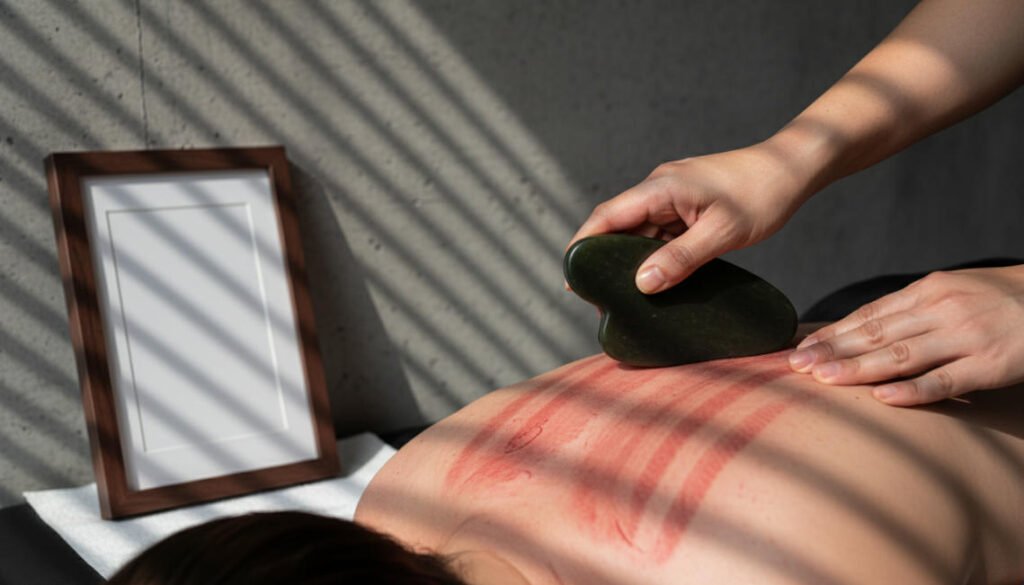
Today, Yi Yang Qianxi, a young Chinese actor and singer with a huge fan base, sparked heated discussion online with a remark made at a concert. The incident stemmed from Yi Yang Qianxi’s revelation that he had recently been feeling unwell and had attempted to use gua sha therapy to heal his condition. During the guasha process, due to excessive force, large purple-red marks appeared on his neck and chest. Afterward, he immediately took a hot shower to relax. As a result, he developed a high fever that evening. Many people have raised numerous questions: Does gua sha therapy really work? Why did he develop a high fever? Is guasha therapy truly safe? However, the core issue lies not in the gua sha technique itself, but in Yi Yang Qianxi’s post-processing treatment. The real risks of guasha therapy often stem from improper technique. What is Gua Sha? Why do Red Spots Appear After Gua Sha? Gua Sha, a traditional Chinese folk medical technique, originates in China. It involves gua sha various areas and acupuncture points on the body with a smooth, firm object, stimulating the flow of Qi and blood, thereby improving symptoms. The red spots that appear after guasha are considered “sha” in Traditional Chinese Medicine (TCM). This is a normal phenomenon. The appearance of “sha” indicates that harmful substances in the body are being gradually released from the skin through the guasha process. The appearance of “sha” can vary from person to person, with variations in color and size. Excluding TCM theories, the “sha” that occurs during guasha is actually caused by subcutaneous bleeding. Despite the use of a lubricant, the repeated friction between the gua sha tool and the skin, combined with downward pressure, can rupture capillaries beneath the surface of the skin, resulting in the appearance of red spots. Generally, the harder the guasha is and the more repetitive it is, the more pronounced the “sha” symptoms become. The large “sha” marks described by Yi Yang Qianxi are also due to these factors. Modern medical research has shown that guasha has been shown to be helpful for certain conditions. For example, a randomized controlled trial published in the international medical journal Pain Medicine found that gua sha effectively relieved chronic neck pain and improved neck function. However, this does not mean that gua sha is suitable for all people or all conditions. Despite its millennia-long history, most people know very little about it. While some may have heard of gua sha, they often lack the knowledge of how to use it, leading to numerous misconceptions, especially among foreign users. Common Misconceptions about Guasha 1. The Darker the “Sha”, the More Effective It Is. This is a common misconception. Indeed, in Traditional Chinese Medicine (TCM) theory, “sha” (sha) is a direct reflection of harmful substances in the body. Therefore, theoretically, the darker the “sha,” the more harmful substances the body has expelled. However, this is not the case. The color of the “sha” simply reflects the degree of the body’s reaction and does not indicate the effectiveness of the treatment. Different people’s skin conditions, thickness, and even skin tone can result in different “sha” colors. Therefore, when performing guasha, the improvement of symptoms and the body’s self-perception should be the criteria, rather than simply focusing on the amount of “sha” or the depth of its color. 2. Regular Gua Sha can Strengthen Your Body No, regular gua sha will not help strengthen the body. On the contrary, too frequent gua sha will weaken the body. This is because gua sha can cause symptoms under the skin, which in turn triggers the body’s immune system to respond. Excessive use will cause the body to be in a state of inflammation and high tension of the immune system for a long time, making the body weaker and reducing resistance. 3. After Gua Sha, You can Take A Hot Shower or Use A Fan/air Conditioner Immediately. This is one of the most dangerous misconceptions. After Gua Sha, the pores are open. Immediately exposing yourself to cold water or wind can easily cause a cold to enter the body, leading to headaches, fever, muscle aches, and other discomforts. This was also the culprit for Yi Yangqianxi’s high fever the night after guasha. You can wipe your body with a clean, hot towel after Gua Sha and keep warm. To avoid these mistakes, you need to master the correct Gua Sha technique. Correct Practice and Precautions of Guasha 1. Gua Sha Before 2. During Gua Sha 3. Gua Sha After Through analyzing and reviewing the incident involving Yi Yangqianxi’s high fever after guasha, we can clearly see that many people merely know the term but lack the specific techniques and precautions, leading to numerous adverse consequences. We must be clear that Gua Sha does have its unique benefits, but improper use can be risky. Only by correctly understanding the principles and symptoms of guasha, as well as the correct techniques, can the true benefits of Gua Sha be realized.

Thoughts on Gua Sha Practice and Precautions Inspired by the Yi Yangqianxi Incident Read More »

Today, Yi Yang Qianxi, a young Chinese actor and singer with a huge fan base, sparked heated discussion online with a remark made at a concert. The incident stemmed from Yi Yang Qianxi’s revelation that he had recently been feeling unwell and had attempted to use gua sha therapy to heal his condition. During the guasha process, due to excessive force, large purple-red marks appeared on his neck and chest. Afterward, he immediately took a hot shower to relax. As a result, he developed a high fever that evening. Many people have raised numerous questions: Does gua sha therapy really work? Why did he develop a high fever? Is guasha therapy truly safe? However, the core issue lies not in the gua sha technique itself, but in Yi Yang Qianxi’s post-processing treatment. The real risks of guasha therapy often stem from improper technique. What is Gua Sha? Why do Red Spots Appear After Gua Sha? Gua Sha, a traditional Chinese folk medical technique, originates in China. It involves gua sha various areas and acupuncture points on the body with a smooth, firm object, stimulating the flow of Qi and blood, thereby improving symptoms. The red spots that appear after guasha are considered “sha” in Traditional Chinese Medicine (TCM). This is a normal phenomenon. The appearance of “sha” indicates that harmful substances in the body are being gradually released from the skin through the guasha process. The appearance of “sha” can vary from person to person, with variations in color and size. Excluding TCM theories, the “sha” that occurs during guasha is actually caused by subcutaneous bleeding. Despite the use of a lubricant, the repeated friction between the gua sha tool and the skin, combined with downward pressure, can rupture capillaries beneath the surface of the skin, resulting in the appearance of red spots. Generally, the harder the guasha is and the more repetitive it is, the more pronounced the “sha” symptoms become. The large “sha” marks described by Yi Yang Qianxi are also due to these factors. Modern medical research has shown that guasha has been shown to be helpful for certain conditions. For example, a randomized controlled trial published in the international medical journal Pain Medicine found that gua sha effectively relieved chronic neck pain and improved neck function. However, this does not mean that gua sha is suitable for all people or all conditions. Despite its millennia-long history, most people know very little about it. While some may have heard of gua sha, they often lack the knowledge of how to use it, leading to numerous misconceptions, especially among foreign users. Common Misconceptions about Guasha 1. The Darker the “Sha”, the More Effective It Is. This is a common misconception. Indeed, in Traditional Chinese Medicine (TCM) theory, “sha” (sha) is a direct reflection of harmful substances in the body. Therefore, theoretically, the darker the “sha,” the more harmful substances the body has expelled. However, this is not the case. The color of the “sha” simply reflects the degree of the body’s reaction and does not indicate the effectiveness of the treatment. Different people’s skin conditions, thickness, and even skin tone can result in different “sha” colors. Therefore, when performing guasha, the improvement of symptoms and the body’s self-perception should be the criteria, rather than simply focusing on the amount of “sha” or the depth of its color. 2. Regular Gua Sha can Strengthen Your Body No, regular gua sha will not help strengthen the body. On the contrary, too frequent gua sha will weaken the body. This is because gua sha can cause symptoms under the skin, which in turn triggers the body’s immune system to respond. Excessive use will cause the body to be in a state of inflammation and high tension of the immune system for a long time, making the body weaker and reducing resistance. 3. After Gua Sha, You can Take A Hot Shower or Use A Fan/air Conditioner Immediately. This is one of the most dangerous misconceptions. After Gua Sha, the pores are open. Immediately exposing yourself to cold water or wind can easily cause a cold to enter the body, leading to headaches, fever, muscle aches, and other discomforts. This was also the culprit for Yi Yangqianxi’s high fever the night after guasha. You can wipe your body with a clean, hot towel after Gua Sha and keep warm. To avoid these mistakes, you need to master the correct Gua Sha technique. Correct Practice and Precautions of Guasha 1. Gua Sha Before 2. During Gua Sha 3. Gua Sha After Through analyzing and reviewing the incident involving Yi Yangqianxi’s high fever after guasha, we can clearly see that many people merely know the term but lack the specific techniques and precautions, leading to numerous adverse consequences. We must be clear that Gua Sha does have its unique benefits, but improper use can be risky. Only by correctly understanding the principles and symptoms of guasha, as well as the correct techniques, can the true benefits of Gua Sha be realized.

In the photo, a person's arm is holding a smooth Gua Sha tool against an infant's leg.

Gua Sha for Infant & Young Children Sparks Controversy: Safety, Ethics, and Legal Boundaries

If you are searching for answers about gua sha for infant care, here is the most important fact you need to know before reading any further: the global mainstream medical community does not currently recommend traditional gua sha for babies or toddlers. According to a 2020 systematic review published in PLOS ONE, while gua sha demonstrates measurable clinical effects in adult populations — including reduced neck pain and improved local circulation — there are zero large-scale randomized controlled trials examining its safety or efficacy in children under the age of five. That absence of evidence is not a minor footnote; it is the central reason pediatricians worldwide urge caution. Yet in millions of Asian households, gua sha for baby care has been practiced for generations, and the conversation between tradition and modern medicine is far from settled. This article gives you both sides — clearly, with the data you need to make an informed decision. What Global Medical Institutions Currently Say About Gua Sha for Infant Skin The American Academy of Pediatrics (AAP) consistently upholds a clear standard: any physical therapy applied to infants must demonstrate that benefit outweighs risk, supported by peer-reviewed clinical evidence. Currently, gua sha for infant treatment does not meet that standard. Infant skin is structurally distinct from adult skin — it is approximately 20–30% thinner, with capillaries sitting closer to the surface and connective tissue that has not yet fully matured. This means that even moderate scraping pressure — pressure an adult would barely register — can produce bruising, capillary rupture, and epidermal damage in a baby. The physical vulnerability of infant skin is not a cultural judgment; it is a documented anatomical fact that directly shapes how pediatric dermatologists approach any friction-based therapy applied to young children. Beyond skin structure, there is a second layer of risk that is equally important: infants cannot self-report pain. A two-month-old cannot tell you “this hurts” or “that pressure is too much.” This communication barrier makes it structurally impossible to maintain the real-time feedback loop that any responsible manual therapy depends on. Even a practitioner working with the most careful intentions operates without the safety net that verbal feedback provides — and that gap in safety infrastructure is a permanent feature of applying any manual technique to a pre-verbal child. Why Traditional Practice and Modern Medicine Don’t Always Agree Traditional Chinese Medicine (TCM) frameworks approach health through a lens that prioritizes qi circulation, wind-cold pathogen removal, and meridian balance — concepts that have guided family healthcare across East Asia for over two thousand years. Within these frameworks, a gentle form of gua sha for baby — using soft tools, minimal pressure, and very short sessions — has long been considered a valid first response to minor childhood ailments such as early-stage colds, fussiness, or disrupted sleep. This is not ignorance; it is a different model of how the body functions and recovers. Respecting that distinction is necessary for any honest evaluation of the evidence. The tension between these two systems is real and deserves to be treated directly. Modern medicine demands randomized controlled trials and quantifiable, reproducible outcomes. Traditional systems rely on generational observation and case-based knowledge accumulated across centuries. Neither approach is inherently superior in all contexts, but when the subject is an infant who cannot advocate for themselves, the burden of proof falls heavily on demonstrating that the intervention is safe. That proof, for gua sha for infant use, does not yet exist in the form that modern pediatric medicine requires — and that is the central fact this article is built around. What Is Baby Gua Sha, and How Is It Different from Adult Practice? Understanding the difference between adult gua sha and gua sha for infant application is essential before evaluating any risk accurately. Many parents who encounter warnings about gua sha picture the aggressive scraping that leaves dark red marks across an adult’s upper back — and that image, while accurate for certain adult applications, is not what traditional infant practitioners describe or perform. The Foundational Technique — Understanding Adult Gua Sha First In adult practice, how to use gua sha involves pressing a smooth-edged tool — traditionally made from jade, buffalo horn, or rose quartz — firmly against oiled skin and drawing it in repeated strokes along muscle groups or meridian lines. The deliberate goal is to produce sha: reddish or purplish petechiae that appear as superficial capillaries respond to controlled friction. According to research published in the Journal of Traditional and Complementary Medicine, this process stimulates local microcirculation, reduces myofascial tension, and triggers an anti-inflammatory response mediated by upregulation of heme oxygenase-1 (HO-1) — a protein with measurable tissue-protective properties. In healthy adults with no contraindications, this technique has produced documented benefits for musculoskeletal pain, chronic neck stiffness, and fatigue-related conditions. The material quality of the gua sha tool is a significant variable at this stage, and not only for performance reasons. For context on gemstone quality standards relevant to jade and crystal tools, the Gemological Institute of America (GIA) publishes internationally recognized grading criteria that distinguish genuine nephrite jade, jadeite, and rose quartz from imitation materials — a distinction that directly affects tool hardness, edge smoothness, and surface friction coefficient, all of which carry safety implications for skin contact. Choosing a tool verified against these standards means you can predict its behavior against skin with much greater confidence than with ungraded alternatives. How Gua Sha for Infant Differs — Lighter, Shorter, and Fundamentally Different in Goal Gua sha for infant application, as described within traditional practice, is not a scaled-down version of the adult technique. It is a categorically different approach in both mechanism and intent. The pressure used is described as genuinely feather-light — comparable to the gentle strokes of structured infant massage rather than the firm, deliberate scraping that defines adult gua sha. Sessions are kept to one to two minutes at most. The tool moves slowly and is never dragged with repeated, accumulating force. Critically, the

Gua Sha for Infant & Young Children Sparks Controversy: Safety, Ethics, and Legal Boundaries Read More »

If you are searching for answers about gua sha for infant care, here is the most important fact you need to know before reading any further: the global mainstream medical community does not currently recommend traditional gua sha for babies or toddlers. According to a 2020 systematic review published in PLOS ONE, while gua sha demonstrates measurable clinical effects in adult populations — including reduced neck pain and improved local circulation — there are zero large-scale randomized controlled trials examining its safety or efficacy in children under the age of five. That absence of evidence is not a minor footnote; it is the central reason pediatricians worldwide urge caution. Yet in millions of Asian households, gua sha for baby care has been practiced for generations, and the conversation between tradition and modern medicine is far from settled. This article gives you both sides — clearly, with the data you need to make an informed decision. What Global Medical Institutions Currently Say About Gua Sha for Infant Skin The American Academy of Pediatrics (AAP) consistently upholds a clear standard: any physical therapy applied to infants must demonstrate that benefit outweighs risk, supported by peer-reviewed clinical evidence. Currently, gua sha for infant treatment does not meet that standard. Infant skin is structurally distinct from adult skin — it is approximately 20–30% thinner, with capillaries sitting closer to the surface and connective tissue that has not yet fully matured. This means that even moderate scraping pressure — pressure an adult would barely register — can produce bruising, capillary rupture, and epidermal damage in a baby. The physical vulnerability of infant skin is not a cultural judgment; it is a documented anatomical fact that directly shapes how pediatric dermatologists approach any friction-based therapy applied to young children. Beyond skin structure, there is a second layer of risk that is equally important: infants cannot self-report pain. A two-month-old cannot tell you “this hurts” or “that pressure is too much.” This communication barrier makes it structurally impossible to maintain the real-time feedback loop that any responsible manual therapy depends on. Even a practitioner working with the most careful intentions operates without the safety net that verbal feedback provides — and that gap in safety infrastructure is a permanent feature of applying any manual technique to a pre-verbal child. Why Traditional Practice and Modern Medicine Don’t Always Agree Traditional Chinese Medicine (TCM) frameworks approach health through a lens that prioritizes qi circulation, wind-cold pathogen removal, and meridian balance — concepts that have guided family healthcare across East Asia for over two thousand years. Within these frameworks, a gentle form of gua sha for baby — using soft tools, minimal pressure, and very short sessions — has long been considered a valid first response to minor childhood ailments such as early-stage colds, fussiness, or disrupted sleep. This is not ignorance; it is a different model of how the body functions and recovers. Respecting that distinction is necessary for any honest evaluation of the evidence. The tension between these two systems is real and deserves to be treated directly. Modern medicine demands randomized controlled trials and quantifiable, reproducible outcomes. Traditional systems rely on generational observation and case-based knowledge accumulated across centuries. Neither approach is inherently superior in all contexts, but when the subject is an infant who cannot advocate for themselves, the burden of proof falls heavily on demonstrating that the intervention is safe. That proof, for gua sha for infant use, does not yet exist in the form that modern pediatric medicine requires — and that is the central fact this article is built around. What Is Baby Gua Sha, and How Is It Different from Adult Practice? Understanding the difference between adult gua sha and gua sha for infant application is essential before evaluating any risk accurately. Many parents who encounter warnings about gua sha picture the aggressive scraping that leaves dark red marks across an adult’s upper back — and that image, while accurate for certain adult applications, is not what traditional infant practitioners describe or perform. The Foundational Technique — Understanding Adult Gua Sha First In adult practice, how to use gua sha involves pressing a smooth-edged tool — traditionally made from jade, buffalo horn, or rose quartz — firmly against oiled skin and drawing it in repeated strokes along muscle groups or meridian lines. The deliberate goal is to produce sha: reddish or purplish petechiae that appear as superficial capillaries respond to controlled friction. According to research published in the Journal of Traditional and Complementary Medicine, this process stimulates local microcirculation, reduces myofascial tension, and triggers an anti-inflammatory response mediated by upregulation of heme oxygenase-1 (HO-1) — a protein with measurable tissue-protective properties. In healthy adults with no contraindications, this technique has produced documented benefits for musculoskeletal pain, chronic neck stiffness, and fatigue-related conditions. The material quality of the gua sha tool is a significant variable at this stage, and not only for performance reasons. For context on gemstone quality standards relevant to jade and crystal tools, the Gemological Institute of America (GIA) publishes internationally recognized grading criteria that distinguish genuine nephrite jade, jadeite, and rose quartz from imitation materials — a distinction that directly affects tool hardness, edge smoothness, and surface friction coefficient, all of which carry safety implications for skin contact. Choosing a tool verified against these standards means you can predict its behavior against skin with much greater confidence than with ungraded alternatives. How Gua Sha for Infant Differs — Lighter, Shorter, and Fundamentally Different in Goal Gua sha for infant application, as described within traditional practice, is not a scaled-down version of the adult technique. It is a categorically different approach in both mechanism and intent. The pressure used is described as genuinely feather-light — comparable to the gentle strokes of structured infant massage rather than the firm, deliberate scraping that defines adult gua sha. Sessions are kept to one to two minutes at most. The tool moves slowly and is never dragged with repeated, accumulating force. Critically, the

gua sha and Temu

Analyzing Why Temu Gua Sha is So Cheap & Expanded to Other Platforms

The prices of Gua Sha tools vary significantly across different platforms, with Temu often offering the cheapest prices, often significantly outpacing other platforms. Why are prices so different for the same product? Today, we’ll analyze the reasons. (As a leading gua sha wholesale manufacturer, we understand the rules and have worked with Temu before, so we’re well aware of some of them.) We’ll explain this from three perspectives: platform strategy, the partnership model between sellers and the platform, and merchant product positioning. What is Temu and Its Platform Strategy? Temu, with its comprehensive product range and low prices, has seen rapid growth in recent years overseas. Its popularity is even eclipsing established e-commerce platforms like Amazon. However, Temu’s origins lie in China, not Europe or the US. Temu’s predecessor stems from the Chinese retail platform Pinduoduo. China boasts numerous retail platforms, with Taobao and JD.com initially dominating the market. With the emergence of Pinduoduo, a three-way competition has emerged. Pinduoduo’s sales strategy in China mirrors its overseas strategy: rapidly establishing its brand and capturing market share through extremely low prices. While its rapid expansion has led to a poor brand reputation due to its neglect of product quality and the authenticity of its merchants, its unparalleled pricing has also significantly impacted JD.com and Taobao. The resulting consensus among Chinese customers is as follows: Temu Platform Sales Strategy: Temu (also known as the overseas version of Pinduoduo) employs the same sales strategy as its counterparts in China: using “extremely low prices” as its primary selling point, using various platform subsidies and paid advertising to capture market share. They then leverage social media to increase exposure and attract audiences. Temu Gua Sha Hosting Model: Temu’s Collaboration with Gua Sha Sellers: Pricing is the Core The most striking feature of Temu’s partnerships with sellers is that pricing power rests almost entirely with the platform. Unlike platforms like Amazon and eBay, which allow sellers to set their own prices, Temu adopts a “full-management” model: sellers are solely responsible for supplying products, while the platform oversees pricing, operations, logistics, and after-sales service. This means that product prices are not determined by sellers but rather by Temu’s data algorithms, market comparisons, and traffic strategies. Under this mechanism, Temu’s core goal is to ensure that the platform maintains the “lowest prices online.” The platform compares prices for similar products and continuously reduces sellers’ offers, ensuring that consumers on Temu consistently see lower prices than on other e-commerce platforms. Small commodities like gua sha tools, which are low-cost to produce and easy to ship, are particularly susceptible to being categorized as “low-priced bestsellers.” This model also brings changes to the seller’s profit logic: However, this partnership also presents a potential conflict of interest. For Temu, extremely low prices can continuously bring in traffic and market share; but for sellers, if the platform over-cuts prices, it could erode their profit margins in the long term, forcing some small and medium-sized suppliers to withdraw. This forces sellers to rethink their product channel positioning and pricing strategies when working with Temu. As a leading gua sha wholesale manufacture, we are constantly looking for platforms to expand our sales channels. Faced with the rapid growth of Temu, we naturally have also cooperated with it. Therefore, we have a deep understanding of Temu’s cooperation model. We need to submit our products to the Temu platform, and the product list includes our selling prices. Temu officials will search the entire internet for data, including products on their own platform. Once all data is collected, Temu officials will modify the product list provided by the merchant and send it back to the merchant. The modified product list includes which products are eligible for listing and the purchase price. Only if you agree to Temu’s purchase price will your products be displayed on the Temu platform. This leads to a serious problem: the purchase price of the products is far below our acceptable range. The main reason is that: To address this situation, we had to remove long-standing, hard-to-sell inventory and use various methods to lower product costs, even if this meant quality issues. There was no other solution: if you couldn’t accept Temu’s pricing, your products wouldn’t be sold on the platform. While merchants could dispute the purchase price and resubmit it, our experience showed that the success rate was low. For this reason, we abandoned the idea of  using Temu as our primary platform for Gua Sha retail. Product Positioning and Response of Gua Sha Manufacturers As mentioned above, gua sha manufacturers have lost their pricing power in Temu, which is difficult for most merchants to accept. At the very least, they will not sell their company’s mainstream products on it, nor will they use it as a mainstream sales platform: 1. Low-end positioning: catering to the Temu platform’s “explosive thinking” 2. Mid-to-high-end positioning: Differentiation and breakthrough 3. Multi-level market layout: “kill two birds with one stone” Conclusion Admittedly, Temu should offer the lowest retail prices for gua sha products online, based solely on price. However, we can’t judge the issue solely by price. We believe quality is a more important factor. However, due to platform regulations, many wholesale manufacturers of gua sha products cannot sell high-quality gua sha products on Temu, as it would be a thankless task for them. So, if you’re looking to source high-quality gua sha products, brand-owned websites and Amazon are better options. The decision is yours; the balance between price and quality is different for everyone.

Analyzing Why Temu Gua Sha is So Cheap & Expanded to Other Platforms Read More »

The prices of Gua Sha tools vary significantly across different platforms, with Temu often offering the cheapest prices, often significantly outpacing other platforms. Why are prices so different for the same product? Today, we’ll analyze the reasons. (As a leading gua sha wholesale manufacturer, we understand the rules and have worked with Temu before, so we’re well aware of some of them.) We’ll explain this from three perspectives: platform strategy, the partnership model between sellers and the platform, and merchant product positioning. What is Temu and Its Platform Strategy? Temu, with its comprehensive product range and low prices, has seen rapid growth in recent years overseas. Its popularity is even eclipsing established e-commerce platforms like Amazon. However, Temu’s origins lie in China, not Europe or the US. Temu’s predecessor stems from the Chinese retail platform Pinduoduo. China boasts numerous retail platforms, with Taobao and JD.com initially dominating the market. With the emergence of Pinduoduo, a three-way competition has emerged. Pinduoduo’s sales strategy in China mirrors its overseas strategy: rapidly establishing its brand and capturing market share through extremely low prices. While its rapid expansion has led to a poor brand reputation due to its neglect of product quality and the authenticity of its merchants, its unparalleled pricing has also significantly impacted JD.com and Taobao. The resulting consensus among Chinese customers is as follows: Temu Platform Sales Strategy: Temu (also known as the overseas version of Pinduoduo) employs the same sales strategy as its counterparts in China: using “extremely low prices” as its primary selling point, using various platform subsidies and paid advertising to capture market share. They then leverage social media to increase exposure and attract audiences. Temu Gua Sha Hosting Model: Temu’s Collaboration with Gua Sha Sellers: Pricing is the Core The most striking feature of Temu’s partnerships with sellers is that pricing power rests almost entirely with the platform. Unlike platforms like Amazon and eBay, which allow sellers to set their own prices, Temu adopts a “full-management” model: sellers are solely responsible for supplying products, while the platform oversees pricing, operations, logistics, and after-sales service. This means that product prices are not determined by sellers but rather by Temu’s data algorithms, market comparisons, and traffic strategies. Under this mechanism, Temu’s core goal is to ensure that the platform maintains the “lowest prices online.” The platform compares prices for similar products and continuously reduces sellers’ offers, ensuring that consumers on Temu consistently see lower prices than on other e-commerce platforms. Small commodities like gua sha tools, which are low-cost to produce and easy to ship, are particularly susceptible to being categorized as “low-priced bestsellers.” This model also brings changes to the seller’s profit logic: However, this partnership also presents a potential conflict of interest. For Temu, extremely low prices can continuously bring in traffic and market share; but for sellers, if the platform over-cuts prices, it could erode their profit margins in the long term, forcing some small and medium-sized suppliers to withdraw. This forces sellers to rethink their product channel positioning and pricing strategies when working with Temu. As a leading gua sha wholesale manufacture, we are constantly looking for platforms to expand our sales channels. Faced with the rapid growth of Temu, we naturally have also cooperated with it. Therefore, we have a deep understanding of Temu’s cooperation model. We need to submit our products to the Temu platform, and the product list includes our selling prices. Temu officials will search the entire internet for data, including products on their own platform. Once all data is collected, Temu officials will modify the product list provided by the merchant and send it back to the merchant. The modified product list includes which products are eligible for listing and the purchase price. Only if you agree to Temu’s purchase price will your products be displayed on the Temu platform. This leads to a serious problem: the purchase price of the products is far below our acceptable range. The main reason is that: To address this situation, we had to remove long-standing, hard-to-sell inventory and use various methods to lower product costs, even if this meant quality issues. There was no other solution: if you couldn’t accept Temu’s pricing, your products wouldn’t be sold on the platform. While merchants could dispute the purchase price and resubmit it, our experience showed that the success rate was low. For this reason, we abandoned the idea of  using Temu as our primary platform for Gua Sha retail. Product Positioning and Response of Gua Sha Manufacturers As mentioned above, gua sha manufacturers have lost their pricing power in Temu, which is difficult for most merchants to accept. At the very least, they will not sell their company’s mainstream products on it, nor will they use it as a mainstream sales platform: 1. Low-end positioning: catering to the Temu platform’s “explosive thinking” 2. Mid-to-high-end positioning: Differentiation and breakthrough 3. Multi-level market layout: “kill two birds with one stone” Conclusion Admittedly, Temu should offer the lowest retail prices for gua sha products online, based solely on price. However, we can’t judge the issue solely by price. We believe quality is a more important factor. However, due to platform regulations, many wholesale manufacturers of gua sha products cannot sell high-quality gua sha products on Temu, as it would be a thankless task for them. So, if you’re looking to source high-quality gua sha products, brand-owned websites and Amazon are better options. The decision is yours; the balance between price and quality is different for everyone.

gua sha manufactuer material analysis

Gua Sha Manufacturers: Gua Sha Material Market Analysis

In recent years, with the continuous expansion of the Gua Sha market and a surge in demand, the market trends and price fluctuations of Gua Sha materials have become a key focus for many Gua Sha manufacturer. Low prices mean a sharp reduction in production costs, while securing large quantities of raw materials ensures a stable supply. Both are directly related to the manufacturer’s specific interests. However, for raw materials such as crystal and jade, their market supply is directly affected by mining volume, resulting in drastic price fluctuations. For example, the current amethyst raw material, affected by mining volume, has led to a sharp increase in cost and a shortage of supply. Today, we will analyze the market trends of amethyst raw materials, starting with amethyst raw materials and branching out to other crystal and jade materials. 1. Why is Amethyst Gua Sha so Hard to Come By? Amethyst in China is primarily divided into two types: “dog-tooth amethyst” (the raw material contains white banding), and “flower amethyst” (which lacks the white banding). Originally, the price of “dog-tooth amethyst” was slightly lower than that of “flower amethyst,” but with increasing material scarcity, the prices of both have risen sharply, and are now roughly on par. Most of the world’s amethyst is mined in regions such as South Africa, Brazil, and Uruguay. Amethyst is inherently scarcer than crystals like rose quartz. In addition to recent years of heavy mining, several major mines have been depleted, and new mines have yet to be discovered. This has led to an extreme shortage of amethyst in the raw material market. Not only is the quantity scarce, but the quality is also subpar. This situation has persisted for nearly a year and shows no signs of improvement. Besides the scarcity of raw material, another major factor is the structure of amethyst’s crystals. Amethyst cannot be produced in the form of large crystals like rose quartz, which can weigh several tons. Instead, it typically weighs around one or two kilograms. This size makes it difficult to create gua sha tools. Most raw amethyst is not large enough for this purpose, and can only be made into small carvings. Future Trend: Alternative materials (dyed crystal/synthetic amethyst) may emerge, but genuine amethyst will remain the mainstream in the high-end market. 2. Analysis of Other Crystal/Jade Gua Sha Materials 1. Mining situation: 2. Analysis of the Market Sales Situation of Gua Sha materials: 3. Challenges Faced By Supply Chain and Gua Sha Manufacturer In recent years, with the booming Gua Sha market, a large amount of raw stones have been mined. However, raw stone resources are limited, and some precious raw stones are at risk of depletion, while new resources are unlikely to be discovered in a short period of time. This has led to a large shortage of raw materials, with amethyst being a typical example. This situation has forced Gua Sha manufacturer to lock in resources in advance, resulting in increased financial pressure. The international market is increasingly demanding sustainable mining and environmental certification, and some supply chains are facing compliance challenges. Controls on the export of rough diamonds will also become increasingly stringent. The high-end market has higher requirements for the polishing, design, and branding of Gua Sha blades. While this will drive the upgrading of manufacturing processes in the industry to a certain extent, it also brings more challenges to Gua Sha manufacturer. The material market for Gua Sha tools is no longer simply a matter of raw material selection; it is a comprehensive reflection of supply chains, environmental policies, and global consumer trends. Given the scarcity of amethyst resources, Gua Sha manufacturer must not only seize opportunities in the high-end market but also actively explore alternative materials and innovative products to maintain their advantages in the fierce competition of the future.

Gua Sha Manufacturers: Gua Sha Material Market Analysis Read More »

In recent years, with the continuous expansion of the Gua Sha market and a surge in demand, the market trends and price fluctuations of Gua Sha materials have become a key focus for many Gua Sha manufacturer. Low prices mean a sharp reduction in production costs, while securing large quantities of raw materials ensures a stable supply. Both are directly related to the manufacturer’s specific interests. However, for raw materials such as crystal and jade, their market supply is directly affected by mining volume, resulting in drastic price fluctuations. For example, the current amethyst raw material, affected by mining volume, has led to a sharp increase in cost and a shortage of supply. Today, we will analyze the market trends of amethyst raw materials, starting with amethyst raw materials and branching out to other crystal and jade materials. 1. Why is Amethyst Gua Sha so Hard to Come By? Amethyst in China is primarily divided into two types: “dog-tooth amethyst” (the raw material contains white banding), and “flower amethyst” (which lacks the white banding). Originally, the price of “dog-tooth amethyst” was slightly lower than that of “flower amethyst,” but with increasing material scarcity, the prices of both have risen sharply, and are now roughly on par. Most of the world’s amethyst is mined in regions such as South Africa, Brazil, and Uruguay. Amethyst is inherently scarcer than crystals like rose quartz. In addition to recent years of heavy mining, several major mines have been depleted, and new mines have yet to be discovered. This has led to an extreme shortage of amethyst in the raw material market. Not only is the quantity scarce, but the quality is also subpar. This situation has persisted for nearly a year and shows no signs of improvement. Besides the scarcity of raw material, another major factor is the structure of amethyst’s crystals. Amethyst cannot be produced in the form of large crystals like rose quartz, which can weigh several tons. Instead, it typically weighs around one or two kilograms. This size makes it difficult to create gua sha tools. Most raw amethyst is not large enough for this purpose, and can only be made into small carvings. Future Trend: Alternative materials (dyed crystal/synthetic amethyst) may emerge, but genuine amethyst will remain the mainstream in the high-end market. 2. Analysis of Other Crystal/Jade Gua Sha Materials 1. Mining situation: 2. Analysis of the Market Sales Situation of Gua Sha materials: 3. Challenges Faced By Supply Chain and Gua Sha Manufacturer In recent years, with the booming Gua Sha market, a large amount of raw stones have been mined. However, raw stone resources are limited, and some precious raw stones are at risk of depletion, while new resources are unlikely to be discovered in a short period of time. This has led to a large shortage of raw materials, with amethyst being a typical example. This situation has forced Gua Sha manufacturer to lock in resources in advance, resulting in increased financial pressure. The international market is increasingly demanding sustainable mining and environmental certification, and some supply chains are facing compliance challenges. Controls on the export of rough diamonds will also become increasingly stringent. The high-end market has higher requirements for the polishing, design, and branding of Gua Sha blades. While this will drive the upgrading of manufacturing processes in the industry to a certain extent, it also brings more challenges to Gua Sha manufacturer. The material market for Gua Sha tools is no longer simply a matter of raw material selection; it is a comprehensive reflection of supply chains, environmental policies, and global consumer trends. Given the scarcity of amethyst resources, Gua Sha manufacturer must not only seize opportunities in the high-end market but also actively explore alternative materials and innovative products to maintain their advantages in the fierce competition of the future.

Scroll to Top

Getting Fast Reply

gua sha wholesale
Please enter product details (such as color, size, materials etc.) and other specifc requirements to receive an accurate quote.