
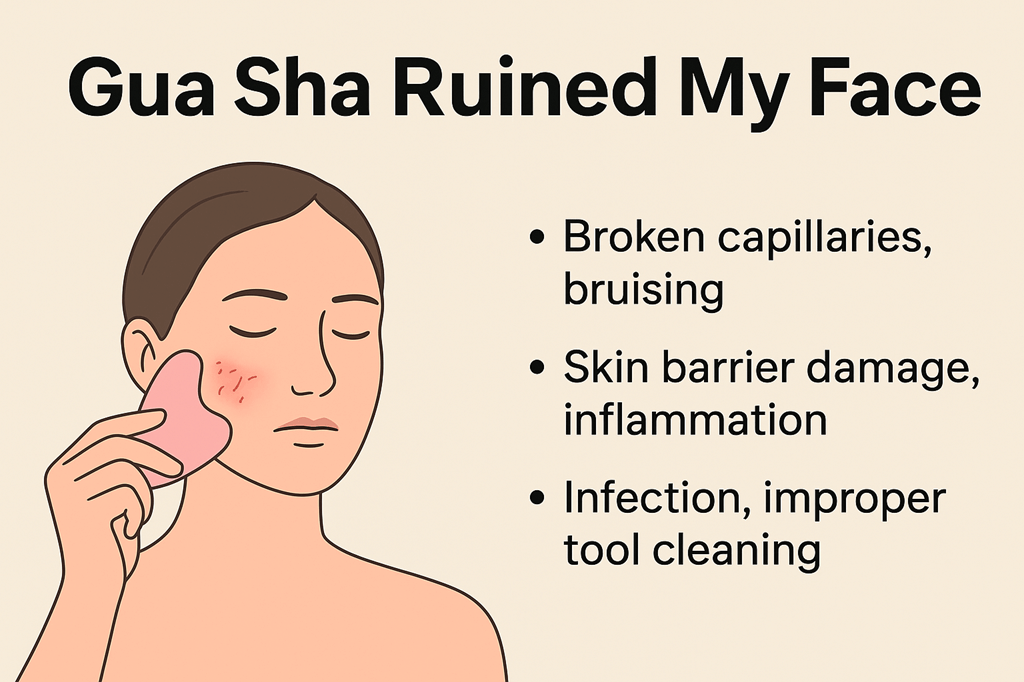
“Gua sha ruined my face.” If you’ve typed those words into a search bar, you’re not alone — but you may be working from incomplete information. Here is the conclusion first: in the overwhelming majority of documented cases, gua sha itself did not cause the damage. The damage came from three controllable, identifiable factors — incorrect technique, incompatible skin conditions, and unsafe tools. The good news? Most mild facial injuries from gua sha resolve on their own within 2 to 3 days of stopping use. Severe cases, such as visible bruising or persistent swelling, typically clear within one week with basic first-aid intervention. Before you abandon gua sha on face entirely, the evidence strongly suggests that what went wrong is fixable — and preventable.
Understanding why your skin reacted the way it did is the fastest path to recovery. This guide breaks down every documented cause of gua sha facial damage, ranks them by frequency and severity, and gives you a concrete repair roadmap based on your specific injury type. Whether you’re dealing with broken capillaries, unexpected sensitivity, or a reaction you can’t quite explain, the answer is almost certainly in one of the three categories covered below.
Did Gua Sha Actually Ruin Your Face? What the Evidence Really Shows
The phrase “gua sha ruined my face” has become one of the most searched skincare concerns of the past three years, spreading rapidly across Reddit threads, TikTok comment sections, and beauty forums. Yet when you examine the clinical and practitioner literature on facial gua sha, a striking pattern emerges: the therapy itself is not the primary variable. According to a widely cited overview published by the National Center for Complementary and Integrative Health (NCCIH), gua sha is broadly considered safe when performed correctly, with adverse effects almost universally traced back to application errors rather than the technique’s fundamental mechanism. This distinction matters enormously — because it means the problem is solvable.
What makes this topic genuinely complicated is that real injuries do occur. Dismissing every complaint as user error would be both inaccurate and unhelpful. Broken capillaries, skin barrier disruption, bacterial infection, and heightened sensitivity are all documented outcomes of improper facial gua sha practice. The question is not whether these injuries happen — they do — but why they happen and whether they are attributable to the therapy or to the conditions surrounding its application. In nearly every well-documented case, the answer points to at least one of three external factors: technique, skin state, or tool quality.
The 3-Factor Framework — Why “Gua Sha Ruined My Face” Is Almost Never the Whole Story
Researchers and licensed practitioners who study traditional East Asian medicine consistently organize gua sha adverse events into a predictable three-part framework. The first factor is operator error, which accounts for the largest share of reported facial injuries by a significant margin. The second is individual skin condition and skin type variation, which determines how a given level of pressure or friction will translate into tissue response. The third is tool-related issues, including material safety and shape compatibility with facial anatomy. Understanding which factor — or combination of factors — applies to your situation is the essential first step before any recovery protocol can be effective.
This framework is not just theoretical. A 2021 practitioner survey referenced in the Journal of Integrative Medicine found that over 78% of reported skin complaints following gua sha treatment were linked to identifiable technique deviations, not to the therapy itself. That figure should reframe how you interpret your own experience. If gua sha on face left your skin red, tender, or broken out, the most statistically likely explanation is not that gua sha is dangerous — it is that something specific went wrong in one of three measurable places. The sections that follow address each one in detail.
The Overlooked Psychological Factor — When “Gua Sha Ruined My Face” Is a Perception, Not a Physical Reality
Before moving into the three objective factors, there is one additional cause that almost never appears in mainstream skincare articles, yet represents a meaningful share of negative gua sha experiences. A subset of users — particularly those who discovered gua sha through heavily marketed social media content — develop expectations of dramatic, rapid transformation: lifted jawlines, erased fine lines, visibly sculpted cheekbones, all within weeks. When those results do not materialize after consistent use, the psychological response can be surprisingly intense.
The gap between expectation and reality can distort perception so significantly that users begin interpreting their unchanged or slowly improving skin as deterioration. Skin that looks the same as it did three months ago starts to feel worse than it did before they began — not because the tissue has changed, but because the benchmark has shifted. This phenomenon is not imaginary, but it is important to recognize it for what it is: a response to misleading marketing, not evidence that gua sha caused physical harm. This situation is genuinely rare among the broader population of gua sha users, and it should not be conflated with the documented physical injuries discussed in the chapters that follow. Identifying which category your experience falls into will determine your entire recovery strategy.
The 3 Real Reasons Gua Sha on Face Goes Wrong
If you have concluded that gua sha ruined my face is an accurate description of your experience, this chapter is where the diagnosis begins. The three factors outlined below are not ranked arbitrarily — they are ordered by frequency of occurrence, from the most commonly reported cause of facial gua sha injury to the least. Working through them systematically will help you identify exactly where your practice deviated from safe parameters, which in turn determines the most effective recovery approach. Skipping this diagnostic step and jumping straight to treatment is one of the most common mistakes people make after a negative gua sha experience.
Reason 1 — Wrong Technique: The Leading Cause Behind “Gua Sha Ruined My Face” Complaints
Technique error is responsible for the majority of facial gua sha injuries reported across practitioner case studies and user communities alike. Within this category, four specific mistakes appear repeatedly, and understanding each one gives you both a diagnosis and a prevention strategy for the future.
Excessive pressure is by far the most frequent offender. Many people who begin practicing gua sha on face have prior experience with body gua sha, where significantly more pressure is applied to reach deeper muscle tissue. The structural difference between facial skin and body skin is substantial: facial tissue is thinner, more vascular, and sits over a far more complex network of small capillaries. Applying body-level pressure to the face does not produce a more effective treatment — it produces broken capillaries, compromised skin barrier function, and in repeated cases, chronic sensitivity that can take weeks to resolve. A 2019 review published via the Pacific College of Health and Science notes that pressure calibration is one of the most critical — and most frequently mismanaged — variables in facial gua sha practice. This means that if you adjust nothing else about your technique, reducing pressure alone will eliminate a significant share of your risk.
Incorrect stroke direction is the second most common technique error, and it is particularly damaging because its effects are cumulative and slow to become visible. Facial gua sha strokes should generally follow the direction of lymphatic drainage — outward from the center of the face and upward along the neck. Strokes applied in the opposite direction, or in random patterns without anatomical awareness, can disrupt lymphatic flow rather than support it, contributing to puffiness, congestion, and over time, a gradual breakdown in skin tone rather than the improvement users were seeking.
Insufficient lubrication is the third error, and it is strikingly underestimated. The friction generated between a gua sha tool and dry or inadequately lubricated skin is responsible for a substantial proportion of surface-level injuries — micro-tears, redness, and texture disruption that users frequently misattribute to the tool itself or to their skin type. A facial oil, serum, or practitioner-grade lubricant is not optional. It is a functional requirement that directly determines whether the tool glides safely or drags destructively across the skin surface. Without adequate lubrication, even a correctly shaped, high-quality tool can cause damage.
Inadequate cleaning of gua sha tools is the fourth technique-related cause, and arguably the one with the most serious potential consequences. During each session, your gua sha tool comes into direct contact with facial oils, applied serums or creams, and the natural secretions of your skin. If the tool is not thoroughly cleaned and sanitized before and after every use, this residue becomes a culture medium for bacteria and, in some cases, viral pathogens. A contaminated tool reintroduced to facial skin — especially skin that has been slightly compromised by friction — creates an infection pathway that has nothing to do with gua sha as a therapy and everything to do with basic hygiene practice.
Reason 2 — Skin Condition Incompatibility: When Your Skin State Makes Gua Sha on Face Genuinely Risky
Individual skin variation is the second most significant factor behind gua sha facial injuries, and it operates on two distinct levels. The first is baseline skin type — the fixed constitutional characteristics of your skin that determine its tolerance for friction, pressure, and mechanical stimulation. Some people have a naturally thicker epidermal layer and higher baseline tolerance; others have constitutionally thinner, more reactive skin that will respond negatively to stimulation levels that pose no problem for the majority of users. Neither type is defective — they simply require different calibration. Applying a standardized gua sha protocol without accounting for your individual skin type is a form of operator error in itself, even if the technique is otherwise correct.
The second level is skin state — the dynamic, changeable condition of your skin on any given day or period. This is where the most preventable injuries occur. Gua sha on face is contraindicated — meaning it should not be performed — on skin that currently presents any of the following conditions: open wounds or active lesions of any kind, active inflammatory acne or cystic breakouts, clinically diagnosed sensitive or reactive skin in a flare state, and skin that has recently undergone chemical exfoliation (such as AHA or BHA acid treatments) or any form of aesthetic medical procedure. The American Academy of Dermatology consistently advises against mechanical facial stimulation during any period of active skin inflammation or compromised barrier function, for precisely the reason that compromised skin lacks the structural integrity to withstand even gentle friction without sustaining further damage.
Performing gua sha on face when your skin is in any of the above states does not produce a milder version of normal results — it produces injury. The compromised surface cannot differentiate between therapeutic stimulation and mechanical assault. If your gua sha experience resulted in a significant flare of sensitivity, breakouts, or barrier disruption, reviewing your skin state at the time of use is an essential diagnostic step.
Reason 3 — Unsafe or Incompatible Gua Sha Tools: The Least Frequent but Most Hidden Risk
Tool-related injury is the least frequently occurring of the three primary factors, but it carries a specific quality of risk that the other two do not: it can be chemically complex, difficult to self-diagnose, and in some cases, slower to manifest. The majority of gua sha tools on the market are safe when they are made from appropriate materials — natural jade, rose quartz, nephrite, aventurine, or medical-grade stainless steel are all materials with well-established safety profiles for skin contact. The problem arises at the lower end of the market, where cost-reduction pressure leads some manufacturers to use plastics, resins, or composite materials that contain chemical additives capable of leaching onto skin during use.
These additives — which can include plasticizers, colorants, and stabilizing compounds — are not always visible or detectable by the end user. Their effects may present as contact dermatitis, unexplained breakouts, or chronic irritation that does not resolve with technique correction, because the source of irritation is not technique — it is chemistry. If your skin reaction persists despite correcting your pressure, direction, lubrication, and hygiene practices, material safety becomes the primary suspect.
The second tool-related risk factor is shape incompatibility. Not all gua sha tools are designed for facial use, and using a body or scalp tool on the face creates a mechanical problem. Scalp gua sha combs, for example, are designed with tine-style projections that part through hair — when applied to facial skin, those same projections concentrate the applied force across a dramatically smaller contact area, producing pressure levels far exceeding what the user intends. The result is localized bruising or capillary damage from a tool used at what feels like a normal pressure. Checking that your tool is specifically designed and dimensioned for facial anatomy is a non-negotiable baseline. When evaluating material authenticity for natural stone tools, gemological certifications from institutions such as the Gemological Institute of America (GIA) or the International Gem Society (IGS) provide a reliable reference standard for understanding material classification and safety.
How to Fix It — Gua Sha Face Damage Recovery by Type and Severity
Knowing that gua sha ruined my face is one thing — knowing what to actually do about it is another. The recovery protocol that applies to your situation is not universal. It depends directly on which of the three causative factors was responsible for your injury, and on the severity of the damage that resulted. Applying the wrong recovery approach — for example, using active skincare ingredients on a mechanically compromised barrier, or waiting passively when a chemical reaction requires medical attention — can extend your recovery timeline significantly or cause secondary damage. The three recovery pathways below are organized to match the three causative categories identified in Chapter 2, and each one includes a clear severity threshold that tells you when self-care is sufficient and when professional intervention is necessary.
Recovery Path 1 — Fixing Technique-Based Gua Sha Damage: What to Do in the First 72 Hours
For injuries caused by incorrect technique — excessive pressure, wrong stroke direction, insufficient lubrication, or tool contamination — the recovery process is more straightforward than most people expect, provided the damage is caught early and the right steps are taken immediately. The single most important action you can take is also the simplest: stop using your gua sha tool immediately and completely. This sounds obvious, but a significant number of users continue practicing gua sha on face in an attempt to “work through” the sensitivity, believing that the discomfort is a normal part of an adjustment period. It is not. Continuing to apply mechanical stimulation to already-compromised skin will extend and deepen the injury rather than resolve it.
For mild technique-based damage — which presents as surface redness, slight tenderness to touch, or temporary heightened sensitivity without visible structural changes — the skin’s natural repair cycle is typically sufficient. Most users in this category see a full return to baseline skin condition within 48 to 72 hours of stopping use, provided they support the barrier during that window rather than further challenging it. This means eliminating all active exfoliants, retinoids, and high-concentration acids from your routine for the duration of the recovery period. Your skin is engaged in repair work; adding chemical stimulation during that process redirects resources and slows healing. Switch to a simple, fragrance-free moisturizer and allow the barrier to rebuild without interference. This means you can achieve a full recovery from mild technique-related gua sha damage without any specialist products, medical appointments, or significant expense — provided you act quickly and resist the urge to over-treat.
For severe technique-based damage — which presents as visible bruising beneath the skin surface, pronounced swelling that does not subside within a few hours, or pain that is disproportionate to the level of pressure applied — a more structured response is required. Apply a clean ice pack or cold compress wrapped in a thin cloth to the affected area for 10 to 15 minutes, repeating every two to three hours during the first 24 hours. Cold application constricts the broken or leaking capillaries, reduces inflammatory response, and limits the spread of bruising into surrounding tissue. Do not apply heat, do not massage the area, and do not apply any product that contains alcohol, menthol, or fragrance compounds, as these will further compromise already-damaged tissue. If bruising is extensive, swelling is severe, or pain persists beyond 48 hours without improvement, seek evaluation from a dermatologist or general practitioner. Based on documented recovery timelines from gua sha practitioners, the vast majority of even significant technique-based facial injuries resolve fully within seven days with appropriate first-aid management.
Recovery Path 2 — Addressing Skin-Type and Skin-State Related Gua Sha Injuries
Injuries that arise from skin condition incompatibility — either from using gua sha on face during a contraindicated skin state or from failing to account for a constitutionally reactive skin type — follow a similar initial recovery structure to technique-based injuries, with one critical additional consideration: the underlying skin condition that made gua sha risky in the first place also needs to be addressed as part of the recovery protocol.
For mild cases in this category — such as a temporary flare of sensitivity in skin that was already slightly reactive, or minor irritation following gua sha use during a mild breakout — the immediate response is identical to technique-based recovery. Stop all gua sha activity, simplify your skincare routine to barrier-supportive basics, and allow 48 to 72 hours for the acute response to subside. What differs here is the longer-term recalibration required before resuming gua sha practice. You will need to honestly assess your baseline skin type and identify which skin states represent genuine contraindications for you personally — not based on general guidance alone, but based on your skin’s demonstrated response. This self-assessment is an investment that pays dividends across your entire skincare practice, not just your gua sha routine. This means you can eventually return to gua sha on face safely — but the path back requires a more careful, individualized approach than simply waiting for the irritation to clear.
For more serious skin-state injuries — particularly those involving a significant barrier disruption event, a widespread inflammatory response across multiple facial zones, or a reaction that occurs in the context of recent chemical exfoliation or medical aesthetic treatment — self-management is insufficient. These situations require professional dermatological evaluation, both to assess the extent of barrier compromise and to determine whether any secondary infection or inflammatory complication has developed. According to guidance from the American Academy of Dermatology, compromised skin barriers are significantly more vulnerable to secondary infection and environmental damage, making prompt professional assessment an important protective step rather than an overreaction.
Recovery Path 3 — When Gua Sha Tools Cause Chemical Reactions: Why This Requires Professional Help
Of the three recovery pathways, chemical injury from unsafe gua sha tool materials is the most complex to manage and the one most likely to be misdiagnosed or undertreated through self-care alone. The fundamental challenge is identification: unlike technique-based or skin-state injuries, where the cause is relatively visible and the timeline is clear, chemical reactions from material leaching can present with a delayed onset, appearing one to three days after use rather than immediately. They can also mimic other conditions — contact dermatitis from a tool material can look nearly identical to an allergic reaction to a skincare ingredient, making it easy to misattribute the cause and therefore apply the wrong treatment.
If you suspect your skin reaction is related to tool material rather than technique or skin state — particularly if the reaction persists despite correcting all other variables, or if it presents as a distinctive pattern concentrated in the areas of heaviest tool contact — do not attempt to self-treat beyond basic supportive care. The reason is straightforward: effective treatment of a chemical contact reaction depends on identifying the specific substance responsible. Without knowing whether your reaction is triggered by a plasticizer, a colorant, a resin compound, or another additive, you cannot select an appropriate topical treatment, and applying the wrong agents can complicate rather than resolve the reaction.
The correct course of action is to bring your gua sha tool to a dermatologist or allergist and request patch testing or material evaluation. In parallel, stop using the tool immediately and do not use any other tools from the same product line or manufacturer until the causative substance has been identified. This is also the category of injury where material sourcing becomes a concrete health consideration rather than an abstract quality preference. Gua sha tools made from verified natural materials — authentic jade, nephrite, or rose quartz authenticated through gemological standards, or stainless steel certified to food-contact or medical-contact safety grades — carry a fundamentally different risk profile than tools made from unverified composite or plastic materials. For reference on material authenticity standards, the Swiss Gemmological Institute (SSEF) provides internationally recognized protocols for the identification and authentication of natural gemstones used in wellness and jewelry applications. This means that choosing a tool with verifiable material credentials is not a premium lifestyle choice — it is a direct reduction in your exposure to this specific category of injury risk.
How to Use Gua Sha on Face Correctly — Prevention Is the Best Repair
Every recovery protocol described in Chapter 3 shares one underlying truth: the injury it addresses was preventable. Understanding how to use gua sha correctly is not supplementary information for enthusiasts — it is the foundational knowledge that separates a beneficial facial practice from one that causes harm. The data supports this framing clearly. A 2020 survey conducted by the American Massage Therapy Association found that practitioners who received structured technique training reported adverse event rates below 3%, compared to significantly higher rates among self-taught users operating from social media tutorials alone. The gap between those two numbers is almost entirely explained by technique knowledge, tool selection, and hygiene practice — the three variables this chapter addresses directly. If you have already experienced a negative outcome and recovered, the content below is your roadmap for returning to gua sha on face safely. If you are new to the practice, it is your baseline standard from day one.
Step-by-Step Guide — How to Use Gua Sha on Face Without Causing Damage
The correct execution of facial gua sha is not complicated, but it is specific. Deviating from any of the following parameters — even with good intentions — reintroduces the risk factors identified in Chapter 2. Work through each step in sequence, and treat the protocol as non-negotiable until you have enough practice to understand intuitively when and why adjustments are appropriate.
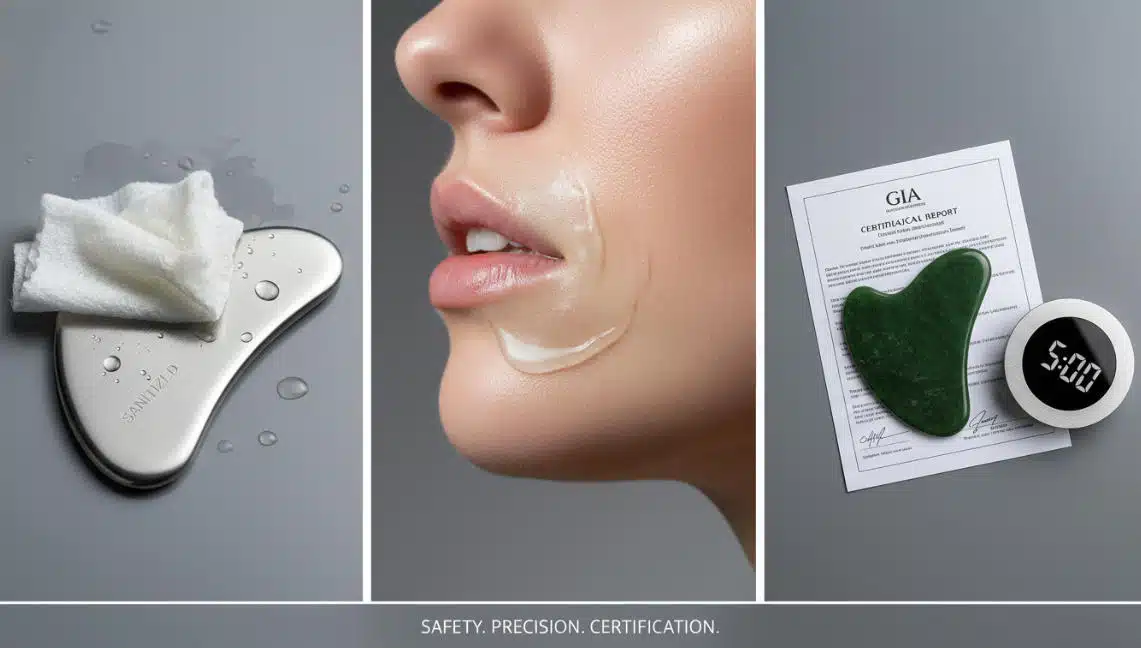
Step 1: Prepare your skin and your tool. Begin by cleansing your face thoroughly with a gentle, non-stripping cleanser. Your skin should be clean but not tight or dry. Simultaneously, clean your gua sha tool with warm water and a gentle soap or a dedicated tool sanitizer, then allow it to dry completely before use. A contaminated tool applied to clean skin defeats the purpose of facial cleansing entirely, and as established in Chapter 2, tool hygiene is one of the four primary technique-related causes of gua sha injury.
Step 2: Apply your lubrication medium. This step is non-negotiable. Apply a facial oil, a water-based serum with sufficient slip, or a practitioner-recommended lubricant evenly across the areas you intend to treat. The lubrication layer should be generous enough that the tool glides without any sensation of drag or pulling. If you feel the tool catching or skipping on your skin surface at any point during the session, stop and reapply lubricant before continuing. Friction is the mechanism behind a substantial proportion of surface-level gua sha injuries, and adequate lubrication is its most direct countermeasure. This means that investing thirty seconds in proper lubrication application is the single highest-return action you can take to protect your skin during every session.
Step 3: Apply correct pressure — significantly less than you think. Hold the tool at an angle of approximately 15 to 45 degrees relative to your skin surface, with the flat or curved edge in contact. The pressure should be light enough that you feel the tool moving across your skin but experience no discomfort whatsoever. A useful calibration reference: if you are pressing hard enough to feel resistance in your wrist or hand, you are pressing too hard. Facial tissue does not require — and cannot safely tolerate — the pressure levels appropriate for body or scalp gua sha. Start at the lightest possible pressure and increase only incrementally over multiple sessions, always guided by your skin’s response rather than a predetermined intensity target.
Step 4: Follow anatomically correct stroke directions. On the forehead, stroke outward from the center toward the temples. On the cheeks, stroke outward from the nose toward the ears, maintaining an upward angle of approximately 30 to 45 degrees. Along the jawline, stroke from the chin toward the ear. On the neck, stroke downward toward the collarbone to support lymphatic drainage toward the lymph node clusters located there. Each stroke should be slow, deliberate, and repeated three to five times per zone before moving to the next area. Rushing through strokes or applying them in random directions negates the lymphatic and circulatory benefits of the technique and increases the risk of directional tissue stress.
Step 5: Manage session frequency and duration. For most skin types, two to three sessions per week is the appropriate starting frequency, with each session lasting no longer than five to ten minutes of active tool contact time. Daily use is not inherently harmful for all skin types, but it significantly narrows the margin for error — particularly for users who are still developing pressure calibration and directional accuracy. Give your skin at least one full rest day between sessions during your first month of practice. As your technique becomes more consistent and your skin demonstrates clear tolerance, you can adjust frequency upward based on your individual response.
How to Choose the Right Gua Sha Tools for Your Face — A Material and Design Guide
Selecting the right gua sha tools is not an aesthetic decision — it is a safety decision with direct consequences for your skin health. The market for facial gua sha tools has expanded rapidly over the past five years, and the quality variance within that market is substantial. Knowing what to look for — and what to avoid — is the practical extension of everything covered in Chapter 2’s tool-related risk section.
Material safety is the primary evaluation criterion. Natural stone materials — including jade (both nephrite and jadeite), rose quartz, amethyst, and aventurine — have been used in skin contact applications for centuries and carry well-established safety profiles when they are authentic. The critical qualifier is authenticity: the market contains a significant volume of dyed, treated, or synthetic stone simulants sold under the names of natural gemstones. These materials may contain chemical treatments or binding agents that do not share the safety profile of the natural material they resemble. When purchasing a natural stone gua sha tool, look for sellers who can provide material documentation or who source from verified suppliers. For understanding the difference between natural and treated or synthetic stone materials, the educational resources maintained by the Gemological Institute of America (GIA) provide accessible, authoritative reference information that applies directly to purchasing decisions.
Medical-grade stainless steel is the alternative material with the most straightforward safety verification pathway. Steel tools that meet food-contact or medical-contact certification standards — typically 304 or 316 grade stainless steel — are chemically inert against skin, non-porous, and highly resistant to bacterial accumulation. They are also significantly easier to sterilize thoroughly than porous natural stone, which gives them a measurable hygiene advantage for users who prioritize infection risk minimization. This means that a verified stainless steel tool often delivers more consistent safety assurance than an unverified natural stone tool at a similar price point, even though the stone may appear more premium.
Shape and size compatibility with facial anatomy is the second evaluation criterion. A gua sha tool designed for facial use will have curved edges that conform to the contours of the cheekbones, jaw, and orbital area, with no sharp angles or projections that concentrate pressure into a small contact zone. Avoid using any tool that was designed for scalp or body application on your face, for the pressure concentration reasons detailed in Chapter 2. If you are uncertain whether a tool is appropriate for facial use, the manufacturer should be able to specify the intended application area — if that information is not available, that absence of documentation is itself a relevant data point about the supplier’s quality standards.
Gua Sha Tool Hygiene — The Cleaning Protocol That Eliminates Infection Risk
Tool hygiene occupies an interesting position in the gua sha conversation: it is simultaneously one of the most important preventive factors and one of the most consistently underemphasized. A gua sha tool that is used correctly and made from safe materials can still cause significant skin problems if it is not cleaned properly between uses. The oils, serums, and biological secretions that accumulate on the tool surface during a session do not evaporate or become inert once the session ends — they remain active and become an increasingly rich culture medium for microbial growth over time.
The cleaning protocol required is neither time-consuming nor expensive. After every single use, wash your tool under warm running water with a gentle soap, using your fingers or a soft cloth to remove all visible residue from every surface, edge, and contour of the tool. Follow this with a sanitizing step: either a 70% isopropyl alcohol wipe applied to all surfaces and allowed to air-dry completely, or immersion in a diluted antibacterial solution appropriate for the tool’s material. Note that prolonged soaking is not recommended for natural stone tools, as extended water exposure can affect the structural integrity of some materials over time. Allow the tool to dry fully before storing it in a clean, enclosed container or pouch — storing a damp tool in an enclosed space creates the humid conditions most favorable to bacterial growth, negating the cleaning step entirely.
Clean your tool before use as well as after, particularly if it has been stored for more than 48 hours since its last cleaning. This pre-use cleaning step is the specific hygiene action that addresses the infection risk identified in Chapter 2’s technique error section, and it takes less than two minutes. This means that the full pre-and-post cleaning protocol adds approximately three to four minutes to your total session time — a negligible time investment relative to the infection and irritation risk it eliminates.
Gua Sha Confirmation — Is Gua Sha on Face Still Right for You?
Arriving at this chapter means you have worked through the complete diagnostic and recovery framework — you understand what caused the damage, how to address it, and how to prevent it from recurring. The question that remains is the one that brought many readers here in the first place: given everything that went wrong, is gua sha on face still worth pursuing? The answer is not universal, and presenting it as such would be a disservice. What the evidence does support is a clear, criteria-based framework for making that decision rationally rather than reactively. A single negative experience — particularly one now understood to be caused by a correctable variable — is not sufficient grounds for permanently abandoning a practice with a documented history of benefit when performed correctly. But there are genuine contraindications that warrant a different conclusion for a specific subset of users, and those deserve equal clarity.
Who Should Stop — Absolute Contraindications for Gua Sha on Face
There is a meaningful difference between “gua sha did not work well for me under these conditions” and “gua sha is genuinely contraindicated for my situation.” The former is a calibration problem; the latter is a clinical boundary. For the following groups, the recommendation is not to adjust technique or change tools — it is to discontinue facial gua sha practice entirely until the underlying condition changes, and in some cases, permanently.
Users with active inflammatory acne or cystic breakouts should not perform gua sha on face under any circumstances during a flare. The mechanical action of the tool across inflamed lesions spreads bacteria across the skin surface, ruptures follicular walls that are already under pressure, and dramatically increases the probability of post-inflammatory hyperpigmentation. This is not a matter of using less pressure or a gentler tool — the contraindication applies to all tool contact with actively inflamed acne lesions, regardless of technique quality. According to guidance from the American Academy of Dermatology, mechanical manipulation of active acne lesions is one of the most reliably documented causes of scarring and infection spread, and gua sha on face during an active breakout falls squarely within that category.
Users with any form of open wound, active skin lesion, or broken skin barrier in the treatment area share the same absolute contraindication. The risk here is not limited to worsening the wound itself — it extends to the infection pathway created when a tool that contacts broken skin is then moved across adjacent healthy tissue. Even a single small open area represents a contraindication for the entire facial zone, not just for the immediate area of the wound.
Users who have undergone any form of medical aesthetic procedure — including laser resurfacing, microneedling, chemical peels of any depth, or injectable treatments — within the preceding two to four weeks should consider gua sha on face fully contraindicated during the post-procedure healing window. Post-procedure skin is operating in an active repair state, with a compromised barrier and heightened inflammatory sensitivity. Introducing mechanical stimulation during this period does not accelerate healing — it disrupts it. Consult the practitioner who performed your procedure for a specific clearance timeline before resuming any form of mechanical facial treatment.
Users with diagnosed rosacea, perioral dermatitis, or seborrheic dermatitis in an active phase should approach gua sha on face with significant caution, and ideally only resume practice — if at all — following explicit guidance from a dermatologist familiar with their individual condition history. These conditions involve baseline vascular reactivity and barrier fragility that make even correctly executed gua sha a meaningful risk.
For Everyone Else — Why “Gua Sha Ruined My Face” Does Not Have to Be Your Final Chapter
If you do not fall into any of the absolute contraindication categories above, the evidence-based conclusion is straightforward: gua sha on face, practiced with correct technique, appropriate tools, and consistent hygiene, remains a legitimate and accessible facial wellness practice. The body of practitioner experience and user data does not support the conclusion that gua sha is inherently dangerous — it supports the conclusion that gua sha is technique-sensitive, tool-dependent, and skin-state specific. Those are meaningfully different statements with meaningfully different implications for what you should do next.
The population of users for whom gua sha has produced consistent, positive outcomes over sustained practice periods is substantially larger than the population represented in “gua sha ruined my face” search queries. That is not a dismissal of negative experiences — every one of those experiences reflects a real injury sustained by a real person, and this guide has treated them accordingly. It is a calibration of perspective: the negative outcomes are real, they are documentable, and they are also predominantly preventable with the knowledge now available to you.
Returning to gua sha practice after a negative experience is a reasonable decision for most users, provided the return is structured rather than immediate. Give your skin a full recovery window — a minimum of one week for mild injuries, and clearance from a dermatologist for moderate to severe ones — before reintroducing the tool. When you do return, begin at a significantly lower pressure and frequency than your previous practice, treat the first two weeks as a recalibration period, and assess your skin’s response after each session before proceeding to the next. This graduated return protocol is not overly cautious — it is the approach most likely to produce a different outcome than the one that brought you to this article.
The investment required to practice gua sha correctly is modest in material terms. A well-made tool from verified natural stone or certified stainless steel, a quality facial oil for lubrication, and a basic sanitizing solution represent a one-time or low-recurring cost that is negligible relative to the alternative expense of treating avoidable skin injuries. A single dermatologist visit for a gua sha-related skin reaction typically costs between $150 and $300 in the United States without insurance coverage, according to Healthcare Bluebook — a figure that contextualizes the value of prevention-oriented tool and technique investment clearly. This means that the upfront cost of doing gua sha correctly is almost always lower than the downstream cost of doing it incorrectly.
The Standard You Should Hold Your Gua Sha Tools To — And Why It Matters
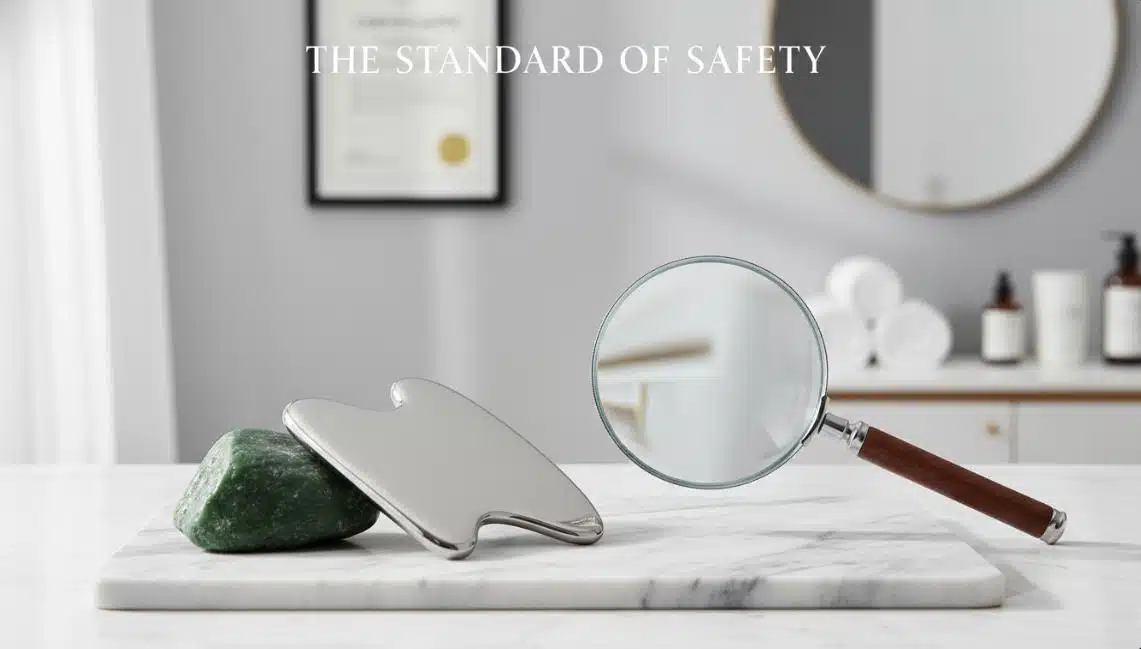
One conclusion that emerges consistently across every chapter of this guide is that tool quality is not a peripheral variable — it is a load-bearing element of safe gua sha practice. The tool is the only physical interface between your intention and your skin. Its material determines whether that interface is chemically safe. Its shape determines whether it is mechanically appropriate for facial anatomy. Its surface integrity determines whether it can be adequately cleaned. And its origin determines whether the material claims made about it are verifiable.
The standard worth holding your gua sha tools to is not the standard of premium aesthetics or brand reputation — it is the standard of verifiable material safety, documented design intent for facial use, and cleanability. Natural stone tools that meet this standard are those sourced from suppliers who can provide origin documentation or whose materials have been assessed against gemological classification standards maintained by institutions such as the GIA or the International Gem Society (IGS). Stainless steel tools that meet this standard carry explicit material grade documentation — 304 or 316 grade — and are manufactured under quality management conditions that ensure consistent material composition across production runs.
When you hold your tools to this standard, you are not paying for luxury — you are paying for the elimination of one of the three primary risk factors identified in this guide. That is a concrete, quantifiable return on a purchasing decision, not an abstract quality preference. The difference between a tool that meets this standard and one that does not is the difference between a gua sha practice that carries manageable, technique-dependent risk and one that carries an additional, hidden layer of chemical and mechanical risk that no amount of technique correction can address. This means that your tool selection is not the last decision you make before starting a gua sha practice — it is the first, and it sets the ceiling on how safe that practice can ever be, regardless of everything else you do correctly.
What “Gua Sha Ruined My Face” Actually Tells Us
The phrase “gua sha ruined my face” is, in most cases, a story about a gap — between the technique that was used and the technique that was required, between the tool that was selected and the tool that was appropriate, between the skin state that existed and the skin state that gua sha safely serves. Gaps of this kind are not evidence that gua sha is dangerous. They are evidence that gua sha is specific — that it rewards informed practice and penalizes uninformed practice with unusual clarity.
The three-factor framework this guide has built — technique, skin state, and tool quality — gives you a complete diagnostic map for any negative gua sha experience, past or future. The recovery pathways give you a structured response to each category of injury. The prevention protocol gives you the operational standard against which to measure every future session. And the contraindication framework gives you the honest boundaries within which all of this applies.
Gua sha on face, practiced correctly, is not the risk that a surface reading of “gua sha ruined my face” search results might suggest. It is a technique-sensitive practice that becomes safer, more effective, and more predictable in direct proportion to the quality of information guiding it. You now have that information. What you do with it determines whether your next experience with gua sha belongs in the recovery category or the results category.
FAQs for Gua Sha Ruined My Face
1. Can gua sha permanently ruin your face?
Permanent damage from gua sha is extremely rare. Most technique-related injuries — redness, sensitivity, minor barrier disruption — resolve within 2 to 3 days of stopping use. Even visible bruising typically clears within one week with basic cold-compress first aid. Permanent outcomes are almost exclusively linked to either prolonged, repeated misuse or an untreated chemical reaction from unsafe tool materials — both of which are preventable with the information in this guide.
2. How do I know if my gua sha tool is safe for my face?
Three criteria matter: material, shape, and cleanability. Safe materials include verified natural stone — authentic jade, nephrite, or rose quartz — and certified 304 or 316 grade stainless steel. Avoid unverified plastics or resins, particularly at very low price points. The tool should be shaped specifically for facial contours, not adapted from a scalp or body tool. If a supplier cannot provide basic material documentation, that lack of transparency is a meaningful warning sign.
3. My skin broke out after gua sha — what caused it?
A post-gua sha breakout traces back to one of three causes: an inadequately cleaned tool introducing bacteria onto compromised skin, performing gua sha during a contraindicated skin state such as sub-clinical congestion or early inflammation, or a reaction to tool material. The most common culprit by a significant margin is tool hygiene. Washing and sanitizing your tool before and after every session eliminates this risk category entirely.
4. How often should I use gua sha on my face?
Two to three sessions per week, with five to ten minutes of active tool contact per session, is the appropriate starting point for most skin types. Daily use is not inherently harmful but narrows your margin for technique error considerably. Use your skin’s response — not a fixed schedule — as your frequency guide. Sustained redness or sensitivity between sessions is a clear signal to reduce frequency and extend your recovery window before the next use.
5. Can I use gua sha if I have sensitive skin?
Yes, with meaningful adjustments. Reduce pressure below standard recommendations, limit initial sessions to three to five minutes, use a generous lubrication layer, and patch test on a small area below the jawline before treating the full face. Never practice during an active sensitivity flare. If your skin condition is clinically diagnosed, a dermatologist consultation before beginning gua sha practice is a straightforward step that removes significant uncertainty.