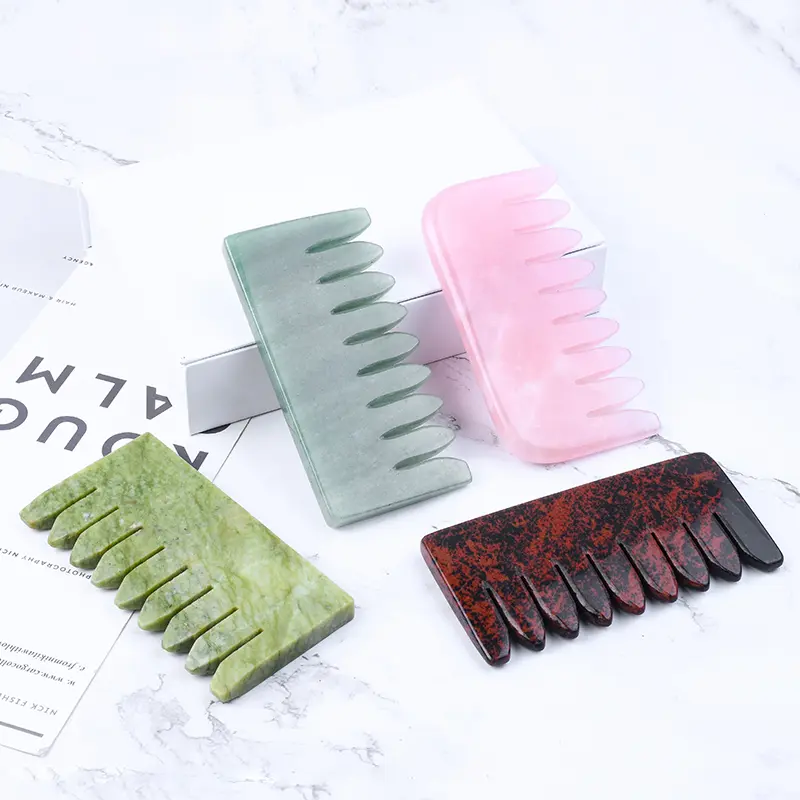
gua sha effect

gua sha reduce face fat

Can Gua Sha Reduce Face Fat? Guasha Face Slimming

Can gua sha reduce face fat? This is a topic often asked by many beauty lovers. “Everyone has a love for beauty” is an old Chinese saying. People’s pursuit of beauty is endless, so countless beauty institutions, beauty products and technologies emerge in endlessly. We do not advocate the use of surgery or chemical products for cosmetic purposes, as this is very harmful to the body. As for the problem of gua sha reduce face fat, we recommend that you don’t expect too much. Before formally answering this question, we need to clarify what Gua Sha can bring and why it has these functions. Finally, we will give you the answer. Empty answers, theories and processes are unconvincing. What can Gua Sha Bring? Gua Sha originated from China and was first used to treat certain diseases or regulate the body. You will find that Gua Sha’s beauty effects were not revealed at first. Indeed, the application of gua sha to facial beauty is a new function that has only been developed in recent years. As for traditional scraping, it has the following effects: Did you find anything? All effects seem to be related to factors such as blood flow and circulation in the human body. This is why people now want to use it to improve their skin. People are a whole, and by improving blood circulation throughout the body, we can indirectly achieve the effect of improving skin condition. Why Gua Sha Have These Effects? In the theory of traditional Chinese medicine, the health of the human body is closely related to the body’s circulatory system (the circulation of the human body in traditional Chinese medicine can be summarized as the circulation of “qi” and “blood”). When there is a problem with the body’s circulation, a person’s health can also be affected. So how does Gua Sha improve circulation in the human body? So, Can Gua Sha Reduce Face Fat? Through the above content, what insights do you have on the issue of gua sha reduce face fat? Does it really slim down the face? Before you judge, let’s lay out our opinion: Gua Sha has no direct and long-term effect on reducing facial fat, but it does help indirectly. After using facial scraping, many people feel that their facial lines have improved a lot, as if their entire face has slimmed down. But this is usually the short-term physical effect of gua sha and the removal of excess fluid from the face. This effect is usually not long-lasting. The indirect effect of scraping is that it can promote human body circulation and improve the weight loss effect of exercise to a certain extent. So if you want to slim down your face through gua sha, you need to combine it with exercise to achieve the effect.

Can Gua Sha Reduce Face Fat? Guasha Face Slimming Read More »

Can gua sha reduce face fat? This is a topic often asked by many beauty lovers. “Everyone has a love for beauty” is an old Chinese saying. People’s pursuit of beauty is endless, so countless beauty institutions, beauty products and technologies emerge in endlessly. We do not advocate the use of surgery or chemical products for cosmetic purposes, as this is very harmful to the body. As for the problem of gua sha reduce face fat, we recommend that you don’t expect too much. Before formally answering this question, we need to clarify what Gua Sha can bring and why it has these functions. Finally, we will give you the answer. Empty answers, theories and processes are unconvincing. What can Gua Sha Bring? Gua Sha originated from China and was first used to treat certain diseases or regulate the body. You will find that Gua Sha’s beauty effects were not revealed at first. Indeed, the application of gua sha to facial beauty is a new function that has only been developed in recent years. As for traditional scraping, it has the following effects: Did you find anything? All effects seem to be related to factors such as blood flow and circulation in the human body. This is why people now want to use it to improve their skin. People are a whole, and by improving blood circulation throughout the body, we can indirectly achieve the effect of improving skin condition. Why Gua Sha Have These Effects? In the theory of traditional Chinese medicine, the health of the human body is closely related to the body’s circulatory system (the circulation of the human body in traditional Chinese medicine can be summarized as the circulation of “qi” and “blood”). When there is a problem with the body’s circulation, a person’s health can also be affected. So how does Gua Sha improve circulation in the human body? So, Can Gua Sha Reduce Face Fat? Through the above content, what insights do you have on the issue of gua sha reduce face fat? Does it really slim down the face? Before you judge, let’s lay out our opinion: Gua Sha has no direct and long-term effect on reducing facial fat, but it does help indirectly. After using facial scraping, many people feel that their facial lines have improved a lot, as if their entire face has slimmed down. But this is usually the short-term physical effect of gua sha and the removal of excess fluid from the face. This effect is usually not long-lasting. The indirect effect of scraping is that it can promote human body circulation and improve the weight loss effect of exercise to a certain extent. So if you want to slim down your face through gua sha, you need to combine it with exercise to achieve the effect.

gua sha wholesale

Which Gua Sha is Best for Your Face?

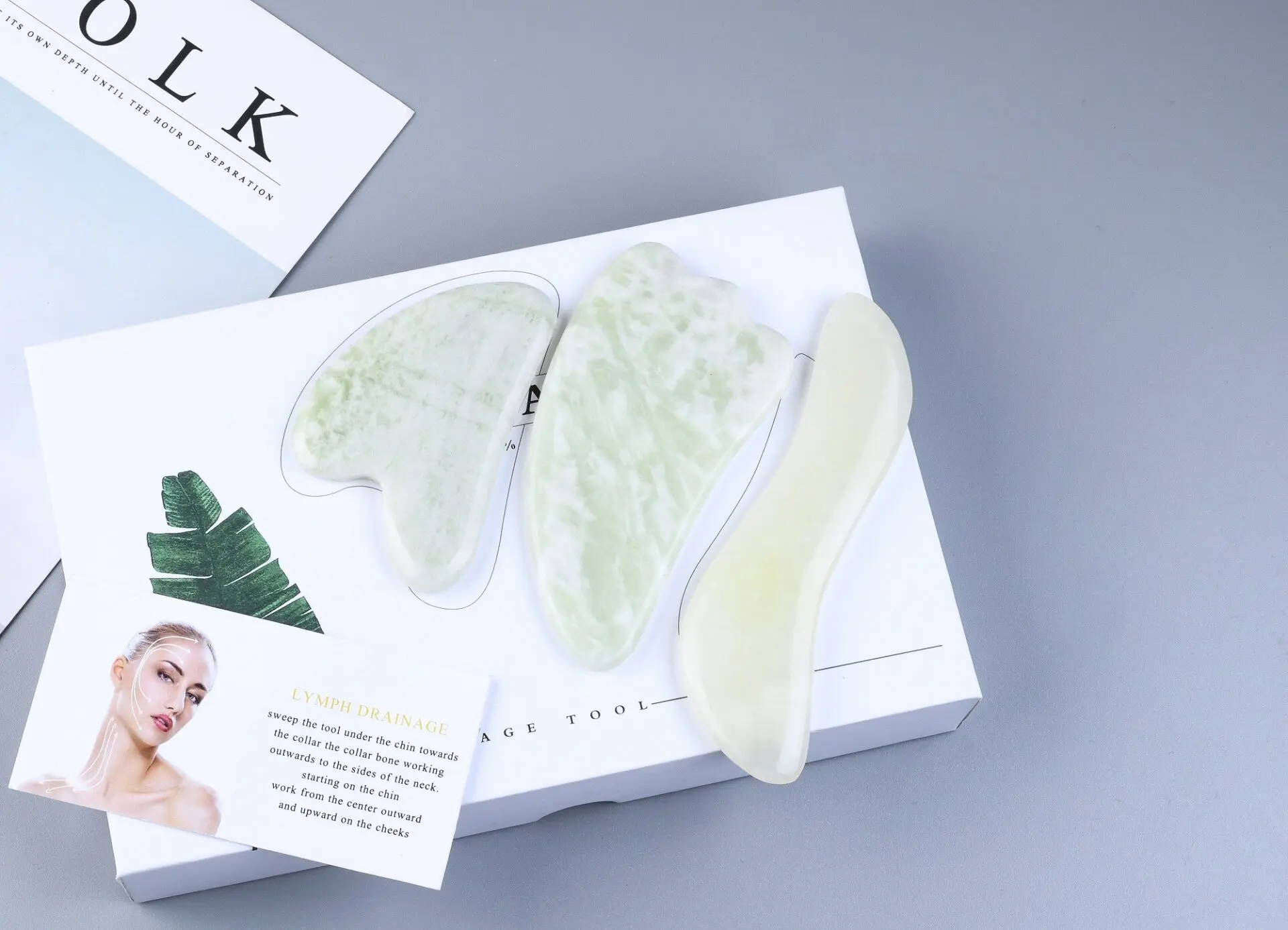
Facial massages and gua sha are everywhere these days (if you haven’t heard of them, read more about them here). These brightening, cheekbone-defining, detoxing treatments are all the rage in your favorite beauty magazines, and jade rollers are everywhere in the hands of top models. It’s no surprise that facial massage and gua sha get some legitimate attention—it promotes lymphatic drainage, removes puffiness from the face, relaxes overly tense muscles, and leaves your skin glowing. So, if you’ve had facial massage and gua sha, you’re faced with a decision – which material of gua sha tools should I get? Or which one is best for you? In our factory, we manufacture and sell rollers and gua sha tools made of natural gemstones such as beryl, white jade, rose quartz, amethyst, aventurine and sodalite. So which one is right for you? Are they really that different? Next let us reveal the answer: Green Jade Gua Sha: Oh hello! Lovely jade! Green Jade (or Feng Yu) is a traditional choice for facial massage and Gua Sha. It has a long history of use in Traditional Chinese Medicine and is considered the ultimate gem in ancient Chinese beauty treatments. Green jade was considered the most precious gemstone in ancient China (although not the kind we use for our Gua Sha tools); it symbolizes purity, moral integrity and immortality. It is also believed that jade is indestructible (unfortunately, it is not), thus granting its owner a longer lifespan. Fengyu feels naturally cool to the touch, with a “soapstone” feel. In terms of gem energetics, Emerald promotes calm, balance and positivity. Jade protects its users from negative energies entering their orbit and also helps to clear negative energies and thoughts that are already present. White Jade Gua Sha: White jade, also known as nephrite jade, is a beautiful translucent white. Along with green jade, the use of white jade in China dates back to 6000 BC, with white being the most revered and prized type of jade in China. White jade is considered to be a symbol of heaven, and as part of Liuli jade, it represents the sky. (However, the precious white jade in the traditional Chinese sense is not used in scraping at present, because the cost is too expensive) White jade, like green jade, is cool to the touch, but smoother and more “slippery” than green jade. In terms of gem energetics, white jade is calming and grounded, bringing peace, harmony and luck. It helps the body repair itself, especially for fluid retention and puffy skin. Amethyst Gua Sha: The elegant February purple birthstone, amethyst, has gained a lot of attention for its use in helping to heal and beautify the skin. However, the healing properties of amethyst are nothing new. The ancient Greeks used amethyst to help prevent drunkenness and overindulgence. In the Middle Ages, it was used to ward off disease and contagion. Amethyst is rich in negative ions and has strong anti-inflammatory properties. This is an excellent choice for those looking for a more balanced complexion. If you have red, acne-prone or irritated skin, look no further than Amethyst! Amethyst is also considered a meditation stone because it creates a state of enhanced spirituality and contentment. The smoothness of amethyst is between emerald and rose quartz. It is associated with meditation and the ability to induce an enhanced meditative state. Amethyst is a talisman for focus and success as it is believed to enhance clarity of thought, intuition and bring projects to fruition. Green Aventurine Gua Sha: Looking for a gorgeous deep green gemstone with amazing energy? Just look at Green Aventurine. Most commonly found in India (hence the nickname “Indian jade,” although it’s actually a type of quartzite), Green Aventurine has bright purplish-red inclusions that give the gem its beautiful, sparkling iridescence. It is called the “Stone of Opportunity” and is considered the luckiest of all gemstones. According to legend, drinking water infused with aventurine is an effective remedy for problem skin. While it’s up to you whether to soak and drink aventurine, using gua sha gemstones and rollers made from green aventurine can be used to treat skin conditions like acne, eczema, and rosacea due to its anti-inflammatory properties. Aventurine is very smooth, polished, and easily warms to your skin temperature. Green Aventurine helps heal emotional imbalances, calm irritation and anger, and reduce stress and distraction. So, Which Gua Sha Best For You? Still struggling to decide which gua sha gemstone is right for you? Here’s the outline: Green Jade: Best for toning, lifting and toning tight muscles. A traditional choice, choosing Emerald helps ward off negative energy and promote positivity. White Jade: Best for reducing puffiness and puffiness (bye, bags under the eyes!) A precious gemstone from ancient China, choosing White Jade aids in the body’s ability to repair itself. Rose Quartz: Best for acne-prone skin, fine lines and wrinkles. Choosing rose quartz can help relieve stress and promote self-love. Amethyst: Best for balancing irritated complexions and soothing breakouts. Choose amethyst to calm irritated skin and stimulate intuition. Green Aventurine: Best for problem skin prone to acne, eczema or rosacea. Choose aventurine for its anti-inflammatory properties, which can calm a restless mind and bring good luck. Still struggling? Let me say this – all face gua sha gems and face rollers are good, and using one is better than nothing. At its most basic, all gua sha gems and rollers do the same basic thing—massage your face. However, using a little gemstone knowledge, you can unlock the full potential of these beautiful tools and choose the one that works best for you! Want to wholesalse best gua sha stone? Deyi Gems is a good choose!  We have more than 100 different gua sha stones to choose from! and customized services offer! Contact us now to get the best gua sha wholesale quote!

Which Gua Sha is Best for Your Face? Read More »

Facial massages and gua sha are everywhere these days (if you haven’t heard of them, read more about them here). These brightening, cheekbone-defining, detoxing treatments are all the rage in your favorite beauty magazines, and jade rollers are everywhere in the hands of top models. It’s no surprise that facial massage and gua sha get some legitimate attention—it promotes lymphatic drainage, removes puffiness from the face, relaxes overly tense muscles, and leaves your skin glowing. So, if you’ve had facial massage and gua sha, you’re faced with a decision – which material of gua sha tools should I get? Or which one is best for you? In our factory, we manufacture and sell rollers and gua sha tools made of natural gemstones such as beryl, white jade, rose quartz, amethyst, aventurine and sodalite. So which one is right for you? Are they really that different? Next let us reveal the answer: Green Jade Gua Sha: Oh hello! Lovely jade! Green Jade (or Feng Yu) is a traditional choice for facial massage and Gua Sha. It has a long history of use in Traditional Chinese Medicine and is considered the ultimate gem in ancient Chinese beauty treatments. Green jade was considered the most precious gemstone in ancient China (although not the kind we use for our Gua Sha tools); it symbolizes purity, moral integrity and immortality. It is also believed that jade is indestructible (unfortunately, it is not), thus granting its owner a longer lifespan. Fengyu feels naturally cool to the touch, with a “soapstone” feel. In terms of gem energetics, Emerald promotes calm, balance and positivity. Jade protects its users from negative energies entering their orbit and also helps to clear negative energies and thoughts that are already present. White Jade Gua Sha: White jade, also known as nephrite jade, is a beautiful translucent white. Along with green jade, the use of white jade in China dates back to 6000 BC, with white being the most revered and prized type of jade in China. White jade is considered to be a symbol of heaven, and as part of Liuli jade, it represents the sky. (However, the precious white jade in the traditional Chinese sense is not used in scraping at present, because the cost is too expensive) White jade, like green jade, is cool to the touch, but smoother and more “slippery” than green jade. In terms of gem energetics, white jade is calming and grounded, bringing peace, harmony and luck. It helps the body repair itself, especially for fluid retention and puffy skin. Amethyst Gua Sha: The elegant February purple birthstone, amethyst, has gained a lot of attention for its use in helping to heal and beautify the skin. However, the healing properties of amethyst are nothing new. The ancient Greeks used amethyst to help prevent drunkenness and overindulgence. In the Middle Ages, it was used to ward off disease and contagion. Amethyst is rich in negative ions and has strong anti-inflammatory properties. This is an excellent choice for those looking for a more balanced complexion. If you have red, acne-prone or irritated skin, look no further than Amethyst! Amethyst is also considered a meditation stone because it creates a state of enhanced spirituality and contentment. The smoothness of amethyst is between emerald and rose quartz. It is associated with meditation and the ability to induce an enhanced meditative state. Amethyst is a talisman for focus and success as it is believed to enhance clarity of thought, intuition and bring projects to fruition. Green Aventurine Gua Sha: Looking for a gorgeous deep green gemstone with amazing energy? Just look at Green Aventurine. Most commonly found in India (hence the nickname “Indian jade,” although it’s actually a type of quartzite), Green Aventurine has bright purplish-red inclusions that give the gem its beautiful, sparkling iridescence. It is called the “Stone of Opportunity” and is considered the luckiest of all gemstones. According to legend, drinking water infused with aventurine is an effective remedy for problem skin. While it’s up to you whether to soak and drink aventurine, using gua sha gemstones and rollers made from green aventurine can be used to treat skin conditions like acne, eczema, and rosacea due to its anti-inflammatory properties. Aventurine is very smooth, polished, and easily warms to your skin temperature. Green Aventurine helps heal emotional imbalances, calm irritation and anger, and reduce stress and distraction. So, Which Gua Sha Best For You? Still struggling to decide which gua sha gemstone is right for you? Here’s the outline: Green Jade: Best for toning, lifting and toning tight muscles. A traditional choice, choosing Emerald helps ward off negative energy and promote positivity. White Jade: Best for reducing puffiness and puffiness (bye, bags under the eyes!) A precious gemstone from ancient China, choosing White Jade aids in the body’s ability to repair itself. Rose Quartz: Best for acne-prone skin, fine lines and wrinkles. Choosing rose quartz can help relieve stress and promote self-love. Amethyst: Best for balancing irritated complexions and soothing breakouts. Choose amethyst to calm irritated skin and stimulate intuition. Green Aventurine: Best for problem skin prone to acne, eczema or rosacea. Choose aventurine for its anti-inflammatory properties, which can calm a restless mind and bring good luck. Still struggling? Let me say this – all face gua sha gems and face rollers are good, and using one is better than nothing. At its most basic, all gua sha gems and rollers do the same basic thing—massage your face. However, using a little gemstone knowledge, you can unlock the full potential of these beautiful tools and choose the one that works best for you! Want to wholesalse best gua sha stone? Deyi Gems is a good choose!  We have more than 100 different gua sha stones to choose from! and customized services offer! Contact us now to get the best gua sha wholesale quote!
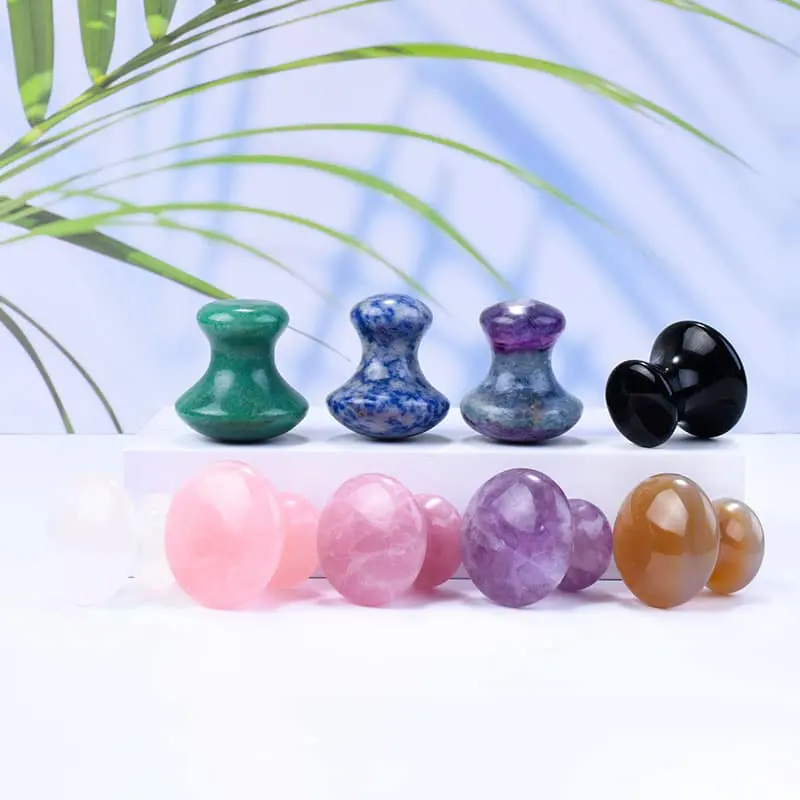
gua sha comb (5)

Gua Sha Guidebook 2 – How to Use Gua Sha Stone ?

We wrote an article about Gua Sha Guidebook a while ago, and we’ll call it Gua Sha Guidebook 2 for now. In the gua sha guide 1, we introduce you to how to choose a gua sha stone that suits you and recommend some of the best-selling guasha tool on the market. However, it seems that these are just to let you know how to choose, but how to use them? Well, this gua sha guidebook 2 – “Gua Sha efficacy and how to use it” will take you to understand the deeper secrets of guasha. Gua Sha Guidebook – Gua Sha Effect Gua Sha is a traditional Chinese treatment that has a history of thousands of years. It has gradually developed from the Bianstone therapy to the current gua sha therapy. This kind of therapy is not only popular in China, because of cultural exchanges. Chinese gua sha therapy has gradually flowed into Southeast Asian countries and is popular among the local people. There are many benefits of gua sha. It can be used to treat ailments such as fever, heat stroke and also sports injuries such as sprains, muscle soreness. These injuries all have a common feature – related to “qi” and blood. And this is precisely the biggest role that the scraping board can play. Chinese medicine thinks. When people’s “qi” and blood are blocked, the human body will face many problems, and various diseases will also occur. When a person is injured, the qi and blood in the injured part will also stagnate. And when the stagnant blood is unclogged. You can treat these diseases and speed up the repair of sports injuries. In addition to treating diseases and accidents, gua sha has great effects on beauty and health. It can lighten dark circles and under-eye lines, lift facial lines, firm skin and more. In conclusion, Gua Sha, this magical treatment method, does have its practical uses. So after we have a general understanding of the effect of scraping, how can we use it correctly? Next we enter the second part: Gua Sha Guidebook – How to Use Gua Sha Stone? There are many ways to use Gua Sha, and there are dozens of different techniques in terms of intensity and direction of Gua Sha. But most of the gua sha methods are not available to us. Because we are not professional doctors, the main purpose of our use of gua sha stones is beauty and health preservation. Then based on these two aspects, we have summarized a few points that should be paid attention to in the daily use of scraping. The focus of the two is different and does not need to achieve the same effect.   Keep in mind the above five points, it is enough for our daily use of scraping. If you want to know more or are interested in buying, Wholesale Gua Sha Board. Feel free to contact us any time. Not only gua sha stone, we also offer other face beauty tools, such as jade roller and ice globes, you will meet your needs here!

Gua Sha Guidebook 2 – How to Use Gua Sha Stone ? Read More »

We wrote an article about Gua Sha Guidebook a while ago, and we’ll call it Gua Sha Guidebook 2 for now. In the gua sha guide 1, we introduce you to how to choose a gua sha stone that suits you and recommend some of the best-selling guasha tool on the market. However, it seems that these are just to let you know how to choose, but how to use them? Well, this gua sha guidebook 2 – “Gua Sha efficacy and how to use it” will take you to understand the deeper secrets of guasha. Gua Sha Guidebook – Gua Sha Effect Gua Sha is a traditional Chinese treatment that has a history of thousands of years. It has gradually developed from the Bianstone therapy to the current gua sha therapy. This kind of therapy is not only popular in China, because of cultural exchanges. Chinese gua sha therapy has gradually flowed into Southeast Asian countries and is popular among the local people. There are many benefits of gua sha. It can be used to treat ailments such as fever, heat stroke and also sports injuries such as sprains, muscle soreness. These injuries all have a common feature – related to “qi” and blood. And this is precisely the biggest role that the scraping board can play. Chinese medicine thinks. When people’s “qi” and blood are blocked, the human body will face many problems, and various diseases will also occur. When a person is injured, the qi and blood in the injured part will also stagnate. And when the stagnant blood is unclogged. You can treat these diseases and speed up the repair of sports injuries. In addition to treating diseases and accidents, gua sha has great effects on beauty and health. It can lighten dark circles and under-eye lines, lift facial lines, firm skin and more. In conclusion, Gua Sha, this magical treatment method, does have its practical uses. So after we have a general understanding of the effect of scraping, how can we use it correctly? Next we enter the second part: Gua Sha Guidebook – How to Use Gua Sha Stone? There are many ways to use Gua Sha, and there are dozens of different techniques in terms of intensity and direction of Gua Sha. But most of the gua sha methods are not available to us. Because we are not professional doctors, the main purpose of our use of gua sha stones is beauty and health preservation. Then based on these two aspects, we have summarized a few points that should be paid attention to in the daily use of scraping. The focus of the two is different and does not need to achieve the same effect.   Keep in mind the above five points, it is enough for our daily use of scraping. If you want to know more or are interested in buying, Wholesale Gua Sha Board. Feel free to contact us any time. Not only gua sha stone, we also offer other face beauty tools, such as jade roller and ice globes, you will meet your needs here!

xiuyan jade gua sha

Stone Gua Sha VS Horn Gua Sha VS Plastic Gua Sha

Walk into any wellness store or scroll through five minutes of skincare content, and you will encounter the same saturated promise: a gua sha tool will lift, contour, drain, and transform your face. But before you reach for the nearest jade board or quartz scraper, consider the question that wellness marketing rarely asks directly — does material actually determine what you get? When you place stone gua sha vs horn gua sha vs plastic side by side, the differences are not cosmetic. A 2019 systematic review indexed on PubMed confirmed that gua sha effectiveness is governed primarily by applied technique and pressure — not by the composition of the tool. Yet material still determines something arguably more important than efficacy: your skin’s safety, the physical consistency of your practice, and the cumulative effects of daily facial contact with that material. This guide examines all three materials through dermatological safety data, biomechanical performance, and gemmological science sourced from institutions including the Gemological Institute of America (GIA) and the International Gem Society (IGS), so that you can make a decision grounded in evidence rather than aesthetics. What the Science Behind Gua Sha Actually Says — Before You Pick a Material The most commercially motivated claims in the gua sha market position the tool’s material as the primary driver of results. The evidence does not support this. A study published in The Journal of Alternative and Complementary Medicine concluded explicitly that gua sha tool material is less relevant than technique for improving microcirculation — the core physiological mechanism behind the practice. What this finding means for you is straightforward: you do not need a specific crystal to achieve the documented gua sha benefits. What you do need is a material that is safe to use on your skin every day, consistent enough in its physical properties to support correct technique, and durable enough to maintain those properties over repeated gua sha use sessions. Gua Sha vs Wellness Culture: Separating Documented Benefits from Marketing Gua sha use has a substantiated therapeutic record within Traditional Chinese Medicine, where practitioners have employed smooth-edged tools across the skin surface to promote blood circulation and release fascial tension for centuries. Modern Western adoption of the practice — particularly face gua sha — has produced a secondary mythology around the specific healing properties of individual crystals, mineral vibrations, and gemstone energies. The GIA’s gem encyclopedia and the IGS both document the verified physical and chemical properties of gemstones — hardness, thermal conductivity, specific gravity, refractive index — without any peer-reviewed evidence that these properties transfer healing energy through skin contact. This does not diminish the ritual comfort and psychological benefit that many practitioners derive from working with a beautiful piece of natural stone. It does mean that when you evaluate stone gua sha vs horn vs plastic, the material conversation should be anchored to safety and performance rather than energy theory. What Peer-Reviewed Research Confirms About Gua Sha Benefits The gua sha benefits that scientific literature does support are measurable and meaningful. PubMed-indexed research demonstrates that correct gua sha use produces a documented four-fold increase in surface microperfusion — increased blood flow in the capillary beds immediately beneath the skin surface — that persists for approximately 25 minutes post-treatment. Separately, the directional stroking technique used in face gua sha, when performed toward the lymphatic drainage nodes of the face and neck, mechanically supports interstitial fluid movement in a way that reduces visible puffiness. Myofascial tension relief is a third documented effect: the sustained pressure and gliding motion of gua sha use along facial and neck musculature produces a stretching effect on the connective tissue that can temporarily reduce the appearance of tension-related creasing. These effects are real, replicable, and worth pursuing — but they require consistent, correctly executed technique. The material in your hand determines whether that technique is safe and sustainable, not whether the effects occur at all. The Swiss Gemmological Institute SSEF applies exactly the standard of measurable evidence to gemstone assessment that the gua sha market would benefit from applying to its own claims. Their certification protocols verify origin, treatment history, and physical composition through laboratory analysis — the same rigour that should inform any claim made about a material that makes daily contact with your skin. This means you deserve the same level of material transparency in your gua sha tools that you would expect from a certified gemstone. Skin Safety: Stone Gua Sha vs Horn vs Plastic — A Material-by-Material Analysis Safety is not a secondary consideration in face gua sha — it is the foundational one. Your face is covered with a thin, selectively permeable epidermal barrier that absorbs compounds from topical contact, particularly when that contact involves heat, friction, and oil-based lubricants. The material of your gua sha tool determines what, if anything, crosses that barrier during every session. When you assess the three primary materials available — natural stone, buffalo horn, and plastic — the safety profiles diverge substantially, and the differences compound with the frequency of use. Why Stone Gua Sha Is the Benchmark for Skin Safety Natural stone — jade, rose quartz, amethyst, aventurine — is chemically inert under normal skincare conditions. It does not react with the facial oils, serums, and moisturisers you apply before face gua sha, and it releases no compounds into the skin during friction-based contact. Healthline notes that natural stone tools are specifically preferred in clinical and wellness contexts because they introduce no foreign chemical compounds to the skin surface. MindBodyGreen similarly confirms that jade gua sha tools are non-toxic and considered safe across all skin types, including reactive and compromised skin. For users who practice face gua sha daily or multiple times per week, this chemical neutrality means cumulative exposure carries no measurable risk — which is the definition of a safe daily-use tool. Stone gua sha is non-porous, meaning its surface harbours no bacteria between uses, and its hardness — typically 6–7 on the Mohs scale for jade, as documented by

Stone Gua Sha VS Horn Gua Sha VS Plastic Gua Sha Read More »

Walk into any wellness store or scroll through five minutes of skincare content, and you will encounter the same saturated promise: a gua sha tool will lift, contour, drain, and transform your face. But before you reach for the nearest jade board or quartz scraper, consider the question that wellness marketing rarely asks directly — does material actually determine what you get? When you place stone gua sha vs horn gua sha vs plastic side by side, the differences are not cosmetic. A 2019 systematic review indexed on PubMed confirmed that gua sha effectiveness is governed primarily by applied technique and pressure — not by the composition of the tool. Yet material still determines something arguably more important than efficacy: your skin’s safety, the physical consistency of your practice, and the cumulative effects of daily facial contact with that material. This guide examines all three materials through dermatological safety data, biomechanical performance, and gemmological science sourced from institutions including the Gemological Institute of America (GIA) and the International Gem Society (IGS), so that you can make a decision grounded in evidence rather than aesthetics. What the Science Behind Gua Sha Actually Says — Before You Pick a Material The most commercially motivated claims in the gua sha market position the tool’s material as the primary driver of results. The evidence does not support this. A study published in The Journal of Alternative and Complementary Medicine concluded explicitly that gua sha tool material is less relevant than technique for improving microcirculation — the core physiological mechanism behind the practice. What this finding means for you is straightforward: you do not need a specific crystal to achieve the documented gua sha benefits. What you do need is a material that is safe to use on your skin every day, consistent enough in its physical properties to support correct technique, and durable enough to maintain those properties over repeated gua sha use sessions. Gua Sha vs Wellness Culture: Separating Documented Benefits from Marketing Gua sha use has a substantiated therapeutic record within Traditional Chinese Medicine, where practitioners have employed smooth-edged tools across the skin surface to promote blood circulation and release fascial tension for centuries. Modern Western adoption of the practice — particularly face gua sha — has produced a secondary mythology around the specific healing properties of individual crystals, mineral vibrations, and gemstone energies. The GIA’s gem encyclopedia and the IGS both document the verified physical and chemical properties of gemstones — hardness, thermal conductivity, specific gravity, refractive index — without any peer-reviewed evidence that these properties transfer healing energy through skin contact. This does not diminish the ritual comfort and psychological benefit that many practitioners derive from working with a beautiful piece of natural stone. It does mean that when you evaluate stone gua sha vs horn vs plastic, the material conversation should be anchored to safety and performance rather than energy theory. What Peer-Reviewed Research Confirms About Gua Sha Benefits The gua sha benefits that scientific literature does support are measurable and meaningful. PubMed-indexed research demonstrates that correct gua sha use produces a documented four-fold increase in surface microperfusion — increased blood flow in the capillary beds immediately beneath the skin surface — that persists for approximately 25 minutes post-treatment. Separately, the directional stroking technique used in face gua sha, when performed toward the lymphatic drainage nodes of the face and neck, mechanically supports interstitial fluid movement in a way that reduces visible puffiness. Myofascial tension relief is a third documented effect: the sustained pressure and gliding motion of gua sha use along facial and neck musculature produces a stretching effect on the connective tissue that can temporarily reduce the appearance of tension-related creasing. These effects are real, replicable, and worth pursuing — but they require consistent, correctly executed technique. The material in your hand determines whether that technique is safe and sustainable, not whether the effects occur at all. The Swiss Gemmological Institute SSEF applies exactly the standard of measurable evidence to gemstone assessment that the gua sha market would benefit from applying to its own claims. Their certification protocols verify origin, treatment history, and physical composition through laboratory analysis — the same rigour that should inform any claim made about a material that makes daily contact with your skin. This means you deserve the same level of material transparency in your gua sha tools that you would expect from a certified gemstone. Skin Safety: Stone Gua Sha vs Horn vs Plastic — A Material-by-Material Analysis Safety is not a secondary consideration in face gua sha — it is the foundational one. Your face is covered with a thin, selectively permeable epidermal barrier that absorbs compounds from topical contact, particularly when that contact involves heat, friction, and oil-based lubricants. The material of your gua sha tool determines what, if anything, crosses that barrier during every session. When you assess the three primary materials available — natural stone, buffalo horn, and plastic — the safety profiles diverge substantially, and the differences compound with the frequency of use. Why Stone Gua Sha Is the Benchmark for Skin Safety Natural stone — jade, rose quartz, amethyst, aventurine — is chemically inert under normal skincare conditions. It does not react with the facial oils, serums, and moisturisers you apply before face gua sha, and it releases no compounds into the skin during friction-based contact. Healthline notes that natural stone tools are specifically preferred in clinical and wellness contexts because they introduce no foreign chemical compounds to the skin surface. MindBodyGreen similarly confirms that jade gua sha tools are non-toxic and considered safe across all skin types, including reactive and compromised skin. For users who practice face gua sha daily or multiple times per week, this chemical neutrality means cumulative exposure carries no measurable risk — which is the definition of a safe daily-use tool. Stone gua sha is non-porous, meaning its surface harbours no bacteria between uses, and its hardness — typically 6–7 on the Mohs scale for jade, as documented by

Scroll to Top

Getting Fast Reply

gua sha wholesale
Please enter product details (such as color, size, materials etc.) and other specifc requirements to receive an accurate quote.