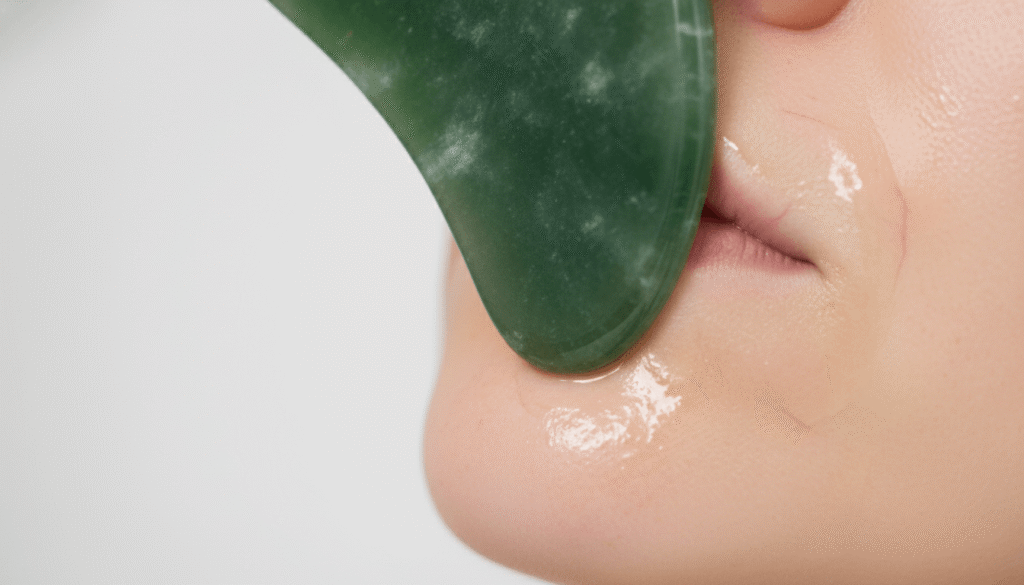
gua sha on face

How to Use Gua Sha on Face Safety

How to Use Gua Sha on Face Safety? – Gua Sha Analysis

Facial gua sha has evolved from a traditional East Asian therapeutic technique into a mainstream skincare ritual adopted by estheticians, dermatologists’ offices, and at-home users worldwide. Today, gua sha on face is frequently associated with de-puffing, contouring, relaxation, and short-term improvements in skin appearance. However, the rapid spread of simplified tutorials has also led to widespread misunderstandings about safety, pressure, and appropriate use. From an industry and product-development perspective, facial gua sha is not a casual massage technique. It is a form of controlled mechanical stimulation applied directly to the skin barrier, superficial vasculature, lymphatic structures, and facial musculature. When performed correctly, gua sha on face can support circulation and skin comfort. When performed incorrectly, it can contribute to barrier disruption, capillary damage, inflammation, and long-term sensitivity. This article is designed as a safety-focused gua sha use guide. Centered on the core keyword gua sha on face, it integrates skin barrier science, anatomical considerations, manufacturing experience, and verifiable dermatology consensus sources. The objective is not to promote aggressive techniques, but to help readers understand how to practice facial gua sha responsibly, effectively, and with clear awareness of its limits. Understanding Gua Sha on Face: Foundations of Safety Facial Gua Sha vs. Traditional Body Gua Sha Traditional gua sha, as described in classical Chinese medicine texts, was primarily applied to the body using firm pressure to intentionally create visible petechiae, often referred to as “sha.” Facial gua sha is a modern adaptation that follows a fundamentally different safety logic. The goal is not to raise deep redness or bruising, but to provide gentle stimulation compatible with the thin and highly vascularized facial skin. Dermatology research confirms that facial skin differs significantly from body skin in thickness, lipid composition, and barrier recovery speed. According to skin barrier research published by the National Center for Biotechnology Information (NCBI), repeated mechanical stress can impair barrier function when applied without adequate recovery time or lubrication (https://www.ncbi.nlm.nih.gov/pmc/articles/PMC2878624/). Why the Face Requires Lower Pressure The face contains a dense network of superficial capillaries and lymphatic vessels located closer to the skin surface than on most body areas. As a result, excessive force during gua sha on face can rupture capillaries or trigger prolonged inflammation. This is particularly relevant for individuals with fair skin, rosacea-prone skin, or a history of sensitivity. The American Academy of Dermatology (AAD) notes that repeated mechanical irritation can worsen visible redness and broken capillaries, especially in vulnerable facial zones such as the cheeks and nasal area (https://www.aad.org/public/diseases/rosacea). Skin Preparation: The First Line of Facial Gua Sha Safety Assessing Skin Condition Before Each Session Safe gua sha on face begins with an honest assessment of current skin condition. Facial gua sha should only be performed on intact, calm skin. Active acne lesions, eczema, sunburn, post-procedure skin, or compromised barriers significantly increase the risk of irritation and delayed healing. From repeated internal routine testing and customer feedback analysis, we have observed that most adverse reactions attributed to gua sha are not caused by the tool itself, but by ignoring temporary skin contraindications. If the skin feels warm, itchy, or reactive to touch, gua sha should be postponed. Cleansing and Lubrication as Safety Requirements Facial gua sha should never be performed on dry or inadequately lubricated skin. Cleansing removes surface debris that may increase friction, while lubrication allows the tool to glide without dragging. Dragging is a primary cause of micro-irritation and barrier stress. Dermatology guidance from institutions such as the Cleveland Clinic emphasizes that facial massage techniques should always minimize friction to protect the skin barrier (https://health.clevelandclinic.org/lymphatic-drainage-massage/). Choosing a Safe Gua Sha Tool for Facial Use Material Selection and Skin Contact Safety The material of a gua sha tool directly influences safety during facial use. Polished natural stones such as jade and rose quartz are commonly preferred because they provide stable weight, smooth edges, and a naturally cool skin feel. From a manufacturing quality-control standpoint, well-polished stone tools are less likely to develop sharp micro-edges compared to low-grade molded materials. In internal comparative testing of stone, resin, and metal tools, we found that surface polish consistency was a stronger predictor of skin comfort than material hardness alone. Tools with inconsistent polishing increased localized friction, particularly on the cheek area. Tool Shape, Thickness, and Edge Geometry Facial gua sha tools should be designed to distribute pressure evenly across the skin. Medium-thickness edges with smooth curvature are generally safer than thin or sharply contoured edges. Thin edges concentrate force into smaller contact areas, increasing the likelihood of capillary stress. For most users, especially beginners, classic heart-shaped or wing-shaped designs provide sufficient versatility while maintaining safe pressure distribution across facial contours. How to Perform Gua Sha on Face Safely: Technique Principles Pressure Control and Tool Angle One of the most critical safety principles of gua sha on face is pressure moderation. Facial gua sha should never feel painful. A practical guideline used in professional demonstrations is that the skin should move gently with the tool, without blanching or sharp discomfort. The tool should be held nearly flat against the skin, typically at a 10–15 degree angle. This orientation allows the edge to glide smoothly rather than scrape. In repeated in-house demonstrations, we observed that steeper angles significantly increased post-session redness, even when stroke counts were low. Stroke Direction and Movement Logic Safe gua sha on face follows the natural orientation of facial muscles and lymphatic drainage pathways. Most strokes begin near the center of the face and move outward toward the hairline or ears. Movements should be slow and controlled, allowing the skin to adapt to mechanical stimulation. According to lymphatic massage guidance published by the Cleveland Clinic, gentle outward and downward movements are most compatible with facial lymph flow and tissue comfort (https://health.clevelandclinic.org/lymphatic-drainage-massage/). Practical Facial Gua Sha Session: Step-by-Step Safety Walkthrough Duration and Frequency Based on Skin Tolerance In routine product demonstrations and internal testing sessions, a typical facial gua sha session lasts between five and eight minutes. Sessions exceeding ten minutes were consistently associated with

How to Use Gua Sha on Face Safety? – Gua Sha Analysis Read More »

Facial gua sha has evolved from a traditional East Asian therapeutic technique into a mainstream skincare ritual adopted by estheticians, dermatologists’ offices, and at-home users worldwide. Today, gua sha on face is frequently associated with de-puffing, contouring, relaxation, and short-term improvements in skin appearance. However, the rapid spread of simplified tutorials has also led to widespread misunderstandings about safety, pressure, and appropriate use. From an industry and product-development perspective, facial gua sha is not a casual massage technique. It is a form of controlled mechanical stimulation applied directly to the skin barrier, superficial vasculature, lymphatic structures, and facial musculature. When performed correctly, gua sha on face can support circulation and skin comfort. When performed incorrectly, it can contribute to barrier disruption, capillary damage, inflammation, and long-term sensitivity. This article is designed as a safety-focused gua sha use guide. Centered on the core keyword gua sha on face, it integrates skin barrier science, anatomical considerations, manufacturing experience, and verifiable dermatology consensus sources. The objective is not to promote aggressive techniques, but to help readers understand how to practice facial gua sha responsibly, effectively, and with clear awareness of its limits. Understanding Gua Sha on Face: Foundations of Safety Facial Gua Sha vs. Traditional Body Gua Sha Traditional gua sha, as described in classical Chinese medicine texts, was primarily applied to the body using firm pressure to intentionally create visible petechiae, often referred to as “sha.” Facial gua sha is a modern adaptation that follows a fundamentally different safety logic. The goal is not to raise deep redness or bruising, but to provide gentle stimulation compatible with the thin and highly vascularized facial skin. Dermatology research confirms that facial skin differs significantly from body skin in thickness, lipid composition, and barrier recovery speed. According to skin barrier research published by the National Center for Biotechnology Information (NCBI), repeated mechanical stress can impair barrier function when applied without adequate recovery time or lubrication (https://www.ncbi.nlm.nih.gov/pmc/articles/PMC2878624/). Why the Face Requires Lower Pressure The face contains a dense network of superficial capillaries and lymphatic vessels located closer to the skin surface than on most body areas. As a result, excessive force during gua sha on face can rupture capillaries or trigger prolonged inflammation. This is particularly relevant for individuals with fair skin, rosacea-prone skin, or a history of sensitivity. The American Academy of Dermatology (AAD) notes that repeated mechanical irritation can worsen visible redness and broken capillaries, especially in vulnerable facial zones such as the cheeks and nasal area (https://www.aad.org/public/diseases/rosacea). Skin Preparation: The First Line of Facial Gua Sha Safety Assessing Skin Condition Before Each Session Safe gua sha on face begins with an honest assessment of current skin condition. Facial gua sha should only be performed on intact, calm skin. Active acne lesions, eczema, sunburn, post-procedure skin, or compromised barriers significantly increase the risk of irritation and delayed healing. From repeated internal routine testing and customer feedback analysis, we have observed that most adverse reactions attributed to gua sha are not caused by the tool itself, but by ignoring temporary skin contraindications. If the skin feels warm, itchy, or reactive to touch, gua sha should be postponed. Cleansing and Lubrication as Safety Requirements Facial gua sha should never be performed on dry or inadequately lubricated skin. Cleansing removes surface debris that may increase friction, while lubrication allows the tool to glide without dragging. Dragging is a primary cause of micro-irritation and barrier stress. Dermatology guidance from institutions such as the Cleveland Clinic emphasizes that facial massage techniques should always minimize friction to protect the skin barrier (https://health.clevelandclinic.org/lymphatic-drainage-massage/). Choosing a Safe Gua Sha Tool for Facial Use Material Selection and Skin Contact Safety The material of a gua sha tool directly influences safety during facial use. Polished natural stones such as jade and rose quartz are commonly preferred because they provide stable weight, smooth edges, and a naturally cool skin feel. From a manufacturing quality-control standpoint, well-polished stone tools are less likely to develop sharp micro-edges compared to low-grade molded materials. In internal comparative testing of stone, resin, and metal tools, we found that surface polish consistency was a stronger predictor of skin comfort than material hardness alone. Tools with inconsistent polishing increased localized friction, particularly on the cheek area. Tool Shape, Thickness, and Edge Geometry Facial gua sha tools should be designed to distribute pressure evenly across the skin. Medium-thickness edges with smooth curvature are generally safer than thin or sharply contoured edges. Thin edges concentrate force into smaller contact areas, increasing the likelihood of capillary stress. For most users, especially beginners, classic heart-shaped or wing-shaped designs provide sufficient versatility while maintaining safe pressure distribution across facial contours. How to Perform Gua Sha on Face Safely: Technique Principles Pressure Control and Tool Angle One of the most critical safety principles of gua sha on face is pressure moderation. Facial gua sha should never feel painful. A practical guideline used in professional demonstrations is that the skin should move gently with the tool, without blanching or sharp discomfort. The tool should be held nearly flat against the skin, typically at a 10–15 degree angle. This orientation allows the edge to glide smoothly rather than scrape. In repeated in-house demonstrations, we observed that steeper angles significantly increased post-session redness, even when stroke counts were low. Stroke Direction and Movement Logic Safe gua sha on face follows the natural orientation of facial muscles and lymphatic drainage pathways. Most strokes begin near the center of the face and move outward toward the hairline or ears. Movements should be slow and controlled, allowing the skin to adapt to mechanical stimulation. According to lymphatic massage guidance published by the Cleveland Clinic, gentle outward and downward movements are most compatible with facial lymph flow and tissue comfort (https://health.clevelandclinic.org/lymphatic-drainage-massage/). Practical Facial Gua Sha Session: Step-by-Step Safety Walkthrough Duration and Frequency Based on Skin Tolerance In routine product demonstrations and internal testing sessions, a typical facial gua sha session lasts between five and eight minutes. Sessions exceeding ten minutes were consistently associated with
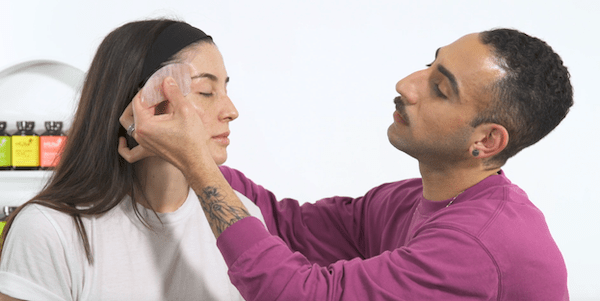
gua sha hurt your face

Why Does Gua Sha Hurt Your Face?

Does gua sha hurt your face? Despite being a technique proven to be safe and low-risk over thousands of years of development, improper use of scraping can still cause harm. Especially in its new application for facial beauty, incorrect usage can damage your face. Here are some factors that might lead to scraping harming your face: Using Inferior Gua Sha Hurt Your Face gua sha tools, being items in direct contact with your skin, even with minor flaws, can harm your face. Therefore, when purchasing gua sha tools, make sure they meet the requirements. Here are phenomena commonly found in substandard gua sha products: When purchasing gua sha tools, choose shapes and sizes suitable for facial gua sha. Gua Sha Medium Can Also Hurt Your Face Various liquid mediums are used during gua sha for lubrication and enhanced effects. However, using inappropriate mediums can have adverse effects: Incorrect Techniques of Gua Sha Hurt Your Face Improper usage is the most common reason for facial injuries. For instance, incorrect angles or excessive force can cause harm. Here’s how to correctly use gua sha tools on your face: Follow these methods. For more visual guidance, there are numerous tutorials available on platforms like YouTube. Feel free to refer to them for hands-on instructions. In summary, the probability of gua sha hurt your face is low but not zero. However, by using the correct methods and choosing the right tools, you can significantly reduce this probability. If you still have questions, please leave a comment, and we’ll promptly respond to your inquiries.

Why Does Gua Sha Hurt Your Face? Read More »

Does gua sha hurt your face? Despite being a technique proven to be safe and low-risk over thousands of years of development, improper use of scraping can still cause harm. Especially in its new application for facial beauty, incorrect usage can damage your face. Here are some factors that might lead to scraping harming your face: Using Inferior Gua Sha Hurt Your Face gua sha tools, being items in direct contact with your skin, even with minor flaws, can harm your face. Therefore, when purchasing gua sha tools, make sure they meet the requirements. Here are phenomena commonly found in substandard gua sha products: When purchasing gua sha tools, choose shapes and sizes suitable for facial gua sha. Gua Sha Medium Can Also Hurt Your Face Various liquid mediums are used during gua sha for lubrication and enhanced effects. However, using inappropriate mediums can have adverse effects: Incorrect Techniques of Gua Sha Hurt Your Face Improper usage is the most common reason for facial injuries. For instance, incorrect angles or excessive force can cause harm. Here’s how to correctly use gua sha tools on your face: Follow these methods. For more visual guidance, there are numerous tutorials available on platforms like YouTube. Feel free to refer to them for hands-on instructions. In summary, the probability of gua sha hurt your face is low but not zero. However, by using the correct methods and choosing the right tools, you can significantly reduce this probability. If you still have questions, please leave a comment, and we’ll promptly respond to your inquiries.

Can-Gua-Sha-Help-With-Specific-Health-Conditions

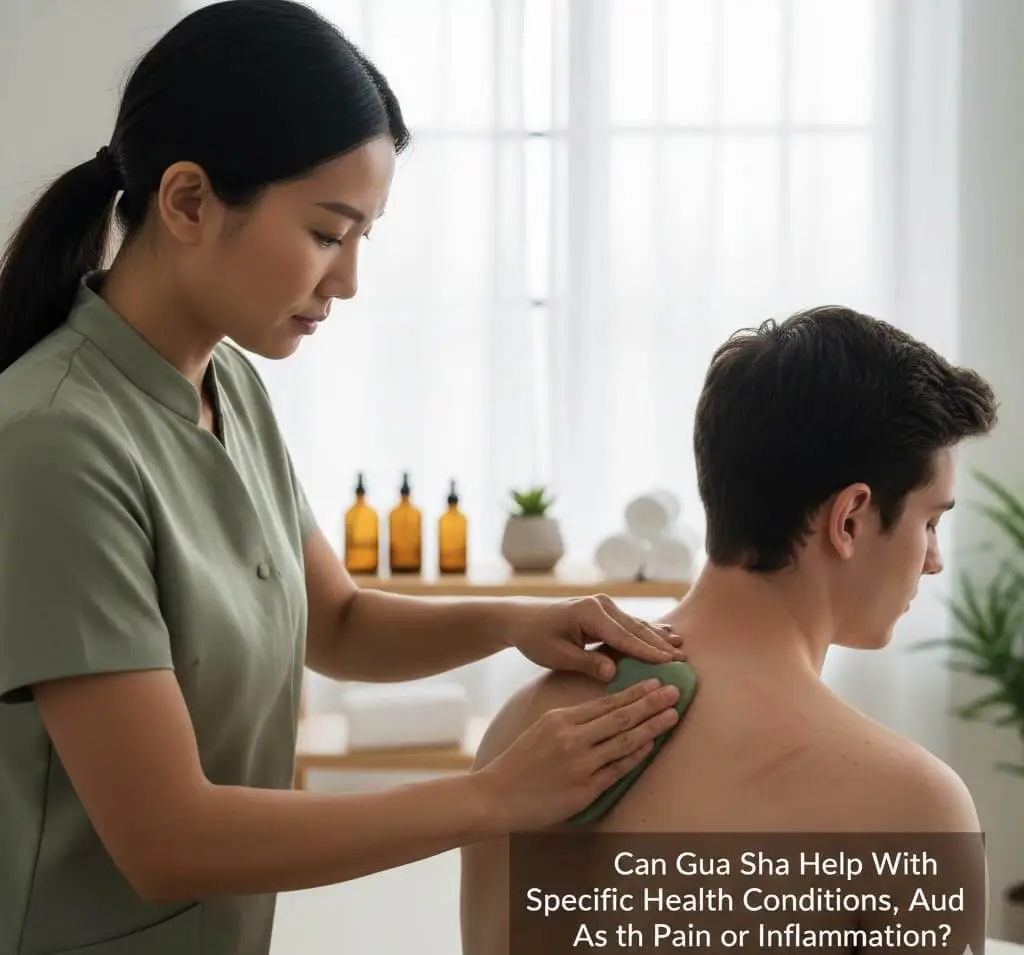
Can Gua Sha Help With Specific Health Conditions, Such As Pain or Inflammation?

I. Introduction Gua sha is an ancient Chinese healing technique that involves using a flat tool, such as a jade or rose quartz scraper, to scrape the skin in a specific direction. The technique is also known as “gua sha” and is commonly used in Traditional Chinese Medicine to promote healing and relieve pain. In recent years, gua sha has gained popularity in Western countries as a natural remedy for various health conditions, including pain and inflammation. While gua sha has been used for thousands of years in Chinese medicine, its potential benefits and effectiveness have only recently been studied in Western medical research. II. Gua Sha History Gua sha has been used in Traditional Chinese Medicine for thousands of years, and its exact origin is not known. The practice is believed to have originated in Southeast Asia and spread to other parts of Asia, including China. Traditionally, gua sha was used to treat a variety of conditions, including fever, colds, digestive disorders, and muscle pain. In Chinese medicine, the technique is believed to promote the flow of “qi” or energy in the body, which is essential for good health. III. Gua Sha Benefits Gua sha is believed to have several potential health benefits, including pain relief, reduced inflammation, improved circulation, and relaxation. The technique is also thought to help detoxify the body and boost the immune system. Several research studies have suggested that gua sha may be effective in reducing pain and inflammation. For example, a study published in the Journal of Pain found that gua sha was more effective than a placebo in reducing neck pain in patients with chronic neck pain. In addition to pain relief and reduced inflammation, gua sha may also help improve circulation and promote relaxation. One study published in the Journal of Traditional Chinese Medicine found that gua sha increased blood flow in the skin and improved microcirculation. Another study suggested that gua sha may help reduce anxiety and promote relaxation. IV. How to Use Gua Sha on Face To use gua sha on the face, follow these steps: Benefits of Using Gua Sha on the Face Using gua sha on the face may help promote circulation, reduce puffiness, and improve skin elasticity. It may also help reduce the appearance of fine lines and wrinkles. Precautions to Take When Using Gua Sha on the Face When using gua sha on the face, be gentle and avoid applying too much pressure. It’s also important to use a facial oil or serum to provide lubrication and protect the skin from damage. V. How to Use Gua Sha on Body Step-by-Step Guide on How to Use Gua Sha on the Body To use gua sha on the body, follow these steps: Focus on areas of tension or pain, such as the neck, shoulders, and back. Benefits of Using Gua Sha on the Body Using gua sha on the body may help relieve muscle tension, reduce inflammation, and promote relaxation. It may also help improve circulation and boost the immune system. Precautions to Take When Using Gua Sha on the Body When using gua sha on the body, be careful not to apply too much pressure, especially on bony areas such as the spine. It’s also important to use a massage oil or lotion to provide lubrication and protect the skin from damage. VI. Gua Sha Precautions Precautions to Take When Using Gua Sha When using gua sha, it’s important to take the following precautions: Who Should Not Use Gua Sha Gua sha may not be suitable for everyone, including people with certain medical conditions or those taking certain medications. It’s important to speak with a healthcare provider before using gua sha. Possible Side Effects of Gua Sha Possible side effects of gua sha include bruising, redness, and soreness. These side effects are usually mild and temporary. VII. Conclusion Summary of the potential benefits of gua sha for pain and inflammation Gua sha may be helpful in reducing pain and inflammation, as well as promoting circulation, relaxation, and overall well-being. Final thoughts on gua sha use for specific health conditions While gua sha may be helpful for certain health conditions, it’s important to speak with a healthcare provider before using the technique. It’s also important to follow proper precautions and Gua Sha Tool Recommendations 1. Recommended Gua Sha Tools for Beginners And Advanced Users: 2. Considerations When Purchasing Gua Sha Tools, Such As Quality And Price: Gua Sha Tool Shapes 1. Overview of the Different Shapes of Gua Sha Tools: Flat: These gua sha tools have a smooth, flat surface and are ideal for larger areas of the body, such as the back. Curved: These gua sha tools have a curved surface and are great for areas of the body that have a more defined contour, such as the neck and face. Comb-shaped: These gua sha tools have teeth-like ridges and are perfect for stimulating the scalp and promoting hair growth. 2. Advantages And Disadvantages of Each Shape: Flat: Advantages include their versatility and ability to cover large areas quickly. However, they may not be as effective for smaller, more intricate areas. Curved: Advantages include their ability to contour to the shape of the body and reach more specific areas. However, they may require more time and precision to use effectively. Comb-shaped: Advantages include their ability to stimulate the scalp and promote hair growth. However, they may not be as effective for other areas of the body. Gua Sha Tool Materials 1. Overview of the Different Materials Used for Gua Sha Tools: Jade: This is a popular choice for gua sha tools due to its natural cooling properties and ability to promote lymphatic drainage. Rose quartz: This is another popular choice for gua sha tools due to its calming and soothing properties. Stainless steel: This is a more affordable option for gua sha tools and is durable and easy to clean. 2. Advantages And Disadvantages of Each Material: Jade: Advantages include its natural cooling properties and ability to promote lymphatic drainage. However, it may be more fragile and prone to cracking

Can Gua Sha Help With Specific Health Conditions, Such As Pain or Inflammation? Read More »

I. Introduction Gua sha is an ancient Chinese healing technique that involves using a flat tool, such as a jade or rose quartz scraper, to scrape the skin in a specific direction. The technique is also known as “gua sha” and is commonly used in Traditional Chinese Medicine to promote healing and relieve pain. In recent years, gua sha has gained popularity in Western countries as a natural remedy for various health conditions, including pain and inflammation. While gua sha has been used for thousands of years in Chinese medicine, its potential benefits and effectiveness have only recently been studied in Western medical research. II. Gua Sha History Gua sha has been used in Traditional Chinese Medicine for thousands of years, and its exact origin is not known. The practice is believed to have originated in Southeast Asia and spread to other parts of Asia, including China. Traditionally, gua sha was used to treat a variety of conditions, including fever, colds, digestive disorders, and muscle pain. In Chinese medicine, the technique is believed to promote the flow of “qi” or energy in the body, which is essential for good health. III. Gua Sha Benefits Gua sha is believed to have several potential health benefits, including pain relief, reduced inflammation, improved circulation, and relaxation. The technique is also thought to help detoxify the body and boost the immune system. Several research studies have suggested that gua sha may be effective in reducing pain and inflammation. For example, a study published in the Journal of Pain found that gua sha was more effective than a placebo in reducing neck pain in patients with chronic neck pain. In addition to pain relief and reduced inflammation, gua sha may also help improve circulation and promote relaxation. One study published in the Journal of Traditional Chinese Medicine found that gua sha increased blood flow in the skin and improved microcirculation. Another study suggested that gua sha may help reduce anxiety and promote relaxation. IV. How to Use Gua Sha on Face To use gua sha on the face, follow these steps: Benefits of Using Gua Sha on the Face Using gua sha on the face may help promote circulation, reduce puffiness, and improve skin elasticity. It may also help reduce the appearance of fine lines and wrinkles. Precautions to Take When Using Gua Sha on the Face When using gua sha on the face, be gentle and avoid applying too much pressure. It’s also important to use a facial oil or serum to provide lubrication and protect the skin from damage. V. How to Use Gua Sha on Body Step-by-Step Guide on How to Use Gua Sha on the Body To use gua sha on the body, follow these steps: Focus on areas of tension or pain, such as the neck, shoulders, and back. Benefits of Using Gua Sha on the Body Using gua sha on the body may help relieve muscle tension, reduce inflammation, and promote relaxation. It may also help improve circulation and boost the immune system. Precautions to Take When Using Gua Sha on the Body When using gua sha on the body, be careful not to apply too much pressure, especially on bony areas such as the spine. It’s also important to use a massage oil or lotion to provide lubrication and protect the skin from damage. VI. Gua Sha Precautions Precautions to Take When Using Gua Sha When using gua sha, it’s important to take the following precautions: Who Should Not Use Gua Sha Gua sha may not be suitable for everyone, including people with certain medical conditions or those taking certain medications. It’s important to speak with a healthcare provider before using gua sha. Possible Side Effects of Gua Sha Possible side effects of gua sha include bruising, redness, and soreness. These side effects are usually mild and temporary. VII. Conclusion Summary of the potential benefits of gua sha for pain and inflammation Gua sha may be helpful in reducing pain and inflammation, as well as promoting circulation, relaxation, and overall well-being. Final thoughts on gua sha use for specific health conditions While gua sha may be helpful for certain health conditions, it’s important to speak with a healthcare provider before using the technique. It’s also important to follow proper precautions and Gua Sha Tool Recommendations 1. Recommended Gua Sha Tools for Beginners And Advanced Users: 2. Considerations When Purchasing Gua Sha Tools, Such As Quality And Price: Gua Sha Tool Shapes 1. Overview of the Different Shapes of Gua Sha Tools: Flat: These gua sha tools have a smooth, flat surface and are ideal for larger areas of the body, such as the back. Curved: These gua sha tools have a curved surface and are great for areas of the body that have a more defined contour, such as the neck and face. Comb-shaped: These gua sha tools have teeth-like ridges and are perfect for stimulating the scalp and promoting hair growth. 2. Advantages And Disadvantages of Each Shape: Flat: Advantages include their versatility and ability to cover large areas quickly. However, they may not be as effective for smaller, more intricate areas. Curved: Advantages include their ability to contour to the shape of the body and reach more specific areas. However, they may require more time and precision to use effectively. Comb-shaped: Advantages include their ability to stimulate the scalp and promote hair growth. However, they may not be as effective for other areas of the body. Gua Sha Tool Materials 1. Overview of the Different Materials Used for Gua Sha Tools: Jade: This is a popular choice for gua sha tools due to its natural cooling properties and ability to promote lymphatic drainage. Rose quartz: This is another popular choice for gua sha tools due to its calming and soothing properties. Stainless steel: This is a more affordable option for gua sha tools and is durable and easy to clean. 2. Advantages And Disadvantages of Each Material: Jade: Advantages include its natural cooling properties and ability to promote lymphatic drainage. However, it may be more fragile and prone to cracking

Why Gua Sha Might Good For You? Which Gua Sha is Best?

You can find a lot of great stuff on social media — and a lot of questionable stuff. Gua sha is not one of those problematic things. While it may look like something you’d see on a late-night TV commercial, this time-honored muscle-gua sha technique has many benefits. LAc’s licensed acupuncturist, Tim Sobo, explains what Gua Sha is and provides some helpful tips to ensure your experience is satisfying and not scary. What is Gua Sha? Gua Sha is rooted in Traditional Chinese Medicine (TCM). According to the principles of Chinese medicine, your qi (pronounced “chi”), or energy, must flow throughout your body in order for you to feel your best. When qi becomes stagnant in certain areas, it is thought that there may be health problems. With Gua Sha, a doctor (in many cases an acupuncturist) will use a smooth-edged tool to gently scrape areas of the body that are inflamed or stagnant Qi to help improve blood circulation and promote healing. “Gua Sha is a very standard form of treatment that most acupuncturists use. Its meaning is loosely translated as ‘scrape, rub or push’. Essentially, Gua Sha is just a tool-assisted massage,” explains Sobo. The Difference Between Gua Sha Shapes and Glaston’s Method Physical therapists sometimes combine muscle gua sha to stretch and relax muscles or scar tissue. Although this is almost Gua Sha, it is known in the industry as the Graston Technique®. In 1990, amateur athlete David Glaston introduced his version of Gua Sha to the United States. While chi is more associated with scraping, the two methods of scraping muscles are roughly the same, Sobo said. “The Graston technique is just a trademark version of the Gua Sha massage technique. The difference is that you get Graston from a physical therapist. They will discuss the technique entirely in anatomical or physiological terms. If you go to a very strict acupuncturist , you may hear more about boosting Qi and blood circulation and helping to break energy stagnation in the body. But at the end of the day, both treatments have the same target outcome.” The Benefits of Gua Sha Gua Sha has been reported to help relieve a variety of health conditions. Sobo says Gua Sha is good for musculoskeletal problems, especially major problems like tightness in the shoulders, legs and back. It can also help relieve tension headaches, migraines, neck pain, or body swelling. In addition to acupuncture, Gua Sha can even help relieve anxiety, fatigue, insomnia, and perimenopausal symptoms, Sobo added. “We’re just promoting airflow in the body. We’re helping to ensure better blood supply and proper nerve conduction so that everything goes through your body the way it should. While doing Gua Sha, hopefully any symptoms you experience will be Fading. That’s the overall goal.” He added: “Through gua sha, acupuncture and traditional Chinese medicine, we can see many diseases. If your blood and energy flow throughout the body is not smooth, it may manifest as muscle nodules, soreness, weakness or pain. Acupuncture and gua sha will only Helps promote the healthy conduction of blood supply and everything through the tissues so we can keep your body as balanced as possible.” Body Gua Sha Shapes Sobo says the body’s gua sha is tissue-dependent, which means you want to work in a way that supports the goals of the treatment. “If you have a muscle knot, you want to run your gua sha tool through it first. You’ll want to work perpendicular to the muscle fibers so you can break all the adhesions. Then, you want to pull in the direction of the muscle fibers long to get them going in the right direction again. You have those painful knots in your shoulders and you want to use your tool back and forth through them to break the knots. Once things start to loosen up, you’ll start moving the scraping tool in the direction of the muscle fibers Move, usually from the inside out. You don’t start gua sha in this direction, though, because you’ll just tighten the tissue.” It is recommended that you choose a larger guasha shaped. Black obsidian gua sha Big V-shaped with teeth is a good choice. Gua Sha Shaped on Face You may have seen people on social media gua sha stones on their faces and wondered what happened. Gua sha has been shown to help relieve facial tension, reduce puffiness and inflammation, and can even help reduce sinus pressure. However, since the musculature of the face is much thinner, you want to avoid putting too much pressure on this area. “In general, the musculature in the face is very thin and doesn’t bulge like other muscles. With gua sha on the face, you don’t want to drag your tools off the outer edges of your face. Instead, imagine pulling your face Divide in half, using your nose as the middle point. If you are working under your eyes, you will start at your nose and work your scraping tool outward. Keep your tool moving in a smooth, straight line. Don’t rub too hard Go back and forth, up and down, and at different angles, because that just stretches and aggravates the skin. Keep things going in a smooth direction, and do it just enough to create a little bit of redness, but not too hurtful.” To help with the problem, you can even apply a lotion or serum before gua sha on your face. This way, your tool will slide over the skin more easily. Sobo recommends avoiding overly swollen areas. You don’t want to press those too hard, as you might burst the capillary bed and end up with bruises on your face. When using it on the face, it is recommended that you choose a guasha with a smaller volume. V-shaped rose quartz gua sha is one of the most suitable options Wholesale Gua Sha Stone As the leading gua sha factory in China, Deyi Gems have more than 100 different gua sha stones and customized services!

Why Gua Sha Might Good For You? Which Gua Sha is Best? Read More »

You can find a lot of great stuff on social media — and a lot of questionable stuff. Gua sha is not one of those problematic things. While it may look like something you’d see on a late-night TV commercial, this time-honored muscle-gua sha technique has many benefits. LAc’s licensed acupuncturist, Tim Sobo, explains what Gua Sha is and provides some helpful tips to ensure your experience is satisfying and not scary. What is Gua Sha? Gua Sha is rooted in Traditional Chinese Medicine (TCM). According to the principles of Chinese medicine, your qi (pronounced “chi”), or energy, must flow throughout your body in order for you to feel your best. When qi becomes stagnant in certain areas, it is thought that there may be health problems. With Gua Sha, a doctor (in many cases an acupuncturist) will use a smooth-edged tool to gently scrape areas of the body that are inflamed or stagnant Qi to help improve blood circulation and promote healing. “Gua Sha is a very standard form of treatment that most acupuncturists use. Its meaning is loosely translated as ‘scrape, rub or push’. Essentially, Gua Sha is just a tool-assisted massage,” explains Sobo. The Difference Between Gua Sha Shapes and Glaston’s Method Physical therapists sometimes combine muscle gua sha to stretch and relax muscles or scar tissue. Although this is almost Gua Sha, it is known in the industry as the Graston Technique®. In 1990, amateur athlete David Glaston introduced his version of Gua Sha to the United States. While chi is more associated with scraping, the two methods of scraping muscles are roughly the same, Sobo said. “The Graston technique is just a trademark version of the Gua Sha massage technique. The difference is that you get Graston from a physical therapist. They will discuss the technique entirely in anatomical or physiological terms. If you go to a very strict acupuncturist , you may hear more about boosting Qi and blood circulation and helping to break energy stagnation in the body. But at the end of the day, both treatments have the same target outcome.” The Benefits of Gua Sha Gua Sha has been reported to help relieve a variety of health conditions. Sobo says Gua Sha is good for musculoskeletal problems, especially major problems like tightness in the shoulders, legs and back. It can also help relieve tension headaches, migraines, neck pain, or body swelling. In addition to acupuncture, Gua Sha can even help relieve anxiety, fatigue, insomnia, and perimenopausal symptoms, Sobo added. “We’re just promoting airflow in the body. We’re helping to ensure better blood supply and proper nerve conduction so that everything goes through your body the way it should. While doing Gua Sha, hopefully any symptoms you experience will be Fading. That’s the overall goal.” He added: “Through gua sha, acupuncture and traditional Chinese medicine, we can see many diseases. If your blood and energy flow throughout the body is not smooth, it may manifest as muscle nodules, soreness, weakness or pain. Acupuncture and gua sha will only Helps promote the healthy conduction of blood supply and everything through the tissues so we can keep your body as balanced as possible.” Body Gua Sha Shapes Sobo says the body’s gua sha is tissue-dependent, which means you want to work in a way that supports the goals of the treatment. “If you have a muscle knot, you want to run your gua sha tool through it first. You’ll want to work perpendicular to the muscle fibers so you can break all the adhesions. Then, you want to pull in the direction of the muscle fibers long to get them going in the right direction again. You have those painful knots in your shoulders and you want to use your tool back and forth through them to break the knots. Once things start to loosen up, you’ll start moving the scraping tool in the direction of the muscle fibers Move, usually from the inside out. You don’t start gua sha in this direction, though, because you’ll just tighten the tissue.” It is recommended that you choose a larger guasha shaped. Black obsidian gua sha Big V-shaped with teeth is a good choice. Gua Sha Shaped on Face You may have seen people on social media gua sha stones on their faces and wondered what happened. Gua sha has been shown to help relieve facial tension, reduce puffiness and inflammation, and can even help reduce sinus pressure. However, since the musculature of the face is much thinner, you want to avoid putting too much pressure on this area. “In general, the musculature in the face is very thin and doesn’t bulge like other muscles. With gua sha on the face, you don’t want to drag your tools off the outer edges of your face. Instead, imagine pulling your face Divide in half, using your nose as the middle point. If you are working under your eyes, you will start at your nose and work your scraping tool outward. Keep your tool moving in a smooth, straight line. Don’t rub too hard Go back and forth, up and down, and at different angles, because that just stretches and aggravates the skin. Keep things going in a smooth direction, and do it just enough to create a little bit of redness, but not too hurtful.” To help with the problem, you can even apply a lotion or serum before gua sha on your face. This way, your tool will slide over the skin more easily. Sobo recommends avoiding overly swollen areas. You don’t want to press those too hard, as you might burst the capillary bed and end up with bruises on your face. When using it on the face, it is recommended that you choose a guasha with a smaller volume. V-shaped rose quartz gua sha is one of the most suitable options Wholesale Gua Sha Stone As the leading gua sha factory in China, Deyi Gems have more than 100 different gua sha stones and customized services!

How to Use Gua Sha on Face | Gua Sha Instruction

What is Gua Sha Benign facial “gua sha” stimulation can not only improve the microcirculation of facial blood vessels, but also increase the flow of blood, lymph and body fluids, so that the cells in the skin get sufficient nutrition and oxygen, accelerate the metabolism of cells, and promote the shedding of senescent cells. It maintains the elastic state of fibers, stimulates the “potential” of the human body, and redistributes the energy of the whole body through feedback from the brain. “Sha” is the metabolic product of the fight between “righteous qi” and “evil qi” in the meridians. Scraping can open the local sweat pores, promote the efflux of evil qi, improve microcirculation, clean the meridians, and eliminate hidden dangers; at the same time, it can dredge the meridians, promote blood circulation, invigorate “yang qi”, replenish oxygen and remove blood stasis, regulate internal organs, and improve the body’s health. Disease resistance; changes the hypoxic state of the tissue, strengthens the metabolism of the human body, and promotes the regeneration and activation of cells. How to Use Gua Sha on Face Precautions for Gua Sha on Face Attention should be paid to gua sha on face: the technique must be gentle, and the gua sha stone should be gently scraped along the meridians, and do not use excessive force. Best Gua Sha Stone on Face Recommend: The most popular gua sha stone in the market. Made of high quality rose quartz, high quality with an competitive price! Cheapest!!! If you want to wholesale the most competitive price of natural gua sha stone, green jade gua sha is the best choose! The most durable gua sha board. It is more resistant to falling, breaking and high temperature than jade and crystal gua sha stone.

How to Use Gua Sha on Face | Gua Sha Instruction Read More »

What is Gua Sha Benign facial “gua sha” stimulation can not only improve the microcirculation of facial blood vessels, but also increase the flow of blood, lymph and body fluids, so that the cells in the skin get sufficient nutrition and oxygen, accelerate the metabolism of cells, and promote the shedding of senescent cells. It maintains the elastic state of fibers, stimulates the “potential” of the human body, and redistributes the energy of the whole body through feedback from the brain. “Sha” is the metabolic product of the fight between “righteous qi” and “evil qi” in the meridians. Scraping can open the local sweat pores, promote the efflux of evil qi, improve microcirculation, clean the meridians, and eliminate hidden dangers; at the same time, it can dredge the meridians, promote blood circulation, invigorate “yang qi”, replenish oxygen and remove blood stasis, regulate internal organs, and improve the body’s health. Disease resistance; changes the hypoxic state of the tissue, strengthens the metabolism of the human body, and promotes the regeneration and activation of cells. How to Use Gua Sha on Face Precautions for Gua Sha on Face Attention should be paid to gua sha on face: the technique must be gentle, and the gua sha stone should be gently scraped along the meridians, and do not use excessive force. Best Gua Sha Stone on Face Recommend: The most popular gua sha stone in the market. Made of high quality rose quartz, high quality with an competitive price! Cheapest!!! If you want to wholesale the most competitive price of natural gua sha stone, green jade gua sha is the best choose! The most durable gua sha board. It is more resistant to falling, breaking and high temperature than jade and crystal gua sha stone.

gua sha on face

How to Use Gua Sha Stone on Face

How to Use Gua Sha Stone on Face About Gua Sha on Face Gua sha on face can clean the skin, reduce wrinkles and fine lines, and promote blood circulation and lymphatic drainage. Many skincare brands now sell their own products with the assistance of gua sha boards to speed up the absorption of facial extracts and so on. But really does the gua sha boards work? Is it worth your money? I will address these questions for you below. I read a book written by a Gua Sha practitioner where he mentioned, “I define facial gua sha as a simple, gentle technique where gua sha increases circulation and lymphatic flow to the face. The use of rose quartz allows for the creation of higher quality gua sha tools that can be shaped without resin”. He adds, “If you feel tension in your face, jaw or between your eyebrows, then a gua sha is the tool you are missing. Using a gua sha massage tool allows the muscles and fascia to work deeper than massaging with your fingers, so you can consciously relax tight areas.” Gua Sha practitioners also say that it is the cooling properties of jade itself that makes facial gua sha really useful, such as getting delicate features, eliminating dark circles under the eyes, relaxing facial muscles and more. The famous gua sha practitioner is Katie Brindle, founder of Hayo’u Method, a qualified Five Elements Chinese Medical practitioner. He graduated from the U.K.’s Integrated College of Chinese Medicine. So his words are worthy to believe. This is the reason why i recommend gua sha on face to you. Using Gua Sha On Face Next, i will introduce gua sha tutorial to you. Gua sha gently all over your neck, face and shoulder. Gently press and hold the gua sha boards under each eye, then over each eye, with the lids shut. Starting at the neck, press-stroke up to your forehead. Angling the gua sha plates at 45 degrees in the direction that you want to work, use the round edge to press-stroke the forehead, cheekbones, then the lips-about eight sweeps in each direction. Use the double-curved end on your throat and jawline. Gua sha on face can be used in the morning or before you go to bed, along with some facial oil. Based on the energies the stones supposedly carry, you should use rose quartz gua sha facial massage tools in the morning and during the rest of the day and at night. Deyi Gems – Leading Jade Gua Sha Stones Wholesale Factory! Popular Gua Sha Stone Styles Gua Sha Stone Display Customized Service We Bring Tailor-Made Customized Solutions Working closely with you from concept to packaging, our talented designers and engineers get all the information needed for your project to succeed. Gua Sha Logo Custom MOQ: 50pcs only Gua Sha Packaging Custom MOQ: 100pcs only Gua Sha Style Custom MOQ: 500pcs only Start Customized Your Gua Sha Tool With high quality products, we have established long-term cooperation with many famous brands like Sephora, Ulta, Beautybio as so on. Have any inquiry or customized demand! Feel free to contact us 请在浏览器中启用JavaScript来完成此表单。Name *Email *Subject *Comment or Message * * Enter product details (such as color, size, materials etc.) and other specifc requirements to receive an accurate quote. Get a Quote Trending Today Why is Pursuing Genuine Jade Gua Sha Tools Unrealistic? How Does Rose Quartz Made? From Raw Stones to Exquisite Pieces Gua Sha Wholesale: Opportunities, Challenges, and Risks in the Indian Market Global Gua Sha Industry 2025: Manufacturing Trends, Wholesale Market Insights, and Future Opportunities

How to Use Gua Sha Stone on Face Read More »

How to Use Gua Sha Stone on Face About Gua Sha on Face Gua sha on face can clean the skin, reduce wrinkles and fine lines, and promote blood circulation and lymphatic drainage. Many skincare brands now sell their own products with the assistance of gua sha boards to speed up the absorption of facial extracts and so on. But really does the gua sha boards work? Is it worth your money? I will address these questions for you below. I read a book written by a Gua Sha practitioner where he mentioned, “I define facial gua sha as a simple, gentle technique where gua sha increases circulation and lymphatic flow to the face. The use of rose quartz allows for the creation of higher quality gua sha tools that can be shaped without resin”. He adds, “If you feel tension in your face, jaw or between your eyebrows, then a gua sha is the tool you are missing. Using a gua sha massage tool allows the muscles and fascia to work deeper than massaging with your fingers, so you can consciously relax tight areas.” Gua Sha practitioners also say that it is the cooling properties of jade itself that makes facial gua sha really useful, such as getting delicate features, eliminating dark circles under the eyes, relaxing facial muscles and more. The famous gua sha practitioner is Katie Brindle, founder of Hayo’u Method, a qualified Five Elements Chinese Medical practitioner. He graduated from the U.K.’s Integrated College of Chinese Medicine. So his words are worthy to believe. This is the reason why i recommend gua sha on face to you. Using Gua Sha On Face Next, i will introduce gua sha tutorial to you. Gua sha gently all over your neck, face and shoulder. Gently press and hold the gua sha boards under each eye, then over each eye, with the lids shut. Starting at the neck, press-stroke up to your forehead. Angling the gua sha plates at 45 degrees in the direction that you want to work, use the round edge to press-stroke the forehead, cheekbones, then the lips-about eight sweeps in each direction. Use the double-curved end on your throat and jawline. Gua sha on face can be used in the morning or before you go to bed, along with some facial oil. Based on the energies the stones supposedly carry, you should use rose quartz gua sha facial massage tools in the morning and during the rest of the day and at night. Deyi Gems – Leading Jade Gua Sha Stones Wholesale Factory! Popular Gua Sha Stone Styles Gua Sha Stone Display Customized Service We Bring Tailor-Made Customized Solutions Working closely with you from concept to packaging, our talented designers and engineers get all the information needed for your project to succeed. Gua Sha Logo Custom MOQ: 50pcs only Gua Sha Packaging Custom MOQ: 100pcs only Gua Sha Style Custom MOQ: 500pcs only Start Customized Your Gua Sha Tool With high quality products, we have established long-term cooperation with many famous brands like Sephora, Ulta, Beautybio as so on. Have any inquiry or customized demand! Feel free to contact us 请在浏览器中启用JavaScript来完成此表单。Name *Email *Subject *Comment or Message * * Enter product details (such as color, size, materials etc.) and other specifc requirements to receive an accurate quote. Get a Quote Trending Today Why is Pursuing Genuine Jade Gua Sha Tools Unrealistic? How Does Rose Quartz Made? From Raw Stones to Exquisite Pieces Gua Sha Wholesale: Opportunities, Challenges, and Risks in the Indian Market Global Gua Sha Industry 2025: Manufacturing Trends, Wholesale Market Insights, and Future Opportunities

Scroll to Top

Getting Fast Reply

gua sha wholesale
Please enter product details (such as color, size, materials etc.) and other specifc requirements to receive an accurate quote.