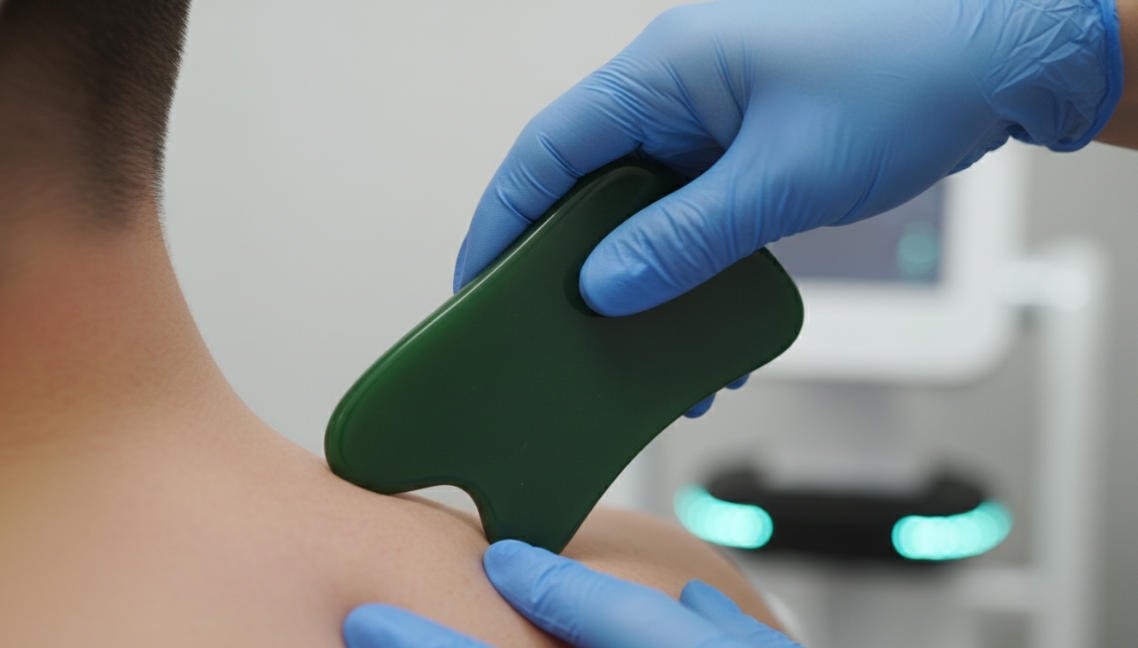
Over the past three years, global search interest in gua sha has grown by more than 300%, and TikTok videos tagged #guasha have surpassed 4 billion combined views as of 2024. Behind that growth lies a consistent and measurable gap: the expectations those videos generate versus what the practice can actually deliver. The most consequential gua sha myth is not any single false claim — it is a systemic pattern of presenting short-term, technique-dependent effects as permanent, structural results. Research indexed by the National Institutes of Health on PubMed includes over 40 published studies on gua sha, the majority concentrated on musculoskeletal pain applications — not facial cosmetic outcomes. Does gua sha work? Yes — within limits that popular content almost never states clearly, and that this article will define precisely.
- Why the Gua Sha Myth Spreads: Viral Content vs. Clinical Evidence
- Gua Sha Myth Analysis: Four Claims That Deserve a Closer Look
- Gua Sha Side Effects: Who Should Avoid It and When to Stop
- Does Gua Sha Material Matter? Tool Quality, Safety, and What to Actually Evaluate
- Realistic Expectations and a Practical Risk Summary
- FAQs
Why the Gua Sha Myth Spreads: Viral Content vs. Clinical Evidence
Three structural forces drove gua sha to its current cultural position, and those same forces are responsible for most of the misinformation now embedded in public perception. The practice produces changes that are immediately visible on camera: a face that appears less puffy or more contoured after several minutes of directed scraping is genuinely compelling content, and compelling content spreads irrespective of its physiological accuracy. Simultaneously, a documented consumer shift toward affordable at-home wellness created a ready audience for any low-cost skincare tool with aspirational associations. Add the ritual quality of the practice — the cool stone, the deliberate upward strokes — and you have a format that generates shares, not scrutiny. A 2021 review published in Complementary Therapies in Clinical Practice confirmed that while gua sha demonstrates measurable value for musculoskeletal pain and localized inflammation, evidence for facial cosmetic claims remains limited and methodologically inconsistent. This does not make is gua sha fake a fair verdict — but it does confirm that the standard of proof required for permanent anti-aging claims has not been met.
Gua Sha Myth vs. Reality: What the Evidence Actually Supports
Separating demonstrable gua sha benefits from inflated marketing language requires examining mechanism, not anecdote. The directional scraping motion applies mild pressure to superficial lymphatic vessels, encouraging temporary drainage of interstitial fluid — which is why effects are most visible in the morning, when overnight fluid retention peaks. A research overview published in the Journal of Traditional Chinese Medical Sciences found that the mechanical pressure involved in gua sha produces a relaxation response in superficial muscles functionally comparable to targeted massage. Repetitive directional motion can also temporarily improve microcirculation near the skin surface, contributing to a short-term brightening effect observable within minutes. This means you can realistically expect reduced morning puffiness, a measurable softening of jaw tension, and a skincare routine that feels more restorative — when technique is applied correctly.
None of these outcomes are permanent. None restructure bone or dissolve fat. But they are reproducible and real — which is precisely why the gua sha scam label, applied broadly by skeptics, is equally inaccurate. Does gua sha work? The answer is: selectively, temporarily, and entirely dependent on whether your expectations match what the mechanism can actually produce. Understanding that distinction is the most actionable takeaway you can carry out of this article.
Gua Sha Myth Analysis: Four Claims That Deserve a Closer Look
Gua Sha Myth #1 — “It Can Permanently Slim Your Face”
No peer-reviewed study has demonstrated that regular gua sha use produces lasting changes in facial fat distribution, bone geometry, or muscle volume. What users interpret as “permanent slimming” is almost always a combination of temporary factors that are real but short-lived: improved lymphatic drainage that reduces puffiness for a few hours, relaxation of the masseter muscle that briefly softens jaw tension, and the reduction of morning edema that makes the face appear noticeably more defined in the first hour after waking. These effects can appear dramatic — especially under good lighting — but they reverse within the same day as fluid reaccumulates and muscle tone normalizes.
The American Academy of Dermatology is explicit that non-invasive surface treatments do not produce significant or lasting changes in subcutaneous fat distribution. The actual determinants of long-term facial shape are systemic: overall body composition, dietary patterns, sleep quality, hormonal fluctuations, and the structural changes in bone density and soft tissue that accompany aging. If you notice genuine facial changes over a period of months, those shifts almost certainly correlate with improvements in sleep, diet, or body composition — not with the gua sha sessions themselves. This gua sha myth is not a harmless exaggeration: it causes users to attribute results to the wrong variable, making it impossible to accurately assess what is actually working in their routine. This means you lose time chasing an effect that a tool cannot produce, while the genuine levers — lifestyle and consistency — go unaddressed.
Gua Sha Myth #2 — “The Harder You Press, the Better the Results”
This gua sha myth is not simply incorrect — it is the most direct path from a wellness ritual to documented skin damage. Facial tissue is considerably thinner and more vascular than the areas of the body, such as the upper back and thighs, where gua sha has traditional therapeutic roots. Applying excessive pressure to facial skin carries clinical risks that are well-documented: capillary rupture causing persistent broken blood vessels, reactive inflammation, visible bruising that can take weeks to fully resolve, and — with repeated misapplication — measurable degradation of the skin barrier function. The American Academy of Dermatology has established that a compromised skin barrier leads to accelerated transepidermal water loss, heightened sensitivity to environmental irritants, and a significantly extended recovery period from routine skincare stressors. This means every session where you exceed appropriate pressure is not accelerating your results — it is creating a recovery debt that compounds across weeks of repeated use.
Correct technique uses light-to-medium pressure with the tool angled at approximately 15 to 45 degrees relative to the skin surface, always moving in a single outward or upward direction. Sufficient lubricating medium — a serum or facial oil applied before the session — is non-negotiable. Dragging any tool across insufficiently prepared skin generates friction that damages the epidermis regardless of pressure level. Pain is not an indicator of effectiveness in facial gua sha: it is a signal to stop immediately. These are the most consistently reported gua sha side effects in user feedback, and each one is avoidable with appropriate technique. This means you can access all the documented benefits of the practice while keeping the risk profile close to zero — provided pressure and preparation are managed correctly.
Gua Sha Myth #3 — “Daily Use Will Speed Up Your Results”
High-frequency use is frequently confused with high commitment in skincare. In practice, they produce different outcomes. Using gua sha daily — at any pressure level above minimal — creates a cumulative mechanical load on the skin barrier that most skin types cannot sustain without visible consequence. The documented gua sha side effects of overuse include persistent erythema in sensitive skin types, friction-induced barrier disruption, bacterial spread across acne-prone areas where the tool contacts active lesions, and a general increase in skin reactivity that takes considerably longer to resolve than it takes to create.
A systematic review published on PubMed in 2019 examining gua sha in clinical therapeutic settings found that even for pain management applications, practitioners modulate treatment frequency carefully based on individual response — the assumption that more sessions equal better outcomes does not hold in clinical practice, and it does not hold in at-home facial use either. Two to four sessions per week is the range most dermatology-informed practitioners reference for facial application, with frequency reduced further for sensitive or barrier-compromised skin. The results gua sha can reliably produce — reduced puffiness, relaxed muscle tension, improved routine adherence — emerge from sustained, low-stress consistency across weeks and months. This means a practice of three sessions per week, maintained carefully for sixty days, will outperform a daily practice that degrades your barrier within the first two weeks.
Gua Sha Myth #4 — “Jade Always Outperforms Other Materials”
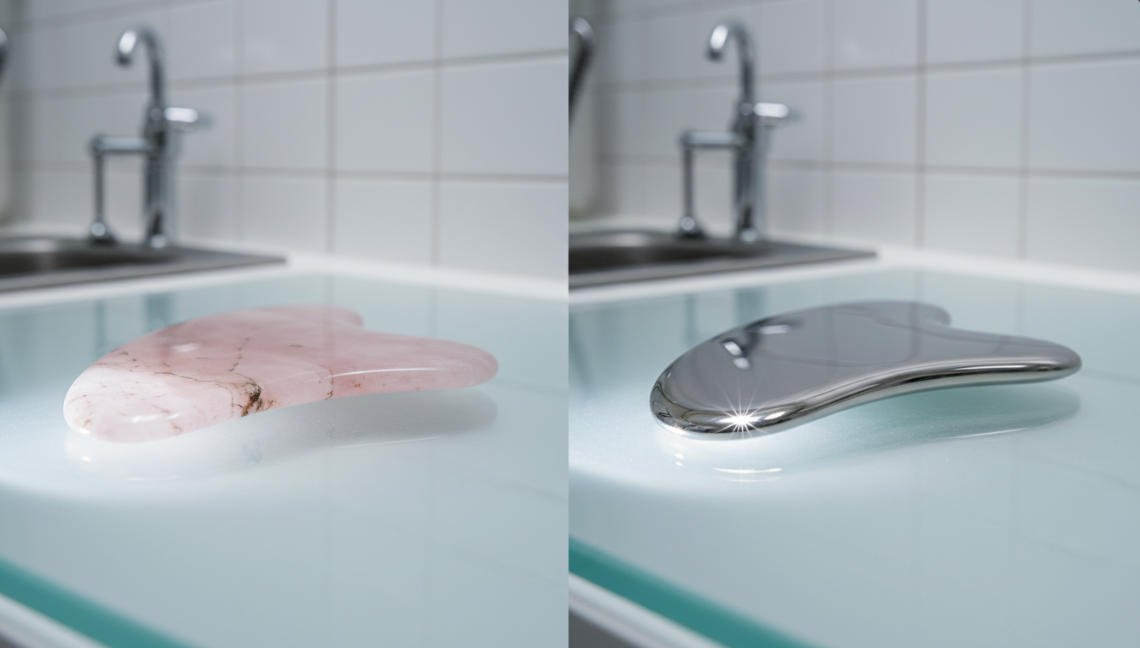
Does gua sha material matter? It matters — but not in the way most product descriptions suggest, and significantly less than the price premium on jade tools implies. Material type primarily influences sensory experience: the initial temperature of the tool, its weight and balance, and the friction coefficient during use. None of these variables alter the physiological mechanism — the lymphatic and muscular pressure response — that gua sha produces. The Gemological Institute of America (GIA) documents that genuine nephrite and jadeite — the only two minerals that meet gemological standards for true jade classification — have a microcrystalline structure that, while visually smooth, retains trace porosity capable of harboring bacteria over time without rigorous cleaning protocols. This is a meaningful hygiene consideration that jade proponents rarely disclose.
The International Gem Society (IGS) further notes that the commercial term “jade” is routinely applied to serpentine, calcite, aventurine, and other simulant minerals that differ substantially from certified nephrite or jadeite in hardness, thermal behavior, and surface properties. This means that when does gua sha material matter is the question you’re asking in a retail context, the more precise and useful question is: what is this tool actually made from, and has its finish been brought to a standard that makes it safe for facial contact? Jade retains real advantages over plastic and resin in terms of durability and environmental inertness. But within the tier of properly finished tools, the functional performance gap between jade and well-finished stainless steel is narrower than the price difference routinely suggests. This gua sha myth — that material determines outcome — causes buyers to overpay for a poorly finished jade tool while dismissing a better-made alternative, and that trade-off directly affects skin safety.
Gua Sha Side Effects: Who Should Avoid It and When to Stop
When Gua Sha Benefits Become Risks: The Contraindication Framework
The same mechanical pressure that produces gua sha benefits in healthy skin becomes a documented liability in specific physiological conditions. Understanding where that line sits is not a disclaimer — it is the most practically useful information this article can offer. A 2020 clinical commentary published via the National Center for Complementary and Integrative Health (NCCIH) noted that while adverse events associated with properly applied gua sha are rare, they are almost entirely concentrated in cases where the practice was applied to contraindicated skin conditions or by users without adequate technique guidance. The pattern is consistent: gua sha side effects are largely avoidable when contraindications are understood in advance, and largely inevitable when they are ignored.
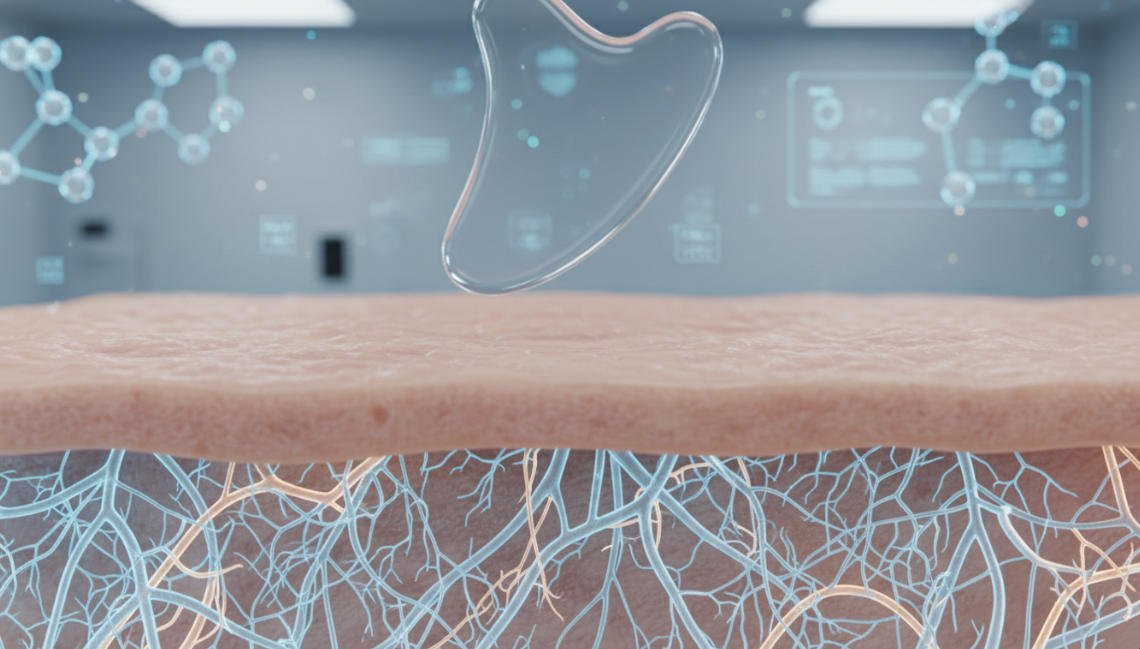
Before examining individual risk categories, it is worth establishing why facial skin specifically requires a more conservative approach than body applications. The epidermis on the face averages 0.1 to 0.3 millimeters in thickness — significantly thinner than the skin on the back or thighs, where traditional therapeutic gua sha is most commonly documented. Subcutaneous fat layers are shallower, capillary networks are denser and more superficial, and the skin barrier turnover rate is faster, meaning damage accumulates and presents visibly more quickly. This means the margin between appropriate and excessive application is narrower on the face than on any other surface, and that margin shrinks further when the skin is already compromised.
Gua Sha Side Effects in Compromised Skin: A Condition-by-Condition Analysis
Active acne is the most commonly underestimated contraindication in consumer gua sha use. When a gua sha tool contacts an active pustule or inflamed papule, the mechanical pressure and directional movement can rupture the lesion below the surface and distribute Cutibacterium acnes bacteria across a wider area of the face — converting a localized breakout into a broader inflammatory response. If you are managing active acne, avoiding gua sha on affected zones is not a conservative overcaution: it is a direct application of how bacterial skin infections respond to surface trauma.
Rosacea in its active phase presents a parallel risk profile. The visible erythema and telangiectasia associated with rosacea indicate a chronically sensitized vascular network — one that responds to mechanical stimulation with exaggerated inflammatory signaling. Any frictional tool use during a rosacea flare is likely to intensify redness and prolong recovery time. The same logic applies to eczema during an acute episode, where the compromised skin barrier is already experiencing elevated transepidermal water loss, and any additional friction accelerates barrier breakdown rather than supporting recovery.
Sunburned skin, skin in the immediate aftermath of chemical exfoliation, and any area with open wounds or active infection represent absolute contraindications — not conditions to navigate carefully, but conditions under which gua sha should not be used at all. The distinction matters because these are situations where gua sha side effects transition from the category of “manageable with better technique” into the category of “the tool is incompatible with the current skin state.” This means you should treat post-sunburn and post-exfoliation skin with the same level of protective conservatism you would apply to post-procedure skin.
Post-Procedure and Medical Contraindications
The period following professional cosmetic procedures requires particular attention. Skin that has undergone laser resurfacing, chemical peels, microneedling, or injectable treatments is in an active repair state — the barrier is intentionally compromised as part of the treatment mechanism, and the inflammatory response is a controlled part of the recovery process. Introducing mechanical friction during this window disrupts the healing sequence, extends recovery time, and in some cases can compromise the results of the procedure. Most practitioners recommend a minimum of two weeks post-procedure before resuming any facial massage or tool-based skincare, and longer windows following more aggressive resurfacing protocols. Confirming the specific timeline with your treating clinician before resuming gua sha is the only accurate approach, since appropriate intervals vary significantly by treatment type and individual healing response.
Beyond skin-state contraindications, several systemic health conditions place gua sha outside the appropriate risk profile regardless of skin appearance. Individuals with clotting disorders — including hemophilia and von Willebrand disease — face elevated risk of subcutaneous bleeding from any form of mechanical pressure to the face or body. Those taking anticoagulant or antiplatelet medications, including warfarin, aspirin at therapeutic doses, and newer-generation blood thinners, share a meaningfully elevated bruising risk even with light-pressure application. If you bruise easily under ordinary circumstances and without an identified medical cause, that pattern indicates vascular fragility that warrants medical consultation before beginning any gua sha practice. The Cleveland Clinic’s patient education resources recommend discussing gua sha with a physician if any of these systemic factors apply, and that recommendation reflects the standard of care appropriate for a technique that involves deliberate mechanical stimulation of facial vasculature.
Does Gua Sha Material Matter? Tool Quality, Safety, and What to Actually Evaluate
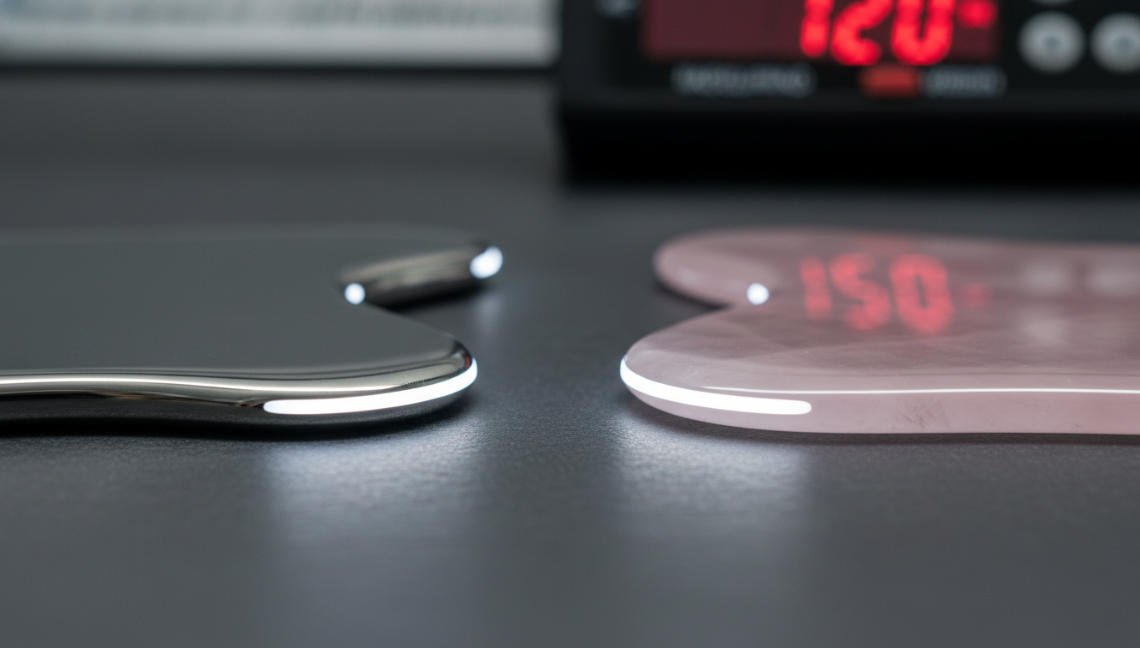
The Gua Sha Myth About Material vs. the Reality of Manufacturing Quality
The framing of does gua sha material matter as a jade-versus-steel comparison misses the variable that most directly affects both skin safety and functional performance: the finish quality of the tool itself, regardless of what it is made from. After producing and testing tools across jade, rose quartz, stainless steel, and resin materials at scale, the feedback pattern that emerges most consistently from users does not center on material preference — it centers on manufacturing failures. Edge roughness, uneven surface polish, imbalanced weight distribution, and inadequate thickness are the factors that generate the most frequent complaints, and each one is a function of manufacturing precision rather than raw material selection. This means the question “which material is best?” is less useful to you as a consumer than “how do I evaluate whether this specific tool is safe to use?”
The GIA’s documentation on jade properties and the IGS material reference for gua sha-relevant stones both confirm that the commercial gemstone market contains substantial variation in material quality within the same named category — meaning two tools both labeled “jade” can differ significantly in surface hardness, porosity, and thermal behavior. This material-level variation is compounded by manufacturing-level variation in how those materials are shaped, edged, and polished. The result is that a high-quality rose quartz tool with a properly executed edge finish will perform more safely and more comfortably than a poorly finished piece of certified nephrite jade at twice the price. This means your evaluation criteria should consistently prioritize documented manufacturing quality over marketing language about material origin.
The Three Quality Indicators That Determine Skin Safety
Edge finish is the most consequential variable in tool safety assessment, and it is the one most frequently sacrificed in cost-reduction manufacturing. The edge of a gua sha tool that contacts your skin must be completely smooth — not smooth in visual inspection, but smooth under the tactile test of running a fingertip slowly along the full perimeter of all contact edges. Any irregularity, microchip, or granular roughness at the edge will generate localized friction during use that can abrade the epidermis. At light pressure this produces micro-tears that are invisible in the moment but accumulate into measurable barrier disruption over repeated sessions. At moderate pressure it can cause visible scratching within a single use. Across thousands of production cycles, edge consistency is one of the most technically demanding aspects of gua sha manufacturing — and one of the first areas where cost pressure produces visible quality compromise.
Surface polish determines the friction coefficient between the tool and skin during each stroke, and it operates independently of material type. A materials science perspective on tribology — the study of friction between surfaces — confirms that for smooth-contact applications, surface roughness measured in micrometers is a stronger predictor of friction resistance than material composition. In practical terms: a jade tool polished to a matte finish will generate more drag on the skin than a rose quartz tool polished to optical smoothness, regardless of which stone has the theoretical surface advantage. This matters because high friction during a gua sha session is not offset by lubricating medium alone — insufficient polish creates friction that bypasses the serum layer and contacts the epidermis directly. This means surface polish is the manufacturing variable most directly correlated with whether your tool feels effortless or effortful in use, and tools with poor polish are frequently described by users as “pulling” at the skin even with adequate preparation.
Weight and thickness round out the trifecta of quality indicators with the most practical implications for technique control. A tool that is too light provides insufficient feedback for pressure calibration — users tend to apply more force to compensate for the lack of tactile resistance, and that compensatory pressure is where unintended skin stress accumulates. A tool that is disproportionately heavy for its handle geometry creates fatigue during use and makes consistent light-pressure application harder to sustain across a full session. The optimal weight range for facial gua sha tools is generally cited by practitioners in the range of 80 to 150 grams, with the distribution of that weight balanced toward the working edge rather than the grip. This means you can evaluate weight appropriateness during purchasing by holding the tool in your dominant hand in the position you would use it and assessing whether the balance allows you to exert controlled light pressure without muscular effort to maintain grip.
What Different Users Actually Need From a Gua Sha Tool
Understanding the specific performance requirements of different use contexts clarifies the evaluation process considerably. Spa and professional treatment environments prioritize durability and cleanability above aesthetic considerations — a tool in a treatment setting may be used six to eight times per day and sanitized between each session, so material porosity, resistance to cleaning agents, and structural integrity under repeated use are the practical metrics. Stainless steel performs consistently well across all three in professional settings, which is why it is common in clinical contexts where jade would be impractical to maintain at appropriate hygiene standards.
Individuals using gua sha for personal at-home care typically weight their evaluation toward sensory experience: the initial temperature of the tool, its visual appeal, and the tactile quality of the stroke. For this use context, jade and rose quartz have genuine and non-trivial advantages — the natural thermal conductivity of stone produces a cooling sensation on skin contact that stainless steel at room temperature does not replicate, and that cooling effect has a measurable vasoconstrictive component that contributes to the puffiness reduction users report. However, that thermal advantage is only meaningful when the tool is properly stored and when the material is genuine — which is why the GIA certification standards for jade and the IGS verification guidance for gemstone materials exist as reference points for confirming what you are actually purchasing. This means the sensory benefits of natural stone are real, but they are contingent on material authenticity and surface preparation — both of which require verification rather than assumption.
Realistic Expectations and a Practical Risk Summary
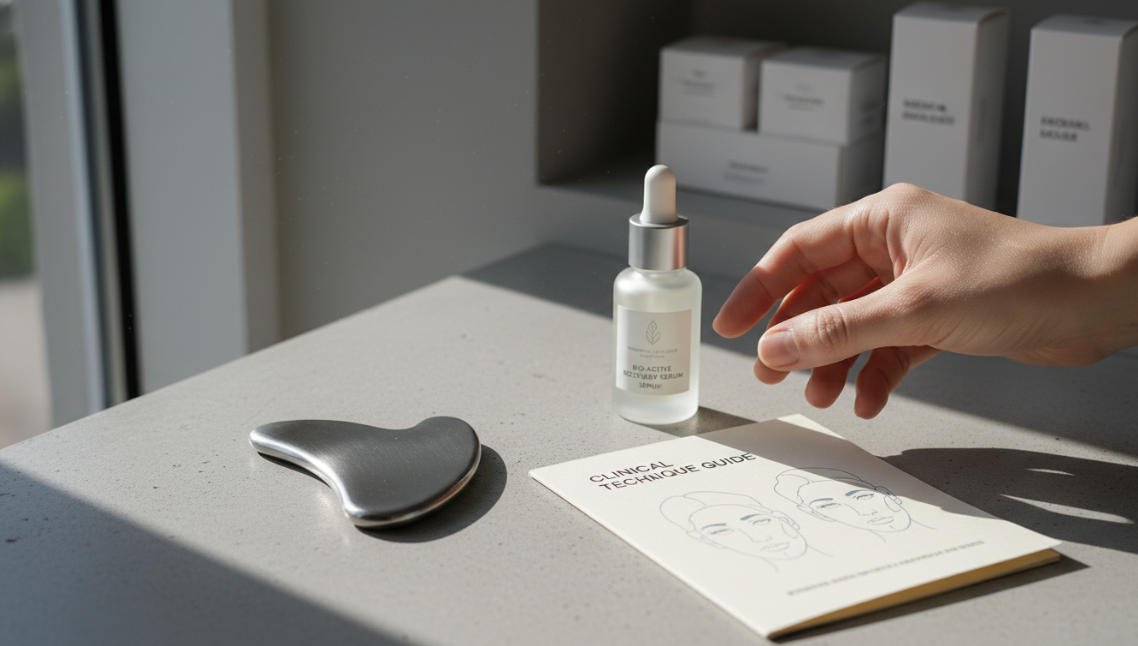
Reframing the Gua Sha Scam Question With an Accurate Risk-Benefit Model
The gua sha scam characterization surfaces most frequently in two contexts: users who tried the practice expecting permanent facial transformation and found none, and critics responding to the volume of unsubstantiated claims circulating in commercial and influencer content. Both reactions are understandable given the gap between what is promised and what the mechanism can deliver — but neither constitutes an accurate assessment of the practice itself. Is gua sha fake as a category question has a straightforward answer: no. The physiological mechanisms — lymphatic drainage stimulation, superficial muscle relaxation, temporary microcirculation improvement — are real, reproducible, and documented in the peer-reviewed literature. What is fake, or more precisely what is unsupported, is the layer of permanent anti-aging claims built on top of those real mechanisms.
A 2019 systematic review in PLOS ONE that examined the evidence base for gua sha across multiple applications found consistent support for pain reduction and anti-inflammatory effects, while noting that cosmetic efficacy claims require substantially more rigorous investigation before clinical conclusions can be drawn. That is not a condemnation of gua sha as a practice — it is an accurate mapping of where the evidence sits. You can make a fully informed decision to use gua sha for its documented short-term benefits, its contribution to a deliberate skincare routine, and the genuine relaxation response it produces — without requiring it to do something no peer-reviewed study has confirmed it can do. This means the risk-benefit calculation is favorable for most users when expectations are calibrated to the evidence, and unfavorable primarily when they are calibrated to social media.
Does Gua Sha Work? A Final Evidence-Based Assessment
Does gua sha work is a question that requires a specified outcome before it can be answered accurately. For temporary reduction of morning facial puffiness in individuals who sleep poorly, eat high-sodium diets, or experience fluid retention: yes, with reasonable consistency. For relaxation of jaw and temple muscle tension that contributes to a more rested facial appearance: yes, when applied with correct technique and appropriate pressure. For short-term improvement in skin tone and the subjective experience of a more intentional skincare routine: yes, consistently reported and physiologically plausible. For permanent facial slimming, structural contour change, or anti-aging outcomes equivalent to clinical intervention: no, and the absence of supporting evidence is not a gap in the research — it is the research finding.
The gua sha benefits that are most reliably accessible are also the most consistently undervalued in popular content, because they do not lend themselves to dramatic before-and-after documentation. A face that is less puffy at 7am than it was at 7am yesterday does not generate the same engagement as a face that appears visibly contoured after five minutes of filming. But the former is real and repeatable, while the latter is a combination of lighting, angles, temporary fluid movement, and the natural variation in facial appearance across a single morning — variables that compound unpredictably and cannot be attributed cleanly to the tool. Understanding that gap is the most direct route from using gua sha ineffectively and with inflated expectations to using it effectively and sustainably.
Gua Sha Myth Resolution: A Practical Checklist for Safe, Effective Practice
The accumulation of misinformation around gua sha is not unique to this wellness category — it follows a pattern common to any practice that achieves viral distribution before clinical evaluation. What distinguishes informed users from disappointed ones is not access to better products, but access to accurate information about mechanism, contraindications, and realistic outcomes. The following framework consolidates the risk-relevant conclusions from each section of this analysis into an actionable reference.
Your skin is an appropriate candidate for facial gua sha if it is intact, free of active infection or acute inflammation, and not in a post-procedure recovery window. Your technique is appropriate if you are using light-to-medium pressure, a single outward direction, adequate lubricating medium, and a tool with a verified smooth edge finish and consistent surface polish. Your frequency is appropriate if it allows your skin barrier to maintain its baseline function between sessions — most skin types achieve this at two to four sessions per week. Your expectations are calibrated accurately if you are anticipating temporary puffiness reduction, muscle relaxation, and an enhanced sense of ritual — not permanent structural change.
If any of those four conditions are not met, the risk profile of your practice is elevated in proportion to the degree of misalignment. Gua sha side effects are not random — they are predictable outcomes of specific misapplications, and they are avoidable when the conditions for safe practice are understood and applied consistently. The gua sha myth that the practice is either universally transformative or fundamentally fraudulent obscures a more accurate and more useful conclusion: it is a legitimate complementary skincare technique with a defined evidence base, real contraindications, and results that are entirely dependent on the accuracy of the user’s expectations and the quality of their execution.
The Tool You Use Is Part of Your Risk Profile
One conclusion from this analysis that applies regardless of skin type, technique, or frequency: the physical quality of your gua sha tool is a direct component of your personal risk assessment, not a secondary consideration. An edge that is not fully smooth is a source of epidermal microtrauma in every session where it contacts your skin. A surface that is not uniformly polished generates friction that your lubricating medium partially but not completely mitigates. These are not abstract manufacturing standards — they are variables you can verify before purchase using the tactile edge test and visual polish inspection described in Section 4.
Does gua sha material matter? Material matters less than finish quality, and finish quality is the variable most frequently compromised in lower-cost production. The GIA’s material verification standards and the IGS gemstone reference database provide starting points for confirming material authenticity when purchasing natural stone tools. Beyond authentication, physical inspection of the tool you receive — before you use it on your face — is the most direct form of quality verification available to you. This means the safest gua sha practice begins not with the first stroke on skin, but with the assessment of the tool in your hand before that session begins. That single habit change reduces your gua sha side effects risk more than any change in technique, frequency, or material selection.
FAQs
1. Does gua sha actually work, or is it just a gua sha scam?
Gua sha is not a scam — but it is consistently oversold. Its documented benefits are real and short-term: temporary reduction of facial puffiness, superficial muscle relaxation, and improved circulation. No peer-reviewed evidence supports permanent facial slimming or structural anti-aging outcomes. Calibrate your expectations to the mechanism, and the practice delivers reliably.
2. What are the most common gua sha side effects?
The most frequently reported gua sha side effects include redness, bruising, skin barrier irritation, and — in acne-prone users — bacterial spread across the face. Nearly all of these are technique-related and avoidable. Excessive pressure, insufficient lubricating medium, and tool edges that are not fully smooth are the three most common causes.
3. Is the gua sha myth about jade being superior actually true?
No. Does gua sha material matter? It affects sensory experience — temperature, weight, and glide — but not the physiological outcome. A poorly finished jade tool performs less safely than a well-finished stainless steel one. Edge smoothness and surface polish determine skin safety; material determines how the session feels.