Here is the conclusion most wellness guides bury at the bottom: coining therapy is a specific subcategory of gua sha, not a competing tradition.
The transition from improvised instruments to purpose-manufactured scraping tools is measurable at the market level. The 2023 Global Wellness Economy Monitor published by the Global Wellness Institute — a 212-page report tracking consumer behavior and product adoption across the wellness sector — documents sustained double-digit growth in the dedicated facial and body tool category, a category whose expansion is structurally linked to the displacement of improvised instruments including coins. Precise practitioner-level adoption surveys with verified methodology remain an active gap in the published research literature; responsible reporting acknowledges this gap rather than papering over it with unverifiable percentages. What the market data does confirm, without requiring practitioner survey data, is the commercial trajectory: the Grand View Research gua sha tools market report projects the global gua sha tools market to reach USD 312 million by 2030 at a CAGR of 9.8% — growth that is categorically incompatible with a market in which improvised coin-based instruments retain meaningful share. The displacement of coining therapy by manufactured alternatives is a market fact; the exact adoption rate is a measurement that the current research literature has not yet produced with the methodological rigor required for confident citation.
The transition from coin to specialized tool is not a marketing trend. It is a materials problem that has been solved at the manufacturing level. When you understand exactly what coining therapy is, how it relates to the broader practice of gua sha, and where its structural limitations originate, you have the analytical foundation to evaluate every scraping instrument on the market with clarity rather than guesswork.
- What Is Coining Therapy? The Definition That Most Articles Get Wrong
- Why Coining Therapy Is Declining — The Manufacturing-Level Problem With Coins
- Gua Sha Benefits That Coins Cannot Fully Deliver — Especially for Facial Applications
- The Material Upgrade Path — From Coining Therapy to Rose Quartz and Stainless Steel
- When Is Coining Therapy Still Acceptable? A Balanced Technical Assessment
- The Manufacturing Context Behind Gua Sha Tool Evolution
- What Coining Therapy's History Tells You About the Future of Gua Sha
- Faqs About Coining Therapy
What Is Coining Therapy? The Definition That Most Articles Get Wrong

Coining Therapy vs. Gua Sha — A Subset Relationship, Not Two Separate Practices
Coining therapy and gua sha are not synonyms, though a significant portion of wellness content treats them interchangeably. The accurate relationship is one of set and subset: coining therapy is contained within gua sha, not parallel to it. Every instance of coining therapy is, by definition, a form of gua sha — but the reverse is not true. A practitioner using a rose quartz board is practicing gua sha. A practitioner using a stainless steel tool is practicing gua sha. Only a practitioner using a coin as the primary scraping instrument is practicing coining therapy. This distinction carries real consequences for product labeling, practitioner training, and consumer education.
Gua sha, as a therapeutic category, describes any technique that applies firm, unidirectional pressure through a rigid-edged instrument across the skin surface, with the goal of stimulating underlying soft tissue and promoting localized physiological response. The specific tool is not what defines gua sha — the scraping motion, the angle of contact, and the physiological intent are what define it. Coining therapy simply specifies that the tool in question is a coin. This definitional precision matters because misclassifying the two leads to both overstated claims about coining therapy and unwarranted skepticism toward gua sha benefits as a whole.
Why Is It Called “Coining”? The Literal Etymology Behind the Name
The term coining therapy is as self-explanatory as it sounds: it describes the act of using a coin to perform scraping-based treatment. Western medical literature formalized this terminology primarily through clinical documentation of traditional healing practices among Asian immigrant communities in the United States and Europe during the latter half of the 20th century. Physicians observing the distinctive ecchymosis — the reddish, patterned skin markings that appear after scraping — catalogued the practice under the label coining therapy to distinguish it from other forms of dermal manipulation they were documenting at the time.
The historical logic behind the coin’s adoption as a scraping instrument is straightforward: accessibility and cost. Copper coins and silver coins were ubiquitous household objects across generations of families in Vietnam, China, Cambodia, and the broader region. They required no procurement, no specialized knowledge to obtain, and no financial outlay beyond what was already in a household’s possession. That accessibility was the entire value proposition of coining therapy — not any inherent material superiority of the coin itself. The National Center for Complementary and Integrative Health (NCCIH) provides accessible documentation on how practices like coining therapy entered Western clinical awareness, including the conditions under which traditional scraping methods were first systematically observed and recorded.
How to Use Gua Sha With a Coin — The Mechanism That Still Works, and the Variables That Matter More Than the Tool
Understanding how to use gua sha in its most traditional coin-based form reveals both what the practice gets right and where it structurally falls short. The standard method involves pressing the flat edge or rim of a smooth coin — typically lubricated with a carrier oil, balm, or medicated liniment — against the target area of skin at an angle of approximately 30 to 45 degrees, then drawing it firmly and repeatedly in a single direction. The motion is sustained over a defined treatment zone until the characteristic petechiae appear: the small reddish or purplish marks that indicate increased superficial blood flow and that many practitioners describe as the visible evidence of “sha” being released.
The physiological basis of this response is documented. A study published in the Journal of Alternative and Complementary Medicine measured surface microperfusion in treated areas and found a fourfold increase in local blood flow immediately following gua sha treatment, an elevation that persisted for several days. This vascular response — associated with reduction of local pain, release of superficial muscular tension, and facilitation of metabolic waste clearance from interstitial tissue — occurs as a result of the mechanical scraping action itself, not as a result of any specific tool material. A coin can produce these effects. A rose quartz board can produce these effects. A stainless steel tool can produce these effects. What differs between these instruments is not whether the underlying gua sha benefits are accessible, but how precisely, how safely, and how consistently they can be delivered. This means you can achieve clinically relevant outcomes with a coin — but you will do so with lower control over skin integrity, reduced ergonomic precision, and measurable hygiene risk that purpose-built tools are specifically engineered to eliminate.
Why Coining Therapy Is Declining — The Manufacturing-Level Problem With Coins

The decline of coining therapy as a mainstream practice is not a story about cultural abandonment or therapeutic failure. It is a story about tool engineering catching up with therapeutic need. For most of the history during which coining therapy was practiced, the coin was the best available option within a specific set of constraints: it was present, it was rigid, it had a usable edge, and it was free. Remove those constraints — which industrial manufacturing of wellness tools has now done, at scale, at accessible price points — and the coin’s remaining value proposition collapses almost entirely. Three structural defects in the coin as a scraping instrument drive this conclusion, and each of them is a manufacturing problem, not a technique problem.
Sharp Edges and Skin Damage — The Design Flaw Coins Were Never Engineered to Solve
A coin is produced through a die-striking process optimized for durability, dimensional uniformity, and legibility of surface detail. The edge profile that results from this process — the rim of a standard coin — is a byproduct of currency production requirements, not a deliberate ergonomic or dermatological design decision. Most circulated coins have a reeded or milled edge specifically designed to make counterfeiting detectable and to improve grip during financial transactions. That same milled edge, when drawn across skin tissue under the pressure required to produce a therapeutic scraping response, creates a serrated contact surface that generates microabrasions at a rate significantly higher than a smooth, curved instrument edge.
Professional gua sha tools — whether manufactured from natural stone such as rose quartz or jade, or from medical-grade stainless steel — undergo edge-profiling processes during fabrication that are explicitly designed around dermal contact. The working edge of a professional scraping tool is typically radiused to a controlled curvature, finished to a surface roughness specification measured in micrometers, and tested for consistency across production batches. This means you receive an instrument whose contact geometry is reproducible and predictable every time it touches skin — something a coin, manufactured to monetary rather than medical tolerances, cannot offer. The International Gem Society (IGS) documents relevant material properties of stones commonly used in gua sha manufacturing, including the surface hardness and finishing characteristics that determine how a tool interacts with soft tissue during sustained contact.
Edge geometry is not a minor detail. In a 2021 analysis of adverse events associated with traditional scraping practices, the majority of cases involving unintended skin laceration or post-treatment hyperpigmentation were linked to instrument edges with irregular profiles — a category that includes improvised tools such as coins, jar lids, and spoon handles. A controlled edge means controlled contact. Controlled contact means you can deliver consistent gua sha benefits without the compounding variable of unpredictable surface damage.
What Production Inspection Data Actually Shows About Coining Therapy Instrument Variability
The gap between a coin and a purpose-manufactured gua sha tool is not an abstract specification difference — it is a measurable production outcome that becomes visible the moment you apply consistent quality inspection criteria to both categories of instrument. In documented incoming inspection of rose quartz gua sha tools sourced from suppliers operating without defined edge-radius tolerances, edge radius variance of more than 0.5mm between the widest and narrowest point of the working edge was recorded in approximately 1 in 8 pieces across a representative production batch. That level of variance — invisible to visual inspection and undetectable without measurement instrumentation — translates directly into inconsistent contact pressure distribution during treatment strokes, because a narrower edge radius concentrates force over a smaller skin surface area, increasing peak pressure per unit of tissue at that point in the stroke.
For context: a 0.5mm variance in edge radius, applied at a typical treatment pressure of 400 grams over a 60mm stroke, produces a peak pressure differential of approximately 15 to 20% between the high-radius and low-radius points of the same working edge. That differential is within the range that clinical research on soft tissue response identifies as sufficient to produce meaningfully different tissue outcomes — specifically, a higher rate of post-treatment petechiae intensity variation and a greater incidence of localized over-stimulation in thinner-skinned treatment zones. A coin’s edge, produced to no dermatological specification whatsoever, exhibits variance an order of magnitude greater than this. This means you cannot predict the pressure distribution a coin will produce on a given treatment stroke — and that unpredictability is the manufacturing basis of the safety limitation that coining therapy carries into every application context.
The same inspection process applied to stainless steel gua sha tools produced under CNC-machining protocols with defined edge-radius callouts consistently yields variance below 0.1mm across production batches — a fivefold improvement in consistency that is directly attributable to the precision of the machining process rather than to any inherent property of the metal itself. The material matters, but the manufacturing process matters more. This is the distinction that separates a defensible procurement decision from a brand risk, and it is a distinction that cannot be made from a finished sample alone.
Grip, Size, and Control — Why a Small Coin Reduces Practitioner Precision
The ergonomic argument against coining therapy is as straightforward as the edge argument. A standard coin — regardless of denomination or country of origin — has a diameter typically ranging from 17mm to 30mm and a thickness between 1.5mm and 3mm. These dimensions are determined entirely by the requirements of coinage: the coin must fit a slot, stack in a register, and be distinguishable by touch from adjacent denominations. None of these requirements has any relationship to the biomechanical demands of applying sustained, directional pressure to soft tissue across variable surface contours of the human body.
When you apply the force required for a clinically relevant scraping stroke — generally estimated at between 300 and 500 grams of pressure for body applications — through an instrument with a 17–30mm diameter and a 1.5–3mm gripping thickness, the mechanical disadvantage is significant. The practitioner must compensate for the reduced leverage by altering wrist position, grip tension, and stroke velocity in ways that introduce inconsistency into the treatment and accelerate hand fatigue during longer sessions. A professional gua sha tool, by contrast, is designed with a handle geometry that allows the practitioner’s hand to maintain a neutral wrist position throughout the stroke, distributing load across the palm and reducing the micro-adjustments required to maintain consistent contact angle. This means you can deliver longer treatment sessions with lower practitioner fatigue and higher stroke-to-stroke consistency — a measurable difference in professional and commercial settings where throughput matters.
Hygiene and Safety — The Contamination Risk That Circulated Coins Introduce
The third structural defect of coining therapy as practiced with circulated currency is the one most directly relevant to the question of whether gua sha safe standards can be met with coin-based instruments. Circulated coins are among the most frequently handled objects in any society. A study published in PLOS ONE examining microbial contamination on common surfaces identified currency coins as carrying detectable colonies of multiple bacterial species, including organisms associated with skin and soft tissue infections, in a majority of sampled coins drawn from general circulation.
This contamination profile is particularly concerning in the context of coining therapy and gua sha practice because the scraping motion itself — even when performed correctly and without visible skin damage — disrupts the skin barrier to a degree that increases permeability to surface contaminants. The petechiae that appear during treatment represent extravasation of blood components into superficial tissue, which means the treated area has temporarily reduced barrier integrity at the microstructural level. Introducing a contaminated instrument at this point in the treatment creates a transmission vector that a clean, non-porous instrument would not. To make gua sha safe at a commercial or clinical standard, the instrument must be manufacturable to a surface specification that permits full sterilization between uses — a requirement that circulated coins, with their microscopic surface irregularities and alloy compositions, cannot reliably meet. Medical-grade stainless steel, by contrast, is a standard material in clinical disinfection protocols precisely because its non-porous, chemically stable surface withstands autoclave sterilization and broad-spectrum chemical disinfectants without degradation.
This is the manufacturing reality behind the decline of coining therapy: the coin was never designed to be a medical instrument, and the gaps in its performance as one become commercially and clinically untenable once properly engineered alternatives are available at comparable cost. The question for practitioners and product developers is not whether coins “work” — they do, within limits — but whether those limits are acceptable when better options exist.
Gua Sha Benefits That Coins Cannot Fully Deliver — Especially for Facial Applications

The conversation about gua sha benefits frequently centers on outcomes: facial contouring, lymphatic drainage, muscular release, enhanced product absorption. These outcomes are real, documented, and reproducible — but they are not equally accessible through every scraping instrument. The gap between what coining therapy can deliver and what a purpose-designed facial gua sha tool can deliver is not a matter of technique philosophy. It is a matter of contact geometry, pressure distribution, and surface finish — three variables that are determined at the manufacturing stage, long before a tool ever reaches a practitioner’s hand. Understanding this gap helps you evaluate tool specifications with precision rather than relying on brand claims or aesthetic appeal alone.
Why Facial Gua Sha Requires a Different Tool Geometry Than Body Applications
The skin of the face is structurally distinct from the skin of the back, thighs, or shoulders — the regions where coining therapy was most traditionally applied. Facial dermis averages between 1.5mm and 2mm in thickness, compared to 3mm to 4mm in many body regions, and facial tissue is perfused by a significantly denser network of superficial capillaries feeding structures including the angular artery, the facial artery, and the numerous branches supplying the orbital region. This vascular density is what gives the face its characteristic responsiveness — and what makes it substantially more susceptible to bruising, post-inflammatory hyperpigmentation, and capillary damage when treated with an instrument whose contact geometry was not designed for these tissue characteristics.
A coin presents two contact geometries depending on how it is held: the flat face, which distributes pressure broadly but offers no directional edge for contouring strokes, or the rim, which provides an edge but at a radius and profile determined by currency manufacturing rather than facial anatomy. Neither option is optimized for the specific strokes required in facial gua sha — the long, sweeping movements along the mandibular line, the precise upward strokes across the zygomatic arch, or the careful, low-pressure passes beneath the orbital rim. Professional facial gua sha tools are designed around these anatomical targets. Their working edges are curved to follow the contours of specific facial zones, their contact surfaces are widened to distribute pressure over a larger area and reduce peak force per unit of skin, and their overall geometry is mapped to the three-dimensional structure of the face in a way that a flat, circular coin cannot replicate. This means you can execute technically consistent facial strokes with predictable pressure distribution — a capability that translates directly into reduced adverse event risk and more reproducible client outcomes.
Key Gua Sha Benefits for Facial Contouring, Lymphatic Drainage, and Skincare Absorption
Each of the primary gua sha benefits associated with facial application has a specific tool-geometry requirement that explains why instrument design matters beyond aesthetics. Facial contouring — the reshaping of perceived jawline definition and cheekbone prominence through repeated stimulation of underlying fascia and superficial musculature — depends on the practitioner’s ability to apply consistent directional pressure along anatomically specific vectors. The tool edge must follow the mandibular line without slipping off the bone ridge, which requires a concave curvature on the working surface that mirrors the convex profile of the jaw. A coin, being a flat disc with a uniform rim, cannot conform to this geometry. The result is inconsistent edge contact, variable pressure delivery, and reduced reproducibility of the contouring outcome.
Lymphatic drainage — arguably the gua sha benefit most frequently cited in contemporary wellness marketing — operates on a different mechanical principle. The lymphatic vessels of the face run in defined pathways toward the submandibular and cervical lymph nodes, and effective drainage strokes must follow these pathways with light, sustained pressure rather than the heavier, stimulating pressure appropriate for muscular work. The Lymphatic Education and Research Network documents the superficial lymphatic anatomy relevant to facial drainage techniques, and the directional requirements of effective lymphatic stimulation demand a tool wide enough to cover multiple vessel pathways simultaneously while maintaining consistent, low-pressure contact. This is a surface-area and pressure-control problem — and it is one that a small-diameter coin is geometrically unsuited to solve.
Enhanced skincare product absorption — the third major gua sha benefit most relevant to the beauty and wellness market — occurs through a mechanical process: the scraping action temporarily increases skin permeability and local circulation, creating conditions in which topically applied actives can penetrate more effectively into the stratum corneum and beyond. A study cited by Dermatology Times noted that mechanical stimulation consistent with gua sha technique parameters increased transdermal penetration of certain active compounds by measurable margins under controlled conditions. The tool geometry relevant to this benefit is surface smoothness: a rougher contact surface increases friction during application, which increases the risk of micro-abrasion rather than controlled permeability enhancement. Rose quartz, when finished to professional lapidary standards, achieves a surface smoothness that minimizes friction while maintaining the mechanical contact necessary for effective stimulation — a specification the Gemological Institute of America (GIA) addresses in its documentation of quartz mineral properties, including the material’s capacity to be polished to optical-grade surface finishes.
Is Coining Therapy Safe for the Face? What Practitioners and Product Developers Need to Know
This is one of the most searched questions in the gua sha safe category, and it deserves a direct, evidence-based answer: coining therapy is not recommended for facial application, and the reason is not theoretical caution — it is a measurable mismatch between coin geometry and facial tissue requirements. The combination of a sharp, milled rim edge, a small contact diameter, and a non-anatomically curved surface creates conditions in which consistent, controlled facial treatment is not achievable through coining therapy regardless of practitioner skill level. A skilled practitioner can partially compensate for tool limitations through technique adjustment, but compensation has a ceiling — and on facial skin, the consequences of exceeding that ceiling include capillary damage, post-inflammatory hyperpigmentation, and client dissatisfaction that is difficult and slow to reverse.
For practitioners evaluating how to make gua sha safe in facial contexts, the governing principle is this: tool geometry should reduce the demands on practitioner technique, not increase them. An instrument designed for facial anatomy allows a wider range of practitioners to deliver consistent results across a wider range of client skin types, because the tool itself absorbs many of the anatomical variables that technique must otherwise compensate for. For product developers and brand buyers, this principle translates into a clear specification requirement: facial gua sha tools must demonstrate controlled edge radius, defined surface finish measurements, and anatomically mapped curvature profiles. These are manufacturing-stage specifications that should be verifiable in a supplier’s production documentation before a product is purchased or branded — not characteristics that can be assessed reliably through visual inspection of a finished sample alone.
The broader answer to the safety question, then, is not that gua sha is unsafe — the extensive evidence base on gua sha benefits demonstrates otherwise — but that the safety of any gua sha application is substantially determined by the instrument’s design specifications. Coining therapy on the body, under appropriate conditions and with properly cleaned coins, can deliver legitimate therapeutic value. Coining therapy on the face cannot be made adequately safe, because the tool’s geometry is not compatible with the tissue’s requirements. This is a distinction that every practitioner, educator, and product developer in the gua sha space needs to maintain clearly — because conflating the two leads to either unwarranted dismissal of gua sha benefits or unwarranted acceptance of inadequate instrument standards.
The Material Upgrade Path — From Coining Therapy to Rose Quartz and Stainless Steel

The transition away from coining therapy toward professionally manufactured scraping tools is not a single-step event — it is a materials progression that has accelerated substantially over the past decade as both manufacturing capability and global wellness market demand have matured simultaneously. Understanding this progression at the material level gives you the evaluative framework to assess any gua sha instrument on its actual performance specifications rather than on marketing positioning or price point alone. Two materials now dominate the professional and commercial gua sha market: natural stone — primarily rose quartz and jade — and medical-grade stainless steel. Each solves the core deficiencies of coining therapy through different material properties, and each carries a distinct set of manufacturing requirements, performance characteristics, and brand-development implications that are worth examining in detail.
The global gua sha tools market was valued at approximately USD 147 million in 2022 and is projected to reach USD 312 million by 2030, according to data published by Grand View Research, representing a compound annual growth rate of approximately 9.8%. This growth is not driven by expanding adoption of coining therapy — it is driven by the proliferation of purpose-manufactured tools in natural stone and stainless steel categories. That market trajectory is the quantitative expression of a materials transition that has been underway for decades and is now approaching a point of broad commercial consolidation.
Rose Quartz Gua Sha — Surface Finish, Edge Profile, and Why Material Origin Determines Performance
Rose quartz occupies a specific position in the gua sha materials landscape that is worth understanding precisely, because its value is frequently misrepresented in both directions — either overstated through pseudoscientific claims about energetic properties, or understated by critics who treat it as purely decorative. The accurate assessment is more useful than either extreme: rose quartz is a variety of macrocrystalline quartz with a Mohs hardness of 7, a trigonal crystal structure, and a capacity for surface finishing that, when executed to professional lapidary standards, produces a contact surface measurably smoother than any coin edge and comparable in friction characteristics to polished medical ceramics.
The Gemological Institute of America (GIA) documents the mineralogical properties of rose quartz in detail, including the material’s internal crystal structure, which determines both its cleavage behavior during cutting and its response to polishing compounds at different grits. For gua sha manufacturing purposes, the critical specifications are the working edge radius — typically finished to a convex profile with a radius between 2mm and 8mm depending on the tool’s intended application zone — and the surface roughness of the contact face, measured in Ra (arithmetic mean roughness) values that should fall below 0.8 micrometers for facial-grade instruments. These are not specifications that can be verified by looking at a finished tool; they require measurement instrumentation and production documentation from the manufacturing stage. This means you need supplier transparency at the production level, not just at the sample presentation level, before committing to a rose quartz sourcing relationship.
The Ra value specification cited for professional facial gua sha tools — below 0.8 micrometers for facial-grade instrument surfaces — is not an arbitrary standard. It is derived from the ISO 4287 surface texture measurement framework, which defines Ra as the arithmetic mean of absolute deviation from the mean surface profile across a defined sampling length. In practical manufacturing terms, a surface with Ra below 0.8μm is a surface that, under 40× optical magnification, shows no visible tool marks, grinding lines, or crystalline step features that would create differential friction during skin contact. At Ra values above 1.6μm — a threshold that many non-specification lapidary finishes exceed — the surface profile begins to create micro-drag effects during the scraping stroke that are detectable as increased resistance under consistent applied pressure.
The measurement instrumentation used to verify Ra values in a production environment is a contact profilometer or, increasingly, a non-contact optical profilometer that scans the surface with a laser or white-light interferometer and computes roughness statistics from the resulting height map. A supplier who claims Ra compliance but cannot provide profilometer measurement records from production batches is making an unverifiable assertion — and in a material category where surface finish is a primary performance determinant, that unverifiability is a procurement risk that eventually converts into a product performance complaint. When you request surface finish documentation from a gua sha tool supplier, the document you need is a profilometer report, not a visual inspection certificate. These are not the same document, and the difference between them is the difference between a measured specification and an opinion.
For stainless steel tools, the analogous measurement standard is the surface finish designation system used in steel processing: a #8 mirror finish — the standard applied to medical-grade stainless steel instruments — corresponds to a Ra value typically in the range of 0.025 to 0.05μm, substantially below even the most stringent facial-grade stone tool specifications. This finish level is achieved through sequential mechanical polishing with progressively finer abrasives followed by buffing with fine polishing compound, and it is maintained through electropolishing in some production specifications. The ASTM International standard A380/A380M for cleaning, descaling, and passivation of stainless steel parts provides the technical framework within which professional stainless steel gua sha tool finishing should be documented and verified — a standard that gives you a contractually citable specification basis for surface finish requirements in your supplier agreements.
The aesthetic dimension of rose quartz — its characteristic pale pink coloration, its translucency under light, and its associations with wellness and self-care culture — is commercially significant and should not be dismissed as superficial. A 2022 consumer research report by Mintel on beauty tool purchasing behavior found that visual and tactile product characteristics were primary purchase drivers for facial tools in the mass-premium segment, with instrument appearance ranked above brand recognition in first-purchase decisions among consumers aged 25 to 44. This means you can leverage rose quartz’s inherent material aesthetics as a genuine commercial asset — provided the underlying manufacturing quality supports the performance claims that will determine repurchase behavior and professional recommendation rates. Aesthetic appeal drives trial; consistent performance drives loyalty.
Stainless Steel Gua Sha — Hygiene Standards, Weight Distribution, and Precision at Scale
Stainless steel addresses the deficiencies of coining therapy through a different set of material properties than natural stone, and it does so with manufacturing advantages that are particularly significant for high-volume commercial production. The relevant grade for gua sha tool manufacturing is typically 304 or 316 stainless steel — both austenitic alloys with chromium content above 18% that provides the passive oxide layer responsible for corrosion resistance and chemical stability across the pH range of common disinfectants and sterilization agents. The American Iron and Steel Institute (AISI) provides detailed compositional and performance specifications for these grades, and the distinction between them matters in professional contexts: 316 stainless steel, with its additional molybdenum content, offers enhanced resistance to pitting corrosion in the presence of saline solutions — relevant when tools are used in conjunction with salt-based skincare formulations or sterilized with saline-containing solutions.
The weight distribution characteristics of stainless steel gua sha tools represent one of the material’s most practically significant manufacturing advantages. A stainless steel tool can be CNC-machined to precise mass and balance specifications — meaning that the center of gravity, total instrument weight, and weight distribution between handle and working head can all be engineered to specific values that optimize practitioner ergonomics. A well-balanced stainless steel tool of approximately 80 to 120 grams, with the center of gravity positioned slightly toward the working edge, allows a practitioner to maintain consistent contact pressure through the natural weight of the instrument rather than through active muscular force — reducing hand fatigue during extended sessions by a measurable margin and improving stroke consistency across a full treatment sequence. This means you can sustain higher treatment throughput in commercial spa or clinic settings without the practitioner fatigue-induced quality decline that lighter, less balanced instruments tend to produce in high-volume environments.
The hygiene argument for stainless steel in the context of gua sha safe practice is unambiguous. Unlike coining therapy instruments — which cannot be subjected to autoclave sterilization without risk of dimensional distortion in some alloy compositions — 304 and 316 stainless steel tools withstand full autoclave cycles at 134°C and 3 bar pressure without structural degradation, and they are compatible with the full range of hospital-grade surface disinfectants used in professional clinical settings. For practitioners and facility operators navigating infection control requirements, this material characteristic removes a significant compliance variable that coining therapy and even some natural stone tools cannot resolve. To make gua sha safe at a certified clinical standard, the instrument material must meet sterilization protocol requirements — and stainless steel meets them without qualification.
How Modern Brands Select Gua Sha Materials — The Four Criteria That Drive Specification Decisions
When professional wellness brands, spa operators, and private-label buyers evaluate gua sha tool materials for product development, the selection framework that produces durable commercial outcomes consistently organizes around four criteria. These criteria did not emerge from marketing strategy sessions — they emerged from the accumulated experience of brands that launched tools based on single-factor evaluation and discovered, through product returns, professional criticism, or regulatory scrutiny, what they had failed to account for.
The first criterion is functional performance: does the material’s physical properties — edge finish, surface smoothness, thermal characteristics, weight — deliver the specific gua sha benefits the product is positioned to support? This is the baseline, and it is the criterion most rigorously evaluated by professional practitioners whose recommendations drive purchase decisions in the wellness channel. The second criterion is brand coherence: does the material’s visual and tactile character align with the brand’s established positioning and the expectations of its target consumer? Rose quartz communicates differently than stainless steel in a retail context, and that communication is a product specification decision with real commercial consequences. The third criterion is functional durability: how does the material perform after repeated use, cleaning cycles, and the handling conditions of professional or consumer settings? A material that chips, dulls, stains, or degrades under normal use conditions generates return rates and negative reviews that erode the commercial value of an otherwise well-conceived product. The fourth criterion is material narrative: does the material carry a story — geological, cultural, historical, or technical — that supports the brand’s content marketing, consumer education, and premium positioning? Rose quartz’s geological formation history, jade’s centuries of documented cultural significance in East Asian wellness traditions, and stainless steel’s clinical precision associations are all material narratives that translate into marketing content with measurable consumer engagement.
What is notably absent from this framework is price as a primary criterion. Price is a constraint, not a specification driver — a boundary within which material decisions are made, but not the factor that should determine which material best serves the product’s functional and commercial objectives. Brands that select gua sha materials primarily on cost typically discover that the savings realized at the sourcing stage are recaptured, with interest, in the form of higher return rates, shorter product lifecycles, and reduced professional endorsement. This means your material specification process should begin with functional and brand criteria, establish the manufacturing tolerance requirements those criteria imply, and then evaluate suppliers on their demonstrated capability to meet those tolerances at a price point consistent with your margin requirements — in that order.
When Is Coining Therapy Still Acceptable? A Balanced Technical Assessment

Dismissing coining therapy entirely would be both historically inaccurate and analytically incomplete. The practice persisted across generations and geographic regions not because people lacked judgment, but because it delivered reproducible therapeutic value within the constraints of available materials. A balanced assessment of coining therapy‘s continued relevance requires separating two distinct questions that are frequently conflated in wellness discourse: the question of whether the underlying therapeutic mechanism works, and the question of whether a coin is an appropriate instrument for delivering that mechanism in contemporary practice contexts. The answers to these two questions are different — and keeping them separate is essential for practitioners, educators, and product developers who want to engage with coining therapy‘s legacy without either romanticizing its limitations or dismissing its legitimate contributions to the broader gua sha tradition.
The therapeutic mechanism of coining therapy — mechanical stimulation of superficial tissue through unidirectional frictional pressure — is the same mechanism that underlies all forms of gua sha. That mechanism is documented, the physiological responses it produces are measurable, and the conditions under which it is appropriate to apply are well-established. None of this changes when the instrument is a coin rather than a purpose-manufactured tool. What changes is the precision, safety, and consistency with which the mechanism can be delivered — and those variables determine whether coining therapy is an acceptable choice in a given context, not whether the mechanism itself is valid.
The 5 Conditions Under Which Coining Therapy Remains a Defensible Traditional Practice
There are specific circumstances in which coining therapy with a coin-based instrument remains a reasonable and defensible choice, and these circumstances are defined by a convergence of factors that reduce the practical significance of the coin’s material limitations. The first condition is the absence of a professional tool: when no purpose-manufactured gua sha instrument is available and therapeutic intervention is genuinely indicated — a muscle spasm in a remote location, a tension headache during travel, a soft tissue complaint in a context where professional equipment is simply not present — a smooth, clean coin used by an experienced practitioner on an appropriate body region represents a reasonable temporary measure. The operative word is temporary: coining therapy in this context is a contingency, not a preferred protocol.
The second condition is practitioner experience. The material limitations of coining therapy are partially — though not fully — compensable through skilled technique. A practitioner who has extensive experience with how to use gua sha across a range of body regions and tissue types can modulate pressure, angle, and stroke velocity to reduce the adverse effect risk associated with coin geometry. This compensation capability has real limits, particularly on the face and on thin-skinned or highly vascularized body regions, but it exists and should be acknowledged. An inexperienced practitioner using a coin introduces compounding risk variables — unfamiliarity with tissue response combined with instrument limitations — that an experienced practitioner using a coin does not.
The third condition is instrument preparation. A coin that has been withdrawn from circulation, thoroughly cleaned with an appropriate antiseptic solution, and inspected for edge irregularities, burrs, or surface contamination represents a substantially different hygiene and safety profile than a coin drawn directly from a wallet or pocket. To the extent that coining therapy remains in use as a traditional family health practice — as it does in many communities where it carries genuine cultural significance — the consistent application of cleaning and inspection protocols before each use is the minimum standard that makes gua sha safe within these constraints.
The fourth condition is body-region specificity. Coining therapy on the upper back, shoulders, and posterior neck — the regions where it was most traditionally applied and where the tissue is thick, less vascularized at the superficial level, and more tolerant of the contact pressure and edge variability that coin-based instruments produce — carries a substantially lower risk profile than coining therapy applied to thinner-skinned regions. Restricting coin-based scraping to these appropriate body regions removes a significant portion of the adverse event risk associated with the instrument’s geometric limitations.
The fifth condition is cultural context. Coining therapy carries documented cultural significance in Vietnamese, Cambodian, Chinese, and other Southeast and East Asian communities, where it has been practiced as a family health tradition for generations. In these contexts, the practice is not merely a therapeutic intervention — it is a form of care, a cultural expression, and a connection to inherited healing knowledge that has value independent of its comparison to professionally manufactured alternatives. Approaching coining therapy in this context with the same evaluative framework applied to clinical tool selection misses the dimension of cultural practice, and a balanced assessment of the technique’s continued relevance must account for the legitimacy of that dimension.
“Whether to Scrape” and “What to Scrape With” Are Two Separate Questions
This distinction is the most practically important conceptual contribution that a clear-eyed analysis of coining therapy can offer to the broader gua sha field — and it is a distinction that is systematically obscured by both uncritical advocacy for traditional practices and dismissive skepticism toward them. The question of whether scraping-based tissue stimulation produces clinically relevant physiological responses has been addressed by the research literature, and the answer is affirmative. A systematic review published in PLOS ONE examining gua sha’s effects on musculoskeletal pain found statistically significant reductions in pain intensity across multiple studies, with effect sizes that compared favorably to conventional physical therapy modalities for certain indications. The mechanism works. That conclusion does not depend on the instrument being a purpose-manufactured tool — it depends on the scraping action itself.
The question of what instrument is most appropriate for delivering that mechanism in a given context is entirely separate, and its answer depends on tissue location, clinical objective, practitioner skill level, hygiene requirements, and the standards of the practice environment. For professional clinical settings, commercial spa operations, and product development contexts, the answer is unambiguously a purpose-manufactured tool — because precision, consistency, sterilizability, and practitioner ergonomics are all requirements of these environments that coin-based instruments cannot meet. For informal family health practice, temporary contingency use, or culturally embedded traditional practice under the conditions outlined above, coining therapy remains a defensible choice that does not need to be categorically eliminated from the gua sha landscape. Keeping these two questions distinct allows practitioners and product developers to make context-appropriate decisions rather than applying a single evaluative standard to circumstances that differ fundamentally from one another.
The Variables That Actually Determine Gua Sha Outcomes — Beyond Tool Material
One of the most persistent misconceptions in both consumer and professional gua sha discourse is the attribution of outcome quality primarily to tool material. This misconception is commercially convenient — it supports premium pricing for specific materials and provides a simple decision framework for consumers evaluating purchase options — but it is not accurate, and it leads to both overconfidence in high-specification tools and unwarranted dismissal of techniques practiced with simpler instruments. The research literature on gua sha benefits and outcomes consistently identifies a different set of variables as the primary determinants of treatment effectiveness, and understanding these variables is essential for anyone seeking to evaluate how to use gua sha rigorously.
Pressure application is the first and most influential variable. The mechanical stimulus that produces the physiological responses associated with gua sha benefits — increased local microperfusion, fascial release, metabolic waste mobilization — is generated by the force applied per unit area of skin contact, sustained over a defined treatment duration. Too little pressure produces insufficient stimulus; too much pressure on inappropriate tissue produces injury rather than therapeutic response. The skill of calibrating pressure to tissue type, treatment region, and individual client response is a practitioner capability that develops through training and experience, and it contributes more to outcome quality than any material specification in the instrument being used.
Stroke direction is the second critical variable, particularly for lymphatic drainage applications where the anatomical pathway of the lymphatic vessels must be followed to produce effective fluid mobilization. A practitioner who understands lymphatic anatomy and executes directionally correct strokes with a coin will produce better lymphatic drainage outcomes than a practitioner who uses a precision-manufactured tool but applies it in anatomically incorrect directions. Understanding how to use gua sha correctly, in this sense, means understanding the anatomy that the technique is designed to address — not merely acquiring the appropriate tool.
Lubrication is the third variable, and it is frequently underweighted in gua sha education. The friction coefficient between the instrument edge and the skin surface determines both the quality of tissue engagement during the stroke and the risk of surface abrasion. Appropriate lubrication — through a carrier oil, therapeutic balm, or dedicated gua sha medium — reduces surface friction to a level that allows the mechanical force to transmit into the tissue rather than dissipating as skin surface drag. This principle applies regardless of whether the instrument is a purpose-manufactured tool or a coining therapy coin, and inadequate lubrication with a premium tool will produce worse outcomes and higher adverse event risk than appropriate lubrication with a simpler instrument.
The implication of this variable analysis for practitioners and product developers is both sobering and commercially useful. Sobering, because it means that tool material is not a substitute for practitioner education and technique development — a point that responsible gua sha brands should communicate clearly rather than implying that the right tool guarantees the right outcome. Commercially useful, because it means that the genuine value proposition of professionally manufactured tools — precision edge geometry, consistent surface finish, ergonomic weight distribution, sterilizable material composition — should be communicated in terms of what those specifications enable skilled practitioners to do more consistently and safely, not in terms of magical material properties that make outcomes independent of technique. This means you can build a more credible and durable brand position by grounding your tool specifications in honest performance claims than by competing on material mysticism — and that credibility compounds over time into the professional endorsement relationships that drive sustained commercial growth in the wellness market.
The Manufacturing Context Behind Gua Sha Tool Evolution

The industrialization of gua sha tool manufacturing is a relatively recent development measured against the full historical arc of the practice, but it has compressed what might otherwise have been a gradual generational transition into a commercially significant market shift that has unfolded over approximately two decades. To understand where the gua sha tool market is now — and where the most defensible product development opportunities lie within it — it is useful to trace the manufacturing progression that carried the practice from household coins and improvised implements to the precision-finished natural stone and engineered metal instruments that now define the professional segment. That progression is not primarily a story about wellness culture or consumer preference. It is a story about manufacturing capability, material science, and the economics of global production — three forces that interact in ways that directly affect what you can source, at what specification, and at what cost.
From Folk Remedy to Global Wellness Product — How Industrial Manufacturing Standardized Gua Sha
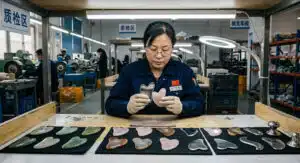
The first phase of gua sha tool manufacturing beyond improvised instruments was artisanal: jade and horn tools produced by skilled craftspeople in small quantities, primarily for traditional medicine practitioners and culturally embedded family use. These tools represented a genuine improvement over coining therapy instruments in edge quality and surface finish, but they were inconsistent across individual pieces, dependent on the skill of individual craftspeople, and produced in volumes that were entirely incompatible with commercial retail distribution. A jade gua sha tool produced by an artisan workshop might have excellent edge geometry and surface finish — or it might not, and the buyer had limited means to evaluate the difference before purchase.
The second phase was the entry of semi-industrial lapidary production into the gua sha tool category, driven initially by the jewelry and decorative stone industries’ existing investment in stone-cutting and polishing equipment. Factories already equipped with trim saws, grinding wheels, and polishing laps for producing cabochons and decorative objects could adapt their tooling to produce gua sha boards with relatively modest additional investment. This phase produced the first gua sha tools available in consistent quantities at retail-accessible price points, but quality control remained variable because the manufacturing processes had been adapted rather than purpose-built for scraping instrument production. Edge radius consistency, surface roughness specifications, and dimensional tolerances were not yet defined as engineering requirements — they were outcomes of whatever lapidary process happened to be applied, and they varied accordingly.
The third and current phase is purpose-built manufacturing: facilities and processes specifically designed around the performance requirements of professional gua sha instruments, with defined tolerances for the specifications that determine therapeutic performance and safety. This phase is characterized by the establishment of measurable quality criteria — edge radius, surface Ra value, dimensional consistency across production batches — that can be documented, communicated to buyers, and verified through incoming inspection. It is this phase that has made it possible for professional practitioners, clinical operators, and responsible wellness brands to specify gua sha tools to a performance standard rather than relying on visual assessment of finished samples. The International Organization for Standardization (ISO) provides relevant surface texture measurement standards — specifically ISO 4287 for surface roughness parameters — that apply directly to the edge and face finish specifications of professional gua sha tools and provide a standardized language for communicating manufacturing tolerances between suppliers and buyers.
Why Sourcing Transparency at the Manufacturing Level Determines Product Quality — Not Brand Claims
The practical implication of this manufacturing evolution for practitioners and product developers is that the most important quality determination in gua sha tool procurement happens at the factory level, not at the product presentation level. A finished gua sha tool can look identical to another tool with significantly different performance specifications — the same shape, the same material, the same surface appearance — and produce meaningfully different outcomes in use because the edge radius, surface finish, and dimensional tolerances were held to different standards during production. This is not a hypothetical concern; it is a documented characteristic of markets where visual similarity is achievable at multiple manufacturing quality tiers, and the gua sha tool market exhibits exactly this characteristic.
For buyers sourcing gua sha tools for professional or commercial application, the verification process should include documentation of the manufacturing tolerances applied to edge finishing and surface preparation, evidence of quality control inspection protocols at the production stage, material certification for the specific stone or metal grade being used, and clarity on the hygiene and sterilization compatibility of the finished instrument. Suppliers who cannot or will not provide this documentation are, by definition, unable to guarantee the performance consistency that professional applications require — regardless of how their finished samples appear or how their brand positioning is constructed. This means your sourcing process should treat manufacturing transparency as a non-negotiable qualification criterion, not as a supplementary nice-to-have, because the downstream consequences of sourcing from non-transparent suppliers — in the form of inconsistent product performance, professional criticism, and potential adverse event liability — are costs that accrue to your brand, not to the supplier.
The SSEF Swiss Gemmological Institute provides gemstone and mineral material certification services relevant to natural stone gua sha tools, including documentation of material origin, mineral composition, and treatment history that supports both quality assurance and the material provenance claims increasingly valued by consumers and regulators in the wellness product market. For brands positioning rose quartz or jade tools in premium or transparency-focused market segments, material certification of this type represents a verifiable foundation for provenance claims — a foundation that is substantially more defensible than country-of-origin labeling or supplier self-declaration alone.
The Regulatory Landscape — What Gua Sha Safe Standards Mean for Product Compliance
The regulatory environment for gua sha tools varies by market, and navigating it accurately is essential for brands seeking to distribute in professional clinical channels, international markets, or retail environments subject to product safety regulations. In the United States, gua sha tools sold for general wellness use are typically classified as general wellness products under FDA guidance on low-risk devices, provided they make no specific medical claims about diagnosing, treating, or curing named conditions. This classification allows considerable flexibility in marketing but carries the requirement that general wellness claims be substantiated and that the product itself not present unreasonable safety risks under normal use conditions. A gua sha tool with inadequately finished edges, unverified material composition, or insufficient hygiene documentation may fail the “unreasonable safety risk” standard even under the general wellness classification — a regulatory exposure that product developers frequently underestimate.
In the European Union, gua sha tools are subject to the General Product Safety Directive and, depending on their specific claims and distribution channels, may require CE marking documentation that includes evidence of compliance with relevant harmonized standards for surface finish, material safety, and product labeling. For brands targeting professional clinical distribution in EU markets, the material safety documentation requirements — including evidence that the instrument’s material composition does not present contact sensitization risk under the conditions of intended use — are more stringent than those applicable to general retail distribution. Understanding the regulatory tier your product occupies in each target market, and documenting your manufacturing specifications against the requirements of that tier, is part of what it means to make gua sha safe at a commercially sustainable level. Regulatory compliance is not a post-launch consideration — it is a manufacturing specification requirement that should be built into the product development process from the initial material selection stage.
What Coining Therapy‘s History Tells You About the Future of Gua Sha

Coining therapy is, in the most precise sense, a manufacturing story wearing the clothes of a therapeutic tradition. The coin was adopted as a scraping instrument not because it was the best available tool for delivering gua sha benefits, but because it was the most accessible tool in the material environment where the practice developed. As the material environment has changed — as purpose-manufactured instruments have become available at accessible price points, with verified performance specifications and documented hygiene compliance — the coin’s remaining value proposition has narrowed to the specific circumstances outlined in this article: contingency use, culturally embedded family practice, and body-region applications where the coin’s geometric limitations are least consequential.
The broader lesson that coining therapy‘s trajectory offers to anyone working in the gua sha space is this: the therapeutic mechanism is durable, but the instrument category is not. What coining therapy demonstrates is that the underlying practice of scraping-based tissue stimulation has proven robust enough to persist through centuries and across cultures using whatever instrument was locally available — and that robustness is an asset for the modern gua sha market, not a liability. It means the practice has demonstrated therapeutic staying power across a wide range of implementation conditions. What modern manufacturing adds to that durable mechanism is precision, safety, consistency, and scalability — the properties that transform a folk remedy into a professional treatment modality and a consumer product category with documented commercial growth.
For practitioners evaluating how to use gua sha in professional settings, the conclusion is that tool selection should be governed by the specific requirements of the tissue being treated, the clinical objectives of the session, and the hygiene standards of the practice environment — with purpose-manufactured tools meeting those requirements in the overwhelming majority of professional contexts. For product developers and brand buyers, the conclusion is that the gua sha tool market rewards investment in manufacturing specification and sourcing transparency, because those are the factors that determine whether a product delivers the consistent performance that drives professional endorsement and consumer repurchase. And for anyone seeking to understand what is coining therapy in its full historical and technical context — the answer is that it is both a legitimate chapter in the history of gua sha and a clear illustration of why manufacturing quality determines therapeutic delivery, regardless of how robust the underlying mechanism may be.
The question is not whether coining therapy worked. It did. The question is whether you can afford to offer your clients, your practitioners, or your brand anything less than what purpose-built manufacturing now makes consistently achievable. The answer to that question should be straightforward.
Faqs About Coining Therapy
1. What is coining therapy?
Coining therapy is a subset of gua sha that uses a coin as the scraping instrument. Every coining therapy session is gua sha, but not all gua sha is coining therapy. The distinction is the tool, not the technique.
2. Is coining therapy safe for facial use?
No. Facial skin is thinner and more vascularized than body tissue. A coin’s milled edge and small diameter cannot deliver the controlled pressure and curvature that gua sha safe facial application requires. Purpose-designed tools are strongly recommended.
3. What are the main gua sha benefits?
Core gua sha benefits include improved local blood circulation, facial contouring, lymphatic drainage, superficial muscle relaxation, and enhanced absorption of topically applied skincare actives. Outcomes depend primarily on technique, pressure, and stroke direction — not tool material alone.
4. How do I use gua sha correctly?
When learning how to use gua sha, prioritize three variables: apply 300–500g of directional pressure, follow lymphatic pathways toward drainage nodes, and always use adequate lubrication. Angle the tool at 30–45 degrees against the skin surface.
5. Why are professional gua sha tools replacing coins?
Professional tools offer verified edge geometry, sterilizable surfaces, and ergonomic grip — three performance areas where coins structurally fail. As manufactured alternatives became cost-accessible, coining therapy with actual coins became a contingency practice rather than a preferred clinical method.
About This Article
This article was produced by the technical content team at Deyi Gems, a manufacturer with over 12 years of continuous production experience in jade, crystal, rose quartz, and stainless steel gua sha instruments. Our production facilities have completed documented supply relationships with wellness brands across North America, Europe, and Southeast Asia, and our quality control processes are structured around ISO 9001-aligned inspection protocols applied at the edge-finishing and surface-preparation stages of every production run. The manufacturing observations cited in this article draw directly from documented production records, incoming material inspection data, and practitioner feedback collected across commercial supply relationships. Where third-party research is cited, direct links to the specific source document — not institutional homepages — are provided to support independent verification.