If you are planning a gua sha custom logo order, choose laser engraving unless your artwork needs full color or gradients. Across one full year at Deyi Gems, about 540,000 of 570,000 custom-logo pieces (roughly 94.7%) were laser engraved. The reason is practical: MOQ starts at 50 pcs, no plate fee applies, a single-color, single-line logo costs up to US$0.5 per piece, and orders under 10,000 pcs usually finish in 2–3 days. This guide comes from a gua sha manufacturer and speaks to you if you buy through gua sha wholesale channels or build a private label gua sha line. You will also see exactly where laser engraving falls short, so you can plan around the risks before you place a purchase order.
- Which Gua Sha Custom Logo Method Do Manufacturers Use Most?
- What Are the Limits of Gua Sha Custom Laser Engraving for Private Label Orders?
- How to Choose a Gua Sha Custom Logo Method by Material?
- When Should Gua Sha Wholesale Buyers Choose Non-Laser Logos?
- How Do 7 Gua Sha Custom Logo Processes Compare for a Guasha ODM Project?
- What to Confirm Before Placing a Gua Sha Custom Order?
- Gua Sha Custom Logo FAQ: What Buyers Ask Before Ordering
Which Gua Sha Custom Logo Method Do Manufacturers Use Most?
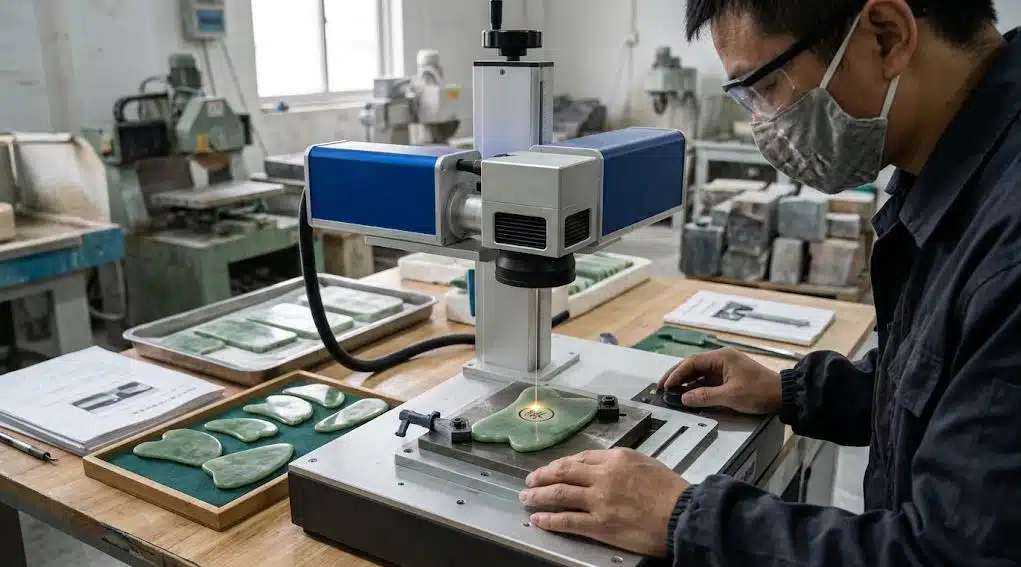
Most factories mark a gua sha custom order with a laser, and production records back that up. The sections below give you the volume share, the per-piece cost, the lead time, and the minimum order, so you can compare methods with numbers instead of guesses.
How Much Gua Sha Wholesale Volume Uses Laser Engraving?
Out of 570,000 custom-logo pieces produced in a full year, about 540,000 went through a laser engraver. That is roughly 94.7% of the volume, which leaves about 30,000 pieces for every other method combined. At the gua sha factory behind this guide, the pattern is that clear, and conversations with other gua sha manufacturer teams point to a share above 90% as well. That second figure comes from peer exchange, not from a published survey, so treat it as an industry estimate. When you place a gua sha custom order through gua sha wholesale channels, this means you can request laser engraving and get an established workflow instead of a trial run.
How Much Does a Gua Sha Custom Logo Cost Per Piece?
A single-color, single-line logo costs up to US$0.5 per piece, and that price already includes hand coloring. Each extra color adds US$0.5, and a second line of text adds another US$0.5. Most orders stop at three colors. Laser engraving needs no printing plate, so you pay no plate fee before production starts.
Here is a quick ROI check you can run yourself. On a 1,000-piece order, a single-color, single-line mark adds at most US$500, while a two-color, two-line mark adds at most US$1,500. Is a second line of text worth a 100% jump in marking cost for your gua sha custom design? If your brand name already fits on one line, the answer is usually no. This means you can test a new logo on a small batch without a tooling bill, and you can decide on extra colors only after you see the first samples.
How Fast Can a Gua Sha Factory Engrave 10,000 Logos?
Orders under 10,000 pieces usually finish logo work in 2–3 days. Speed matters because a restock delay hits your shelves before it hits your invoice, and one missed week can pause a product line you spent months building. Laser engraving moves quickly because the machine works straight from a digital file, so no plate has to be made first. For your gua sha custom reorders, this means you can order smaller batches more often instead of locking cash into one large run.
What MOQ Applies to Laser-Engraved Logos?
Across the market, laser-engraved logos usually start at 50–100 pcs, and Deyi Gems sets its own minimum at 50 pcs. Other methods ask for far more: hot foil stamping starts at 500 pcs, screen printing and UV printing at 3,000 pcs per design, and embossing at 5,000 pcs for metal tools. A 3,000-piece commitment is 60 times the size of a 50-piece test. If you launch a private label gua sha line or scope a guasha odm project, this means you can validate a design, a color, and a market with a small order before you scale.
What Are the Limits of Gua Sha Custom Laser Engraving for Private Label Orders?
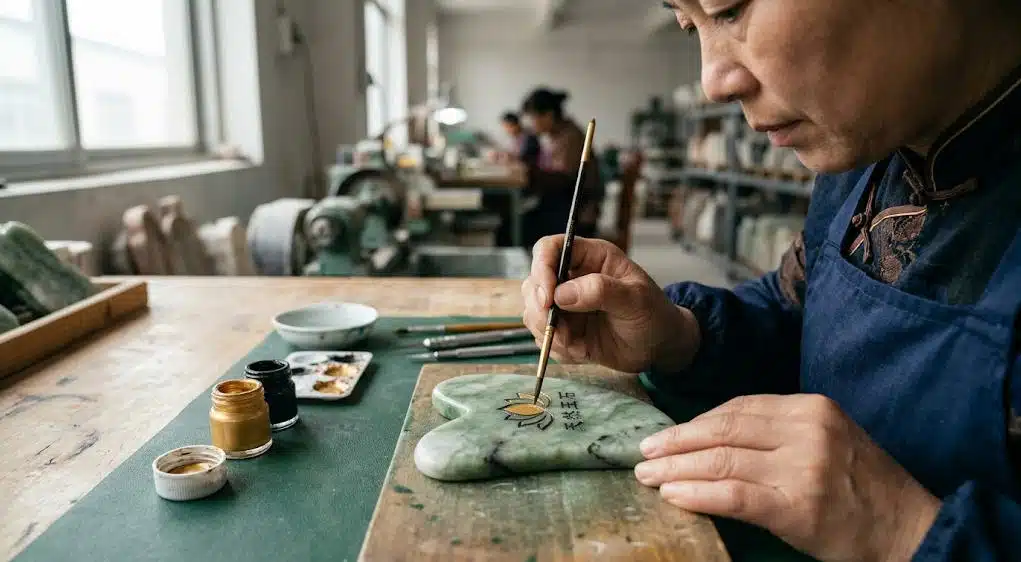
Laser engraving wins on cost, speed, and MOQ, but it is not the right fit for every gua sha custom design. If you run a private label gua sha line, knowing the limits before you approve artwork saves you a reprint and a delayed launch. The four sections below cover color, durability, paint overflow, and natural stone.
Can Laser Engraving Make Multi-Color Gua Sha Custom Logos?
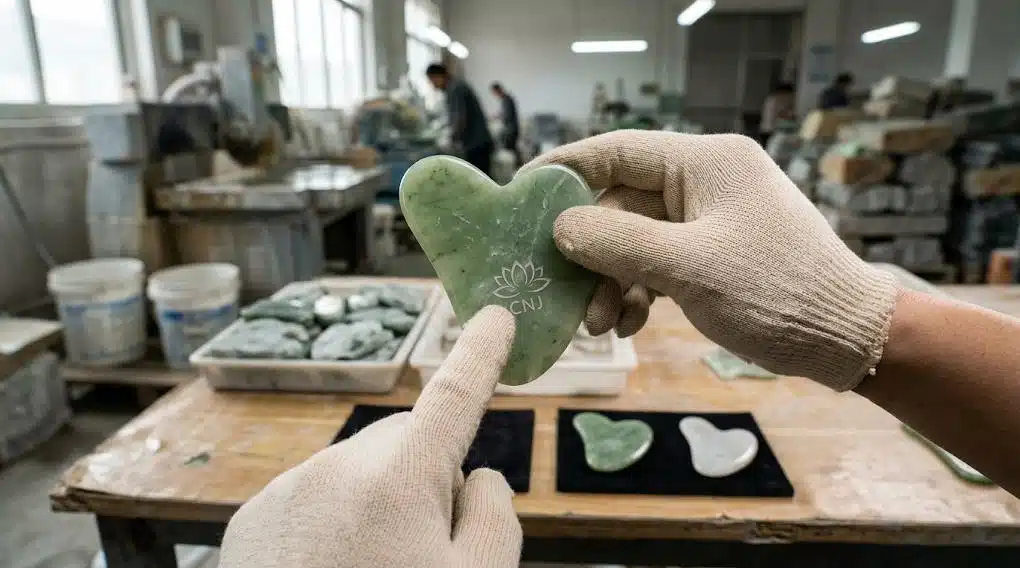
A laser removes material, and it cannot add color. Workers fill the engraved logo with safe paint by hand, one piece at a time, which is why single color is the default and each extra color adds US$0.5 per piece. Most orders are capped at three colors. Two colors that touch will bleed into each other, so the artwork needs a clear gap between color zones. A gua sha factory cannot fix a bleed after the paint is on, so the fix has to happen in your file.
This means you can keep a multi-color logo as long as you separate the colors in the design. To avoid rework, follow these steps:
- Count your colors and keep them at three or fewer.
- Add a clear gap between any two colors in the vector file.
- Ask for a painted sample and check the gap before you approve mass production.
Does a Hand-Painted Laser Logo Wear Off With Use?
The engraved logo sits below the gua sha surface, and the paint layer is thin enough that the filled logo still stays lower than the area around it. During normal use, skin and oil mostly touch the surrounding surface instead of the paint, so friction on the color stays limited. Wear therefore does not become a major problem. If you sell through gua sha wholesale accounts, this means you can expect the logo to stay readable through everyday use, and you can confirm that with a rub and wash test on your own sample. Do your end customers clean the tool with strong solvents? If they might, test that cleaner on the sample before you commit.
How Often Does Paint Overflow Happen on Gua Sha Custom Orders?
Because workers color each logo by hand, paint can spill slightly past the engraved edge. Deyi Gems’ 2025 statistics show paint residue on about 0.09% of pieces, or roughly 9 pieces per 10,000. On a 5,000-piece order that is around 4 to 5 pieces, and on 20,000 pieces it is about 18. Each piece is cleaned by hand, yet careful work can still miss a spot, so final inspection matters. When you sign a guasha odm purchase order, this means you should ask your gua sha manufacturer how overflow pieces are handled, then write the acceptance rate and the replacement rule into the contract.
Will Laser Engraving Whiten or Damage Jade and Crystal Gua Sha?
Natural stone varies in color, texture, and transparency, so one laser setting does not give identical results on every piece. Wrong parameters can whiten the surface, blur the edges, or damage a small area. GIA notes that jade can be dyed, bleached, heated, waxed, and impregnated, which means two pieces that look alike may not react the same way. The International Gem Society lists jadeite at 6.5–7 and nephrite at 6–6.5 on the Mohs scale, so the stone is hard but not immune to surface damage. GIA also warns that heat from a jeweler’s torch can harm jade. A laser also delivers concentrated heat, so settings matter, though that last link is our own inference and not a GIA statement about lasers.
If you want to learn how treatments and testing work, SSEF’s introductory jade course covers jade origins, treatments, and the science of jade testing. For your gua sha custom order, this means you can avoid whitened or chipped pieces by approving a sample engraved with your actual logo, on the actual stone, before the full run starts.
How to Choose a Gua Sha Custom Logo Method by Material?
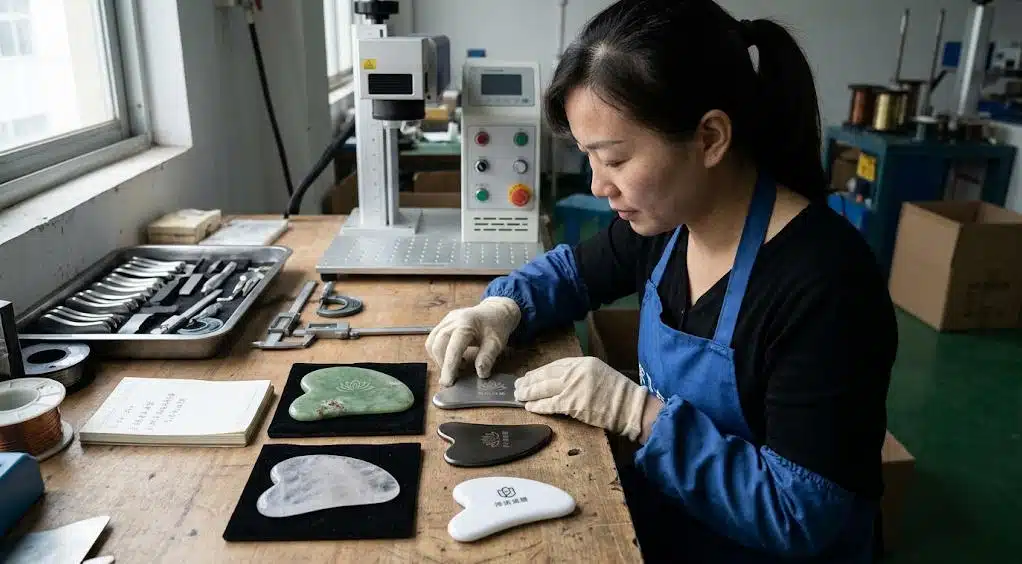
Material decides which gua sha custom methods are even available to you. A mark that sits well on jade can fail on coated steel, and a method built for plastic can peel off stone. Start with what your tool is made of, then match the method to it.
What Is the Best Gua Sha Custom Logo Method for Jade and Crystal?
For natural jade and crystal, laser engraving is the first choice, and it is the method behind most orders at this gua sha factory. Stone differs from piece to piece in base color, grain, and flatness, and those differences change how clearly a logo reads. GIA’s jade quality guide notes that jade buyers check transparency, among other factors, which is a reminder that two pieces from the same batch can look different under a laser. So approve a sample on your actual stone before mass production starts. This means you can lock in the logo depth and paint color early, and you avoid surprises across the batch.
Some brands need a specific color that hand painting cannot match. If you build a private label gua sha line around a fixed brand color, evaluate UV printing or screen printing next. Both start at 3,000 pcs per design at this factory, which is 60 times the size of a 50-piece laser test. At up to US$0.5 per piece, a 3,000-piece laser job costs at most US$1,500 for a single-color, single-line logo, so you have a clear ceiling to compare against any printing quote. Does your first order really need a 3,000-piece commitment for one design? If not, stay with laser and refine the paint color instead, which means you protect your cash while the product proves itself.
Can You Laser Engrave Coated or PVD Stainless Steel Gua Sha?
Stainless steel takes laser marking well, so laser remains the first option for bare steel tools. Coated surfaces need more care. If the tool uses PVD, electroplating, or another surface coating, the laser may damage that layer, so confirm the result on a test piece before you approve artwork. Color logos on steel can go through printing tests, but embossing needs a decision at the design stage. It applies only to metal tools, starts at 5,000 pcs per design (100 times the laser minimum), and needs a mold, so a later logo change means a new mold. For a gua sha custom steel tool, this means you can start with laser while the design is still changing, and move to embossing only when the logo is final and your volume is steady.
Which Logo Methods Suit Plastic and Resin Gua Sha Tools?
Plastic and resin tools open up more options. Screen printing, UV printing, and mold-formed logos can all be evaluated. Before you pick one, confirm the plastic type, its surface energy, its heat resistance, and the conditions where the tool will be used, because ink adhesion depends on all four. Pad printing and metal logo plates are not offered here for three reasons: logos wear off too easily on gua sha tools, the cost runs high, and no partner factory makes them. When you compare quotes from a guasha odm partner, this means you can skip those two methods and focus on the ones that actually reach production.
How Do You Pick a Gua Sha Custom Logo Method in Four Steps?
Start with the material, because it removes the methods that cannot work. Next, count your colors. One to three colors fit laser with hand coloring, while gradients point to UV printing. Then check your volume against the minimums: 50 pcs for laser, 500 pcs for hot foil on gift boxes, 3,000 pcs for screen or UV printing, and 5,000 pcs for metal embossing. Last, order a sample and test it by rubbing and washing before you approve production. GIA says warm, soapy water is a safe way to clean jade, so use it for your wash test. If you buy through gua sha wholesale channels, this means you can decide in an afternoon with four facts, and you give your gua sha manufacturer a complete brief in the first email.
When Should Gua Sha Wholesale Buyers Choose Non-Laser Logos?
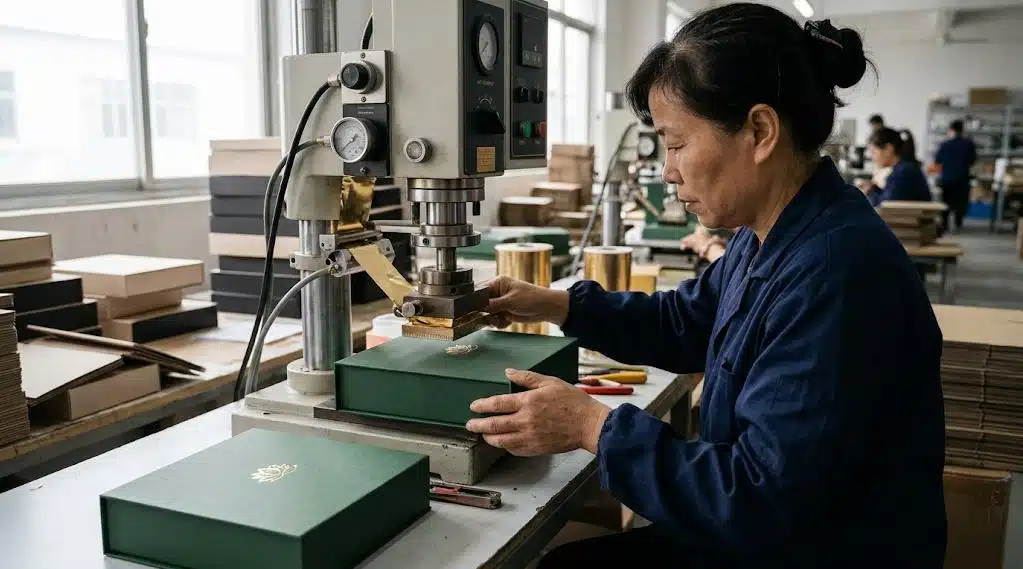
Move away from laser only when your artwork or your volume forces the change. For most gua sha custom orders, three situations justify it: a gradient, more than three colors, or a fixed brand color on 3,000 or more pieces. If you manage gua sha wholesale accounts across several brands, each method below comes with its minimum order so you can check the numbers before you ask for a quote.
Is UV Printing Better for Full-Color Gua Sha Custom Logos?
UV printing sprays ink straight onto the surface and cures it with ultraviolet light, so it handles multiple colors and gradients without a separate screen for each color. The minimum is 3,000 pcs per design at this factory. Adhesion depends on the base material, the surface treatment, and the curing, and heavy rubbing or unsuitable cleaners can wear the pattern down. On natural stone, the grain and base color also change how sharp the logo looks.
Compare it with laser using real numbers. A three-color, single-line laser logo costs up to US$1.5 per piece (US$0.5 base plus US$1.0 for two extra colors), which is US$4,500 on a 3,000-piece order. This means you can request a UV quote for the same quantity and see whether a gradient is worth the price difference for your gua sha custom line.
Is Screen Printing Worth a 3,000 pcs MOQ?
Screen printing pushes ink through a mesh screen, so a plate has to be made before the first piece is printed. Single-color logos on a flat area run efficiently in large batches, and the result repeats well from one order to the next. Curved or irregular tools are harder to print, and multi-color artwork needs several passes with tight alignment. Ink adhesion also depends on the material and the curing, so friction and washing can fade the mark over time.
With a 3,000-piece minimum plus a plate cost, this means you should choose screen printing only when your tool has a flat print area, your design is final, and your sales forecast covers the batch. A guasha odm partner will quote the plate cost separately, so ask for it up front and add it to your per-piece math. If your forecast is below 3,000 pieces, laser keeps your risk lower at this gua sha factory and at most others.
Is Embossing Worth the Mold Cost for Metal Gua Sha Custom Tools?
Embossing or debossing shapes the logo into the metal itself, so no ink or foil can peel away. It applies to metal tools only, starts at 5,000 pcs per design, and needs a new mold or a change to an existing one. Thin lines and small text may not form cleanly, and a new logo means a new mold.
Natural stone is the wrong base for this method, because pressing on a finished stone tool risks cracking or chipping it. The International Gem Society calls jade tough but says the gem is not indestructible, which is a good reason to avoid forcing a mold onto a finished piece. Will your logo stay unchanged for the next two years? If you are unsure, a mold ties you to a design you may replace, so embossing suits a long-running steel line with a locked design, and laser covers everything else.
When Does Hot Foil Stamping Make Sense for Gua Sha Packaging?
Hot foil stamping transfers metallic foil with heat and pressure, which gives you gold or silver lettering. At this factory it starts at 500 pcs, and it is used on gift boxes and other packaging, not on the tool itself. Natural stone and bare steel do not reliably accept foil without a special coating or a tested process, and fine lines or small text can transfer poorly.
This means you can put a gold logo on the box, keep a laser mark on the tool, and still present one consistent brand. For a private label gua sha gift set, that pairing costs you one 500-piece foil run for the packaging plus up to US$0.5 per piece on the tool. Ask your gua sha manufacturer to test the foil on a sample box before you commit to the full run, because wear resistance has to be confirmed with a physical test. In short, match each logo method to the surface it was designed for, and your gua sha custom order will carry far fewer surprises.
How Do 7 Gua Sha Custom Logo Processes Compare for a Guasha ODM Project?
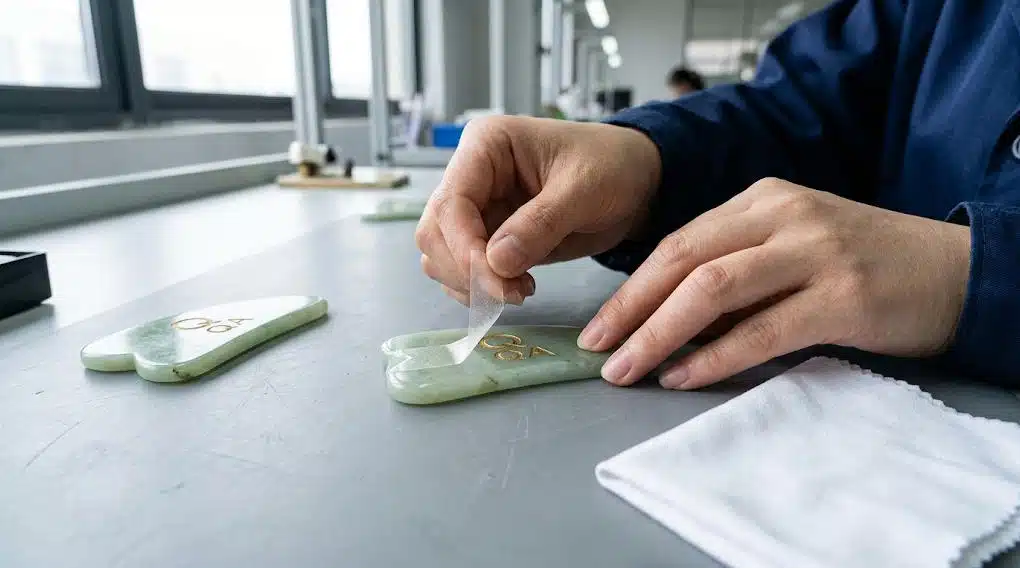
A guasha odm project lives or dies on the first logo decision, because that choice sets your minimum order, your unit cost, and your lead time. The table below puts all seven processes side by side, using the minimums and cost rules from this factory. Use it as a filter before you ask anyone for a quote.
Cost, MOQ and Durability at a Glance
| Process | Color | MOQ per design | Upfront cost | Best fit |
|---|---|---|---|---|
| Laser engraving | Single color by hand coloring; each extra color +US$0.5, max 3 | 50 pcs | No plate fee | Jade, crystal, bare steel |
| Screen printing | Spot colors | 3,000 pcs | Plate required | Flat surfaces, high volume |
| UV printing | Multi-color, gradients | 3,000 pcs | No screen | Complex artwork |
| Hot foil stamping | Metallic | 500 pcs | Die required | Gift boxes, packaging |
| Embossing | 3D relief | 5,000 pcs | Mold required | Metal tools only |
| Pad printing | Not offered | Not offered | Not offered | Not offered |
| Metal logo plate | Not offered | Not offered | Not offered | Not offered |
The table does not rank durability, because adhesion and wear depend on the base material, the surface treatment, and the curing. The gap in minimums is the clearest number: 5,000 pcs for embossing is 100 times the 50 pcs laser minimum. A single-color, single-line laser logo on a 3,000-piece order costs at most US$1,500, which gives you a fixed ceiling to hold against any printing quote. For your gua sha custom project, this means you can drop any process whose MOQ exceeds your first order and compare only the ones that fit.
How to Test Gua Sha Custom Logo Durability: Rub, Wash and Pull-Off Tests
Run three tests on a sample before you approve mass production. For the rub test, rub the logo with a dry cloth and then a damp one, and agree on a stroke count with your factory, for example 100 strokes each. For the wash test, clean the sample in warm, soapy water, repeat the cycle several times, and check the edges for lifting or fading. For the pull-off test, apply pressure-sensitive tape over the logo and peel it back quickly. ASTM D3359 describes this tape method for coating adhesion, but it was written for coated metal, so on stone or plastic you should treat it as a screening check and agree on a pass/fail rule in advance.
Would your customers use harsh cleaners on the tool? If so, add that cleaner to the wash test, because ink and paint react differently to solvents. This means you can catch peeling, fading, and bleed problems on one sample instead of on 3,000 shipped pieces.
Which Logo Process Costs Less Over a Full Year?
Take a brand that orders 12,000 pieces a year in four batches of 3,000. Laser marking with a single color and a single line costs at most US$6,000 across the year, and you can adjust artwork between batches at no plate cost. Screen or UV printing meets the 3,000-piece minimum for each batch, but each design commits you to that quantity, and screen printing adds a plate cost. Ask your gua sha manufacturer for per-piece and plate quotes at 3,000 pcs, then compare them against the laser ceiling. For a private label gua sha line that still changes designs, this means laser usually carries the lower financial risk.
What to Confirm Before Placing a Gua Sha Custom Order?
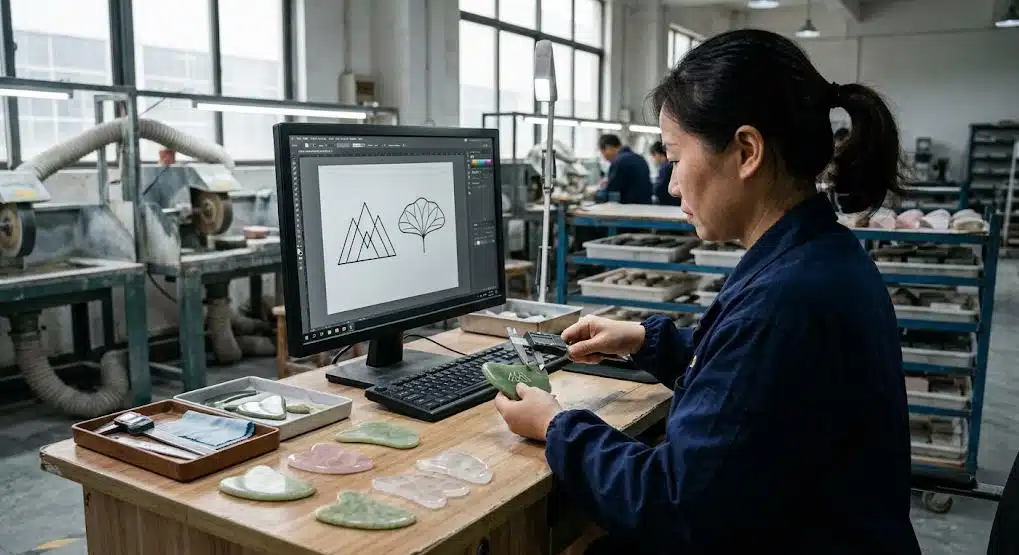
Most logo problems start before production, in the file, the sample, or the contract. Settle these three areas first and your gua sha custom order will run with far fewer corrections.
What Artwork Files Does a Gua Sha Manufacturer Need?
Send vector artwork, not a screenshot, so the engraving follows clean lines. Give the logo size in millimeters, state where it sits on the tool, and say whether it is one line or two. Count your colors, keep them at three or fewer, and leave a visible gap between any two colors, since touching colors bleed together during hand painting. A gua sha manufacturer can then quote the exact per-piece price without guessing, using the US$0.5 base and the US$0.5 steps for each extra color or line. This means you can get a firm quote and a correct sample in the first round instead of the third.
Why Is Sample Approval Required for Natural Stone?
Natural stone changes from piece to piece, so a logo that looks sharp on one tool can look weaker on the next. GIA explains that in one Chinese classification system, B jade is jadeite bleached with acid and impregnated with polymer resin, while A jade is natural or wax-treated only. Treated and untreated stone may respond differently to a laser, though that is our inference and not a GIA statement. Why risk a full batch on a guess? A sample engraved on your actual stone, with your actual logo and paint color, costs you a few days. This means you can approve depth, edge sharpness, and color before the gua sha factory starts the full run.
What Acceptance Rate and Safety Records Should You Request?
Use 0.09% paint residue as your reference point. At Deyi Gems in 2025, that rate means about 9 pieces per 10,000, or about 18 per 20,000. Write the acceptable rate and the replacement rule into your guasha odm contract, so both sides know what happens when residue is found. Ask also for the paint’s safety documentation, including a test report from an accredited laboratory, the test date, and the batch it covers. Rules differ by selling market and by how your product is classified, so confirm the requirements for your destination before you order. This means you can turn a vague quality promise into a measurable term, and you can answer your retailer’s compliance questions with paperwork instead of assurances.
Gua Sha Custom Logo FAQ: What Buyers Ask Before Ordering
1. What Is the MOQ for a Gua Sha Custom Logo Order?
For laser engraving, the market range is 50–100 pcs, and this factory accepts 50 pcs. Hot foil stamping starts at 500 pcs, screen and UV printing at 3,000 pcs per design, and embossing at 5,000 pcs for metal tools. Pad printing and metal logo plates are not offered. If you open a new private label gua sha line, this means you can start with 50 pieces, check the logo on real stock, and scale after your first sell-through. A gua sha custom pilot of that size costs at most US$25 for a single-color, single-line mark.
2. How Much Extra Does a Gua Sha Factory Charge for Multi-Color or Two-Line Logos?
The base price is up to US$0.5 per piece for a single-color, single-line logo. Each extra color adds US$0.5, up to three colors, and a second line adds US$0.5. By that rule, a three-color, two-line logo reaches up to US$2.0 per piece, which is US$6,000 on 3,000 pieces compared with US$1,500 for the single-color, single-line version. Will the extra colors lift your sell-through enough to cover that US$4,500 gap? Run that check before you finalize artwork, because a gua sha factory applies the same step pricing to every order. This means you can price each design option in advance and pick the one that fits your margin.
3. Can a Gua Sha Custom Order Combine Laser Engraving and Printing?
Packaging and tools use different methods, so one order can carry both. Hot foil stamping is used on gift boxes rather than on the tool itself, which means a laser mark on the tool and a foil mark on the box can sit in the same private label gua sha gift set. The foil minimum is 500 pcs, so a set of 500 or more makes the pairing practical. Combining two marking methods on the same tool depends on the material and the artwork, and the figures in this guide do not cover it. This means you should ask for a sample before you assume it will work on your gua sha custom design.
4. How Many Pieces Will Show Paint Residue in a Gua Sha Custom Batch?
At the 2025 rate of 0.09%, a batch of 10,000 pieces carries about 9 pieces with paint residue. A batch of 3,000 carries about 3, and a 50-piece pilot will most likely carry none. These pieces come from hand coloring, and each one is cleaned by hand before shipment, yet a careful worker can still miss a spot. This means you can plan a small replacement allowance into your purchase order and keep the delivered count exact.