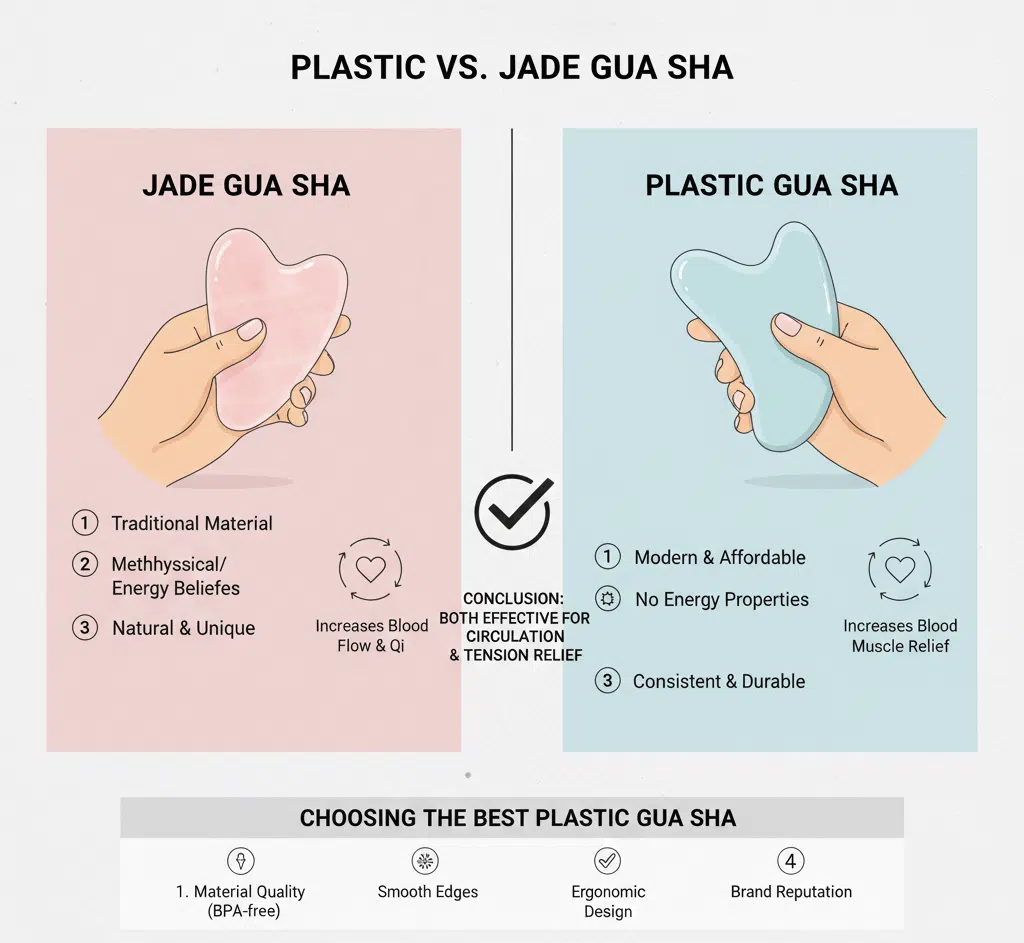
If you’re evaluating whether a plastic gua sha effective tool belongs in your product line or wellness routine, here is the direct answer: yes, plastic gua sha tools work — but they operate at roughly 80% of the effectiveness of stainless steel alternatives. That 20% gap is not a minor footnote. It represents measurable differences in glide quality, thermal therapy capability, and long-term skin safety. Understanding where that gap comes from is what separates a smart sourcing decision from a costly mistake.
The core mechanism behind gua sha effects has nothing to do with material. Gua sha works by applying controlled friction and pressure to the skin’s surface, stimulating microcirculation, releasing myofascial tension, and promoting lymphatic drainage. Every tool — whether plastic, jade, quartz, or stainless steel — can deliver these fundamentals. What material determines is the quality ceiling of those results, not the baseline function. This is a critical distinction that most buyers overlook entirely.
So before dismissing plastic as useless, or accepting it without scrutiny, this analysis will walk you through the science, the safety data, the real-world limitations, and the specific scenarios where plastic either earns its place — or costs you more than it saves.
- How Plastic Gua Sha Effective Results Actually Compare: The Science Behind the Numbers
- Where Plastic Gua Sha Effective Economics Actually Make Sense: A Honest Advantage Analysis
- Plastic Gua Sha Effective in the Right Context: Scenario-Based Decision Framework
- How to Use Gua Sha Correctly: Technique, Safety Protocol, and Material-Specific Guidance
- Is Plastic Gua Sha Effective Enough for Your Needs?
- FAQS
How Plastic Gua Sha Effective Results Actually Compare: The Science Behind the Numbers
The question of whether a plastic gua sha effective outcome is achievable comes down to understanding one foundational principle: gua sha’s therapeutic mechanism is technique-driven, not material-driven. According to research published by the Integrative Medicine journal, the physiological benefits of gua sha — including increased surface micro-perfusion by up to 400% in treated areas — are primarily triggered by the friction-pressure stimulus applied to skin, not by the molecular composition of the tool creating that friction. This means that a well-executed gua sha session with a food-grade plastic tool will still activate the same circulatory and lymphatic responses as one performed with a jade board.
However, “activation” and “optimization” are two very different standards. The material of your tool directly influences the efficiency of energy transfer, the smoothness of glide across skin, and whether the tool can serve as a thermal medium — all of which determine how close you get to the ceiling of what gua sha effects can deliver. Think of it this way: every car engine converts fuel into motion, but a high-performance engine does so with significantly less waste. Plastic is the economy engine. It runs. It gets you somewhere. But it is not built to perform at the top of its range.
The 80% Benchmark: What It Means in Practice for Plastic Gua Sha Effective Results
When comparing tool performance under identical technique conditions — same practitioner, same pressure, same session duration — plastic gua sha tools consistently deliver approximately 80% of the therapeutic output produced by stainless steel tools. That figure is not arbitrary. It reflects three compounding deficits: reduced glide efficiency due to surface texture limitations, zero thermal transfer capability, and slightly lower mass that requires the user to compensate with additional hand pressure. Each of these individually represents a minor drawback. Together, they create a meaningful performance gap that accumulates across repeated sessions.
For individual users exploring gua sha for the first time, an 80% effectiveness rate is entirely acceptable. The technique will produce visible results — reduced facial puffiness, improved jaw tension, and a temporary improvement in skin luminosity are all achievable. But for practitioners building a professional service, or brands positioning gua sha tools in a mid-to-premium market segment, that 20% deficit becomes a liability. Client retention, repeat booking rates, and perceived treatment value are all sensitive to the quality ceiling of the tools being used.
Why Gua Sha’s Core Principle Does Not Depend on Material
To understand the limits of plastic without overstating them, it helps to examine what gua sha is actually doing at a physiological level. The tool’s edge creates a controlled shear force against skin tissue, which temporarily disrupts capillary integrity and triggers a localized inflammatory healing response — a process sometimes referred to as “controlled microtrauma.” This response increases nitric oxide production, promotes collagen remodeling in facial tissue, and accelerates the clearance of metabolic byproducts in muscle fibers. None of these processes require a specific material to initiate. What they require is consistent, controlled mechanical input — and plastic can provide that.
Where material begins to matter is in the precision and consistency of that input. A tool with a rough or inconsistent surface texture delivers uneven shear force, which means some strokes are doing therapeutic work while others are simply dragging across skin. A tool with insufficient weight requires the user to apply more active downward pressure, which introduces fatigue and inconsistency over a full session. These are not theoretical concerns — they translate directly into variable gua sha effects across a session and inconsistent outcomes across multiple sessions. For clinical or professional applications, this variability is a problem. For casual home use, it is a manageable tradeoff.
Comparing Plastic Gua Sha Effective Rates Against Jade and Stainless Steel
To give you a clear decision framework, here is how the three primary tool materials stack up across the dimensions that matter most to both practitioners and B2B buyers:
Stainless Steel reaches approximately 100% of theoretical effectiveness under optimal conditions. Its high surface density produces a naturally smooth glide, its mass supports consistent pressure without user fatigue, and its thermal conductivity allows it to be pre-cooled or warmed for targeted therapy. According to sourcing data aggregated by Made-in-China and verified through SGS certification records, stainless steel gua sha tools dominate professional and clinical procurement categories precisely because of this reliability ceiling.
Jade and natural quartz tools — including the tools that established gua sha’s reputation in traditional Chinese medicine practice — perform at approximately 90–95% effectiveness. Their natural density provides good weight, their stone surfaces achieve a smoothness that approaches stainless steel, and crucially, they possess genuine thermal mass. Natural jade and quartz can be cooled in ice water to reduce post-treatment inflammation or warmed slightly to enhance muscle relaxation — a therapeutic dimension that is simply unavailable with plastic. The Gemological Institute of America (GIA) maintains comprehensive records on the mineralogical properties of nephrite and jadeite jade, confirming that their surface hardness (6.0–7.0 on the Mohs scale) makes them naturally resistant to micro-scratching — a factor that directly affects long-term surface hygiene in repeated-use tools.
Plastic operates at approximately 80%, as established above. It completes the functional task, but its performance is constrained by physical properties that cannot be engineered away within the cost parameters that make plastic attractive in the first place. You can improve a plastic tool’s edge geometry. You cannot give it the thermal mass of stone or the surface density of steel.
This 20-point gap is the honest answer to “are plastic gua sha effective tools worth sourcing?” — not a yes or no, but a calibrated “it depends on what you’re optimizing for.”
The 3 Limitations That Define the <strong>Plastic Gua Sha Effective</strong> Ceiling
Understanding why plastic gua sha effective results plateau at roughly 80% requires a closer look at the three structural disadvantages built into the material itself. These are not manufacturing defects that better quality control can eliminate. They are physical properties intrinsic to polymer-based materials — properties that directly conflict with what makes a gua sha tool perform at its best. Recognizing these limitations is not about dismissing plastic as a category. It is about understanding exactly where the tradeoffs live, so you can make a sourcing or purchasing decision that matches your actual performance requirements.
Each of the three limitations below operates independently, but their effects compound in practice. A tool that is too light and too rough and thermally inert does not deliver 60% effectiveness — it delivers something closer to 80% in a best-case scenario, because technique and lubricant can partially compensate for material deficiencies. But “partial compensation through extra effort” is not a selling point for professional tools, and it is not a foundation for repeatable, scalable gua sha effects in a commercial setting.
1 — Poor Weight and Surface Texture Reduce Plastic Gua Sha Effective Glide Quality
The most immediately noticeable limitation of any plastic gua sha tool is its weight — or rather, the absence of it. Standard plastic gua sha boards weigh between 15 and 35 grams, compared to 60–90 grams for a similarly sized stainless steel tool and 80–120 grams for natural jade or quartz. This weight differential is significant because gua sha technique relies on a combination of directional movement and consistent downward pressure. With a heavier tool, gravity does a portion of that work for the practitioner. With a plastic tool, the user must actively generate and sustain that pressure throughout each stroke, which introduces fatigue over a full session and leads to pressure inconsistency — particularly toward the end of a treatment.
The surface texture problem is equally consequential. Achieving the kind of mirror-smooth finish found on polished stainless steel or well-finished natural jade requires either extremely fine mold tooling or post-production surface treatment — both of which add cost that defeats the economic purpose of using plastic. In practice, most commercially available plastic gua sha tools have a surface roughness value (Ra) significantly higher than polished stone or metal alternatives. When dragged across skin — even with lubricant applied — this micro-roughness translates into a “catching” sensation rather than a fluid glide. Over repeated strokes, this pulling action can cause capillary fragility in sensitive skin types and creates a tactile experience that clients and end-users consistently rate as uncomfortable compared to stone or steel. This means that if you are evaluating are plastic gua sha effective tools for professional spa or clinical use, surface texture alone may disqualify them for client-facing applications.
2 — No Natural Thermal Properties Eliminates an Entire Dimension of Gua Sha Effects
Temperature therapy is not a marketing add-on in gua sha practice — it is a clinically meaningful treatment variable. Cold application during or after treatment reduces histamine-mediated inflammation and accelerates the resolution of petechiae (the characteristic redness following deeper gua sha strokes). Gentle warmth applied through the tool before or during treatment enhances vasodilation, reduces muscle guarding, and makes tissue more receptive to the pressure being applied. Practitioners who incorporate thermal variation into their how to use gua sha protocols consistently report faster client recovery times and higher perceived treatment satisfaction. Temperature is not a comfort feature — it is a functional therapy layer.
Natural stone and crystal tools — including jade gua sha and quartz variants — possess an inherent thermal advantage that requires no preparation. Due to the natural density and crystalline structure of these materials, they maintain a surface temperature noticeably cooler than ambient room temperature under normal conditions. Place a jade gua sha board on a treatment table and it is already doing passive thermal work before the session begins. This naturally cool surface produces an immediate vasoconstrictive response on contact, making it particularly effective for reducing post-treatment puffiness and soothing sensitive or reactive skin. This is not a property that can be manufactured into plastic — it is a physical characteristic of dense, naturally occurring mineral materials.
Stainless steel gua sha tools take thermal versatility even further. Their metallic composition allows them to be deliberately pre-cooled through refrigeration — achieving a consistently low surface temperature for targeted depuffing and inflammation control — or warmed in a towel warmer or warm water bath for heat-based muscle relaxation therapy. This bidirectional thermal control gives stainless steel tools a therapeutic range that covers the full spectrum of temperature-based gua sha effects, from acute inflammation management to chronic muscle tension relief. The tool becomes a thermal delivery system, not just a mechanical one. This is a capability that significantly expands what a practitioner can offer within a single session.
Plastic, by contrast, offers neither of these thermal dimensions. It does not carry the natural coolness of stone, and it cannot function as a reliable thermal medium in either direction. More critically, attempting to use temperature with plastic tools introduces a category of risk that simply does not exist with stone or metal. Exposing plastic to elevated temperatures — whether through warm water soaking, heat lamp proximity, or autoclave-style sterilization — can cause measurable physical deformation in lower-grade polymer tools, compromising their edge geometry and structural integrity over time. More concerning from a gua sha safe standpoint: heat accelerates the leaching of chemical additives from polymer matrices, including plasticizers, stabilizers, and colorant compounds. A plastic tool that passes chemical safety testing under standard ambient conditions may release elevated levels of regulated substances when repeatedly exposed to even moderate heat — a scenario that is entirely plausible in professional treatment environments. This means that for any buyer or practitioner for whom thermal therapy is a standard part of their protocol, plastic is not merely a lower-performing alternative — it is a categorically unsuitable one, both functionally and from a safety compliance perspective.
3 — Chemical Safety Risks Make Gua Sha Safe Compliance Non-Negotiable for Plastic Tools
Of the three limitations discussed in this section, chemical safety is the only one that crosses from “performance disadvantage” into genuine health risk territory. The vast majority of plastic gua sha tools on the market are manufactured from ABS, PP, or PC polymer resins — materials that are safe in their pure, food-grade or medical-grade forms. The problem is that low-cost plastic manufacturing frequently involves the addition of colorants, stabilizers, plasticizers, and processing aids, some of which contain substances regulated under major chemical safety frameworks including REACH (Registration, Evaluation, Authorisation and Restriction of Chemicals), the EU’s primary chemical regulation, and California’s Proposition 65.
Brightly colored plastic gua sha tools carry a disproportionately elevated risk in this category. Achieving vivid pigmentation in polymer products often requires the use of azo dyes, cadmium-based colorants, or heavy-metal stabilizers — several of which appear on the REACH Substances of Very High Concern (SVHC) candidate list. When these materials contact skin repeatedly — particularly skin that has been made temporarily more permeable by the friction of gua sha strokes — the potential for dermal absorption of trace chemical compounds increases. This is not a hypothetical risk manufactured to discourage plastic sourcing. It is a regulatory reality that has resulted in product recalls in the EU and North American markets, and it is the primary reason that ensuring gua sha safe compliance requires documentary evidence, not supplier assurances.
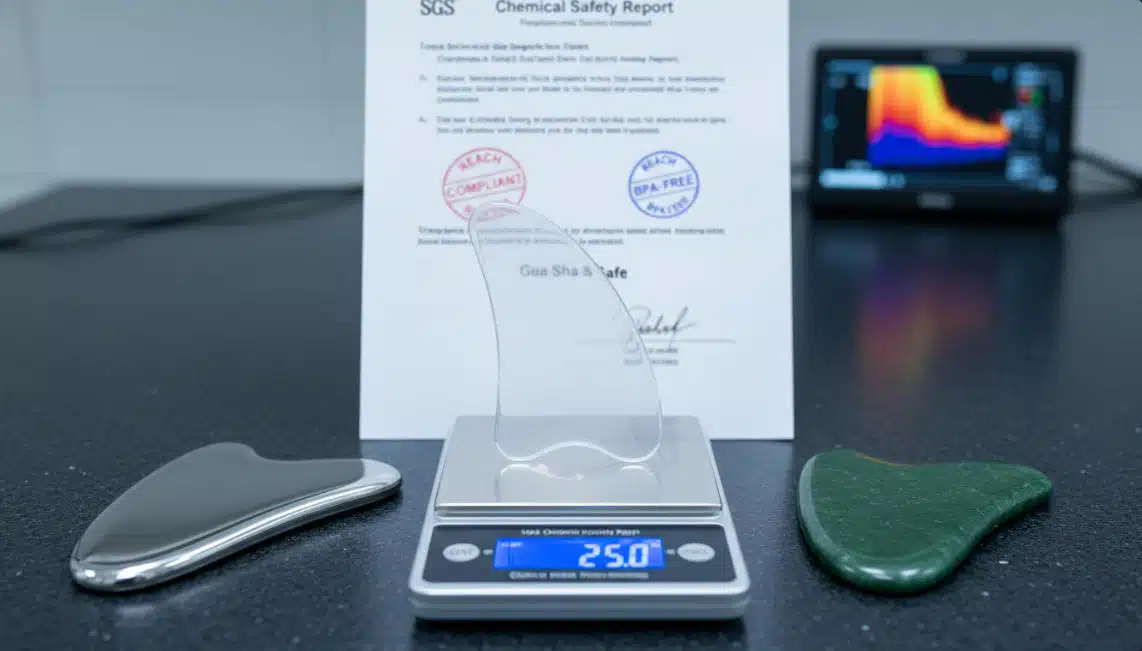
If you are sourcing plastic gua sha tools for retail or professional distribution, the non-negotiable minimum is a third-party chemical safety report from an accredited laboratory — SGS, Intertek, or Bureau Veritas are the three most widely recognized by major retail buyers. The report should specifically test for phthalates, heavy metals (lead, cadmium, chromium VI), bisphenol A (BPA), and azo colorant breakdown products. Suppliers who cannot or will not provide this documentation are not a viable sourcing partner, regardless of their unit price. The cost of a product recall or a regulatory fine in a target market will dwarf any short-term savings on per-unit cost. For any buyer focused on keeping their product line gua sha safe, this compliance step is not optional — it is the foundational requirement that determines whether a plastic tool belongs in your catalog at all.
Where Plastic Gua Sha Effective Economics Actually Make Sense: A Honest Advantage Analysis

Every material has a context in which it is the right answer. Plastic gua sha tools are no exception. The limitations documented in the previous section are real, but they do not tell the complete story — and a sourcing analysis that only covers weaknesses is not a useful decision-making tool. The advantages of plastic gua sha tools are concentrated in three specific areas: unit economics, manufacturing scalability, and physical durability. None of these are trivial considerations, particularly for buyers operating in volume-sensitive or price-constrained market segments. Understanding where plastic genuinely wins helps you deploy it strategically rather than defaulting to it by default or rejecting it entirely based on its performance ceiling.
The key insight here is that “effective” does not always mean “highest performing.” In commercial sourcing contexts, plastic gua sha effective value is often measured not by therapeutic output per session, but by cost-per-unit, breakage rate, and inventory consistency — metrics where plastic performs exceptionally well. The question is whether those metrics align with your specific business model and target customer. If they do, plastic is not a compromise. It is the correct specification for the job.
Advantage 1 — Unit Economics That Enable Market Entry and Volume-Based Business Models
The price difference between plastic and premium material gua sha tools is not marginal — it is structural. A standard plastic gua sha board can be sourced at wholesale for $1.00 to $3.00 USD per unit at typical minimum order quantities, depending on geometry complexity and finishing requirements. A comparable jade gua sha board from a verified natural stone source will typically range from $8.00 to $25.00 per unit at wholesale, depending on jade grade and carving complexity. A polished stainless steel gua sha tool sits in the $4.00 to $12.00 range depending on gauge and surface treatment. That cost differential — a factor of 4x to 8x between plastic and natural stone — fundamentally changes the unit economics of market entry, promotional bundling, and customer acquisition strategies.
For brands testing a new geographic market, or for distributors assessing demand in price-sensitive regions where consumer purchasing power limits retail price points, absorbing a $20 retail price for a jade gua sha board is not a viable starting position. A $5.00 to $8.00 retail plastic alternative, however, places are plastic gua sha effective tools within reach of a substantially larger initial customer base. This allows you to build product awareness, establish a distribution channel, and validate market demand before committing capital to higher-cost inventory. The plastic tool in this context is not the end product — it is the market intelligence vehicle. This means you can gather real consumer data on gua sha adoption rates in your target market without the inventory risk that comes with premium material commitments.
Advantage 2 — Injection Molding Scalability Delivers Consistency That Hand-Finished Stone Cannot Match
The manufacturing process for plastic gua sha tools — injection molding — offers a set of production characteristics that natural stone and even stainless steel fabrication cannot replicate at equivalent cost. Once a mold has been designed and validated, every unit produced from that mold is dimensionally identical. Edge radius, board thickness, grip geometry, and surface profile are held to tolerances that would require extensive hand-finishing to achieve in carved stone. For buyers whose products need to meet consistent dimensional specifications — whether for retail packaging uniformity, regulatory compliance documentation, or brand standardization across a product line — injection-molded plastic delivers a level of reproducibility that stone carving simply cannot guarantee.
Production speed is the other dimension of this advantage. A single injection molding cycle produces a finished plastic gua sha unit in seconds. Natural jade gua sha boards require cutting, shaping, grinding, and polishing stages that collectively span hours per unit and require skilled craftspeople whose capacity is inherently limited. At scale, this translates into dramatically shorter lead times and more predictable delivery schedules. For buyers managing seasonal inventory cycles or responding to sudden demand spikes, a plastic supplier can scale output in ways that a stone carving workshop cannot. According to manufacturing capacity data published by Statista’s global plastics industry reports, injection molding remains the dominant polymer processing method globally precisely because of its combination of speed, dimensional consistency, and low per-unit cost at volume. This means your procurement team can place larger orders with greater confidence in on-time delivery — a supply chain reliability advantage that has direct value in retail and wholesale distribution contexts.
Advantage 3 — Impact Resistance Makes Plastic the Practical Choice for Transit and High-Turnover Environments
Breakage is a real cost in any product category involving stone or ceramic materials, and gua sha tools are no exception. Natural jade gua sha and quartz tools, while durable under normal use conditions, are vulnerable to impact fracture. A jade board dropped onto a hard floor from countertop height — a routine occurrence in any busy spa, clinic, or retail environment — has a meaningful probability of cracking or chipping. Depending on the jade grade and the nature of the fracture, that unit may be rendered unsafe for skin contact due to sharp edges, or simply destroyed entirely. At a wholesale cost of $8.00 to $25.00 per unit, these breakage events accumulate into a significant operational cost, particularly in high-throughput professional settings.
Plastic gua sha tools are, by contrast, effectively shatterproof under normal handling conditions. The polymer matrix absorbs impact energy rather than fracturing, meaning a dropped plastic tool almost always survives intact. For product categories where tools will be handled frequently, transported regularly, or used in environments where drops are common — mobile practitioners, travel wellness kits, hospitality amenity packages, or gym and fitness center settings — this durability advantage directly reduces replacement costs and operational disruption. It also eliminates the packaging and shipping complexity that fragile stone tools require, reducing both packaging material costs and the rate of in-transit damage claims. A retail buyer sourcing gua sha tools for a subscription wellness box, for example, will find that plastic’s resistance to transit damage meaningfully reduces customer complaint rates compared to stone alternatives — and that reduction in complaint handling has a real, calculable value in customer service operational costs. This means that in the right distribution context, choosing plastic is not about compromising on quality — it is about optimizing for the specific durability requirements of your channel.
The Honest Summary: What Plastic Gua Sha Tools Are Actually Optimized For
Taken together, these three advantages — low unit cost, manufacturing consistency, and impact resistance — define a clear product archetype. Plastic gua sha tools are optimized for volume, accessibility, and operational resilience. They are not optimized for therapeutic ceiling, thermal versatility, or premium brand positioning. When your sourcing criteria align with the former set of requirements, plastic is the correct specification. When your criteria align with the latter, it is not. The remainder of this analysis will give you the specific scenario frameworks to determine which category your use case falls into — so that the question of whether plastic gua sha effective tools belong in your lineup has a concrete, context-specific answer rather than a generic one.
Plastic Gua Sha Effective in the Right Context: Scenario-Based Decision Framework

The most common sourcing mistake in the gua sha tool category is treating material selection as a universal judgment — concluding that plastic is either “fine for everyone” or “never acceptable” based on a single evaluation criterion. Neither position reflects how purchasing decisions actually work in practice. The correct framework is scenario-based: plastic gua sha tools are the right answer in specific, well-defined contexts, and the wrong answer in equally specific ones. Mapping your use case against these scenarios will give you a more actionable answer than any general performance comparison can provide. Whether you are an individual practitioner, a wellness brand building a product line, or a B2B distributor evaluating a new market, the scenarios below are designed to give you a direct, data-grounded decision pathway.
What makes this framework useful is that it separates two questions that buyers frequently conflate: “Is this tool therapeutically effective?” and “Is this tool commercially appropriate for my context?” A plastic gua sha effective outcome in one business context can simultaneously represent a brand-damaging miscalculation in another. The tool does not change. The context does. Getting that context right is what this section is designed to help you do.
3 Scenarios Where Plastic Gua Sha Effective Tools Are the Right Specification
Scenario 1: First-Time Users and Entry-Level Consumer Markets
For individuals who have never used a gua sha tool and are uncertain whether the practice will become a regular part of their wellness routine, committing $25.00 to $60.00 to a jade gua sha or premium stainless steel tool is a significant financial barrier. At this stage of the customer journey, the primary objective is not maximizing therapeutic output — it is reducing the cost of trial low enough that curiosity can convert into habit without financial risk. A safety-certified plastic gua sha tool priced at retail between $5.00 and $10.00 accomplishes this objective effectively. The user experiences genuine gua sha effects — improved circulation, reduced facial tension, visible depuffing — at a price point that makes initial adoption frictionless.
The key qualifier here is “safety-certified.” Entry-level does not mean unregulated. Any plastic tool sold into consumer markets — regardless of price point — must carry documented compliance with applicable chemical safety standards. For EU markets, this means REACH SVHC compliance. For US markets, CPSC guidelines and California Proposition 65 are the relevant frameworks. For buyers sourcing entry-level plastic tools at volume, the unit economics of compliance testing are highly favorable: a third-party chemical safety test from SGS or Intertek typically costs $200–$400 per formulation, amortized across a production run of 5,000 units adds less than $0.08 per unit to your landed cost. There is no commercially rational justification for skipping this step, and keeping your product gua sha safe at this price tier is entirely achievable.
Scenario 2: Travel and Mobile Use Cases Where Durability Outweighs Performance
The second scenario where plastic gua sha tools earn their place is mobility-driven. Practitioners who travel regularly between client locations, wellness professionals attending events or retreats, and individual users who want to maintain a gua sha routine while traveling face a practical equipment problem: natural jade gua sha boards are fragile, and stainless steel tools add meaningful weight to carry-on luggage. A high-grade jade board packed without adequate protection in checked luggage has a realistic chance of arriving cracked. A stainless steel tool weighing 80–100 grams adds measurable bulk across a multi-week travel kit.
A safety-certified plastic gua sha tool solves both problems simultaneously. It weighs 15–35 grams, fits in any toiletry bag without dedicated protective packaging, survives luggage handling without damage, and still delivers the 80% effectiveness benchmark established earlier in this analysis. For a practitioner whose alternative is skipping their personal gua sha routine entirely during travel periods, that 80% is not a compromise — it is a practical solution that keeps the habit intact. The same logic applies to hospitality wellness programs — hotel spa amenity kits, airline wellness partnerships, and retreat welcome packages — where single-use or low-use-frequency tools need to be lightweight, shatterproof, and cost-effective enough to replace without meaningful financial impact.
Scenario 3: B2B Market Testing in Price-Sensitive Regions
The third scenario is explicitly commercial. Distributors and brands expanding into new geographic markets — particularly in Southeast Asia, Latin America, Eastern Europe, and parts of Africa where consumer purchasing power limits viable retail price points — face a market entry challenge that premium material tools cannot solve. A jade gua sha board retailing at $35.00 is not a realistic consumer product in a market where the average monthly disposable income makes that price point a luxury purchase. Plastic tools priced at $5.00–$8.00 retail, however, occupy a commercially viable position that allows genuine market penetration.
More strategically, plastic tools in this context serve as demand validation instruments. Before committing to a full premium product line localization — including jade inventory, specialized packaging, import compliance documentation, and retailer margin structures calibrated for a higher-price product — a plastic tool market test tells you whether the gua sha category has organic consumer traction in that market at all. If plastic gua sha tools at accessible price points generate repeat purchase behavior and measurable word-of-mouth, that is a strong signal that the market is ready for a premium tier introduction. According to market entry frameworks published by the International Trade Centre, phased product introduction — starting with accessible entry-level products and graduating to premium tiers as brand recognition builds — consistently outperforms direct premium market entry in price-sensitive emerging markets. This means your plastic tool investment is not just a short-term sales play — it is a strategic intelligence tool that reduces the capital risk of your premium product launch.
When Plastic Gua Sha Tools Are the Wrong Choice: 3 Scenarios to Avoid
Scenario 1: Professional Clinical and Spa Environments Where Client Experience Is the Product
In professional settings — licensed esthetics practices, traditional Chinese medicine clinics, luxury day spas, and wellness centers where clients are paying $80.00 to $200.00 per session — the tool is not incidental to the service. It is part of the experience being sold. Clients in these environments have tactile expectations calibrated to premium materials. The drag sensation of a plastic tool against skin, the absence of the natural coolness of a jade gua sha board, and the lightweight feel that signals “low-cost” to an experienced consumer will all undermine the perceived value of the treatment — regardless of the practitioner’s technical skill.
This is not a speculation about consumer psychology. It reflects the commercial reality that in premium service environments, every physical touchpoint — including the tools used — contributes to or detracts from the client’s willingness to rebook and their likelihood of referring others. A client who notices that a $150 facial treatment used a $2.00 plastic tool is not going to have that experience reinforced as worth repeating. For any brand or practitioner for whom client retention and referral rates are primary business metrics, are plastic gua sha effective tools at the professional level? Technically, yes. Commercially, no — and the commercial answer is the one that determines business viability.
Scenario 2: Brands Positioning in the Mid-to-Premium Market Segment
Brand positioning is a coherence problem. Every element of a brand’s product experience — packaging materials, price point, visual identity, ingredient or material sourcing — sends a signal to the consumer about the brand’s values and quality standards. When those signals are internally inconsistent, consumer trust erodes. A brand that communicates “natural,” “wellness-focused,” and “premium quality” through its marketing but sources plastic gua sha tools for its product line is sending contradictory signals that attentive consumers — particularly in the wellness category, where ingredient and material transparency is a significant purchase driver — will notice and respond to negatively.
The stainless steel gua sha and jade gua sha categories, by contrast, carry inherent material storytelling that reinforces premium positioning. Natural jade has centuries of documented use in traditional Chinese medicine and carries cultural associations with health, longevity, and craftsmanship that no polymer can replicate. Stainless steel carries associations with clinical precision, hygiene, and professional-grade performance. These material narratives are not trivial marketing assets — they are part of what justifies premium pricing and builds the brand equity that drives customer lifetime value. For any brand whose pricing strategy, visual identity, and target customer profile place it in the mid-to-premium wellness segment, plastic is not just a performance compromise — it is a brand coherence failure.
Scenario 3: Buyers With Non-Negotiable Material Safety Standards
The final scenario where plastic should be categorically excluded is any context where chemical safety standards are non-negotiable and cannot be fully verified through supplier documentation alone. This includes products for sensitive skin consumers, tools marketed for use on children or during pregnancy, and any product destined for markets with active regulatory enforcement of chemical safety standards. In these contexts, the inherent variability of plastic formulation — the fact that a supplier can change resin batches, colorant sources, or stabilizer compounds between production runs without visible indication — creates a compliance risk that responsible sourcing cannot fully eliminate through documentation alone.
Natural materials — jade, quartz, nephrite — do not contain synthetic chemical additives. Their composition is mineralogically defined and does not change between production batches. The Swiss Gemmological Institute SSEF and the Gemological Institute of America GIA both provide material authentication services that can verify the composition and origin of natural stone tools to a standard that plastic simply cannot achieve. For buyers whose customers demand the highest level of material transparency and safety assurance, this verifiability gap between natural stone and plastic is not a manageable risk — it is a product category disqualifier. Keeping the product gua sha safe at this standard means specifying natural materials and accepting the higher unit cost as the price of genuine compliance assurance.
How to Use Gua Sha Correctly: Technique, Safety Protocol, and Material-Specific Guidance
One of the most consistently underemphasized points in gua sha education is this: the single largest variable in your results is not the tool you are holding — it is what you do with it. Technique accounts for the majority of therapeutic outcome across all material categories. A practitioner with refined technique and a plastic tool will consistently outperform a beginner with a premium jade gua sha board. This is not an argument for choosing plastic. It is an argument for investing in technique first, and then selecting the material that best supports the ceiling you are capable of reaching. For anyone asking are plastic gua sha effective tools worth using, the honest prerequisite question is: “Have I developed enough technique to reach the ceiling that plastic can offer — and do I have ambitions beyond it?”
Understanding correct technique also has a direct bearing on safety. The majority of adverse reactions reported from gua sha use — excessive bruising, skin irritation, capillary damage — are the result of incorrect technique rather than material failure. A poorly controlled stroke with a jade gua sha board causes more damage than a well-executed stroke with a plastic tool. This section provides the foundational technique and safety framework that applies regardless of material, followed by material-specific guidance that helps you maximize results within the constraints of whichever tool category you are working with.
The Foundational How to Use Gua Sha Protocol: Technique Parameters That Apply to Every Material
The starting point for any how to use gua sha protocol is skin preparation. The tool must never contact dry skin. A lubricating medium — facial oil, gua sha serum, or a water-based gel — must be applied generously enough that the tool glides without resistance. The lubricant serves two functions: it reduces the friction coefficient between the tool edge and the skin surface, protecting the epidermal barrier, and it provides a medium through which the tool’s pressure is distributed more evenly across the treatment zone. For plastic tools specifically, adequate lubrication is even more critical than with stone or steel, because the higher surface roughness of plastic means that insufficient lubrication translates directly into the skin-pulling sensation that makes plastic tools uncomfortable and potentially irritating.
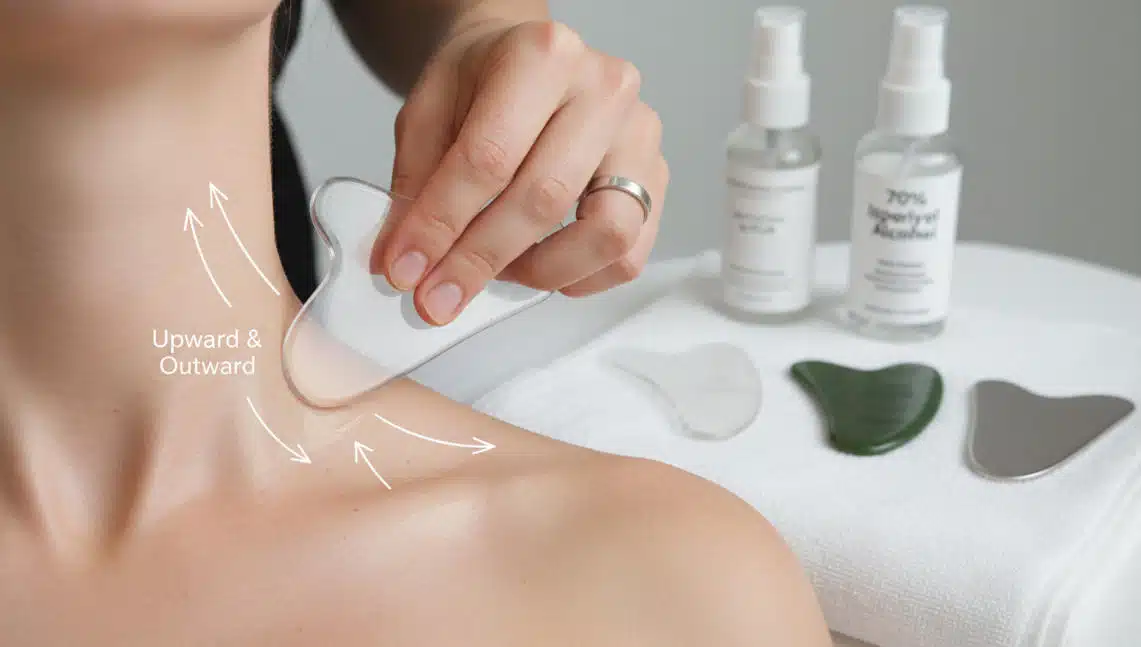
Stroke direction follows anatomical drainage pathways. For facial gua sha, strokes should move outward and upward from the midline of the face toward the hairline, jawline, and neck, following the direction of lymphatic flow toward the submandibular and cervical lymph nodes. Reversing this direction — stroking inward or downward — works against lymphatic drainage mechanics and reduces the depuffing and circulation benefits that are among the primary documented gua sha effects. According to guidance published by practitioners cited in the Journal of Traditional Chinese Medicine, maintaining consistent stroke direction along meridian pathways is among the most significant technique variables affecting treatment outcome, independent of the tool being used.
Pressure calibration is the technique variable most frequently miscalibrated by new users. Effective gua sha pressure is moderate and consistent — enough to create visible skin flushing (erythema) within three to five strokes, but not so heavy that the user is pressing the tool into subcutaneous tissue. A useful calibration benchmark: if the skin is blanching white immediately ahead of the tool edge during the stroke, pressure is excessive. If the skin shows no color change after five strokes with adequate lubricant, pressure is insufficient. For plastic tools, users often unconsciously increase pressure to compensate for the tool’s light weight, which can push technique into the excessive range. Being deliberate about pressure calibration is particularly important when working with lighter plastic tools for this reason. This means that anyone transitioning from a heavier jade or stainless steel tool to a plastic alternative should expect to relearn their pressure instincts rather than assuming the same hand feel translates across materials.
Gua Sha Safe Practice: The Pre-Session Checklist Every User and Practitioner Should Follow
Keeping your gua sha practice genuinely gua sha safe requires addressing three categories of risk: tool integrity, contraindication screening, and hygiene protocol. Each of these applies regardless of material, but some elements have specific relevance to plastic tools that warrant additional attention.
Tool integrity inspection should happen before every session. For jade gua sha and natural stone tools, this means checking the edge for chips or micro-fractures that could create sharp contact points against skin. For stainless steel gua sha tools, it means inspecting for surface scratches deep enough to create edge irregularities or harbor bacteria. For plastic tools, the inspection criteria are different but equally important: check for any warping or deformation of the tool geometry — particularly if the tool has been exposed to heat — and examine the edge for any cracking or brittleness that might indicate material degradation. A plastic tool that has been repeatedly exposed to warm water, UV light, or chemical cleaning agents may show surface crazing or micro-cracking that makes it unsuitable for skin contact. Any tool showing visible integrity compromise should be replaced immediately, regardless of material.
Contraindication screening is non-negotiable before any gua sha session. Active skin conditions — open wounds, active acne lesions, sunburned skin, active eczema or psoriasis flares, rosacea in active phase — are absolute contraindications for gua sha treatment in the affected area. Clients taking blood-thinning medications, those with bleeding disorders, and pregnant individuals (particularly for body gua sha protocols) require practitioner-level assessment before treatment. These contraindications apply identically across all tool materials. The American Massage Therapy Association and the Pacific College of Health and Science both document contraindication frameworks for gua sha practice that provide a clinically grounded reference for practitioners developing their screening protocols.
Hygiene protocol closes the safety loop. Gua sha tools make repeated contact with skin and must be cleaned between every use. For stainless steel gua sha tools, isopropyl alcohol (70%) or hospital-grade surface disinfectant provides full sanitization. For jade gua sha and natural stone tools, mild soap and warm water followed by air drying is appropriate — avoid harsh chemical disinfectants that can degrade stone polish over time. For plastic tools, cleaning protocol must be chosen with material compatibility in mind: avoid hot water above 60°C, avoid solvent-based cleaners, and avoid prolonged soaking. As noted in the limitations section, heat and chemical exposure accelerate degradation in plastic materials and may trigger release of stabilizer compounds — making the cleaning step a potential safety variable that does not exist for stone or metal tools.
A Full Plastic Gua Sha Effective vs. Premium Material Comparison: Side-by-Side Reference
The table below consolidates the key performance, safety, and commercial dimensions covered in this analysis into a single reference framework. It is designed to function as a sourcing decision tool — map your specific requirements against the criteria that matter most for your use case, and the appropriate material specification becomes self-evident.
| Evaluation Criteria | Plastic Gua Sha | Jade Gua Sha | Stainless Steel Gua Sha |
|---|---|---|---|
| Therapeutic Effectiveness | ~80% | ~90–95% | ~100% |
| Surface Glide Quality | Moderate (lubricant-dependent) | High | Very High |
| Natural Thermal Properties | None | Naturally cool | Bidirectional (hot/cold) |
| Chemical Safety Risk | Requires verification | Negligible | Negligible |
| Impact Resistance | Excellent | Low–Moderate | High |
| Wholesale Unit Cost | $1.00–$3.00 | $8.00–$25.00 | $4.00–$12.00 |
| Production Scalability | Very High | Low | Moderate |
| Dimensional Consistency | Very High | Moderate | High |
| Brand Positioning Fit | Entry-level / Volume | Mid–Premium | Mid–Premium |
| Thermal Therapy Compatible | No | Partial (cold only) | Yes (full range) |
| Third-Party Certification Required | Yes (chemical safety) | Recommended (authenticity) | Recommended (alloy grade) |
| Recommended Use Context | Market testing / Travel / Entry | Professional / Retail | Professional / Clinical |
This comparison makes the core conclusion of this analysis visible in a single view: plastic gua sha effective results are real and commercially valuable in the right context, but the material operates in a fundamentally different performance and positioning tier than jade or stainless steel. The gap is not a manufacturing quality problem that better plastic production can close — it is a material property gap that defines the category. Your sourcing decision should reflect which tier your business model, brand positioning, and customer expectations actually require. Choosing the wrong tier in either direction — over-specifying with premium materials for a price-sensitive market, or under-specifying with plastic for a premium brand — creates misalignment that costs more than the per-unit price difference suggests.
The appropriate material for your gua sha tool is the one whose performance ceiling matches the demands of your specific use case. In contexts where that ceiling is 80%, plastic is the right answer. In contexts where 80% is not enough, it is not — and no amount of favorable unit economics changes that fundamental calculus. This means the most important sourcing decision you will make in this category is not which supplier offers the best price, but which material tier honestly matches what your customers need and what your brand has committed to delivering.
Is Plastic Gua Sha Effective Enough for Your Needs?

The answer this analysis has built toward is not a simple yes or no — it is a calibrated framework that gives you the tools to answer that question for your own specific context. But if a direct summary is what you need, here it is: plastic gua sha effective results are real, reproducible, and commercially viable within a defined set of conditions. Outside those conditions, plastic is not just a lower-performing option — it is actively the wrong specification for the job. The difference between these two outcomes is not luck. It is whether your material selection matches your actual use case requirements.
Throughout this analysis, three conclusions have emerged with enough consistency to serve as reliable decision anchors. First, gua sha’s therapeutic mechanism is fundamentally technique-driven, and plastic tools can activate that mechanism at approximately 80% of the effectiveness ceiling that stainless steel achieves. That 80% is not a failure — it is a defined capability that serves specific user profiles and business models well. Second, the limitations of plastic — surface texture, absence of thermal properties, and chemical safety variability — are not engineering problems awaiting a better manufacturing solution. They are material properties intrinsic to polymer chemistry, and they define a ceiling that plastic cannot exceed regardless of production quality. Third, the safety dimension of plastic gua sha is not optional to address — it is the foundational compliance requirement that determines whether a plastic tool belongs in commerce at all. A plastic tool without verified third-party chemical safety documentation is not a cost-effective option. It is a liability.
Matching Plastic Gua Sha Effective Results to the Right Business Model
For individual consumers, the practical takeaway is straightforward. If you are new to gua sha, budget-conscious, or primarily using a tool for travel, a safety-certified plastic gua sha tool gives you genuine access to gua sha effects without the financial commitment of natural stone or stainless steel. Learn the technique, build the habit, and experience the results. When your practice develops to the point where you are working at the edges of what plastic can deliver — when you want better glide, thermal therapy options, or the tactile quality that comes with premium materials — that is the signal to graduate to jade gua sha or stainless steel gua sha. The plastic tool will have done its job: it brought you into the practice at a cost that made starting easy.
For B2B buyers and brand operators, the decision calculus is more structured. Plastic belongs in your catalog if you are serving entry-level consumer segments, testing price-sensitive geographic markets, or building a product tier specifically designed for volume and accessibility. It does not belong if your brand positioning communicates premium quality, natural materials, or clinical-grade performance — because the material contradiction between that positioning and a plastic tool will surface in customer experience and erode the brand equity you are investing in building. The unit cost savings of plastic relative to jade gua sha or stainless steel do not compensate for the brand coherence cost of the mismatch. In premium market segments, material selection is a brand statement, not just a procurement decision.
The Sourcing Standard That Makes Gua Sha Safe at Every Price Point
Regardless of which material you ultimately specify, the sourcing standard that keeps your product gua sha safe is consistent across categories. Third-party chemical safety testing is non-negotiable for plastic — and strongly recommended for natural stone tools where origin authenticity and treatment disclosure are relevant to your customer base. For jade gua sha tools specifically, authentication through a recognized gemological authority — the Gemological Institute of America (GIA) or the Swiss Gemmological Institute SSEF — protects your buyers from the widespread problem of dyed or polymer-treated stone being sold as natural jade, a misrepresentation that carries both regulatory and reputational risk.
For stainless steel gua sha tools, material grade certification — specifically confirming 304 or 316 surgical-grade stainless steel rather than lower-grade alloys that may contain elevated nickel or chromium levels — is the equivalent verification step. An SGS or Bureau Veritas material composition report for your stainless steel tool supplier gives you the documentation needed to make accurate marketing claims about your product’s safety profile and supports compliance with cosmetic tool regulations in EU, US, and Australian markets. According to SGS’s consumer product testing guidelines, material grade verification for metal tools in skin contact applications is increasingly expected by major retail buyers as a standard procurement requirement, not an optional enhancement.
The sourcing principle that unifies all three material categories is this: your customer’s skin is in direct, repeated contact with whatever tool you put in their hands. The cost of verifying that tool’s safety is a fraction of the cost of managing the consequences of not doing so. That equation does not change based on whether the tool costs $2.00 or $20.00.
Why Material Knowledge Gives You a Durable Competitive Advantage
The gua sha tool market is growing. According to market analysis published by Grand View Research, the global gua sha tools market is projected to expand significantly through the end of the decade, driven by rising consumer interest in at-home wellness practices and the mainstreaming of traditional Chinese medicine-inspired skincare routines in Western markets. That growth is attracting new entrants at every price tier — and most of them are competing on price alone, without the material knowledge needed to make defensible quality claims or build genuine brand differentiation.
Buyers and brands who understand the performance architecture of their tools — who can articulate precisely why are plastic gua sha effective tools appropriate for one segment and not another, why jade gua sha commands a price premium that reflects real material properties rather than marketing, and why stainless steel gua sha tools occupy a specific clinical and professional niche — are positioned to make sourcing decisions that hold up under customer scrutiny, regulatory review, and competitive pressure. That knowledge does not expire when market trends shift. It compounds.
Understanding how to use gua sha correctly, which materials support which therapeutic goals, and where safety compliance is non-negotiable gives you a sourcing and communication framework that most competitors in this space do not have. In a market where the majority of product differentiation is currently happening at the marketing layer rather than the material and performance layer, that knowledge is a genuine commercial advantage — not because it lets you charge more, but because it lets you deliver more and explain precisely why.
About Deyi Gems: 12+ Years of Gua Sha Tool Manufacturing at the Source
If your evaluation of gua sha tool materials has led you toward natural jade, quartz, or specialty stone options, Deyi Gems operates as a source-level manufacturer with over 12 years of documented experience in the design, fabrication, and quality control of jade and crystal gua sha tools. With direct access to raw material supply chains and in-house production capacity, the tools you source through Deyi Gems move from raw stone to finished, inspection-verified product without the markups and quality variability that multi-tier distribution introduces.
Every production batch can be supported with third-party material authentication and quality documentation — giving your procurement team, your retail buyers, and your end customers the verification they need to purchase with confidence. If you are building a product line where material integrity is part of your brand story, or if you are a distributor whose buyers require documented sourcing transparency, you can reach Deyi Gems directly to discuss specifications, minimum order quantities, and certification requirements. Your customers deserve tools that perform at the ceiling your brand has promised them — and that ceiling starts with the material your tools are made from.
FAQS
1. Plastic Gua Sha Safety?
Safety depends entirely on the specific tool and its verified material composition. Food-grade or medical-grade plastic formulations — when certified through third-party testing by accredited laboratories such as SGS or Intertek — are safe for skin contact. The risk category to avoid is unverified, brightly colored plastic tools that may contain regulated substances including phthalates, azo dyes, or heavy-metal stabilizers. Never purchase a plastic gua sha tool from a supplier who cannot provide a documented chemical safety report. Keeping your practice gua sha safe at any price point starts with that verification step.
2. Can Plastic Gua Sha be Used Like Stone Guasha?
Yes. A plastic gua sha effective outcome is achievable for core benefits including reduced facial puffiness, improved local circulation, and myofascial tension relief. Under identical technique conditions, plastic tools deliver approximately 80% of the therapeutic output that stainless steel achieves. For entry-level users and casual home practice, that 80% produces results that are genuinely visible and repeatable — provided correct technique and adequate lubrication are applied consistently.
3. How does plastic gua sha compare to jade gua sha or stainless steel gua sha?
The performance hierarchy is consistent across evaluation criteria. Stainless steel gua sha reaches approximately 100% of theoretical effectiveness, supported by high surface density, consistent pressure transfer, and full bidirectional thermal therapy capability. Jade gua sha performs at 90–95%, with the added advantage of natural coolness and the cultural material narrative that supports premium brand positioning. Plastic operates at roughly 80%, constrained by lighter weight, higher surface roughness, and the complete absence of thermal properties. For professional, clinical, or mid-to-premium retail contexts, jade and stainless steel are the appropriate specifications. For entry-level consumer markets and volume-driven distribution, plastic’s unit economics make it the practical choice.
4. Can plastic gua sha tools be used with hot or cold temperature therapy?
No — and attempting to do so introduces risk that does not exist with stone or metal tools. Unlike jade gua sha boards, which carry natural coolness, or stainless steel gua sha tools, which can be safely refrigerated or warmed for targeted thermal therapy, plastic tools are thermally inert and structurally vulnerable to temperature variation. Exposure to heat above approximately 60°C can cause physical deformation of the tool geometry, and repeated heat exposure may accelerate the leaching of chemical stabilizers from the polymer matrix. If temperature-based gua sha effects are part of your protocol, plastic is categorically the wrong material specification — regardless of its other attributes.