Gerry Ou

With over 10 years of experience in the gua sha industry, I possess a considerable understanding of the field. This includes in-depth knowledge of industry trends, product characteristics, and usage tutorials.

Amethyst Gua Sha Wholesale Price Higher

Why Amethyst Gua Sha Wholesale Price Higher Than Other Quartz Guasha?

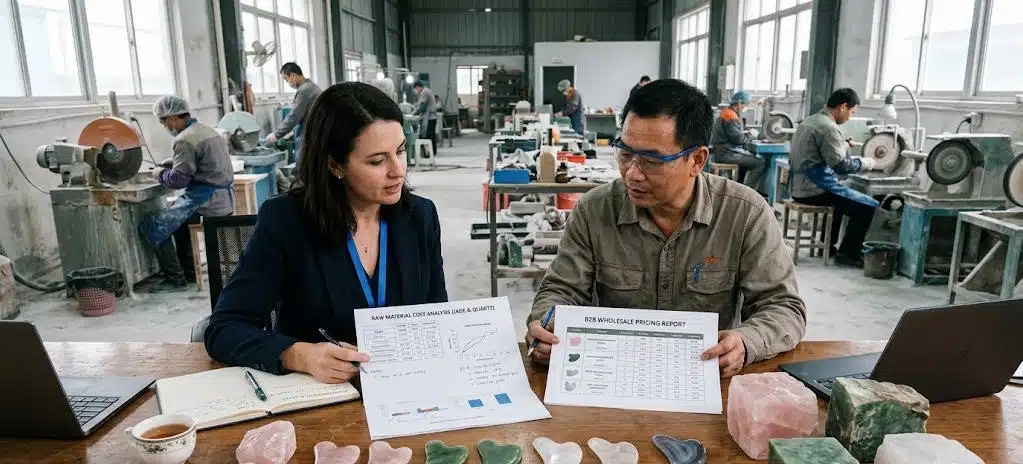
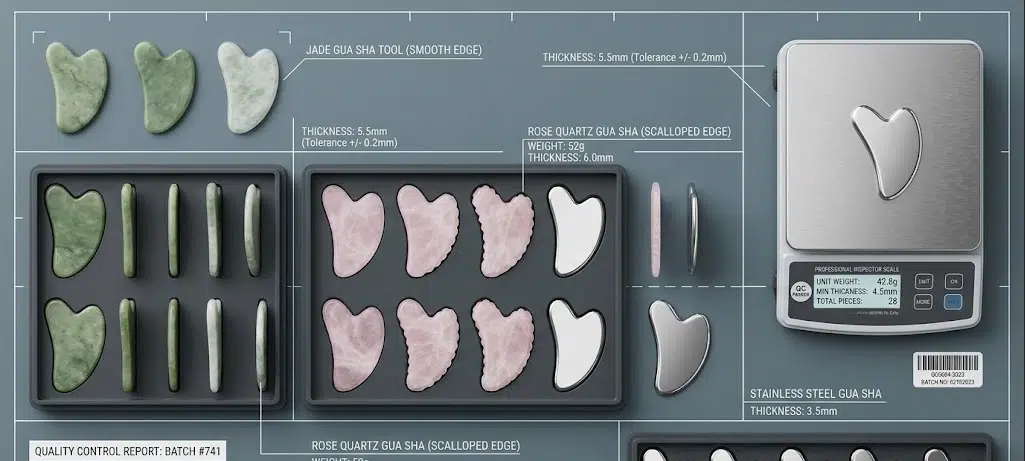
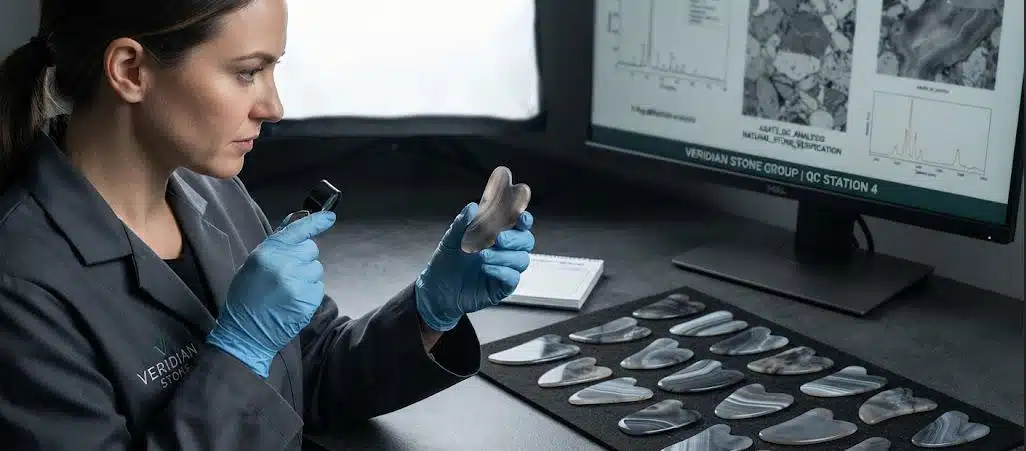
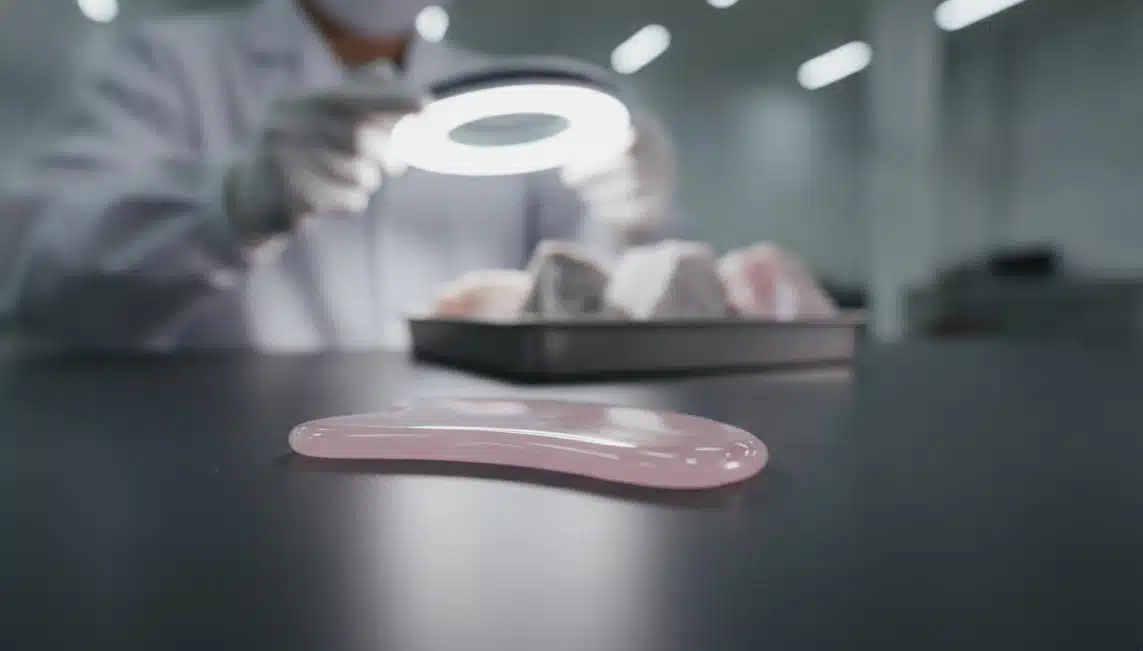
In the fast-growing beauty and wellness industry, natural stone tools continue to gain popularity among global distributors and skincare brands. As a source manufacturer under the Deyi Gems brand, we are frequently asked why amethyst gua sha wholesale prices are consistently higher than other quartz gua sha tools. At first glance, amethyst and rose quartz both belong to the quartz family, so buyers often expect similar production costs. However, once we examine the manufacturing process from mining to final polishing, clear structural differences begin to appear. From a gua sha wholesale manufacturing perspective, pricing is influenced by raw material availability, processing difficulty, yield efficiency, labor intensity, and long-term production risk. These factors originate at the earliest stage of sourcing raw stone and continue throughout the manufacturing chain. In other words, the wholesale price is not only about color or branding but about real technical and operational costs. In this article, Deyi Gems shares a comprehensive manufacturer-level analysis explaining why amethyst gua sha tools command higher wholesale prices. The discussion uses clear, easy English while providing deeper technical insight, measurable production standards, and third-party industry references. Readers who want additional geological context may explore the Gemological Institute of America’s introduction to amethyst formation:https://www.gia.edu/amethyst-descriptionAdditional mineral background can also be found at Geology.com:https://geology.com/minerals/quartz.shtml The Role of Raw Material Cost in Gua Sha Wholesale Pricing Limited Supply of High-Quality Amethyst Raw Stone Although amethyst is classified as quartz, suitable raw material for gua sha manufacturing is far more limited than many buyers realize. Manufacturers require stones with structural stability, low fracture density, and enough surface area to produce ergonomic tools safely. However, most amethyst forms inside geodes rather than large solid slabs, which limits usable material size and increases sourcing difficulty. In typical procurement cycles, only about 25%–40% of mined amethyst clusters meet the structural requirements necessary for facial gua sha tools. Stones are evaluated using polarized light inspection to detect internal stress fractures, and pieces lacking sufficient continuous surface length are rejected. This selective sourcing increases raw material competition and raises baseline gua sha wholesale costs before production even begins. Detailed mineral formation explanations are available through Mindat’s mineral database:https://www.mindat.org/min-198.html Higher Market Demand Driving Up Purchase Prices Amethyst holds strong recognition in both the jewelry and wellness markets. Global demand for visually attractive purple gemstones often exceeds supply, especially during periods of high consumer interest in natural beauty tools. As a result, raw stone purchase prices fluctuate more than common quartz materials like rose quartz. From a gua sha wholesale manufacturing viewpoint, this demand pressure directly affects production planning. Manufacturers must secure raw materials months in advance to stabilize supply, which increases financial risk and contributes to higher wholesale pricing structures. Raw Material Size Limitations and Their Impact on Manufacturing Small Crystal Structure Reduces Usable Production Volume Unlike large quartz slabs that can be cut efficiently into multiple tools, amethyst crystals frequently grow in irregular clusters. Even stones that appear large may contain internal cavities or uneven growth layers that limit usable cutting space. Manufacturers must carefully inspect each piece and design custom cutting layouts based on available geometry. Because of these limitations, production efficiency drops significantly. A single rose quartz slab may produce dozens of gua sha tools, while a similarly sized amethyst cluster may produce only a few finished units. This reduction in output increases the cost per finished tool in the gua sha wholesale supply chain. Strict Selection Standards for Beauty Tool Safety Safety is critical in facial skincare tools. Manufacturers must avoid stones with hidden fractures that could break during use. Therefore, only the most stable sections of each amethyst cluster are used for gua sha production, while smaller fragments are redirected into jewelry or accessory components. This strict selection reduces overall material utilization rates. While other quartz materials may achieve high conversion efficiency, amethyst manufacturing involves more material rejection, which increases the final wholesale price. High Material Waste Rates During Production Limited Cutting Space Leads to Greater Loss One of the most significant factors affecting gua sha wholesale pricing is the amount of material lost during cutting. Because amethyst clusters often have uneven shapes, technicians cannot arrange optimized cutting patterns. Consequently, more stone is removed during trimming and shaping processes. Typical stone fabrication guidelines discussed by the Natural Stone Institute explain how irregular geometry increases material waste and reduces production efficiency:https://www.naturalstoneinstitute.org From a manufacturing perspective, each discarded fragment represents both lost material and lost labor time. This waste ratio is significantly higher for amethyst compared to many other quartz varieties. Internal Fractures Increase Breakage Risk Amethyst’s crystal structure contains natural cleavage planes that make it more prone to cracking during mechanical processing. Hidden fractures may not appear until grinding or polishing begins, at which point partially finished tools may break and become unusable. Material science resources such as ScienceDirect provide technical discussions on quartz fracture behavior and stress responses:https://www.sciencedirect.com/topics/materials-science/quartz Higher breakage rates directly reduce production yield. As a result, successful gua sha wholesale units must absorb a greater share of the overall production cost. Manufacturing Expertise and Measurable Production Standards Material Grading Protocols Used by Source Manufacturers At Deyi Gems, incoming amethyst stones are sorted into structured grading levels based on fracture density, color uniformity, and workable surface area rather than appearance alone. Stones must provide at least 60 mm of continuous usable surface length and demonstrate minimal internal stress lines during polarized light inspection. Only about 35%–50% of incoming material typically progresses into full gua sha production batches. Lower-grade stones are redirected into smaller accessories, ensuring responsible resource usage while maintaining high product safety standards. Gemstone testing frameworks described by the Gemological Institute of America provide reference methods for structural evaluation:https://www.gia.edu/gem-testing-lab Realistic Production Yield Ranges Compared to Other Quartz Standard rose quartz slabs may achieve finished product yields of approximately 65%–75% after cutting and polishing. In contrast, amethyst clusters generally achieve only 35%–50% yield because of irregular geometry and higher fracture risk. Lower yield significantly affects gua sha wholesale pricing. Since fewer finished units are produced

Why Amethyst Gua Sha Wholesale Price Higher Than Other Quartz Guasha? Read More »

In the fast-growing beauty and wellness industry, natural stone tools continue to gain popularity among global distributors and skincare brands. As a source manufacturer under the Deyi Gems brand, we are frequently asked why amethyst gua sha wholesale prices are consistently higher than other quartz gua sha tools. At first glance, amethyst and rose quartz both belong to the quartz family, so buyers often expect similar production costs. However, once we examine the manufacturing process from mining to final polishing, clear structural differences begin to appear. From a gua sha wholesale manufacturing perspective, pricing is influenced by raw material availability, processing difficulty, yield efficiency, labor intensity, and long-term production risk. These factors originate at the earliest stage of sourcing raw stone and continue throughout the manufacturing chain. In other words, the wholesale price is not only about color or branding but about real technical and operational costs. In this article, Deyi Gems shares a comprehensive manufacturer-level analysis explaining why amethyst gua sha tools command higher wholesale prices. The discussion uses clear, easy English while providing deeper technical insight, measurable production standards, and third-party industry references. Readers who want additional geological context may explore the Gemological Institute of America’s introduction to amethyst formation:https://www.gia.edu/amethyst-descriptionAdditional mineral background can also be found at Geology.com:https://geology.com/minerals/quartz.shtml The Role of Raw Material Cost in Gua Sha Wholesale Pricing Limited Supply of High-Quality Amethyst Raw Stone Although amethyst is classified as quartz, suitable raw material for gua sha manufacturing is far more limited than many buyers realize. Manufacturers require stones with structural stability, low fracture density, and enough surface area to produce ergonomic tools safely. However, most amethyst forms inside geodes rather than large solid slabs, which limits usable material size and increases sourcing difficulty. In typical procurement cycles, only about 25%–40% of mined amethyst clusters meet the structural requirements necessary for facial gua sha tools. Stones are evaluated using polarized light inspection to detect internal stress fractures, and pieces lacking sufficient continuous surface length are rejected. This selective sourcing increases raw material competition and raises baseline gua sha wholesale costs before production even begins. Detailed mineral formation explanations are available through Mindat’s mineral database:https://www.mindat.org/min-198.html Higher Market Demand Driving Up Purchase Prices Amethyst holds strong recognition in both the jewelry and wellness markets. Global demand for visually attractive purple gemstones often exceeds supply, especially during periods of high consumer interest in natural beauty tools. As a result, raw stone purchase prices fluctuate more than common quartz materials like rose quartz. From a gua sha wholesale manufacturing viewpoint, this demand pressure directly affects production planning. Manufacturers must secure raw materials months in advance to stabilize supply, which increases financial risk and contributes to higher wholesale pricing structures. Raw Material Size Limitations and Their Impact on Manufacturing Small Crystal Structure Reduces Usable Production Volume Unlike large quartz slabs that can be cut efficiently into multiple tools, amethyst crystals frequently grow in irregular clusters. Even stones that appear large may contain internal cavities or uneven growth layers that limit usable cutting space. Manufacturers must carefully inspect each piece and design custom cutting layouts based on available geometry. Because of these limitations, production efficiency drops significantly. A single rose quartz slab may produce dozens of gua sha tools, while a similarly sized amethyst cluster may produce only a few finished units. This reduction in output increases the cost per finished tool in the gua sha wholesale supply chain. Strict Selection Standards for Beauty Tool Safety Safety is critical in facial skincare tools. Manufacturers must avoid stones with hidden fractures that could break during use. Therefore, only the most stable sections of each amethyst cluster are used for gua sha production, while smaller fragments are redirected into jewelry or accessory components. This strict selection reduces overall material utilization rates. While other quartz materials may achieve high conversion efficiency, amethyst manufacturing involves more material rejection, which increases the final wholesale price. High Material Waste Rates During Production Limited Cutting Space Leads to Greater Loss One of the most significant factors affecting gua sha wholesale pricing is the amount of material lost during cutting. Because amethyst clusters often have uneven shapes, technicians cannot arrange optimized cutting patterns. Consequently, more stone is removed during trimming and shaping processes. Typical stone fabrication guidelines discussed by the Natural Stone Institute explain how irregular geometry increases material waste and reduces production efficiency:https://www.naturalstoneinstitute.org From a manufacturing perspective, each discarded fragment represents both lost material and lost labor time. This waste ratio is significantly higher for amethyst compared to many other quartz varieties. Internal Fractures Increase Breakage Risk Amethyst’s crystal structure contains natural cleavage planes that make it more prone to cracking during mechanical processing. Hidden fractures may not appear until grinding or polishing begins, at which point partially finished tools may break and become unusable. Material science resources such as ScienceDirect provide technical discussions on quartz fracture behavior and stress responses:https://www.sciencedirect.com/topics/materials-science/quartz Higher breakage rates directly reduce production yield. As a result, successful gua sha wholesale units must absorb a greater share of the overall production cost. Manufacturing Expertise and Measurable Production Standards Material Grading Protocols Used by Source Manufacturers At Deyi Gems, incoming amethyst stones are sorted into structured grading levels based on fracture density, color uniformity, and workable surface area rather than appearance alone. Stones must provide at least 60 mm of continuous usable surface length and demonstrate minimal internal stress lines during polarized light inspection. Only about 35%–50% of incoming material typically progresses into full gua sha production batches. Lower-grade stones are redirected into smaller accessories, ensuring responsible resource usage while maintaining high product safety standards. Gemstone testing frameworks described by the Gemological Institute of America provide reference methods for structural evaluation:https://www.gia.edu/gem-testing-lab Realistic Production Yield Ranges Compared to Other Quartz Standard rose quartz slabs may achieve finished product yields of approximately 65%–75% after cutting and polishing. In contrast, amethyst clusters generally achieve only 35%–50% yield because of irregular geometry and higher fracture risk. Lower yield significantly affects gua sha wholesale pricing. Since fewer finished units are produced

gua sha too much

Why Shouldn’t Body Gua Sha Too Much? – Potential Dangers of Gua Sha

Body gua sha has become increasingly popular in the global wellness and beauty industry. From spa therapy rooms to home self-care routines, people use scraping tools to improve circulation, relax muscles, and promote overall skin vitality. However, as interest grows, one major problem has also become more common: many users are simply doing gua sha too much. More pressure and more frequent sessions do not always lead to better results. In fact, overuse may stress the skin barrier, irritate connective tissues, and slow natural recovery. At Deyi Gems and guashawholesale.com, feedback from estheticians, therapists, and wholesale clients shows that beginners often misunderstand how gua sha works. Many believe visible redness or daily scraping equals effectiveness, even though traditional practice emphasizes moderation and body awareness. This guide explains the science, risks, warning signs, and practical safety strategies related to excessive body gua sha. It also integrates dermatology research, complementary medicine guidelines, and real-world professional observations. Authoritative educational sources such as the American Academy of Dermatology (https://www.aad.org), the National Center for Complementary and Integrative Health (https://www.nccih.nih.gov), DermNet NZ (https://dermnetnz.org), and the World Health Organization (https://www.who.int) are included to improve transparency and credibility. What Does “Gua Sha Too Much” Actually Mean? Too Much Frequency vs. Too Much Pressure Many beginners think that daily scraping will speed up body shaping or muscle recovery. However, skin and fascia need time to repair after mechanical stimulation. Performing body gua sha every day on the same area is often considered excessive for most people. Too much pressure is another common issue. Some users intentionally try to create heavy bruising or intense petechiae. While temporary redness can occur during treatment, repeated aggressive scraping increases inflammation instead of supporting healthy circulation. Understanding Tissue Recovery Time The skin barrier, also called the stratum corneum, protects the body from dehydration and external irritants. Dermatology education from the American Academy of Dermatology explains that repeated mechanical friction can weaken this barrier and increase transepidermal water loss. When gua sha sessions occur too frequently, the skin may not recover fully before the next session begins. Muscles and fascia respond similarly to overtraining. Gentle stimulation may support flexibility, but repeated scraping without rest can lead to soreness, tightness, or chronic irritation. Industry Perspective from Professional Practitioners Professional therapists usually space body gua sha sessions several days apart. Traditional practice focuses on observing the client’s recovery rather than following a rigid schedule. However, social media tutorials sometimes encourage daily routines, which can lead to the pattern known as “gua sha too much.” The Science Behind Overuse: How the Body Reacts to Excessive Gua Sha Skin Barrier Disruption and Microtrauma Dermatology research has shown that repeated friction may weaken the lipid structure of the outer skin layer. A well-known study by Fluhr JW et al. published in the British Journal of Dermatology (2001) demonstrated that mechanical stress increases transepidermal water loss, indicating barrier damage. When gua sha is repeated too often, micro-injuries may accumulate faster than the body can repair them. Instead of smoother skin, users may notice dryness, rough texture, or sensitivity. Inflammatory Response and Capillary Stress Gua sha intentionally increases microcirculation, but excessive sessions may overstimulate inflammatory pathways. Research discussed in dermatology literature such as the Journal of Investigative Dermatology highlights how repeated mechanical stress can lead to prolonged redness and vascular sensitivity. Capillaries are delicate structures. Over-scraping may cause bruising or broken vessels. Occasional redness is normal, but persistent discoloration indicates that sessions may be too frequent or too aggressive. Nervous System Fatigue and Sensory Overload Body gua sha also stimulates nerve endings. Gentle scraping may promote relaxation, but excessive pressure can irritate sensory nerves. Some users report burning sensations or heightened sensitivity when they perform gua sha too much. From a nervous system perspective, repeated strong stimulation may be interpreted as stress instead of therapy, reducing the calming effect that gua sha is meant to provide. Potential Dangers of Doing Body Gua Sha Too Much Skin Irritation and Long-Term Sensitivity Chronic irritation is one of the most common outcomes of excessive scraping. Repeated disruption of the skin barrier may lead to dryness, itching, and prolonged redness. DermNet NZ provides educational materials explaining how friction contributes to barrier damage and irritation (https://dermnetnz.org/topics/frictional-dermatitis). Over time, sensitive skin may become reactive even to gentle skincare products because protective lipids have been weakened. Bruising, Hyperpigmentation, and Vascular Damage Aggressive scraping increases the risk of bruising and small blood vessel damage. Individuals with darker skin tones may develop post-inflammatory hyperpigmentation that lasts weeks or months. This effect often surprises beginners who expect immediate cosmetic improvement. Consistent bruising is not a sign of effective treatment. Instead, it is usually a sign that the body is being pushed beyond its tolerance level. Muscle Strain and Fascia Irritation Gua sha is commonly used for muscle relaxation. However, daily intense sessions may cause soreness similar to overtraining. Fascia responds best to gradual and gentle stretching. Excessive scraping may increase stiffness instead of reducing tension. Athletes who use gua sha for recovery should especially avoid aggressive daily routines, as these may interfere with natural muscle repair cycles. Increased Risk of Infection Damaged skin is more vulnerable to bacteria. Small microtears created by repeated scraping may increase infection risk, especially when tools are not cleaned properly. Safety guidance from the National Center for Complementary and Integrative Health emphasizes hygiene and moderation in traditional therapies (https://www.nccih.nih.gov). Warning Signs That You May Be Doing Gua Sha Too Much Persistent Redness Beyond Normal Recovery Temporary redness is expected, but it should gradually fade within one to two days. Redness lasting several days suggests excessive stimulation. Pain Instead of Gentle Discomfort Gua sha should feel firm yet tolerable. Sharp pain, burning sensations, or nerve-like tingling indicate that tissues may be overstressed. Skin Barrier Symptoms Peeling, dryness, acne flare-ups, or product sensitivity may indicate barrier damage. If these symptoms appear after frequent scraping sessions, reducing frequency is often the first step toward recovery. Clinical and Scientific Foundations Supporting Gua Sha Safety Guidelines Systematic Reviews on Scraping Therapy

Why Shouldn’t Body Gua Sha Too Much? – Potential Dangers of Gua Sha Read More »

Body gua sha has become increasingly popular in the global wellness and beauty industry. From spa therapy rooms to home self-care routines, people use scraping tools to improve circulation, relax muscles, and promote overall skin vitality. However, as interest grows, one major problem has also become more common: many users are simply doing gua sha too much. More pressure and more frequent sessions do not always lead to better results. In fact, overuse may stress the skin barrier, irritate connective tissues, and slow natural recovery. At Deyi Gems and guashawholesale.com, feedback from estheticians, therapists, and wholesale clients shows that beginners often misunderstand how gua sha works. Many believe visible redness or daily scraping equals effectiveness, even though traditional practice emphasizes moderation and body awareness. This guide explains the science, risks, warning signs, and practical safety strategies related to excessive body gua sha. It also integrates dermatology research, complementary medicine guidelines, and real-world professional observations. Authoritative educational sources such as the American Academy of Dermatology (https://www.aad.org), the National Center for Complementary and Integrative Health (https://www.nccih.nih.gov), DermNet NZ (https://dermnetnz.org), and the World Health Organization (https://www.who.int) are included to improve transparency and credibility. What Does “Gua Sha Too Much” Actually Mean? Too Much Frequency vs. Too Much Pressure Many beginners think that daily scraping will speed up body shaping or muscle recovery. However, skin and fascia need time to repair after mechanical stimulation. Performing body gua sha every day on the same area is often considered excessive for most people. Too much pressure is another common issue. Some users intentionally try to create heavy bruising or intense petechiae. While temporary redness can occur during treatment, repeated aggressive scraping increases inflammation instead of supporting healthy circulation. Understanding Tissue Recovery Time The skin barrier, also called the stratum corneum, protects the body from dehydration and external irritants. Dermatology education from the American Academy of Dermatology explains that repeated mechanical friction can weaken this barrier and increase transepidermal water loss. When gua sha sessions occur too frequently, the skin may not recover fully before the next session begins. Muscles and fascia respond similarly to overtraining. Gentle stimulation may support flexibility, but repeated scraping without rest can lead to soreness, tightness, or chronic irritation. Industry Perspective from Professional Practitioners Professional therapists usually space body gua sha sessions several days apart. Traditional practice focuses on observing the client’s recovery rather than following a rigid schedule. However, social media tutorials sometimes encourage daily routines, which can lead to the pattern known as “gua sha too much.” The Science Behind Overuse: How the Body Reacts to Excessive Gua Sha Skin Barrier Disruption and Microtrauma Dermatology research has shown that repeated friction may weaken the lipid structure of the outer skin layer. A well-known study by Fluhr JW et al. published in the British Journal of Dermatology (2001) demonstrated that mechanical stress increases transepidermal water loss, indicating barrier damage. When gua sha is repeated too often, micro-injuries may accumulate faster than the body can repair them. Instead of smoother skin, users may notice dryness, rough texture, or sensitivity. Inflammatory Response and Capillary Stress Gua sha intentionally increases microcirculation, but excessive sessions may overstimulate inflammatory pathways. Research discussed in dermatology literature such as the Journal of Investigative Dermatology highlights how repeated mechanical stress can lead to prolonged redness and vascular sensitivity. Capillaries are delicate structures. Over-scraping may cause bruising or broken vessels. Occasional redness is normal, but persistent discoloration indicates that sessions may be too frequent or too aggressive. Nervous System Fatigue and Sensory Overload Body gua sha also stimulates nerve endings. Gentle scraping may promote relaxation, but excessive pressure can irritate sensory nerves. Some users report burning sensations or heightened sensitivity when they perform gua sha too much. From a nervous system perspective, repeated strong stimulation may be interpreted as stress instead of therapy, reducing the calming effect that gua sha is meant to provide. Potential Dangers of Doing Body Gua Sha Too Much Skin Irritation and Long-Term Sensitivity Chronic irritation is one of the most common outcomes of excessive scraping. Repeated disruption of the skin barrier may lead to dryness, itching, and prolonged redness. DermNet NZ provides educational materials explaining how friction contributes to barrier damage and irritation (https://dermnetnz.org/topics/frictional-dermatitis). Over time, sensitive skin may become reactive even to gentle skincare products because protective lipids have been weakened. Bruising, Hyperpigmentation, and Vascular Damage Aggressive scraping increases the risk of bruising and small blood vessel damage. Individuals with darker skin tones may develop post-inflammatory hyperpigmentation that lasts weeks or months. This effect often surprises beginners who expect immediate cosmetic improvement. Consistent bruising is not a sign of effective treatment. Instead, it is usually a sign that the body is being pushed beyond its tolerance level. Muscle Strain and Fascia Irritation Gua sha is commonly used for muscle relaxation. However, daily intense sessions may cause soreness similar to overtraining. Fascia responds best to gradual and gentle stretching. Excessive scraping may increase stiffness instead of reducing tension. Athletes who use gua sha for recovery should especially avoid aggressive daily routines, as these may interfere with natural muscle repair cycles. Increased Risk of Infection Damaged skin is more vulnerable to bacteria. Small microtears created by repeated scraping may increase infection risk, especially when tools are not cleaned properly. Safety guidance from the National Center for Complementary and Integrative Health emphasizes hygiene and moderation in traditional therapies (https://www.nccih.nih.gov). Warning Signs That You May Be Doing Gua Sha Too Much Persistent Redness Beyond Normal Recovery Temporary redness is expected, but it should gradually fade within one to two days. Redness lasting several days suggests excessive stimulation. Pain Instead of Gentle Discomfort Gua sha should feel firm yet tolerable. Sharp pain, burning sensations, or nerve-like tingling indicate that tissues may be overstressed. Skin Barrier Symptoms Peeling, dryness, acne flare-ups, or product sensitivity may indicate barrier damage. If these symptoms appear after frequent scraping sessions, reducing frequency is often the first step toward recovery. Clinical and Scientific Foundations Supporting Gua Sha Safety Guidelines Systematic Reviews on Scraping Therapy

How to Use Gua Sha Body Safety

How to Use Gua Sha Body Safety? – Gua Sha Analysis

The global popularity of gua sha body practices has grown rapidly over the past decade. Once limited mainly to clinical or household use within East Asian traditions, body gua sha is now widely adopted in spas, wellness centers, and personal self-care routines worldwide. However, as accessibility increases, so does the risk of misunderstanding how this technique should be applied safely. Unlike facial gua sha, body gua sha involves thicker skin, deeper connective tissue, and larger muscle groups. The margin between therapeutic stimulation and tissue overload is therefore narrower. In real-world usage, many adverse reactions do not stem from the technique itself, but from excessive pressure, poor tool design, or a lack of understanding of skin and tissue limits. This article focuses on gua sha body safety from a practical, experience-informed, and evidence-aware perspective. Drawing on long-term manufacturing experience, professional user feedback, and cautious reference to established research and guidelines, the goal is not to promote aggressive results, but to support responsible, sustainable use. What Is Gua Sha Body? A Modern Safety-Focused Definition Gua Sha Body as Mechanical Skin Stimulation At its core, gua sha body is a form of controlled mechanical stimulation applied to the skin using a smooth-edged tool. The strokes are typically unidirectional and performed with moderate pressure, assisted by oil or lotion to reduce friction. From a modern physiological perspective, gua sha body affects: It is important to recognize that these effects arise from mechanical interaction, not from forceful scraping or tissue damage. Why Body Gua Sha Requires Higher Safety Awareness Than Facial Gua Sha Body skin is structurally different from facial skin. While it is generally thicker, it also contains denser capillary networks in certain areas and is more prone to deep bruising when overloaded. Additionally, body gua sha sessions tend to be longer and involve repeated strokes over the same region. In manufacturing-side feedback collected from spa professionals, body gua sha–related discomfort complaints are significantly more often associated with overuse and pressure misjudgment than with material defects. This highlights why safety education is essential. Skin Barrier Function, TEWL, and Why Pressure Control Matters Understanding the Skin Barrier in Gua Sha Body Practice The skin barrier serves as the body’s first line of defense against dehydration, irritation, and microbial invasion. Mechanical stimulation, including scraping or massage, temporarily alters barrier function. Research published in the British Journal of Dermatology has shown that repeated mechanical stress can increase transepidermal water loss (TEWL), indicating a transient weakening of the skin barrier (Fluhr et al., 2001). While this change is usually reversible, excessive or repeated stress without recovery time may lead to prolonged sensitivity. Practical Implications for Gua Sha Body Safety In body gua sha practice, pressure should always remain within a range that produces warmth or mild redness, but not sharp pain or deep discoloration. Persistent soreness or delayed tenderness often indicates barrier overload rather than therapeutic benefit. From a safety standpoint, lighter pressure applied consistently is more effective than intense pressure applied sporadically. Selecting Safe Gua Sha Tools for Body Use Material Safety: Why Surface Quality Is Critical Tool material plays a central role in gua sha body safety. Natural stone tools such as jade, rose quartz, or obsidian are widely used due to their density, thermal stability, and ability to be polished to a high surface smoothness. During manufacturing quality audits, micro-surface irregularities are one of the most common hidden causes of skin discomfort. Even when a tool appears smooth to the naked eye, microscopic edge defects can increase friction and irritation during repeated strokes. International manufacturing standards such as ISO guidelines on surface finish emphasize that tools intended for skin contact should minimize micro-abrasive risk. This principle applies directly to gua sha body tools. Tool Shape and Edge Geometry For body gua sha, edge geometry often matters more than material. Broader curves and rounded edges distribute pressure across a wider contact area, reducing localized capillary stress. Feedback from professional users consistently shows that thin or sharply contoured edges generate stronger sensations but also correlate with higher reports of bruising and discomfort. From a safety perspective, comfort is not weakness—it is an indicator of controlled force distribution. Preparing the Body for a Safe Gua Sha Session Assessing Skin Condition Before Use Before performing gua sha body techniques, the skin should be free from: The American Academy of Dermatology advises avoiding mechanical stimulation on compromised skin, as barrier disruption can worsen inflammation and delay healing. Ignoring pre-existing skin conditions is one of the most avoidable causes of adverse reactions in home gua sha practice. Lubrication and Friction Reduction Adequate lubrication is essential for safety. Oils reduce shear force between the tool and skin, lowering the risk of barrier disruption. In professional settings, insufficient oil application is one of the most common contributors to bruising complaints. From a practical standpoint, it is almost impossible to use too much oil, but very easy to use too little. Safe Gua Sha Body Techniques: Pressure, Direction, and Timing Stroke Direction and Consistency Modern gua sha body practice typically favors long, consistent strokes rather than short, repetitive scraping. While traditional descriptions reference meridian pathways, safety depends less on exact direction and more on consistency and control. Abrupt back-and-forth movements increase friction and tissue stress. In contrast, steady unidirectional strokes allow the skin to adapt gradually. Pressure Regulation Based on Tissue Feedback Pressure should always be guided by tissue response rather than visual appearance. Mild warmth, relaxation, or a sense of release are appropriate indicators. Sharp pain, numbness, or intense discoloration are warning signs. Microcirculation research published in the Journal of Investigative Dermatology indicates that increased blood flow can be achieved without capillary rupture (Stücker et al., 2002). Therefore, visible bruising is not a requirement for effectiveness. Session Duration and Frequency For most body areas, five to ten minutes per session is sufficient. Overworking a single area increases cumulative tissue stress without proportional benefit. As a general safety guideline: Daily intensive scraping increases the risk of delayed soreness and inflammation. Common Safety Mistakes

How to Use Gua Sha Body Safety? – Gua Sha Analysis Read More »

The global popularity of gua sha body practices has grown rapidly over the past decade. Once limited mainly to clinical or household use within East Asian traditions, body gua sha is now widely adopted in spas, wellness centers, and personal self-care routines worldwide. However, as accessibility increases, so does the risk of misunderstanding how this technique should be applied safely. Unlike facial gua sha, body gua sha involves thicker skin, deeper connective tissue, and larger muscle groups. The margin between therapeutic stimulation and tissue overload is therefore narrower. In real-world usage, many adverse reactions do not stem from the technique itself, but from excessive pressure, poor tool design, or a lack of understanding of skin and tissue limits. This article focuses on gua sha body safety from a practical, experience-informed, and evidence-aware perspective. Drawing on long-term manufacturing experience, professional user feedback, and cautious reference to established research and guidelines, the goal is not to promote aggressive results, but to support responsible, sustainable use. What Is Gua Sha Body? A Modern Safety-Focused Definition Gua Sha Body as Mechanical Skin Stimulation At its core, gua sha body is a form of controlled mechanical stimulation applied to the skin using a smooth-edged tool. The strokes are typically unidirectional and performed with moderate pressure, assisted by oil or lotion to reduce friction. From a modern physiological perspective, gua sha body affects: It is important to recognize that these effects arise from mechanical interaction, not from forceful scraping or tissue damage. Why Body Gua Sha Requires Higher Safety Awareness Than Facial Gua Sha Body skin is structurally different from facial skin. While it is generally thicker, it also contains denser capillary networks in certain areas and is more prone to deep bruising when overloaded. Additionally, body gua sha sessions tend to be longer and involve repeated strokes over the same region. In manufacturing-side feedback collected from spa professionals, body gua sha–related discomfort complaints are significantly more often associated with overuse and pressure misjudgment than with material defects. This highlights why safety education is essential. Skin Barrier Function, TEWL, and Why Pressure Control Matters Understanding the Skin Barrier in Gua Sha Body Practice The skin barrier serves as the body’s first line of defense against dehydration, irritation, and microbial invasion. Mechanical stimulation, including scraping or massage, temporarily alters barrier function. Research published in the British Journal of Dermatology has shown that repeated mechanical stress can increase transepidermal water loss (TEWL), indicating a transient weakening of the skin barrier (Fluhr et al., 2001). While this change is usually reversible, excessive or repeated stress without recovery time may lead to prolonged sensitivity. Practical Implications for Gua Sha Body Safety In body gua sha practice, pressure should always remain within a range that produces warmth or mild redness, but not sharp pain or deep discoloration. Persistent soreness or delayed tenderness often indicates barrier overload rather than therapeutic benefit. From a safety standpoint, lighter pressure applied consistently is more effective than intense pressure applied sporadically. Selecting Safe Gua Sha Tools for Body Use Material Safety: Why Surface Quality Is Critical Tool material plays a central role in gua sha body safety. Natural stone tools such as jade, rose quartz, or obsidian are widely used due to their density, thermal stability, and ability to be polished to a high surface smoothness. During manufacturing quality audits, micro-surface irregularities are one of the most common hidden causes of skin discomfort. Even when a tool appears smooth to the naked eye, microscopic edge defects can increase friction and irritation during repeated strokes. International manufacturing standards such as ISO guidelines on surface finish emphasize that tools intended for skin contact should minimize micro-abrasive risk. This principle applies directly to gua sha body tools. Tool Shape and Edge Geometry For body gua sha, edge geometry often matters more than material. Broader curves and rounded edges distribute pressure across a wider contact area, reducing localized capillary stress. Feedback from professional users consistently shows that thin or sharply contoured edges generate stronger sensations but also correlate with higher reports of bruising and discomfort. From a safety perspective, comfort is not weakness—it is an indicator of controlled force distribution. Preparing the Body for a Safe Gua Sha Session Assessing Skin Condition Before Use Before performing gua sha body techniques, the skin should be free from: The American Academy of Dermatology advises avoiding mechanical stimulation on compromised skin, as barrier disruption can worsen inflammation and delay healing. Ignoring pre-existing skin conditions is one of the most avoidable causes of adverse reactions in home gua sha practice. Lubrication and Friction Reduction Adequate lubrication is essential for safety. Oils reduce shear force between the tool and skin, lowering the risk of barrier disruption. In professional settings, insufficient oil application is one of the most common contributors to bruising complaints. From a practical standpoint, it is almost impossible to use too much oil, but very easy to use too little. Safe Gua Sha Body Techniques: Pressure, Direction, and Timing Stroke Direction and Consistency Modern gua sha body practice typically favors long, consistent strokes rather than short, repetitive scraping. While traditional descriptions reference meridian pathways, safety depends less on exact direction and more on consistency and control. Abrupt back-and-forth movements increase friction and tissue stress. In contrast, steady unidirectional strokes allow the skin to adapt gradually. Pressure Regulation Based on Tissue Feedback Pressure should always be guided by tissue response rather than visual appearance. Mild warmth, relaxation, or a sense of release are appropriate indicators. Sharp pain, numbness, or intense discoloration are warning signs. Microcirculation research published in the Journal of Investigative Dermatology indicates that increased blood flow can be achieved without capillary rupture (Stücker et al., 2002). Therefore, visible bruising is not a requirement for effectiveness. Session Duration and Frequency For most body areas, five to ten minutes per session is sufficient. Overworking a single area increases cumulative tissue stress without proportional benefit. As a general safety guideline: Daily intensive scraping increases the risk of delayed soreness and inflammation. Common Safety Mistakes

How to Use Gua Sha on Face Safety

How to Use Gua Sha on Face Safety? – Gua Sha Analysis

Facial gua sha has evolved from a traditional East Asian therapeutic technique into a mainstream skincare ritual adopted by estheticians, dermatologists’ offices, and at-home users worldwide. Today, gua sha on face is frequently associated with de-puffing, contouring, relaxation, and short-term improvements in skin appearance. However, the rapid spread of simplified tutorials has also led to widespread misunderstandings about safety, pressure, and appropriate use. From an industry and product-development perspective, facial gua sha is not a casual massage technique. It is a form of controlled mechanical stimulation applied directly to the skin barrier, superficial vasculature, lymphatic structures, and facial musculature. When performed correctly, gua sha on face can support circulation and skin comfort. When performed incorrectly, it can contribute to barrier disruption, capillary damage, inflammation, and long-term sensitivity. This article is designed as a safety-focused gua sha use guide. Centered on the core keyword gua sha on face, it integrates skin barrier science, anatomical considerations, manufacturing experience, and verifiable dermatology consensus sources. The objective is not to promote aggressive techniques, but to help readers understand how to practice facial gua sha responsibly, effectively, and with clear awareness of its limits. Understanding Gua Sha on Face: Foundations of Safety Facial Gua Sha vs. Traditional Body Gua Sha Traditional gua sha, as described in classical Chinese medicine texts, was primarily applied to the body using firm pressure to intentionally create visible petechiae, often referred to as “sha.” Facial gua sha is a modern adaptation that follows a fundamentally different safety logic. The goal is not to raise deep redness or bruising, but to provide gentle stimulation compatible with the thin and highly vascularized facial skin. Dermatology research confirms that facial skin differs significantly from body skin in thickness, lipid composition, and barrier recovery speed. According to skin barrier research published by the National Center for Biotechnology Information (NCBI), repeated mechanical stress can impair barrier function when applied without adequate recovery time or lubrication (https://www.ncbi.nlm.nih.gov/pmc/articles/PMC2878624/). Why the Face Requires Lower Pressure The face contains a dense network of superficial capillaries and lymphatic vessels located closer to the skin surface than on most body areas. As a result, excessive force during gua sha on face can rupture capillaries or trigger prolonged inflammation. This is particularly relevant for individuals with fair skin, rosacea-prone skin, or a history of sensitivity. The American Academy of Dermatology (AAD) notes that repeated mechanical irritation can worsen visible redness and broken capillaries, especially in vulnerable facial zones such as the cheeks and nasal area (https://www.aad.org/public/diseases/rosacea). Skin Preparation: The First Line of Facial Gua Sha Safety Assessing Skin Condition Before Each Session Safe gua sha on face begins with an honest assessment of current skin condition. Facial gua sha should only be performed on intact, calm skin. Active acne lesions, eczema, sunburn, post-procedure skin, or compromised barriers significantly increase the risk of irritation and delayed healing. From repeated internal routine testing and customer feedback analysis, we have observed that most adverse reactions attributed to gua sha are not caused by the tool itself, but by ignoring temporary skin contraindications. If the skin feels warm, itchy, or reactive to touch, gua sha should be postponed. Cleansing and Lubrication as Safety Requirements Facial gua sha should never be performed on dry or inadequately lubricated skin. Cleansing removes surface debris that may increase friction, while lubrication allows the tool to glide without dragging. Dragging is a primary cause of micro-irritation and barrier stress. Dermatology guidance from institutions such as the Cleveland Clinic emphasizes that facial massage techniques should always minimize friction to protect the skin barrier (https://health.clevelandclinic.org/lymphatic-drainage-massage/). Choosing a Safe Gua Sha Tool for Facial Use Material Selection and Skin Contact Safety The material of a gua sha tool directly influences safety during facial use. Polished natural stones such as jade and rose quartz are commonly preferred because they provide stable weight, smooth edges, and a naturally cool skin feel. From a manufacturing quality-control standpoint, well-polished stone tools are less likely to develop sharp micro-edges compared to low-grade molded materials. In internal comparative testing of stone, resin, and metal tools, we found that surface polish consistency was a stronger predictor of skin comfort than material hardness alone. Tools with inconsistent polishing increased localized friction, particularly on the cheek area. Tool Shape, Thickness, and Edge Geometry Facial gua sha tools should be designed to distribute pressure evenly across the skin. Medium-thickness edges with smooth curvature are generally safer than thin or sharply contoured edges. Thin edges concentrate force into smaller contact areas, increasing the likelihood of capillary stress. For most users, especially beginners, classic heart-shaped or wing-shaped designs provide sufficient versatility while maintaining safe pressure distribution across facial contours. How to Perform Gua Sha on Face Safely: Technique Principles Pressure Control and Tool Angle One of the most critical safety principles of gua sha on face is pressure moderation. Facial gua sha should never feel painful. A practical guideline used in professional demonstrations is that the skin should move gently with the tool, without blanching or sharp discomfort. The tool should be held nearly flat against the skin, typically at a 10–15 degree angle. This orientation allows the edge to glide smoothly rather than scrape. In repeated in-house demonstrations, we observed that steeper angles significantly increased post-session redness, even when stroke counts were low. Stroke Direction and Movement Logic Safe gua sha on face follows the natural orientation of facial muscles and lymphatic drainage pathways. Most strokes begin near the center of the face and move outward toward the hairline or ears. Movements should be slow and controlled, allowing the skin to adapt to mechanical stimulation. According to lymphatic massage guidance published by the Cleveland Clinic, gentle outward and downward movements are most compatible with facial lymph flow and tissue comfort (https://health.clevelandclinic.org/lymphatic-drainage-massage/). Practical Facial Gua Sha Session: Step-by-Step Safety Walkthrough Duration and Frequency Based on Skin Tolerance In routine product demonstrations and internal testing sessions, a typical facial gua sha session lasts between five and eight minutes. Sessions exceeding ten minutes were consistently associated with

How to Use Gua Sha on Face Safety? – Gua Sha Analysis Read More »

Facial gua sha has evolved from a traditional East Asian therapeutic technique into a mainstream skincare ritual adopted by estheticians, dermatologists’ offices, and at-home users worldwide. Today, gua sha on face is frequently associated with de-puffing, contouring, relaxation, and short-term improvements in skin appearance. However, the rapid spread of simplified tutorials has also led to widespread misunderstandings about safety, pressure, and appropriate use. From an industry and product-development perspective, facial gua sha is not a casual massage technique. It is a form of controlled mechanical stimulation applied directly to the skin barrier, superficial vasculature, lymphatic structures, and facial musculature. When performed correctly, gua sha on face can support circulation and skin comfort. When performed incorrectly, it can contribute to barrier disruption, capillary damage, inflammation, and long-term sensitivity. This article is designed as a safety-focused gua sha use guide. Centered on the core keyword gua sha on face, it integrates skin barrier science, anatomical considerations, manufacturing experience, and verifiable dermatology consensus sources. The objective is not to promote aggressive techniques, but to help readers understand how to practice facial gua sha responsibly, effectively, and with clear awareness of its limits. Understanding Gua Sha on Face: Foundations of Safety Facial Gua Sha vs. Traditional Body Gua Sha Traditional gua sha, as described in classical Chinese medicine texts, was primarily applied to the body using firm pressure to intentionally create visible petechiae, often referred to as “sha.” Facial gua sha is a modern adaptation that follows a fundamentally different safety logic. The goal is not to raise deep redness or bruising, but to provide gentle stimulation compatible with the thin and highly vascularized facial skin. Dermatology research confirms that facial skin differs significantly from body skin in thickness, lipid composition, and barrier recovery speed. According to skin barrier research published by the National Center for Biotechnology Information (NCBI), repeated mechanical stress can impair barrier function when applied without adequate recovery time or lubrication (https://www.ncbi.nlm.nih.gov/pmc/articles/PMC2878624/). Why the Face Requires Lower Pressure The face contains a dense network of superficial capillaries and lymphatic vessels located closer to the skin surface than on most body areas. As a result, excessive force during gua sha on face can rupture capillaries or trigger prolonged inflammation. This is particularly relevant for individuals with fair skin, rosacea-prone skin, or a history of sensitivity. The American Academy of Dermatology (AAD) notes that repeated mechanical irritation can worsen visible redness and broken capillaries, especially in vulnerable facial zones such as the cheeks and nasal area (https://www.aad.org/public/diseases/rosacea). Skin Preparation: The First Line of Facial Gua Sha Safety Assessing Skin Condition Before Each Session Safe gua sha on face begins with an honest assessment of current skin condition. Facial gua sha should only be performed on intact, calm skin. Active acne lesions, eczema, sunburn, post-procedure skin, or compromised barriers significantly increase the risk of irritation and delayed healing. From repeated internal routine testing and customer feedback analysis, we have observed that most adverse reactions attributed to gua sha are not caused by the tool itself, but by ignoring temporary skin contraindications. If the skin feels warm, itchy, or reactive to touch, gua sha should be postponed. Cleansing and Lubrication as Safety Requirements Facial gua sha should never be performed on dry or inadequately lubricated skin. Cleansing removes surface debris that may increase friction, while lubrication allows the tool to glide without dragging. Dragging is a primary cause of micro-irritation and barrier stress. Dermatology guidance from institutions such as the Cleveland Clinic emphasizes that facial massage techniques should always minimize friction to protect the skin barrier (https://health.clevelandclinic.org/lymphatic-drainage-massage/). Choosing a Safe Gua Sha Tool for Facial Use Material Selection and Skin Contact Safety The material of a gua sha tool directly influences safety during facial use. Polished natural stones such as jade and rose quartz are commonly preferred because they provide stable weight, smooth edges, and a naturally cool skin feel. From a manufacturing quality-control standpoint, well-polished stone tools are less likely to develop sharp micro-edges compared to low-grade molded materials. In internal comparative testing of stone, resin, and metal tools, we found that surface polish consistency was a stronger predictor of skin comfort than material hardness alone. Tools with inconsistent polishing increased localized friction, particularly on the cheek area. Tool Shape, Thickness, and Edge Geometry Facial gua sha tools should be designed to distribute pressure evenly across the skin. Medium-thickness edges with smooth curvature are generally safer than thin or sharply contoured edges. Thin edges concentrate force into smaller contact areas, increasing the likelihood of capillary stress. For most users, especially beginners, classic heart-shaped or wing-shaped designs provide sufficient versatility while maintaining safe pressure distribution across facial contours. How to Perform Gua Sha on Face Safely: Technique Principles Pressure Control and Tool Angle One of the most critical safety principles of gua sha on face is pressure moderation. Facial gua sha should never feel painful. A practical guideline used in professional demonstrations is that the skin should move gently with the tool, without blanching or sharp discomfort. The tool should be held nearly flat against the skin, typically at a 10–15 degree angle. This orientation allows the edge to glide smoothly rather than scrape. In repeated in-house demonstrations, we observed that steeper angles significantly increased post-session redness, even when stroke counts were low. Stroke Direction and Movement Logic Safe gua sha on face follows the natural orientation of facial muscles and lymphatic drainage pathways. Most strokes begin near the center of the face and move outward toward the hairline or ears. Movements should be slow and controlled, allowing the skin to adapt to mechanical stimulation. According to lymphatic massage guidance published by the Cleveland Clinic, gentle outward and downward movements are most compatible with facial lymph flow and tissue comfort (https://health.clevelandclinic.org/lymphatic-drainage-massage/). Practical Facial Gua Sha Session: Step-by-Step Safety Walkthrough Duration and Frequency Based on Skin Tolerance In routine product demonstrations and internal testing sessions, a typical facial gua sha session lasts between five and eight minutes. Sessions exceeding ten minutes were consistently associated with

oil use with gua sha

What Oil to Use with Gua Sha – Gua Sha Use Guide

Gua sha has evolved from a traditional East Asian therapy into a global beauty and wellness ritual. While modern users often focus on tool shape or material—jade, rose quartz, or ceramic—the oil use with gua sha plays an equally critical role. Without the right oil, even the most premium gua sha tool can cause drag, irritation, or ineffective results. Moreover, facial skin and body skin behave very differently. Facial gua sha emphasizes lymphatic drainage, microcirculation, and fascia relaxation, whereas body gua sha focuses more on muscle release, detoxification, and deeper tissue stimulation. As a result, the oil suitable for facial gua sha may not be ideal for body gua sha, especially when considering skin type, allergies, and absorption speed. From a professional skincare and wellness perspective, gua sha should be understood as a supportive self-care technique rather than a medical treatment. While it has been widely adopted in modern beauty routines, its effectiveness and safety depend heavily on proper technique, appropriate pressure, and correct product pairing. In particular, using a suitable oil with gua sha is essential to minimize friction, protect the skin barrier, and ensure a smooth, controlled movement of the tool. When performed gently and consistently, gua sha can complement skincare routines without compromising skin health. This guide is written from a professional production and application perspective at Deyi Gems, combining long-term industry experience with dermatological and cosmetic science references. Throughout this article, we will explain what oil to use with gua sha in a practical, accessible way, while also supporting recommendations with authoritative external sources. Understanding the Role of Oil in Gua Sha How Oil Improves Gua Sha Effectiveness At its core, oil reduces friction between the gua sha tool and the skin. However, friction control is only the surface-level function. A properly chosen oil allows consistent pressure, ensuring that the gua sha strokes stimulate circulation without damaging the skin barrier. In addition, oils act as active carriers. Many plant-based oils contain fatty acids, antioxidants, and vitamins that enhance skin elasticity during massage. According to the American Academy of Dermatology, maintaining the skin barrier during massage is critical to preventing transepidermal water loss and irritation (https://www.aad.org). Oil vs. Serum vs. Cream for Gua Sha Although serums and creams are sometimes used with gua sha, oils remain the most reliable option. Serums often absorb too quickly, increasing drag mid-session. Creams, on the other hand, may contain emulsifiers that pill under repeated strokes. Oils provide a stable glide throughout the session, especially when gua sha strokes last longer than five minutes. Dermatological research published by the National Institutes of Health highlights that lipid-based products offer longer-lasting occlusion and lubrication compared to water-based formulas (https://www.ncbi.nlm.nih.gov). Facial Gua Sha: Choosing the Right Oil Why Facial Skin Requires Special Consideration Facial skin is thinner, more vascular, and more reactive than body skin. Therefore, the oil used with facial gua sha must be lightweight, non-comedogenic, and low in allergens. Heavy or occlusive oils can clog pores, while fragranced oils may trigger sensitivity. Facial gua sha also emphasizes lymphatic drainage rather than muscle scraping. This means that smoothness and consistency matter more than deep penetration. Because facial skin is thinner and more vascularized than body skin, excessive pressure or insufficient lubrication may increase the risk of irritation or barrier disruption, particularly around delicate areas such as the under-eye zone and jawline. The American Academy of Dermatology emphasizes that repeated mechanical friction on compromised skin barriers can lead to redness, sensitivity, or flare-ups, especially for individuals with reactive or acne-prone skin. Best Oils for Facial Gua Sha Jojoba Oil for Balanced Skin Jojoba oil is chemically similar to human sebum, making it one of the safest choices for facial gua sha. It provides excellent slip without feeling greasy and helps regulate oil production in both dry and oily skin types. Clinical cosmetic studies show that jojoba oil supports skin barrier repair and has a low irritation profile, making it suitable even for sensitive skin (https://www.ncbi.nlm.nih.gov/pmc/articles/PMC5796020). Rosehip Oil for Mature or Dull Skin Rosehip oil is rich in linoleic acid and vitamin A derivatives, which support skin regeneration. When used with gua sha, it enhances glow while maintaining sufficient glide. However, rosehip oil absorbs faster than jojoba oil. For longer gua sha sessions, users may need to reapply a small amount to maintain smooth strokes. Squalane for Acne-Prone Skin Squalane is a hydrogenated version of squalene, naturally found in skin lipids. It is non-comedogenic and extremely lightweight, making it ideal for acne-prone or combination skin. According to research published in the International Journal of Cosmetic Science, squalane significantly improves skin smoothness without increasing acne risk (https://onlinelibrary.wiley.com). Oils to Avoid for Facial Gua Sha Certain oils are technically safe but less suitable for facial gua sha. Coconut oil, for example, provides excellent slip but has a high comedogenic rating. Essential oils, unless heavily diluted, can cause irritation and photosensitivity. The Environmental Working Group (EWG) warns that undiluted essential oils are among the most common causes of cosmetic-related contact dermatitis (https://www.ewg.org). Facial Gua Sha and Skin Type Matching Dry and Dehydrated Skin Dry skin benefits from oils with higher oleic acid content, such as avocado oil or sweet almond oil. These oils provide longer-lasting glide and reduce micro-tearing during gua sha strokes. However, facial gua sha users with dry skin should still prioritize oils labeled as cosmetic-grade and cold-pressed to avoid impurities. Oily and Combination Skin Contrary to popular belief, oily skin still needs oil during gua sha. The key is choosing lightweight, fast-absorbing oils such as grapeseed or squalane. These oils reduce friction without overwhelming the sebaceous glands. Studies from the Journal of Cosmetic Dermatology confirm that lightweight oils can help balance oil production rather than increase it (https://onlinelibrary.wiley.com). Sensitive and Allergy-Prone Skin For individuals with sensitive or allergy-prone skin, single-ingredient, fragrance-free oils are strongly recommended when performing gua sha. Oils with minimal processing, such as jojoba oil or sunflower seed oil, tend to have lower allergenic potential. The American Contact Dermatitis Society advises patch testing

What Oil to Use with Gua Sha – Gua Sha Use Guide Read More »

Gua sha has evolved from a traditional East Asian therapy into a global beauty and wellness ritual. While modern users often focus on tool shape or material—jade, rose quartz, or ceramic—the oil use with gua sha plays an equally critical role. Without the right oil, even the most premium gua sha tool can cause drag, irritation, or ineffective results. Moreover, facial skin and body skin behave very differently. Facial gua sha emphasizes lymphatic drainage, microcirculation, and fascia relaxation, whereas body gua sha focuses more on muscle release, detoxification, and deeper tissue stimulation. As a result, the oil suitable for facial gua sha may not be ideal for body gua sha, especially when considering skin type, allergies, and absorption speed. From a professional skincare and wellness perspective, gua sha should be understood as a supportive self-care technique rather than a medical treatment. While it has been widely adopted in modern beauty routines, its effectiveness and safety depend heavily on proper technique, appropriate pressure, and correct product pairing. In particular, using a suitable oil with gua sha is essential to minimize friction, protect the skin barrier, and ensure a smooth, controlled movement of the tool. When performed gently and consistently, gua sha can complement skincare routines without compromising skin health. This guide is written from a professional production and application perspective at Deyi Gems, combining long-term industry experience with dermatological and cosmetic science references. Throughout this article, we will explain what oil to use with gua sha in a practical, accessible way, while also supporting recommendations with authoritative external sources. Understanding the Role of Oil in Gua Sha How Oil Improves Gua Sha Effectiveness At its core, oil reduces friction between the gua sha tool and the skin. However, friction control is only the surface-level function. A properly chosen oil allows consistent pressure, ensuring that the gua sha strokes stimulate circulation without damaging the skin barrier. In addition, oils act as active carriers. Many plant-based oils contain fatty acids, antioxidants, and vitamins that enhance skin elasticity during massage. According to the American Academy of Dermatology, maintaining the skin barrier during massage is critical to preventing transepidermal water loss and irritation (https://www.aad.org). Oil vs. Serum vs. Cream for Gua Sha Although serums and creams are sometimes used with gua sha, oils remain the most reliable option. Serums often absorb too quickly, increasing drag mid-session. Creams, on the other hand, may contain emulsifiers that pill under repeated strokes. Oils provide a stable glide throughout the session, especially when gua sha strokes last longer than five minutes. Dermatological research published by the National Institutes of Health highlights that lipid-based products offer longer-lasting occlusion and lubrication compared to water-based formulas (https://www.ncbi.nlm.nih.gov). Facial Gua Sha: Choosing the Right Oil Why Facial Skin Requires Special Consideration Facial skin is thinner, more vascular, and more reactive than body skin. Therefore, the oil used with facial gua sha must be lightweight, non-comedogenic, and low in allergens. Heavy or occlusive oils can clog pores, while fragranced oils may trigger sensitivity. Facial gua sha also emphasizes lymphatic drainage rather than muscle scraping. This means that smoothness and consistency matter more than deep penetration. Because facial skin is thinner and more vascularized than body skin, excessive pressure or insufficient lubrication may increase the risk of irritation or barrier disruption, particularly around delicate areas such as the under-eye zone and jawline. The American Academy of Dermatology emphasizes that repeated mechanical friction on compromised skin barriers can lead to redness, sensitivity, or flare-ups, especially for individuals with reactive or acne-prone skin. Best Oils for Facial Gua Sha Jojoba Oil for Balanced Skin Jojoba oil is chemically similar to human sebum, making it one of the safest choices for facial gua sha. It provides excellent slip without feeling greasy and helps regulate oil production in both dry and oily skin types. Clinical cosmetic studies show that jojoba oil supports skin barrier repair and has a low irritation profile, making it suitable even for sensitive skin (https://www.ncbi.nlm.nih.gov/pmc/articles/PMC5796020). Rosehip Oil for Mature or Dull Skin Rosehip oil is rich in linoleic acid and vitamin A derivatives, which support skin regeneration. When used with gua sha, it enhances glow while maintaining sufficient glide. However, rosehip oil absorbs faster than jojoba oil. For longer gua sha sessions, users may need to reapply a small amount to maintain smooth strokes. Squalane for Acne-Prone Skin Squalane is a hydrogenated version of squalene, naturally found in skin lipids. It is non-comedogenic and extremely lightweight, making it ideal for acne-prone or combination skin. According to research published in the International Journal of Cosmetic Science, squalane significantly improves skin smoothness without increasing acne risk (https://onlinelibrary.wiley.com). Oils to Avoid for Facial Gua Sha Certain oils are technically safe but less suitable for facial gua sha. Coconut oil, for example, provides excellent slip but has a high comedogenic rating. Essential oils, unless heavily diluted, can cause irritation and photosensitivity. The Environmental Working Group (EWG) warns that undiluted essential oils are among the most common causes of cosmetic-related contact dermatitis (https://www.ewg.org). Facial Gua Sha and Skin Type Matching Dry and Dehydrated Skin Dry skin benefits from oils with higher oleic acid content, such as avocado oil or sweet almond oil. These oils provide longer-lasting glide and reduce micro-tearing during gua sha strokes. However, facial gua sha users with dry skin should still prioritize oils labeled as cosmetic-grade and cold-pressed to avoid impurities. Oily and Combination Skin Contrary to popular belief, oily skin still needs oil during gua sha. The key is choosing lightweight, fast-absorbing oils such as grapeseed or squalane. These oils reduce friction without overwhelming the sebaceous glands. Studies from the Journal of Cosmetic Dermatology confirm that lightweight oils can help balance oil production rather than increase it (https://onlinelibrary.wiley.com). Sensitive and Allergy-Prone Skin For individuals with sensitive or allergy-prone skin, single-ingredient, fragrance-free oils are strongly recommended when performing gua sha. Oils with minimal processing, such as jojoba oil or sunflower seed oil, tend to have lower allergenic potential. The American Contact Dermatitis Society advises patch testing

ceramic gua sha vs jade gua sha

Ceramic Gua Sha vs. Jade Gua Sha — From the Production and User Perspectives

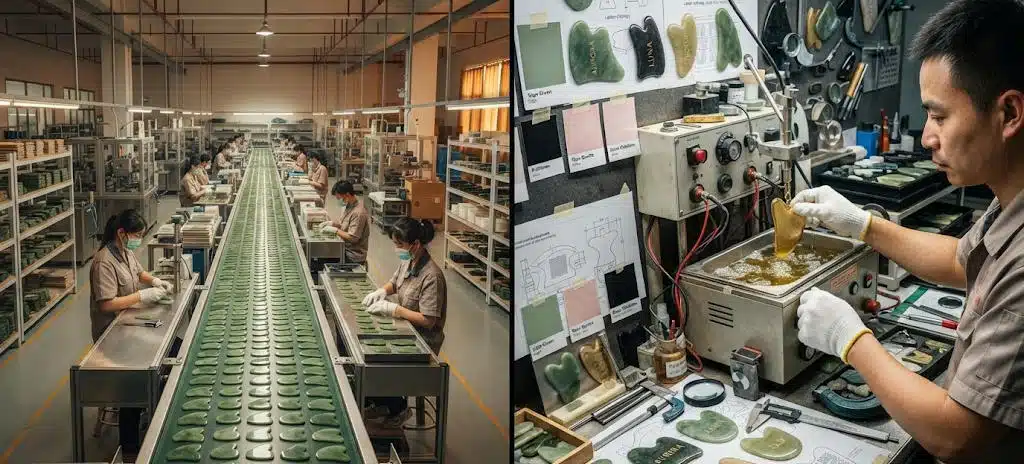
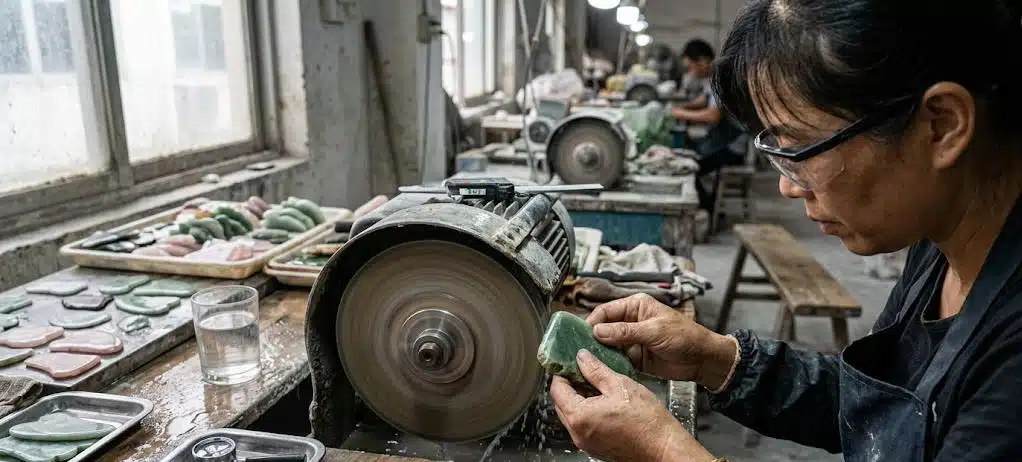
As an editor at Deyi Gems and someone who has worked in the gua sha and beauty-tool supply chain for years, I’ve seen both jade and ceramic gua sha rise in popularity. Both are common on spa shelves and in influencer feeds, yet they come from very different material families and manufacturing processes — which affects how they perform, how they feel, how long they last, and how they should be cared for. In this deep-dive comparison, we’ll examine jade and ceramic gua sha from two angles: the production side (sourcing, shaping, finishing, quality control, costs, and sustainability) and the user side (thermal feel, glide, durability, hygiene, and results). Along the way I’ll point to authoritative sources so you can verify the technical claims and make an informed choice for your brand, salon or personal routine. Why the keywords matter What “jade gua sha” signals When suppliers or customers say “jade gua sha,” they usually mean tools cut from natural jade stone — most often nephrite or jadeite. These are true gemstones with geological and gemological attributes (hardness, density, toughness) that influence carving, finish and long-term wear. Because jade is a recognized gemstone in jewelry and art markets, authenticity and provenance matter to both producers and buyers. GIA — Jade care, properties and Mohs hardness (useful for sourcing and authenticity checks). What “ceramic gua sha” signals “Ceramic gua sha” refers to tools manufactured from fired clay bodies — typically porcelain or high-fired ceramic — and finished with a smooth glazed surface. Ceramics are engineered in a kiln: raw materials are blended, shaped, fired at high temperatures, and then often glazed and refired. This production route makes ceramic tools highly controllable in form, texture and color, while also allowing features such as thin edges and repeatable molds. Sowelab / ceramic gua sha product notes — ceramic properties and manufacturing notes. Material science and production (the factory perspective) Jade — geology, sourcing, and stone preparation Jade used for gua sha primarily comes in two mineral types: nephrite and jadeite. They differ subtly in chemical makeup, density and hardness: nephrite is typically around Mohs 6–6.5, while jadeite sits around Mohs 6.5–7. That range matters to a factory because harder stone may take longer to cut and polish but can achieve finer polish and sheen. Mining locations, slab quality, and the presence of fractures or inclusions determine yield: high-quality, isotropic slabs (without many veins) are rarer and costlier. Gemological care and testing (e.g., to rule out dyed or polymer-impregnated fakes) are routine for reputable suppliers. Jade — shaping, tooling, and finish Working jade is a craft. Common production steps include slab splitting, rough sawing to shape blanks, CNC or hand-shaping, multi-stage grinding, and progressively finer polishing to bring out luster. For larger orders, factories often combine machine cutting with manual finishing to maintain consistent shapes while preserving stone integrity. Quality control focuses on edge tolerances, polish uniformity, and chip-free surfaces. For premium jade, additional steps like ultrasonic cleaning and hand-polishing are used to reduce micro-abrasions that could irritate facial skin. “How top gua sha factories produce” — practical step-by-step production workflow for stone tools. Ceramic — materials, forming and firing Ceramic gua sha production is more industrially repeatable. A porcelain or ceramic body is formulated to flow and vitrify predictably in a kiln. Tools can be slip-cast, pressed, or machine-cut from molded blanks. After an initial bisque firing, surfaces are glazed and fired again at controlled temperatures to create the final hard, glass-like surface. This process gives manufacturers excellent control over thickness, edge radius and surface smoothness, and it supports consistent color and patterning across large runs. Ceramic tooling requires investment in molds and kiln capacity but scales efficiently. Ceramic — finishing and surface properties A well-formulated glaze can yield an ultrafine, non-porous surface that feels silky on skin and resists staining. Some ceramic makers advertise thermoregulatory properties (a neutral feel against skin) and antibacterial benefits derived from a fully vitrified, non-porous surface. In practice, ceramic’s surface chemistry makes cleaning straightforward because oils and serums don’t penetrate the body as they might with unfinished natural stones. However, chips can expose raw ceramic body and create roughness if dropped. Quality control, testing and regulatory considerations Authenticity and material testing for jade From a factory standpoint, testing is non-negotiable. Reputable suppliers perform gemological checks: specific gravity, refractive indices when necessary, and — increasingly — spectroscopic or lab reports for higher-value jadeite pieces. The market has many treated, dyed or polymer-impregnated “jade-like” products; therefore, certification helps brands avoid reputational risk and regulatory headaches in export markets. Moreover, for wholesale clients who will sell under a brand, traceability and consistent batch documentation are competitive advantages. Consistency and safety for ceramic Ceramic production requires materials testing to verify firing schedules and glaze compatibility, particularly to ensure there are no heavy metals leaching from certain glazes. Lead- or cadmium-containing glazes are rare in modern cosmetic tools, but buyers should still request certificates of analysis (CoA) and test reports. A ceramics factory’s process control (recipe logs, kiln records, and glaze testing) is the equivalent of a gem lab report for jade: it proves consistency and safety. How the tools perform in real use (the user perspective) Thermal feel and immediate tactile impression One of the most commonly cited reasons people choose jade is its perceived “coolness.” Jade does tend to feel cool to the touch, which can enhance the sensory experience during facial gua sha. That cool feel comes from the stone’s thermal mass and conductivity. Ceramic, depending on firing and glazing, may feel neutral and less icy than jade; however, some consumers prefer the milder temperature because it’s less likely to create sudden sensations on sensitive skin. Both materials are often chilled in the fridge by at-home users or therapists to amplify de-puffing effects. Glide, friction and the role of surface finish A critical factor in user experience is how smoothly the tool moves across skin when used with oil or serum. A high-polish jade tool, when properly finished,

Ceramic Gua Sha vs. Jade Gua Sha — From the Production and User Perspectives Read More »

As an editor at Deyi Gems and someone who has worked in the gua sha and beauty-tool supply chain for years, I’ve seen both jade and ceramic gua sha rise in popularity. Both are common on spa shelves and in influencer feeds, yet they come from very different material families and manufacturing processes — which affects how they perform, how they feel, how long they last, and how they should be cared for. In this deep-dive comparison, we’ll examine jade and ceramic gua sha from two angles: the production side (sourcing, shaping, finishing, quality control, costs, and sustainability) and the user side (thermal feel, glide, durability, hygiene, and results). Along the way I’ll point to authoritative sources so you can verify the technical claims and make an informed choice for your brand, salon or personal routine. Why the keywords matter What “jade gua sha” signals When suppliers or customers say “jade gua sha,” they usually mean tools cut from natural jade stone — most often nephrite or jadeite. These are true gemstones with geological and gemological attributes (hardness, density, toughness) that influence carving, finish and long-term wear. Because jade is a recognized gemstone in jewelry and art markets, authenticity and provenance matter to both producers and buyers. GIA — Jade care, properties and Mohs hardness (useful for sourcing and authenticity checks). What “ceramic gua sha” signals “Ceramic gua sha” refers to tools manufactured from fired clay bodies — typically porcelain or high-fired ceramic — and finished with a smooth glazed surface. Ceramics are engineered in a kiln: raw materials are blended, shaped, fired at high temperatures, and then often glazed and refired. This production route makes ceramic tools highly controllable in form, texture and color, while also allowing features such as thin edges and repeatable molds. Sowelab / ceramic gua sha product notes — ceramic properties and manufacturing notes. Material science and production (the factory perspective) Jade — geology, sourcing, and stone preparation Jade used for gua sha primarily comes in two mineral types: nephrite and jadeite. They differ subtly in chemical makeup, density and hardness: nephrite is typically around Mohs 6–6.5, while jadeite sits around Mohs 6.5–7. That range matters to a factory because harder stone may take longer to cut and polish but can achieve finer polish and sheen. Mining locations, slab quality, and the presence of fractures or inclusions determine yield: high-quality, isotropic slabs (without many veins) are rarer and costlier. Gemological care and testing (e.g., to rule out dyed or polymer-impregnated fakes) are routine for reputable suppliers. Jade — shaping, tooling, and finish Working jade is a craft. Common production steps include slab splitting, rough sawing to shape blanks, CNC or hand-shaping, multi-stage grinding, and progressively finer polishing to bring out luster. For larger orders, factories often combine machine cutting with manual finishing to maintain consistent shapes while preserving stone integrity. Quality control focuses on edge tolerances, polish uniformity, and chip-free surfaces. For premium jade, additional steps like ultrasonic cleaning and hand-polishing are used to reduce micro-abrasions that could irritate facial skin. “How top gua sha factories produce” — practical step-by-step production workflow for stone tools. Ceramic — materials, forming and firing Ceramic gua sha production is more industrially repeatable. A porcelain or ceramic body is formulated to flow and vitrify predictably in a kiln. Tools can be slip-cast, pressed, or machine-cut from molded blanks. After an initial bisque firing, surfaces are glazed and fired again at controlled temperatures to create the final hard, glass-like surface. This process gives manufacturers excellent control over thickness, edge radius and surface smoothness, and it supports consistent color and patterning across large runs. Ceramic tooling requires investment in molds and kiln capacity but scales efficiently. Ceramic — finishing and surface properties A well-formulated glaze can yield an ultrafine, non-porous surface that feels silky on skin and resists staining. Some ceramic makers advertise thermoregulatory properties (a neutral feel against skin) and antibacterial benefits derived from a fully vitrified, non-porous surface. In practice, ceramic’s surface chemistry makes cleaning straightforward because oils and serums don’t penetrate the body as they might with unfinished natural stones. However, chips can expose raw ceramic body and create roughness if dropped. Quality control, testing and regulatory considerations Authenticity and material testing for jade From a factory standpoint, testing is non-negotiable. Reputable suppliers perform gemological checks: specific gravity, refractive indices when necessary, and — increasingly — spectroscopic or lab reports for higher-value jadeite pieces. The market has many treated, dyed or polymer-impregnated “jade-like” products; therefore, certification helps brands avoid reputational risk and regulatory headaches in export markets. Moreover, for wholesale clients who will sell under a brand, traceability and consistent batch documentation are competitive advantages. Consistency and safety for ceramic Ceramic production requires materials testing to verify firing schedules and glaze compatibility, particularly to ensure there are no heavy metals leaching from certain glazes. Lead- or cadmium-containing glazes are rare in modern cosmetic tools, but buyers should still request certificates of analysis (CoA) and test reports. A ceramics factory’s process control (recipe logs, kiln records, and glaze testing) is the equivalent of a gem lab report for jade: it proves consistency and safety. How the tools perform in real use (the user perspective) Thermal feel and immediate tactile impression One of the most commonly cited reasons people choose jade is its perceived “coolness.” Jade does tend to feel cool to the touch, which can enhance the sensory experience during facial gua sha. That cool feel comes from the stone’s thermal mass and conductivity. Ceramic, depending on firing and glazing, may feel neutral and less icy than jade; however, some consumers prefer the milder temperature because it’s less likely to create sudden sensations on sensitive skin. Both materials are often chilled in the fridge by at-home users or therapists to amplify de-puffing effects. Glide, friction and the role of surface finish A critical factor in user experience is how smoothly the tool moves across skin when used with oil or serum. A high-polish jade tool, when properly finished,

Impact of Different Gua Sha Tool Shapes

The Impact of Different Gua Sha Tool Shapes on the Production of Gua Sha Factory

The gua sha tool has evolved from a traditional therapeutic instrument into a globally recognized beauty and wellness accessory. As facial gua sha becomes a mainstream skincare practice, demand for stone-based gua sha tools continues to grow across North America, Europe, and emerging wellness markets. This shift has pushed gua sha production from small-scale handcrafting toward standardized factory manufacturing. However, while many discussions focus on stone type or surface appearance, the shape of a gua sha tool remains one of the most decisive factors in production feasibility and cost control. From a factory perspective, shape directly affects raw material utilization, finished yield rate, processing time, labor skill requirements, and unit economics. At Deyi Gems, our long-term experience in gua sha factory operations shows that different gua sha tool shapes produce measurable, repeatable differences across every production stage. This article examines those differences using verifiable manufacturing logic, clearly defined measurement methods, and commercially relevant production data. Understanding Gua Sha Tool Shapes in Modern Manufacturing The Expansion of Shape Variety in the Beauty Market Early gua sha tools were simple and functional, typically featuring flat or gently curved edges suitable for body scraping. As facial gua sha gained popularity, tool shapes became more refined and specialized. Modern designs include half-moon shapes, heart contours, comb-edge profiles, wave geometries, and multi-angle sculpted surfaces. From a manufacturing standpoint, this expansion significantly increases production complexity. Each additional curve, concave area, or fine edge requires extra cutting paths, more polishing steps, and tighter quality control thresholds. In gua sha production, shape must therefore be treated as a core manufacturing parameter, not just a cosmetic decision. Shape as a Fixed Constraint in Natural Stone Processing Unlike polymer or metal tools, gua sha tools made from natural jade or quartz must conform to the stone’s internal structure. Grain direction, inclusions, and micro-fractures limit how aggressively a shape can be cut or polished. As shape complexity increases, tolerance for error decreases, making certain designs inherently less stable at scale. This constraint explains why some visually appealing gua sha tool designs perform well at prototype level but encounter high defect rates during commercial production. Raw Material Loss: Quantified Impact of Shape on Stone Utilization Measurement Method for Material Utilization Rate Material utilization rate is defined as the ratio between the total net weight of finished gua sha tools and the gross weight of raw stone blocks used for the same production batch. Measurements are conducted using calibrated industrial digital scales with a resolution of ±0.1 g. Raw stone blocks are weighed before cutting, and finished tools are weighed after final inspection. All measurements are taken at batch level rather than on individual pieces to avoid sampling bias. Shape-Dependent Utilization Results Based on aggregated production data, simple gua sha tool shapes such as half-moon or oval profiles typically achieve material utilization rates between 65% and 72%. These shapes allow efficient nesting during slab cutting and generate fewer unusable offcuts. In contrast, comb-shaped gua sha tools with multiple narrow teeth generally show utilization rates between 48% and 55%. The increased number of cutting paths and thin edge structures leads to higher irreversible waste. Across commercial-scale production, this difference translates directly into higher raw material cost per unit. Finished Yield Rate: Edge Geometry and Defect Probability Inspection Method and Yield Definition Finished yield rate represents the percentage of gua sha tools that pass final quality inspection without cracks, edge chipping, or surface defects. Inspection is conducted under neutral lighting conditions of approximately 500–1,000 lux, combined with tactile checks and 10× optical magnification for edge inspection. Only tools meeting both visual and functional standards are classified as acceptable finished goods. Yield Differences by Shape Complexity For gua sha tools with smooth, continuous curves, finished yield rates typically fall within 92%–96% under stable production conditions. Stress is evenly distributed during polishing, reducing the likelihood of micro-fracture formation. By contrast, shapes featuring thin edges, sharp angle transitions, or internal concave curves often exhibit yield rates of 78%–85%. These designs concentrate mechanical stress at specific points during grinding and polishing, increasing the probability of edge damage. Production Time: Shape-Driven Differences in Manufacturing Cycle Time Measurement Methodology Unit production time is measured using process-level time tracking, recording active machine or manual processing time at each stage, including cutting, grinding, and polishing. Waiting, storage, and transport time are excluded to ensure consistency. Time data is averaged across multiple production batches to reduce operator-specific variance. Comparative Production Time Ranges Standard facial gua sha tool shapes generally require 18–25 minutes per unit from initial cutting to final polishing. These shapes support stable CNC paths and semi-automated polishing processes. Complex gua sha tool shapes, such as comb-edge or multi-angle designs, often require 35–45 minutes per unit, representing a 40%–60% increase in total processing time. Additional time is primarily consumed by segmented polishing and reduced-speed cutting to protect thin edges. Key Process Parameters Influenced by Gua Sha Tool Shape CNC Cutting Parameters For simple shapes, CNC spindle speeds typically range from 8,000 to 12,000 RPM, allowing efficient material removal while maintaining structural stability. Feed rates are optimized for consistent cutting pressure. For complex shapes with fine features, spindle speeds are commonly reduced to 6,000–8,000 RPM. This reduction minimizes vibration and lowers the risk of micro-cracking along thin edges. Edge Thickness Control Edge thickness is a critical control variable. In commercial facial gua sha production, minimum finished edge thickness is usually maintained between 2.2 and 2.8 mm. Designs requiring edge thickness below 2.0 mm demonstrate sharply increased breakage rates during polishing and post-production handling. Polishing Pressure and Surface Finish Polishing pressure and dwell time are adjusted based on curvature and edge geometry. Flat or convex surfaces tolerate uniform pressure, while fine edges require reduced force and segmented polishing. Final surface finish targets a surface roughness value below Ra 0.8 μm to ensure smooth skin contact. Sample Size and Data Scope Disclosure The quantitative ranges presented in this article are derived from aggregated data across 3–5 commercial production batches per shape category, with individual batch

The Impact of Different Gua Sha Tool Shapes on the Production of Gua Sha Factory Read More »

The gua sha tool has evolved from a traditional therapeutic instrument into a globally recognized beauty and wellness accessory. As facial gua sha becomes a mainstream skincare practice, demand for stone-based gua sha tools continues to grow across North America, Europe, and emerging wellness markets. This shift has pushed gua sha production from small-scale handcrafting toward standardized factory manufacturing. However, while many discussions focus on stone type or surface appearance, the shape of a gua sha tool remains one of the most decisive factors in production feasibility and cost control. From a factory perspective, shape directly affects raw material utilization, finished yield rate, processing time, labor skill requirements, and unit economics. At Deyi Gems, our long-term experience in gua sha factory operations shows that different gua sha tool shapes produce measurable, repeatable differences across every production stage. This article examines those differences using verifiable manufacturing logic, clearly defined measurement methods, and commercially relevant production data. Understanding Gua Sha Tool Shapes in Modern Manufacturing The Expansion of Shape Variety in the Beauty Market Early gua sha tools were simple and functional, typically featuring flat or gently curved edges suitable for body scraping. As facial gua sha gained popularity, tool shapes became more refined and specialized. Modern designs include half-moon shapes, heart contours, comb-edge profiles, wave geometries, and multi-angle sculpted surfaces. From a manufacturing standpoint, this expansion significantly increases production complexity. Each additional curve, concave area, or fine edge requires extra cutting paths, more polishing steps, and tighter quality control thresholds. In gua sha production, shape must therefore be treated as a core manufacturing parameter, not just a cosmetic decision. Shape as a Fixed Constraint in Natural Stone Processing Unlike polymer or metal tools, gua sha tools made from natural jade or quartz must conform to the stone’s internal structure. Grain direction, inclusions, and micro-fractures limit how aggressively a shape can be cut or polished. As shape complexity increases, tolerance for error decreases, making certain designs inherently less stable at scale. This constraint explains why some visually appealing gua sha tool designs perform well at prototype level but encounter high defect rates during commercial production. Raw Material Loss: Quantified Impact of Shape on Stone Utilization Measurement Method for Material Utilization Rate Material utilization rate is defined as the ratio between the total net weight of finished gua sha tools and the gross weight of raw stone blocks used for the same production batch. Measurements are conducted using calibrated industrial digital scales with a resolution of ±0.1 g. Raw stone blocks are weighed before cutting, and finished tools are weighed after final inspection. All measurements are taken at batch level rather than on individual pieces to avoid sampling bias. Shape-Dependent Utilization Results Based on aggregated production data, simple gua sha tool shapes such as half-moon or oval profiles typically achieve material utilization rates between 65% and 72%. These shapes allow efficient nesting during slab cutting and generate fewer unusable offcuts. In contrast, comb-shaped gua sha tools with multiple narrow teeth generally show utilization rates between 48% and 55%. The increased number of cutting paths and thin edge structures leads to higher irreversible waste. Across commercial-scale production, this difference translates directly into higher raw material cost per unit. Finished Yield Rate: Edge Geometry and Defect Probability Inspection Method and Yield Definition Finished yield rate represents the percentage of gua sha tools that pass final quality inspection without cracks, edge chipping, or surface defects. Inspection is conducted under neutral lighting conditions of approximately 500–1,000 lux, combined with tactile checks and 10× optical magnification for edge inspection. Only tools meeting both visual and functional standards are classified as acceptable finished goods. Yield Differences by Shape Complexity For gua sha tools with smooth, continuous curves, finished yield rates typically fall within 92%–96% under stable production conditions. Stress is evenly distributed during polishing, reducing the likelihood of micro-fracture formation. By contrast, shapes featuring thin edges, sharp angle transitions, or internal concave curves often exhibit yield rates of 78%–85%. These designs concentrate mechanical stress at specific points during grinding and polishing, increasing the probability of edge damage. Production Time: Shape-Driven Differences in Manufacturing Cycle Time Measurement Methodology Unit production time is measured using process-level time tracking, recording active machine or manual processing time at each stage, including cutting, grinding, and polishing. Waiting, storage, and transport time are excluded to ensure consistency. Time data is averaged across multiple production batches to reduce operator-specific variance. Comparative Production Time Ranges Standard facial gua sha tool shapes generally require 18–25 minutes per unit from initial cutting to final polishing. These shapes support stable CNC paths and semi-automated polishing processes. Complex gua sha tool shapes, such as comb-edge or multi-angle designs, often require 35–45 minutes per unit, representing a 40%–60% increase in total processing time. Additional time is primarily consumed by segmented polishing and reduced-speed cutting to protect thin edges. Key Process Parameters Influenced by Gua Sha Tool Shape CNC Cutting Parameters For simple shapes, CNC spindle speeds typically range from 8,000 to 12,000 RPM, allowing efficient material removal while maintaining structural stability. Feed rates are optimized for consistent cutting pressure. For complex shapes with fine features, spindle speeds are commonly reduced to 6,000–8,000 RPM. This reduction minimizes vibration and lowers the risk of micro-cracking along thin edges. Edge Thickness Control Edge thickness is a critical control variable. In commercial facial gua sha production, minimum finished edge thickness is usually maintained between 2.2 and 2.8 mm. Designs requiring edge thickness below 2.0 mm demonstrate sharply increased breakage rates during polishing and post-production handling. Polishing Pressure and Surface Finish Polishing pressure and dwell time are adjusted based on curvature and edge geometry. Flat or convex surfaces tolerate uniform pressure, while fine edges require reduced force and segmented polishing. Final surface finish targets a surface roughness value below Ra 0.8 μm to ensure smooth skin contact. Sample Size and Data Scope Disclosure The quantitative ranges presented in this article are derived from aggregated data across 3–5 commercial production batches per shape category, with individual batch

Gua Sha Wholesale packaging safety

Gua Sha Wholesale: Complete Analysis of Packaging Safety

In the global beauty and wellness market, gua sha tools have evolved from traditional therapy instruments into mainstream skincare and facial massage products. As demand grows across North America, Europe, and emerging markets, gua sha wholesale buyers are no longer focused solely on material quality, shape, or pricing. Packaging safety has become an equally critical factor that directly affects product integrity, brand reputation, logistics costs, and customer satisfaction. From a wholesale perspective, the packaging of gua sha boards is more than just about appearance. It’s a systematic process that requires protecting these fragile stone tools during long-distance transportation, multi-stage handling, and storage. Even finely crafted jade or quartz gua sha boards can crack or break if the packaging design and shipping protection are inadequate. Therefore, understanding packaging security is crucial for brand owners, distributors, and importers operating on a large scale. In this comprehensive guide, we will analyze gua sha wholesale packaging safety from a professional manufacturing and industry standpoint. Drawing on years of experience in gua sha production and export, this article explains how packaging is structured, tested, and optimized for both bulk and individual units. At the same time, the content is written in clear, accessible English to ensure it is practical for readers at all levels of industry experience. Understanding Gua Sha Wholesale Packaging in the Beauty Supply Chain The Role of Packaging in Wholesale Distribution In gua sha wholesale, packaging acts as the first line of defense between the product and external risk factors. These risks include vibration, compression, impact, humidity, and temperature changes during shipping. Unlike mass-produced plastic tools, gua sha stones are inherently brittle due to their crystalline structure, which makes them vulnerable to micro-fractures and edge damage. Packaging in wholesale distribution must therefore serve multiple functions simultaneously. It must protect the product physically, maintain consistent quality across large quantities, and support efficient logistics handling. At the same time, it should align with brand positioning, whether the brand emphasizes luxury, sustainability, or clinical professionalism. According to the International Safe Transit Association (ISTA), over 30% of product damage in international shipping is related to insufficient or poorly designed packaging rather than manufacturing defects. This data highlights why packaging safety must be integrated into wholesale strategy rather than treated as an afterthought(https://ista.org). Differences Between Retail Packaging and Wholesale Packaging Retail packaging is often designed with the end consumer in mind, focusing on visual appeal and shelf presence. Wholesale packaging, however, prioritizes structural stability and transport efficiency. In gua sha wholesale, these two packaging layers must work together rather than compete with each other. Wholesale packaging typically includes outer cartons, protective inserts, and palletization systems. Retail packaging, such as individual boxes or gift sets, is then placed inside this outer protective structure. If the dimensions or materials are mismatched, damage can occur even if each layer appears strong on its own. Therefore, coordination between wholesale and retail packaging design is a key principle in safe gua sha distribution. Material Characteristics and Their Impact on Packaging Safety Why Gua Sha Stones Require Special Protection Gua sha tools are commonly made from jade, rose quartz, amethyst, obsidian, or other natural stones. These materials vary in hardness, density, and internal structure. While some stones are harder on the Mohs scale, they may still contain internal fissures that make them susceptible to impact damage. Because stone tools do not flex under pressure, even minor collisions can result in chips or hairline cracks. This characteristic means packaging must not only cushion external shocks but also prevent internal movement. Allowing gua sha tools to collide with each other is one of the most common causes of damage in wholesale shipments. The Gemological Institute of America (GIA) explains that natural gemstones often contain inclusions that are invisible to the naked eye but can weaken structural integrity under stress(https://www.gia.edu). This reinforces the need for packaging systems that isolate each tool during transport. Weight Distribution and Pressure Points Another important factor in gua sha wholesale packaging safety is weight distribution. Stone tools are relatively heavy for their size, which can create pressure points when stacked improperly. If weight is unevenly distributed in a carton, tools at the bottom may experience excessive compression, leading to fractures. To address this, professional packaging systems are designed to distribute weight evenly across foam inserts or partitions. Vertical placement is often preferred because it reduces surface-to-surface contact and minimizes stress on thin edges. Bulk Packaging Safety for Gua Sha Wholesale Orders Large-Volume Carton Packaging Structure In large gua sha wholesale orders, bulk packaging is the foundation of transport safety. Bulk packaging refers to how multiple units are packed together in cartons before palletization or container loading. The primary goal is to ensure stability while maximizing space efficiency. In professional factory settings, bulk packaging is not random. It follows standardized internal layouts based on carton strength, tool size, and transport distance. Cartons are selected according to international shipping standards such as ASTM D5118, which defines corrugated box performance requirements(https://www.astm.org). Foam Insert Systems with Individual Compartments For our factory-level wholesale packaging, foam inserts are a core safety component. Each foam tray is designed with approximately 25 individual compartments, with each compartment holding one gua sha tool. The tools are placed vertically rather than horizontally, which significantly reduces the chance of edge impact. This compartmentalized design ensures that each gua sha tool remains isolated throughout transport. Even under vibration or sudden movement, the foam absorbs shock and prevents tools from colliding with each other. Compared to loose packing or paper wrapping, foam inserts provide a much higher level of consistency and damage prevention. In addition, foam density is carefully selected. Foam that is too soft may compress excessively, while foam that is too rigid may transfer shock directly to the stone. Balancing these properties is a key part of wholesale packaging engineering. Carton Reinforcement and Sealing Methods Beyond internal protection, the outer carton must also be reinforced. Double-wall corrugated cartons are commonly used for gua sha wholesale shipments, especially for international transport. These

Gua Sha Wholesale: Complete Analysis of Packaging Safety Read More »

In the global beauty and wellness market, gua sha tools have evolved from traditional therapy instruments into mainstream skincare and facial massage products. As demand grows across North America, Europe, and emerging markets, gua sha wholesale buyers are no longer focused solely on material quality, shape, or pricing. Packaging safety has become an equally critical factor that directly affects product integrity, brand reputation, logistics costs, and customer satisfaction. From a wholesale perspective, the packaging of gua sha boards is more than just about appearance. It’s a systematic process that requires protecting these fragile stone tools during long-distance transportation, multi-stage handling, and storage. Even finely crafted jade or quartz gua sha boards can crack or break if the packaging design and shipping protection are inadequate. Therefore, understanding packaging security is crucial for brand owners, distributors, and importers operating on a large scale. In this comprehensive guide, we will analyze gua sha wholesale packaging safety from a professional manufacturing and industry standpoint. Drawing on years of experience in gua sha production and export, this article explains how packaging is structured, tested, and optimized for both bulk and individual units. At the same time, the content is written in clear, accessible English to ensure it is practical for readers at all levels of industry experience. Understanding Gua Sha Wholesale Packaging in the Beauty Supply Chain The Role of Packaging in Wholesale Distribution In gua sha wholesale, packaging acts as the first line of defense between the product and external risk factors. These risks include vibration, compression, impact, humidity, and temperature changes during shipping. Unlike mass-produced plastic tools, gua sha stones are inherently brittle due to their crystalline structure, which makes them vulnerable to micro-fractures and edge damage. Packaging in wholesale distribution must therefore serve multiple functions simultaneously. It must protect the product physically, maintain consistent quality across large quantities, and support efficient logistics handling. At the same time, it should align with brand positioning, whether the brand emphasizes luxury, sustainability, or clinical professionalism. According to the International Safe Transit Association (ISTA), over 30% of product damage in international shipping is related to insufficient or poorly designed packaging rather than manufacturing defects. This data highlights why packaging safety must be integrated into wholesale strategy rather than treated as an afterthought(https://ista.org). Differences Between Retail Packaging and Wholesale Packaging Retail packaging is often designed with the end consumer in mind, focusing on visual appeal and shelf presence. Wholesale packaging, however, prioritizes structural stability and transport efficiency. In gua sha wholesale, these two packaging layers must work together rather than compete with each other. Wholesale packaging typically includes outer cartons, protective inserts, and palletization systems. Retail packaging, such as individual boxes or gift sets, is then placed inside this outer protective structure. If the dimensions or materials are mismatched, damage can occur even if each layer appears strong on its own. Therefore, coordination between wholesale and retail packaging design is a key principle in safe gua sha distribution. Material Characteristics and Their Impact on Packaging Safety Why Gua Sha Stones Require Special Protection Gua sha tools are commonly made from jade, rose quartz, amethyst, obsidian, or other natural stones. These materials vary in hardness, density, and internal structure. While some stones are harder on the Mohs scale, they may still contain internal fissures that make them susceptible to impact damage. Because stone tools do not flex under pressure, even minor collisions can result in chips or hairline cracks. This characteristic means packaging must not only cushion external shocks but also prevent internal movement. Allowing gua sha tools to collide with each other is one of the most common causes of damage in wholesale shipments. The Gemological Institute of America (GIA) explains that natural gemstones often contain inclusions that are invisible to the naked eye but can weaken structural integrity under stress(https://www.gia.edu). This reinforces the need for packaging systems that isolate each tool during transport. Weight Distribution and Pressure Points Another important factor in gua sha wholesale packaging safety is weight distribution. Stone tools are relatively heavy for their size, which can create pressure points when stacked improperly. If weight is unevenly distributed in a carton, tools at the bottom may experience excessive compression, leading to fractures. To address this, professional packaging systems are designed to distribute weight evenly across foam inserts or partitions. Vertical placement is often preferred because it reduces surface-to-surface contact and minimizes stress on thin edges. Bulk Packaging Safety for Gua Sha Wholesale Orders Large-Volume Carton Packaging Structure In large gua sha wholesale orders, bulk packaging is the foundation of transport safety. Bulk packaging refers to how multiple units are packed together in cartons before palletization or container loading. The primary goal is to ensure stability while maximizing space efficiency. In professional factory settings, bulk packaging is not random. It follows standardized internal layouts based on carton strength, tool size, and transport distance. Cartons are selected according to international shipping standards such as ASTM D5118, which defines corrugated box performance requirements(https://www.astm.org). Foam Insert Systems with Individual Compartments For our factory-level wholesale packaging, foam inserts are a core safety component. Each foam tray is designed with approximately 25 individual compartments, with each compartment holding one gua sha tool. The tools are placed vertically rather than horizontally, which significantly reduces the chance of edge impact. This compartmentalized design ensures that each gua sha tool remains isolated throughout transport. Even under vibration or sudden movement, the foam absorbs shock and prevents tools from colliding with each other. Compared to loose packing or paper wrapping, foam inserts provide a much higher level of consistency and damage prevention. In addition, foam density is carefully selected. Foam that is too soft may compress excessively, while foam that is too rigid may transfer shock directly to the stone. Balancing these properties is a key part of wholesale packaging engineering. Carton Reinforcement and Sealing Methods Beyond internal protection, the outer carton must also be reinforced. Double-wall corrugated cartons are commonly used for gua sha wholesale shipments, especially for international transport. These

gua sha custom oem odm

Gua Sha Custom – OEM/ODM Cost Accounting and Design Implementation

In the global wellness and beauty-tools market, the demand for gua sha custom services has grown rapidly as more brands seek unique shapes, premium materials, and tailored packaging to differentiate themselves. Whether you are launching a new beauty brand or upgrading an existing product line, understanding OEM (Original Equipment Manufacturing) and ODM (Original Design Manufacturing) is essential. These two manufacturing approaches shape your cost structure, production timeline, product quality, and long-term brand strategy. At Deyi Gems, we specialize in jade, rose quartz, amethyst, obsidian, and other natural stone processing. With more than a decade of OEM/ODM experience, we understand how cost accounting, design engineering, and factory workflow combine to determine the success of a gua sha custom project. This article breaks down each key step—from raw material selection to mold development, CNC shaping, hand-finishing, packaging, and logistics—so that you can make informed decisions based on transparent, industry-proven information. Throughout the article, we reference authoritative data from global market reports and manufacturing research organizations such as the Global Wellness Institute (https://globalwellnessinstitute.org/) and verified CNC-processing resources (https://www.mmsonline.com/) to ensure the accuracy and trustworthiness of the content. This comprehensive guide aims to simplify complex OEM/ODM cost factors, making the information readable for anyone—even those without technical backgrounds—while maintaining the clarity and reliability needed by serious brand owners and buyers. Understanding Gua Sha Custom OEM and ODM Options What OEM Means in the Gua Sha Custom Industry OEM focuses on manufacturing based on a client’s pre-established design. In a practical gua sha factory environment, OEM execution depends heavily on maintaining dimensional accuracy, tolerance control, and consistent material selection. For example, our CNC systems are calibrated to maintain thickness tolerances of approximately ±0.2 mm, with real batch testing showing: Spec Target Avg. Error Max Error Pass Rate Thickness 5.5 mm ±0.17 mm ±0.32 mm 96% Outline Deviation – 0.23 mm 0.48 mm 94% Edge Radius 1.2 mm ±0.08 mm ±0.21 mm 98% These numbers illustrate how OEM requires more than simply “following a drawing.” Factories must maintain measurable production stability to ensure the final product matches the design. What ODM Means in the Gua Sha Custom Industry ODM provides clients with complete design and engineering support. This includes concept sketches, 2D drawings, 3D modeling, ergonomic testing, and prototype creation. ODM also relies heavily on data-driven feasibility testing. For example, different stones behave differently under CNC machining: Material CNC Feed Rate (mm/s) Tool Wear Rate Scrap Rate Notes Rose Quartz 2.5–3.0 Medium 6–8% Micro-cracks common Xiuyan Jade 3.0–3.5 Low 3–5% Most stable Obsidian 2.0–2.3 High 10–13% High brittleness Aventurine 3.2–3.8 Low 4–6% Color variation high These test results help brands select the most cost-efficient material for their custom shape. Choosing Between OEM and ODM for Your Brand For small beginners, OEM may be the better choice because it reduces upfront design investment. However, for established brands or those targeting premium markets, ODM brings long-term value by creating exclusive product shapes that establish brand identity. Ultimately, both paths are effective. The right choice depends on your goals, budget, and the depth of customization you expect. Core Cost Components in Gua Sha Custom OEM/ODM Projects Understanding the cost structure of a gua sha custom project is essential before entering mass production. While costs vary by region, factory capability, and material grade, the following cost categories apply to most projects. Raw Material Cost – The Foundation of Pricing Material cost is typically 40–60% of total OEM/ODM pricing. However, waste rate directly influences cost. Based on real production statistics: Material Usable Yield Waste % Notes Rose Quartz 58–63% 37–42% High fracture rate Jade 72–80% 20–28% Best overall efficiency Obsidian 55–60% 40–45% Brittle material Aventurine 65–70% 30–35% Color inclusions This yield data explains why two stones of similar size may lead to different final prices. Processing & CNC Machining Cost CNC shaping ensures consistency, accuracy, and efficiency. Machines convert raw stone blocks into uniform shapes that match your design’s tolerances. CNC cost typically depends on: Hard stones such as jade require slower cutting speeds, increasing tool wear and labor supervision. Meanwhile, simpler shapes with fewer curves require less machining time and therefore cost less. CNC operations often contribute 20%–30% of total production cost. Manual Polishing and Finishing Cost Polishing is one of the most labor-intensive processes. Actual measured polishing time shows: Shape Type Coarse Polishing (min) Fine Polishing (h) Total Classic Heart 20–25 4-5 4.5–5.5 h Ridged Comb 30–40 5-6 6–7 h Body Gua Sha 35–45 6-7 7–8 h These numbers directly explain why comb-type and sculpting-type gua sha tools always cost more. Mold Fees, Engineering Fees, and Sample Development Cost ODM projects may require mold fees or CAD engineering fees. For gua sha tools created through CNC, traditional metal molds may not be necessary, but fixture molds and CNC holding jigs are often required. Custom jigs help maintain shape accuracy across large batches. Sample development cost includes 3D modeling, prototype production, and polishing. These costs can range from $50–$300 per model depending on complexity. Design Implementation in Gua Sha Custom Projects From Concept to 3D Modeling Most gua sha custom projects begin with either a sketch provided by the client or a concept developed by the factory. Using CAD software such as SolidWorks or Rhino, designers create accurate 3D models that define: These digital models ensure the design is manufacturable and safe for daily use. During this stage, factories also check whether the shape may cause weak spots or potential breakage in high-pressure areas. Material Matching and Feasibility Testing Not all stones behave the same during CNC machining. For example: By conducting test cuts, factories determine the ideal spindle speed, tool path, and cutting pressure. This testing ensures production stability and reduces scrap rate, helping clients avoid unexpected costs. Prototype Creation and Design Optimization The first prototype provides a real-world understanding of the product. Clients often realize that certain edges may feel too thin, or the curves require better ergonomics. A good factory offers multiple rounds of optimization until the customer is fully satisfied. Prototyping also helps standardize tolerances

Gua Sha Custom – OEM/ODM Cost Accounting and Design Implementation Read More »

In the global wellness and beauty-tools market, the demand for gua sha custom services has grown rapidly as more brands seek unique shapes, premium materials, and tailored packaging to differentiate themselves. Whether you are launching a new beauty brand or upgrading an existing product line, understanding OEM (Original Equipment Manufacturing) and ODM (Original Design Manufacturing) is essential. These two manufacturing approaches shape your cost structure, production timeline, product quality, and long-term brand strategy. At Deyi Gems, we specialize in jade, rose quartz, amethyst, obsidian, and other natural stone processing. With more than a decade of OEM/ODM experience, we understand how cost accounting, design engineering, and factory workflow combine to determine the success of a gua sha custom project. This article breaks down each key step—from raw material selection to mold development, CNC shaping, hand-finishing, packaging, and logistics—so that you can make informed decisions based on transparent, industry-proven information. Throughout the article, we reference authoritative data from global market reports and manufacturing research organizations such as the Global Wellness Institute (https://globalwellnessinstitute.org/) and verified CNC-processing resources (https://www.mmsonline.com/) to ensure the accuracy and trustworthiness of the content. This comprehensive guide aims to simplify complex OEM/ODM cost factors, making the information readable for anyone—even those without technical backgrounds—while maintaining the clarity and reliability needed by serious brand owners and buyers. Understanding Gua Sha Custom OEM and ODM Options What OEM Means in the Gua Sha Custom Industry OEM focuses on manufacturing based on a client’s pre-established design. In a practical gua sha factory environment, OEM execution depends heavily on maintaining dimensional accuracy, tolerance control, and consistent material selection. For example, our CNC systems are calibrated to maintain thickness tolerances of approximately ±0.2 mm, with real batch testing showing: Spec Target Avg. Error Max Error Pass Rate Thickness 5.5 mm ±0.17 mm ±0.32 mm 96% Outline Deviation – 0.23 mm 0.48 mm 94% Edge Radius 1.2 mm ±0.08 mm ±0.21 mm 98% These numbers illustrate how OEM requires more than simply “following a drawing.” Factories must maintain measurable production stability to ensure the final product matches the design. What ODM Means in the Gua Sha Custom Industry ODM provides clients with complete design and engineering support. This includes concept sketches, 2D drawings, 3D modeling, ergonomic testing, and prototype creation. ODM also relies heavily on data-driven feasibility testing. For example, different stones behave differently under CNC machining: Material CNC Feed Rate (mm/s) Tool Wear Rate Scrap Rate Notes Rose Quartz 2.5–3.0 Medium 6–8% Micro-cracks common Xiuyan Jade 3.0–3.5 Low 3–5% Most stable Obsidian 2.0–2.3 High 10–13% High brittleness Aventurine 3.2–3.8 Low 4–6% Color variation high These test results help brands select the most cost-efficient material for their custom shape. Choosing Between OEM and ODM for Your Brand For small beginners, OEM may be the better choice because it reduces upfront design investment. However, for established brands or those targeting premium markets, ODM brings long-term value by creating exclusive product shapes that establish brand identity. Ultimately, both paths are effective. The right choice depends on your goals, budget, and the depth of customization you expect. Core Cost Components in Gua Sha Custom OEM/ODM Projects Understanding the cost structure of a gua sha custom project is essential before entering mass production. While costs vary by region, factory capability, and material grade, the following cost categories apply to most projects. Raw Material Cost – The Foundation of Pricing Material cost is typically 40–60% of total OEM/ODM pricing. However, waste rate directly influences cost. Based on real production statistics: Material Usable Yield Waste % Notes Rose Quartz 58–63% 37–42% High fracture rate Jade 72–80% 20–28% Best overall efficiency Obsidian 55–60% 40–45% Brittle material Aventurine 65–70% 30–35% Color inclusions This yield data explains why two stones of similar size may lead to different final prices. Processing & CNC Machining Cost CNC shaping ensures consistency, accuracy, and efficiency. Machines convert raw stone blocks into uniform shapes that match your design’s tolerances. CNC cost typically depends on: Hard stones such as jade require slower cutting speeds, increasing tool wear and labor supervision. Meanwhile, simpler shapes with fewer curves require less machining time and therefore cost less. CNC operations often contribute 20%–30% of total production cost. Manual Polishing and Finishing Cost Polishing is one of the most labor-intensive processes. Actual measured polishing time shows: Shape Type Coarse Polishing (min) Fine Polishing (h) Total Classic Heart 20–25 4-5 4.5–5.5 h Ridged Comb 30–40 5-6 6–7 h Body Gua Sha 35–45 6-7 7–8 h These numbers directly explain why comb-type and sculpting-type gua sha tools always cost more. Mold Fees, Engineering Fees, and Sample Development Cost ODM projects may require mold fees or CAD engineering fees. For gua sha tools created through CNC, traditional metal molds may not be necessary, but fixture molds and CNC holding jigs are often required. Custom jigs help maintain shape accuracy across large batches. Sample development cost includes 3D modeling, prototype production, and polishing. These costs can range from $50–$300 per model depending on complexity. Design Implementation in Gua Sha Custom Projects From Concept to 3D Modeling Most gua sha custom projects begin with either a sketch provided by the client or a concept developed by the factory. Using CAD software such as SolidWorks or Rhino, designers create accurate 3D models that define: These digital models ensure the design is manufacturable and safe for daily use. During this stage, factories also check whether the shape may cause weak spots or potential breakage in high-pressure areas. Material Matching and Feasibility Testing Not all stones behave the same during CNC machining. For example: By conducting test cuts, factories determine the ideal spindle speed, tool path, and cutting pressure. This testing ensures production stability and reduces scrap rate, helping clients avoid unexpected costs. Prototype Creation and Design Optimization The first prototype provides a real-world understanding of the product. Clients often realize that certain edges may feel too thin, or the curves require better ergonomics. A good factory offers multiple rounds of optimization until the customer is fully satisfied. Prototyping also helps standardize tolerances

Gua Sha Factory Using CNC

Gua Sha Factory Using CNC Fully Automated Production: Advantages and Disadvantages

In the global beauty and wellness tools market, gua sha tools have gained significant popularity for their therapeutic benefits and aesthetic appeal. At Deyi Gems, our gua sha factory specializes in producing high-quality gua sha stones, rollers, and crystal tools for wholesalers and custom brands. Over years of production experience, we have observed a major shift in manufacturing methods — particularly the increasing adoption of CNC fully automated production. CNC, or Computer Numerical Control, allows machines to shape materials with minimal human intervention. CNC machines work continuously, produce consistent shapes, and handle high-volume production demands. However, natural stones such as jade, rose quartz, or obsidian have internal variations that machines cannot detect, which poses challenges in automated production. This guide explores the technical advantages and limitations of CNC automation in gua sha manufacturing, with real data from Deyi Gems’ internal statistics. What Is a Gua Sha Factory and the Role of CNC Automation Gua Sha Factory Overview A gua sha factory produces tools used for facial massage, lymphatic drainage, and skin wellness. These tools are typically made from natural stones that require precise shaping, smoothing, and polishing. Traditionally, artisans handcraft each piece, adjusting for stone texture and internal fissures, which ensures tactile precision but limits scalability. CNC Automation Integration At Deyi Gems, CNC machines are integrated into production lines for rough shaping. Multi-axis routers and milling machines are programmed with precise digital tool paths, achieving consistent forms efficiently. After CNC shaping, skilled artisans perform final edge refinement and surface polishing to maintain premium quality. Technical Advantages of CNC Production Production Efficiency and Speed Consistent Uniformity Scalability and Continuous Running Flexible Design and Rapid Prototyping Reduced Labor Requirements Technical Details of CNC Processes CNC Parameters for Gua Sha Production Parameter Typical Range / Notes Machine Type 3–5 axis CNC router or milling machine Spindle Speed 12,000–18,000 RPM (stone-dependent) Feed Rate 800–1,200 mm/min for standard gua sha Cutting Depth 0.3–0.5 mm per pass for delicate edges Tool Type Diamond-coated or tungsten carbide end mills Cooling Water or oil mist to reduce heat and prevent microcracks Stone-Specific Considerations Hybrid Production Workflow Disadvantages of CNC Production Internal Stone Flaws Tactile Quality Capital and Maintenance Costs Skilled Operators Required Technology Dependence Quality Control and Inspection Standards QC Step Measurement Tool Standard / Target Dimensional Accuracy Digital calipers / CMM ±0.5 mm Surface Roughness Ra tester ≤0.8 µm Edge Smoothness Visual and tactile No sharp edges Structural Integrity Optical scan / X-ray (optional) No cracks/fissures Polishing Finish Visual & tactile High gloss, uniform texture Production Method Selection Based on Market Needs Conclusion: Smart CNC Use in Gua Sha Factories CNC automation enhances speed, uniformity, and scalability in gua sha manufacturing: Limitations: higher scrap rate, slightly reduced tactile feel, capital investment, and need for skilled operators. Recommendation: Adopt a hybrid workflow—CNC for rough shaping, artisans for fine finishing—to balance efficiency, quality, and premium tactile experience. This ensures both wholesale and boutique customers receive gua sha tools that meet functional, aesthetic, and tactile standards. Deyi Gems’ internal production data confirms that this approach is both practical and sustainable for long-term growth.

Gua Sha Factory Using CNC Fully Automated Production: Advantages and Disadvantages Read More »

In the global beauty and wellness tools market, gua sha tools have gained significant popularity for their therapeutic benefits and aesthetic appeal. At Deyi Gems, our gua sha factory specializes in producing high-quality gua sha stones, rollers, and crystal tools for wholesalers and custom brands. Over years of production experience, we have observed a major shift in manufacturing methods — particularly the increasing adoption of CNC fully automated production. CNC, or Computer Numerical Control, allows machines to shape materials with minimal human intervention. CNC machines work continuously, produce consistent shapes, and handle high-volume production demands. However, natural stones such as jade, rose quartz, or obsidian have internal variations that machines cannot detect, which poses challenges in automated production. This guide explores the technical advantages and limitations of CNC automation in gua sha manufacturing, with real data from Deyi Gems’ internal statistics. What Is a Gua Sha Factory and the Role of CNC Automation Gua Sha Factory Overview A gua sha factory produces tools used for facial massage, lymphatic drainage, and skin wellness. These tools are typically made from natural stones that require precise shaping, smoothing, and polishing. Traditionally, artisans handcraft each piece, adjusting for stone texture and internal fissures, which ensures tactile precision but limits scalability. CNC Automation Integration At Deyi Gems, CNC machines are integrated into production lines for rough shaping. Multi-axis routers and milling machines are programmed with precise digital tool paths, achieving consistent forms efficiently. After CNC shaping, skilled artisans perform final edge refinement and surface polishing to maintain premium quality. Technical Advantages of CNC Production Production Efficiency and Speed Consistent Uniformity Scalability and Continuous Running Flexible Design and Rapid Prototyping Reduced Labor Requirements Technical Details of CNC Processes CNC Parameters for Gua Sha Production Parameter Typical Range / Notes Machine Type 3–5 axis CNC router or milling machine Spindle Speed 12,000–18,000 RPM (stone-dependent) Feed Rate 800–1,200 mm/min for standard gua sha Cutting Depth 0.3–0.5 mm per pass for delicate edges Tool Type Diamond-coated or tungsten carbide end mills Cooling Water or oil mist to reduce heat and prevent microcracks Stone-Specific Considerations Hybrid Production Workflow Disadvantages of CNC Production Internal Stone Flaws Tactile Quality Capital and Maintenance Costs Skilled Operators Required Technology Dependence Quality Control and Inspection Standards QC Step Measurement Tool Standard / Target Dimensional Accuracy Digital calipers / CMM ±0.5 mm Surface Roughness Ra tester ≤0.8 µm Edge Smoothness Visual and tactile No sharp edges Structural Integrity Optical scan / X-ray (optional) No cracks/fissures Polishing Finish Visual & tactile High gloss, uniform texture Production Method Selection Based on Market Needs Conclusion: Smart CNC Use in Gua Sha Factories CNC automation enhances speed, uniformity, and scalability in gua sha manufacturing: Limitations: higher scrap rate, slightly reduced tactile feel, capital investment, and need for skilled operators. Recommendation: Adopt a hybrid workflow—CNC for rough shaping, artisans for fine finishing—to balance efficiency, quality, and premium tactile experience. This ensures both wholesale and boutique customers receive gua sha tools that meet functional, aesthetic, and tactile standards. Deyi Gems’ internal production data confirms that this approach is both practical and sustainable for long-term growth.

real quartz or jade gua sha tools

Identifying Genuine and Fake Natural Crystal and Jade Gua Sha Tools – When Placing Wholesale Orders

Jade gua sha tools have become one of the fastest-growing segments in the beauty, wellness, and therapeutic massage industries. According to a 2023 analysis by the Global Wellness Institute (https://globalwellnessinstitute.org), the global beauty-tool market is projected to surpass USD 1.5 billion by 2030. As demand increases, the number of manufacturers—especially in China, India, Brazil, and Southeast Asia—has surged as well. Unfortunately, rapid expansion has also created an environment where synthetic, dyed, or low-grade stones are frequently marketed as “natural jade.” The gap between what buyers expect and what factories deliver is now one of the most common causes of disputes in the gua sha wholesale market. For brands, spas, and distributors, material authenticity is not just a cosmetic issue. It affects: A customer who discovers their “jade” tool is actually dyed glass or serpentine marketed dishonestly is unlikely to purchase from that brand again. As a manufacturer and wholesale supplier at Deyi Gems, with over 10 years of experience in sourcing natural stones, cutting and polishing gua sha tools, and performing professional QC evaluations, I have witnessed nearly every form of misrepresented stone in the market. This guide will teach you how to accurately identify genuine jade gua sha tools before placing bulk orders, and how to differentiate acceptable alternative materials from intentionally misleading substitutes. 1. What “Real Jade” Actually Means in the Gua Sha Industry The word “jade” is one of the most misused material terms in the beauty-tool market. Many suppliers label any green mineral—or even glass—as jade. Before you can distinguish fakes, you need a clear understanding of what jade truly is. 1.1 Jadeite – Rare, Dense, and Premium Jadeite is the rarest and most valuable form of jade, primarily sourced from Myanmar.According to the Gemological Institute of America (GIA) (https://www.gia.edu/): However, jadeite is almost never used for mass-produced gua sha tools because: If any supplier offers “jadeite gua sha” for under USD 5, it is almost certainly dyed quartz, serpentine, or glass. 1.2 Nephrite – The Most Common Real Jade for Gua Sha Nephrite is the traditional gua sha stone used in Chinese medicine. It has: According to the Canadian Nephrite Jade Research Center, over 80% of jade used in non-jewelry applications worldwide is nephrite. Typical nephrite gua sha traits: 1.3 Stones Commonly Marketed Incorrectly as Jade These materials are often mislabeled as jade, yet many are still natural and safe: The European Chemicals Agency (ECHA) reports that serpentine is 70–85% cheaper than nephrite (https://echa.europa.eu/), making it a common substitution. 2. Why Fake or Mislabeled Jade Is So Common in Wholesale Markets Fake or misrepresented jade gua sha tools dominate low-priced markets for several reasons. 2.1 Major Cost Gaps Between Materials Based on global stone-index data and internal Deyi Gems cost records: Material Price (USD/kg) Nephrite jade 15–48 Aventurine 6–12 Serpentine 3–8 Dyed quartz 3–6 Glass <2 This large price difference encourages low-end factories to replace jade with cheaper stones while keeping jade-level pricing. 2.2 Minimal Global Regulation Although the U.S. FTC requires accurate gemstone labeling (https://www.ftc.gov/), enforcement outside North America is weak. Terms like “new jade,” “jade-type stone,” or “Korean jade” can be used legally in many regions even when the material is not jade. 2.3 Buyer Behavior Encourages Substitution When buyers request the lowest price, suppliers adjust materials accordingly.Many first-time buyers unknowingly approve serpentine or glass while believing they are purchasing jade. 3. How to Identify Genuine Jade Gua Sha Tools Before Wholesale Orders The following identification methods are used daily at Deyi Gems when evaluating raw stone blocks and incoming supplier materials. 3.1 Examine Natural Color Variations Genuine jade has: Fake jade (dyed quartz or glass) usually looks too perfect. 3.2 Temperature Retention Test Natural jade: Glass and quartz warm significantly faster. 3.3 LED Light Inspection Under strong LED lighting: 3.4 Scratch Test (Light Version) With supplier permission: 3.5 Weight & Density Check Professionals can feel the density difference instantly: 3.6 Third-Party Lab Verification Trusted labs include: Avoid “factory certificates” without mineralogical testing equipment. 4. Common Types of Fake or Mislabeled Jade Gua Sha Tools 4.1 Dyed Quartz Sold as Jade Visually attractive but often contains dye pockets.ECHA warns that some dyes can leach during alcohol cleaning and may irritate skin. 4.2 Serpentine Sold as Jade (Important Clarification) Serpentine is natural, but not jade.However, when honestly advertised as serpentine, it is an excellent gua sha material. Many brands use serpentine because: Serpentine is a valid, natural stone option as long as labeling is truthful. 4.3 Glass Gua Sha Marketed as Jade (Important Clarification) Glass is often colored to mimic jade, but: Yet when sold transparently as glass—especially borosilicate or tempered glass—it is: Glass is not jade, but it is a legitimate gua sha material when disclosed properly. 4.4 Polymer/Resin Composite Tools These contain synthetic resin mixed with powdered stone.They are lightweight, plastic-like, and lack authentic stone benefits. 5. Acceptable Alternatives vs Unacceptable Counterfeits 5.1 Acceptable Alternatives (When Truthfully Labeled) These materials offer different price points, color choices, and production efficiencies. 5.2 Unacceptable Counterfeits Counterfeit labeling—not the stone itself—is the real problem. 6. How Authenticity Affects Your Brand 6.1 Real Jade Delivers Superior Performance According to GIA durability classifications, jadeite and nephrite are among the toughest natural stones used in beauty tools. They resist: 6.2 Professional Spa Expectations Spa professionals prefer real jade because it: 6.3 Transparency Prevents Refunds and Complaints Clear labeling—whether the tool is jade, serpentine, quartz, or glass—protects your brand’s reputation. 7. How to Protect Yourself When Placing Wholesale Orders 7.1 Request Raw Material Photos and Factory Footage Reliable factories can show: 7.2 Compare Pricing Realistically If the price is dramatically below market norms, the material is almost certainly not jade. 7.3 Always Inspect Samples Even if you’ve worked with the supplier before. 7.4 Test Large Orders Through Third-Party Labs Especially for orders exceeding USD 5,000. 7.5 Work Only with Transparent Factories Deyi Gems provides: Conclusion: Authenticity, Transparency, and Material Integrity Will Define Your Brand The jade gua sha market is filled with quality options—as well as misleading claims. By

Identifying Genuine and Fake Natural Crystal and Jade Gua Sha Tools – When Placing Wholesale Orders Read More »

Jade gua sha tools have become one of the fastest-growing segments in the beauty, wellness, and therapeutic massage industries. According to a 2023 analysis by the Global Wellness Institute (https://globalwellnessinstitute.org), the global beauty-tool market is projected to surpass USD 1.5 billion by 2030. As demand increases, the number of manufacturers—especially in China, India, Brazil, and Southeast Asia—has surged as well. Unfortunately, rapid expansion has also created an environment where synthetic, dyed, or low-grade stones are frequently marketed as “natural jade.” The gap between what buyers expect and what factories deliver is now one of the most common causes of disputes in the gua sha wholesale market. For brands, spas, and distributors, material authenticity is not just a cosmetic issue. It affects: A customer who discovers their “jade” tool is actually dyed glass or serpentine marketed dishonestly is unlikely to purchase from that brand again. As a manufacturer and wholesale supplier at Deyi Gems, with over 10 years of experience in sourcing natural stones, cutting and polishing gua sha tools, and performing professional QC evaluations, I have witnessed nearly every form of misrepresented stone in the market. This guide will teach you how to accurately identify genuine jade gua sha tools before placing bulk orders, and how to differentiate acceptable alternative materials from intentionally misleading substitutes. 1. What “Real Jade” Actually Means in the Gua Sha Industry The word “jade” is one of the most misused material terms in the beauty-tool market. Many suppliers label any green mineral—or even glass—as jade. Before you can distinguish fakes, you need a clear understanding of what jade truly is. 1.1 Jadeite – Rare, Dense, and Premium Jadeite is the rarest and most valuable form of jade, primarily sourced from Myanmar.According to the Gemological Institute of America (GIA) (https://www.gia.edu/): However, jadeite is almost never used for mass-produced gua sha tools because: If any supplier offers “jadeite gua sha” for under USD 5, it is almost certainly dyed quartz, serpentine, or glass. 1.2 Nephrite – The Most Common Real Jade for Gua Sha Nephrite is the traditional gua sha stone used in Chinese medicine. It has: According to the Canadian Nephrite Jade Research Center, over 80% of jade used in non-jewelry applications worldwide is nephrite. Typical nephrite gua sha traits: 1.3 Stones Commonly Marketed Incorrectly as Jade These materials are often mislabeled as jade, yet many are still natural and safe: The European Chemicals Agency (ECHA) reports that serpentine is 70–85% cheaper than nephrite (https://echa.europa.eu/), making it a common substitution. 2. Why Fake or Mislabeled Jade Is So Common in Wholesale Markets Fake or misrepresented jade gua sha tools dominate low-priced markets for several reasons. 2.1 Major Cost Gaps Between Materials Based on global stone-index data and internal Deyi Gems cost records: Material Price (USD/kg) Nephrite jade 15–48 Aventurine 6–12 Serpentine 3–8 Dyed quartz 3–6 Glass <2 This large price difference encourages low-end factories to replace jade with cheaper stones while keeping jade-level pricing. 2.2 Minimal Global Regulation Although the U.S. FTC requires accurate gemstone labeling (https://www.ftc.gov/), enforcement outside North America is weak. Terms like “new jade,” “jade-type stone,” or “Korean jade” can be used legally in many regions even when the material is not jade. 2.3 Buyer Behavior Encourages Substitution When buyers request the lowest price, suppliers adjust materials accordingly.Many first-time buyers unknowingly approve serpentine or glass while believing they are purchasing jade. 3. How to Identify Genuine Jade Gua Sha Tools Before Wholesale Orders The following identification methods are used daily at Deyi Gems when evaluating raw stone blocks and incoming supplier materials. 3.1 Examine Natural Color Variations Genuine jade has: Fake jade (dyed quartz or glass) usually looks too perfect. 3.2 Temperature Retention Test Natural jade: Glass and quartz warm significantly faster. 3.3 LED Light Inspection Under strong LED lighting: 3.4 Scratch Test (Light Version) With supplier permission: 3.5 Weight & Density Check Professionals can feel the density difference instantly: 3.6 Third-Party Lab Verification Trusted labs include: Avoid “factory certificates” without mineralogical testing equipment. 4. Common Types of Fake or Mislabeled Jade Gua Sha Tools 4.1 Dyed Quartz Sold as Jade Visually attractive but often contains dye pockets.ECHA warns that some dyes can leach during alcohol cleaning and may irritate skin. 4.2 Serpentine Sold as Jade (Important Clarification) Serpentine is natural, but not jade.However, when honestly advertised as serpentine, it is an excellent gua sha material. Many brands use serpentine because: Serpentine is a valid, natural stone option as long as labeling is truthful. 4.3 Glass Gua Sha Marketed as Jade (Important Clarification) Glass is often colored to mimic jade, but: Yet when sold transparently as glass—especially borosilicate or tempered glass—it is: Glass is not jade, but it is a legitimate gua sha material when disclosed properly. 4.4 Polymer/Resin Composite Tools These contain synthetic resin mixed with powdered stone.They are lightweight, plastic-like, and lack authentic stone benefits. 5. Acceptable Alternatives vs Unacceptable Counterfeits 5.1 Acceptable Alternatives (When Truthfully Labeled) These materials offer different price points, color choices, and production efficiencies. 5.2 Unacceptable Counterfeits Counterfeit labeling—not the stone itself—is the real problem. 6. How Authenticity Affects Your Brand 6.1 Real Jade Delivers Superior Performance According to GIA durability classifications, jadeite and nephrite are among the toughest natural stones used in beauty tools. They resist: 6.2 Professional Spa Expectations Spa professionals prefer real jade because it: 6.3 Transparency Prevents Refunds and Complaints Clear labeling—whether the tool is jade, serpentine, quartz, or glass—protects your brand’s reputation. 7. How to Protect Yourself When Placing Wholesale Orders 7.1 Request Raw Material Photos and Factory Footage Reliable factories can show: 7.2 Compare Pricing Realistically If the price is dramatically below market norms, the material is almost certainly not jade. 7.3 Always Inspect Samples Even if you’ve worked with the supplier before. 7.4 Test Large Orders Through Third-Party Labs Especially for orders exceeding USD 5,000. 7.5 Work Only with Transparent Factories Deyi Gems provides: Conclusion: Authenticity, Transparency, and Material Integrity Will Define Your Brand The jade gua sha market is filled with quality options—as well as misleading claims. By

Hand-Drawn Gua Sha Shapes

How to Make Gua Sha Tools – The Significance of Hand-Drawn Gua Sha Shapes

Gua sha tools have become essential instruments in modern wellness and beauty routines, widely appreciated for their ability to stimulate circulation, relax facial muscles, and enhance skincare absorption. But behind every beautifully polished gua sha tool lies a surprisingly meticulous production process—one that combines geology, hand craftsmanship, and precise mechanical engineering. At Deyi Gems, a manufacturer specializing in premium gua sha tools, face rollers, and custom-crafted crystal products, we know that the quality of a gua sha tool starts long before the final polish. While many consumers imagine today’s gua sha tools as fully machine-made products, the truth is that the best-quality tools still rely heavily on skilled manual work. Among these steps, hand-drawing the gua sha shape on stone slabs before cutting is one of the most critical stages. This article explains how gua sha tools are made, why manually drawn outlines are important, how this process reduces waste by 20% and increases final product quality by 15%, and why human expertise continues to outperform fully automated systems when working with natural stone. Understanding What Gua Sha Tools Are Made From Natural Stones and Their Unique Structures Most gua sha tools are carved from natural stones such as rose quartz, jade, amethyst, obsidian, or aventurine. Natural stone, however, is far from uniform. According to the Gemological Institute of America (GIA), natural minerals often contain inclusions, microcracks, color zoning, or structural irregularities caused during geological formation (Source: https://www.gia.edu/gemstone-inclusions). These features, while natural, create challenges in manufacturing. For a gua sha tool, even a tiny internal fracture can cause breakage during shaping or later during use. Machine vision is still limited in detecting subtle, hairline cracks within the stone. Human inspection remains more accurate. Quality Standards for Beauty-Grade Stones Stones used in facial tools must meet stricter standards than stones used for general crafts. The European Chemicals Agency (ECHA) notes that materials used for cosmetic-contact products must avoid toxic minerals and maintain structural stability (Source: https://echa.europa.eu). This means factories must examine not only appearance but also internal composition. A hand-drawn mapping of the gua sha shape helps avoid questionable zones, ensuring safety and durability. Overview of the Gua Sha Manufacturing Process Step 1: Stone Selection and Initial Inspection The production process begins by selecting large stone blocks or slabs. These slabs are inspected under bright lighting to identify visible cracks, impurities, or density inconsistencies. Studies by the Mineralogical Society of America indicate that natural stone density can vary by 10–15% even within the same mineral batch (Source: http://www.minsocam.org). Such differences influence how well the stone can endure grinding and polishing, which is why hand inspection remains essential. Step 2: Cutting the Stone Into Plates Large blocks are cut into thin plates, usually 5–7 mm thick, depending on the final gua sha design. Thickness consistency ensures that finished gua sha tools feel balanced in the hand and deliver uniform pressure during use. Machine cutting guarantees even thickness, but machines still cannot determine where internal cracks lie. Step 3: The Hand-Drawn Shape Process (Most Critical Stage) This stage is where the artisan’s experience makes the greatest impact. Craftsmen examine each stone plate, check for color variations, fractures, and mineral specks, and then manually draw multiple outline options on the slab. At Deyi Gems, our internal data demonstrates: The reason is clear: humans identify internal imperfections better than any machine currently available. Step 4: Rough Shaping and Grinding Once the outline is drawn, machines cut along the line to create the rough gua sha shape. Approximately 60–70% of extra stone material is removed at this stage. If the outline intersects a hidden crack, the piece may break. Hand drawing reduces these breakages significantly. Step 5: Fine Grinding and Edge Formation After rough shaping, artisans manually grind the edges to achieve the signature gua sha curves. This step requires careful attention so the tool feels comfortable in the user’s hand and glides smoothly on the skin. Step 6: Polishing Polishing determines a tool’s smoothness and safety. Cosmetic-grade tools typically must reach a surface roughness of Ra < 0.2 μm, a standard referenced in ASTM engineering surface roughness norms. Multiple rounds of polishing—from coarse to fine to felt wheel—are required. This creates a smooth, glossy finish that ensures an effortless glide. Why Hand-Drawn Gua Sha Shapes Matter The Limitations of Fully Automated Manufacturing Automated shape cutters use preset templates and computer imaging. While efficient for synthetic materials, they struggle with natural stones. Tiny fractures invisible to machine sensors can cause pieces to crack during grinding or polishing. Manual inspection allows artisans to tilt the slab under light, tap it for sound differences, and check reflective patterns—techniques machines cannot replicate accurately. Unlike metal or ceramic, natural stone varies in color, texture, grain direction, and density. Automated layout software assumes the material is uniform, which is rarely true. Skilled workers can visually scan and adjust shapes based on the slab’s natural characteristics, maximizing usability. How Hand-Drawn Shapes Reduce Waste Data From Our Factory: 20% Less Waste Based on internal measurements at Deyi Gems, manual shape mapping reduces material waste by roughly 20%. This is because the artisan avoids areas with: Machines, on the other hand, apply identical shapes across the slab, leading to higher breakage rates. Better Positioning = More Usable Pieces A stone slab that might produce 10 automated-cut pieces could yield 12 pieces with hand mapping. This increased yield directly impacts cost efficiency and environmental sustainability. How Hand-Drawn Shapes Improve Quality Finished Tool Strength Improves by About 15% Because artisans choose the strongest parts of the stone, finished gua sha tools experience fewer breakages during fine grinding or packaging. Tools made from flawed zones are more likely to snap or chip. Internal data from our production shows a 15% improvement in structural integrity for hand-drawn pieces. More Consistent Color and Texture Hand drawing lets artisans choose visually consistent regions of the slab. This results in gua sha tools with more uniform color and fewer visible defects—crucial for premium-grade products. A Deep Look Into the Hand-Drawing

How to Make Gua Sha Tools – The Significance of Hand-Drawn Gua Sha Shapes Read More »

Gua sha tools have become essential instruments in modern wellness and beauty routines, widely appreciated for their ability to stimulate circulation, relax facial muscles, and enhance skincare absorption. But behind every beautifully polished gua sha tool lies a surprisingly meticulous production process—one that combines geology, hand craftsmanship, and precise mechanical engineering. At Deyi Gems, a manufacturer specializing in premium gua sha tools, face rollers, and custom-crafted crystal products, we know that the quality of a gua sha tool starts long before the final polish. While many consumers imagine today’s gua sha tools as fully machine-made products, the truth is that the best-quality tools still rely heavily on skilled manual work. Among these steps, hand-drawing the gua sha shape on stone slabs before cutting is one of the most critical stages. This article explains how gua sha tools are made, why manually drawn outlines are important, how this process reduces waste by 20% and increases final product quality by 15%, and why human expertise continues to outperform fully automated systems when working with natural stone. Understanding What Gua Sha Tools Are Made From Natural Stones and Their Unique Structures Most gua sha tools are carved from natural stones such as rose quartz, jade, amethyst, obsidian, or aventurine. Natural stone, however, is far from uniform. According to the Gemological Institute of America (GIA), natural minerals often contain inclusions, microcracks, color zoning, or structural irregularities caused during geological formation (Source: https://www.gia.edu/gemstone-inclusions). These features, while natural, create challenges in manufacturing. For a gua sha tool, even a tiny internal fracture can cause breakage during shaping or later during use. Machine vision is still limited in detecting subtle, hairline cracks within the stone. Human inspection remains more accurate. Quality Standards for Beauty-Grade Stones Stones used in facial tools must meet stricter standards than stones used for general crafts. The European Chemicals Agency (ECHA) notes that materials used for cosmetic-contact products must avoid toxic minerals and maintain structural stability (Source: https://echa.europa.eu). This means factories must examine not only appearance but also internal composition. A hand-drawn mapping of the gua sha shape helps avoid questionable zones, ensuring safety and durability. Overview of the Gua Sha Manufacturing Process Step 1: Stone Selection and Initial Inspection The production process begins by selecting large stone blocks or slabs. These slabs are inspected under bright lighting to identify visible cracks, impurities, or density inconsistencies. Studies by the Mineralogical Society of America indicate that natural stone density can vary by 10–15% even within the same mineral batch (Source: http://www.minsocam.org). Such differences influence how well the stone can endure grinding and polishing, which is why hand inspection remains essential. Step 2: Cutting the Stone Into Plates Large blocks are cut into thin plates, usually 5–7 mm thick, depending on the final gua sha design. Thickness consistency ensures that finished gua sha tools feel balanced in the hand and deliver uniform pressure during use. Machine cutting guarantees even thickness, but machines still cannot determine where internal cracks lie. Step 3: The Hand-Drawn Shape Process (Most Critical Stage) This stage is where the artisan’s experience makes the greatest impact. Craftsmen examine each stone plate, check for color variations, fractures, and mineral specks, and then manually draw multiple outline options on the slab. At Deyi Gems, our internal data demonstrates: The reason is clear: humans identify internal imperfections better than any machine currently available. Step 4: Rough Shaping and Grinding Once the outline is drawn, machines cut along the line to create the rough gua sha shape. Approximately 60–70% of extra stone material is removed at this stage. If the outline intersects a hidden crack, the piece may break. Hand drawing reduces these breakages significantly. Step 5: Fine Grinding and Edge Formation After rough shaping, artisans manually grind the edges to achieve the signature gua sha curves. This step requires careful attention so the tool feels comfortable in the user’s hand and glides smoothly on the skin. Step 6: Polishing Polishing determines a tool’s smoothness and safety. Cosmetic-grade tools typically must reach a surface roughness of Ra < 0.2 μm, a standard referenced in ASTM engineering surface roughness norms. Multiple rounds of polishing—from coarse to fine to felt wheel—are required. This creates a smooth, glossy finish that ensures an effortless glide. Why Hand-Drawn Gua Sha Shapes Matter The Limitations of Fully Automated Manufacturing Automated shape cutters use preset templates and computer imaging. While efficient for synthetic materials, they struggle with natural stones. Tiny fractures invisible to machine sensors can cause pieces to crack during grinding or polishing. Manual inspection allows artisans to tilt the slab under light, tap it for sound differences, and check reflective patterns—techniques machines cannot replicate accurately. Unlike metal or ceramic, natural stone varies in color, texture, grain direction, and density. Automated layout software assumes the material is uniform, which is rarely true. Skilled workers can visually scan and adjust shapes based on the slab’s natural characteristics, maximizing usability. How Hand-Drawn Shapes Reduce Waste Data From Our Factory: 20% Less Waste Based on internal measurements at Deyi Gems, manual shape mapping reduces material waste by roughly 20%. This is because the artisan avoids areas with: Machines, on the other hand, apply identical shapes across the slab, leading to higher breakage rates. Better Positioning = More Usable Pieces A stone slab that might produce 10 automated-cut pieces could yield 12 pieces with hand mapping. This increased yield directly impacts cost efficiency and environmental sustainability. How Hand-Drawn Shapes Improve Quality Finished Tool Strength Improves by About 15% Because artisans choose the strongest parts of the stone, finished gua sha tools experience fewer breakages during fine grinding or packaging. Tools made from flawed zones are more likely to snap or chip. Internal data from our production shows a 15% improvement in structural integrity for hand-drawn pieces. More Consistent Color and Texture Hand drawing lets artisans choose visually consistent regions of the slab. This results in gua sha tools with more uniform color and fewer visible defects—crucial for premium-grade products. A Deep Look Into the Hand-Drawing

Scroll to Top

Getting Fast Reply

gua sha wholesale
Please enter product details (such as color, size, materials etc.) and other specifc requirements to receive an accurate quote.