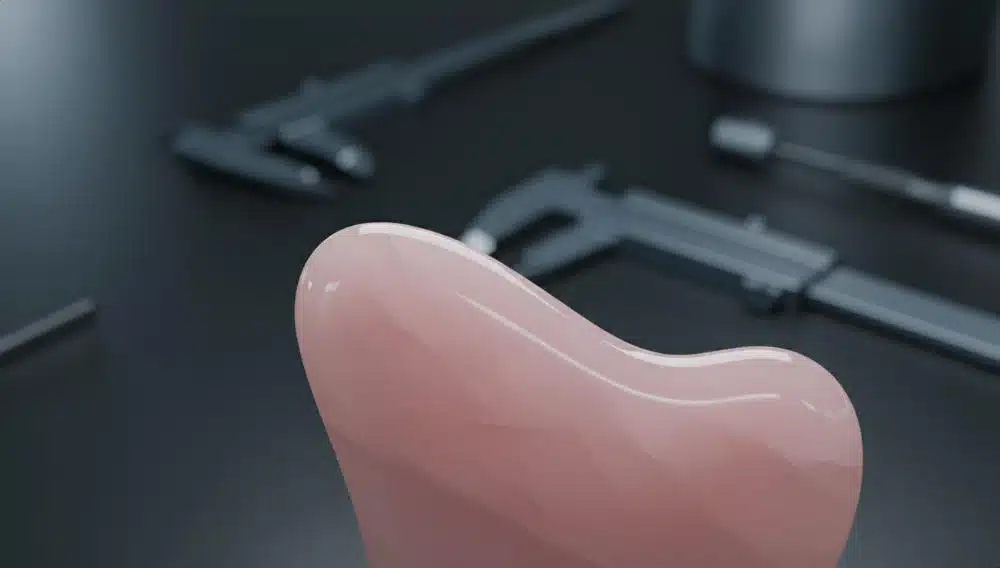
Gua Sha Tool

Sephora, Ulta, and Beautybio Supplier& Manufacturer. News About Jade Gua Sha Tools, Rose Quartz Gua Sha Facial Massage Tools. Know more about Jade Gua Sha Tools. Benefits of Gua Sha Tool.

rose quartz gua sha polishing

Rose Quartz Gua Sha Polishing Guide: Manufacturing Standards Behind Premium Quality

In the global skincare industry, facial massage tools have evolved from niche wellness products into mainstream beauty accessories. Among them, rose quartz gua sha tools remain one of the most recognizable gemstone-based skincare products. Their popularity comes from a combination of aesthetics and ritual. The soft pink tone of rose quartz creates strong visual appeal, while its smooth mineral surface makes it suitable for facial massage techniques used in spas, beauty clinics, and home skincare routines. However, behind the elegance of a premium rose quartz gua sha tool lies a manufacturing reality that many brands only discover after placing their first wholesale order. Not all rose quartz tools are produced to the same standards. In the global supply chain, significant differences exist between factories in terms of polishing capability, production consistency, and quality inspection systems. For beauty brands targeting premium retail channels, these differences can determine whether a product strengthens brand reputation or creates operational problems. This guide explains the manufacturing science behind rose quartz gua sha polishing, including surface finishing methods, quality measurement standards, and the production factors that separate reliable suppliers from inconsistent ones. The Market Problem: Why Many Rose Quartz Gua Sha Tools Fail Quality Expectations Rose quartz belongs to the quartz mineral family and shares physical properties common to crystalline silica materials. According to mineralogical documentation from organizations such as the Gemological Institute of America and the United States Geological Survey, quartz typically exhibits the following characteristics: Property Typical Value Mineral Family Quartz Mohs Hardness ~7 Density ~2.65 g/cm³ Crystal Structure Trigonal Fracture Type Conchoidal While these properties make quartz durable enough for skincare tools, they also introduce challenges during machining and polishing. Natural quartz frequently contains: If polishing processes are poorly controlled, these natural characteristics can become visible as surface defects. Common issues observed in wholesale rose quartz gua sha products include: Although these defects may appear minor, they significantly affect customer perception in premium beauty markets. For brands selling through high-end retailers, even small surface imperfections can transform a product from “luxury skincare tool” into something that feels inexpensive or unfinished. The Hidden Risks for Beauty Brands Manufacturing imperfections rarely remain confined to the factory. When polishing quality is inconsistent, the consequences often extend throughout a brand’s entire supply chain. Understanding these risks is critical for procurement teams sourcing gemstone skincare tools. Retail Returns and Customer Dissatisfaction Consumers purchasing natural gemstone tools typically expect a smooth and luxurious tactile experience. Even subtle imperfections—such as a slightly rough edge or uneven shine—can immediately reduce perceived quality. In premium retail environments, these small issues can result in: Because gua sha tools are often sold alongside high-end skincare products, their physical quality must match the surrounding brand environment. Product Launch Delays Polishing is often the most time-sensitive stage of gemstone tool manufacturing. If the polishing process is poorly optimized, factories may experience: These delays can disrupt brand launch schedules, especially when marketing campaigns and retailer rollouts are planned months in advance. Batch Inconsistency Across Orders Even when the first production order performs well, inconsistent polishing standards can cause quality variations in later batches. Without strict process control, subsequent production runs may show: For procurement managers scaling product lines, this inconsistency creates supply chain risk. Reliable manufacturers must be capable of maintaining consistent polishing quality across thousands of pieces and multiple production cycles. Understanding the Rose Quartz Polishing Process Professional gemstone tool manufacturing typically uses multi-stage vibratory polishing systems combined with optional manual finishing. Although the equipment appears automated, achieving consistent results requires precise control of polishing media, vibration intensity, abrasive compounds, and cycle duration. Manufacturing Workflow Overview The typical production process for rose quartz gua sha tools follows this sequence: Raw Rose Quartz ↓ Block Cutting ↓ CNC Rough Shaping ↓ Edge Carving ↓ Multi-Stage Tumbling Polish ↓ Hand Finishing ↓ Quality Inspection Each stage influences the final tactile and visual quality of the tool. Multi-Stage Polishing Parameters Professional manufacturers usually divide polishing into three sequential stages. Stage 1: Coarse Surface Leveling This stage removes machining marks created during CNC shaping. Parameter Typical Range Media Type Ceramic abrasive Media Size 5–8 mm Cycle Time 4–6 hours Purpose Remove machining lines The objective is to smooth out visible tool marks while preserving the overall geometry of the gua sha tool. Stage 2: Surface Refinement The second stage refines the surface texture and eliminates most micro-scratches. Parameter Typical Range Media Type Plastic or resin abrasive Abrasive Aluminum oxide Cycle Time 6–8 hours Purpose Reduce micro-scratches After this stage, the stone appears smooth but has not yet developed its final gloss. Stage 3: Fine Polishing The final tumbling stage produces the characteristic soft glow of rose quartz. Parameter Typical Range Media Type Resin polishing pellets Compound Fine oxide powder Cycle Time 8–12 hours Purpose Develop surface gloss Surface Quality Measurement Methods In professional gemstone manufacturing, polishing quality is verified using objective measurement tools rather than visual inspection alone. Surface Roughness Testing Surface roughness measures microscopic irregularities on the stone surface. Typical testing method: Premium gua sha tools typically target: Ra ≤ 0.2 μm This level of smoothness ensures comfortable skin contact during facial massage. Gloss Measurement Gloss meters evaluate how much light reflects from the stone surface. Testing procedure: Typical gloss targets for rose quartz tools: 70–85 GU This range preserves a natural gemstone appearance while maintaining a refined surface finish. Experimental Polishing Tests To better understand how polishing variables affect surface quality, controlled internal tests can be conducted. Experiment 1: Polishing Duration A controlled test evaluated polishing duration on 60 identical rose quartz blanks. Tumbling Time Average Gloss 6 hours 64 GU 8 hours 73 GU 10 hours 82 GU Observations: Experiment 2: Polishing Media Wear Another test examined the impact of worn polishing media. Two production batches of 500 pieces were processed. Media Condition Surface Haze Rate Fresh media 4.8% Worn media 16.7% The results show that media degradation significantly increases surface haze defects, highlighting the importance of scheduled media replacement. The Role of Hand Finishing in

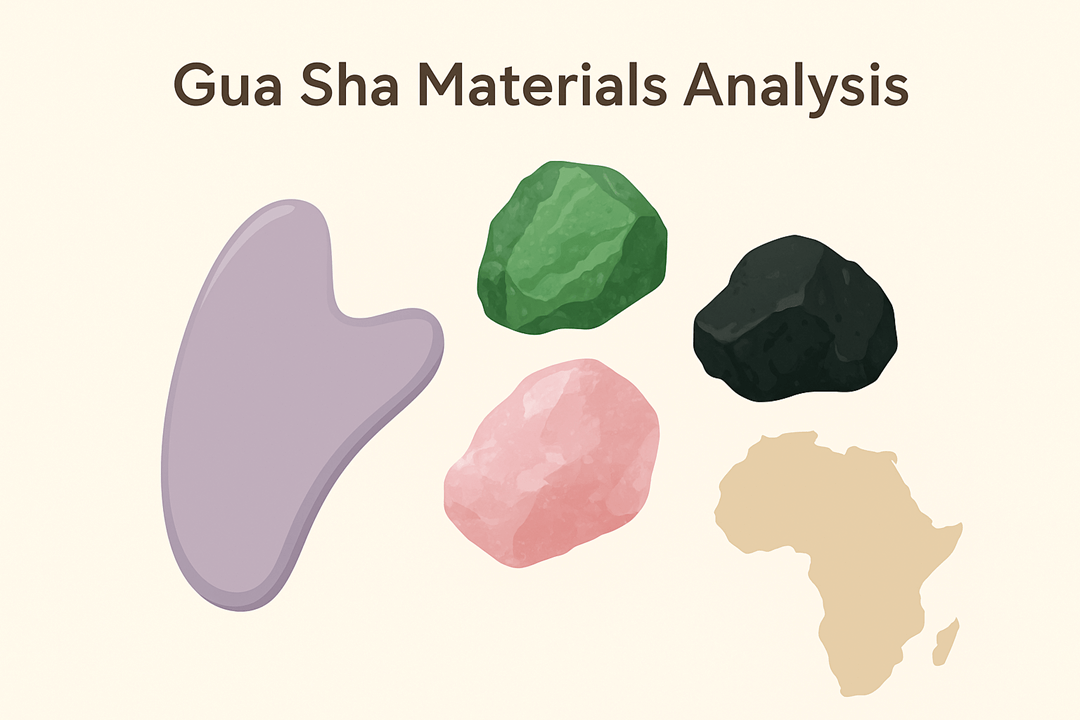
Rose Quartz Gua Sha Polishing Guide: Manufacturing Standards Behind Premium Quality Read More »

In the global skincare industry, facial massage tools have evolved from niche wellness products into mainstream beauty accessories. Among them, rose quartz gua sha tools remain one of the most recognizable gemstone-based skincare products. Their popularity comes from a combination of aesthetics and ritual. The soft pink tone of rose quartz creates strong visual appeal, while its smooth mineral surface makes it suitable for facial massage techniques used in spas, beauty clinics, and home skincare routines. However, behind the elegance of a premium rose quartz gua sha tool lies a manufacturing reality that many brands only discover after placing their first wholesale order. Not all rose quartz tools are produced to the same standards. In the global supply chain, significant differences exist between factories in terms of polishing capability, production consistency, and quality inspection systems. For beauty brands targeting premium retail channels, these differences can determine whether a product strengthens brand reputation or creates operational problems. This guide explains the manufacturing science behind rose quartz gua sha polishing, including surface finishing methods, quality measurement standards, and the production factors that separate reliable suppliers from inconsistent ones. The Market Problem: Why Many Rose Quartz Gua Sha Tools Fail Quality Expectations Rose quartz belongs to the quartz mineral family and shares physical properties common to crystalline silica materials. According to mineralogical documentation from organizations such as the Gemological Institute of America and the United States Geological Survey, quartz typically exhibits the following characteristics: Property Typical Value Mineral Family Quartz Mohs Hardness ~7 Density ~2.65 g/cm³ Crystal Structure Trigonal Fracture Type Conchoidal While these properties make quartz durable enough for skincare tools, they also introduce challenges during machining and polishing. Natural quartz frequently contains: If polishing processes are poorly controlled, these natural characteristics can become visible as surface defects. Common issues observed in wholesale rose quartz gua sha products include: Although these defects may appear minor, they significantly affect customer perception in premium beauty markets. For brands selling through high-end retailers, even small surface imperfections can transform a product from “luxury skincare tool” into something that feels inexpensive or unfinished. The Hidden Risks for Beauty Brands Manufacturing imperfections rarely remain confined to the factory. When polishing quality is inconsistent, the consequences often extend throughout a brand’s entire supply chain. Understanding these risks is critical for procurement teams sourcing gemstone skincare tools. Retail Returns and Customer Dissatisfaction Consumers purchasing natural gemstone tools typically expect a smooth and luxurious tactile experience. Even subtle imperfections—such as a slightly rough edge or uneven shine—can immediately reduce perceived quality. In premium retail environments, these small issues can result in: Because gua sha tools are often sold alongside high-end skincare products, their physical quality must match the surrounding brand environment. Product Launch Delays Polishing is often the most time-sensitive stage of gemstone tool manufacturing. If the polishing process is poorly optimized, factories may experience: These delays can disrupt brand launch schedules, especially when marketing campaigns and retailer rollouts are planned months in advance. Batch Inconsistency Across Orders Even when the first production order performs well, inconsistent polishing standards can cause quality variations in later batches. Without strict process control, subsequent production runs may show: For procurement managers scaling product lines, this inconsistency creates supply chain risk. Reliable manufacturers must be capable of maintaining consistent polishing quality across thousands of pieces and multiple production cycles. Understanding the Rose Quartz Polishing Process Professional gemstone tool manufacturing typically uses multi-stage vibratory polishing systems combined with optional manual finishing. Although the equipment appears automated, achieving consistent results requires precise control of polishing media, vibration intensity, abrasive compounds, and cycle duration. Manufacturing Workflow Overview The typical production process for rose quartz gua sha tools follows this sequence: Raw Rose Quartz ↓ Block Cutting ↓ CNC Rough Shaping ↓ Edge Carving ↓ Multi-Stage Tumbling Polish ↓ Hand Finishing ↓ Quality Inspection Each stage influences the final tactile and visual quality of the tool. Multi-Stage Polishing Parameters Professional manufacturers usually divide polishing into three sequential stages. Stage 1: Coarse Surface Leveling This stage removes machining marks created during CNC shaping. Parameter Typical Range Media Type Ceramic abrasive Media Size 5–8 mm Cycle Time 4–6 hours Purpose Remove machining lines The objective is to smooth out visible tool marks while preserving the overall geometry of the gua sha tool. Stage 2: Surface Refinement The second stage refines the surface texture and eliminates most micro-scratches. Parameter Typical Range Media Type Plastic or resin abrasive Abrasive Aluminum oxide Cycle Time 6–8 hours Purpose Reduce micro-scratches After this stage, the stone appears smooth but has not yet developed its final gloss. Stage 3: Fine Polishing The final tumbling stage produces the characteristic soft glow of rose quartz. Parameter Typical Range Media Type Resin polishing pellets Compound Fine oxide powder Cycle Time 8–12 hours Purpose Develop surface gloss Surface Quality Measurement Methods In professional gemstone manufacturing, polishing quality is verified using objective measurement tools rather than visual inspection alone. Surface Roughness Testing Surface roughness measures microscopic irregularities on the stone surface. Typical testing method: Premium gua sha tools typically target: Ra ≤ 0.2 μm This level of smoothness ensures comfortable skin contact during facial massage. Gloss Measurement Gloss meters evaluate how much light reflects from the stone surface. Testing procedure: Typical gloss targets for rose quartz tools: 70–85 GU This range preserves a natural gemstone appearance while maintaining a refined surface finish. Experimental Polishing Tests To better understand how polishing variables affect surface quality, controlled internal tests can be conducted. Experiment 1: Polishing Duration A controlled test evaluated polishing duration on 60 identical rose quartz blanks. Tumbling Time Average Gloss 6 hours 64 GU 8 hours 73 GU 10 hours 82 GU Observations: Experiment 2: Polishing Media Wear Another test examined the impact of worn polishing media. Two production batches of 500 pieces were processed. Media Condition Surface Haze Rate Fresh media 4.8% Worn media 16.7% The results show that media degradation significantly increases surface haze defects, highlighting the importance of scheduled media replacement. The Role of Hand Finishing in

gua sha and Temu

Analyzing Why Temu Gua Sha is So Cheap & Expanded to Other Platforms

The prices of Gua Sha tools vary significantly across different platforms, with Temu often offering the cheapest prices, often significantly outpacing other platforms. Why are prices so different for the same product? Today, we’ll analyze the reasons. (As a leading gua sha wholesale manufacturer, we understand the rules and have worked with Temu before, so we’re well aware of some of them.) We’ll explain this from three perspectives: platform strategy, the partnership model between sellers and the platform, and merchant product positioning. What is Temu and Its Platform Strategy? Temu, with its comprehensive product range and low prices, has seen rapid growth in recent years overseas. Its popularity is even eclipsing established e-commerce platforms like Amazon. However, Temu’s origins lie in China, not Europe or the US. Temu’s predecessor stems from the Chinese retail platform Pinduoduo. China boasts numerous retail platforms, with Taobao and JD.com initially dominating the market. With the emergence of Pinduoduo, a three-way competition has emerged. Pinduoduo’s sales strategy in China mirrors its overseas strategy: rapidly establishing its brand and capturing market share through extremely low prices. While its rapid expansion has led to a poor brand reputation due to its neglect of product quality and the authenticity of its merchants, its unparalleled pricing has also significantly impacted JD.com and Taobao. The resulting consensus among Chinese customers is as follows: Temu Platform Sales Strategy: Temu (also known as the overseas version of Pinduoduo) employs the same sales strategy as its counterparts in China: using “extremely low prices” as its primary selling point, using various platform subsidies and paid advertising to capture market share. They then leverage social media to increase exposure and attract audiences. Temu Gua Sha Hosting Model: Temu’s Collaboration with Gua Sha Sellers: Pricing is the Core The most striking feature of Temu’s partnerships with sellers is that pricing power rests almost entirely with the platform. Unlike platforms like Amazon and eBay, which allow sellers to set their own prices, Temu adopts a “full-management” model: sellers are solely responsible for supplying products, while the platform oversees pricing, operations, logistics, and after-sales service. This means that product prices are not determined by sellers but rather by Temu’s data algorithms, market comparisons, and traffic strategies. Under this mechanism, Temu’s core goal is to ensure that the platform maintains the “lowest prices online.” The platform compares prices for similar products and continuously reduces sellers’ offers, ensuring that consumers on Temu consistently see lower prices than on other e-commerce platforms. Small commodities like gua sha tools, which are low-cost to produce and easy to ship, are particularly susceptible to being categorized as “low-priced bestsellers.” This model also brings changes to the seller’s profit logic: However, this partnership also presents a potential conflict of interest. For Temu, extremely low prices can continuously bring in traffic and market share; but for sellers, if the platform over-cuts prices, it could erode their profit margins in the long term, forcing some small and medium-sized suppliers to withdraw. This forces sellers to rethink their product channel positioning and pricing strategies when working with Temu. As a leading gua sha wholesale manufacture, we are constantly looking for platforms to expand our sales channels. Faced with the rapid growth of Temu, we naturally have also cooperated with it. Therefore, we have a deep understanding of Temu’s cooperation model. We need to submit our products to the Temu platform, and the product list includes our selling prices. Temu officials will search the entire internet for data, including products on their own platform. Once all data is collected, Temu officials will modify the product list provided by the merchant and send it back to the merchant. The modified product list includes which products are eligible for listing and the purchase price. Only if you agree to Temu’s purchase price will your products be displayed on the Temu platform. This leads to a serious problem: the purchase price of the products is far below our acceptable range. The main reason is that: To address this situation, we had to remove long-standing, hard-to-sell inventory and use various methods to lower product costs, even if this meant quality issues. There was no other solution: if you couldn’t accept Temu’s pricing, your products wouldn’t be sold on the platform. While merchants could dispute the purchase price and resubmit it, our experience showed that the success rate was low. For this reason, we abandoned the idea of  using Temu as our primary platform for Gua Sha retail. Product Positioning and Response of Gua Sha Manufacturers As mentioned above, gua sha manufacturers have lost their pricing power in Temu, which is difficult for most merchants to accept. At the very least, they will not sell their company’s mainstream products on it, nor will they use it as a mainstream sales platform: 1. Low-end positioning: catering to the Temu platform’s “explosive thinking” 2. Mid-to-high-end positioning: Differentiation and breakthrough 3. Multi-level market layout: “kill two birds with one stone” Conclusion Admittedly, Temu should offer the lowest retail prices for gua sha products online, based solely on price. However, we can’t judge the issue solely by price. We believe quality is a more important factor. However, due to platform regulations, many wholesale manufacturers of gua sha products cannot sell high-quality gua sha products on Temu, as it would be a thankless task for them. So, if you’re looking to source high-quality gua sha products, brand-owned websites and Amazon are better options. The decision is yours; the balance between price and quality is different for everyone.

Analyzing Why Temu Gua Sha is So Cheap & Expanded to Other Platforms Read More »

The prices of Gua Sha tools vary significantly across different platforms, with Temu often offering the cheapest prices, often significantly outpacing other platforms. Why are prices so different for the same product? Today, we’ll analyze the reasons. (As a leading gua sha wholesale manufacturer, we understand the rules and have worked with Temu before, so we’re well aware of some of them.) We’ll explain this from three perspectives: platform strategy, the partnership model between sellers and the platform, and merchant product positioning. What is Temu and Its Platform Strategy? Temu, with its comprehensive product range and low prices, has seen rapid growth in recent years overseas. Its popularity is even eclipsing established e-commerce platforms like Amazon. However, Temu’s origins lie in China, not Europe or the US. Temu’s predecessor stems from the Chinese retail platform Pinduoduo. China boasts numerous retail platforms, with Taobao and JD.com initially dominating the market. With the emergence of Pinduoduo, a three-way competition has emerged. Pinduoduo’s sales strategy in China mirrors its overseas strategy: rapidly establishing its brand and capturing market share through extremely low prices. While its rapid expansion has led to a poor brand reputation due to its neglect of product quality and the authenticity of its merchants, its unparalleled pricing has also significantly impacted JD.com and Taobao. The resulting consensus among Chinese customers is as follows: Temu Platform Sales Strategy: Temu (also known as the overseas version of Pinduoduo) employs the same sales strategy as its counterparts in China: using “extremely low prices” as its primary selling point, using various platform subsidies and paid advertising to capture market share. They then leverage social media to increase exposure and attract audiences. Temu Gua Sha Hosting Model: Temu’s Collaboration with Gua Sha Sellers: Pricing is the Core The most striking feature of Temu’s partnerships with sellers is that pricing power rests almost entirely with the platform. Unlike platforms like Amazon and eBay, which allow sellers to set their own prices, Temu adopts a “full-management” model: sellers are solely responsible for supplying products, while the platform oversees pricing, operations, logistics, and after-sales service. This means that product prices are not determined by sellers but rather by Temu’s data algorithms, market comparisons, and traffic strategies. Under this mechanism, Temu’s core goal is to ensure that the platform maintains the “lowest prices online.” The platform compares prices for similar products and continuously reduces sellers’ offers, ensuring that consumers on Temu consistently see lower prices than on other e-commerce platforms. Small commodities like gua sha tools, which are low-cost to produce and easy to ship, are particularly susceptible to being categorized as “low-priced bestsellers.” This model also brings changes to the seller’s profit logic: However, this partnership also presents a potential conflict of interest. For Temu, extremely low prices can continuously bring in traffic and market share; but for sellers, if the platform over-cuts prices, it could erode their profit margins in the long term, forcing some small and medium-sized suppliers to withdraw. This forces sellers to rethink their product channel positioning and pricing strategies when working with Temu. As a leading gua sha wholesale manufacture, we are constantly looking for platforms to expand our sales channels. Faced with the rapid growth of Temu, we naturally have also cooperated with it. Therefore, we have a deep understanding of Temu’s cooperation model. We need to submit our products to the Temu platform, and the product list includes our selling prices. Temu officials will search the entire internet for data, including products on their own platform. Once all data is collected, Temu officials will modify the product list provided by the merchant and send it back to the merchant. The modified product list includes which products are eligible for listing and the purchase price. Only if you agree to Temu’s purchase price will your products be displayed on the Temu platform. This leads to a serious problem: the purchase price of the products is far below our acceptable range. The main reason is that: To address this situation, we had to remove long-standing, hard-to-sell inventory and use various methods to lower product costs, even if this meant quality issues. There was no other solution: if you couldn’t accept Temu’s pricing, your products wouldn’t be sold on the platform. While merchants could dispute the purchase price and resubmit it, our experience showed that the success rate was low. For this reason, we abandoned the idea of  using Temu as our primary platform for Gua Sha retail. Product Positioning and Response of Gua Sha Manufacturers As mentioned above, gua sha manufacturers have lost their pricing power in Temu, which is difficult for most merchants to accept. At the very least, they will not sell their company’s mainstream products on it, nor will they use it as a mainstream sales platform: 1. Low-end positioning: catering to the Temu platform’s “explosive thinking” 2. Mid-to-high-end positioning: Differentiation and breakthrough 3. Multi-level market layout: “kill two birds with one stone” Conclusion Admittedly, Temu should offer the lowest retail prices for gua sha products online, based solely on price. However, we can’t judge the issue solely by price. We believe quality is a more important factor. However, due to platform regulations, many wholesale manufacturers of gua sha products cannot sell high-quality gua sha products on Temu, as it would be a thankless task for them. So, if you’re looking to source high-quality gua sha products, brand-owned websites and Amazon are better options. The decision is yours; the balance between price and quality is different for everyone.

gua sha manufactuer material analysis

Gua Sha Manufacturers: Gua Sha Material Market Analysis

In recent years, with the continuous expansion of the Gua Sha market and a surge in demand, the market trends and price fluctuations of Gua Sha materials have become a key focus for many Gua Sha manufacturer. Low prices mean a sharp reduction in production costs, while securing large quantities of raw materials ensures a stable supply. Both are directly related to the manufacturer’s specific interests. However, for raw materials such as crystal and jade, their market supply is directly affected by mining volume, resulting in drastic price fluctuations. For example, the current amethyst raw material, affected by mining volume, has led to a sharp increase in cost and a shortage of supply. Today, we will analyze the market trends of amethyst raw materials, starting with amethyst raw materials and branching out to other crystal and jade materials. 1. Why is Amethyst Gua Sha so Hard to Come By? Amethyst in China is primarily divided into two types: “dog-tooth amethyst” (the raw material contains white banding), and “flower amethyst” (which lacks the white banding). Originally, the price of “dog-tooth amethyst” was slightly lower than that of “flower amethyst,” but with increasing material scarcity, the prices of both have risen sharply, and are now roughly on par. Most of the world’s amethyst is mined in regions such as South Africa, Brazil, and Uruguay. Amethyst is inherently scarcer than crystals like rose quartz. In addition to recent years of heavy mining, several major mines have been depleted, and new mines have yet to be discovered. This has led to an extreme shortage of amethyst in the raw material market. Not only is the quantity scarce, but the quality is also subpar. This situation has persisted for nearly a year and shows no signs of improvement. Besides the scarcity of raw material, another major factor is the structure of amethyst’s crystals. Amethyst cannot be produced in the form of large crystals like rose quartz, which can weigh several tons. Instead, it typically weighs around one or two kilograms. This size makes it difficult to create gua sha tools. Most raw amethyst is not large enough for this purpose, and can only be made into small carvings. Future Trend: Alternative materials (dyed crystal/synthetic amethyst) may emerge, but genuine amethyst will remain the mainstream in the high-end market. 2. Analysis of Other Crystal/Jade Gua Sha Materials 1. Mining situation: 2. Analysis of the Market Sales Situation of Gua Sha materials: 3. Challenges Faced By Supply Chain and Gua Sha Manufacturer In recent years, with the booming Gua Sha market, a large amount of raw stones have been mined. However, raw stone resources are limited, and some precious raw stones are at risk of depletion, while new resources are unlikely to be discovered in a short period of time. This has led to a large shortage of raw materials, with amethyst being a typical example. This situation has forced Gua Sha manufacturer to lock in resources in advance, resulting in increased financial pressure. The international market is increasingly demanding sustainable mining and environmental certification, and some supply chains are facing compliance challenges. Controls on the export of rough diamonds will also become increasingly stringent. The high-end market has higher requirements for the polishing, design, and branding of Gua Sha blades. While this will drive the upgrading of manufacturing processes in the industry to a certain extent, it also brings more challenges to Gua Sha manufacturer. The material market for Gua Sha tools is no longer simply a matter of raw material selection; it is a comprehensive reflection of supply chains, environmental policies, and global consumer trends. Given the scarcity of amethyst resources, Gua Sha manufacturer must not only seize opportunities in the high-end market but also actively explore alternative materials and innovative products to maintain their advantages in the fierce competition of the future.

Gua Sha Manufacturers: Gua Sha Material Market Analysis Read More »

In recent years, with the continuous expansion of the Gua Sha market and a surge in demand, the market trends and price fluctuations of Gua Sha materials have become a key focus for many Gua Sha manufacturer. Low prices mean a sharp reduction in production costs, while securing large quantities of raw materials ensures a stable supply. Both are directly related to the manufacturer’s specific interests. However, for raw materials such as crystal and jade, their market supply is directly affected by mining volume, resulting in drastic price fluctuations. For example, the current amethyst raw material, affected by mining volume, has led to a sharp increase in cost and a shortage of supply. Today, we will analyze the market trends of amethyst raw materials, starting with amethyst raw materials and branching out to other crystal and jade materials. 1. Why is Amethyst Gua Sha so Hard to Come By? Amethyst in China is primarily divided into two types: “dog-tooth amethyst” (the raw material contains white banding), and “flower amethyst” (which lacks the white banding). Originally, the price of “dog-tooth amethyst” was slightly lower than that of “flower amethyst,” but with increasing material scarcity, the prices of both have risen sharply, and are now roughly on par. Most of the world’s amethyst is mined in regions such as South Africa, Brazil, and Uruguay. Amethyst is inherently scarcer than crystals like rose quartz. In addition to recent years of heavy mining, several major mines have been depleted, and new mines have yet to be discovered. This has led to an extreme shortage of amethyst in the raw material market. Not only is the quantity scarce, but the quality is also subpar. This situation has persisted for nearly a year and shows no signs of improvement. Besides the scarcity of raw material, another major factor is the structure of amethyst’s crystals. Amethyst cannot be produced in the form of large crystals like rose quartz, which can weigh several tons. Instead, it typically weighs around one or two kilograms. This size makes it difficult to create gua sha tools. Most raw amethyst is not large enough for this purpose, and can only be made into small carvings. Future Trend: Alternative materials (dyed crystal/synthetic amethyst) may emerge, but genuine amethyst will remain the mainstream in the high-end market. 2. Analysis of Other Crystal/Jade Gua Sha Materials 1. Mining situation: 2. Analysis of the Market Sales Situation of Gua Sha materials: 3. Challenges Faced By Supply Chain and Gua Sha Manufacturer In recent years, with the booming Gua Sha market, a large amount of raw stones have been mined. However, raw stone resources are limited, and some precious raw stones are at risk of depletion, while new resources are unlikely to be discovered in a short period of time. This has led to a large shortage of raw materials, with amethyst being a typical example. This situation has forced Gua Sha manufacturer to lock in resources in advance, resulting in increased financial pressure. The international market is increasingly demanding sustainable mining and environmental certification, and some supply chains are facing compliance challenges. Controls on the export of rough diamonds will also become increasingly stringent. The high-end market has higher requirements for the polishing, design, and branding of Gua Sha blades. While this will drive the upgrading of manufacturing processes in the industry to a certain extent, it also brings more challenges to Gua Sha manufacturer. The material market for Gua Sha tools is no longer simply a matter of raw material selection; it is a comprehensive reflection of supply chains, environmental policies, and global consumer trends. Given the scarcity of amethyst resources, Gua Sha manufacturer must not only seize opportunities in the high-end market but also actively explore alternative materials and innovative products to maintain their advantages in the fierce competition of the future.

gua sha wholesale china guide

Gua Sha Wholesale – China Export Guide

If you’re involved in Gua Sha therapy, whether you’re a physiotherapy salon, spa, or Guasha retailer, you’ll inevitably interact with one country: China. As the birthplace of Guasha therapy, China boasts the largest and most comprehensive Gua Sha wholesale market, as well as the richest Gua Sha culture. Today, we’ve compiled a guide on sourcing Guasha tools from China to help you with your orders. 1. Why is China the Preferred Place for Gu Sha Wholesale? For a purchase order, the most important factors are price, quality, supply stability, product variety and transaction security. The Chinese market perfectly matches these conditions: As the birthplace and primary consumer market for Gua Sha tools, China boasts a comprehensive Gua Sha industry chain. This industry chain allows manufacturers to minimize production costs. In addition to the cost reductions brought about by industrial upgrading, another factor contributing to the low prices of Gua Sha products in China is domestic market competition. As the world’s leading producer and consumer of Gua Sha, competition in this field is fierce in China. To maintain competitiveness, major manufacturers are forced to engage in price wars, resulting in a continuous decline in the price of Gua Sha products. China’s Gua Sha production technology is highly sophisticated, thanks to internal competition and long-term technological development. Looking globally, if you’re looking to source the highest-quality Gua Sha tools, China is undoubtedly the best choice. On the other hand, Gua Sha is a niche industry, making it difficult to find manufacturers outside of China. China boasts abundant resources of raw materials such as jade, crystal, and stainless steel. Coupled with established processing zones (such as those in Hebei, Zhejiang, Guangdong, and Guangxi), this has resulted in a comprehensive Gua Sha tool industry chain. This comprehensive industry chain ensures stable supply. From traditional jade Gua Sha boards to emerging stainless steel, glass, and resin products, Chinese suppliers can meet virtually any market demand. Transaction security is crucial in cross-border transactions. Compared to domestic transactions, overseas transactions carry higher risks, primarily due to transaction uncertainty and the difficulty of recovering funds. China, however, has consistently maintained a high reputation in cross-border transactions. In addition to the aforementioned factors, another key factor is China’s mature export system. As one of the world’s largest exporters, Chinese suppliers have extensive experience in foreign trade processes. 2. How to Choose the Right Chinese Gua Sha Wholesale Supplier? As the largest gua sha market, China has countless suppliers of all sizes. How do you choose a gua sha wholesale supplier that suits you? You only need to pay attention to the following points: 1. Types of Gua Sha Suppliers Suppliers fall into two main categories: factory-based and trading-based. Factory-based traders are often integrated manufacturing and trading companies, meaning they not only produce but also have their own Gua Sha sales department. Trading-based companies, on the other hand, lack their own production departments and focus solely on sales. They primarily purchase their products from manufacturers or through contract manufacturing. Their advantages and disadvantages vary: Industrial and trading-based merchants combine the price advantages of a manufacturing department with the communication convenience of a foreign trade sales department, thus compensating for the disadvantages of the aforementioned two types. You can choose the supplier type that suits your needs. 2. Merchant Evaluation Standard Reference After determining the type of merchant you need, the next step is to assess their qualifications, credibility, and whether they meet your needs. You can inquire about the following: Only after ensuring that the above information meets your needs can we consider further cooperation. 3. Risk Prevention Always be cautious, especially in business partnerships. Here are three key points to consider: 3. Wholesale Export Process and Precautions 1. Production Process: Order confirmation → payment of deposit (full payment) → sample confirmation → mass production → quality inspection → payment of balance → delivery. The entire order process roughly goes through the above steps. The production cycle depends on the number of product orders. 2. Choose the right logistics option Currently, there are three mainstream logistics methods: air freight, ocean freight, and international express delivery. Each has its own advantages and disadvantages. Choose the logistics channel that suits you best: 3. Customs Clearance and Tariffs Given the recent frequent tariff fluctuations in the US, wholesale buyers of Gua Sha products in the US should pay extra attention to tariffs to avoid losses. 4. Payment Methods 4. Gua Sha Wholesale FAQ End, for buyers, selecting high-quality suppliers, understanding export procedures, and understanding market trends are key to successfully entering this niche market. Now is an opportune time to enter the Gua Sha industry and expand your brand’s competitiveness. This concludes our guide to exporting Gua Sha wholesale products from China. If you have any questions about the ideas expressed herein or need further information, please feel free to share your thoughts in the comments section or by contacting us via the form. Thank you for reading.

Gua Sha Wholesale – China Export Guide Read More »

If you’re involved in Gua Sha therapy, whether you’re a physiotherapy salon, spa, or Guasha retailer, you’ll inevitably interact with one country: China. As the birthplace of Guasha therapy, China boasts the largest and most comprehensive Gua Sha wholesale market, as well as the richest Gua Sha culture. Today, we’ve compiled a guide on sourcing Guasha tools from China to help you with your orders. 1. Why is China the Preferred Place for Gu Sha Wholesale? For a purchase order, the most important factors are price, quality, supply stability, product variety and transaction security. The Chinese market perfectly matches these conditions: As the birthplace and primary consumer market for Gua Sha tools, China boasts a comprehensive Gua Sha industry chain. This industry chain allows manufacturers to minimize production costs. In addition to the cost reductions brought about by industrial upgrading, another factor contributing to the low prices of Gua Sha products in China is domestic market competition. As the world’s leading producer and consumer of Gua Sha, competition in this field is fierce in China. To maintain competitiveness, major manufacturers are forced to engage in price wars, resulting in a continuous decline in the price of Gua Sha products. China’s Gua Sha production technology is highly sophisticated, thanks to internal competition and long-term technological development. Looking globally, if you’re looking to source the highest-quality Gua Sha tools, China is undoubtedly the best choice. On the other hand, Gua Sha is a niche industry, making it difficult to find manufacturers outside of China. China boasts abundant resources of raw materials such as jade, crystal, and stainless steel. Coupled with established processing zones (such as those in Hebei, Zhejiang, Guangdong, and Guangxi), this has resulted in a comprehensive Gua Sha tool industry chain. This comprehensive industry chain ensures stable supply. From traditional jade Gua Sha boards to emerging stainless steel, glass, and resin products, Chinese suppliers can meet virtually any market demand. Transaction security is crucial in cross-border transactions. Compared to domestic transactions, overseas transactions carry higher risks, primarily due to transaction uncertainty and the difficulty of recovering funds. China, however, has consistently maintained a high reputation in cross-border transactions. In addition to the aforementioned factors, another key factor is China’s mature export system. As one of the world’s largest exporters, Chinese suppliers have extensive experience in foreign trade processes. 2. How to Choose the Right Chinese Gua Sha Wholesale Supplier? As the largest gua sha market, China has countless suppliers of all sizes. How do you choose a gua sha wholesale supplier that suits you? You only need to pay attention to the following points: 1. Types of Gua Sha Suppliers Suppliers fall into two main categories: factory-based and trading-based. Factory-based traders are often integrated manufacturing and trading companies, meaning they not only produce but also have their own Gua Sha sales department. Trading-based companies, on the other hand, lack their own production departments and focus solely on sales. They primarily purchase their products from manufacturers or through contract manufacturing. Their advantages and disadvantages vary: Industrial and trading-based merchants combine the price advantages of a manufacturing department with the communication convenience of a foreign trade sales department, thus compensating for the disadvantages of the aforementioned two types. You can choose the supplier type that suits your needs. 2. Merchant Evaluation Standard Reference After determining the type of merchant you need, the next step is to assess their qualifications, credibility, and whether they meet your needs. You can inquire about the following: Only after ensuring that the above information meets your needs can we consider further cooperation. 3. Risk Prevention Always be cautious, especially in business partnerships. Here are three key points to consider: 3. Wholesale Export Process and Precautions 1. Production Process: Order confirmation → payment of deposit (full payment) → sample confirmation → mass production → quality inspection → payment of balance → delivery. The entire order process roughly goes through the above steps. The production cycle depends on the number of product orders. 2. Choose the right logistics option Currently, there are three mainstream logistics methods: air freight, ocean freight, and international express delivery. Each has its own advantages and disadvantages. Choose the logistics channel that suits you best: 3. Customs Clearance and Tariffs Given the recent frequent tariff fluctuations in the US, wholesale buyers of Gua Sha products in the US should pay extra attention to tariffs to avoid losses. 4. Payment Methods 4. Gua Sha Wholesale FAQ End, for buyers, selecting high-quality suppliers, understanding export procedures, and understanding market trends are key to successfully entering this niche market. Now is an opportune time to enter the Gua Sha industry and expand your brand’s competitiveness. This concludes our guide to exporting Gua Sha wholesale products from China. If you have any questions about the ideas expressed herein or need further information, please feel free to share your thoughts in the comments section or by contacting us via the form. Thank you for reading.

gua sha for Lymphatic Drainage

Gua Sha for Lymphatic Drainage: Principles, Methods, and Health Benefits

The benefits of Gua Sha for lymphatic drainage have been widely discussed in blogs. It not only improves appearance but also has potential positive effects on overall health. This widespread interest stems from the current surge in interest in natural remedies, as well as the promotion and sharing of beauty bloggers, wellness experts, and professionals. So, does Gua Sha really promote lymphatic drainage? Today, let’s explore this topic. First Understand the Lymphatic System The lymphatic system is a vital immune network in the human body, consisting of lymph nodes, lymphatic vessels, and lymph fluid. It is most widely distributed in the neck and armpits. It performs the following functions: Thus, the lymphatic system plays a crucial role in the human body. When the lymphatic system is not functioning properly, the following symptoms are likely to occur: Maintaining normal lymphatic function is therefore crucial. It not only affects our beauty but, more importantly, our health. The Benefits of Gua Sha for Lymphatic Drainage If lymphatic detoxification is blocked, it can affect our appearance and health. Gua Sha can improve these aspects. Gua Sha has the following benefits for lymphatic detoxification: Relaxes the body and mind. In addition to improving physical health, Gua Sha can also provide psychological support. Gua Sha can effectively relieve stress. How Does Gua Sha for Lymphatic Drainage? Gua Sha, by gua sha the skin’s surface, creates gentle friction and pressure, which can: Different from traditional deep-tissue gua sha used for muscle soreness, lymphatic detoxification gua sha emphasizes light pressure, a slow rhythm, and follows the direction of lymphatic flow (generally from the periphery toward the heart). Relevant Scientific Evidence and Expert Opinions Modern research shows that gua sha can improve local blood circulation and tissue metabolism, thereby indirectly promoting lymphatic circulation. Some physical therapists and Chinese medicine practitioners point out that regular mild gua sha can help relieve edema and tissue fluid retention. Real-world research supports the impact of gua sha on microcirculation and lymphatic flow Views and Reports on Beauty and Lymphatic Flow Precautions While the aforementioned studies and case studies demonstrate the potential of Gua Sha for lymphatic drainage, including promoting circulation and improving muscle function, there is currently insufficient data and research to demonstrate its direct effect on lymphatic detoxification. Therefore, we recommend using Gua Sha as an auxiliary method for lymphatic detoxification, rather than as a primary treatment. Furthermore, you should use Gua Sha tools correctly under the guidance of a professional physician. Gua Sha for Lymphatic Drainage Operation Tutorial Choose an appropriately sized gua sha tool and prepare your preferred gua sha medium/essential oil. This gua sha tutorial is designed for lymphatic drainage, not facial beauty, so we won’t cover facial gua sha in detail. This gua sha session will focus on the neck and arms: Neck gua sha: Arm gua sha: Safety Precautions and Contraindications Gua Sha is a simple, natural, and easy-to-perform at home health supplement that promotes lymphatic drainage. It not only helps reduce puffiness and improve skin tone, but also enhances overall well-being. However, everyone’s constitution is different, so it’s recommended to adjust the frequency and intensity of the treatments based on your individual condition and incorporate healthy lifestyle habits for optimal results.

Gua Sha for Lymphatic Drainage: Principles, Methods, and Health Benefits Read More »

The benefits of Gua Sha for lymphatic drainage have been widely discussed in blogs. It not only improves appearance but also has potential positive effects on overall health. This widespread interest stems from the current surge in interest in natural remedies, as well as the promotion and sharing of beauty bloggers, wellness experts, and professionals. So, does Gua Sha really promote lymphatic drainage? Today, let’s explore this topic. First Understand the Lymphatic System The lymphatic system is a vital immune network in the human body, consisting of lymph nodes, lymphatic vessels, and lymph fluid. It is most widely distributed in the neck and armpits. It performs the following functions: Thus, the lymphatic system plays a crucial role in the human body. When the lymphatic system is not functioning properly, the following symptoms are likely to occur: Maintaining normal lymphatic function is therefore crucial. It not only affects our beauty but, more importantly, our health. The Benefits of Gua Sha for Lymphatic Drainage If lymphatic detoxification is blocked, it can affect our appearance and health. Gua Sha can improve these aspects. Gua Sha has the following benefits for lymphatic detoxification: Relaxes the body and mind. In addition to improving physical health, Gua Sha can also provide psychological support. Gua Sha can effectively relieve stress. How Does Gua Sha for Lymphatic Drainage? Gua Sha, by gua sha the skin’s surface, creates gentle friction and pressure, which can: Different from traditional deep-tissue gua sha used for muscle soreness, lymphatic detoxification gua sha emphasizes light pressure, a slow rhythm, and follows the direction of lymphatic flow (generally from the periphery toward the heart). Relevant Scientific Evidence and Expert Opinions Modern research shows that gua sha can improve local blood circulation and tissue metabolism, thereby indirectly promoting lymphatic circulation. Some physical therapists and Chinese medicine practitioners point out that regular mild gua sha can help relieve edema and tissue fluid retention. Real-world research supports the impact of gua sha on microcirculation and lymphatic flow Views and Reports on Beauty and Lymphatic Flow Precautions While the aforementioned studies and case studies demonstrate the potential of Gua Sha for lymphatic drainage, including promoting circulation and improving muscle function, there is currently insufficient data and research to demonstrate its direct effect on lymphatic detoxification. Therefore, we recommend using Gua Sha as an auxiliary method for lymphatic detoxification, rather than as a primary treatment. Furthermore, you should use Gua Sha tools correctly under the guidance of a professional physician. Gua Sha for Lymphatic Drainage Operation Tutorial Choose an appropriately sized gua sha tool and prepare your preferred gua sha medium/essential oil. This gua sha tutorial is designed for lymphatic drainage, not facial beauty, so we won’t cover facial gua sha in detail. This gua sha session will focus on the neck and arms: Neck gua sha: Arm gua sha: Safety Precautions and Contraindications Gua Sha is a simple, natural, and easy-to-perform at home health supplement that promotes lymphatic drainage. It not only helps reduce puffiness and improve skin tone, but also enhances overall well-being. However, everyone’s constitution is different, so it’s recommended to adjust the frequency and intensity of the treatments based on your individual condition and incorporate healthy lifestyle habits for optimal results.

gua sha for legs

Gua Sha fo Legs – Relieve Fatigue and Promote Health

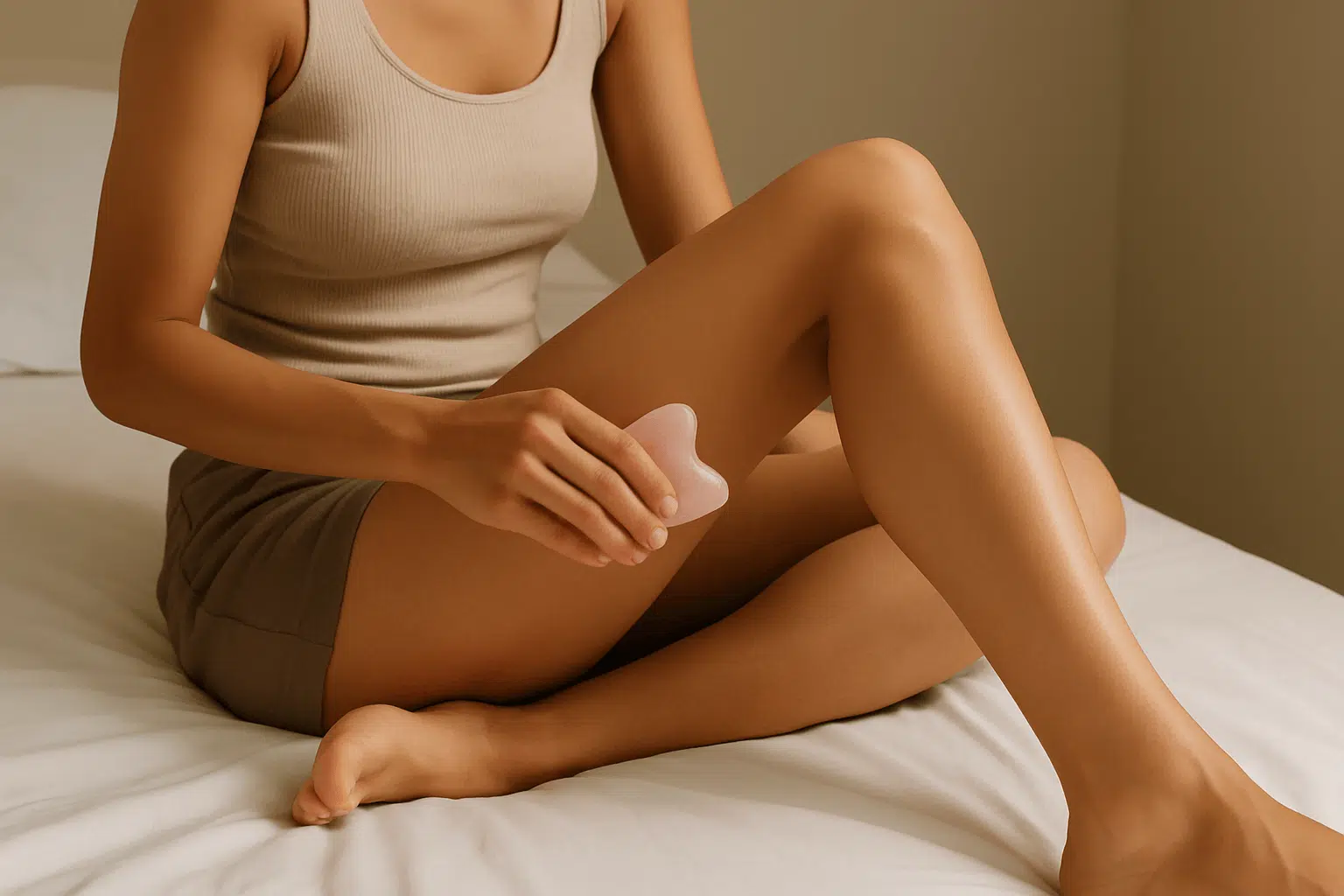
With people’s increasing focus on health and wellness, Gua Sha, an ancient Eastern physical therapy, has regained widespread attention recently. Gua Sha for legs is a key component of this practice. Users report that it improves blood circulation in the legs, thereby relieving muscle soreness and improving overall well-being. Today, we’ll take a detailed look at Gua Sha for legs and explain its true nature. Key Benefits of Gua Sha for Legs As an old Chinese saying goes, “A person’s legs age first.” This means that the legs are the first part of a person to show signs of aging, and this is indeed true. If you observe the elderly, you’ll notice a pattern: while most may still be mentally alert and able to carry considerable weight, their leg flexibility and stability are significantly reduced compared to younger people. Because the legs support the entire body’s weight, age-related deterioration of leg muscles is bound to severely impact them. The legs, subjected to long-term stress, often impair Qi and blood circulation and meridians, and are prone to muscle strain. Gua Sha can significantly improve these symptoms. Leg Gua Sha offers the following benefits: It should be noted that different people have different causes of illness and different constitutions, even though the symptoms may be similar. Therefore, the same gua sha method may have different effects on different people. Please adjust according to your actual situation. The Principle of Guasha for Legs Gua Sha involves rubbing a smooth gua sha tool across the skin’s surface while applying pressure to the muscles to relax them. This gua sha technique can: According to Traditional Chinese Medicine (TCM) theory, literature, and various clinical data, leg gua sha helps dredge meridians and harmonize Qi and blood. Furthermore, TCM considers the legs to be an essential component of maintaining human health, closely connected to the internal organs and meridians, as evidenced by the acupuncture points on the feet. TCM believes that acupuncture points corresponding to the five internal organs are distributed on the soles of the feet, and specialized massage of these areas can improve their function. Sources: How to Use Gua Sha for Legs? Gua Sha can bring many benefits, but it needs to be based on correct use. In fact, Gua Sha is not difficult. You can refer to the following: 1. Make good preparations 2. Correct Gua Sha Method Following the above-mentioned gua sha method, you can experience the basic therapeutic effects of scraping. However, considering the professionalism, if you want to get the best leg gua sha effect, it is recommended that you go to a professional gua sha institution to experience it. 3. Precautions for Gua Sha for Legs Although gua sha is highly safe, it is not completely foolproof. Be fully prepared to minimize risks and maximize benefits. Conclusion Gua Sha, a relatively safe and convenient traditional Chinese medicine treatment, has become a popular way to relieve leg fatigue, improve recovery from sports injuries, and enhance overall health. However, given individual differences, be prepared for unexpected results and seek professional help if necessary. If you’re interested in incorporating Gua Sha into your daily wellness routine, try it on your legs and experience the natural relief and boost in vitality it brings. In addition, you can also incorporate foot massage and scraping into the overall leg massage treatment to achieve more comprehensive and significant results.

Gua Sha fo Legs – Relieve Fatigue and Promote Health Read More »

With people’s increasing focus on health and wellness, Gua Sha, an ancient Eastern physical therapy, has regained widespread attention recently. Gua Sha for legs is a key component of this practice. Users report that it improves blood circulation in the legs, thereby relieving muscle soreness and improving overall well-being. Today, we’ll take a detailed look at Gua Sha for legs and explain its true nature. Key Benefits of Gua Sha for Legs As an old Chinese saying goes, “A person’s legs age first.” This means that the legs are the first part of a person to show signs of aging, and this is indeed true. If you observe the elderly, you’ll notice a pattern: while most may still be mentally alert and able to carry considerable weight, their leg flexibility and stability are significantly reduced compared to younger people. Because the legs support the entire body’s weight, age-related deterioration of leg muscles is bound to severely impact them. The legs, subjected to long-term stress, often impair Qi and blood circulation and meridians, and are prone to muscle strain. Gua Sha can significantly improve these symptoms. Leg Gua Sha offers the following benefits: It should be noted that different people have different causes of illness and different constitutions, even though the symptoms may be similar. Therefore, the same gua sha method may have different effects on different people. Please adjust according to your actual situation. The Principle of Guasha for Legs Gua Sha involves rubbing a smooth gua sha tool across the skin’s surface while applying pressure to the muscles to relax them. This gua sha technique can: According to Traditional Chinese Medicine (TCM) theory, literature, and various clinical data, leg gua sha helps dredge meridians and harmonize Qi and blood. Furthermore, TCM considers the legs to be an essential component of maintaining human health, closely connected to the internal organs and meridians, as evidenced by the acupuncture points on the feet. TCM believes that acupuncture points corresponding to the five internal organs are distributed on the soles of the feet, and specialized massage of these areas can improve their function. Sources: How to Use Gua Sha for Legs? Gua Sha can bring many benefits, but it needs to be based on correct use. In fact, Gua Sha is not difficult. You can refer to the following: 1. Make good preparations 2. Correct Gua Sha Method Following the above-mentioned gua sha method, you can experience the basic therapeutic effects of scraping. However, considering the professionalism, if you want to get the best leg gua sha effect, it is recommended that you go to a professional gua sha institution to experience it. 3. Precautions for Gua Sha for Legs Although gua sha is highly safe, it is not completely foolproof. Be fully prepared to minimize risks and maximize benefits. Conclusion Gua Sha, a relatively safe and convenient traditional Chinese medicine treatment, has become a popular way to relieve leg fatigue, improve recovery from sports injuries, and enhance overall health. However, given individual differences, be prepared for unexpected results and seek professional help if necessary. If you’re interested in incorporating Gua Sha into your daily wellness routine, try it on your legs and experience the natural relief and boost in vitality it brings. In addition, you can also incorporate foot massage and scraping into the overall leg massage treatment to achieve more comprehensive and significant results.

body gua sha

Detailed Explanation of Full Body Gua Sha: Guasha Methods & Precautions for Different Areas

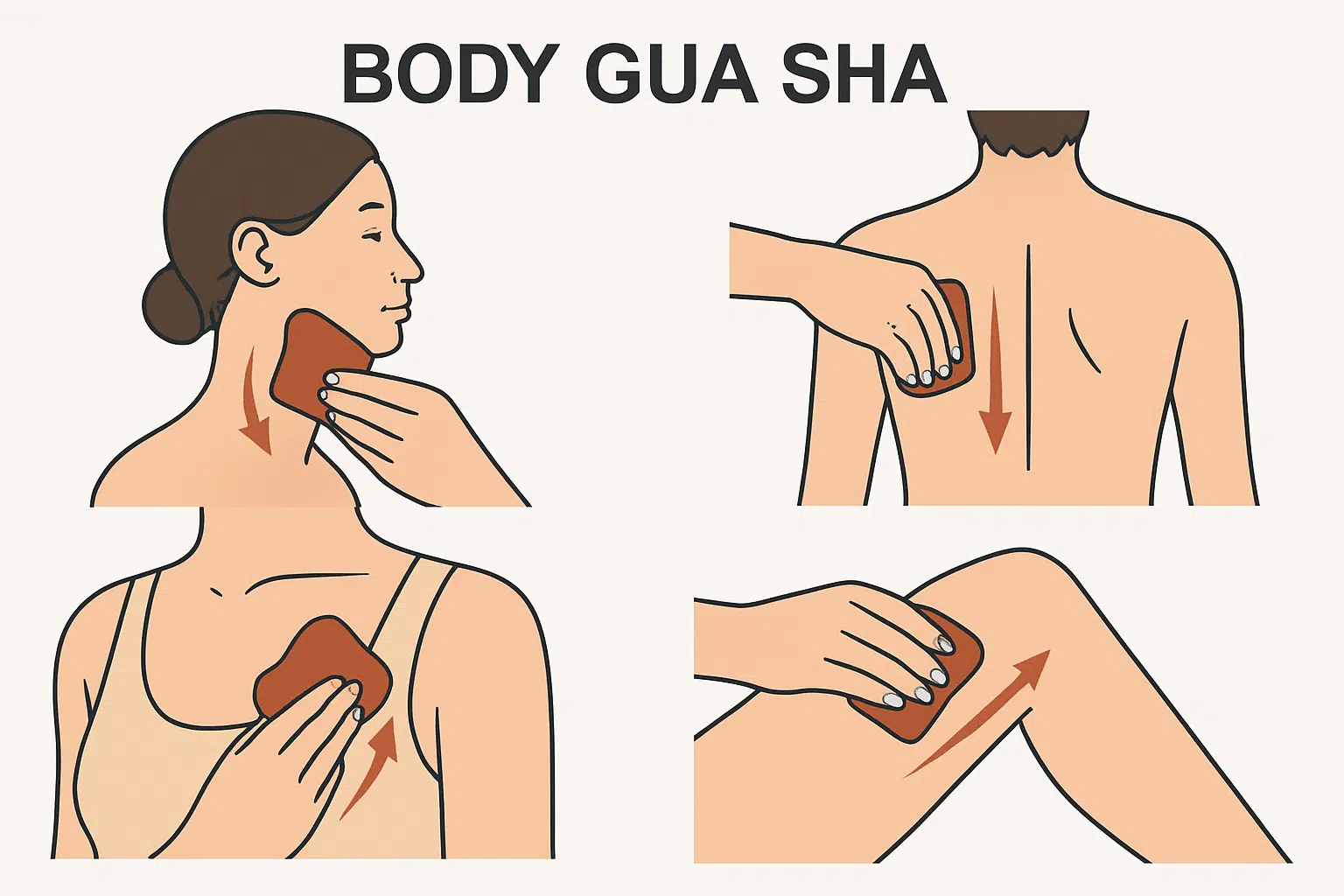
Facial gua sha therapy is currently gaining widespread attention and popularity for its cosmetic benefits. However, traditional body gua sha therapy, when applied to the entire body, is the most effective treatment for various ailments. Outside of China, gua sha therapy’s recognition for cosmetic purposes slightly surpasses traditional medical treatments, but in China, it’s more commonly used as a treatment for specific illnesses. Today, we’ll provide a detailed introduction to gua sha techniques, precautions, and benefits for different body regions. Use this information as a guide to choose the guasha method that suits your needs. Preparation for Full Body Gua Sha An old Chinese saying goes, “Sharpening the knife does not delay the chopping of wood.” This means that to do something well and quickly, you must thoroughly prepare beforehand. This applies to Gua Sha. Before performing guasha on your body, please confirm the following: Ensure all preparatory steps are complete before beginning guasha. This can lead to counterproductive results. Detailed explanation of Body Gua Sha 1. Neck Gua Sha   From: A study in The Journal of Pain (2011) indicated that neck scraping can effectively relieve chronic neck pain. [1] 2. Shoulder Area Gua Sha From: The Chinese Medicine Herald points out that scraping the bladder meridian on the back helps regulate the autonomic nervous system and enhance immunity. 3. Back Gua Sha From: The International Journal of Traditional Chinese Medicine and Materia Medica shows that chest scraping has a positive effect in improving respiratory system function. 4. Waist Gua Sha From: The “Chinese Journal of Traditional Chinese Medicine” mentioned that abdominal scraping can enhance the gastrointestinal nerve regulation function. 5. Abdominal Gua Sha From: Clinical observations in Traditional Chinese Medicine indicate that scraping the waist can significantly relieve tension in the lower back muscles caused by prolonged sitting. 6. Chest Gua Sha From: Experimental data from scraping therapy indicate that upper limb meridian stimulation can help relieve tendonitis and carpal tunnel syndrome. 7. Upper Limb Gua Sha From: Evidence-Based Complementary and Alternative Medicine (2020) mentioned that scraping the spleen meridian area of the calf can significantly promote peripheral circulation. [2] 8. Lower Limb Gua Sha (Thighs, Calfs, and Feet) From: “Research on Foot Reflexology” points out that combining scraping with the principles of plantar reflexology can enhance overall body vitality. Post – After Gua Sha Care Tips If you don’t take good care of yourself after Gua Sha, it can cause harm to your body. Please follow the following recommendations: Conclusion Body gua sha is a gentle form of self-care. Proper use can enhance daily life and promote good health. However, it’s important to note that body gua sha differs from facial gua sha in that it’s a different discipline. Body gua sha requires more specialized techniques and may even require assistance, which can take more time and effort to learn. We recommend that you experience gua sha at a professional institution and seek the advice of a professional practitioner to maximize the benefits and minimize risks.

Detailed Explanation of Full Body Gua Sha: Guasha Methods & Precautions for Different Areas Read More »

Facial gua sha therapy is currently gaining widespread attention and popularity for its cosmetic benefits. However, traditional body gua sha therapy, when applied to the entire body, is the most effective treatment for various ailments. Outside of China, gua sha therapy’s recognition for cosmetic purposes slightly surpasses traditional medical treatments, but in China, it’s more commonly used as a treatment for specific illnesses. Today, we’ll provide a detailed introduction to gua sha techniques, precautions, and benefits for different body regions. Use this information as a guide to choose the guasha method that suits your needs. Preparation for Full Body Gua Sha An old Chinese saying goes, “Sharpening the knife does not delay the chopping of wood.” This means that to do something well and quickly, you must thoroughly prepare beforehand. This applies to Gua Sha. Before performing guasha on your body, please confirm the following: Ensure all preparatory steps are complete before beginning guasha. This can lead to counterproductive results. Detailed explanation of Body Gua Sha 1. Neck Gua Sha   From: A study in The Journal of Pain (2011) indicated that neck scraping can effectively relieve chronic neck pain. [1] 2. Shoulder Area Gua Sha From: The Chinese Medicine Herald points out that scraping the bladder meridian on the back helps regulate the autonomic nervous system and enhance immunity. 3. Back Gua Sha From: The International Journal of Traditional Chinese Medicine and Materia Medica shows that chest scraping has a positive effect in improving respiratory system function. 4. Waist Gua Sha From: The “Chinese Journal of Traditional Chinese Medicine” mentioned that abdominal scraping can enhance the gastrointestinal nerve regulation function. 5. Abdominal Gua Sha From: Clinical observations in Traditional Chinese Medicine indicate that scraping the waist can significantly relieve tension in the lower back muscles caused by prolonged sitting. 6. Chest Gua Sha From: Experimental data from scraping therapy indicate that upper limb meridian stimulation can help relieve tendonitis and carpal tunnel syndrome. 7. Upper Limb Gua Sha From: Evidence-Based Complementary and Alternative Medicine (2020) mentioned that scraping the spleen meridian area of the calf can significantly promote peripheral circulation. [2] 8. Lower Limb Gua Sha (Thighs, Calfs, and Feet) From: “Research on Foot Reflexology” points out that combining scraping with the principles of plantar reflexology can enhance overall body vitality. Post – After Gua Sha Care Tips If you don’t take good care of yourself after Gua Sha, it can cause harm to your body. Please follow the following recommendations: Conclusion Body gua sha is a gentle form of self-care. Proper use can enhance daily life and promote good health. However, it’s important to note that body gua sha differs from facial gua sha in that it’s a different discipline. Body gua sha requires more specialized techniques and may even require assistance, which can take more time and effort to learn. We recommend that you experience gua sha at a professional institution and seek the advice of a professional practitioner to maximize the benefits and minimize risks.

gua sha for high blood pressure

Gua Sha for High Blood Pressure – It’s True or False?

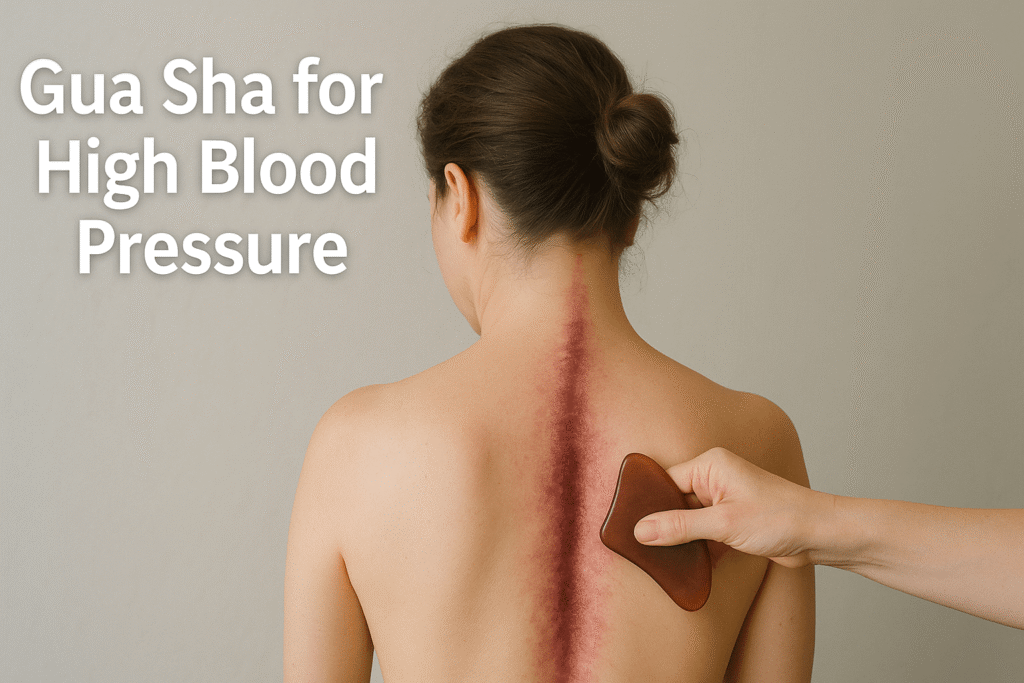
In recent months, I’ve frequently received information about “Gua Sha for High Blood Pressure” from people around me and online. Some sought to learn whether Gua Sha is effective, while others shared their experiences. This sparked my curiosity. In modern society, hypertension has become a common chronic condition affecting global health. According to the World Health Organization, due to improved living conditions and growing social pressures, over 1.1 billion people worldwide suffer from high blood pressure, and this number continues to rise. Given this significant number, in addition to standard medications, people are seeking non-drug, natural therapies to improve their condition and minimize medication side effects. So, can Gua Sha really lower high blood pressure? Today, we’ll address this question. The Formation Mechanism of Hypertension and The Perspective of Traditional Chinese Medicine Traditional Chinese and Western medicine have slightly different explanations for the development of hypertension. Considering that Gua Sha is part of traditional Chinese medicine, we will focus on the TCM explanation. TCM believes that hypertension is often associated with the following pathological mechanisms: Reviewing the therapeutic principles of Gua Sha clearly demonstrates its succumbing to these pathological conditions. Therefore, in principle, Gua Sha has considerable potential for treating hypertension. However, the existence of a theory does not guarantee its effectiveness. We have collected clinical research and case studies to understand its practical effects. The Potential Effects of Gua Sha for High Blood Pressure: Science and Case Studies The conclusions indicate that scraping is more effective in improving sleep quality in elderly patients and can be used as an adjunctive treatment for stage I–II hypertension. It is important to note that this data refers to scraping combined with medication and does not reflect the effects of scraping alone. Gua Sha may be more suitable as an adjunctive therapy rather than a primary treatment for hypertension. The study further indicated that scraping therapy, when combined with other Traditional Chinese Medicine (TCM) methods, can significantly improve clinical symptoms and quality of life in patients with hypertension. The observation group showed significant reductions in blood pressure (systolic and diastolic), blood lipids (TC, TG, LDL-C), homocysteine (Hcy), and MMP-9 levels, surpassing the control group (P < 0.05). This study demonstrates that meridian scraping therapy, based on the theory of “One Qi Circulation,” can be a safe and effective adjunctive treatment for hypertension and stroke. In addition to various research theories, practical case studies are also crucial in demonstrating the potential effects of scraping therapy on hypertension. Numerous TCM clinics and health centers have reported that middle-aged and elderly patients, or those working under prolonged stress, reported relief from head swelling and relaxation after receiving neck and back scraping therapy. Blood pressure measurements also showed a slight decrease. How to Use Gua Sha for High Blood Pressure Through research and case studies, we’ve found that Gua Sha is indeed effective in treating hypertension, but it requires tailoring the treatment to the specific condition. To maximize its hypotensive properties, the selected areas and methods should be tailored to the specific condition: Recommended Gua Sha Areas: Gua Sha Treatment Recommendations: Performing gua sha at night is most effective, helping with sleep and stabilizing blood pressure. Remember not to use gua sha blindly. While it doesn’t have the toxic side effects of medication, excessive use can cause harm. Who is Not Suitable to Lower Blood Pressure Through Gua Sha? While Gua Sha is generally considered safe, it’s not 100% effective. As mentioned above, excessive use can have negative side effects. Furthermore, some people are not suitable for using Gua Sha to lower blood pressure, even if they use the correct technique: In addition, if you experience dizziness, fatigue, or persistent skin rash after using Gua Sha, you should immediately stop using the technique and rest until the symptoms subside before continuing. For those with hypertension who are suitable for Gua Sha, Gua Sha has shown significant positive feedback in improving their daily lives and serving as an auxiliary treatment. This requires proper mastery of the technique. However, we do not recommend blindly using Gua Sha as a primary treatment for hypertension. It is more appropriate to consider it as an auxiliary treatment modality. We strongly recommend consulting a professional physician before considering Gua Sha, this will ensure optimal results and minimize potential risks.

Gua Sha for High Blood Pressure – It’s True or False? Read More »

In recent months, I’ve frequently received information about “Gua Sha for High Blood Pressure” from people around me and online. Some sought to learn whether Gua Sha is effective, while others shared their experiences. This sparked my curiosity. In modern society, hypertension has become a common chronic condition affecting global health. According to the World Health Organization, due to improved living conditions and growing social pressures, over 1.1 billion people worldwide suffer from high blood pressure, and this number continues to rise. Given this significant number, in addition to standard medications, people are seeking non-drug, natural therapies to improve their condition and minimize medication side effects. So, can Gua Sha really lower high blood pressure? Today, we’ll address this question. The Formation Mechanism of Hypertension and The Perspective of Traditional Chinese Medicine Traditional Chinese and Western medicine have slightly different explanations for the development of hypertension. Considering that Gua Sha is part of traditional Chinese medicine, we will focus on the TCM explanation. TCM believes that hypertension is often associated with the following pathological mechanisms: Reviewing the therapeutic principles of Gua Sha clearly demonstrates its succumbing to these pathological conditions. Therefore, in principle, Gua Sha has considerable potential for treating hypertension. However, the existence of a theory does not guarantee its effectiveness. We have collected clinical research and case studies to understand its practical effects. The Potential Effects of Gua Sha for High Blood Pressure: Science and Case Studies The conclusions indicate that scraping is more effective in improving sleep quality in elderly patients and can be used as an adjunctive treatment for stage I–II hypertension. It is important to note that this data refers to scraping combined with medication and does not reflect the effects of scraping alone. Gua Sha may be more suitable as an adjunctive therapy rather than a primary treatment for hypertension. The study further indicated that scraping therapy, when combined with other Traditional Chinese Medicine (TCM) methods, can significantly improve clinical symptoms and quality of life in patients with hypertension. The observation group showed significant reductions in blood pressure (systolic and diastolic), blood lipids (TC, TG, LDL-C), homocysteine (Hcy), and MMP-9 levels, surpassing the control group (P < 0.05). This study demonstrates that meridian scraping therapy, based on the theory of “One Qi Circulation,” can be a safe and effective adjunctive treatment for hypertension and stroke. In addition to various research theories, practical case studies are also crucial in demonstrating the potential effects of scraping therapy on hypertension. Numerous TCM clinics and health centers have reported that middle-aged and elderly patients, or those working under prolonged stress, reported relief from head swelling and relaxation after receiving neck and back scraping therapy. Blood pressure measurements also showed a slight decrease. How to Use Gua Sha for High Blood Pressure Through research and case studies, we’ve found that Gua Sha is indeed effective in treating hypertension, but it requires tailoring the treatment to the specific condition. To maximize its hypotensive properties, the selected areas and methods should be tailored to the specific condition: Recommended Gua Sha Areas: Gua Sha Treatment Recommendations: Performing gua sha at night is most effective, helping with sleep and stabilizing blood pressure. Remember not to use gua sha blindly. While it doesn’t have the toxic side effects of medication, excessive use can cause harm. Who is Not Suitable to Lower Blood Pressure Through Gua Sha? While Gua Sha is generally considered safe, it’s not 100% effective. As mentioned above, excessive use can have negative side effects. Furthermore, some people are not suitable for using Gua Sha to lower blood pressure, even if they use the correct technique: In addition, if you experience dizziness, fatigue, or persistent skin rash after using Gua Sha, you should immediately stop using the technique and rest until the symptoms subside before continuing. For those with hypertension who are suitable for Gua Sha, Gua Sha has shown significant positive feedback in improving their daily lives and serving as an auxiliary treatment. This requires proper mastery of the technique. However, we do not recommend blindly using Gua Sha as a primary treatment for hypertension. It is more appropriate to consider it as an auxiliary treatment modality. We strongly recommend consulting a professional physician before considering Gua Sha, this will ensure optimal results and minimize potential risks.

gua sha for cellulite

How About Gua Sha for Cellulite – It Does Really Work?

Are you troubled by cellulite? Despite trying numerous treatments, you still can’t seem to get rid of it. This can be frustrating for those who value beauty, even though it doesn’t directly impact your health. However, the recent surge in interest in “gua sha for cellulite” suggests that the benefits of gua sha in natural beauty treatments may offer some hope. But the question remains: Is gua sha effective for treating cellulite? Are there any precautions to be aware of? Does it have any side effects? This article will provide a comprehensive overview of these issues. What is Cellulite and Why is It so Difficult to Get Rid of? Cellulite is not simply a result of fat accumulation. In other words, it is not only found in obese people, although it is more common in obese people. It is caused by fat cells squeezing the surface of the skin through the connective tissue under the skin, forming a “wavy” or “honeycomb” texture. Its formation is affected by many factors, including: Once formed, cellulite is difficult to completely eliminate with diet or topical slimming products. Therefore, more and more people are trying physical stimulation therapies such as dry brushing, massage, and scraping to improve their skin’s condition. Gua Sha for Cellulite: How Does It Work? Gua Sha is a natural therapy that uses a specific tools to rhythmically apply pressure and scrape the skin’s surface, promoting blood circulation and unblocking meridians. Gua Sha not only relieves muscle tension but also has the potential to improve cellulite through the following mechanisms: Although large-scale clinical studies on the efficacy of “gua sha for cellulite” are currently lacking. However, according to real feedback from many users, the skin texture is indeed smoother and swelling is reduced after using scraping. How to use Gua Sha to Target Cellulite? There are no special requirements for using Gua Sha for cellulite; simply follow the normal Gua Sha procedure. Here’s a brief guide: We recommend using a large, body-specific Gua Sha board, such as Bian stone, rose quartz, or ox horn, with smooth edges that conform to the skin’s curves. You can use massage oils with draining or firming properties, such as those with caffeine, grapefruit, or rosemary. The Real Effects of Gua Sha for Cellulite: Can You See Any Changes? Gua Sha can’t completely cure cellulite, and it won’t improve it instantly. However, with consistent long-term use, you may experience the following benefits: Precautions for Using Gua Sha As a gentle, accessible natural treatment, Gua Sha for Cellulite isn’t a quick fix, so you won’t see immediate results. However, with consistent, long-term use, you can expect to see significant changes in your body. Don’t consider Gua Sha your primary cellulite treatment; instead, incorporate it into your daily regimen, complementing your primary treatment.

How About Gua Sha for Cellulite – It Does Really Work? Read More »

Are you troubled by cellulite? Despite trying numerous treatments, you still can’t seem to get rid of it. This can be frustrating for those who value beauty, even though it doesn’t directly impact your health. However, the recent surge in interest in “gua sha for cellulite” suggests that the benefits of gua sha in natural beauty treatments may offer some hope. But the question remains: Is gua sha effective for treating cellulite? Are there any precautions to be aware of? Does it have any side effects? This article will provide a comprehensive overview of these issues. What is Cellulite and Why is It so Difficult to Get Rid of? Cellulite is not simply a result of fat accumulation. In other words, it is not only found in obese people, although it is more common in obese people. It is caused by fat cells squeezing the surface of the skin through the connective tissue under the skin, forming a “wavy” or “honeycomb” texture. Its formation is affected by many factors, including: Once formed, cellulite is difficult to completely eliminate with diet or topical slimming products. Therefore, more and more people are trying physical stimulation therapies such as dry brushing, massage, and scraping to improve their skin’s condition. Gua Sha for Cellulite: How Does It Work? Gua Sha is a natural therapy that uses a specific tools to rhythmically apply pressure and scrape the skin’s surface, promoting blood circulation and unblocking meridians. Gua Sha not only relieves muscle tension but also has the potential to improve cellulite through the following mechanisms: Although large-scale clinical studies on the efficacy of “gua sha for cellulite” are currently lacking. However, according to real feedback from many users, the skin texture is indeed smoother and swelling is reduced after using scraping. How to use Gua Sha to Target Cellulite? There are no special requirements for using Gua Sha for cellulite; simply follow the normal Gua Sha procedure. Here’s a brief guide: We recommend using a large, body-specific Gua Sha board, such as Bian stone, rose quartz, or ox horn, with smooth edges that conform to the skin’s curves. You can use massage oils with draining or firming properties, such as those with caffeine, grapefruit, or rosemary. The Real Effects of Gua Sha for Cellulite: Can You See Any Changes? Gua Sha can’t completely cure cellulite, and it won’t improve it instantly. However, with consistent long-term use, you may experience the following benefits: Precautions for Using Gua Sha As a gentle, accessible natural treatment, Gua Sha for Cellulite isn’t a quick fix, so you won’t see immediate results. However, with consistent, long-term use, you can expect to see significant changes in your body. Don’t consider Gua Sha your primary cellulite treatment; instead, incorporate it into your daily regimen, complementing your primary treatment.

gua sha results

Gua Sha Results Explained: How It Works & How Often You Should Use It for Glowing Skin

With the popularity of natural beauty and non-invasive skin care, Gua Sha has gradually moved from the traditional health industry to the beauty industry. From various social media, we keep seeing various videos sharing gua sha results before and after. From these videos, Gua Sha seems to have magical powers. But is Gua Sha really effective? How does it work? How often should we use it? We will answer them one by one. 1. Gua Sha Results – My Personal Experience Many people try to use Gua Sha, and its effect is their biggest concern. In order to find out whether Gua Sha is really effective, I personally experienced Gua Sha for a month, and here are my experiences: 1. Using Gua Sha for 1-2 Weeks: 2. Using Gua Sha for 2-4 weeks: 3. After using Gua Sha for one month: After using Gua Sha for a month, I noticed that the condition of my facial skin has been significantly improved. It became tighter and smoother, and the dull skin tone and other problems were significantly improved.However, after I stopped using gua sha, my skin gradually returned to the state before using gua shaa. It can be seen that the effect of guasha is not permanent, it has a certain time limit. It is recommended that you maintain a long-term and continuous use habit. 2. How Does Gua Sha Work – Scientific Principles [1] Gua Sha originated from traditional Chinese medicine and has a history of thousands of years. Although the efficacy of Gua Sha has not been confirmed by a large number of scientific studies, it can still be explained from modern medicine: 3. How Often Should You Gua Sha?[2] As the saying goes, everything goes to extremes. Even the best things can have bad consequences if used excessively, and the same is true for gua sha. Excessive use of guasha may not give the skin enough time to repair, causing irreversible damage. Depending on your skin type, you can refer to the recommended gua sha frequency listed in the following table: Precautions: 4. 5 Factors that Affect the Gua Sha Results Even if you insist on using guasha for a long time, you may not see obvious results. This is because the gua sha results are affected by many factors, and the results obtained by each person may be different. Gua Sha is not magic, its effect lies in gentleness, naturalness, and long-term accumulation. As long as you master the scientific method, reasonable frequency, and a good lifestyle, most people can see surprising changes after a few weeks.If you are looking for a non-invasive, sustainable, and holistic skin care method, Gua Sha is a very worthwhile choice.

Gua Sha Results Explained: How It Works & How Often You Should Use It for Glowing Skin Read More »

With the popularity of natural beauty and non-invasive skin care, Gua Sha has gradually moved from the traditional health industry to the beauty industry. From various social media, we keep seeing various videos sharing gua sha results before and after. From these videos, Gua Sha seems to have magical powers. But is Gua Sha really effective? How does it work? How often should we use it? We will answer them one by one. 1. Gua Sha Results – My Personal Experience Many people try to use Gua Sha, and its effect is their biggest concern. In order to find out whether Gua Sha is really effective, I personally experienced Gua Sha for a month, and here are my experiences: 1. Using Gua Sha for 1-2 Weeks: 2. Using Gua Sha for 2-4 weeks: 3. After using Gua Sha for one month: After using Gua Sha for a month, I noticed that the condition of my facial skin has been significantly improved. It became tighter and smoother, and the dull skin tone and other problems were significantly improved.However, after I stopped using gua sha, my skin gradually returned to the state before using gua shaa. It can be seen that the effect of guasha is not permanent, it has a certain time limit. It is recommended that you maintain a long-term and continuous use habit. 2. How Does Gua Sha Work – Scientific Principles [1] Gua Sha originated from traditional Chinese medicine and has a history of thousands of years. Although the efficacy of Gua Sha has not been confirmed by a large number of scientific studies, it can still be explained from modern medicine: 3. How Often Should You Gua Sha?[2] As the saying goes, everything goes to extremes. Even the best things can have bad consequences if used excessively, and the same is true for gua sha. Excessive use of guasha may not give the skin enough time to repair, causing irreversible damage. Depending on your skin type, you can refer to the recommended gua sha frequency listed in the following table: Precautions: 4. 5 Factors that Affect the Gua Sha Results Even if you insist on using guasha for a long time, you may not see obvious results. This is because the gua sha results are affected by many factors, and the results obtained by each person may be different. Gua Sha is not magic, its effect lies in gentleness, naturalness, and long-term accumulation. As long as you master the scientific method, reasonable frequency, and a good lifestyle, most people can see surprising changes after a few weeks.If you are looking for a non-invasive, sustainable, and holistic skin care method, Gua Sha is a very worthwhile choice.

how often gua sha

How Often Gua Sha? Frequency, Benefits & Real Results

In recent years, gua sha has successfully transformed from a traditional Chinese medicine body therapy to a “natural skin care technique” in the modern beauty industry. Whether it is the celebrity recommendations and user sharing seen on social platforms, or the addition of various “gua sha instruments” to many skin care brands, this ancient therapy seems to be everywhere. Have you ever had such questions: This article will give some answers to these questions. We will answer you from three dimensions: scientific research, expert advice and real user cases. Through these methods, you can avoid detours on the road of guasha. What is Gua Sha? Why is it Becoming Popular? There is no unified statement about the origin of Gua Sha, and we will not check it too much because it is not the main purpose of this article. We only need to simply understand that Gua Sha is a natural therapy originated from traditional Chinese medicine, and it scrapes the skin surface with specific tools to promote blood circulation, lymphatic detoxification, relieve muscle tension and other effects. So why has it become popular in recent years? There are two main factors-demand and momentum. With the popularity of natural therapy and non-invasive beauty, people are keen to find various natural and non-invasive ways to achieve beauty effects. The relevant market demand has surged. The efficacy of Gua Sha outside of traditional Chinese medicine has been continuously discovered, among which its natural therapy and non-invasive beauty efficacy shines. The high matching degree of demand and function has led to a surge in the Gua Sha sales market. In recent years, social media users have shown exponential growth. The traffic of social media has also gradually surpassed traditional search engines. We have no way of verifying when Gua Sha began to appear on social media, nor do we know who is behind the scenes. But we can observe that since 2017, a large number of videos about Gua Sha have begun to appear on mainstream social media such as YouTube. Some are tutorials on how to use Gua Sha, some are sharing of Gua Sha celebrity cases, and some are professional Gua Sha demonstrations. But no matter who is promoting Gua Sha and what kind of video content is used to promote it, it has eventually made Gua Sha, a tool from the ancient East, appear in the eyes of countless people. Does Gua Sha Really Work? Science and Cases Coexist Does Gua Sha Work? There is no cure-all in the world. Gua Sha cannot work for everyone and every symptom. When exploring its effects, we need to consider multiple factors, such as scientific research and real user experience. 1. Scientific research support 2. User real case sharing Scientific research only represents the effect of its theoretical existence, while the real experience represents its actual possible effect. We will tell three real case sharing, which may give you some reference about the effect of gua sha. How Often is Gua Sha the Best? Scientific Advice to Answer How often gua sha? Have you ever thought about this question? Many people ignore the frequency of guasha and only focus on how to operate it. This has caused a large number of people to not fully experience the benefits of gua sha, and may even cause harm to themselves.How often gua sha? This depends on the part and population used: 1. Facial Gua Sha: Recommended Frequency 2. Body Gua Sha: Varies From Person to Person What Might Happen if You Gua Sha too Frequently? Although gua sha is a natural and non-invasive treatment, it does not have toxic side effects like drugs. However, as the saying goes, too much is as bad as too little. Anything in excess may have negative effects. Guasha may seem gentle, but if the frequency of operation is too high, the force is too strong, or the repair time is ignored, it may bring many disadvantages, such as: 5. Establish a Reasonable Gua Sha Care Plan: Practical Suggestions To maximize the effect of gua sha, it is important to develop a care plan that suits your own situation. Next, I will give you a reference for usage suggestions. This is a plan based on the needs of most people. You can make corresponding adjustments according to your own situation: 1. Recommended Combination: Use plant-extracted oils (such as olive oil), facial essence or special infusion liquid to apply to the skin before use to reduce the pulling feeling during guasha. 2. Recommended Time Period: 3. Recommended Gua Sha Sequence: Cleansing > Apply lubricant > Gentle gua sha> Cleansing > Moisturizing and finishing 4. Precautions: 5. Clean the Tools in Time After Use. If not cleaned properly, the facial oils and essences attached to the gua sha tools will be an excellent breeding ground for bacteria. How often gua sha? There is no standard answer to this question. It varies from person to person and changes with individual changes. But you can refer to some of the suggestions we provide and try them out. Make adjustments that suit your own needs for any areas that you don’t feel good about, so as to find a guasha program that suits you. Another important point to remember is persistence. Gua sha is a long-term investment.

How Often Gua Sha? Frequency, Benefits & Real Results Read More »

In recent years, gua sha has successfully transformed from a traditional Chinese medicine body therapy to a “natural skin care technique” in the modern beauty industry. Whether it is the celebrity recommendations and user sharing seen on social platforms, or the addition of various “gua sha instruments” to many skin care brands, this ancient therapy seems to be everywhere. Have you ever had such questions: This article will give some answers to these questions. We will answer you from three dimensions: scientific research, expert advice and real user cases. Through these methods, you can avoid detours on the road of guasha. What is Gua Sha? Why is it Becoming Popular? There is no unified statement about the origin of Gua Sha, and we will not check it too much because it is not the main purpose of this article. We only need to simply understand that Gua Sha is a natural therapy originated from traditional Chinese medicine, and it scrapes the skin surface with specific tools to promote blood circulation, lymphatic detoxification, relieve muscle tension and other effects. So why has it become popular in recent years? There are two main factors-demand and momentum. With the popularity of natural therapy and non-invasive beauty, people are keen to find various natural and non-invasive ways to achieve beauty effects. The relevant market demand has surged. The efficacy of Gua Sha outside of traditional Chinese medicine has been continuously discovered, among which its natural therapy and non-invasive beauty efficacy shines. The high matching degree of demand and function has led to a surge in the Gua Sha sales market. In recent years, social media users have shown exponential growth. The traffic of social media has also gradually surpassed traditional search engines. We have no way of verifying when Gua Sha began to appear on social media, nor do we know who is behind the scenes. But we can observe that since 2017, a large number of videos about Gua Sha have begun to appear on mainstream social media such as YouTube. Some are tutorials on how to use Gua Sha, some are sharing of Gua Sha celebrity cases, and some are professional Gua Sha demonstrations. But no matter who is promoting Gua Sha and what kind of video content is used to promote it, it has eventually made Gua Sha, a tool from the ancient East, appear in the eyes of countless people. Does Gua Sha Really Work? Science and Cases Coexist Does Gua Sha Work? There is no cure-all in the world. Gua Sha cannot work for everyone and every symptom. When exploring its effects, we need to consider multiple factors, such as scientific research and real user experience. 1. Scientific research support 2. User real case sharing Scientific research only represents the effect of its theoretical existence, while the real experience represents its actual possible effect. We will tell three real case sharing, which may give you some reference about the effect of gua sha. How Often is Gua Sha the Best? Scientific Advice to Answer How often gua sha? Have you ever thought about this question? Many people ignore the frequency of guasha and only focus on how to operate it. This has caused a large number of people to not fully experience the benefits of gua sha, and may even cause harm to themselves.How often gua sha? This depends on the part and population used: 1. Facial Gua Sha: Recommended Frequency 2. Body Gua Sha: Varies From Person to Person What Might Happen if You Gua Sha too Frequently? Although gua sha is a natural and non-invasive treatment, it does not have toxic side effects like drugs. However, as the saying goes, too much is as bad as too little. Anything in excess may have negative effects. Guasha may seem gentle, but if the frequency of operation is too high, the force is too strong, or the repair time is ignored, it may bring many disadvantages, such as: 5. Establish a Reasonable Gua Sha Care Plan: Practical Suggestions To maximize the effect of gua sha, it is important to develop a care plan that suits your own situation. Next, I will give you a reference for usage suggestions. This is a plan based on the needs of most people. You can make corresponding adjustments according to your own situation: 1. Recommended Combination: Use plant-extracted oils (such as olive oil), facial essence or special infusion liquid to apply to the skin before use to reduce the pulling feeling during guasha. 2. Recommended Time Period: 3. Recommended Gua Sha Sequence: Cleansing > Apply lubricant > Gentle gua sha> Cleansing > Moisturizing and finishing 4. Precautions: 5. Clean the Tools in Time After Use. If not cleaned properly, the facial oils and essences attached to the gua sha tools will be an excellent breeding ground for bacteria. How often gua sha? There is no standard answer to this question. It varies from person to person and changes with individual changes. But you can refer to some of the suggestions we provide and try them out. Make adjustments that suit your own needs for any areas that you don’t feel good about, so as to find a guasha program that suits you. Another important point to remember is persistence. Gua sha is a long-term investment.

after gua sha

Abnormal Reactions After Gua Sha & Recovery Strategies: What You Should Know?

Every year, millions of people integrate gua sha into their wellness routines — and the momentum is only growing. According to the Global Wellness Institute, the traditional skin-tool wellness category has expanded by over 40% in the past three years alone, with jade and crystal tools representing a growing share of that increase. Yet despite that surge in popularity, one question continues to surface in wellness communities, practitioner consultations, and online forums with remarkable consistency: is what I am feeling after my session actually gua sha normal? That question deserves a direct, honest answer — and that is exactly what this guide provides. Some post-session responses are simply your body doing what it does. Others are signals worth slowing down for. And far too many people react to one when they should be responding to the other. Understanding the full picture — from identifying gua sha side effects to building smarter habits gua sha before and after gua sha each session — is the foundation of a practice that consistently delivers results without unnecessary discomfort. This guide walks you through all of it, step by step. What Does “Gua Sha Normal” Feel Like? Setting the Right Expectations Before You Begin Before you pick up a tool, the most practical investment you can make is understanding what to expect on the other side of a session. A 2022 consumer wellness survey by Mintel found that 68% of first-time gua sha users reported feeling surprised by their skin’s response — even when that response was entirely expected and benign. That gap between expectation and lived experience is where unnecessary worry takes root, and closing it before you begin is one of the most overlooked gua sha benefits you can give yourself. Gua sha before each session, take a few moments to check in honestly: Are you well-rested? Have you eaten something light? Is your skin adequately hydrated? These variables directly shape what your body does in the hours that follow. Practitioners with years of hands-on experience consistently report that sessions conducted when the body is in a stable, nourished state tend to produce the most comfortable after gua sha responses. This is not coincidence. It reflects the straightforward reality that your body’s recovery resources are finite — and starting from a position of balance gives those resources far more to work with. If you walk into a session depleted, do not be surprised when your body’s response reflects that. Is there a single rule for what counts as gua sha normal? Not exactly — because individual variation is genuinely wide. What you can do is establish your own reference range across several sessions, using consistent pre-session conditions as your control variable. Is Feeling Tired After Gua Sha Normal? What Your Body Is Telling You Fatigue following a gua sha session is one of the most frequently reported post-session experiences — and also one of the most widely misunderstood. When you apply rhythmic, sustained pressure and movement across the skin’s surface, your body responds by adjusting circulation and muscle tension in the worked area. A sense of heaviness or mild tiredness can settle in for several hours afterward, and for the vast majority of users, this falls clearly within gua sha normal territory. If you feel rested again after a full night of sleep and adequate water intake, that is your baseline functioning exactly as it should. What is worth paying closer attention to is the duration of that fatigue, not its initial presence. Research published in Evidence-Based Complementary and Alternative Medicine notes that post-session fatigue in traditional skin-tool wellness practices is typically transient and resolves within 12 to 24 hours in users following appropriate technique. If your tiredness persists significantly beyond that window without improvement, it is worth adjusting your approach for your next session — reducing pressure, shortening duration, or increasing the recovery interval between sessions. Adjusting your approach, rather than abandoning the practice altogether, consistently produces better long-term outcomes. The intensity of post-session fatigue also tracks closely with technique. Understanding how to use gua sha with appropriate pressure and duration is the most direct lever you have over this particular response. Longer sessions with heavier pressure naturally produce more pronounced tiredness; shorter, gentler sessions in a single focused area tend to generate milder, more quickly resolved responses. This means that you are always in a position to influence your outcome — the variable is technique, not the practice itself. Gua Sha Normal: Understanding Skin Marks and Redness After a Session The visible marks that appear on the skin during and after gua sha are arguably the most visually alarming aspect of the experience for new users — and also the most consistently misunderstood. Seeing them for the first time can be startling, but on intact, non-sensitized skin that has been approached with appropriate technique, these marks are a well-documented feature of gua sha normal sessions. According to the National Center for Complementary and Integrative Health (NCCIH), temporary skin discoloration following gua sha is an expected, typically self-resolving response that most practitioners treat as a routine part of the experience. For most skin types, these marks fade within two to five days. Their depth of color varies based on several factors: the pressure level applied, the tool’s surface finish and edge geometry, the specific body area being worked on, and how hydrated your skin was at the start of the session. A darker mark does not automatically signal that something went wrong — it reflects the session’s intensity and your skin’s individual response pattern. What moves a response outside gua sha normal range is not the mark itself, but what the skin does in the days that follow: marks that intensify rather than fade, areas that develop persistent swelling, or any disruption to the skin surface are worth observing carefully and responding to with a reduction in session intensity. This means that tracking your skin’s day-over-day trajectory — rather than reacting to how it looks in the immediate aftermath of

Abnormal Reactions After Gua Sha & Recovery Strategies: What You Should Know? Read More »

Every year, millions of people integrate gua sha into their wellness routines — and the momentum is only growing. According to the Global Wellness Institute, the traditional skin-tool wellness category has expanded by over 40% in the past three years alone, with jade and crystal tools representing a growing share of that increase. Yet despite that surge in popularity, one question continues to surface in wellness communities, practitioner consultations, and online forums with remarkable consistency: is what I am feeling after my session actually gua sha normal? That question deserves a direct, honest answer — and that is exactly what this guide provides. Some post-session responses are simply your body doing what it does. Others are signals worth slowing down for. And far too many people react to one when they should be responding to the other. Understanding the full picture — from identifying gua sha side effects to building smarter habits gua sha before and after gua sha each session — is the foundation of a practice that consistently delivers results without unnecessary discomfort. This guide walks you through all of it, step by step. What Does “Gua Sha Normal” Feel Like? Setting the Right Expectations Before You Begin Before you pick up a tool, the most practical investment you can make is understanding what to expect on the other side of a session. A 2022 consumer wellness survey by Mintel found that 68% of first-time gua sha users reported feeling surprised by their skin’s response — even when that response was entirely expected and benign. That gap between expectation and lived experience is where unnecessary worry takes root, and closing it before you begin is one of the most overlooked gua sha benefits you can give yourself. Gua sha before each session, take a few moments to check in honestly: Are you well-rested? Have you eaten something light? Is your skin adequately hydrated? These variables directly shape what your body does in the hours that follow. Practitioners with years of hands-on experience consistently report that sessions conducted when the body is in a stable, nourished state tend to produce the most comfortable after gua sha responses. This is not coincidence. It reflects the straightforward reality that your body’s recovery resources are finite — and starting from a position of balance gives those resources far more to work with. If you walk into a session depleted, do not be surprised when your body’s response reflects that. Is there a single rule for what counts as gua sha normal? Not exactly — because individual variation is genuinely wide. What you can do is establish your own reference range across several sessions, using consistent pre-session conditions as your control variable. Is Feeling Tired After Gua Sha Normal? What Your Body Is Telling You Fatigue following a gua sha session is one of the most frequently reported post-session experiences — and also one of the most widely misunderstood. When you apply rhythmic, sustained pressure and movement across the skin’s surface, your body responds by adjusting circulation and muscle tension in the worked area. A sense of heaviness or mild tiredness can settle in for several hours afterward, and for the vast majority of users, this falls clearly within gua sha normal territory. If you feel rested again after a full night of sleep and adequate water intake, that is your baseline functioning exactly as it should. What is worth paying closer attention to is the duration of that fatigue, not its initial presence. Research published in Evidence-Based Complementary and Alternative Medicine notes that post-session fatigue in traditional skin-tool wellness practices is typically transient and resolves within 12 to 24 hours in users following appropriate technique. If your tiredness persists significantly beyond that window without improvement, it is worth adjusting your approach for your next session — reducing pressure, shortening duration, or increasing the recovery interval between sessions. Adjusting your approach, rather than abandoning the practice altogether, consistently produces better long-term outcomes. The intensity of post-session fatigue also tracks closely with technique. Understanding how to use gua sha with appropriate pressure and duration is the most direct lever you have over this particular response. Longer sessions with heavier pressure naturally produce more pronounced tiredness; shorter, gentler sessions in a single focused area tend to generate milder, more quickly resolved responses. This means that you are always in a position to influence your outcome — the variable is technique, not the practice itself. Gua Sha Normal: Understanding Skin Marks and Redness After a Session The visible marks that appear on the skin during and after gua sha are arguably the most visually alarming aspect of the experience for new users — and also the most consistently misunderstood. Seeing them for the first time can be startling, but on intact, non-sensitized skin that has been approached with appropriate technique, these marks are a well-documented feature of gua sha normal sessions. According to the National Center for Complementary and Integrative Health (NCCIH), temporary skin discoloration following gua sha is an expected, typically self-resolving response that most practitioners treat as a routine part of the experience. For most skin types, these marks fade within two to five days. Their depth of color varies based on several factors: the pressure level applied, the tool’s surface finish and edge geometry, the specific body area being worked on, and how hydrated your skin was at the start of the session. A darker mark does not automatically signal that something went wrong — it reflects the session’s intensity and your skin’s individual response pattern. What moves a response outside gua sha normal range is not the mark itself, but what the skin does in the days that follow: marks that intensify rather than fade, areas that develop persistent swelling, or any disruption to the skin surface are worth observing carefully and responding to with a reduction in session intensity. This means that tracking your skin’s day-over-day trajectory — rather than reacting to how it looks in the immediate aftermath of

Scroll to Top

Getting Fast Reply

gua sha wholesale
Please enter product details (such as color, size, materials etc.) and other specifc requirements to receive an accurate quote.