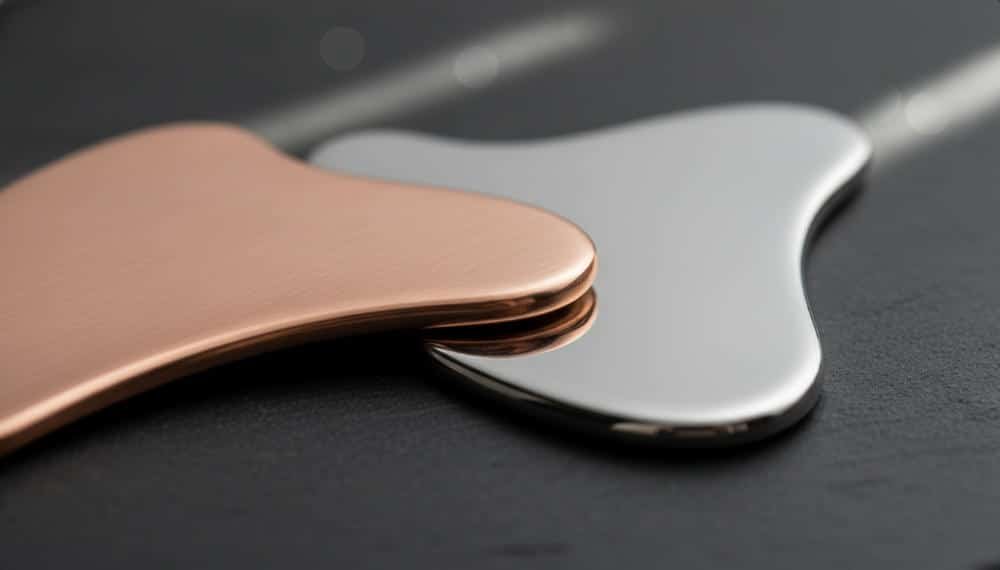
As a manufacturer who has worked for many years in the gua sha and beauty tool industry, we have seen materials rise and fall in popularity. Some trends are driven by marketing, while others are shaped by performance, durability, and cost efficiency. Among all metal tools, copper gua sha and stainless steel gua sha are often compared by professional estheticians, spa brands, and private label buyers.
From a distance, both tools may look similar. They are smooth, polished, and designed to glide over the skin. However, when you examine them from a manufacturing perspective—considering raw material cost, processing difficulty, safety compliance, long-term durability, and user experience—the differences become much clearer.
In this article, we will explore the contrast between copper gua sha and stainless steel gua sha from multiple angles. We will explain not only how they perform in practice but also how they behave during production. As a direct factory source, our goal is to provide objective and practical insight so that brands and buyers can make informed decisions.
Understanding the Core Material: Copper vs Stainless Steel
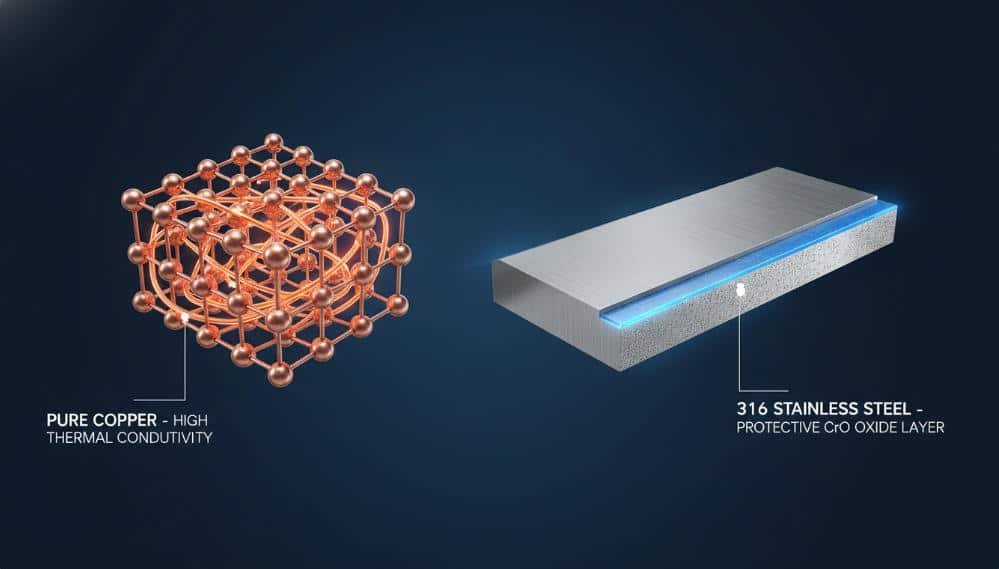
Before discussing performance, we need to understand the base materials. The differences start at the atomic and metallurgical level, and they influence everything from cost to longevity.
What Is Copper in Copper Gua Sha?
Copper is one of the oldest metals used by humans. It is highly conductive, soft compared to steel, and naturally antimicrobial to a certain degree. According to the U.S. Geological Survey (USGS), copper has been widely used in medical and industrial fields due to its conductivity and corrosion resistance in certain environments (https://www.usgs.gov/centers/national-minerals-information-center/copper-statistics-and-information).
In the context of copper gua sha, most tools are made from pure copper or copper alloys such as brass. Brass is primarily a mix of copper and zinc. The percentage of copper typically ranges from 60% to 90%, depending on the formulation.
From a factory perspective, copper is a relatively soft metal. This softness makes shaping easier in early processing stages. However, it also introduces surface vulnerability if not properly finished and coated.
What Is Stainless Steel in Gua Sha Tools?
Stainless steel is an iron-based alloy that contains chromium, usually at least 10.5%. The chromium forms a protective oxide layer that prevents rust. The World Stainless Association explains that this passive layer gives stainless steel its well-known corrosion resistance (https://worldstainless.org/about-stainless/what-is-stainless-steel/).
In gua sha production, the most common grades are 304 and 316 stainless steel. Grade 316 contains molybdenum, which improves resistance to corrosion and makes it more suitable for humid environments or professional spa sterilization processes.
Unlike copper, stainless steel is harder and more resistant to surface damage. This hardness significantly affects machining, polishing, and tool longevity.
Material Cost and Market Fluctuation

From a manufacturer’s viewpoint, material cost is one of the first considerations when developing a product line.
Raw Material Price Differences
Copper prices fluctuate heavily in global commodity markets. According to the London Metal Exchange (LME), copper pricing is influenced by construction demand, electrical infrastructure growth, and global economic conditions. This means copper gua sha tools may experience cost instability.
Stainless steel pricing is also influenced by nickel and chromium markets. However, stainless steel is often more stable in mass production due to broader industrial usage and higher supply volume.
In general, per kilogram, copper is often more expensive than basic 304 stainless steel. When using 316 stainless steel, the cost gap narrows but remains relatively predictable.
Impact on Wholesale Pricing
For B2B buyers, copper gua sha tools usually have a slightly higher base material cost. However, the total unit price depends on thickness, finishing method, and surface treatment. Stainless steel tools, especially those made from 304 grade, tend to offer more consistent pricing in large-scale production.
As a factory, we often advise brands to consider long-term pricing stability. If your brand targets high-volume retail distribution, stainless steel may offer better cost control over time.
Manufacturing Complexity and Processing Differences
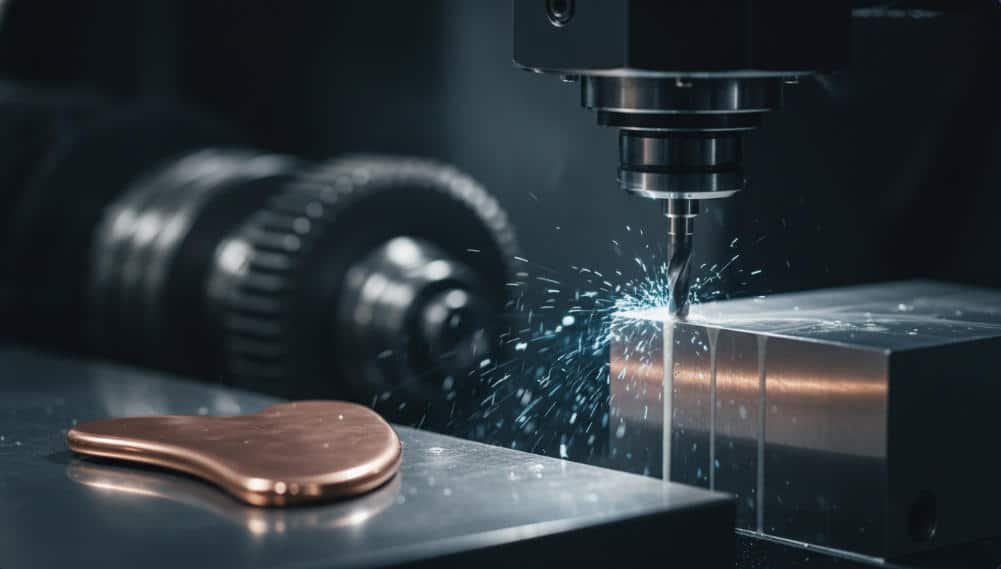
The real contrast between copper gua sha and stainless steel gua sha becomes evident during machining and finishing.
Machining and Shaping
Copper is softer, which means it is easier to stamp or cut into rough shapes. However, softness also means edges can deform more easily during handling. This requires extra care in mold design and post-processing.
Stainless steel, especially 316 grade, is harder and more resistant to deformation. This improves shape retention but increases tool wear during cutting and CNC machining. Manufacturing stainless steel gua sha tools requires stronger equipment and more time per piece.
From our experience, stainless steel machining tools require more frequent replacement, which increases production overhead.
Surface Finishing and Polishing
Both copper and stainless steel need careful polishing to achieve a smooth skin-safe surface.
Copper tends to oxidize quickly when exposed to air. Therefore, copper gua sha tools often require protective coatings such as clear lacquer or electroplating. Without protection, the surface may darken over time due to natural oxidation.
Stainless steel, on the other hand, naturally resists rust due to its chromium oxide layer. It does not require coating to prevent corrosion. This reduces one production step and lowers long-term maintenance concerns.
Because of this, stainless steel often offers greater consistency in appearance across large batches.
Safety and Skin Compatibility
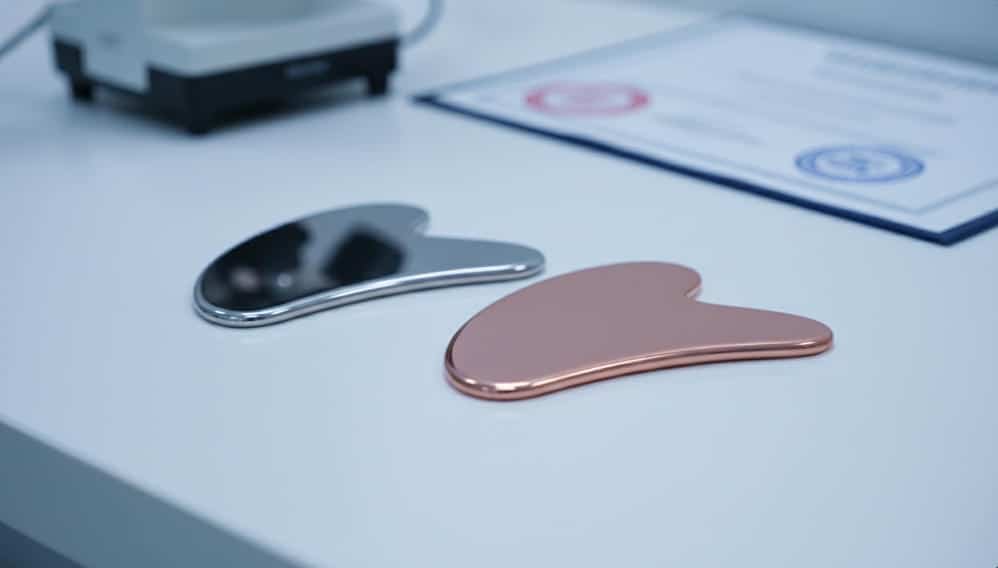
Safety is one of the most important factors for professional beauty tools. As manufacturers, we must comply with international safety standards, including regulations related to heavy metal content and surface coatings.
Copper and Skin Reaction Considerations
Copper itself is generally safe for skin contact. In fact, copper-infused fabrics are sometimes marketed for antimicrobial benefits. The U.S. Environmental Protection Agency (EPA) recognizes certain copper alloys as antimicrobial materials in specific applications (https://www.epa.gov/pesticide-registration/copper-alloys).
However, copper oxidation can leave greenish marks on the skin. While these marks are not typically harmful, they may concern consumers. Additionally, if the copper is alloyed with certain metals like lead (in low-quality brass), safety issues may arise. This is why responsible factories must conduct heavy metal testing.
At Deyi Gems, we ensure compliance with standards such as REACH in the European Union (https://echa.europa.eu/regulations/reach/understanding-reach).
Stainless Steel and Hypoallergenic Properties
Stainless steel, particularly 316L, is widely used in medical instruments and surgical implants. According to ASTM International standards, 316L stainless steel offers strong corrosion resistance and good biocompatibility.
This makes stainless steel gua sha tools highly suitable for sensitive skin and professional spa environments. They are also compatible with alcohol sterilization and UV sanitation procedures.
From a long-term brand positioning perspective, stainless steel often communicates a clinical, hygienic image.
Durability and Longevity
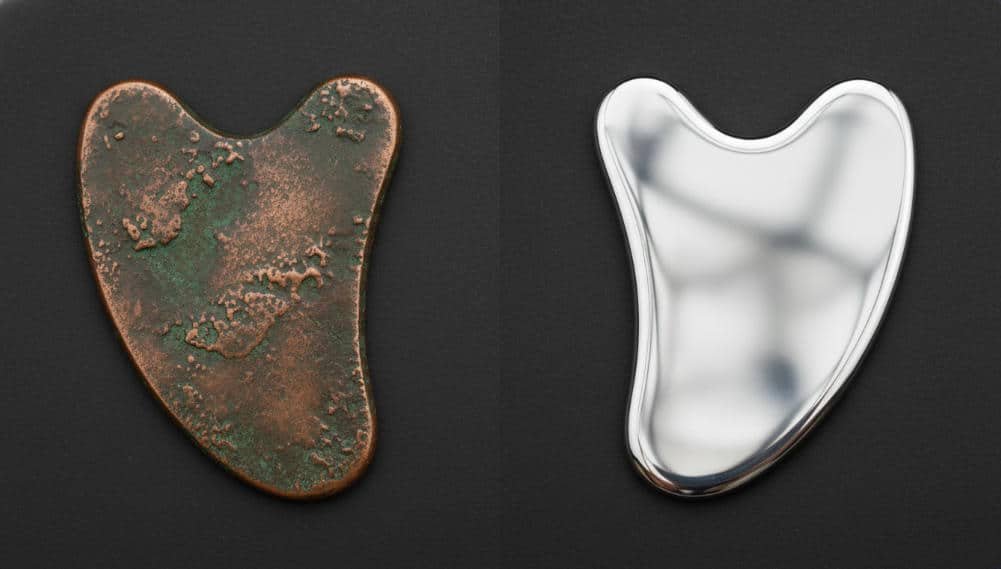
Durability directly affects customer satisfaction and brand reputation.
Oxidation and Corrosion
Copper naturally oxidizes over time. Some customers appreciate the aged patina look, but others prefer a consistent shine. If coating wears off, oxidation will accelerate.
Stainless steel is far more resistant to rust and discoloration. Even after years of use, a properly polished stainless steel gua sha tool maintains its structure and surface integrity.
Structural Strength
Copper is softer and can bend under high pressure. While this is rarely a problem in normal facial use, improper storage or accidental drops may cause deformation.
Stainless steel is structurally stronger. It resists bending and scratching, which is important for professional environments where tools are frequently handled.
In terms of long-term durability, stainless steel generally outperforms copper.
Thermal Conductivity and User Experience
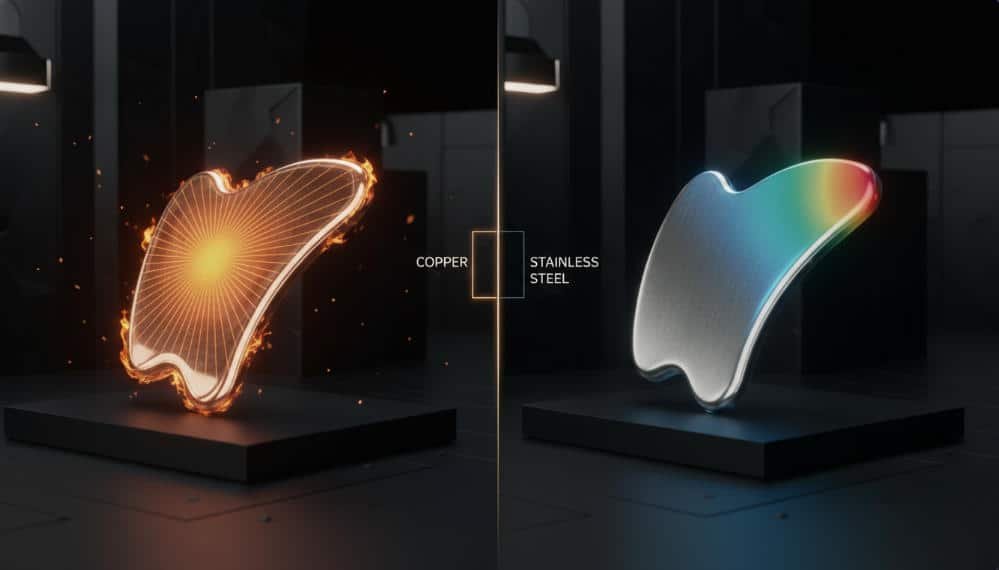
One reason copper gua sha attracts attention is thermal performance.
Heat and Cold Transfer
Copper has very high thermal conductivity. This means it quickly adapts to body temperature or chilled conditions. For users who enjoy warm gua sha therapy, copper heats rapidly.
Stainless steel also conducts temperature but at a slower rate compared to copper. However, in practical facial massage, the difference is subtle for most users.
Sensory Feedback
Copper often feels warmer and slightly softer on contact. Stainless steel feels denser and cooler, especially at room temperature.
From a sensory branding perspective, copper may align better with traditional therapy aesthetics, while stainless steel supports a modern, professional spa identity.
Maintenance and Cleaning
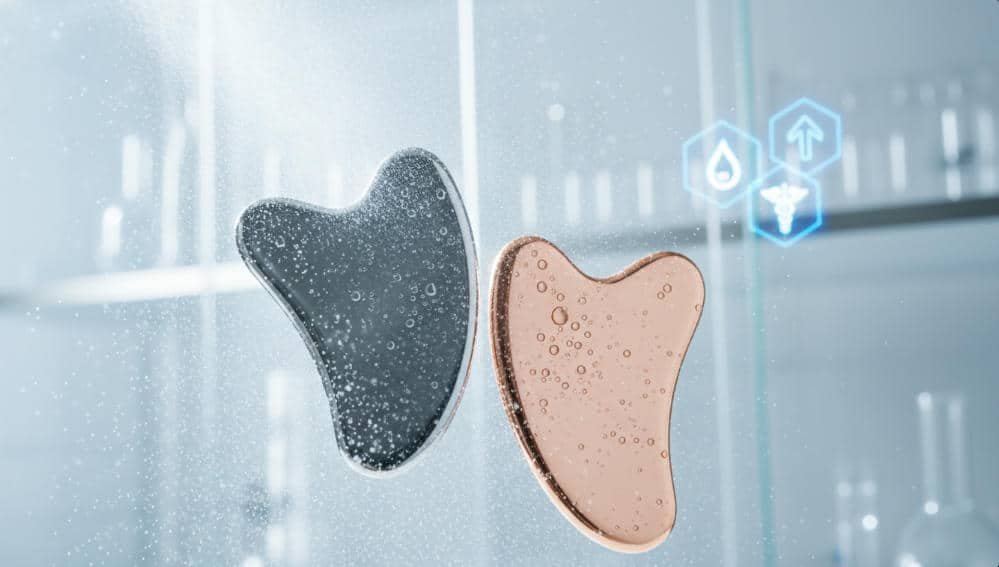
Ease of cleaning is crucial for spas and clinics.
Copper tools must be wiped dry after use to reduce oxidation. Some coatings limit the use of strong disinfectants.
Stainless steel tools can tolerate alcohol, steam, and UV sterilization. This makes them more practical for high-frequency commercial use.
For this reason, many professional estheticians prefer stainless steel when hygiene protocol is strict.
Brand Positioning and Market Perception
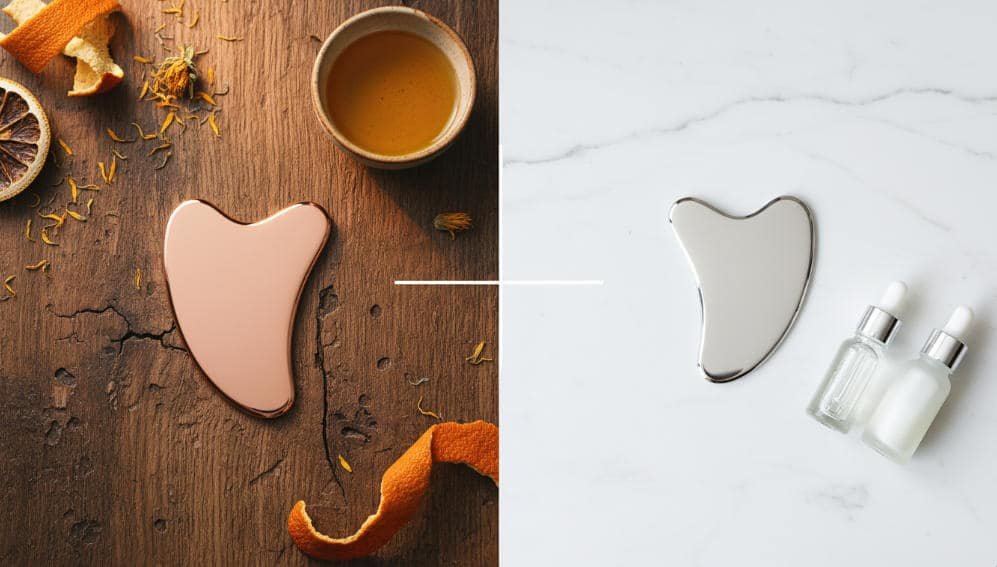
Material choice influences marketing strategy.
Copper gua sha tools are often marketed as traditional, holistic, or energetically beneficial. The warm tone and natural oxidation appeal to customers seeking authenticity.
Stainless steel tools, in contrast, are commonly positioned as medical-grade, hygienic, and long-lasting. This aligns well with dermatology clinics and luxury spa chains.
As a manufacturer, we observe that startup beauty brands often choose copper for storytelling value, while established spa chains lean toward stainless steel for operational reliability.
Environmental and Sustainability Considerations

Both copper and stainless steel are recyclable metals. According to the International Copper Association (https://copperalliance.org), copper can be recycled repeatedly without loss of performance.
Stainless steel is also highly recyclable and contains recycled content in many industrial applications. The World Stainless Association reports that stainless steel products often contain over 60% recycled material globally.
From a sustainability standpoint, both materials can be responsibly sourced. However, stainless steel’s longer lifespan may reduce replacement frequency.
Conclusion: Which One Is Better?
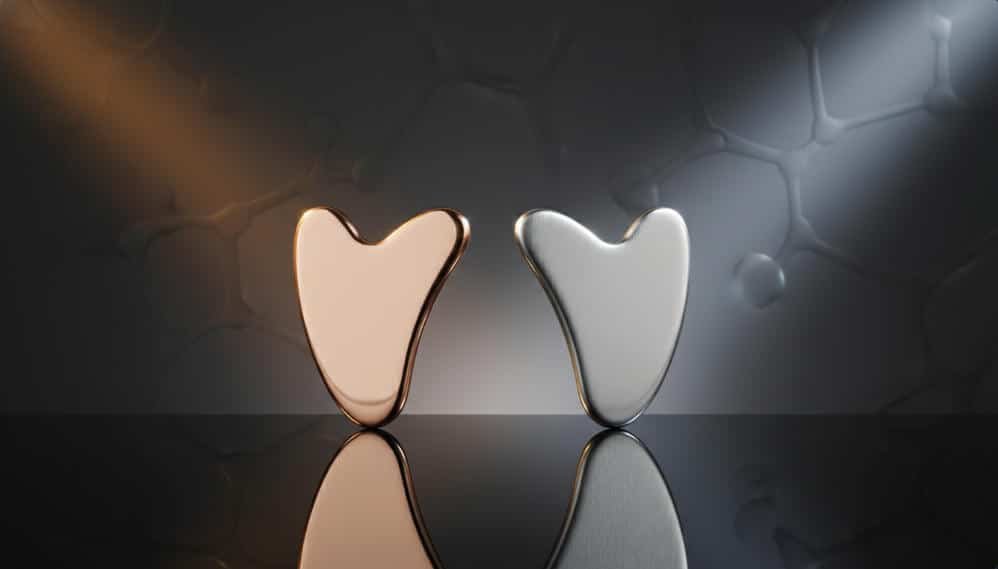
The answer depends on your brand goals and customer expectations.
If your focus is on warmth, traditional appeal, and high thermal conductivity, copper gua sha may be the right choice. However, it requires careful quality control, coating protection, and customer education regarding oxidation.
If your priority is durability, hygiene compatibility, structural strength, and long-term consistency, stainless steel gua sha offers clear advantages.
From our experience as a source manufacturer at Deyi Gems, stainless steel provides greater operational stability for large-scale distribution. Copper gua sha, on the other hand, offers unique aesthetic and sensory characteristics that can differentiate boutique brands.
Ultimately, both materials have their place in the beauty industry. The key is not which one is universally better, but which one aligns with your production strategy, market positioning, and long-term brand vision.
In the evolving gua sha market, informed material selection is the foundation of sustainable growth.