How Automated Tumble Polishing Transformed Gua Sha Manufacturing — 400% Faster, Batch-Consistent, Industry-Ready
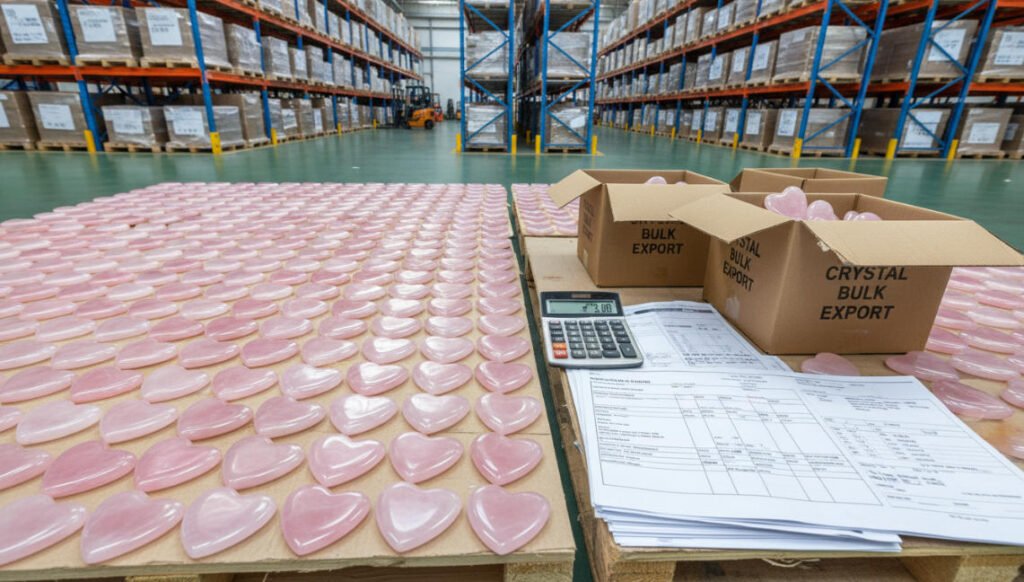
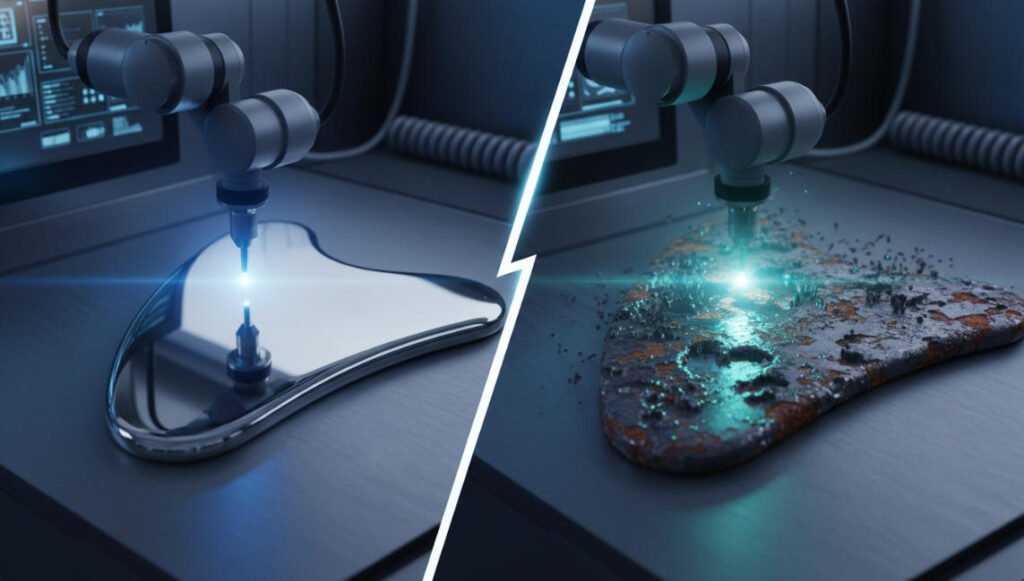
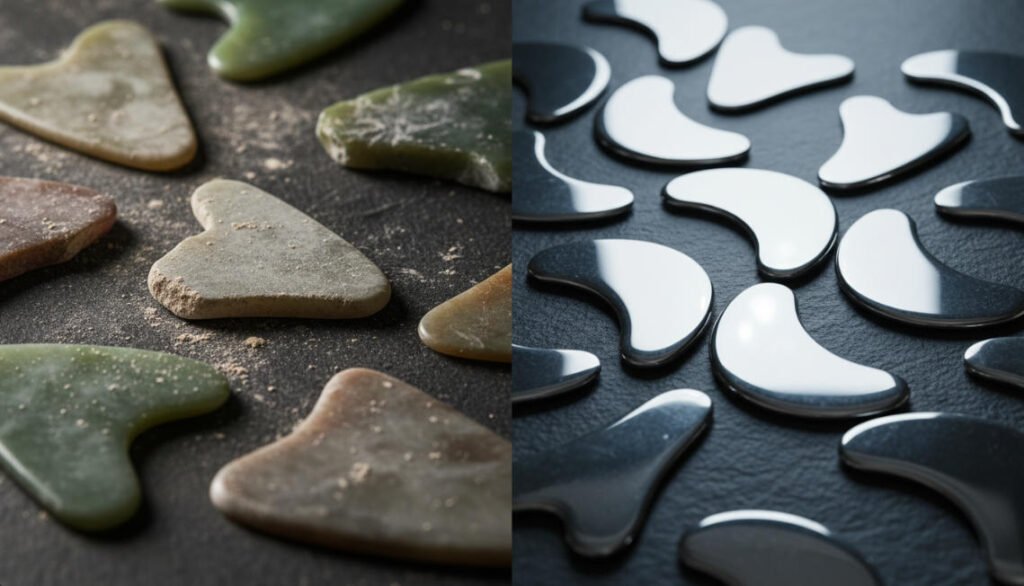
Here is what permanently changed the gua sha manufacturer landscape: in 2019, a controlled 400-sample production trial — conducted by Deyi Gems — directly compared automated tumble polishing against traditional hand-polishing methods across multiple stone types. The result required no interpretation. Automated vibration barrel polishing delivered a 400%+ efficiency gain over manual labor, and that advantage continued to grow as batch sizes increased. For any brand, retailer, or importer evaluating gua sha wholesale sourcing today, this single technological shift redefined what a responsible gua sha supplier can realistically commit to: compressed lead times, scalable production capacities, and — most critically — surface consistency across every unit in a large-volume order. Does your current gua sha factory have the process infrastructure to back those promises with data? That is the question this article equips you to answer. What follows is a complete technical breakdown of how automated tumble polishing works, why it performs differently across quartz and jade gua sha tools, which compounds produce measurable results on specific stone families, and what questions to bring to any gua sha supplier before committing to a bulk production run. Whether your priority is understanding gua sha production mechanics, evaluating supplier capability, or benchmarking the ROI of sourcing from a technically equipped gua sha manufacturer — the information here is structured to serve each of those objectives directly. The Pre-2020 Gua Sha Market and the Hidden Limits of Hand Polishing A Niche Industry Built on Manual Craftsmanship Before 2020, gua sha production existed within a self-contained, regionally concentrated market. Google Trends data confirms that global search interest for “gua sha” remained modest through the late 2010s, with demand clustered predominantly in China and radiating outward into adjacent Southeast Asian markets. That limited geographic footprint meant that the industry’s structural reliance on hand polishing was not a liability — it was an appropriate match between production method and market scale. The two dominant materials of that era, buffalo horn and bian stone, each carry surface characteristics that respond exceptionally well to skilled manual finishing. When orders ran in the hundreds rather than the tens of thousands, experienced craftspeople could produce results that met — and sometimes exceeded — what mechanized alternatives offered. The trade-off embedded in manual polishing was always present, even when it was not yet consequential. A craftsperson working their third consecutive hour of polishing does not produce the same surface quality as one beginning their first. Physical fatigue introduces micro-variations in pressure, angle, and abrasive contact time that accumulate into inconsistency across a batch. In a low-volume, regionally focused market, these variations were manageable — absorbed by tolerant buyers, invisible in small sample sizes, and rarely the subject of formal quality complaints. The conditions that would expose this structural weakness were building quietly. When they arrived, they arrived fast. How the Global Boom Exposed the Breaking Point of Manual Gua Sha Production Between 2020 and 2021, the gua sha production landscape underwent a structural transformation driven by consumer culture, not by the industry itself. Google Trends data shows global search volume for “gua sha” approximately tripling between late 2019 and peak interest in 2021, accelerated by wellness content proliferating across TikTok, Instagram, and YouTube simultaneously. This was not a regional category growing at an organic pace — it was a global beauty and wellness segment compressing years of expected development into 18 months. The consequence for every gua sha factory still operating on manual polishing lines was immediate and structural. Order volumes scaled at a rate that skilled labor recruitment could not match. Craftspeople working extended hours to meet demand produced inconsistent results across batches — not because they lacked skill, but because human output degrades predictably under sustained physical repetition. Brand clients placing gua sha wholesale orders for the first time began receiving shipments where surface finish varied visibly between pieces in the same purchase order. For a consumer brand, that is not a production quality complaint. It is a customer trust event that generates returns, negative reviews, and damage to the brand equity being built around the product. The industry did not need more workers. It needed a different process. The Manufacturing Breakthrough — How Automated Tumble Polishing Entered Gua Sha Production Why Leading Gua Sha Manufacturers Invested in Automated Polishing Systems in 2019 The transition to automated vibration barrel polishing was not an industry-wide announcement. It began with a small number of gua sha manufacturers — those with sufficient production scale to run meaningful comparative trials and the technical curiosity to treat process design as a competitive variable — who recognized that the problem was architectural. Adding manual labor to a manual-polishing production floor does not solve a consistency problem; it scales an inconsistency problem. Addressing it required changing the process itself, not the headcount behind it. In 2019, Deyi Gems conducted a structured 400-sample production trial, running identical stone blanks through manual polishing and automated tumble polishing in parallel, measuring throughput rate, surface consistency, and finish quality across both methods. The methodology was deliberately controlled: same material, same finishing specification, same quality benchmark. The output was not ambiguous. Automated tumble polishing exceeded 400% of the throughput produced by manual methods — and critically, did so while maintaining measurably higher surface uniformity across the full sample set. This means that the volume of finished, inspection-ready gua sha production output your brand requires can be delivered by an automated system in a fraction of the calendar time that manual methods would require for the same quantity. The 400% Efficiency Gain — What It Actually Means for Your Gua Sha Order A 400% efficiency improvement is a meaningful headline. Translating it into sourcing decisions requires understanding what it changes operationally. If your brand requires 2,000 polished units within a 15-day production window, a gua sha factory equipped with automated tumble polishing can fulfill that schedule without compressing quality control steps to hit the deadline. A manual-only operation cannot — not at that volume, not with that consistency, and not without
Here is what permanently changed the gua sha manufacturer landscape: in 2019, a controlled 400-sample production trial — conducted by Deyi Gems — directly compared automated tumble polishing against traditional hand-polishing methods across multiple stone types. The result required no interpretation. Automated vibration barrel polishing delivered a 400%+ efficiency gain over manual labor, and that advantage continued to grow as batch sizes increased. For any brand, retailer, or importer evaluating gua sha wholesale sourcing today, this single technological shift redefined what a responsible gua sha supplier can realistically commit to: compressed lead times, scalable production capacities, and — most critically — surface consistency across every unit in a large-volume order. Does your current gua sha factory have the process infrastructure to back those promises with data? That is the question this article equips you to answer. What follows is a complete technical breakdown of how automated tumble polishing works, why it performs differently across quartz and jade gua sha tools, which compounds produce measurable results on specific stone families, and what questions to bring to any gua sha supplier before committing to a bulk production run. Whether your priority is understanding gua sha production mechanics, evaluating supplier capability, or benchmarking the ROI of sourcing from a technically equipped gua sha manufacturer — the information here is structured to serve each of those objectives directly. The Pre-2020 Gua Sha Market and the Hidden Limits of Hand Polishing A Niche Industry Built on Manual Craftsmanship Before 2020, gua sha production existed within a self-contained, regionally concentrated market. Google Trends data confirms that global search interest for “gua sha” remained modest through the late 2010s, with demand clustered predominantly in China and radiating outward into adjacent Southeast Asian markets. That limited geographic footprint meant that the industry’s structural reliance on hand polishing was not a liability — it was an appropriate match between production method and market scale. The two dominant materials of that era, buffalo horn and bian stone, each carry surface characteristics that respond exceptionally well to skilled manual finishing. When orders ran in the hundreds rather than the tens of thousands, experienced craftspeople could produce results that met — and sometimes exceeded — what mechanized alternatives offered. The trade-off embedded in manual polishing was always present, even when it was not yet consequential. A craftsperson working their third consecutive hour of polishing does not produce the same surface quality as one beginning their first. Physical fatigue introduces micro-variations in pressure, angle, and abrasive contact time that accumulate into inconsistency across a batch. In a low-volume, regionally focused market, these variations were manageable — absorbed by tolerant buyers, invisible in small sample sizes, and rarely the subject of formal quality complaints. The conditions that would expose this structural weakness were building quietly. When they arrived, they arrived fast. How the Global Boom Exposed the Breaking Point of Manual Gua Sha Production Between 2020 and 2021, the gua sha production landscape underwent a structural transformation driven by consumer culture, not by the industry itself. Google Trends data shows global search volume for “gua sha” approximately tripling between late 2019 and peak interest in 2021, accelerated by wellness content proliferating across TikTok, Instagram, and YouTube simultaneously. This was not a regional category growing at an organic pace — it was a global beauty and wellness segment compressing years of expected development into 18 months. The consequence for every gua sha factory still operating on manual polishing lines was immediate and structural. Order volumes scaled at a rate that skilled labor recruitment could not match. Craftspeople working extended hours to meet demand produced inconsistent results across batches — not because they lacked skill, but because human output degrades predictably under sustained physical repetition. Brand clients placing gua sha wholesale orders for the first time began receiving shipments where surface finish varied visibly between pieces in the same purchase order. For a consumer brand, that is not a production quality complaint. It is a customer trust event that generates returns, negative reviews, and damage to the brand equity being built around the product. The industry did not need more workers. It needed a different process. The Manufacturing Breakthrough — How Automated Tumble Polishing Entered Gua Sha Production Why Leading Gua Sha Manufacturers Invested in Automated Polishing Systems in 2019 The transition to automated vibration barrel polishing was not an industry-wide announcement. It began with a small number of gua sha manufacturers — those with sufficient production scale to run meaningful comparative trials and the technical curiosity to treat process design as a competitive variable — who recognized that the problem was architectural. Adding manual labor to a manual-polishing production floor does not solve a consistency problem; it scales an inconsistency problem. Addressing it required changing the process itself, not the headcount behind it. In 2019, Deyi Gems conducted a structured 400-sample production trial, running identical stone blanks through manual polishing and automated tumble polishing in parallel, measuring throughput rate, surface consistency, and finish quality across both methods. The methodology was deliberately controlled: same material, same finishing specification, same quality benchmark. The output was not ambiguous. Automated tumble polishing exceeded 400% of the throughput produced by manual methods — and critically, did so while maintaining measurably higher surface uniformity across the full sample set. This means that the volume of finished, inspection-ready gua sha production output your brand requires can be delivered by an automated system in a fraction of the calendar time that manual methods would require for the same quantity. The 400% Efficiency Gain — What It Actually Means for Your Gua Sha Order A 400% efficiency improvement is a meaningful headline. Translating it into sourcing decisions requires understanding what it changes operationally. If your brand requires 2,000 polished units within a 15-day production window, a gua sha factory equipped with automated tumble polishing can fulfill that schedule without compressing quality control steps to hit the deadline. A manual-only operation cannot — not at that volume, not with that consistency, and not without